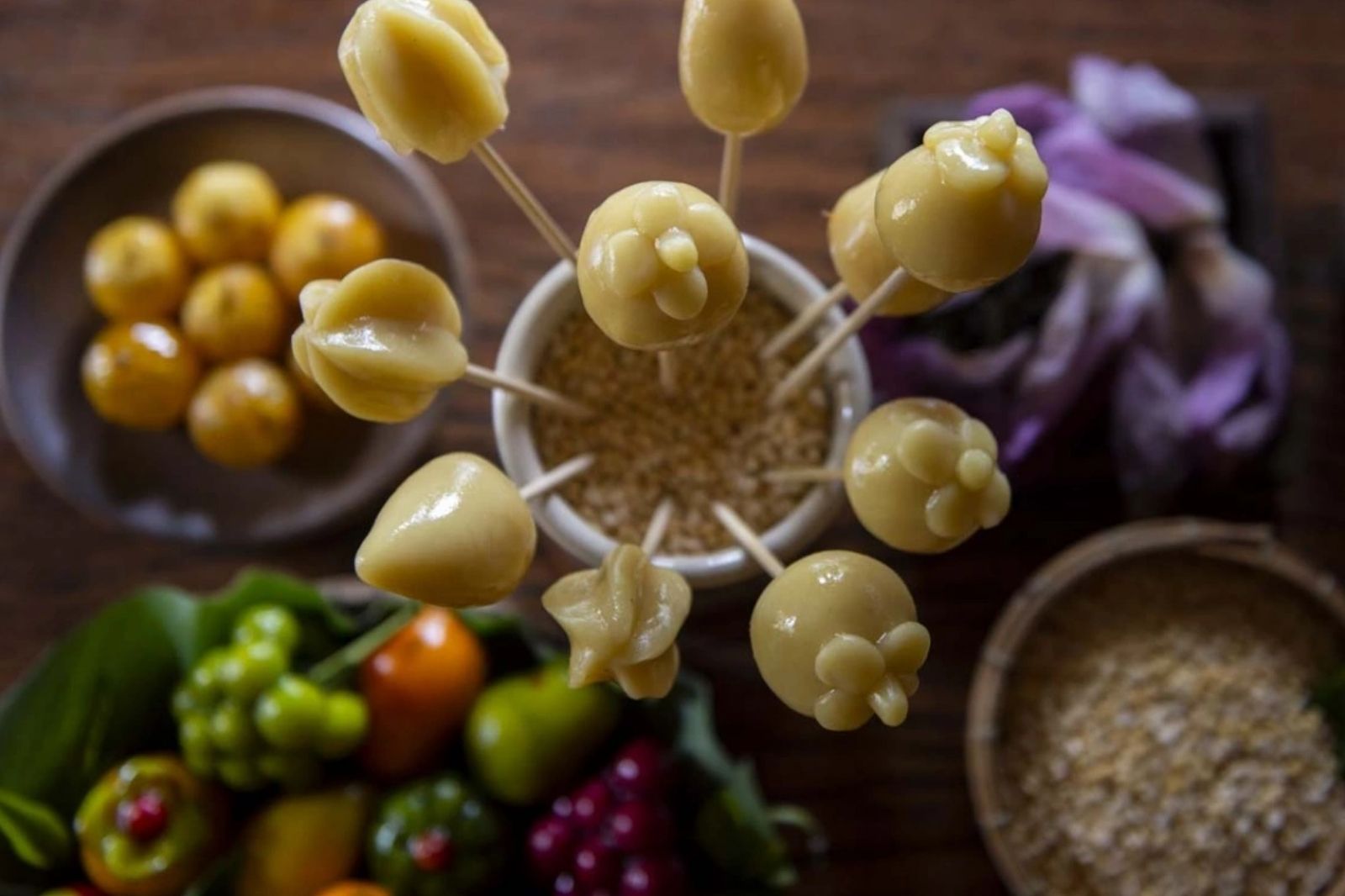
Hue Fruit-Shaped Mung Bean Cake: Artistic Colors from the Country Gardens of the Ancient Capital

Central

Thua Thien Hue

Sovaba.travel

Updated at: 24/09/2026

1. The origin of Hue's mung bean cake

Fruit-shaped mung bean cakes originated during the Nguyen Dynasty, when Hue was the Capital of Vietnam and the political and cultural center of the entire country. In the royal context, cuisine was not merely about nourishing the body, but also an art expressing power, refinement, and royal stature. Thus, dishes created for royalty had to be not only delicious but also visually stunning, carrying symbolic meanings of prosperity, abundance, and harmony with nature.

According to historical records and folk traditions, fruit-shaped mung bean cake was created by royal chefs (*ngự trù*) to serve at royal banquets, Tet celebrations, or ceremonial offerings in the court. Shaped to mimic familiar fruits such as mangoes, starfruit, mangosteens, oranges, chili peppers, or durians, the cakes were visually appealing while carrying feng shui significance, symbolizing the abundance of heaven and earth and the prosperity of the dynasty. Because it initially appeared only in the royal palace, this cake was also known as the "noble cake," reserved exclusively for royalty and grand occasions.
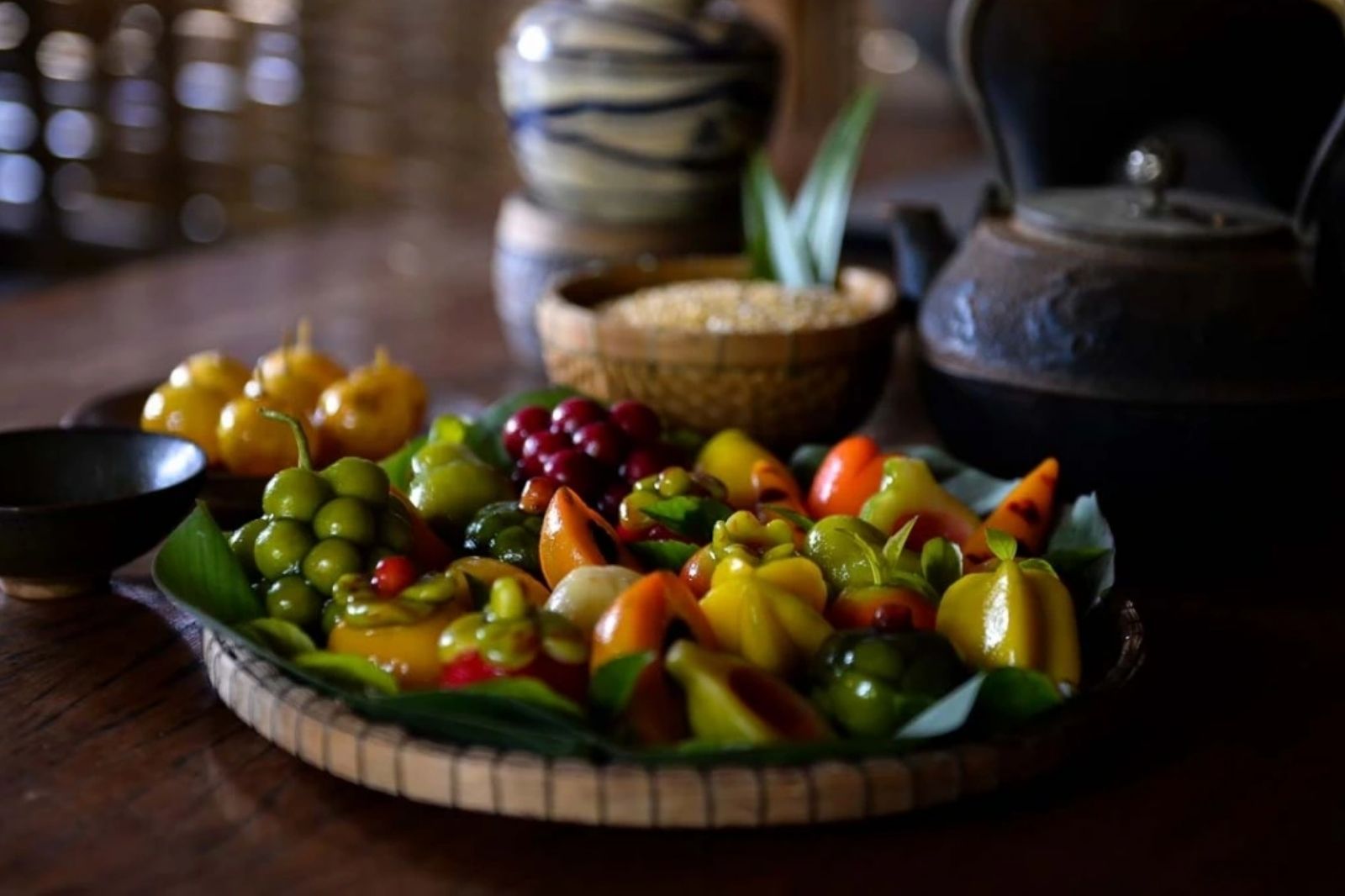
Cakes made in the shape of familiar fruits
Photo: Cakes made in the shape of familiar fruits 

Today, each fruit-shaped mung bean cake not only evokes memories of a golden age in the Imperial City but is also considered a miniature work of art. Each intricately crafted detail reflects the skill, meticulousness, and dedication of Hue artisans, while recreating images of lush, fertile gardens closely tied to rustic life in the Ancient Capital.
2. The process of making fruit-shaped mung bean cakes

The main ingredients of fruit-shaped mung bean cake are simple yet require careful selection to meet royal standards:

  • Mung beans: The beans must be plump, free of pests, soaked in warm water for 4-8 hours, hulled clean, steamed, and pureed to achieve a smooth, nutty, and fragrant texture.
  • Agar-agar powder: Creates a chewy, transparent outer shell that protects the filling and adds a glossy sheen.
  • Coconut milk and sugar: Provide a subtle sweetness and light richness, often using palm sugar to maintain traditional flavor.
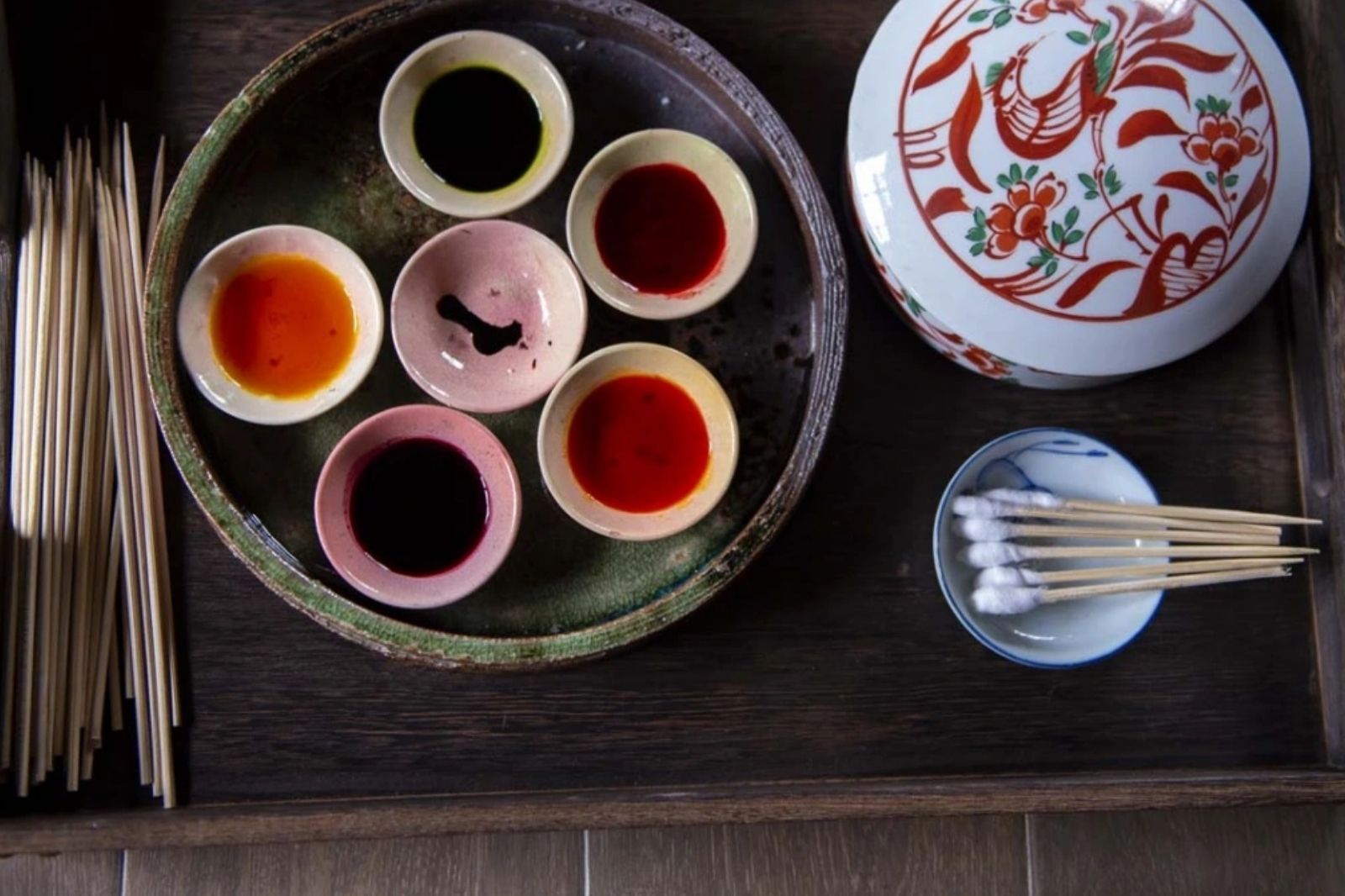
  • Natural food coloring: Ancient artisans utilized beetroot (purple-pink), carrot (orange), pandan leaves (light green), and turmeric (bright yellow) to create vivid colors. Today, food coloring is also used to save time.
Cake crust colors are made from natural ingredients
Photo: Cake crust colors are made from natural ingredients

The process of making fruit-shaped mung bean cake requires patience and dexterity through every step:

  • Preparing the filling: After soaking and steaming, mung beans are pureed with coconut milk, sugar, and a pinch of salt to highlight the gentle sweetness. The mixture is stirred over low heat continuously until it becomes pliable, non-stick, and easy to shape.
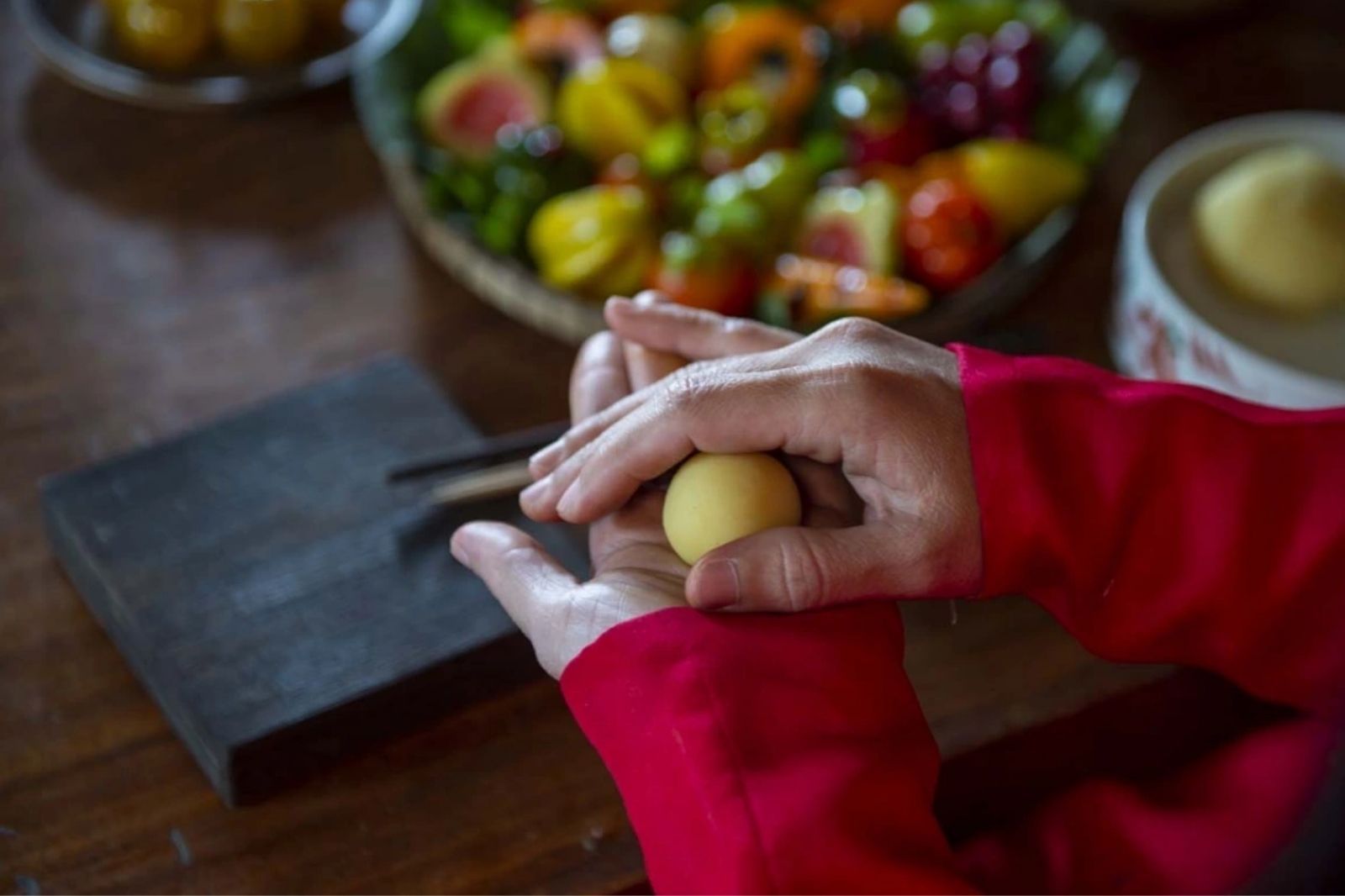
  • Shaping the fruits: The mung bean filling is rolled into balls, then hand-shaped or pressed into silicone molds to replicate fruits like oranges, mangoes, starfruit, mangosteens, or even corn cobs and durian. This stage demands creativity and meticulousness to capture tiny details like stems, textures, and ridges.
  • Coloring and coating with agar-agar: The cakes are skewered on bamboo sticks and dipped into boiling agar-agar liquid to create a shiny outer coating. Artisans then use soft brushes to paint natural or food colors, making them look just like real fruit. The cakes are dipped in agar-agar a second time and dried for 4-6 hours at 60-70°C to preserve color and durability.
Mung beans are steamed and pureed for shaping
Photo: Mung beans are steamed and pureed for shaping 

Each finished cake is not only visually striking but also features the rich, nutty taste of mung beans, mild sweetness of sugar, and chewy texture of agar-agar, creating a complete culinary experience.

3. Cultural value and childhood memories

Fruit-shaped mung bean cake is not merely a sweet treat, but also a signature cultural symbol of Hue. Each tiny cake seems to encapsulate the soul of the Ancient Capital, recalling fruit-laden gardens and reflecting the delicate craftsmanship of the Imperial City's people.

For many Hue locals, this cake is closely tied to childhood memories of children delightedly gazing at colorful cake stalls at Dong Ba Market or An Cuu Market, treasuring each cute cake so much they hesitated to eat it. Similar to the toy figurines (*tò he*) of the North, fruit-shaped mung bean cakes carry traditional value, frequently appearing during Tet holidays, full-moon festivals, or chosen as meaningful gifts. Today, the cake is not only a source of pride for Hue people but also serves as a delicate bridge between royal cuisine and rustic life—close and simple, yet radiating the inherent elegance of the ancient capital.

4. Where to enjoy and buy mung bean cakes

To fully experience the authentic flavor of fruit-shaped mung bean cake, you can visit these famous spots in Hue:

  • Dong Ba Market (2 Tran Hung Dao, Dong Ba Ward, Hue City): Hue's largest market, where you can find specialty cake stalls priced between 20,000-30,000 VND per box of 10.
  • An Cuu Market (Nguyen Hue Street, Vinh Ninh Ward, Hue City): Famous for traditional confectionery stalls, where fruit-shaped mung bean cake always attracts visitors.
  • Thuan Suong Bakery (16 Nguyen Hoang, Kim Long, Hue City): A family bakery with nearly 30 years of history, renowned for its handmade process and royal quality.

Pro tip: Fruit-shaped mung bean cake can only be preserved for 3-4 days in a cool place or 7 days in the refrigerator. Before enjoying, let the cakes sit at room temperature to make the agar layer soft and bring out the full flavor. Pairing the cake with a cup of mildly bitter tea will highlight its subtle sweetness and rich, nutty flavor.

The cake can only be stored for a few days at room temperature
Photo: The cake can only be stored for a few days at room temperature 

Hue fruit-shaped mung bean cake is not just a food item, but a work of art steeped in cultural identity and the dexterity of the Ancient Capital's people. From humble ingredients, through the skillful hands of artisans, each cake is like a precious gem—visually stunning and delicious, evoking images of fertile gardens and childhood memories. Whether you are a traveler or a food enthusiast, don't miss the chance to taste and bring back this treat as a quintessential Hue gift.

Loading......

Featured destinations