Chợ Đông Ba Huế: Hành trình khám phá vẻ đẹp văn hóa và mua sắm đầy sắc màu
TRAVEL GUIDEDong Ba Market

Exploring Dong Ba Market independently is a journey that takes you into the heart of the Ancient Capital's daily life, preserving the true spirit of Hue through every stall, dish, and simple story. Walking among the bustling stalls, with the aroma of local delicacies filling the air, you will clearly feel the refined, slow-paced, yet deep lifestyle of Hue locals. This is an ideal destination for those who love local culture, traditional cuisine, and want to explore Hue from the most authentic and intimate perspective.

Check out the self-guided Dong Ba Market travel tips from Sovaba Travel, featuring recommendations on the ideal time to experience the bustling but not overly crowded market, easy ways to travel from the city center, must-try dishes like Hue beef noodle soup, banh khoai (savory pancakes), and royal sweet soup, as well as outstanding handicraft stalls selling non bai tho (poem conical hats), me xung (sesame candy), and Phuoc Tich pottery. Don't forget to combine your journey with Thien Mu Pagoda, the Perfume River, or Truong Tien Bridge for a more complete look at the cultural and daily beauty of Hue. Careful preparation will help ensure your trip is not only enjoyable and convenient but also filled with emotion, bringing you closer to the subtle depths of Hue – a place where past and present walk side by side in every beat of life.
General Overview of Dong Ba Market

Dong Ba Market is the largest market in Central Vietnam, situated along the poetic Perfume River in Hue City, Thua Thien Hue Province. Spanning over 22,700 m² with more than 2,700 stalls, the market welcomes between 5,000 and 10,000 visitors daily, including domestic and international tourists. More than just a bustling trading hub, Dong Ba Market serves as the "cultural pulse" of Hue, preserving the refined, leisurely, yet profound daily lifestyle of the local people. From Hue specialties like me xung (sesame candy) and royal herbal tea to traditional handicrafts, the market offers an authentic travel experience that deepens your understanding of the ancient capital's history and culture. If you are planning a trip to Hue, Dong Ba Market is undoubtedly a highlight that will enrich your travel experience.

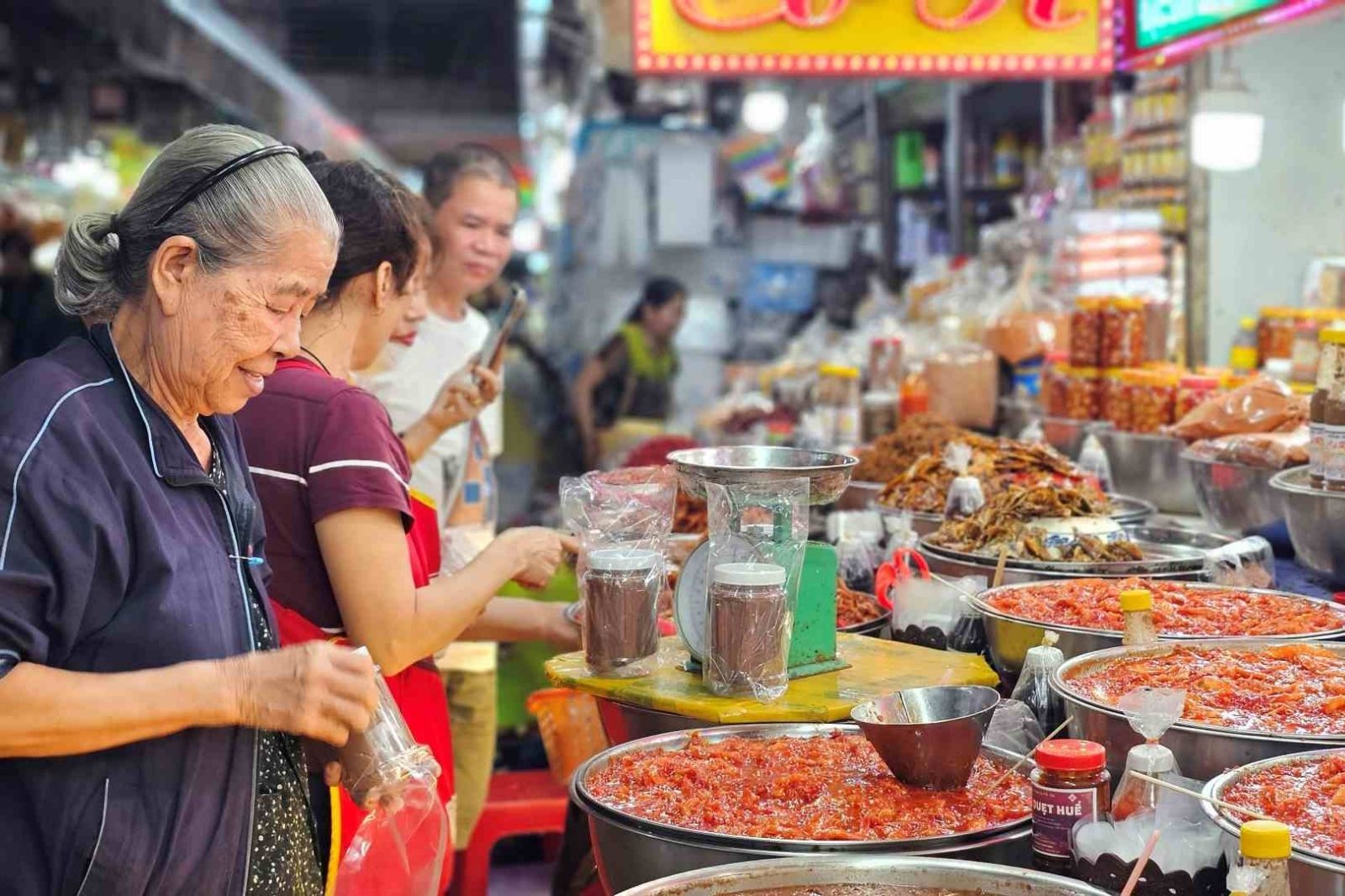
Chợ Đông Ba đã gắn bó với người dân Huế từ lâu
Photo: Dong Ba Market has long been closely connected with Hue residents

History and Development of Dong Ba Market

Dong Ba Market has a history deeply intertwined with the Nguyen Dynasty, built in 1887 during the reign of King Dong Khanh. Originally named "Quy Gia Thi"—meaning "the market of those who return"—it marked the return to Phu Xuan by the Nguyen king following historic events. In 1899, under King Thanh Thai, the market was relocated to its present location along the Perfume River, situated between Gia Hoi Bridge and Truong Tien Bridge, to facilitate trade.

Over 125 years of development, Dong Ba Market has undergone several renovations and expansions in 1887, 1899, 1967, and after national reunification. Initially just a small market outside the Dong Ba Gate (the eastern gate of the Hue Citadel), it was destroyed in 1885 during the fall of the capital before being rebuilt by King Dong Khanh. Today, the market is not only a major commercial center in Central Vietnam but also a cultural heritage site reflecting the diligence, hard work, and hospitality of Hue's people. The market's growth is closely tied to Hue's urbanization, evolving from a traditional marketplace into a renowned tourist destination trading in approximately 60 diverse commodity categories.

Where is Dong Ba Market Located?

Dong Ba Market is located at 2 Tran Hung Dao Street, Phu Hoa Ward, Hue City, Thua Thien Hue Province. Its strategic location on the north bank of the Perfume River, stretching from Gia Hoi Bridge to Truong Tien Bridge, makes it a vital connector between central Hue and neighboring areas.

Detailed directions:

  • From central Hue (Perfume River area or Imperial City): A 10-15 minute walk if staying nearby, allowing you to enjoy the Perfume River view while breathing in the fresh air.
  • By motorbike or car: Set GPS to Tran Hung Dao Street. From Truong Tien Bridge, turn right onto Tran Hung Dao; the market is immediately on your right. Travel time is about 5-10 minutes from the center.
  • By taxi or motorbike taxi (xe om): Costs around 50,000 - 100.000 VND depending on starting point. Choose reliable operators like Xanh SM Taxi (call 1900 2088) or apps like Grab/Be.
  • From Phu Bai Airport: About 17 km from the market, taking 30-45 minutes by taxi (around 200,000 - 300,000 VND).
  • From Hue Railway Station: 2.8 km away; a 5-10 minute taxi or motorbike ride via Le Loi and Tran Hung Dao streets.
  • From Saigon or Hanoi: Fly to Phu Bai Airport, take a train to Hue Station (fares from 290,000 VND), or travel by long-distance sleeper bus (companies like Mai Linh, Hoang Long).

Its central position makes it easy to combine a market visit with other Hue attractions like Thien Mu Pagoda or Quoc Hoc High School.

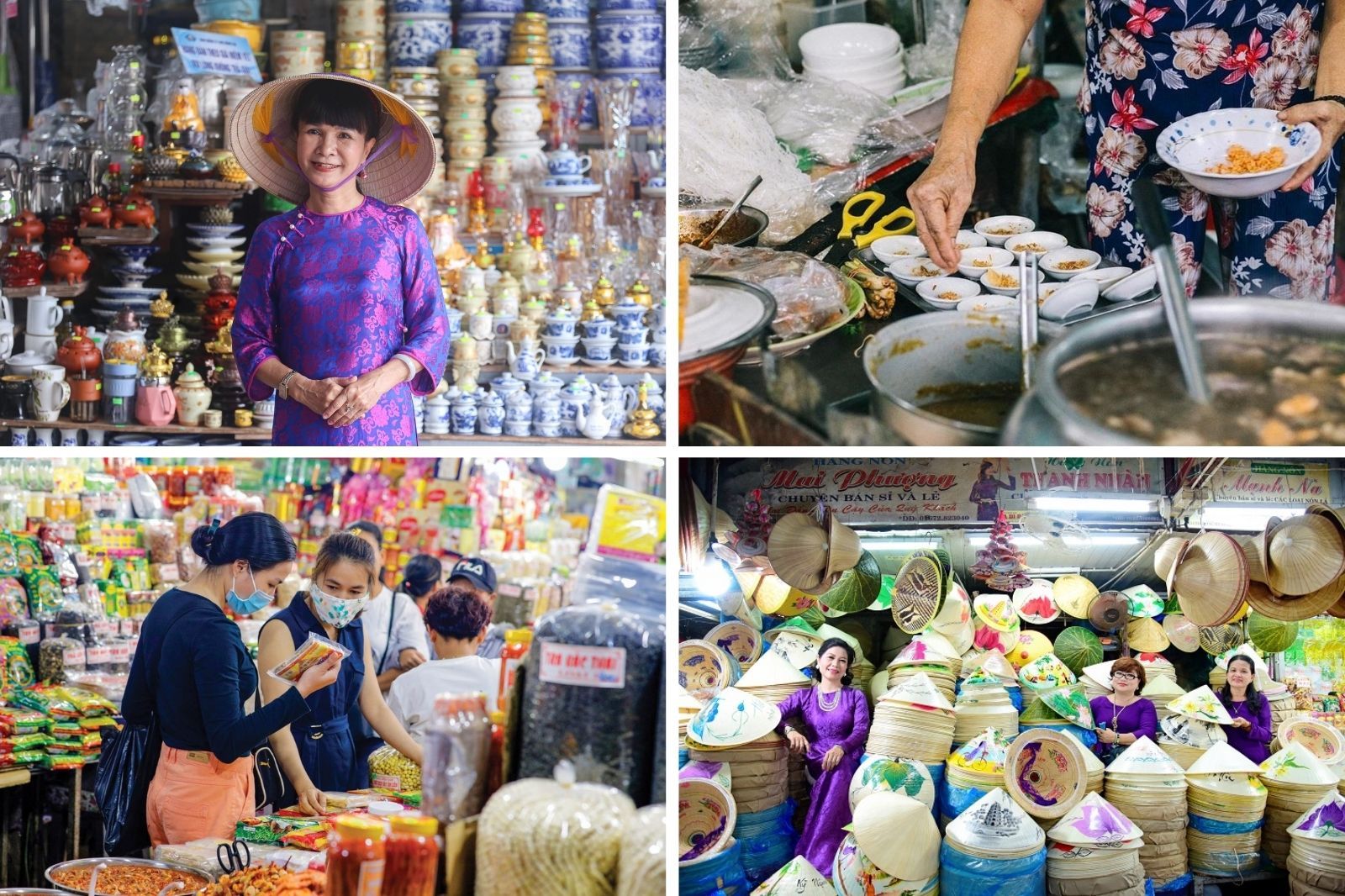
Chợ Đông Ba buôn bán nhiều mặt hàng đặc trưng của Huế
Photo: Dong Ba Market sells many characteristic Hue products

Opening Hours of Dong Ba Market in Hue

Dong Ba Market operates from early morning until late evening, specifically from 3:00 - 6:00 AM until around 7:00 - 8:00 PM daily. During holidays and Tet, the market may stay open later to serve increased shopping demand. Early morning (3:00 - 6:00 AM) is when fresh produce and seafood arrive, ideal for buying fresh ingredients. From 3:00 PM onwards, the market grows busier with food stalls and general shopping. 

Note that some stalls may close earlier on regular weekdays, so check ahead if arriving late.

What Makes Dong Ba Market Special?

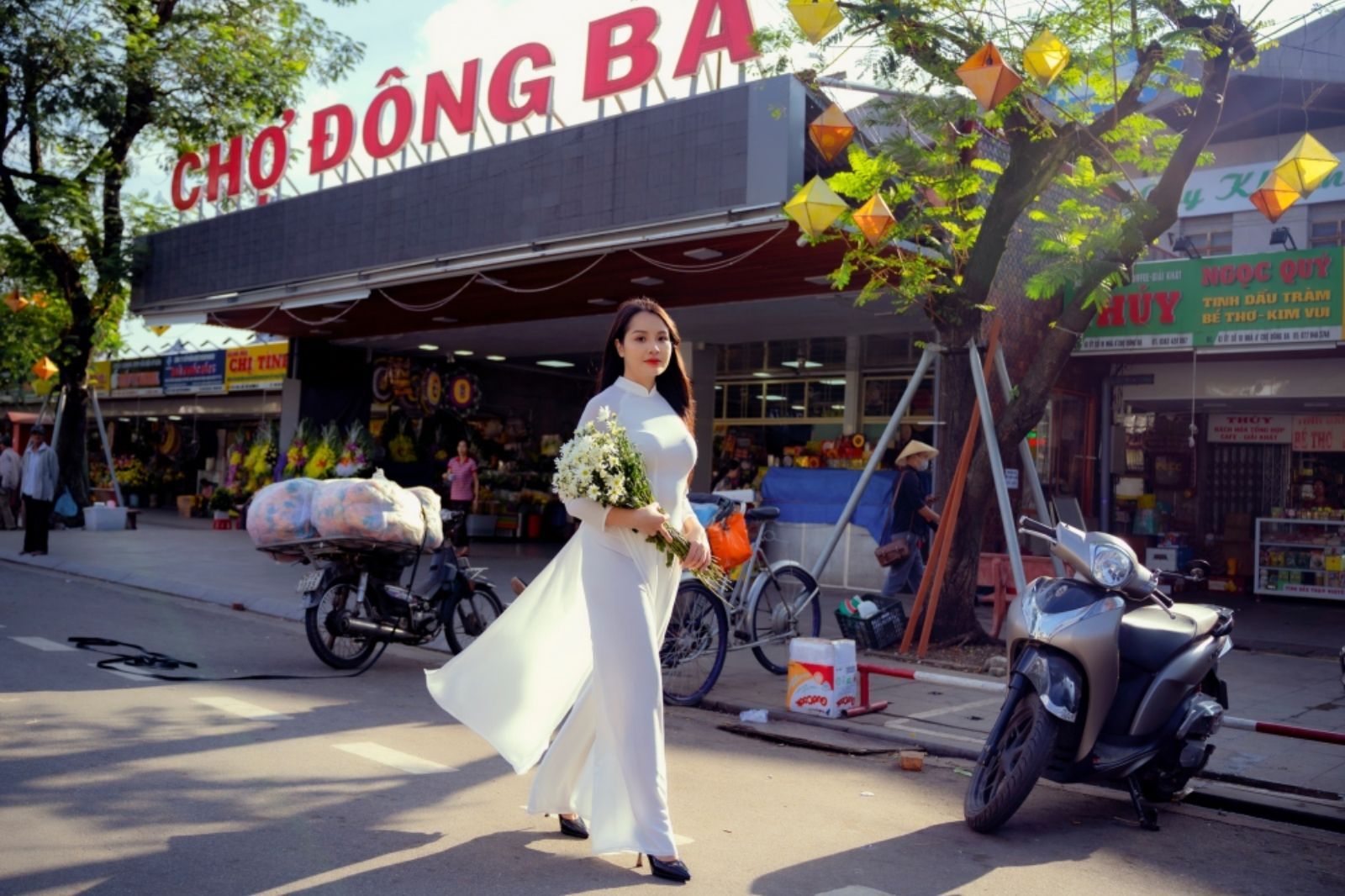
Dong Ba Market stands out with its unique architectural layout: a main 3-story building called the "bell tower" (constructed in the 1920s), surrounded by U-shaped building wings, creating a spacious and easily navigable layout. What is most special is the harmonious blend of shopping, food, and culture: you can buy poem conical hats (non bai tho), Phuoc Tich ceramics, or enjoy Hue beef noodle soup right on the spot. After 6:00 PM, the outdoor area turns into a "night food paradise" with grilled pork skewers (nem lui) and crispy pancakes (banh khoai). The market is also a prime photo spot featuring its red-letter main gate, ancient bell tower, and Perfume River view. The friendly, hospitable vendors are always ready to assist, reflecting the sincere and hardworking spirit of Hue locals. The rustic, welcoming atmosphere makes the market not just a shopping spot, but a living cultural icon.

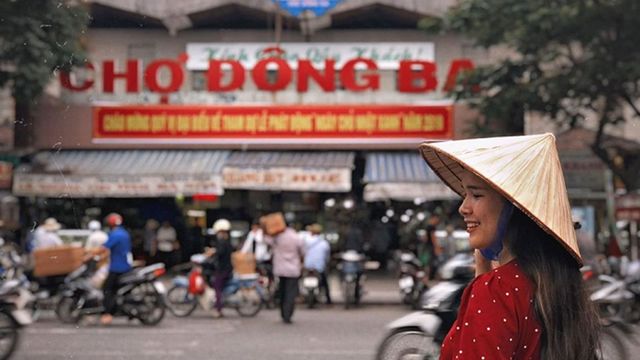
Nên đến chợ vào buổi chiều để tránh đông đúc
Photo: Visitors are advised to visit in the afternoon to avoid crowds

Main Sections Inside Dong Ba Market

Dong Ba Market is clearly divided into 3 floors, each focusing on specific categories of goods, making orientation easy for visitors:

  • Floor 1: A food paradise and dried specialty area. This is the liveliest section featuring dried seafood (shrimp, squid, fish), Hue fermented fish sauces (mam nem, mam ruoc, mam tom chua), and street food like Hue beef noodle soup and banh beo.
  • Floor 2: Handicrafts and souvenirs section. Sells Phu Cam poem conical hats, Phuoc Tich ceramics, Da Le bamboo weaving, Ke Mon jewelry and metalwork (incense burners, scissors), agarwood incense, and cajeput essential oil.
  • Floor 3: Fabric and clothing section. Focuses on ao dai fabrics (100,000 - 500,000 VND/meter), garments, and accessories like handbags, hats, and silver jewelry.

With nearly 3,000 stalls, the market spans from Gia Hoi Bridge to Truong Tien Bridge, offering a diverse and convenient shopping environment.

What is Sold at Dong Ba Market?

Dong Ba Market trades in about 60 commodity categories ranging from affordable to high-end, but most prominent are products bearing distinct Hue characteristics:

  • Dried specialties and fermented sauces: Co Ri shrimp paste (mam ruoc), sour shrimp sauce (mam tom chua), clam sauce (mam so), dried seafood (shrimp, squid, fish).
  • Handicrafts: Poem conical hats (with poem hidden inside), Phuoc Tich pottery (engraved bowls and dishes), bamboo woven crafts (baskets, mats), Ke Mon metalcraft (incense burners, scissors), and Sinh Village paper votive flowers.
  • Teas and confectionery: Hue Royal Tea (50,000 - 60,000 VND/bag), Thien Huong sesame candy (me xung), ginger jam, and Tinh Tam lotus seeds.
  • Fabrics and souvenirs: Ao dai fabrics, keychains, pixiu statues (20,000 - 100,000 VND), and leaf-wrapped Hue fermented pork (nem tre).
  • Fresh seafood: Live swimmer crabs, sea snails, and shellfish—best bought in the morning for peak freshness.

These items are not only high in quality but also carry cultural value, making them excellent gifts.

What to Eat at Dong Ba Market?

Dong Ba Market is an affordable Hue food paradise, concentrated on Floor 1 and the outdoor areas. Here are must-try dishes:

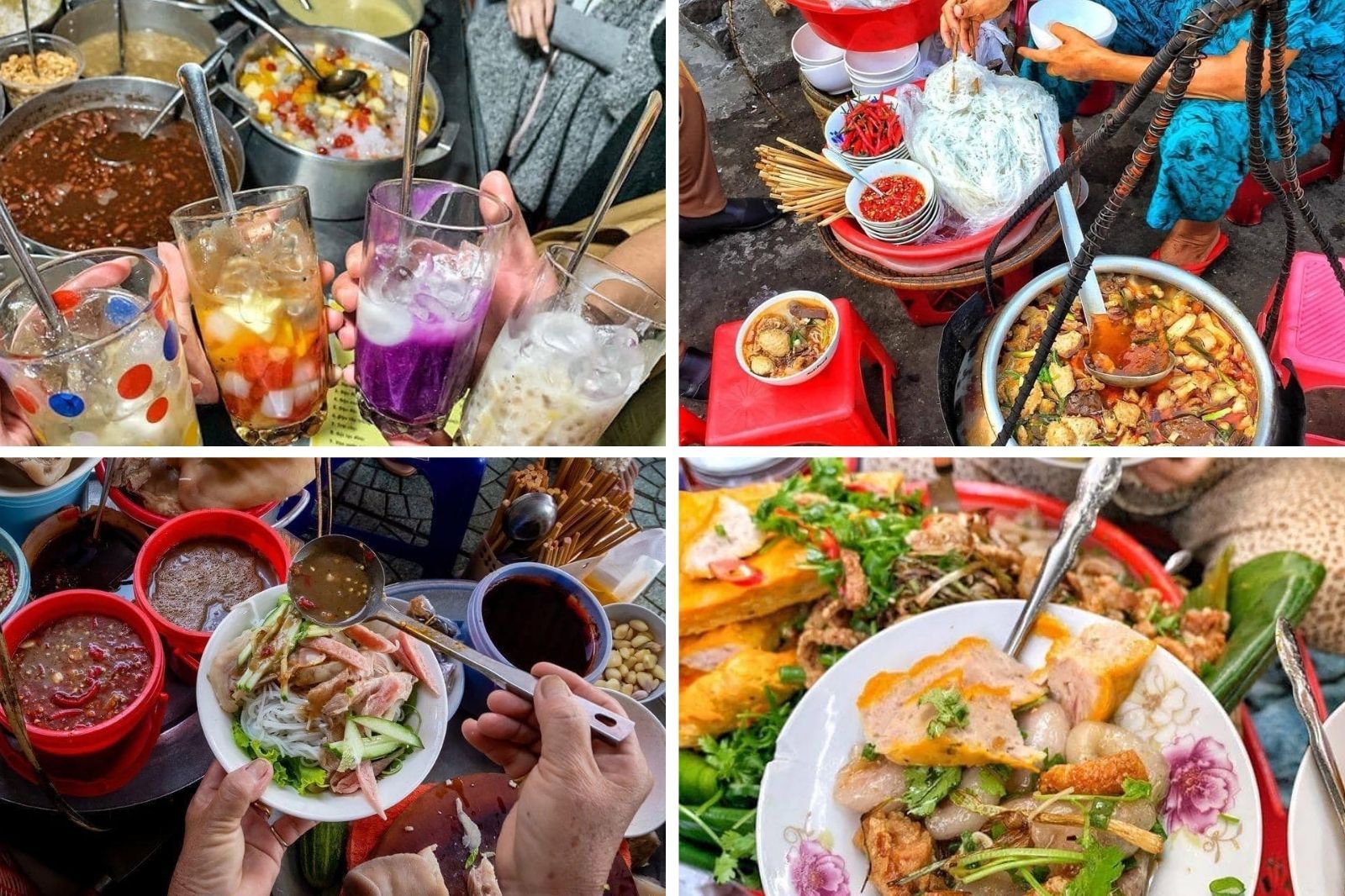
  • Hue beef noodle soup (Bun bo Hue): A rich bowl with beef, pork knuckle, and flavorful broth (20,000 - 30,000 VND/bowl).
  • Banh bot loc & banh beo: Chewy tapioca dumplings and steamed rice cakes topped with shrimp or mung bean, served with sweet fish sauce (15,000 - 30,000 VND/portion).
  • Grilled pork skewers (Nem lui): Fragrant lemongrass pork skewers wrapped in rice paper with fresh herbs (50,000 VND/set for 2 people).
  • Hue sweet soups (Che Hue): Mixed sweet soup, lotus seed soup, or roast pork tapioca sweet soup—mildly sweet with coconut milk (10,000 - 20,000 VND/glass).
  • Nam Pho thick noodle soup (Banh canh Nam Pho): Chewy noodles in a thick shrimp/crab broth (25,000 VND/bowl).
  • Kim Long grilled pork noodles (Bun thit nuong Kim Long): Charcoal-grilled pork served over rice vermicelli with dipping sauce (20,000 - 35,000 VND/portion).
  • Other delicacies: Stir-fried turmeric noodles with offal, banh khoai (crispy pancakes), banh nam, and spicy mussel rice (com hen).

With 100,000 - 200,000 VND, you can try 3-4 dishes. Choose busy, clean stalls; if you are sensitive to heavy spices, feel free to ask for adjustments.

Huế được ví như thiên đường ẩm thực
Photo: Hue is often likened to a culinary paradise

Shopping and Bargaining Experience at Dong Ba Market

To shop effectively at Dong Ba Market, apply the following practical tips:

  • Prepare cash: Many stalls do not accept card payments; carry small notes for easy transactions.
  • Bargain smartly: Start by offering half the asking price and negotiate up with a friendly attitude. Avoid aggressive bargaining early in the morning as sellers consider the first sale of the day superstitious.
  • Explore in order: Start from Floor 3 (fabrics), head down to Floor 2 (souvenirs), and finish on Floor 1 (food) to minimize fatigue.
  • Safety and comfort: Protect your belongings as the market can get crowded, especially during holidays. Wear comfortable clothes and walking shoes; bring a bag for strong-smelling dried goods.
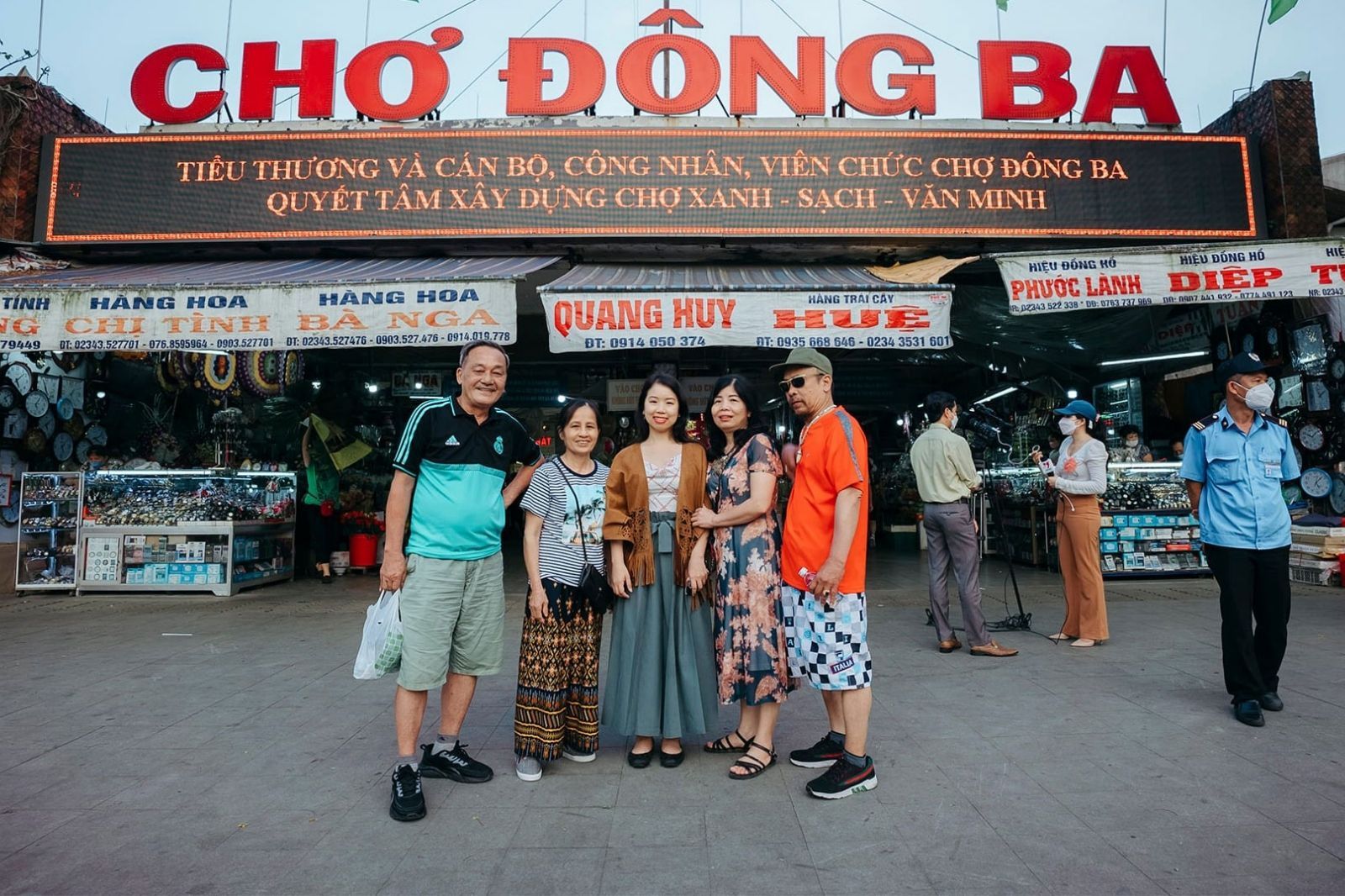
  • Other tips: Ask vendors for recommendations (they are very enthusiastic), buy fresh seafood early in the morning, and take check-in photos at the bell tower or main gate.

Market management encourages posted pricing, so overcharging is increasingly uncommon.

Du khách check-in trước cổng chợ Đông Ba
Photo: Tourists checking in in front of Dong Ba Market gate 

Dong Ba Market is not merely a shopping destination, but a doorway into the refined rhythm of Hue life—where culture, cuisine, and local people intersect in every corner. Here, you can sample dishes rich in the ancient capital's soul like Hue beef noodle soup, banh bot loc, and royal sweet soup, while discovering exquisite handmade souvenirs like poem conical hats, sesame candy, and traditional ceramics. Every stall holds a story. Every conversation offers a glimpse into Hue life past and present. This is a place to see Hue with your eyes, taste Hue with your palate, and feel Hue with your whole heart.

If you wish to experience Dong Ba Market more thoroughly and deeply, explore our Dong Ba Market Tour—a journey that helps you uncover and truly understand Hue's cultural identity with every step.

Articles related to Dong Ba Market