Hue Kumquat Jam: A Tet Specialty Imbued with the Soul of the Ancient Capital
Central
Thua Thien Hue
Sovaba.travel
Updated at: 24/09/2026
1. The flavor of Tet in candied kumquats
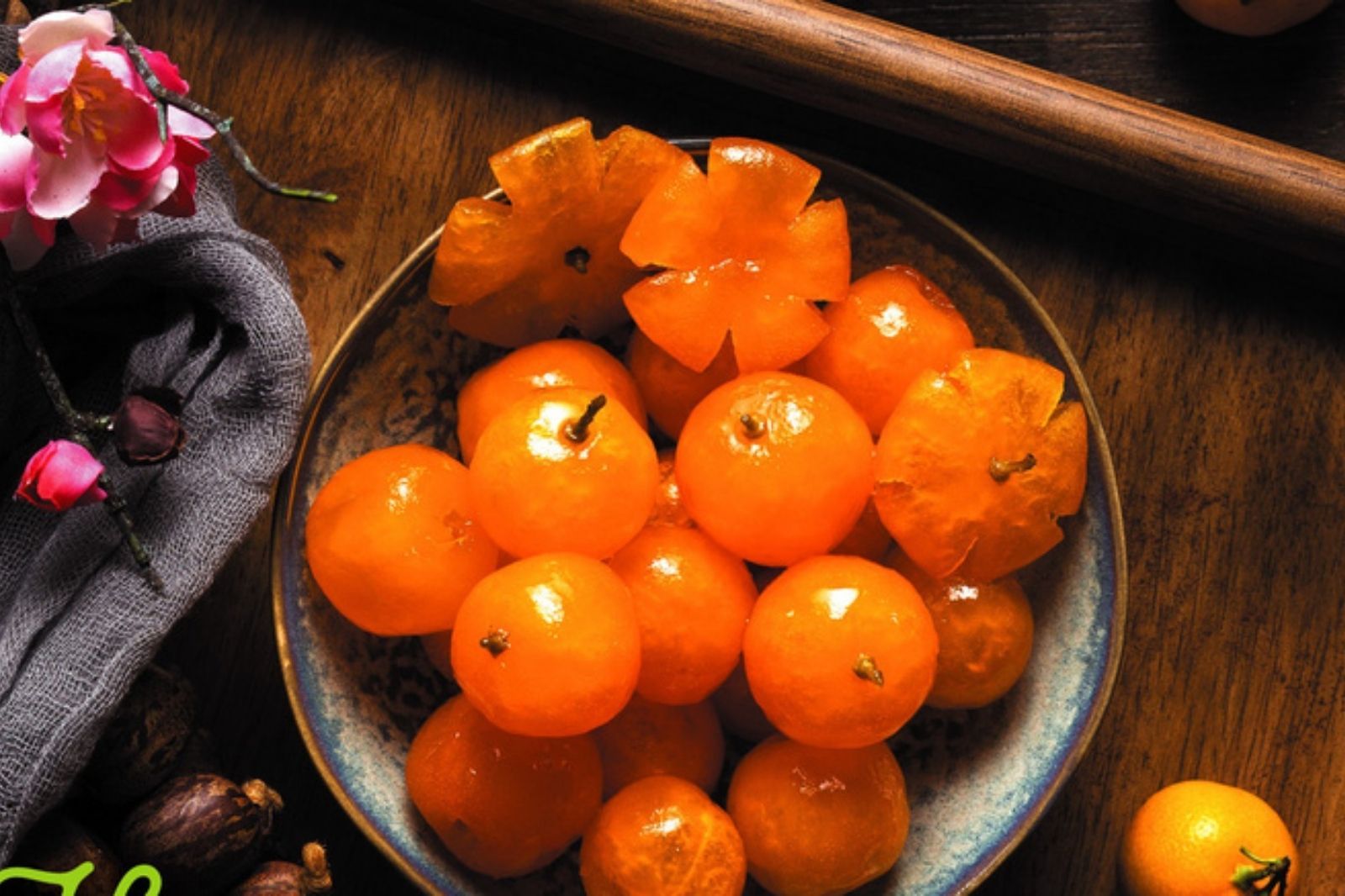
Kumquat jam has long been a sweet part of Tet memories for the people of Hue. When the twelfth lunar month arrives and the kumquats in the garden gradually turn from green to a radiant golden color, it is time for grandmothers and mothers to busy themselves preparing pots of jam, hoping to welcome a complete and warm Tet. This simple sweet treat is not only present on the altar offered to ancestors but also on the tea table to welcome guests, reflecting the inherent hospitality and refinement of the people of Hue.
The glistening golden color of each jam slice symbolizes wealth, prosperity, and good fortune in the New Year. Savoring a piece of kumquat jam beside a hot cup of tea, one not only feels the light sweetness mixed with a subtle tartness on the tip of the tongue, but also feels like reliving the poetic atmosphere of ancient Tet in the old capital.
Photo: Kumquat jam often appears on the ancestor worship tray
2. The meticulous craftsmanship of Hue people
Making Hue kumquat jam is not just a cooking chore, but an art requiring meticulous attention, patience, and dexterity. The special feature of this jam is that the kumquat fruit retains its round, plump shape, creating a rare unique and refined beauty.
Selecting Ingredients
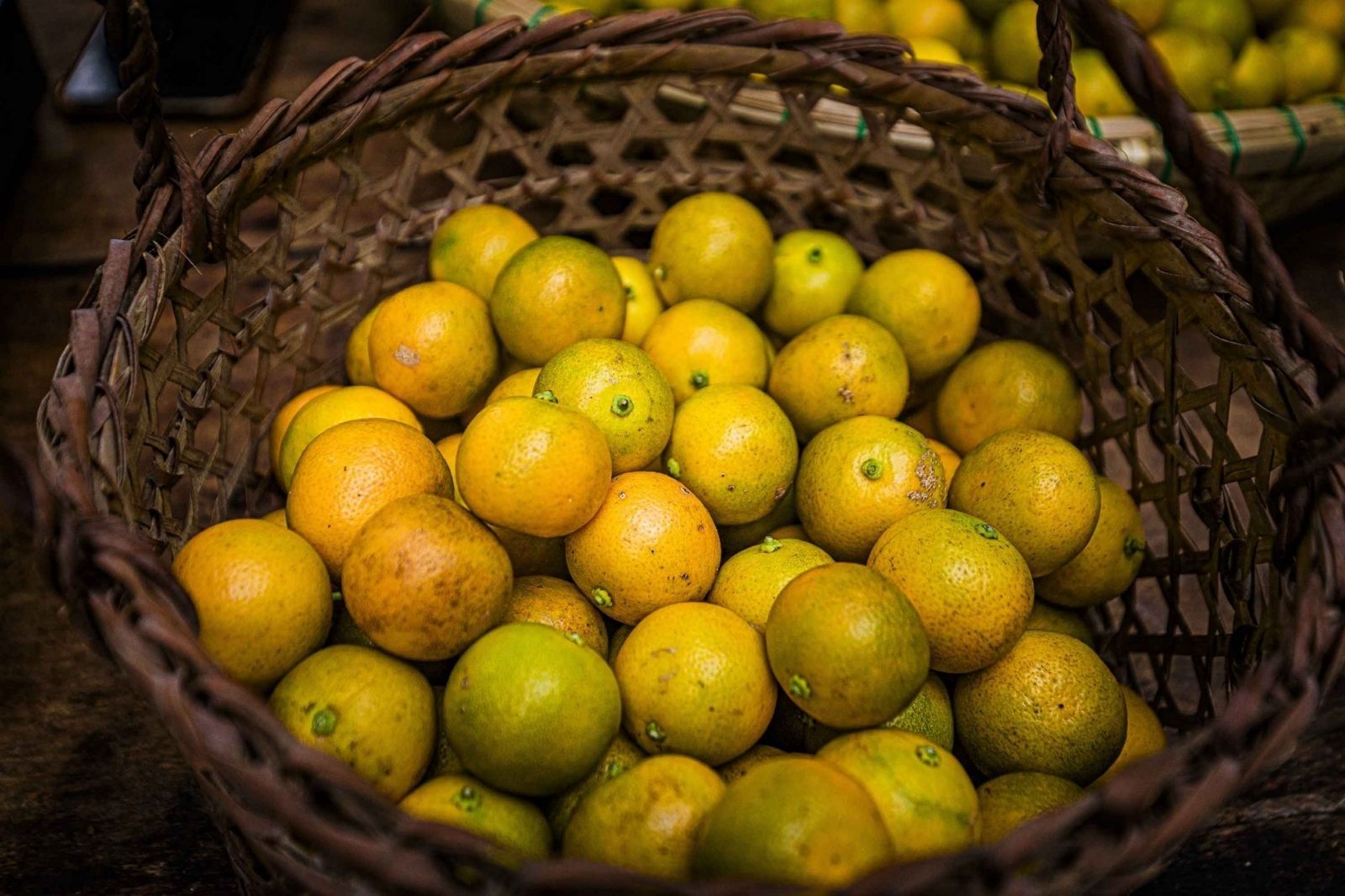
The most important ingredients are evenly golden-ripe kumquats with smooth, non-rough skin. According to Mrs. Huong – a culinary artisan in Hue, the best kumquats must be picked from natural gardens without chemical spraying, to retain their characteristic chewiness and light taste. Properly ripened fruits will emit a delicate aroma, forming the foundation for a delicious, authentic batch of jam.
Photo: Only kumquats with smooth skin are selected
Preparing the Kumquats
The kumquats are washed thoroughly with diluted salt water, then cut into 4–6 symmetrical slits around the skin using a knife to shape them like flower petals. This step requires skill to avoid tearing the fruit pulp. The seeds inside are gently removed, while preserving the juice to use when simmering the jam, which helps prevent bitterness. Next, the kumquats are soaked in clear limewater for about 1–2 days to make the skin crispier, then rinsed with cold water and briefly boiled with alum or lemon water to achieve an attractive shine.
Marinating with Sugar
After preparation, the kumquats are layered alternately with white granulated sugar or rock sugar in glass jars. The standard ratio is usually 1:1 (1kg kumquat : 1kg sugar), but it can be adjusted according to taste. For the sugar to absorb evenly, the kumquats need to be marinated overnight or for at least 24 hours. Some artisans also skillfully add a few slices of licorice to enhance the flavor.
Simmering the Jam
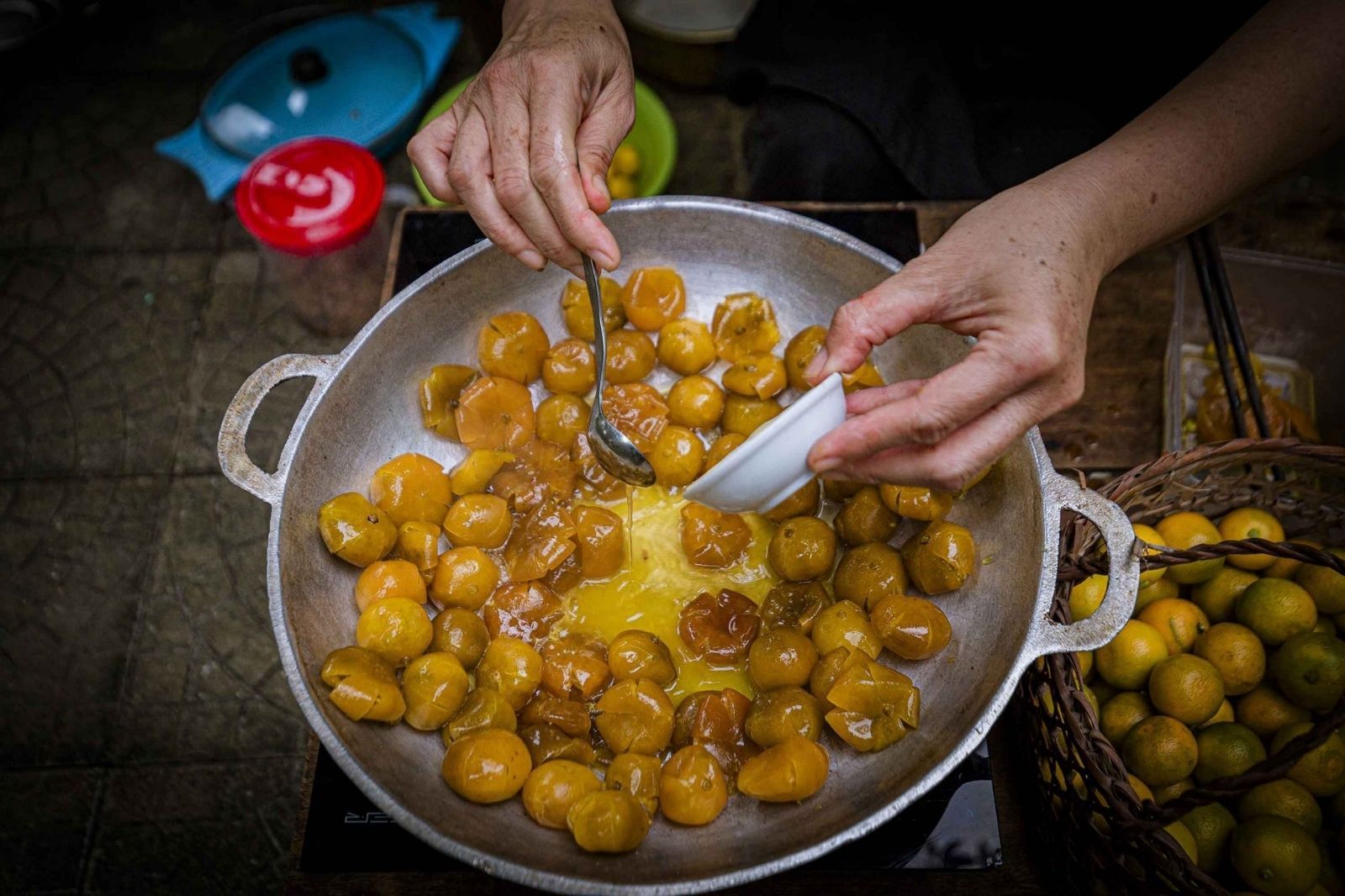
The kumquats and sugar syrup are simmered in a cast-iron pan over low heat. Throughout this process, the maker must stir gently and patiently watch the flame so the fruit does not break apart. When the syrup gradually thickens, the reserved kumquat juice is added to enhance the flavor. Sometimes, a touch of honey is added to give the jam a soft, sweet aroma. When the kumquats become translucent with a radiant golden shine, the jam has reached perfection.
Photo: Kumquat jam is simmered in a cast-iron pan
Sun-drying and Storage
To give the jam clarity and long-lasting preservation, Hue people often dry the jam in mild sunlight for 1–2 days. Finally, the jam is stored in clean glass jars and tightly sealed. This method helps the jam retain its chewiness, fragrance, and glossiness without liquefying throughout the Tet season.
3. Candied kumquats in Hue Royal Cuisine
Kumquat jam was once part of royal preserved fruits, especially "bat buu" (eight-treasure) jam — a precious treat presented to the king to wish for health and good luck. The elaborate preparation of kumquat jam clearly reflects the spirit of Hue royal cuisine: focusing not only on flavor but also ensuring aesthetic appeal and spiritual significance. Today, although eight-treasure jam is no longer widespread, kumquat jam is still preserved as a beautiful traditional feature.
4. Tips for choosing and preserving candied kumquats
To select high-quality Hue kumquat jam, you should note:
Color: Standard jam has a bright golden, translucent color, not cloudy or dark brown.
Flavor: Mildly sweet with a gentle tartness, not overly sweet, with the characteristic aroma of kumquat.
Origin: Prioritize jam from reputable workshops in Hue such as Kim Long village or major brands, ensuring no chemicals or preservatives are used.
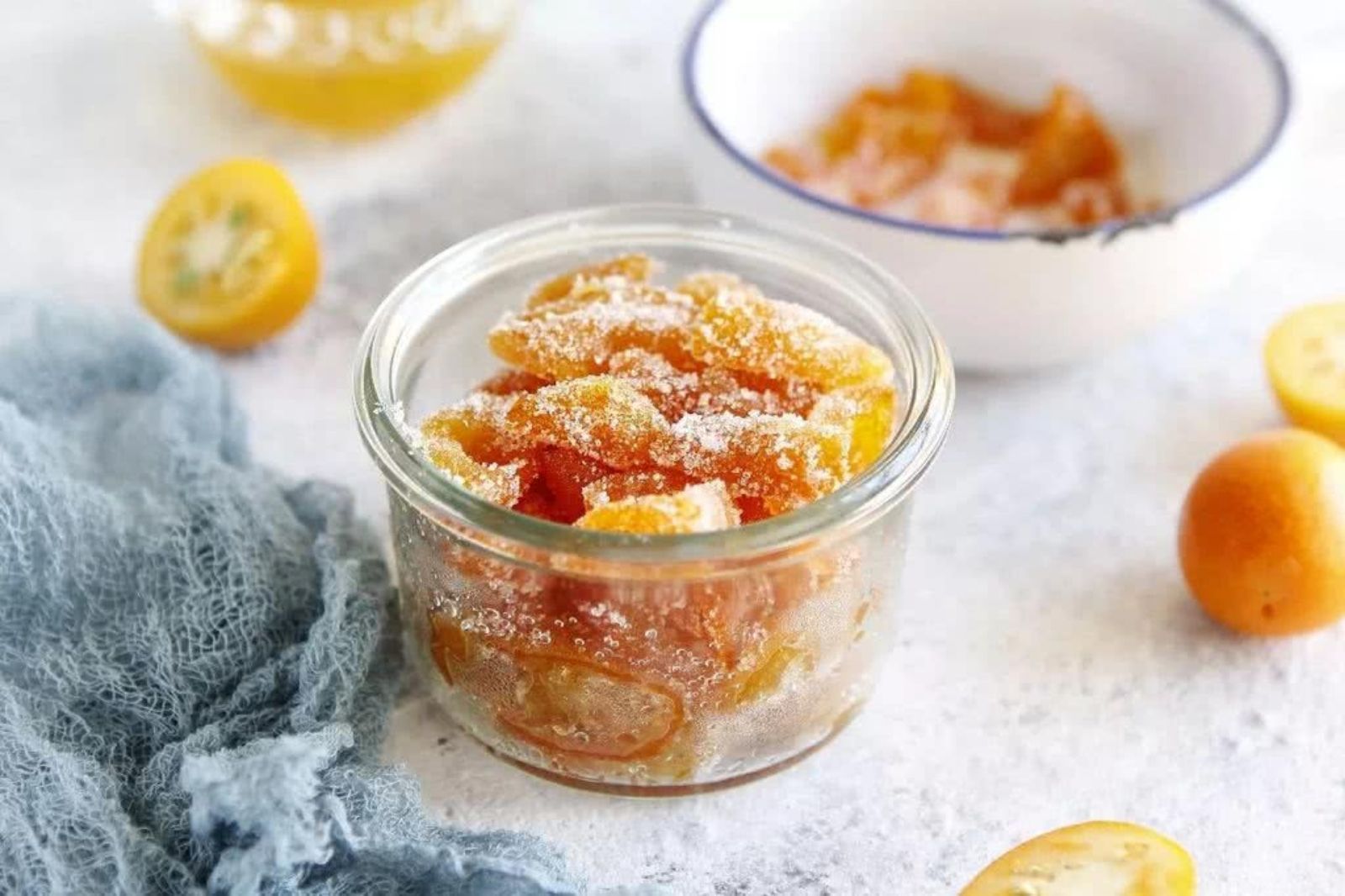
When storing, keep the jam in a sealed glass jar placed in a cool, dry place. Avoid exposing the jam to air for too long to prevent liquefaction or mold.
Photo: For long-term storage, keep the jam in glass jars
Hue kumquat jam is not just a dish but also a symbol of skill, meticulousness, and the refined soul of the ancient capital's people. From golden-ripe kumquats in the garden, through the skillful hands of artisans, this sweet treat has become an indispensable part of Vietnamese Tet culture. Try savoring a piece of kumquat jam beside a warm cup of tea once, and you will fully experience the flavor and breath of Hue during spring days.