Hue Salt Rice: A Rustic Flavor Creating the Culinary Essence of the Ancient Capital
Central
Thua Thien Hue
Sovaba.travel
Updated at: 24/09/2026
1. What is Hue Salt Rice?
Hue salt rice is a dish of white rice served with meticulously prepared salts made from pure white coarse salt (usually sea salt cooked in glazed earthenware jars to form snowflake-like coarse grains), combined with natural ingredients such as vegetables, meat, fish, seafood, and spices. Despite its name "salt rice", this dish is far from monotonous, concealing complexity in its preparation, presentation, and appreciation. Categorized as the "top delicacy" during the Nguyen Dynasty, this royal delicacy was recognized during the reign of King Minh Mang (in 1825).
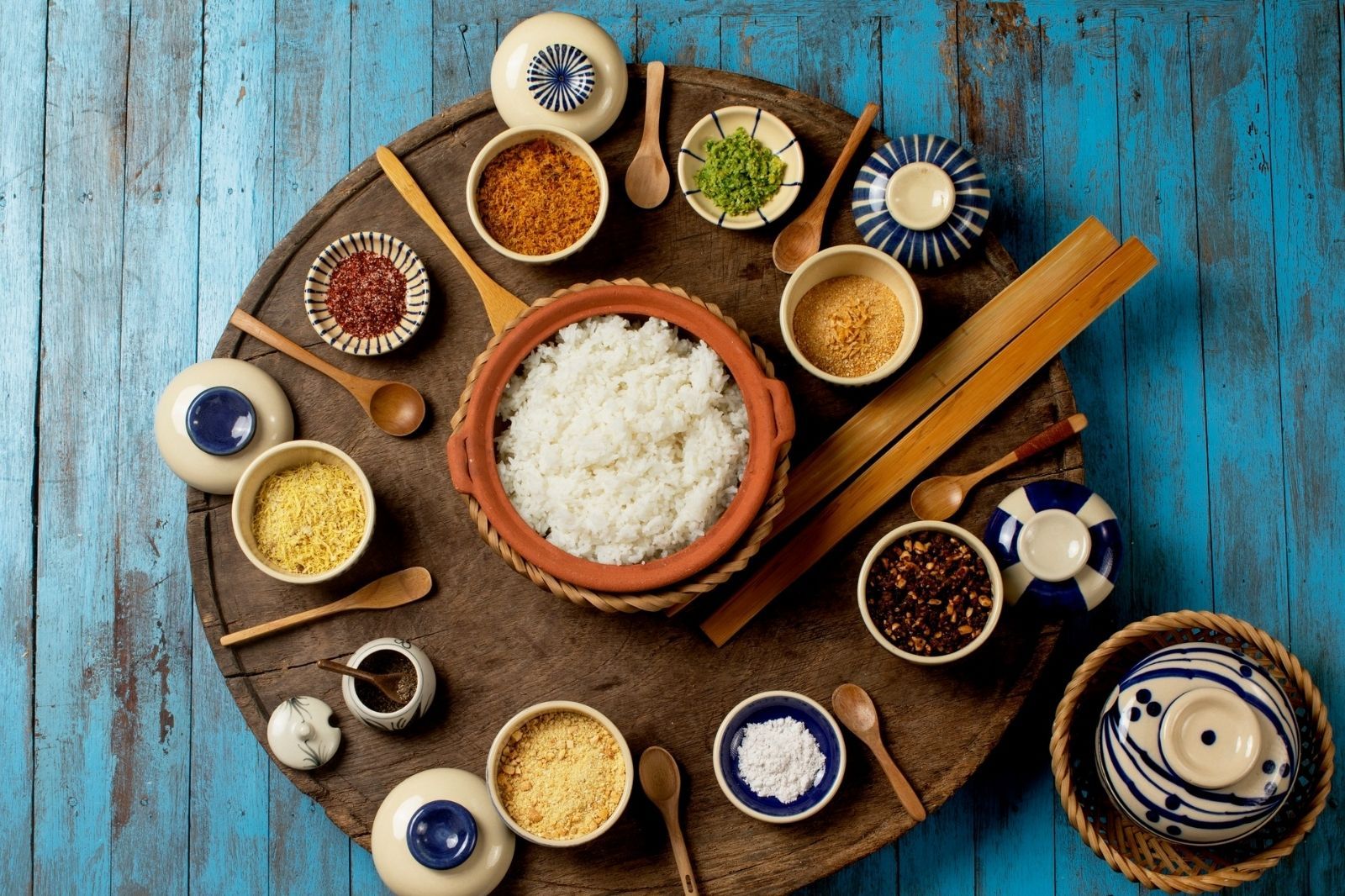
Photo: Salt rice is a dish classified under Royal Cuisine
2. Origin and Cultural Significance
Hue Salt Rice is believed to have originated during the reign of King Minh Mang (1825), when the rustic salt crystal was elevated to a main ingredient in royal culinary masterpieces. Since then, salt has transcended being a simple seasoning to become the "soul" of cuisine, closely linked to the philosophy of yin – yang, cold – heat in Vietnamese food culture. Hue people are refined enough to adjust flavors according to the weather: the rainy season favors spicy, salty, and sweet salts to keep the body warm, while the summer prioritizes sour and bitter salts to reduce body heat and dispel the sweltering heat.
Going beyond its role as a dish, Hue salt rice is also a cultural symbol, embodying the skillfulness and finesse of the women of the ancient capital. From humble white salt grains, they prepare colorful, flavorful small bowls of salt, enriching the Hue dining tray.
3. Distinctive Salts of Hue Salt Rice
Hue Salt Rice stands out for its variety of salts, divided into three main categories:
Meat salt: Includes pork, beef, chicken, goat salt, etc. For example, lemongrass and fermented shrimp paste salt combines minced pork, lemongrass, chili, and Hue shrimp paste, bringing a savory, rich, and aromatic flavor—a royal tribute dish for the king.
Fish salt: Prepared from climbing perch, goby, scad, mackerel, etc., such as krill salt made from dried sea krill, roasted until fragrant, and pounded finely to create a mild salty taste suitable for dipping fruit or eating with hot rice.
Plant-based salt: Includes sesame salt, peanut salt, pepper salt, chili salt, starfruit salt, etc. Each type has its own distinct flavor: sesame salt is rich and nutty, green chili salt is fiery hot, and golden swallow salt (ginger salt) is vibrant yellow.
Each group of salt embodies all five basic tastes: sweet, salty, sour, spicy, and bitter, processed using methods such as roasting, braising, frying, mixing, and simmering to achieve perfect balance.
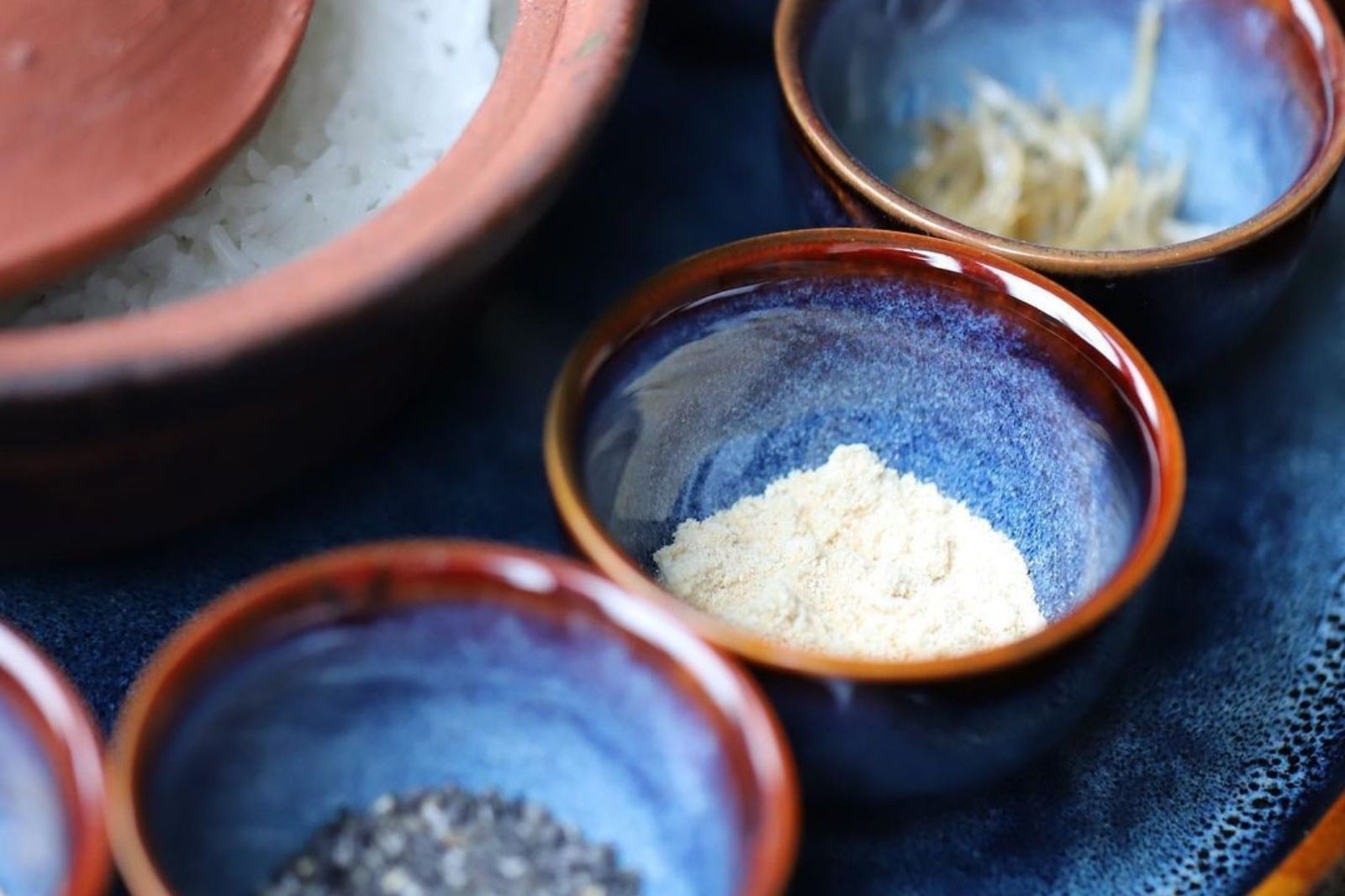
Photo: Salt is divided into 3 main categories
4. How to Prepare Hue Salt Rice
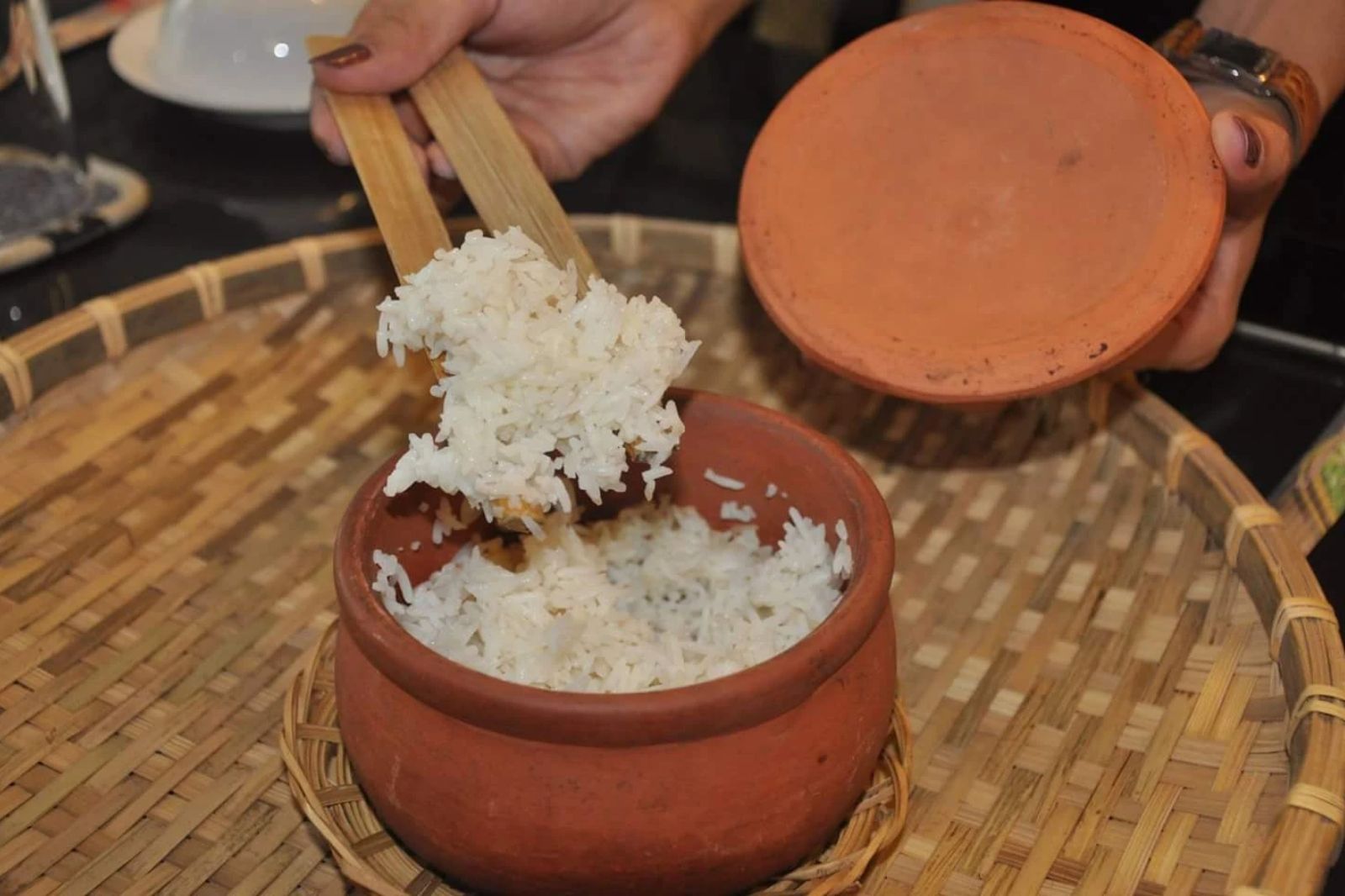
The people of Hue have a unique way of making salt rice, showing refinement right from the selection of ingredients. The rice is usually cooked in clay pots from Phuoc Tich pottery village – famous for durable heat-retaining pots that diffuse a natural aroma. The rice used is typically Nang Thom or premium plain rice, carefully husked so the grains retain their bran layer without chipping. As a result, the cooked rice is fluffy, evenly cooked, sticky, and fragrant without being mushy. The salt is also not ordinary salt, but top-grade salt from Phu Vang, Lang Co, or Sa Huynh, baked in earthenware jars at high temperatures to yield pure white crystals with a mild saltiness and a sweet aftertaste.
Photo: Rice must be cooked in clay pots from Phuoc Tich pottery village
The laboriousness of Hue salt rice lies in its elaborate preparation, transforming salt into numerous varieties with rich flavors. Green chili salt is pounded with coarse salt, sometimes roasted over fire to enhance the pungent spicy aroma. Lemongrass and shrimp paste salt combines Hue shrimp paste with minced pork, stir-fried until golden with lemongrass and chili, creating a distinctly savory and rich flavor. Krill salt is even more delicate: salt grains are lightly roasted until golden, mixed with dried sea krill, and finely pounded into a savory yet gently sweet taste. Notably, Hue people adjust recipes according to the season: the rainy season leans toward spicy, salty, and sweet flavors to keep warm; summer favors sour and bitter tastes to cool down and balance yin and yang.
It is this painstaking effort that elevates every bowl of Hue salt rice beyond a simple meal into a crystallization of culinary culture, reflecting the meticulous and refined spirit inherent to the people of the ancient capital.
5. Presentation and Enjoyment
Hue Salt Rice is not only delicious in flavor but also beautiful in presentation. Small bowls of salt are placed on high-quality ceramic plates with elegant patterns, arranged in a flower petal pattern around the pot of white rice in the center, creating a vibrant dining tray: green chili salt, orange-yellow shrimp salt, brown lemongrass salt, black pepper salt, and more.
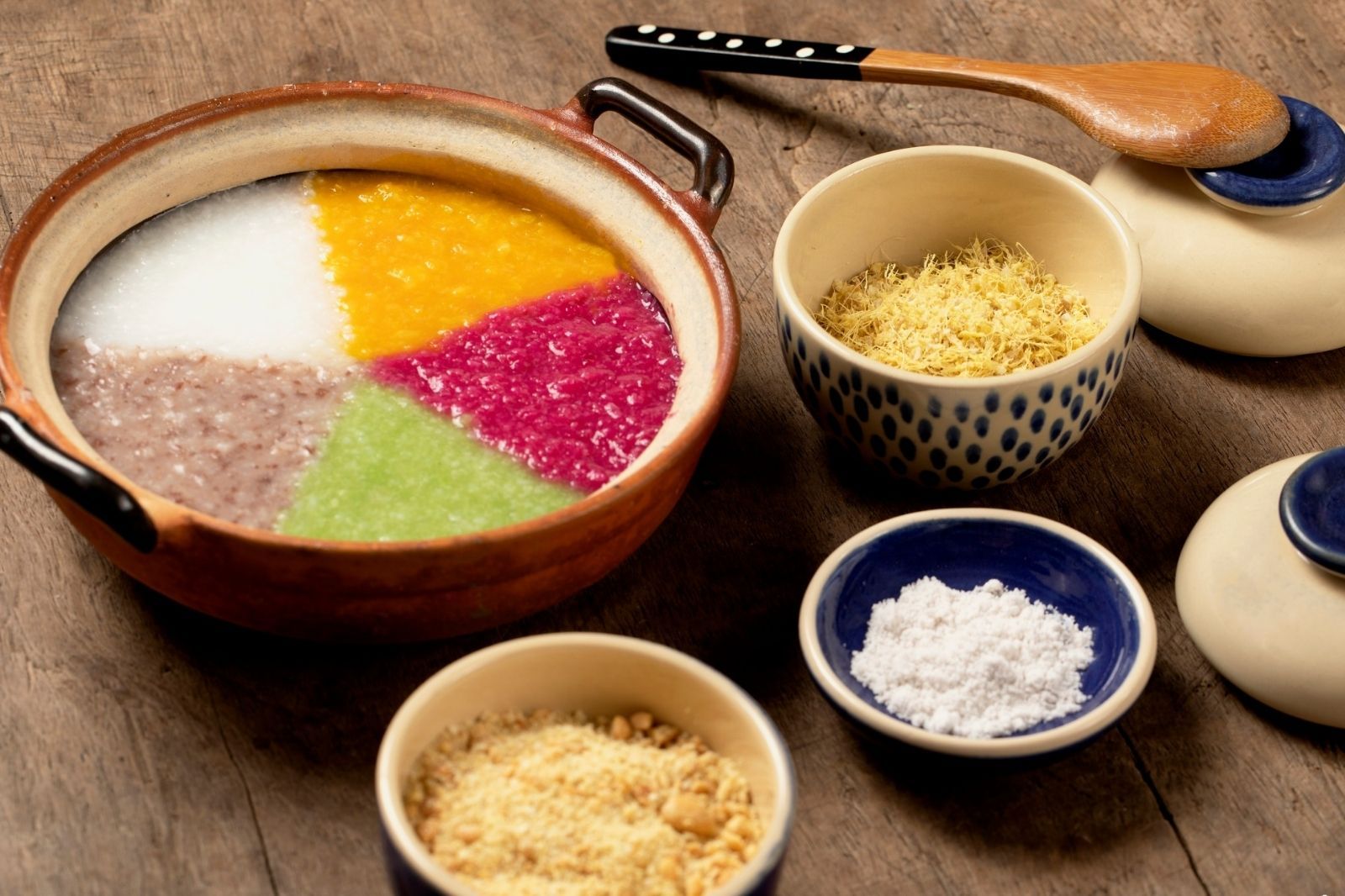
Diners should maintain an elegant and slow manner to fully appreciate the dish's sophistication. Hue Salt Rice is often accompanied by five-color porridge, pressed sticky rice, or dipped with fruits like pomelo and mango to soften the saltiness. Ginger tea or Chuon village rice wine serves as the ideal beverage, adding poetic charm to the experience.
Today, Hue Salt Rice is no longer as common as it once was and faces the risk of fading away. Only a few artisans, such as Ms. Hoang Thi Nhu Huy, still preserve the traditional recipes. Visitors wishing to savor this dish need to book several days in advance at royal restaurants or seek out specialty eateries in Hue. A complete salt rice tray featuring 22 to 27 dishes can cost a few million VND, but the cultural value and culinary experience it offers are priceless.
Photo: Salt rice served with five-color porridge
Hue Salt Rice is not just a dish, but a work of art crystallizing the skill, sophistication, and soul of the Ancient Capital's people. From simple white salt grains, Hue people created a brilliant royal meal infused with yin-yang philosophy and regional culture. If you have the chance to visit Hue, do not miss the opportunity to savor this "top delicacy" dish to fully experience the culinary essence of the ancient capital.