Visiting Phuoc Tich Pottery Village in Hue: A Rustic Beauty of Over 500 Years Old

Central

Thua Thien Hue

Sovaba.travel

Updated at: 24/09/2026

1. History of Phước Tích Village

Phuoc Tich Village was established around 1470 under the reign of King Le Thanh Tong, associated with the footsteps of General Hoang Minh Hung after the victory over Champa. He and the local people reclaimed wasteland and established the first hamlet, naming the village Cam Quyet. Over various periods, the village's name successively changed to Phuoc Giang, Hoang Giang, and during the reign of King Gia Long, it was officially named Phuoc Tich – meaning “accumulating blessings for generations”. Additionally, the village was affectionately called “Ke Dooc” due to its unique, durable pottery products that were once famous throughout the imperial capital.

Over half a millennium has passed, and Phuoc Tich still preserves its ancient soul in every timber frame house, moss-covered communal house, pagoda, and shrine, and especially in its over 500-year-old traditional pottery craft. With special cultural and historical value, in 2009, Phuoc Tich was recognized as a National Relic, becoming the second ancient village in Vietnam after Duong Lam (Hanoi). Visiting here, tourists not only step into the ancient space of an old Vietnamese village, but also feel the peaceful pace of life blended with the essence of traditional handicrafts.
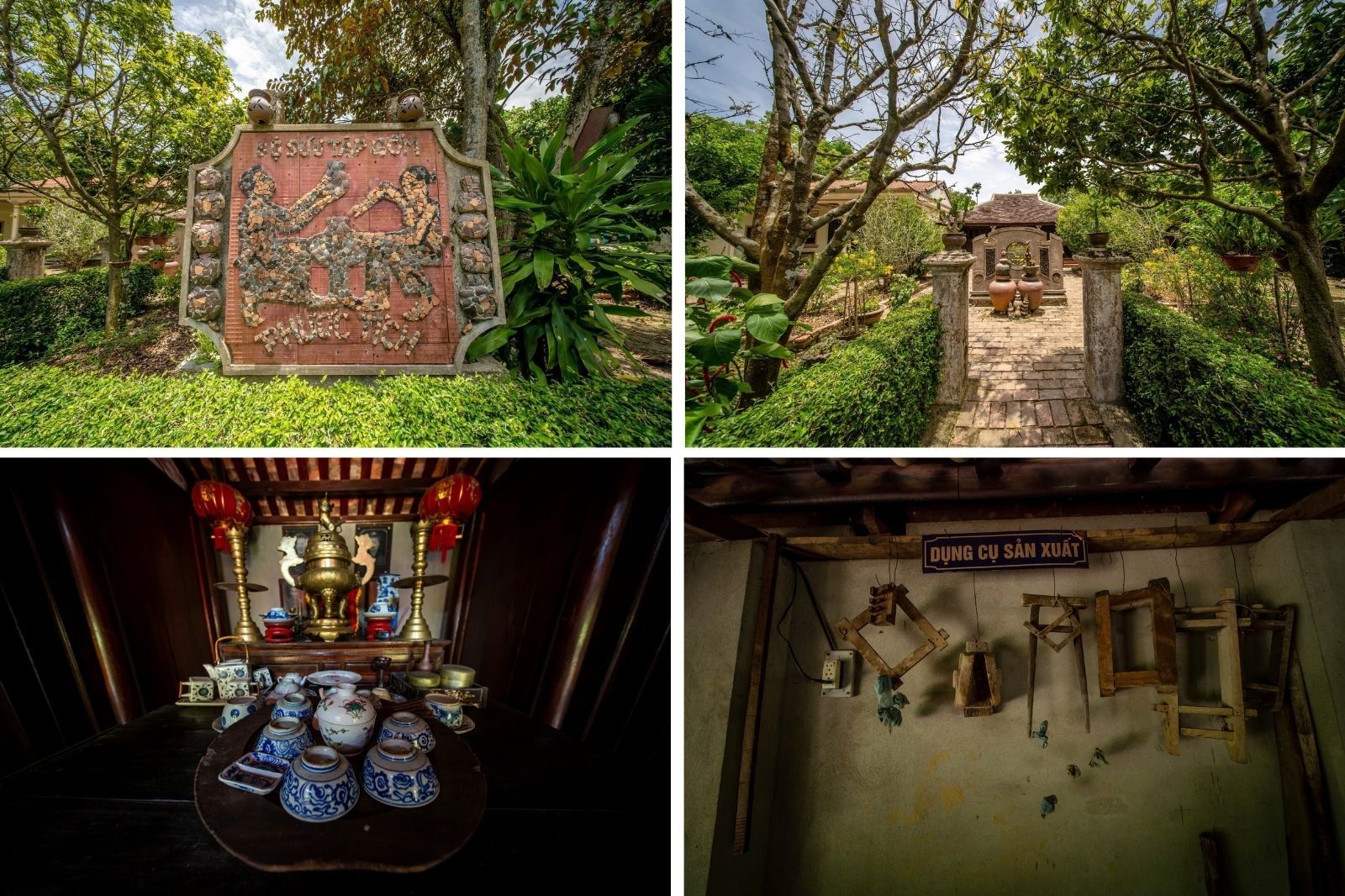
Phuoc Tich pottery village became one of the few ancient villages recognized as a National Relic
Photo: Phuoc Tich pottery village became one of the few ancient villages recognized as a National Relic

2. Traditional pottery craft in Phước Tích Village

Phuoc Tich pottery craft was born along with the establishment of the village and reached its glorious peak in the 18th – 19th centuries. During that period, local pottery was not only associated with daily life but was also chosen as "pottery presented to the King", supplying the Nguyen dynasty with exquisite products such as clay pots, lime pots, jars, and urns.

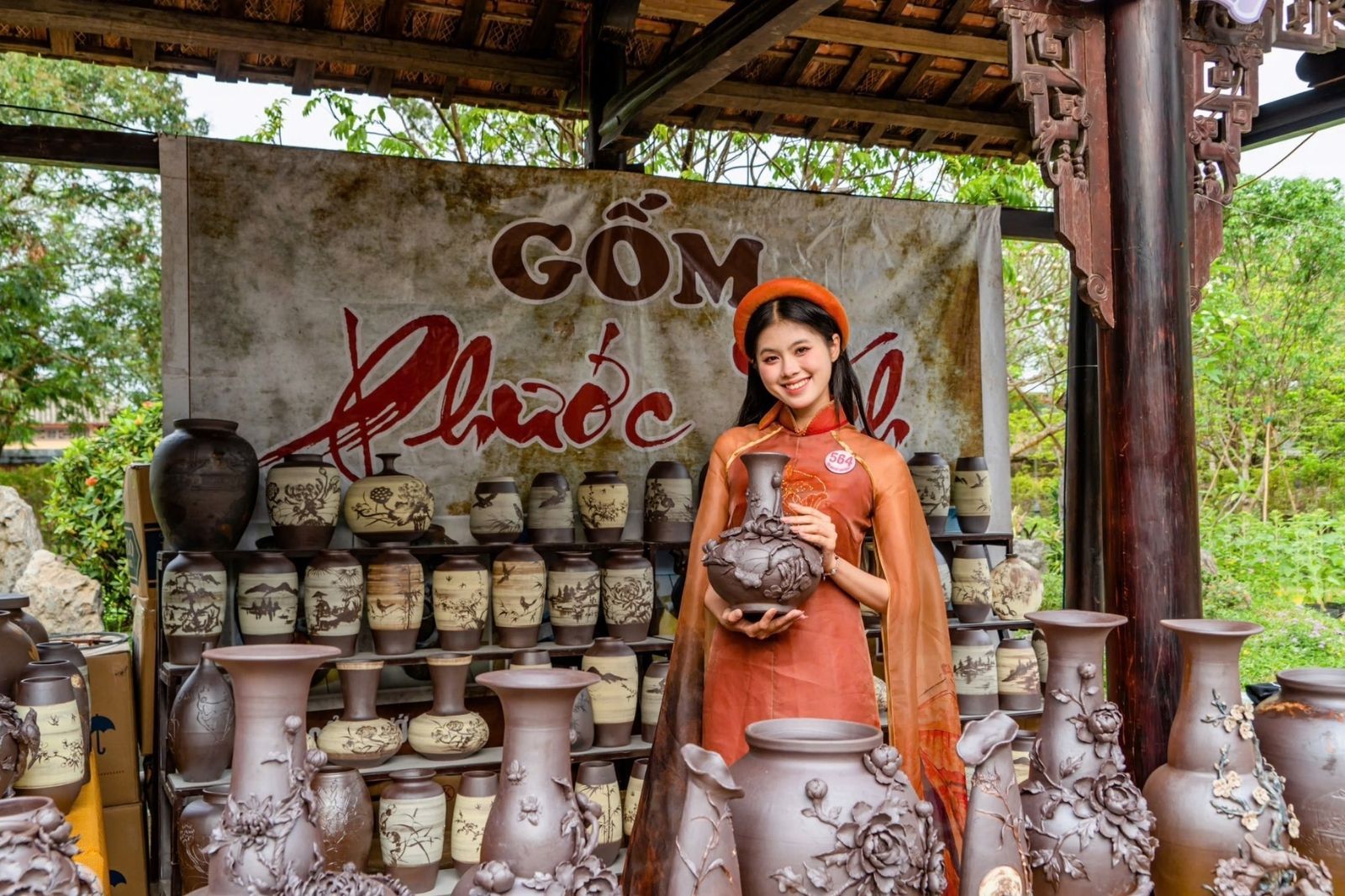
The highlight of Phuoc Tich pottery is its rustic, unglazed beauty, made from clay retrieved from the O Lau River. The products have a thick, solid body with a natural dark brown color, exuding simplicity just like the soul of the Hue people. Patterns are simply carved as scratched lines, concentric circles, or minimalist geometric shapes, yet they create an authentic and charming appeal.

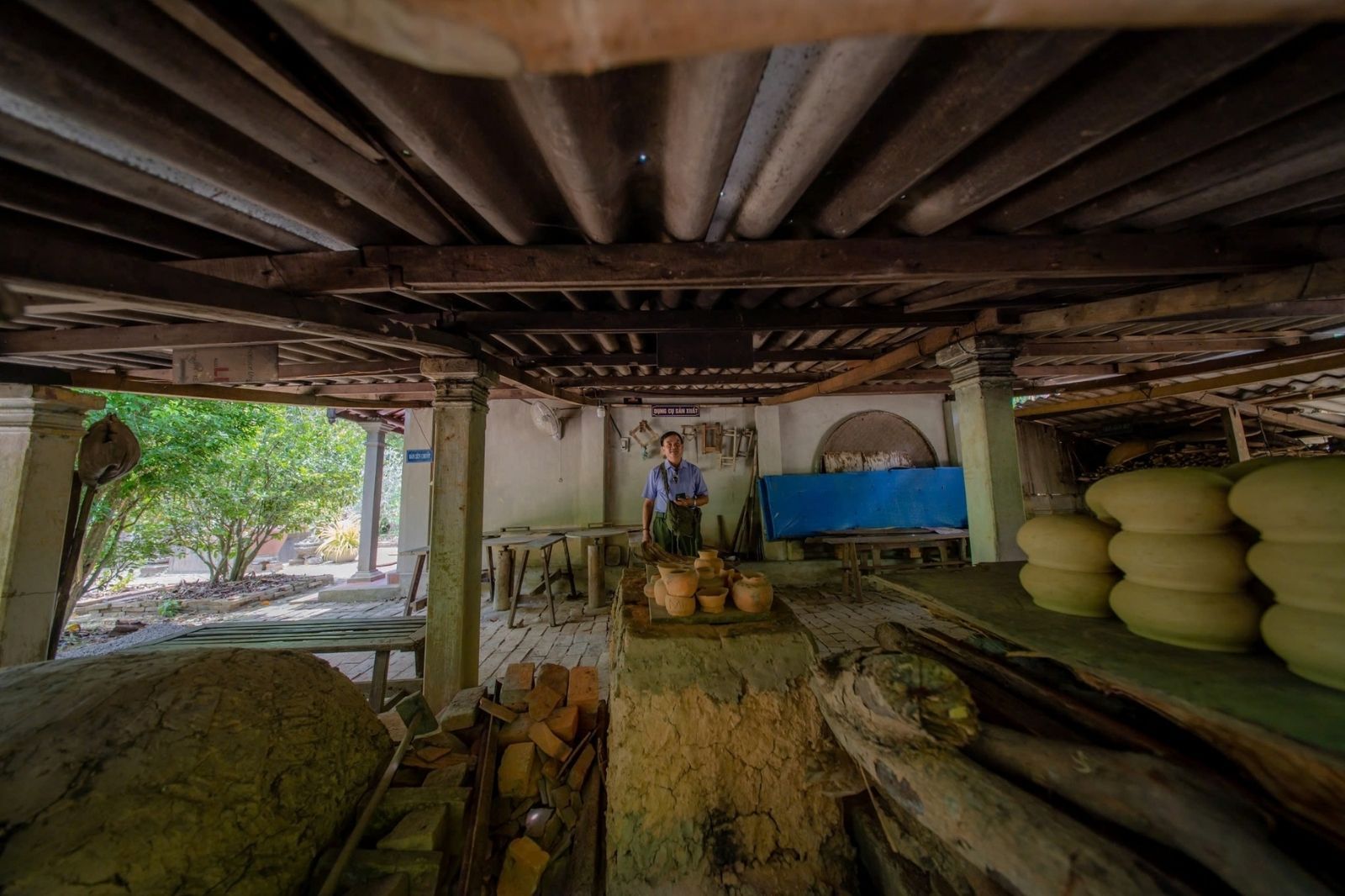
Pottery workshop in Phuoc Tich village
Photo: Pottery workshop in Phuoc Tich village  

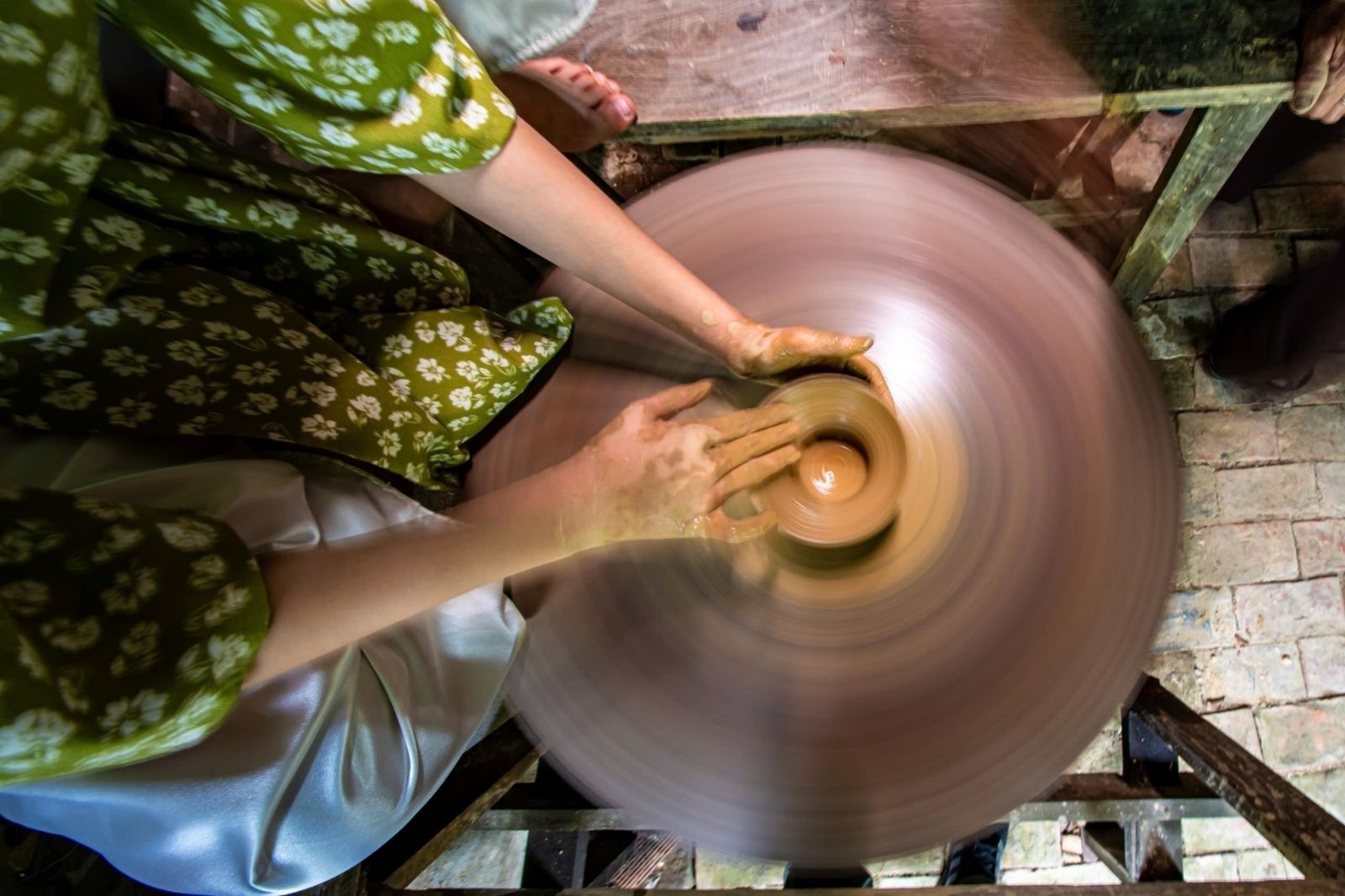
In particular, Phuoc Tich pottery preserves a unique straw-firing technique, rarely seen in other craft villages. Each layer of clay after being kneaded is manually shaped on the potter's wheel, dried, and then fired in straw fire – a dedicated process requiring the artisan's dexterity. Although it experienced disruptions due to war and economic hardships, the pottery craft here has been revived thanks to the Hue Festival and the persistent efforts of dedicated artisans such as Mr. Le Trong Dien and Mr. Luong Thanh Hien.

Pottery being handcrafted on a potter's wheel
Photo: Pottery being handcrafted on a potter's wheel 

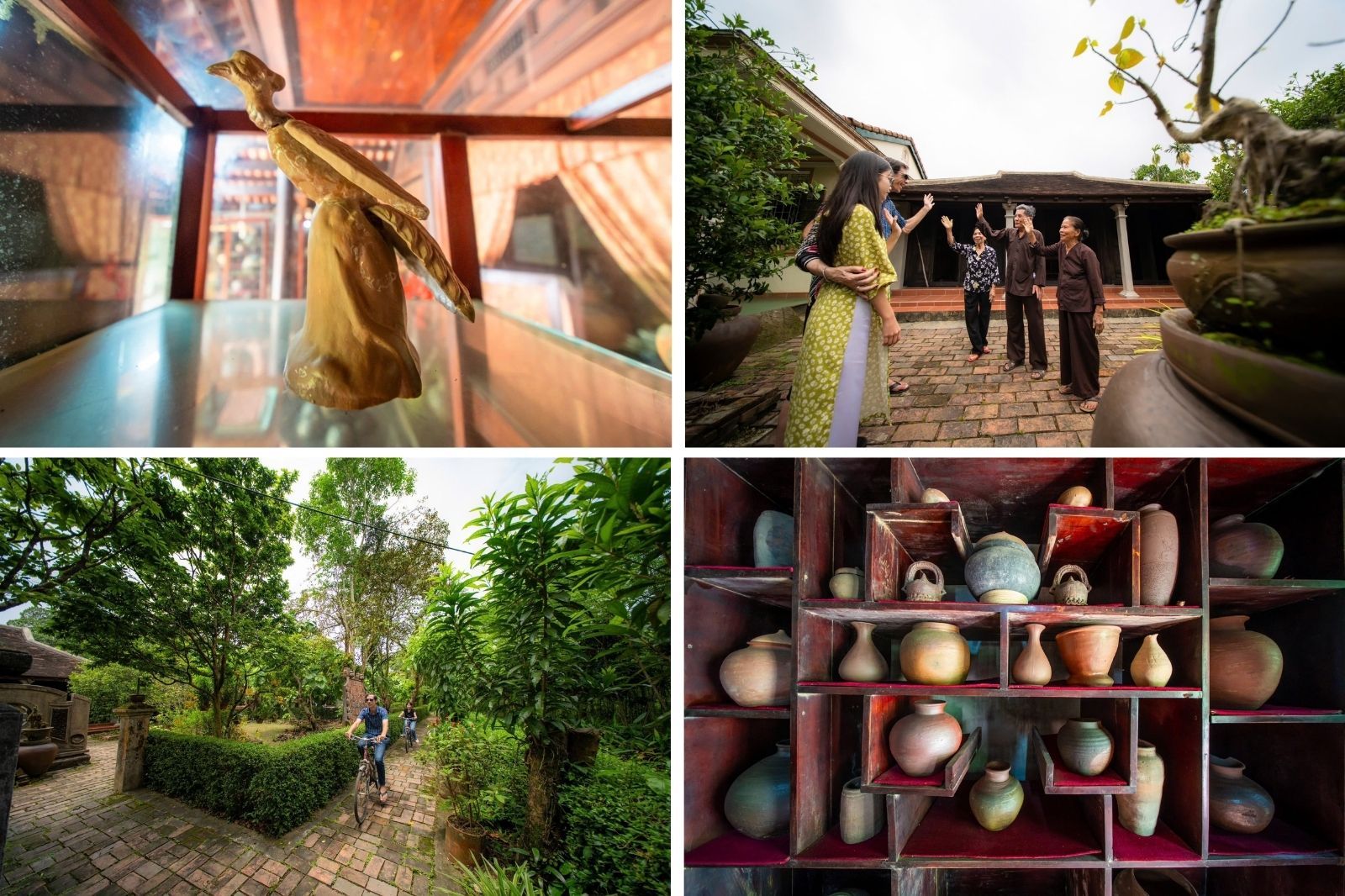
Today, only a few pottery kilns remain active, mainly serving tourism and preservation. Among them, Mr. Le Trong Dien's Pottery Museum holds many precious artifacts ranging from small pots, cups, jars, and vases to traditional pottery tools. Meanwhile, Mr. Luong Thanh Hien's pottery workshop has become an exciting experiential destination where visitors can directly witness and even try their hand at the over 500-year-old pottery craft.

3. Architectural and cultural beauty of Phước Tích Village

Phuoc Tich today still fully preserves the marks of an ancient village over 500 years old. Most prominent are more than 30 timber frame houses, 12 of which have existed for 150 – 200 years. These three-compartment, two-wing houses with mossy tiled roofs are intricately carved with dragons and phoenixes, blending with spacious green gardens to create a peaceful, uniquely Hue countryside scene. Instead of concrete fences, locals choose neatly trimmed mock-orange hedges to divide properties, making them both simple and close to nature.

Not only boasting ancient architecture, Phuoc Tich is also a place that preserves many unique religious works. The Cay Thi Shrine with an ancient gold apple tree over 600 years old worships the goddess Ponagar, the serene Phuoc Bửu Pagoda, and the Hien Linh Shrine with its remaining Yoni symbol—all are vivid proof of the cultural intersection between the Viet and Cham peoples. Clan ancestral houses also contribute to creating historical depth and spiritual identity for the village.

Surrounding Phuoc Tich is the winding, gentle O Lau River, which brings alluvium and precious clay for the pottery craft while serving as a place closely tied to the lives and memories of the villagers. Ancient river docks such as the Cua tree dock and the Banyan tree dock have now become stops where visitors return to feel the peace and capture deeply nostalgic photos.

Visitors will feel peace and tranquility when coming here
Photo: Visitors will feel peace and tranquility when coming here 

4. Travel experiences in Phước Tích Village

Coming to Phuoc Tich, visitors not only admire a peaceful ancient village but also immerse themselves in the typical cultural, artistic, and culinary life of the Hue countryside. Each experience here brings a feeling that is both fresh and familiar, so that when leaving, you will carry along the lingering memories of a land filled with warmth and hospitality.

  • Exploring the village and discovering culture: A cycling trip around small, charming brick-paved roads will take you past ancient timber frame houses, communal houses, shrines, and historical relics dating back hundreds of years. In particular, artisan Le Trong Dien's pottery museum is a must-visit stop, preserving precious artifacts and telling the story of a craft once known as "pottery presented to the King".
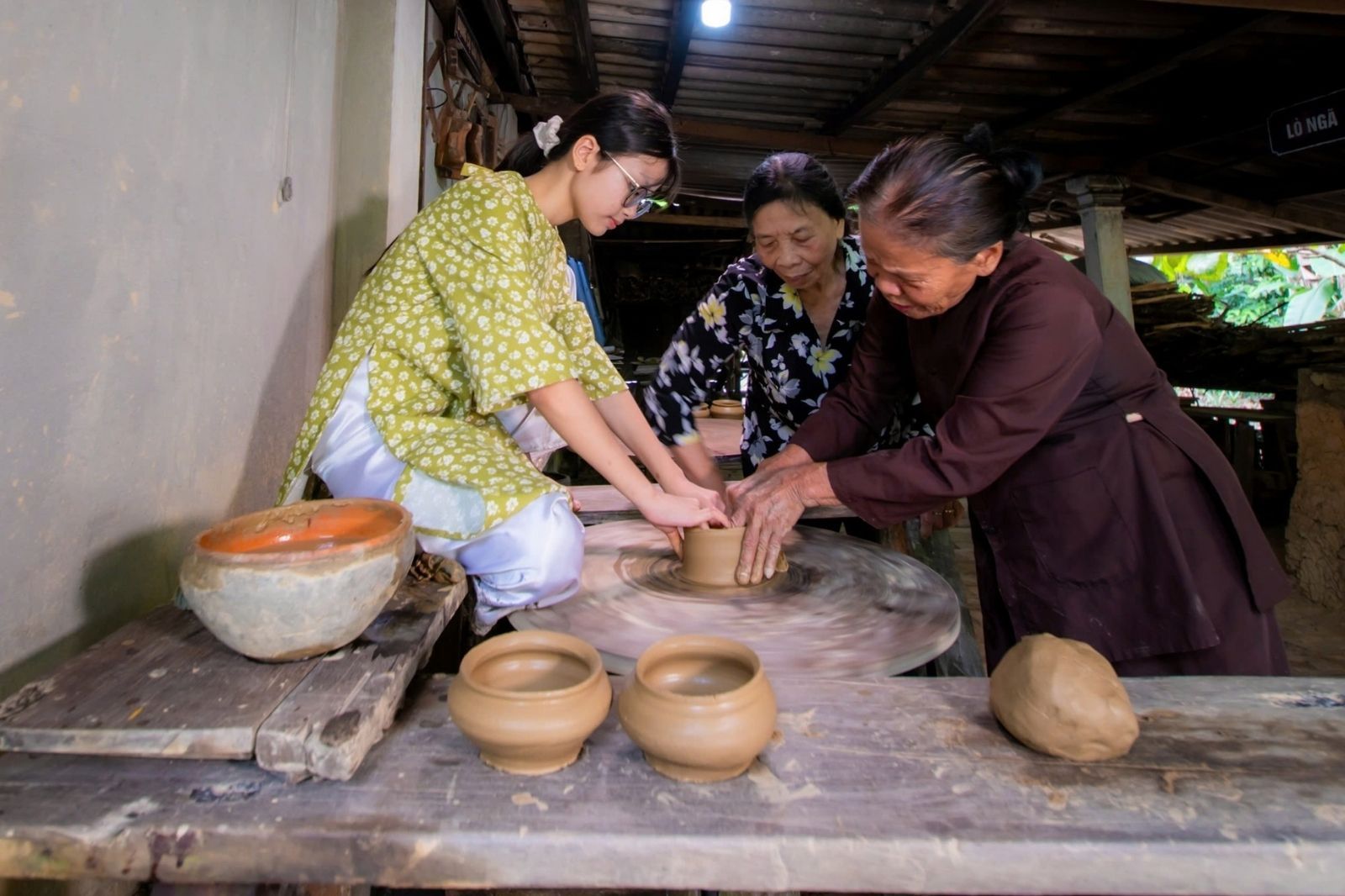
  • Pottery making experience: Under the guidance of artisans, you can directly knead clay, shape it on the potter's wheel, and feel the meticulousness and skill in every step. Completing your own product is also when you take home a unique souvenir containing both experiences and memories.
  • Enjoying local cuisine: After the exploration journey, what could be more delightful than stopping by to enjoy rustic Hue dishes such as Banh Khoai (crispy pancakes), Bun Bo (Hue beef noodle soup), or sweet soups (Che). During the Hue Festival, the village also resounds with rice-pounding chants (Ho Gia Gao) and traditional cultural activities, making the atmosphere even more vibrant and rich in countryside character.
  • Checking in at the lotus pond and ancient trees: The fragrant lotus pond, along with hundreds-of-years-old gold apple trees (Cay Thi) and banyan trees, are ideal photo spots for photography lovers. Especially in the early morning when golden sunlight pierces through the foliage and reflects on the sparkling O Lau River, Phuoc Tich appears in pristine beauty, bringing an extraordinarily soothing and peaceful feeling.
Pottery making experience with local people
Photo: Pottery making experience with local people 

5. How to get to Phước Tích Pottery Village

Phuoc Tich Village is located about 35-40 km north of Hue city center. You can travel by:

  • Motorbike or car: From Hue, take Ly Thai To Street, cross National Highway 1A, turn onto National Highway 49B to Phong Hoa Commune. The journey takes about 40 minutes.
  • Bus: There are bus routes from Hue to Phong Dien, after which you can take a motorbike taxi (xe om) or taxi to the village.
  • Tour: Many travel agencies in Hue organize the "Ancient Fragrance of the Old Village" tour, combining visits to Phuoc Tich and other destinations.

Notes when visiting: 

  • Ideal time: You should visit Phuoc Tich in spring (February-April) or summer (May-August) to avoid hot weather or storms.
  • Attire: Wear comfortable clothes and easy-to-walk shoes as you will be walking or cycling a lot.
  • Prepare cash: Some services in the village do not yet support card payments.
Phuoc Tich pottery village has nowadays become a famous tourist destination
Photo: Phuoc Tich pottery village has nowadays become a famous tourist destination 

Phuoc Tich Village is not only a tourist destination, but also a journey back to the roots of Vietnamese culture. The over 500-year-old ancient village offers visitors the opportunity to discover a national heritage rich in historical value, experience traditional pottery craft, and hand-craft products bearing their own mark. The peaceful space with ancient timber frame houses, green gardens, and the poetic O Lau River helps you escape the hustle and bustle of the city and find peace in your soul. In particular, the religious monuments here also reflect the unique cultural intersection between Vietnamese and Cham cultures, leaving many unforgettable impressions. If you are looking for a place to "hide" from the hectic pace of life and touch the soul of the Vietnamese countryside, Phuoc Tich is the ideal destination. Plan to visit this ancient village on your upcoming trip to Hue to fully feel its rustic, simple yet vibrant beauty.

Follow Sovaba Travel to discover more interesting things about the culture, people, and unique destinations of Hue that you shouldn't miss.

Loading......

Featured destinations