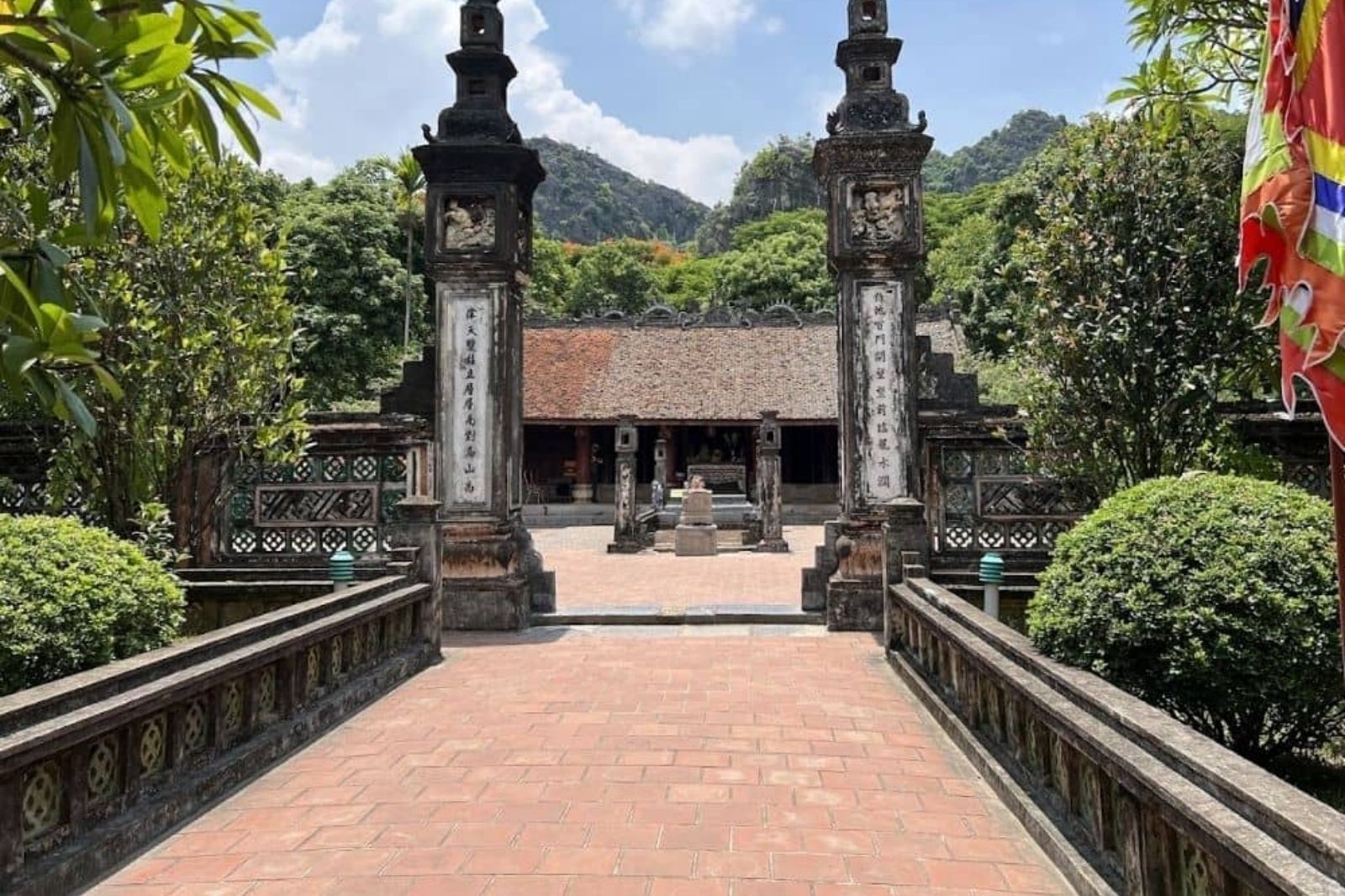
King Le Dai Hanh Temple: Architectural Masterpiece and Heritage of the Early Le Dynasty

Northern

Ninh Binh

Sovaba.travel

Updated at: 24/09/2026

1. Where is King Le Dai Hanh Temple?

King Le Dai Hanh Temple (also known as King Le Dai Hanh Temple or Ha Temple) is located in Truong Yen Ha village, Truong Yen commune, Hoa Lu district, Ninh Binh province. This is part of the special national relic complex Hoa Lu Ancient Capital, situated about 7km from Ninh Binh city center and about 100km south of Hanoi. The temple sits adjacent to the Sao Khe River with favorable feng shui, facing the central square of the ancient capital and backed by a protective moat at the foot of Dia Mountain. Notably, the temple is only about 300 meters from King Dinh Tien Hoang Temple, forming an adjacent complex of monuments that is convenient for visitors to combine during their tour.
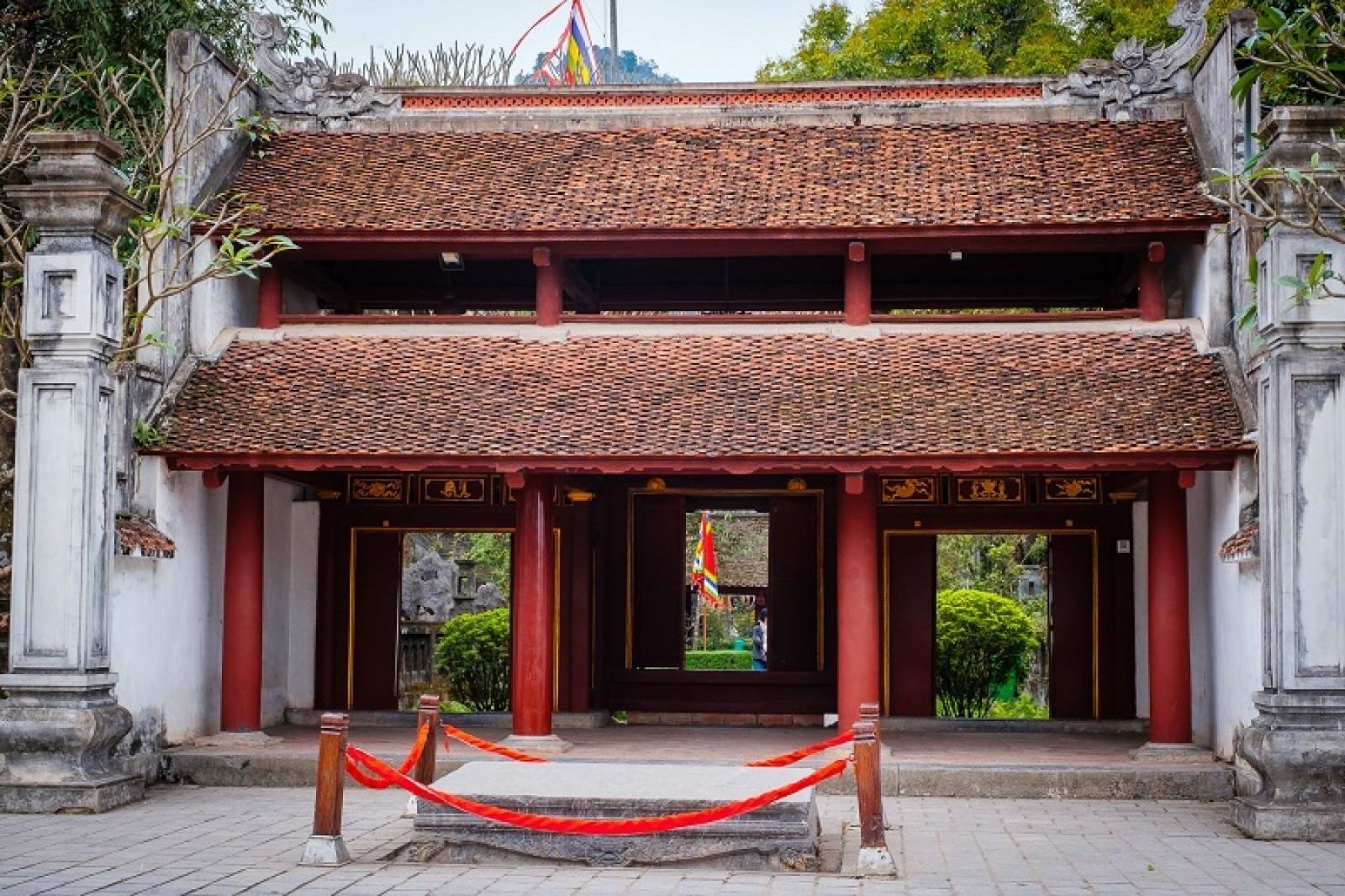
Outer Nghi Mon Gate at King Le Dai Hanh Temple
Photo: Outer Nghi Mon Gate at King Le Dai Hanh Temple  

This location was once the Eastern Citadel of the ancient capital of Hoa Lu, now part of the ancient village of Truong Yen – an area rich in historical and cultural significance. To get here, you can travel by bus from Giap Bat or My Dinh bus stations (Hanoi) for about 70,000 – 100,000 VND, taking about 2 hours. If traveling by motorbike or private car, take the Phap Van – Cau Gie expressway to reach Ninh Binh quickly.
2. History of King Le Dai Hanh Temple and the legacy of the Former Le Dynasty

The history of King Le Dai Hanh Temple is closely linked to the Early Le Dynasty (980-1009), an important period in Vietnamese history after King Dinh Tien Hoang unified the country. The temple was built on the former grounds of the royal palace of the Early Le Dynasty, as evidenced by archaeological excavations in 1998 that uncovered the foundations of a 200m² palace in the southern part of the premises.

King Le Dai Hanh (real name Le Hoan, 941-1005) was the first king of the Early Le Dynasty, famous for defeating the Song invaders in 981 and pacifying Champa, bringing peace and stability to Dai Co Viet. He ascended the throne following the death of King Dinh Tien Hoang, married Empress Duong Van Nga, and played a major role in consolidating the foundations of Vietnam's first feudal state. Although short-lived, the Early Le Dynasty left a profound mark: constructing a fortified capital at Hoa Lu, developing agriculture, and expanding the territory.

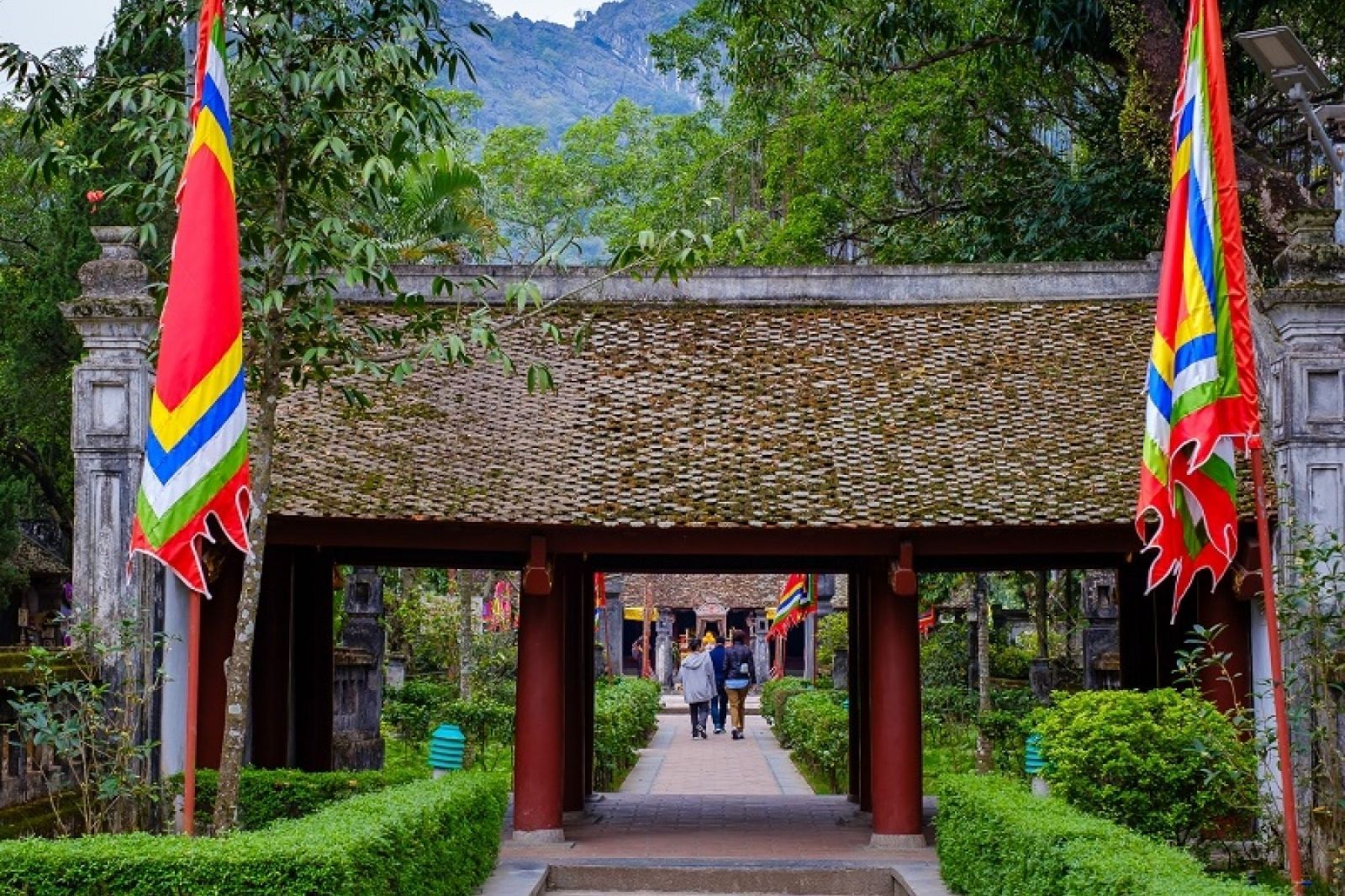
Inner Nghi Mon Gate
Photo: Inner Nghi Mon Gate 

The temple was originally constructed during the Ly Dynasty (11th century), but the current architecture mainly dates from the Later Le Dynasty (17th century), with major renovations during the Nguyen Dynasty. In 1606, Duke Bui Thoi Trung commissioned a stele commemorating the rebuilding of the temple. In 1898, local villagers further repaired the stone thresholds and raised the foundation. The temple was recognized as a national historical and cultural relic in 1962, and became part of the Trang An Landscape Complex – a UNESCO World Heritage Site in 2014.

The main sanctuary worships King Le Dai Hanh, Empress Duong Van Nga, King Le Long Dinh (his son), Princess Le Thi Phat Ngan (his daughter and matriarch of the Ly Dynasty), and generals such as Pham Cu Luong. These figures represent the smooth transition of power from the Dinh to the Early Le and then the Ly Dynasty, showcasing the continuity of national history.

3. Architecture of King Le Dai Hanh Temple

The architecture of King Le Dai Hanh Temple is a masterpiece of the Later Le period, built in the layout style of "internal Gong, external Guo" (shaped like the character "Gong" inside and "Guo" outside). Facing east, the temple offers a mystical space that harmoniously blends nature with the art of fine carving.

  • Exterior and Entrance: From the outer Nghi Mon gate, visitors walk along a brick-paved main pathway flanked by impressive rockeries: on the left is the 3m-high "dancing phoenix", and on the right is the "crouching tiger" beneath an ancient Streblus asper tree over 300 years old. Passing through the 3-compartment inner Nghi Mon gate, visitors reach two symmetrical flower gardens featuring the "Phoenix Nesting" and "Long Ma (Dragon-Horse)" rockeries. The dragon yard features a monolithic blue stone royal bed with intricate carvings.
  • Interior: The temple comprises three halls: Bai Duong (Front Hall, 5 compartments, displaying gold-lacquered plaques such as "Truong Xuan Linh Tich"), Thieu Huong (Incense Burning Hall, worshipping Pham Cu Luong and the four pillars of the Early Le court), and Chinh Cung (Main Sanctuary, 5 compartments, worshipping King Le Dai Hanh in the center, Duong Van Nga on the left, Le Long Dinh on the right, and Princess Phat Ngan in the side wing). Wood carving art of the 17th century reached its peak here, featuring motifs of "Meeting of Dragon and Tiger", lotus flowers, dragons, and phoenixes, inspired by legends of King Le Dai Hanh's life (his mother dreamed of a lotus, wrapped him in bamboo groves, and he was protected by a tiger).

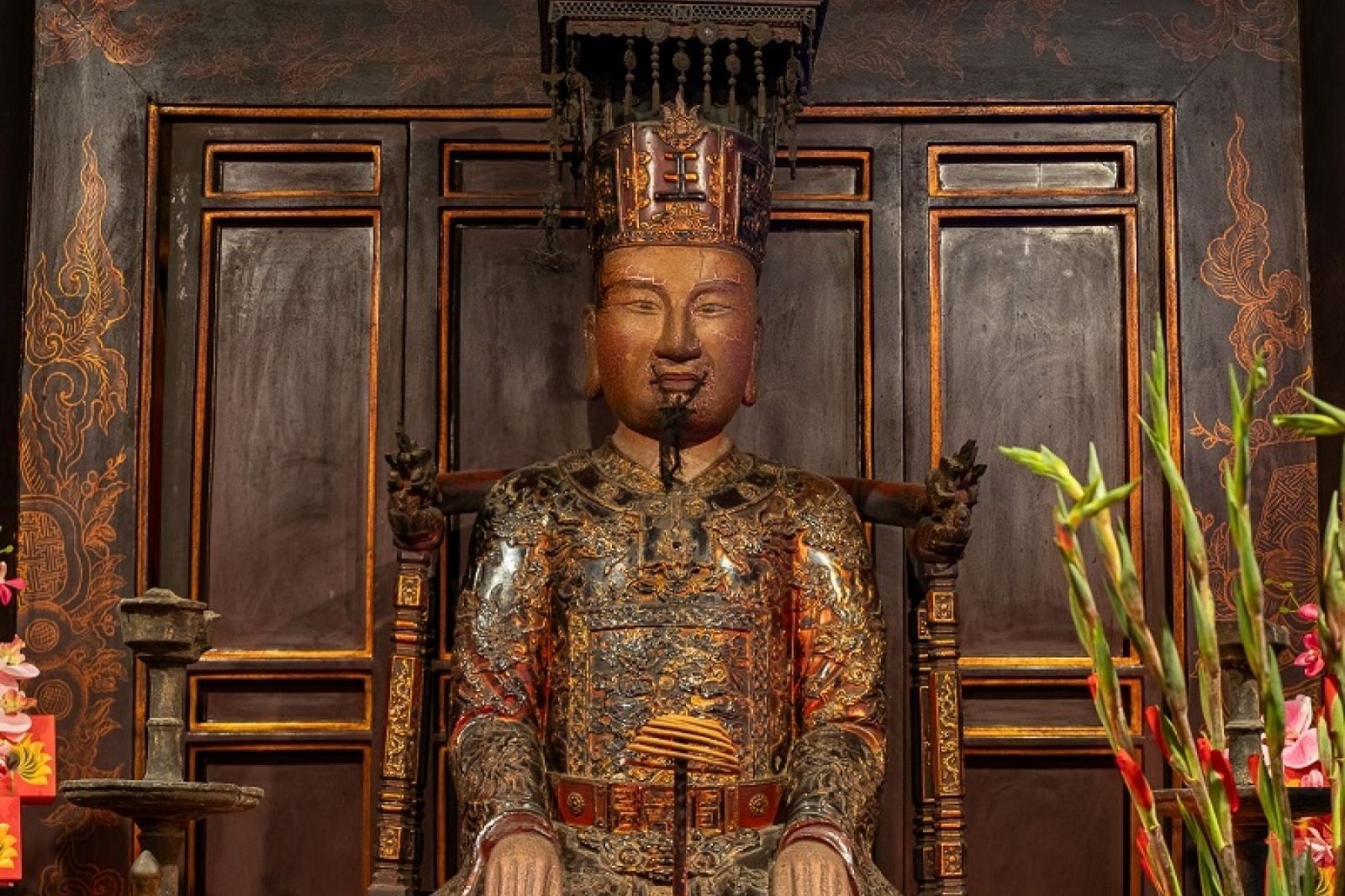
The statues display a blend of artistic styles from the Mac, Later Le, and Nguyen periods: King Le Dai Hanh appears majestic in his Binh Thien crown, Duong Van Nga appears gentle, and Le Long Dinh sits attentively. Unlike the King Dinh Temple, there are no raised stone door sills here, creating a unique distinction.

Statue of King Le Dai Hanh
Photo: Statue of King Le Dai Hanh  

4. Historical and cultural values of King Le Dai Hanh Temple

King Le Dai Hanh Temple is not merely a historical monument, but also a profound symbol of the tradition of "remembering the source when drinking water", expressing the nation's gratitude to the heroes who contributed to building and defending the country. The site honors the immense contributions of King Le Dai Hanh in protecting national independence, developing the economy, and building cultural life during the Early Le Dynasty – a dynasty that laid vital foundations for the subsequent prosperity of the Ly Dynasty, with Princess Phat Ngan serving as a historical bridge.

In terms of cultural and artistic value, the temple is a prime example of 17th-century Vietnamese folk wood carving, distinguished by refined techniques and themes linked to local legends and folk beliefs. As part of the Hoa Lu Ancient Capital complex – a UNESCO-recognized World Cultural and Natural Heritage site – the temple contributes significantly to the study of feudal architecture and Vietnamese history. The fact that Ninh Binh currently has up to 13 relics dedicated to King Le Hoan demonstrates his deep influence on the spiritual life of the Vietnamese people. Furthermore, the temple carries profound educational value, helping present and future generations better understand the nation's resilience in defending and building the country.

5. Visitor guide and tips for King Le Dai Hanh Temple

To ensure a complete and fulfilling trip to King Le Dai Hanh Temple, keep the following practical tips in mind:

  • Ideal Time to Visit: You can visit year-round, but spring (March to May) is best to avoid heavy rain and enjoy the festive atmosphere. Opening hours: 8:00 AM - 5:00 PM daily.
  • Ticket Prices and Costs: Entrance ticket: 20,000 VND/adult and high school student; 10,000 VND/primary and secondary student; free for children under 1m tall. A combined ticket for the Hoa Lu complex is available if visiting multiple sites.
  • Transportation and Accommodation: From Hanoi, buses are affordable and convenient. In Ninh Binh, renting a motorbike (100,000 VND/day) offers great mobility. Stay at homestays or hotels near Tam Coc or Ninh Binh city center, with rates starting from 300,000 VND/room.
  • Visitor Etiquette: Wear modest, polite clothing (avoid revealing attire or short shorts). Maintain quiet, avoid littering, noise, or writing on monuments. Offer incense respectfully, and feel free to ask the temple caretaker to hear historical stories. 

With these practical insights, we hope this guide helps you prepare well for your journey to King Le Dai Hanh Temple.

Tourists can hire a tour guide to learn more about the relic
Photo: Tourists can hire a tour guide to learn more about the relic  

King Le Dai Hanh Temple is not only an iconic architectural work of the ancient capital of Hoa Lu, but also a tranquil space preserving the historical, cultural, and spiritual values of the Early Le Dynasty. Visiting this site gives travelers the opportunity to gain a deeper understanding of the life and career of the emperor who made great contributions to founding and safeguarding the nation, while experiencing the ancient beauty intertwined with Ninh Binh's scenic landscape. If you have the chance to explore the ancient capital, King Le Dai Hanh Temple is certainly an unmissable stop to make your journey complete and meaningful.

Loading......

Featured destinations