My Son Sanctuary: The Enigmatic Beauty of Ruins

Central

Da Nang

Sovaba.travel

Updated at: 28/09/2026

1. Where is My Son Sanctuary located?

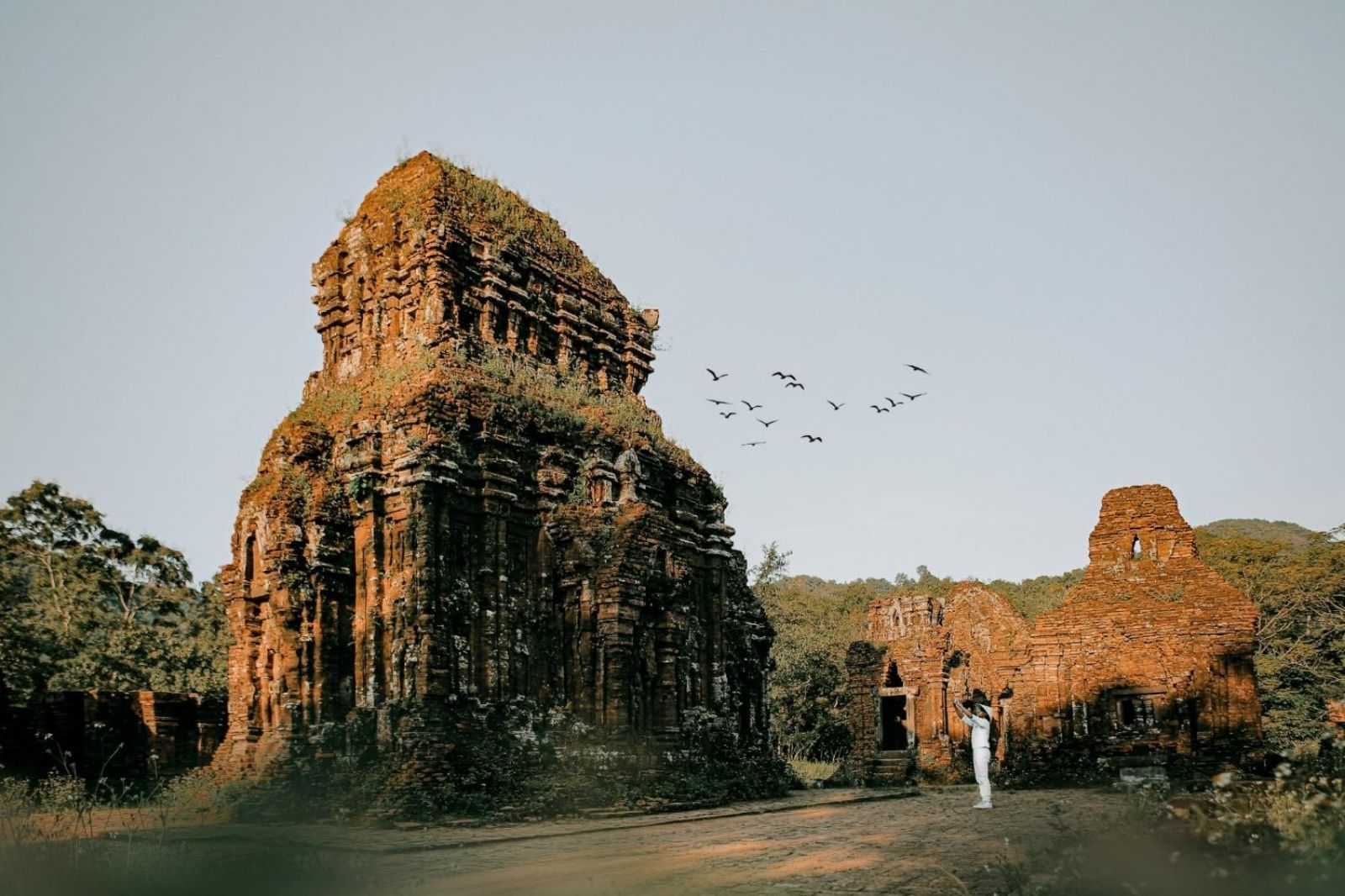
My Son Sanctuary is located in a valley spanning about 2 km in Thu Bon commune, Da Nang (formerly Duy Phu commune, Duy Xuyen district, Quang Nam province). The heritage site is situated about 60–70 km southwest of central Da Nang, about 40–45 km from the Hoi An Ancient Town, and not far from the Tra Kieu ancient citadel – the first capital of the Champa Kingdom.

Surrounded by rolling mountain ranges and situated near the Thu Bon River basin, My Son possesses a terrain that is both rugged and poetic, once serving as an ideal location to establish an important religious center for the ancient Cham people. The relic complex covers an area of about 142 hectares, with a 920-hectare buffer zone, preserving dozens of temple towers of exceptional historical, architectural, and artistic value. Recognizing these outstanding values, UNESCO inscribed the My Son Sanctuary as a World Cultural Heritage site in 1999, making it one of the signature cultural and historical destinations in central Vietnam.
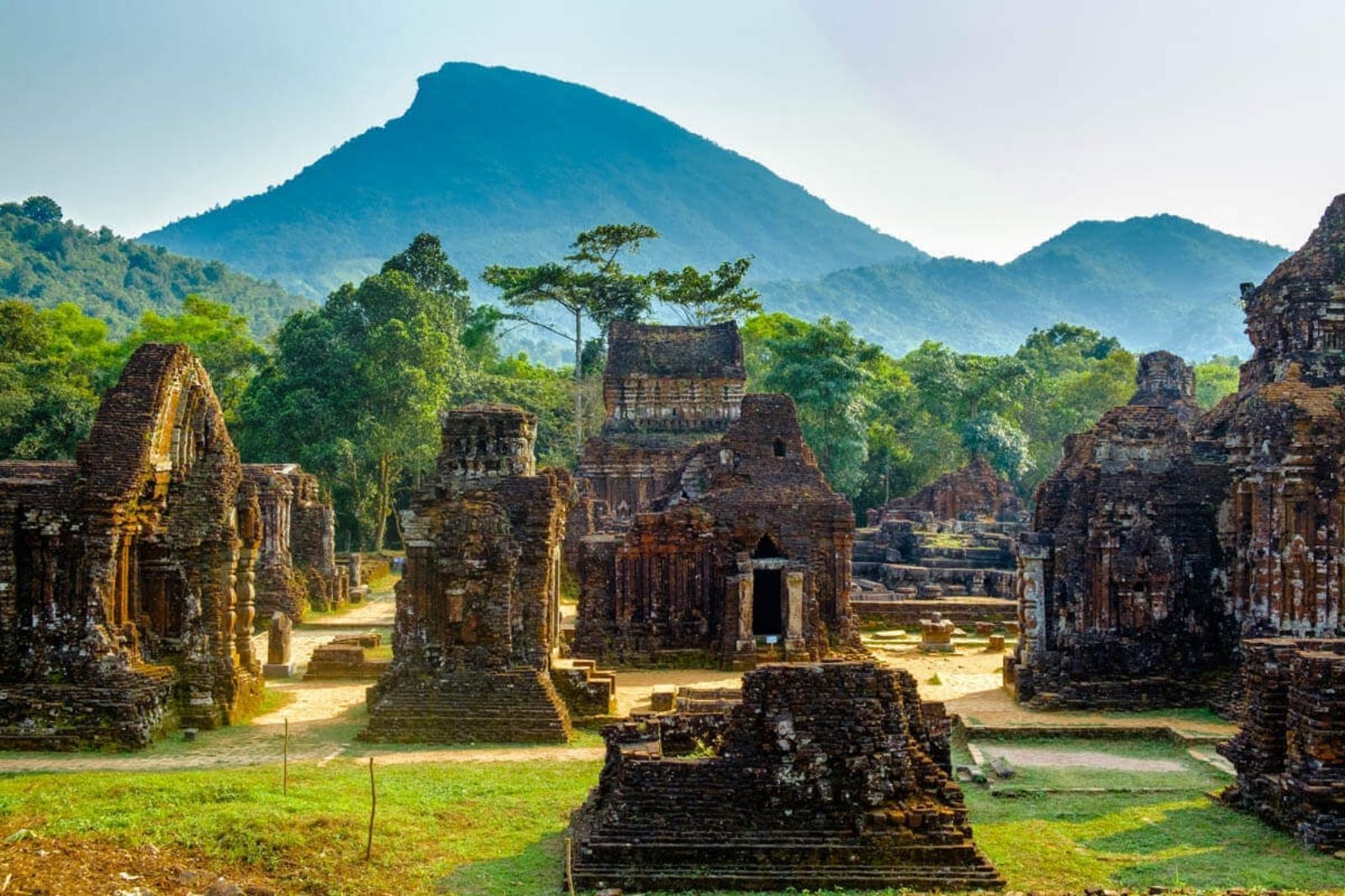
My Son Sanctuary is located about 40km from Hoi An Ancient Town

Photo: My Son Sanctuary is located about 40km from Hoi An Ancient Town

2. History and Role of My Son Sanctuary

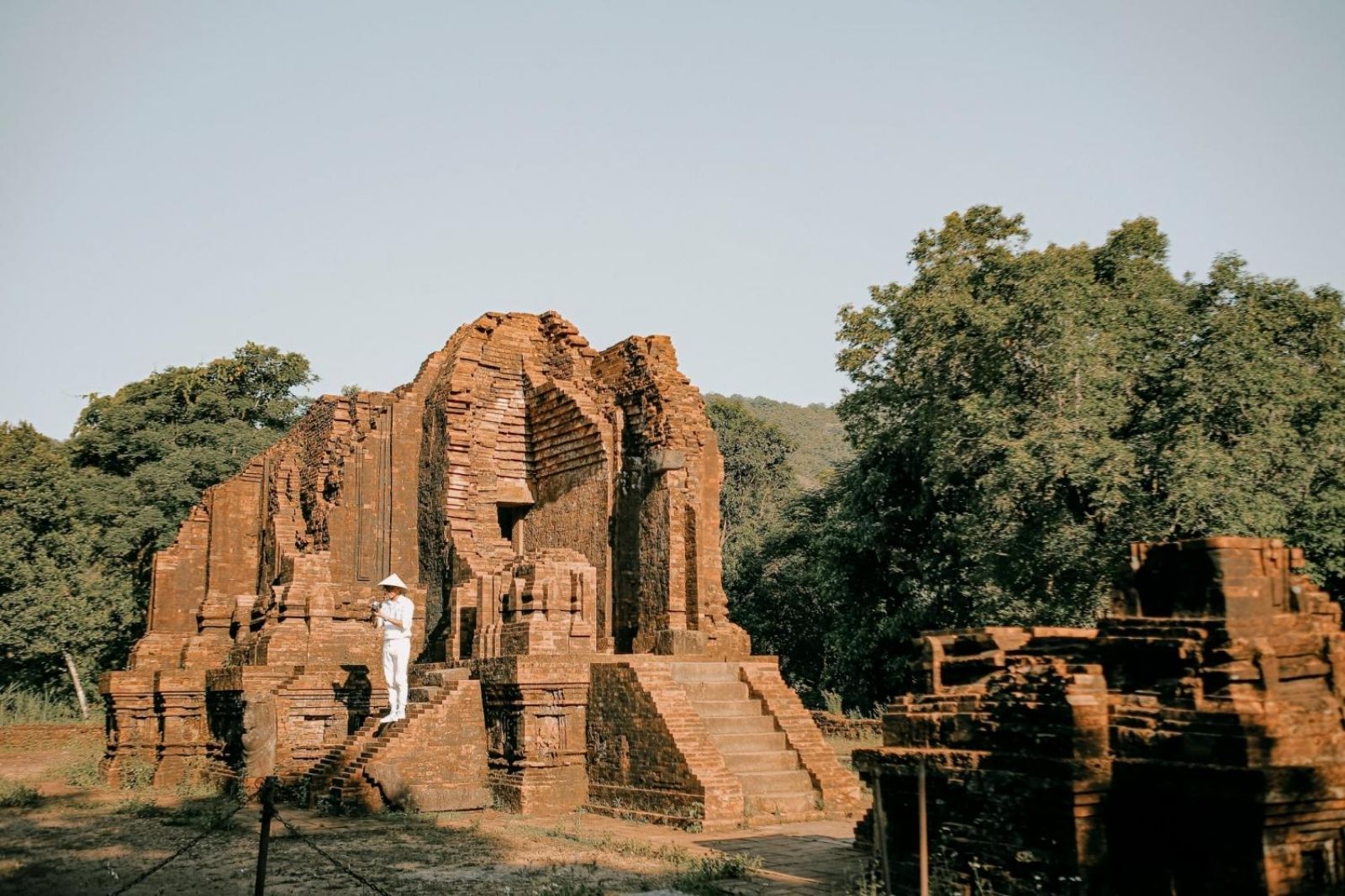
My Son Sanctuary was constructed beginning in the late 4th century under King Bhadravarman I, originally serving as a site for worshiping Shiva – the sacred deity associated with royal power and the Champa dynasty. For nearly a millennium, My Son remained an important religious and political center of the Champa Kingdom. The earliest structures were built of wood but were later destroyed by fire. By the early 7th century, King Sambhuvarman ordered them rebuilt using fired bricks. Subsequent Champa kings continued to expand the temple complex, ultimately forming a site of more than 70 large and small structures dedicated to religious and royal rituals.

Following the decline of the Champa Kingdom, My Son was forgotten until it was rediscovered by the French in 1885. War caused severe damage (particularly U.S. bombing), but restoration efforts from France, Poland, and Vietnam have helped preserve what remains of the more than 70 architectural structures.

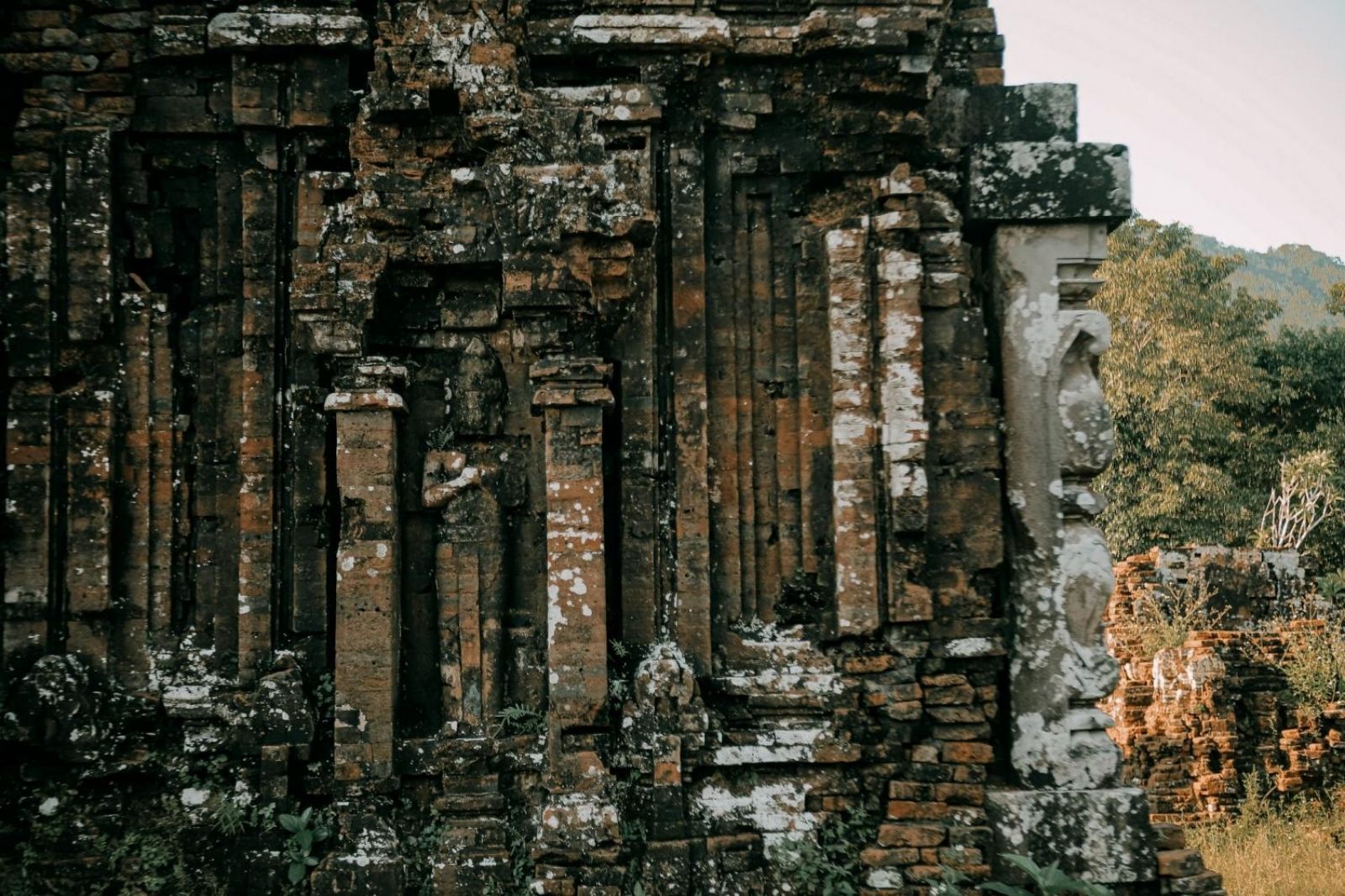
My Son Sanctuary was constructed using bricks

Photo: My Son Sanctuary was constructed using bricks

3. Architecture of My Son Temples

The defining characteristic of My Son Sanctuary lies in its brick temple architecture. The bricks are fitted together tightly, forming seamless, durable walls that have withstood the centuries. The exact techniques used to construct these buildings continue to be studied by researchers today.

A typical temple complex comprises several components with distinct functions:

  • Kalan: The main sanctuary tower, dedicated to Lord Shiva, which usually houses a Linga – the sacred symbol of Cham spirituality.

  • Mandapa: The foyer or hall, used for ceremonies and religious activities.

  • Kosagrha: The firehouse, used to store ritual objects and offerings.

  • Gopura: The gate tower leading into the temple complex.

The My Son complex once featured more than 70 structures, divided into groups such as A, A', B, C, D, E, F, G, H, K, and others. Due to time and war, only a fraction of these structures remains preserved today.

Among them, the B–C–D group still retains many notable architectural remnants. Tower A1, once considered one of My Son's most exemplary structures, stood approximately 24–28 meters tall before suffering heavy destruction during the war. The tower groups at My Son also reflect evolving architectural and artistic styles across the centuries—ranging from My Son E1 and Dong Duong to the My Son A1 style—forming a complex of exceptional value within the history of Champa architecture.

4. Champa Sculptural Art at My Son Sanctuary

Sculptural art at My Son Sanctuary is a prominent hallmark of Champa culture, clearly demonstrating a blend of Hindu religious beliefs and the distinctive artistic expression of the Cham people. Artisans carved deities, dancers, and sacred animals into brick and sandstone with highly expressive lines. Familiar motifs include Shiva, Brahma, Vishnu, Apsaras, Kala, and Makara, alongside floral patterns, elephants, and lions. Each figure carries a specific religious meaning or symbolic purpose, contributing to the distinct visual identity of the temple towers.

Alongside these sculptures, an epigraphic system written in Sanskrit and ancient Cham script serves as an essential resource, helping researchers understand the history, beliefs, and dynasties of Champa. Today, some precious artifacts from My Son are housed in the Da Nang Museum of Sculpture, while many altars, reliefs, and sculptural remnants are preserved directly at the heritage site. Through every carved line, the art of My Son reveals a culture that once flourished brilliantly and left an indelible mark on Southeast Asian art history.

5. Visitor Experiences at My Son Sanctuary

When visiting My Son Sanctuary, travelers can explore the heritage through a variety of activities and spaces, each highlighting the historical and cultural value of the temple complex:

  • Explore the temple complex: Over 70 structures distributed across groups A, B, C, D, E, F, G, H, and K, connected by an ancient road about 8 meters wide leading to the central area.
  • Experience Champa arts: Watch Apsara dance performances and traditional Cham folk music at the performance house, recreating ancient rituals and spiritual practices.
  • Visit the My Son Museum: A 5,400 m² exhibition space showcasing sandstone artifacts, inscriptions, temple models, and important archaeological documents.
  • Experience traditional festivals: Join the Kate Festival (held in the 7th lunar month) to immerse yourself in ritual dances and traditional folk performances unique to the Cham people.
  • Transportation and sightseeing: Choose between electric carts or walking through the forest, enjoying the natural landscape and photographing the ancient tower clusters.
  • Basic visitor information: Admission tickets are 100,000 VND for Vietnamese citizens and 150,000 VND for international visitors; open daily from 6:00 AM to 5:00 PM.

With its diverse experiences and historically rich atmosphere, My Son Sanctuary offers visitors a comprehensive view of Champa heritage, extending far beyond a simple sightseeing tour.

Numerous temple towers featuring unique architecture
Photo: Numerous temple towers featuring unique architecture

6. Best Time to Explore My Son Sanctuary

To ensure a smooth and fulfilling trip to My Son Sanctuary, choosing the right time to visit is crucial. Here are the ideal periods travelers should consider:

  • Dry season (February – August): This is the best time to explore My Son thanks to stable weather and minimal rain, making outdoor travel and sightseeing very convenient.
  • Ideal visiting hours: Although falling during the peak tourism season (January – April), the hours between 6:00 AM and 9:00 AM remain tranquil, allowing visitors to fully appreciate the sanctuary's ancient ambiance.
  • Rainy season (September – December): It is advisable to avoid visiting during this period due to heavy rainfall, slippery paths, and potential flooding risks that can impact the tour experience.

Choosing the right time not only makes the trip safer and more convenient, but also highlights the quiet, mystical beauty of My Son Sanctuary in every single moment.

7. Guide on How to Get to My Son Sanctuary from Hoi An and Da Nang

Getting to My Son Sanctuary is quite flexible, accommodating various starting points and budgets. Below are the popular transport options travelers can choose from:

From Hoi An (40–50 km):

  • Motorbike or car via National Highway 1A – Provincial Road 610, taking 1–1.5 hours
  • Round-trip taxi costing around 500,000 VND

From Da Nang (69 km):

  • Bus route 06, taking 1.5 hours, fare from 8,000 – 30,000 VND
  • Private motorbike/car via National Highway 1A – 14B
  • Shuttle bus or shared car: 200,000 VND/person round-trip

Overall, convenient routes and multiple transport options make My Son Sanctuary easy to include in a day trip combining Hoi An and Da Nang.

Check-in at My Son Sanctuary
Photo: Check-in at My Son Sanctuary

The weathered temple towers at My Son Sanctuary no longer retain their original shapes, but this very absence accentuates the depth of a civilization that once flourished brilliantly. My Son captivates visitors not through sheer scale, but through its ability to make people slow down and reflect on the relationship between time, faith, and artistic creation. Within the tapestry of Vietnam's heritage, this site holds a special place—not only as a remnant of the Champa past, but as an enduring reminder of the value in preserving and understanding legacies that quietly coexist with the present.

Loading......

Featured destinations