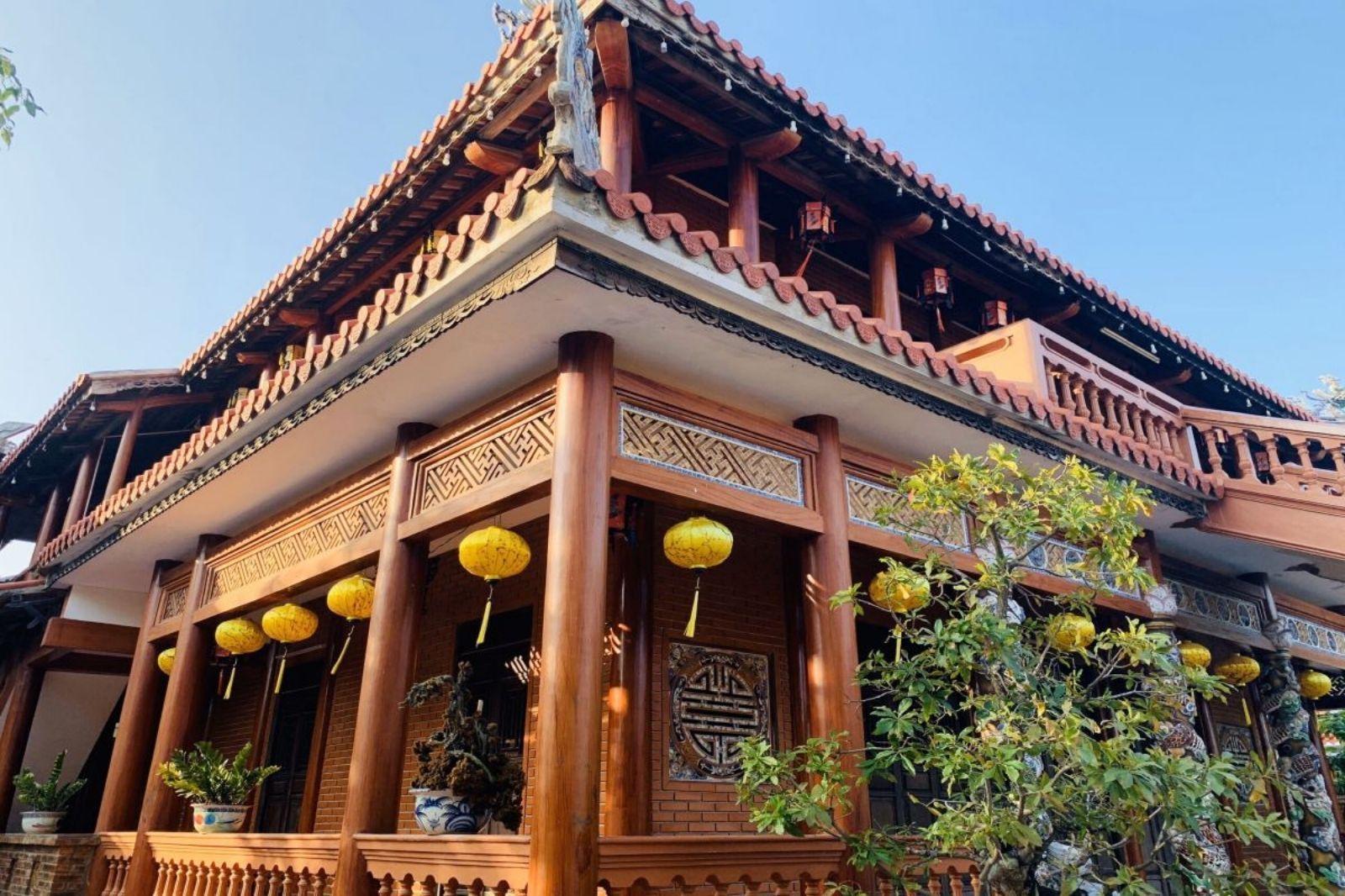
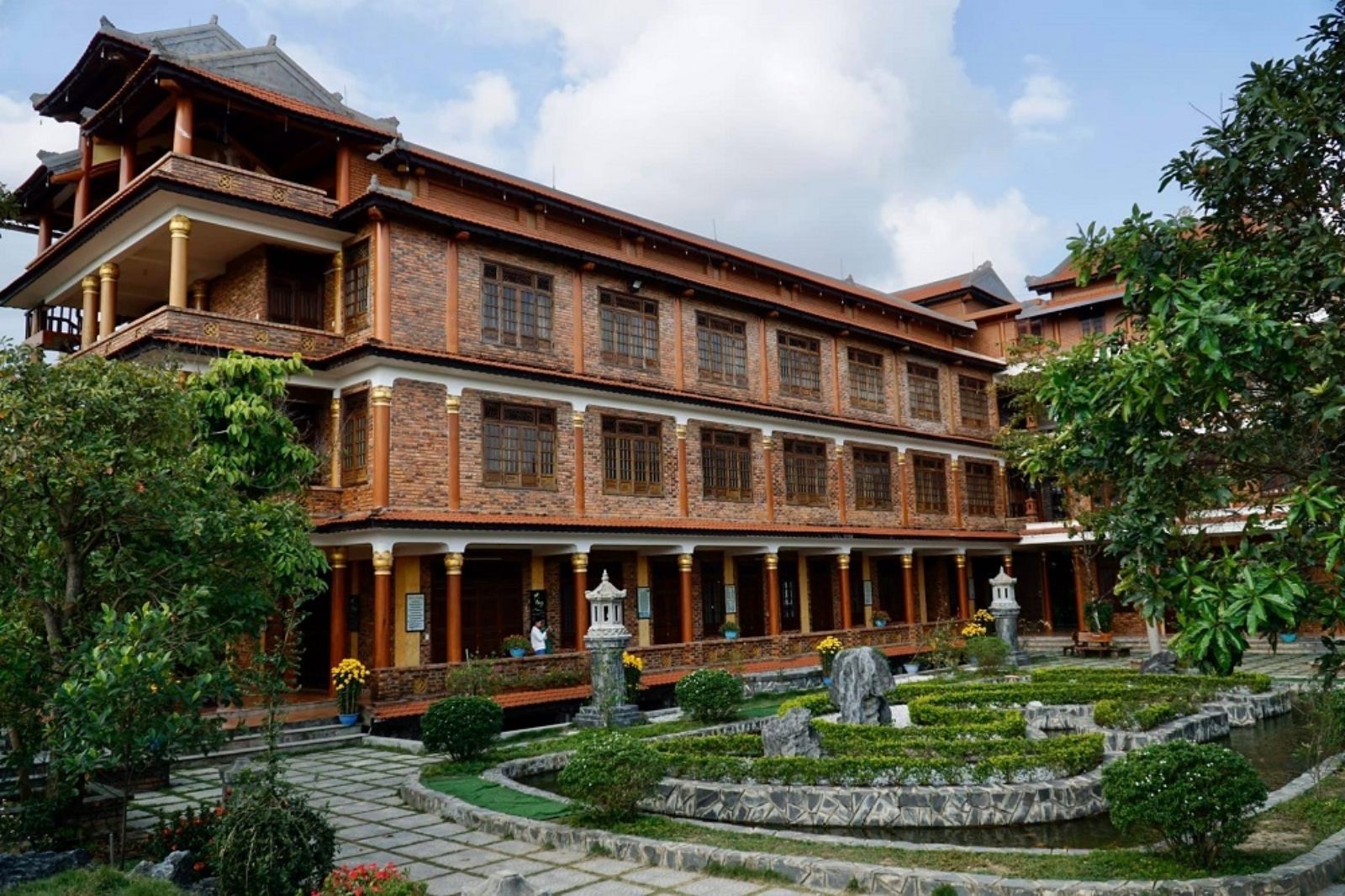
Phuoc Duyen Pagoda was built on the foundation of a long-standing Buddhist site. According to local documents and legends, Oc Tieu Pagoda (Oc Tieu Ancient Pagoda) – a small temple established by locals to worship Quan Cong – previously existed in this area. Through many historical fluctuations, especially during the Tay Son period, the ancient pagoda was completely destroyed, leaving only a deserted plot of land. In 1948 (Year of the Rat), Most Venerable Thich Danh Le (1918–1968, dharma name Tam Ung) resolved to found and rebuild the pagoda on the old land and named it Phuoc Duyen. In the beginning, the pagoda was just a simple thatched cottage, serving the religious and study needs of local residents. With the wish to propagate the Dharma, the Most Venerable not only gradually built the physical infrastructure but also established a strong practice community based on mindfulness, community service, and spiritual education.
Over more than seven decades, Phuoc Duyen Pagoda has been renovated and restored several times, becoming increasingly spacious. After Most Venerable Thich Danh Le passed away, the pagoda continued to be inherited and developed by generations of monks. In particular, Most Venerable Thich Thai Hoa made significant contributions to the development of the practice center, while also being a profound Buddhist scholar with many valuable research, compilation, and translation works. Today, Phuoc Duyen Pagoda is not only a tranquil spiritual destination but also a testament to the enduring vitality of Buddhism in the Ancient Capital. From an ancient pagoda site erased by war and historical changes, this place has revived to become a solemn monastery, contributing to preserving and spreading the unique cultural and spiritual values of Hue – the land known as the "Buddhist Capital" of Vietnam.