Sweat Drops on the Sand - Discovering Traditional Salt Making in Quang Binh

Central

Quang Binh

Sovaba.travel

Updated at: 24/09/2026

1. The craft of salt-making in Quang Binh

Quang Binh – a sunny and windy Central land, embracing over 116 km of coastline like the open arms of Mother Nature. Here, the glowing red sun every early morning shines down on peaceful fishing villages like Canh Duong, Nhan Trach, or Ngu Thuy Bac, where there are not only the sounds of crashing waves and net-fishing boats heading out to sea, but also stretching, pure white salt fields shining like sky mirrors reflecting the golden sunlight.

Making salt in Quang Binh is not only a way for people to rely on the sea to make a living, but also a simple, warm trait in fishing village culture—a trade passed down from ancestors, a memory deeply etched into every salty grain of salt. Generation after generation, local people still maintain the simple, manual way of making salt, crystallized from sun, wind, seawater, and patience. Quang Binh salt may not be as famous as Sa Huynh or Ca Na salt, but it carries a very distinct flavor—richly salty yet smoothly sweet, just like the people here: rustic, honest, and deeply affectionate.

Not only used in cooking, salt from the coastal fishing villages of Quang Binh is also an important ingredient for fermenting fish to make traditional fish sauce and fermented fish with roasted rice powder—specialties imbued with the flavor of the sea. It is the rich and pure saltiness of Quang Binh salt that contributes to producing delicious, rich batches of fish sauce, which are the pride of the local people. Each sparkling white grain of salt is also present in many food processing steps, serving as an indispensable seasoning in every family meal, encapsulating the rich salty flavor of the sea into every rustic dish.
2. The salt-making process: Patience under the sun and wind

Salt making is a trade closely tied to nature, where sun, wind, and sea play the leading roles. In coastal fishing villages of Quang Binh such as Canh Duong, Nhan Trach, or Ngu Thuy Bac, the salt-making process still retains its intact traditional traits, deeply marked by diligence and folk experience accumulated over generations.

Preparing the Salt Fields

Each salt season usually begins in March, when the sun is harsh enough for seawater to evaporate easily. Local people proceed to prepare the salt fields, choosing low, flat plots of land and carefully building dikes to prevent water overflow. The soil layer is firmly packed and dried for many days to prevent seepage and keep the crystallized salt pure and free of impurities. This stage requires meticulousness and patience, acting as an important foundational step that determines the quality of the salt grains later on.

Channeling Seawater

Once the field is ready, seawater is channeled into storage compartments through flume systems or hand pumps, depending on the terrain. The water is left to settle and gradually transferred to crystallization compartments. Everything takes place under careful calculations of water levels, salinity, and weather—something only experienced salt farmers fully master.

Harvesting Salt

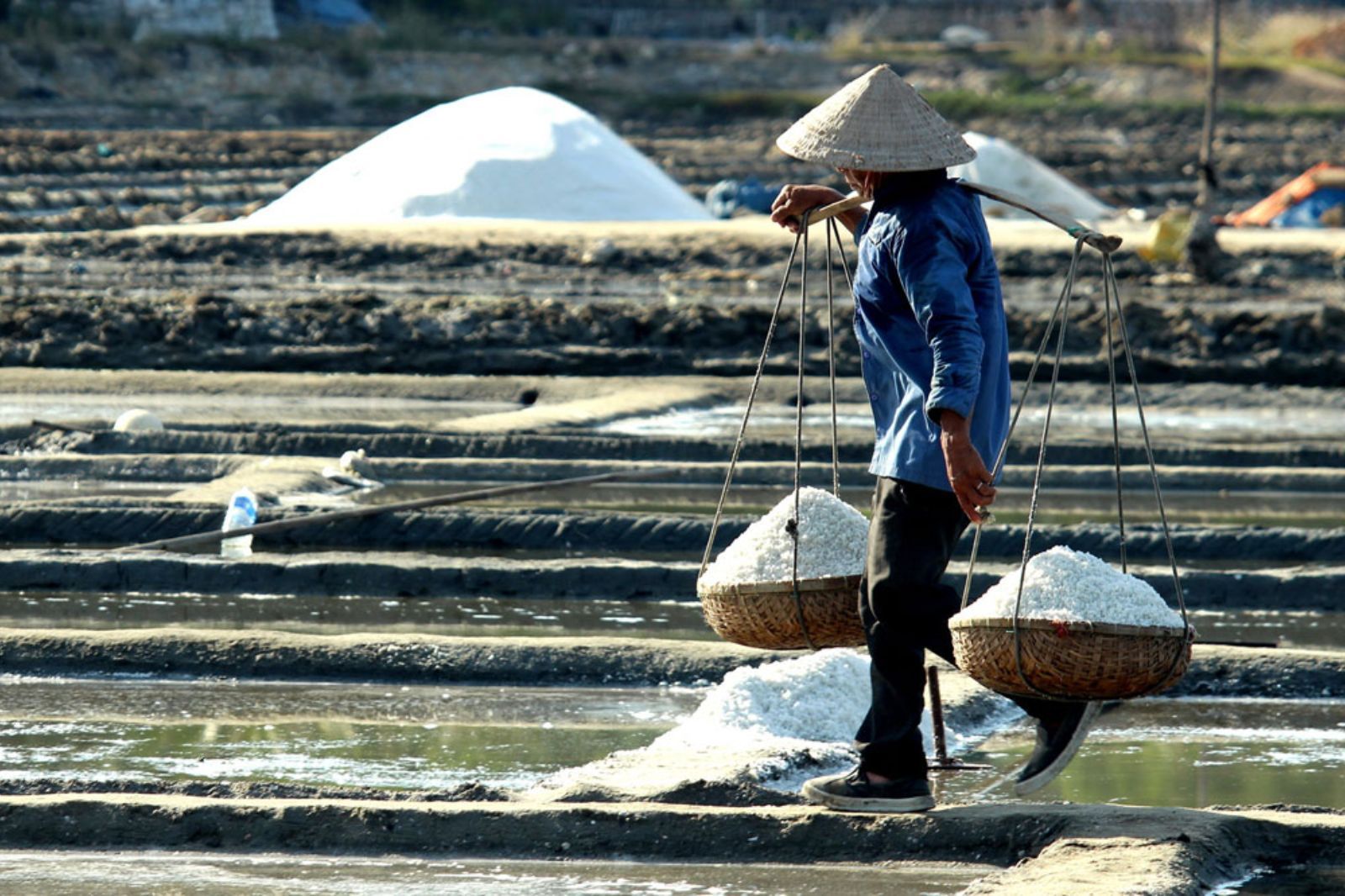
Under the harsh sun of Central Vietnam, the seawater gradually evaporates, leaving behind sparkling white salt grains. Salt farmers use manual tools such as bamboo rakes to gather salt into small heaps, then carry or push carts to bring it to collection points. This work requires strength and endurance, as workers have to labor for hours under the skin-scorching sun.

“The salt-making trade is as bitter as its own saltiness. But when seeing the pure white salt grains piled up on the carts, my heart feels happy, as if seeing all my sweat rewarded.” – Ms. Nguyen Thi Hoa, a resident of Canh Duong fishing village.

Local people still maintain the manual salt-making method
Photo: Local people still maintain the manual salt-making method 

3. Notable fishing villages famous for salt-making in Quang Binh

The salt-making trade in Quang Binh is not boisterous, but it quietly persists across many generations. In a number of coastal fishing villages, locals still maintain the trade, regarding it as an indispensable part of life. Below are three typical fishing villages still attached to salt.

Canh Duong Fishing Village

Located in Quang Trach district, Canh Duong fishing village is not only famous for fishing but also boasts beautiful salt fields, especially in summer. Looking down from above, the salt fields are like sky-reflecting mirrors, creating a poetic landscape. Visitors coming here can not only admire the beauty of the salt fields but also experience the salt-making process together with the locals.

Phu Loc Fishing Village

Located in Quang Phu commune, Quang Trach district, Phu Loc fishing village is a place where the salt-making trade has been maintained for generations. In the early morning, as dawn breaks, the image of hardworking locals on the salt fields blending with the sound of ocean waves creates an emotionally evocative working scene.

Ngu Thuy Bac Fishing Village

Belonging to Le Thuy district, Ngu Thuy Bac is one of Quang Binh's typical coastal fishing villages. Despite facing many hardships in life, the local people remain attached to salt making, considering it an inseparable part of their lives.

Salt making is very laborious and arduous
Photo: Salt making is very laborious and arduous 

Although possessing cultural and economic value, the salt-making trade in Quang Binh faces many challenges. Low salt prices, heavy physical labor, and dependence on the weather make many young people no longer keen on the profession. In addition, competition from industrial salt and changes in the marine environment also raise questions about the sustainability of this traditional trade.

However, there are still positive signs. Many localities in Quang Binh are striving to combine salt making with experiential tourism, creating opportunities for tourists to explore and appreciate the value of salt grains. Support policies from local authorities, such as improving infrastructure and promoting local salt brands, are also being implemented to preserve the trade.

4. Experiencing salt-making tourism in Quang Binh

If you want to learn more deeply about salt making, try joining experiential tours in Quang Binh fishing villages. Below are some exciting activities you can try:

  • Visit salt fields: Admire the sparkling salt fields and take mesmerizing photos.
  • Try being a salt farmer: Personally channel water, rake salt, and feel the hard work yet deep meaning of the job.
  • Enjoy seafood cuisine: After a day of experience, don't forget to taste the fresh seafood dishes at coastal eateries, where local sea salt is used to create rich flavors.

Travel tips: Come to Quang Binh during the salt-making season (March to August) to witness the liveliest scenery. Don't forget to bring sunscreen, a wide-brimmed hat, and sunglasses to protect yourself under the harsh sun.

Pure white salt grains after hot sunny days
Photo: Pure white salt grains after hot sunny days

In Vietnamese culture, salt is not just a condiment but also carries deep symbolic meaning. “Muối ba năm muối đang còn mặn” (Salt remains salty after three years) – that folk verse expresses the durability and attachment of human kindness, and Quang Binh salt is proof of that. Pure white salt grains, distilled from the sweat and dedication of the locals, not only enrich meals but also serve as a bridge between human beings and the sea.

Salt making in the coastal fishing villages of Quang Binh is a story of perseverance, love for the sea, and attachment to tradition. Despite facing many difficulties, local people still labor diligently on the salt fields day by day, bringing pure grains of salt. If you have the chance to travel to Quang Binh, take the time to visit the salt fields to feel the breath of the sea and appreciate the simple yet profound values of this land.

Loading......

Featured destinations