|

Back Home

Hoi An Covered Bridge: Icon of the Ancient Town & 400-Year-Plus History

Central

Da Nang

Hoi An

Sovaba.travel

Updated at: 08/09/2026

1. Where is Hoi An Covered Bridge located?

Hoi An Covered Bridge is located right in the center of Hoi An Ancient Town (near Da Nang City). Specifically, the bridge spans a small branch of the Hoai River (part of the Thu Bon River system), connecting Nguyen Thi Minh Khai Street and Tran Phu Street. This location makes the Covered Bridge the "heart" of the heritage site, easily accessible from other attractions such as the Cantonese Assembly Hall or Tan Ky Ancient House. If traveling from central Da Nang, it takes about 30-40 minutes by motorbike or car, spanning a distance of around 30 km. Hoi An is about 45 km from Da Nang Airport, and you can take a taxi or bus to get here. 

Note for visitors: To visit heritage sites in the ancient town, including the Covered Bridge, you need to purchase an entrance ticket (around 80,000 - 120,000 VND depending on the visitor category).

With its strategic location right beside the peaceful Hoai River, the Covered Bridge is not only an iconic check-in spot but also an ideal place for sightseeing, especially sparkling on lantern festival nights.
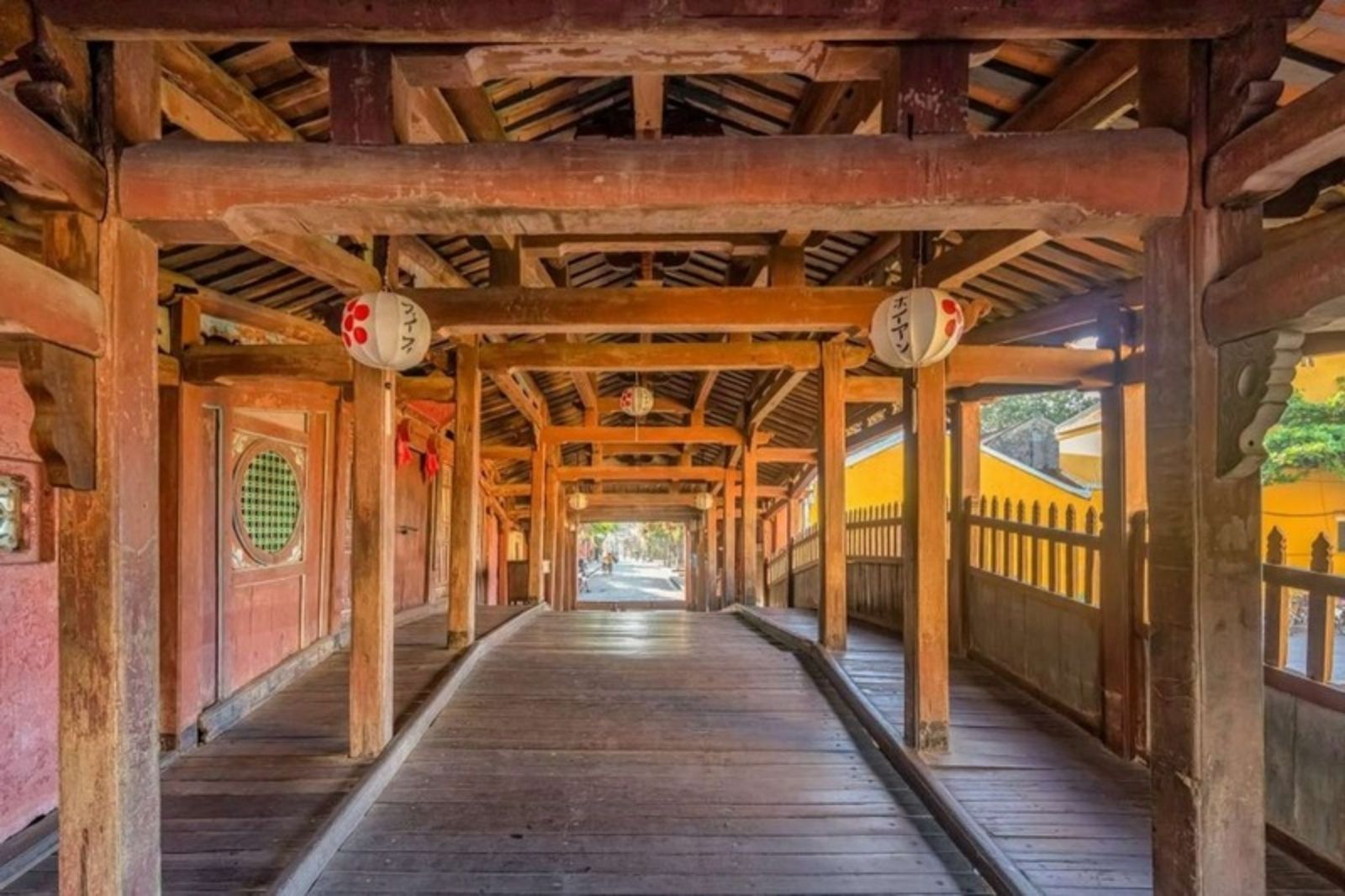
The Covered Bridge located right in the center of Hoi An Ancient Town

Photo: The Covered Bridge located right in the center of Hoi An Ancient Town  

2. The 400-plus-year history of Hoi An Covered Bridge

Over four centuries ago, when Hoi An was a bustling international trading port in the Dang Trong region, it served as a meeting point for merchant communities from Japan, China, Portugal, the Netherlands, and beyond. Among the traders and settlers who flocked here, the Japanese community established their own quarter and left a distinctive architectural mark on the town.

Around 1593–1595, Japanese merchants pooled their funds to build a covered wooden bridge spanning the waterway that separated the Japanese and Chinese quarters. The structure not only facilitated travel and trade but also became an integral part of the local community's life. Over time, it has become one of the few remaining structures that clearly preserves the Japanese legacy in Hoi An. By the mid-17th century, a small shrine was added to the northern side of the bridge, creating the distinctive T-shape that characterizes the "Bridge Pagoda" (Chua Cau) today. In 1719, during a tour of Hoi An, Lord Nguyen Phuc Chu named the bridge Lai Vien Kieu, meaning "Bridge to Welcome Guests from Afar." This name reflects not only the open spirit of an international trading port but also evokes the memory of a Hoi An that welcomed visitors from many different lands.

Over the past 400 years, the Bridge Pagoda has undergone numerous renovations, including major projects in 1817, 1865, 1915, 1986, and the 2022–2024 period. These restorations have resulted in an architectural blend of Japanese, Vietnamese, and Chinese styles, creating a unique beauty rarely found elsewhere in the Ancient Town.

In 1990, the Bridge Pagoda was recognized as a National Historical and Cultural Relic. Once a bridge facilitating trade for merchants of old, the structure has become an integral part of Hoi An’s collective memory; it has stood silently through the passage of time, witnessing the town’s transformation from an international trading port into the renowned cultural heritage site it is today.

The Covered Bridge was originally built by Japanese merchants

Photo: The Covered Bridge was originally built by Japanese merchants 

3. Origin of the name and spiritual significance of Hoi An Covered Bridge

Originally a covered bridge topped by a small shrine, the structure became known to locals as Chua cau (Bridge Pagoda)—though, in reality, it is not a Buddhist temple. Its official name, Lai Vien Kieu—bestowed by Lord Nguyen Phuc Chu in 1719—means "Bridge Welcoming Guests from Afar," a name that perfectly captures the spirit of Hoi An, a place that once welcomed merchant delegations from many lands seeking to trade.

Beyond its historical and architectural significance, the Bridge Pagoda is linked to a spiritual tale rooted in folklore. Legend tells of a giant monster named Namazu (or Cu in Vietnamese), whose head lay in India, body beneath Vietnam, and tail in Japan. Whenever the creature stirred, earthquakes and natural disasters would ensue. Consequently, the bridge was likened to a sword driven into the monster's back, intended to safeguard the land and its inhabitants.

Statues of a monkey and a dog stand at either end of the bridge; these are often explained through legends associated with the Years of the Monkey and the Dog-marking the times construction began and concluded. Inside the shrine sits an altar to Bac De Tran Vu (Huyen Thien Dai De), a Taoist deity believed to possess the power to tame wind and water and protect human life. Thus, the Bridge Pagoda is more than just a passageway between two historic quarters. To the people of Hoi An, it embodies hopes for peace, smooth fortune, and prosperity-sentiments particularly meaningful for a region that once thrived on maritime trade. It is these stories that make the Bridge Pagoda memorable not only for its ancient appearance but also for the rich cultural and spiritual heritage preserved across generations.

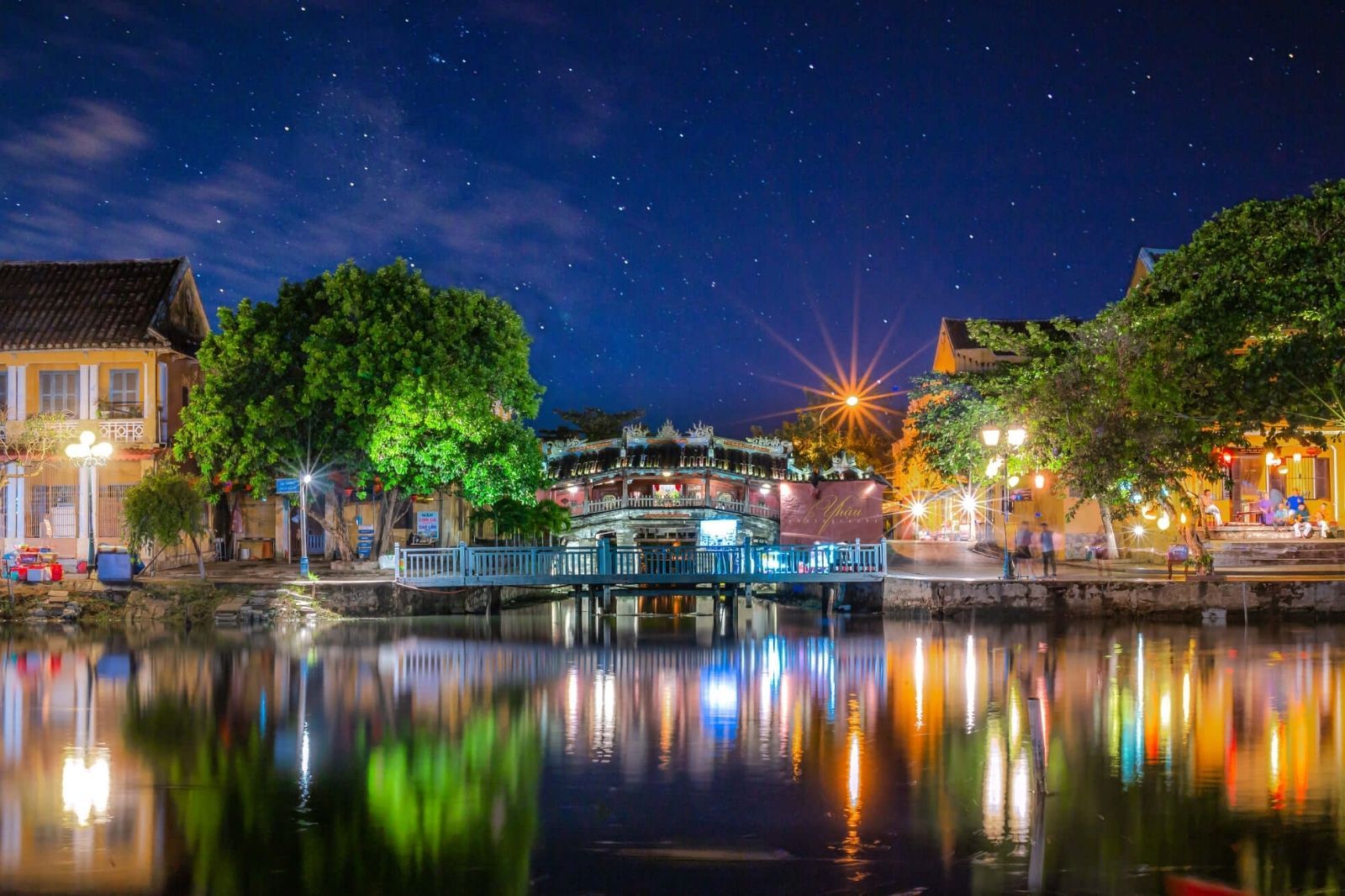
The Covered Bridge glittering at night

Photo: The Covered Bridge glittering at night  

4. What is special about the architecture of Hoi An Covered Bridge?

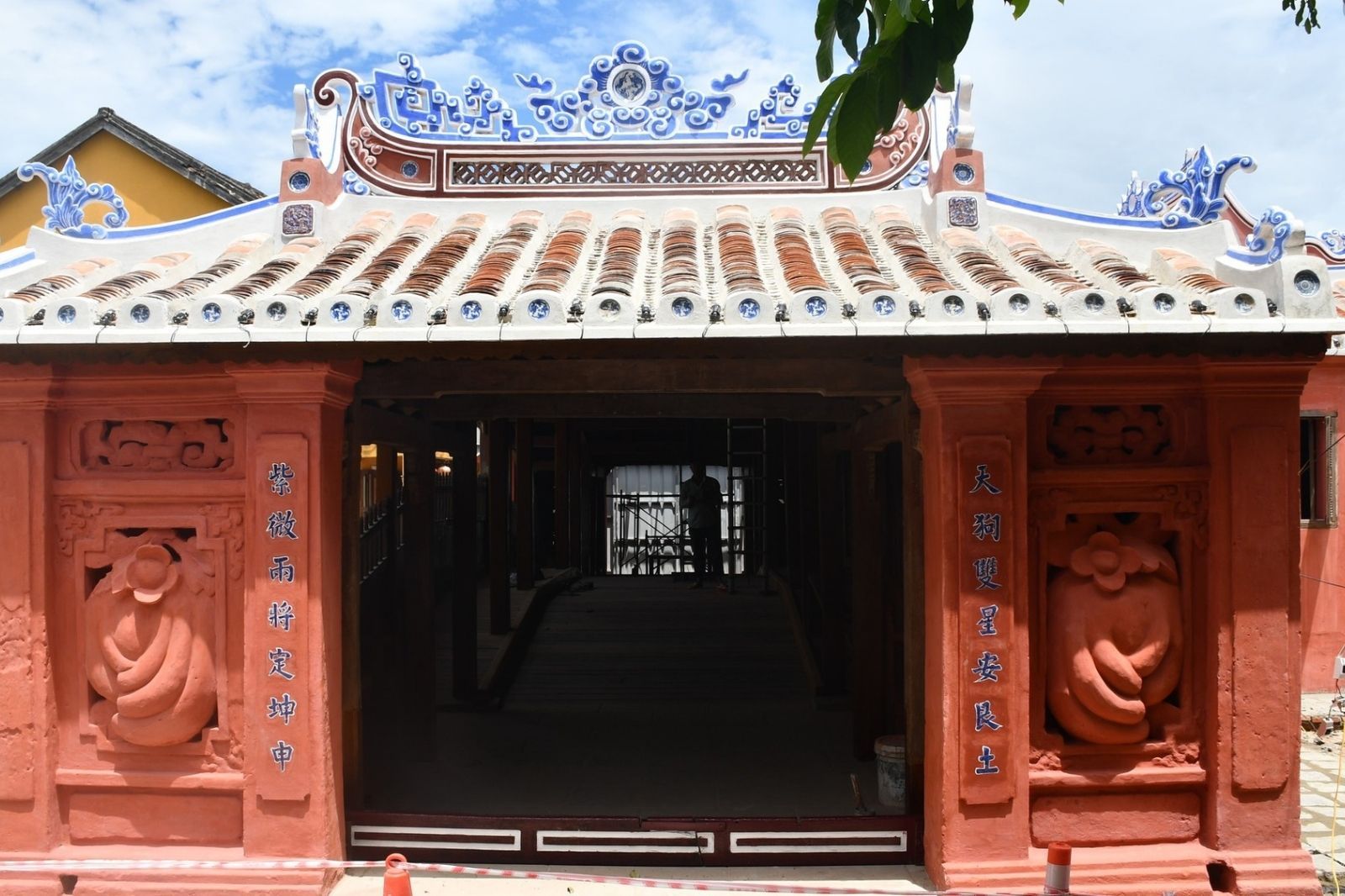
The architecture of Hoi An Covered Bridge is considered one of the most unique structures in the ancient town, clearly demonstrating the subtlety in construction thinking and aesthetics of the former port residents. The prominent features of the Covered Bridge can be clearly seen through the following elements:

  • Unique covered bridge design: The bridge is about 18 m long and 3 m wide, gently curving like a rainbow, supported by a sturdy wooden pillar system, serving both traffic function and high aesthetic value.
  • Traditional materials and roofing: The entire bridge structure is made from precious ironwood, topped with yin-yang tile roofing, decorated with delicately carved dragon and phoenix patterns, symbolizing power, luck, and prosperity.
  • Temple space in the middle of the bridge: At the center is a small shrine dedicated to Bac De Tran Vu, featuring ancient Vietnamese architectural style harmoniously combined with Japanese elements such as square pillars and slightly curved eaves.
  • Sacred animal statues at both ends: Pairs of wooden dog and monkey statues placed at the two ends symbolize protection and reflect the East Asian philosophy of beginning and ending.
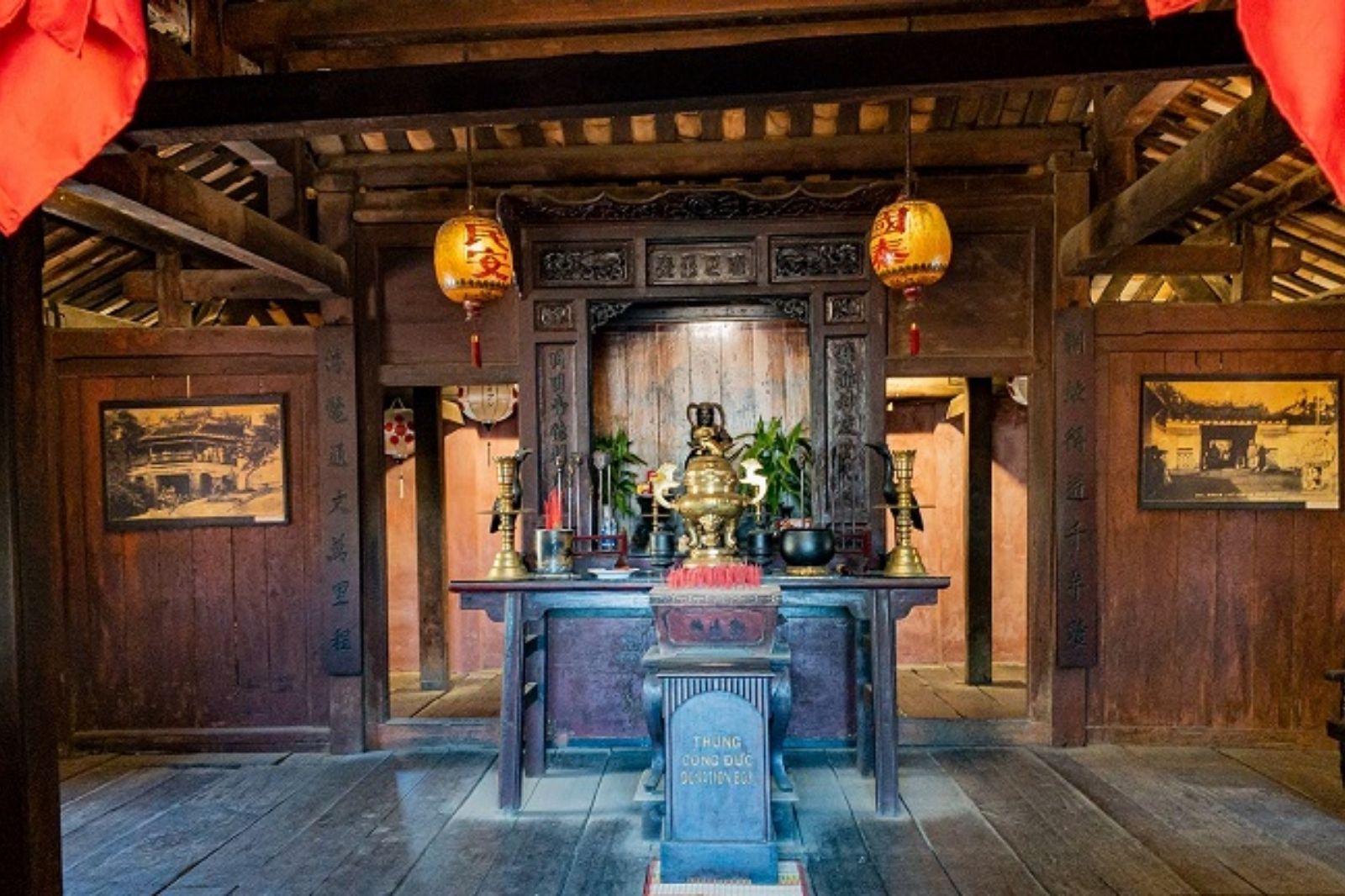
  • Solemn interior space: Inside the shrine, the layout is simple yet solemn, featuring meticulously carved altars and wooden statues that showcase the exquisite craftsmanship of ancient artisans.

It is the harmonious blend of transportation, religious faith, and architectural art that creates the unique value of Hoi An Covered Bridge – a surviving masterpiece from the prosperous trading port era. Despite undergoing multiple restorations, the structure retains its ancient, quiet charm, silently telling a historical story spanning over four centuries in the heart of the ancient town.

Altar inside the Covered Bridge
Photo: Altar inside the Covered Bridge  

5. Cultural fusion of Vietnam, Japan, and China at the Covered Bridge

In the bustling trading port of Hoi An during the 16th and 17th centuries, Japanese, Chinese, and Vietnamese communities lived and traded side by side; their cultural influences gradually merged, shaping the structure's unique character. The Japanese influence is most evident in the bridge's origins. Japanese merchants are believed to have initiated its construction, introducing techniques for building covered wooden bridges alongside the spiritual concept of suppressing the Namazu (a mythical giant catfish). It remains a prime example of Japanese architectural heritage in Hoi An.

Chinese influence is visible in the Bac De Tran Vu shrine space, as well as in the decorative patterns, carving styles, and feng shui principles incorporated into the structure. These elements add a spiritual dimension to the Bridge Pagoda, complementing its original function as a crossing. Meanwhile, the Vietnamese influence has been cultivated over generations; the local people have preserved and restored the structure, making the Bridge Pagoda an integral part of daily life in Hoi An. The very name "Chua Cau" (Bridge Pagoda) reflects how the structure gradually became woven into the fabric of local culture and spiritual beliefs.

6. Tips for visiting and taking photos at Hoi An Covered Bridge

To ensure a fulfilling and memorable visit to Hoi An Covered Bridge, visitors should keep in mind some practical tips below to optimize time, experience, and get the best photo moments:

  • Ideal time to visit: It is recommended to visit in the early morning (7:00–9:00) or late afternoon (16:00–18:00), when the weather is cool, lighting is soft, and the ancient town is not yet too crowded.
  • Ancient town entrance ticket: The entry ticket to the ancient town is about 80,000 VND/person for domestic visitors, allowing you to walk across the Covered Bridge, visit the shrine interior, and admire the peaceful Hoai River.
  • Attire when entering the shrine: Prioritize polite, modest clothing, showing respect for the spiritual space and historical monument.

Great photo spots:

  • Take a panoramic shot of the Covered Bridge from the opposite riverbank, especially at sunset when lanterns begin to light up.
  • At night, the bridge is illuminated brilliantly, making it perfect for night photography.
  • Use a wide-angle lens to capture the soft curve of the bridge, or zoom in on details like the dog and monkey statues for highlights.
  • For art photography lovers, try taking photos from a boat on the Hoai River (around 100,000 VND/trip).

Tips while visiting

  • Avoid pushing or shoving, maintain general cleanliness, and respect the heritage space.
  • Combine itineraries: You can also visit Hoi An Market, neighboring ancient houses, and assembly halls to enrich your journey.
  • Festival times: Visiting during the Mid-Seventh Lunar Month or Tet holiday lets visitors immerse themselves in the vibrant festive atmosphere with floating flower lanterns, rich in ancient town identity.

With these tips, visiting Hoi An Covered Bridge will not just be a brief stop, but a complete journey to feel the cultural beauty, history, and slow pace of life of this heritage in the heart of the ancient town.

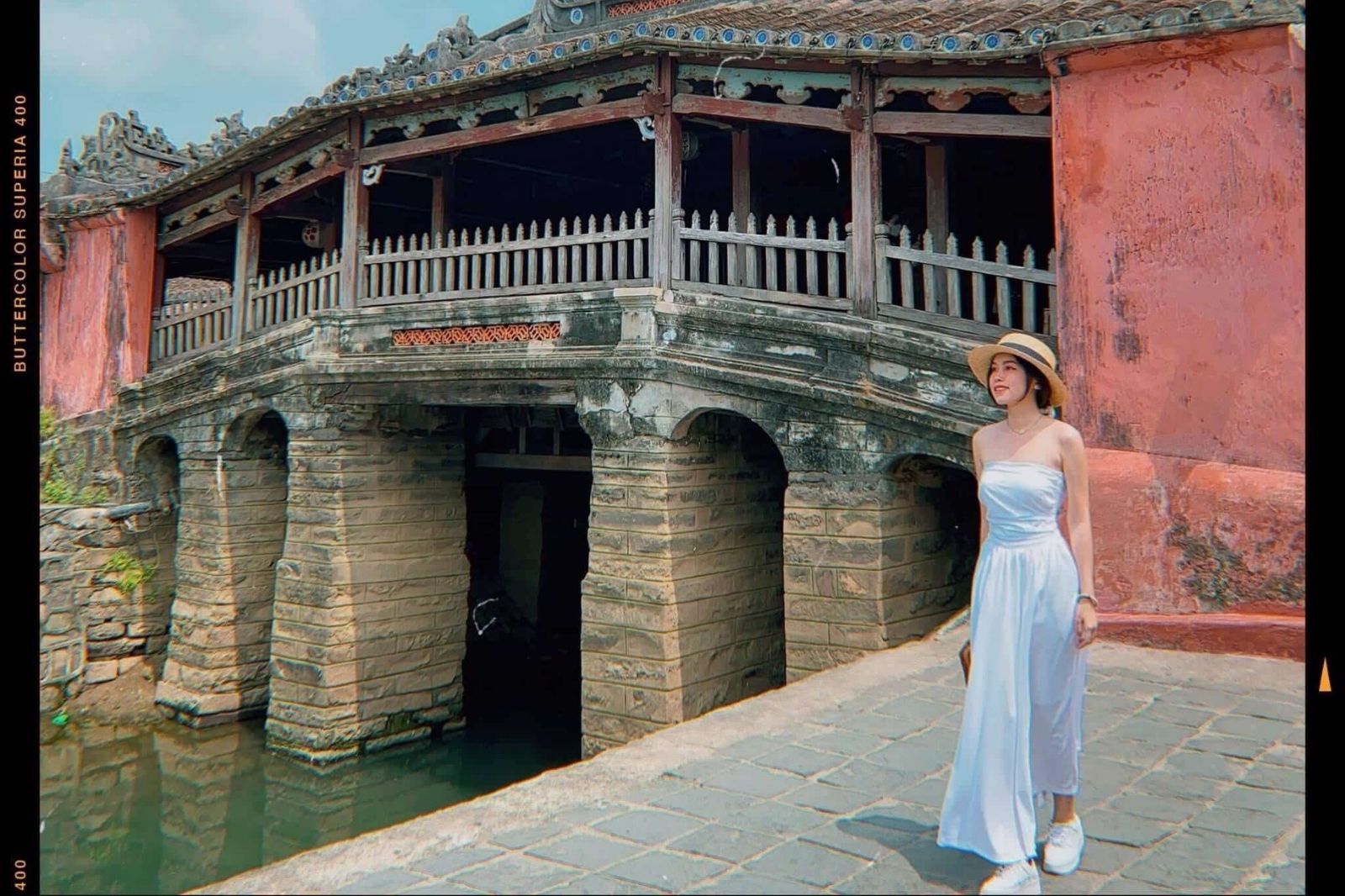
Checking in at the Covered Bridge
Photo: Checking in at the Covered Bridge  

Spanning over 400 years of history, Hoi An Covered Bridge is not only an ancient architectural marvel but also a spiritual symbol of the ancient town, condensing the historical, cultural, and religious values of the old Hoi An port. Every architectural detail and quiet bridge span tells a story of the Vietnamese–Japanese–Chinese cultural intersection and the peaceful, slow-paced life that forms the soul of this world heritage site. To make your journey discovering Hoi An Covered Bridge and the ancient town seamless, convenient, and enriched, visitors can choose an all-inclusive Hoi An tour package with Sovaba Travel. With a well-planned itinerary, professional service, and a team of guides knowledgeable in local history and culture, Sovaba Travel helps you not just "take a tour", but deeply understand and appreciate the true value of each monument, from the Covered Bridge to ancient houses and traditional craft villages.

Loading......

Featured destinations