The Construction Process of La Vang Holy Land - Quang Tri
Central
Quang Tri
La Vang Holy Land
Sovaba.travel
Updated at: 24/09/2026
1. The History of La Vang Holy Land
La Vang Holy Land is situated on an ancient region called Dinh Cat, now part of Hai Phu commune, Hai Lang district, Quang Tri province. In the late 18th century, during the Tay Son dynasty (around 1798), fierce anti-Catholic persecutions broke out, forcing many parishioners to flee their villages and seek refuge in the wild forest of La Vang. Facing hardship, illness, and danger in the unwholesome jungle, the Catholic community gathered under a large banyan tree to pray. According to Catholic tradition, Our Lady Mary appeared to console, protect, and instruct them to use "la vang" – a native plant leaf – to cure illnesses. That sacred event became the foundation for the establishment of La Vang Holy Land, one of the most important Catholic pilgrimage centers in Vietnam.
To commemorate this special event, the early parishioners erected a simple thatched hut right beneath the banyan tree to honor Our Lady. From that humble structure, La Vang Holy Land was gradually constructed and developed through various historical periods, becoming a sacred pilgrimage site attracting millions of believers and visitors every year.
Photo: Center for events in La Vang
2. Historical Milestones in the Construction of La Vang Holy Land
The construction and development process of this Holy Land is tied to memorable historical milestones, demonstrating the sacrifice and solidarity of the community of believers.
Initial Phase (18th - 19th century)
In 1885, the thatched church was burned down during the religious ban. In 1886, Bishop Marie Antoine Caspar (Bishop Loc) decided to build a more solid tile-roofed church. Transporting materials was difficult due to the mountainous terrain, so the construction lasted 15 years.
Groundbreaking: Around 1894 (after preparations starting in 1886).
Completion and inauguration: August 6, 1901, during the 1st La Vang Congress, under the title Our Lady Help of Christians.
This tile-roofed church was the first milestone in the construction process of La Vang Holy Land, marking its transformation from temporary shelters to a large-scale religious monument.
Photo: La Vang Holy Land is a major pilgrimage center
Development Phase (1924 - 1972)
By the 1920s, the number of pilgrims increased sharply, rendering the tile-roofed church cramped and deteriorated. During the 8th La Vang Congress (1923), Bishop Allys Ly decided to build a new, large-scale shrine.
Groundbreaking: February 11, 1924 (Feast of Our Lady of Lourdes), led by Father Morineau Trung (Co Vuu parish), following the design of architect Carpentier.
Completion: After 4 years, inaugurated on August 20, 1928, during the 9th La Vang Congress.
Characteristics: A two-story roofed church with two transepts, and a prominent square two-story bell tower rising above the sand dunes and forest. The interior featured traditional Vietnamese architecture, while the facade followed Western style.
From 1955 to 1959, Father Joseph Tran Van Tuong oversaw major renovations, replacing wood with iron to increase durability. In 1961, Pope John XXIII elevated it to a Minor Basilica and recognized La Vang as the National Marian Center.
Photo: The remaining ancient bell tower
Restoration and Modernization Phase (1990 - present)
1990: After a period of interruption, local authorities allowed the resumption of religious activities at La Vang. This was a turning point bringing La Vang back as the most important pilgrimage center for Vietnamese Catholics.
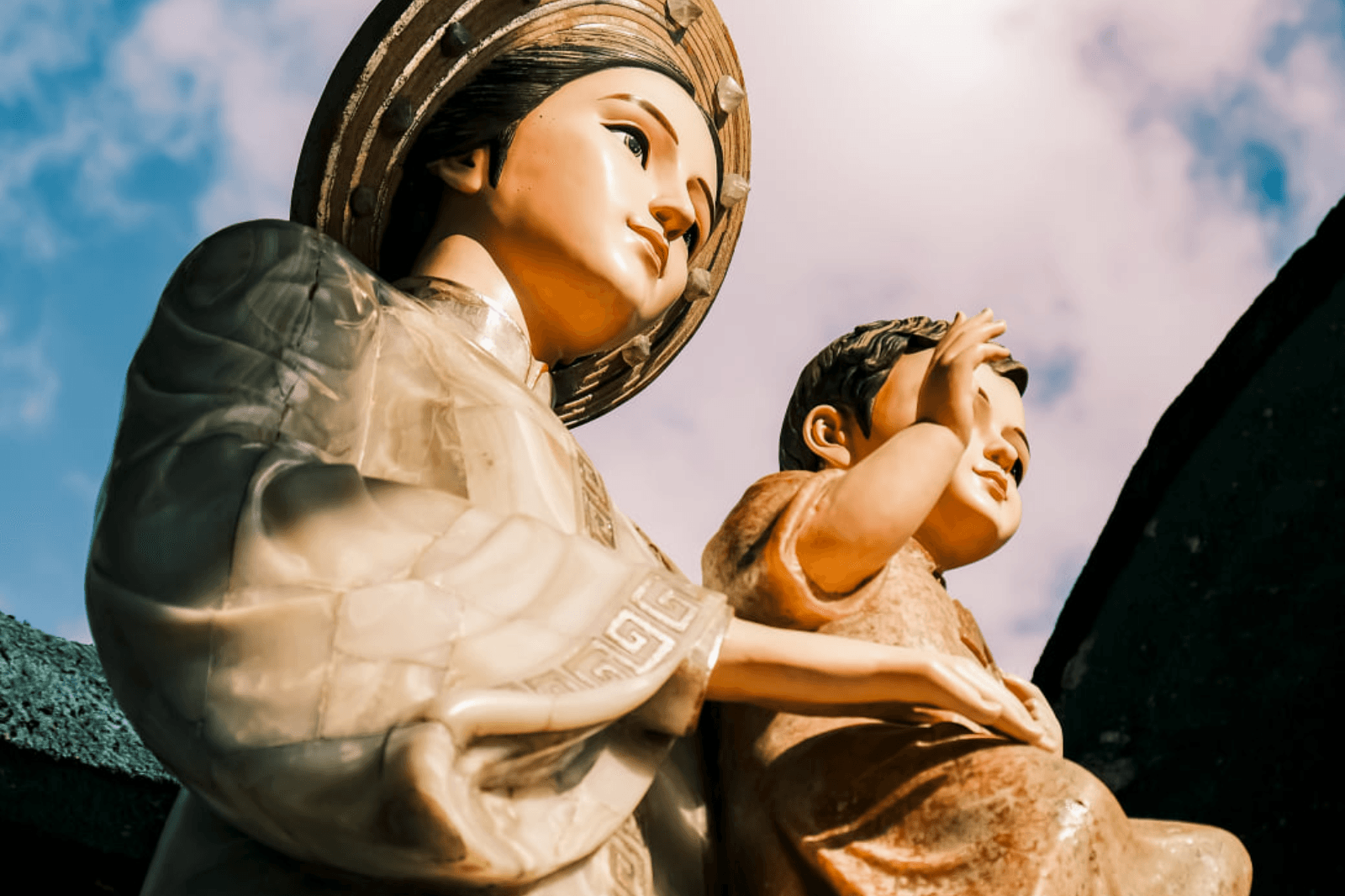
1995: Structures such as the ancient bell tower, Chapel of Our Lady, Blessed Sacrament Chapel (2002), Rosary Square, Ceremony Stage, and Pilgrim House (2004) were restored or newly built. Notably, the statue of Our Lady of La Vang created by sculptor Van Nhan, reflecting Vietnamese ethnic style, was blessed by Pope John Paul II in Rome in 1998.
2008: Quang Tri Provincial Government allocated an additional 21 hectares of land for religious activities, creating favorable conditions for building the new Basilica.
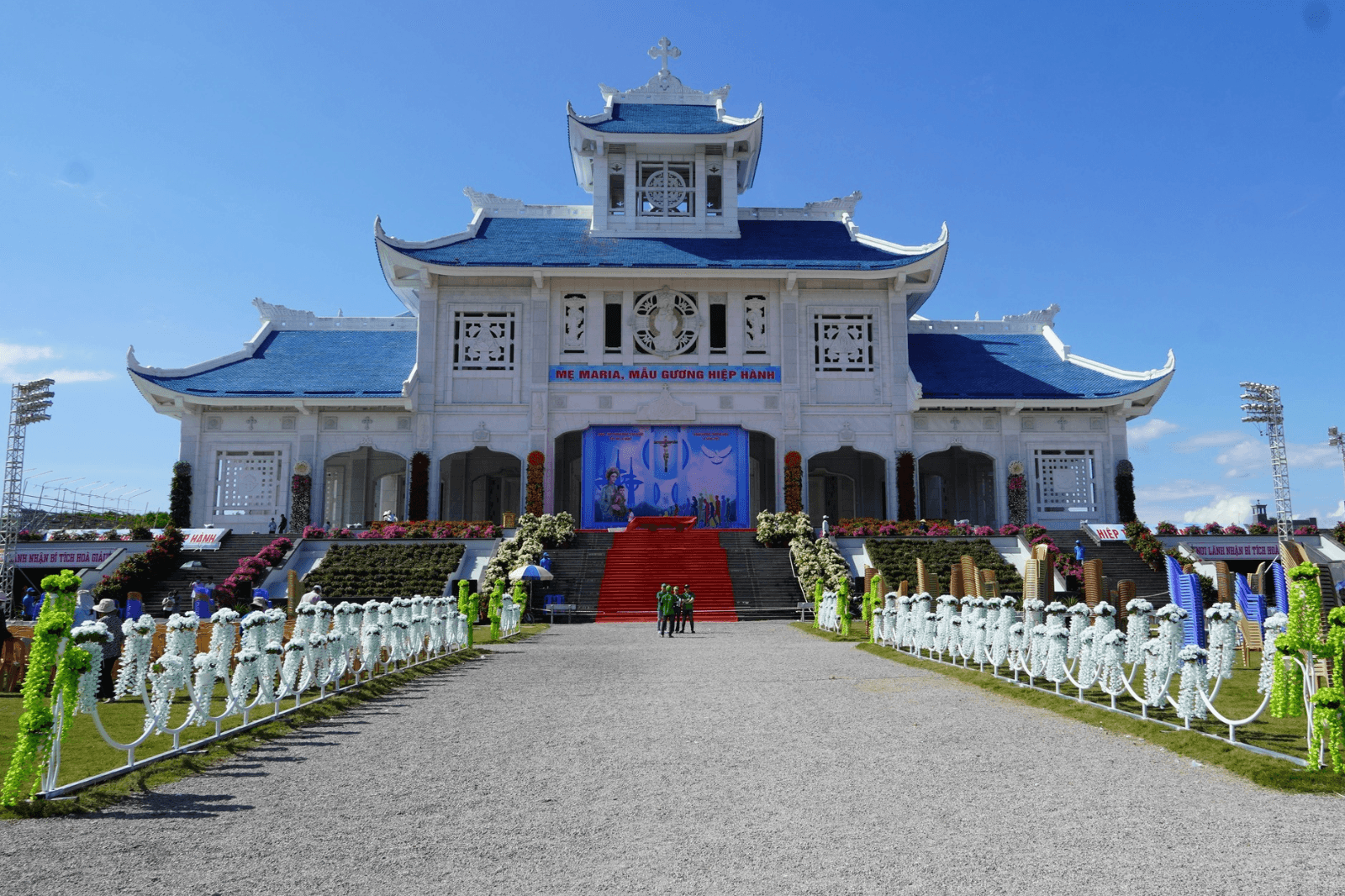
2012: The cornerstone laying ceremony for the new Basilica took place on August 15, 2012. This is the largest project of the Catholic Church in Vietnam to date, covering an area of 13,464 m², with a length of 132 m, a width of 102 m, and a capacity of 5,000 people. The structure was designed in a traditional Oriental style, conveying the Vietnamese soul through tiled roof details, communal house motifs, and delicate carvings.
2023: According to the plan, the new Basilica was expected to be inaugurated, but due to the impact of the pandemic, the construction is still undergoing completion.
Photo: Panoramic view of the La Vang Congress
The historical milestones in the construction of La Vang Holy Land are not only proof of the power of faith, but also a reminder of resilience and perseverance in preserving and promoting the nation's cultural and spiritual values.
3. War Events and the Bell Tower Ruins (1972)
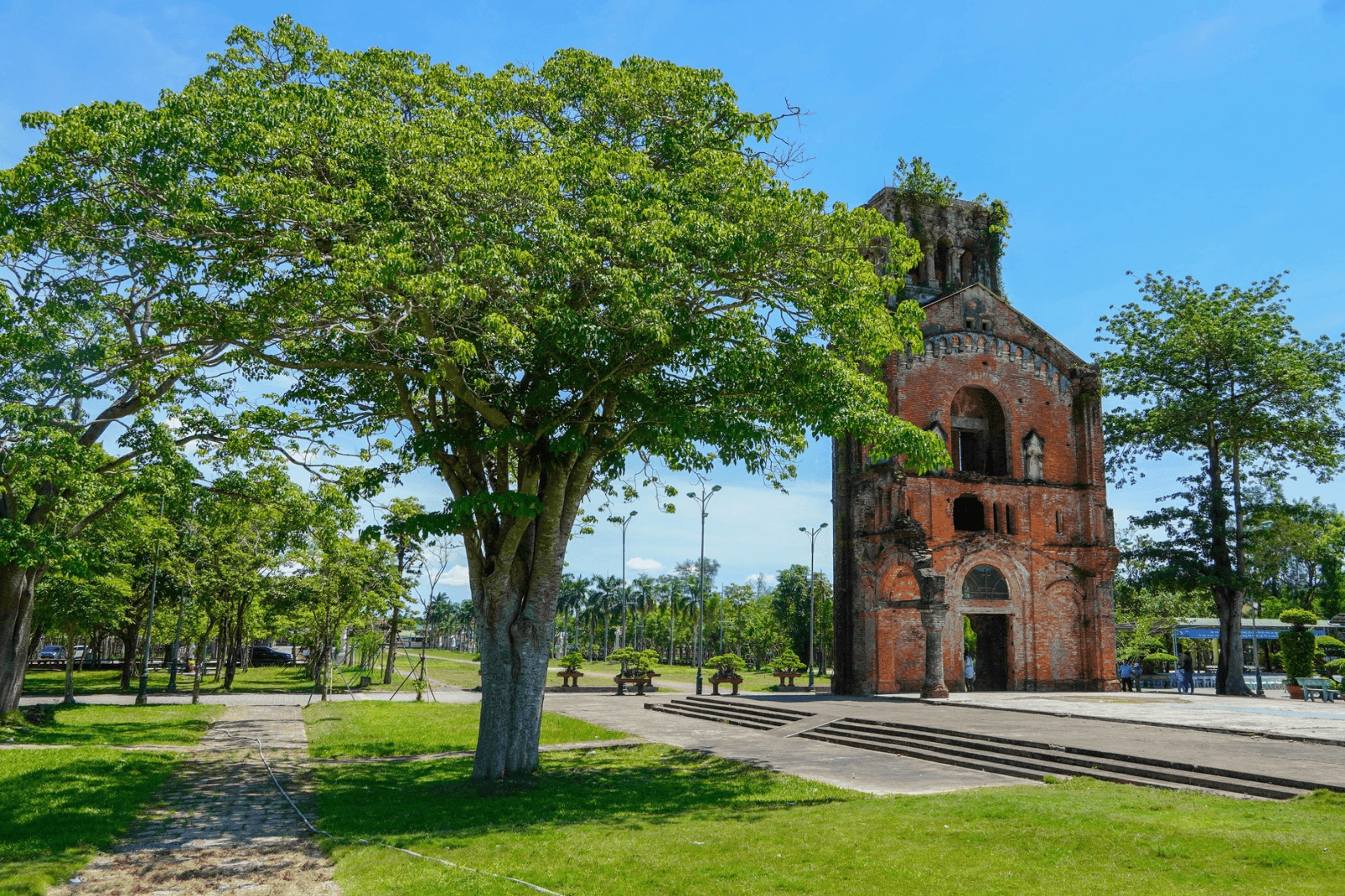
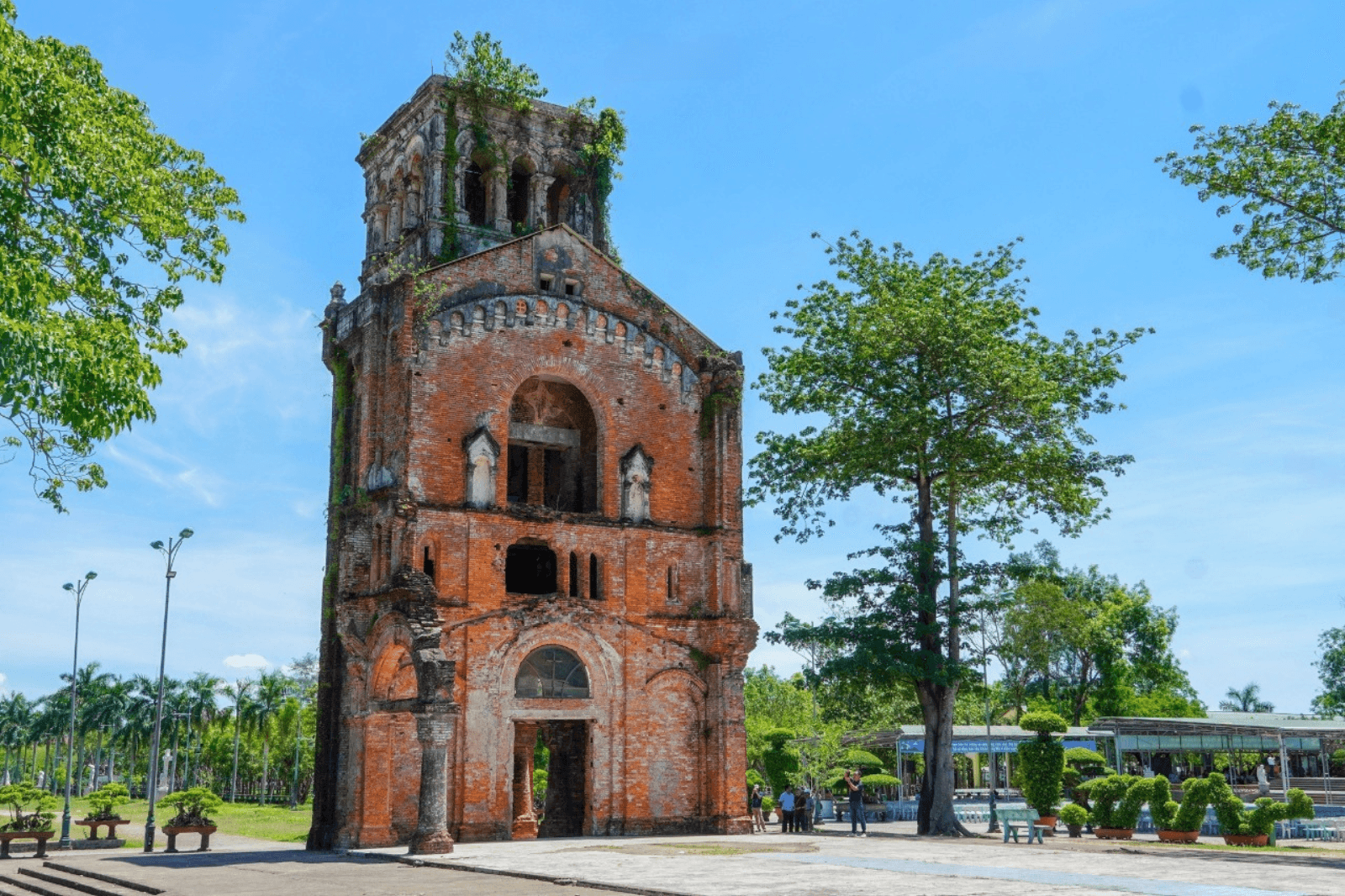
In the summer of 1972, during the fierce war in Quang Tri, the La Vang Basilica was almost completely destroyed by bombs and artillery. After heavy bombardments, only the old bell tower bearing war scars survived to this day as a haunting historical witness. This is considered the most difficult and challenging period for the preservation and restoration of La Vang Holy Land. However, after 1975, many important structures were gradually rebuilt and completed, such as the Chapel of Our Lady, the Blessed Sacrament Chapel (inaugurated in 2002), the Marian Shrine, and a system of pathways serving pilgrims.
The rebirth of La Vang Holy Land not only reflects architectural and religious values, but also stands as a symbol of faith, perseverance, and the aspiration to preserve a sacred spiritual heritage in a land that once suffered immense war trauma.
4. The Construction of the New Basilica
To meet the growing demands of pilgrims, the Church initiated the construction of a new Basilica – the largest project of modern Vietnamese Catholicism.
Laying of the first stone: August 15, 2012.
Scale: Area of 13,464 m², length of 132-140m, width of 102m, capacity of about 5,000 people.
Architecture: Imbued with Vietnamese identity featuring curved tiled roofs, motifs of la vang leaves, rice grains, grape bunches, phoenixes... Harmoniously combining tradition and modernity while being environmentally friendly.
Progress: Official construction began in 2013 after geological surveys. It is currently being completed (expected to be inaugurated in recent years, subject to pandemic impacts and other factors).
This structure is not only a church but also a cultural and religious icon, expressing the Vietnamese spirit within the Catholic faith.
Photo: Our Lady of La Vang
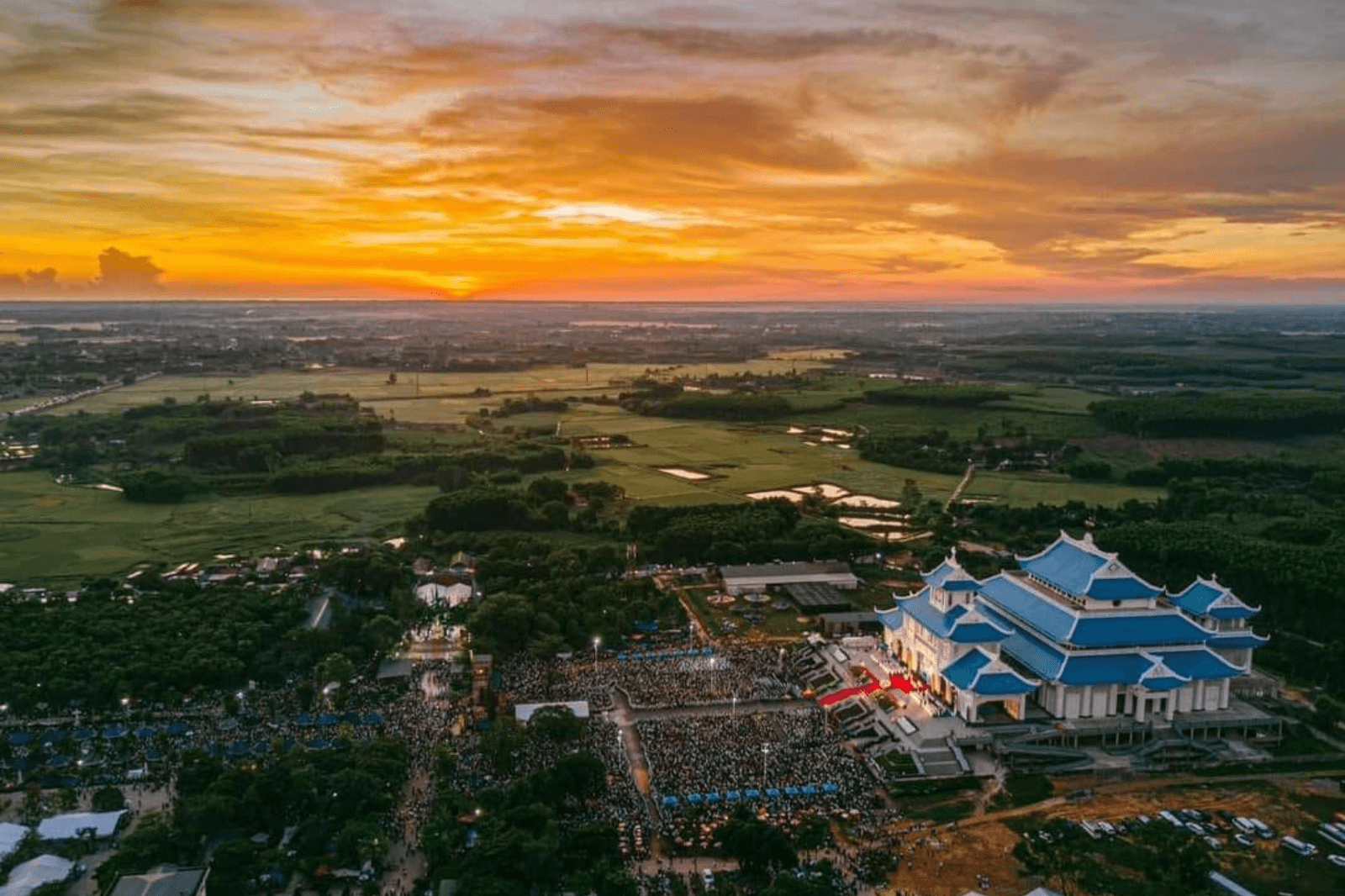
All these highlights at La Vang Holy Land are not only evidence of a wonderful fusion between cultural heritage and faith, but also a place where visitors can deeply feel history, faith, and hope. Every year, especially during the Feast of the Assumption of Mary (August 13-15), hundreds of thousands of people flock here to attend procession rites, floral offerings, and the closing Mass. Every three years, the La Vang Congress is organized on a larger scale, attracting the Vietnamese Catholic community from overseas as well.
The journey of building La Vang Holy Land is a vivid testament to the steadfastness and devotion of the faithful community. This is not only a sacred destination but also a place where visitors can find peace and hope. To fully experience this special historical, cultural, and spiritual space, book a tour to visit La Vang Holy Land and discover the profound beauty of the Quang Tri region.