Where is the Perfume River? Origin, length, and special features of Hue's iconic river
Central
Thua Thien Hue
Perfume River
Sovaba.travel
Updated at: 28/08/2026
1. Where is the Perfume River?
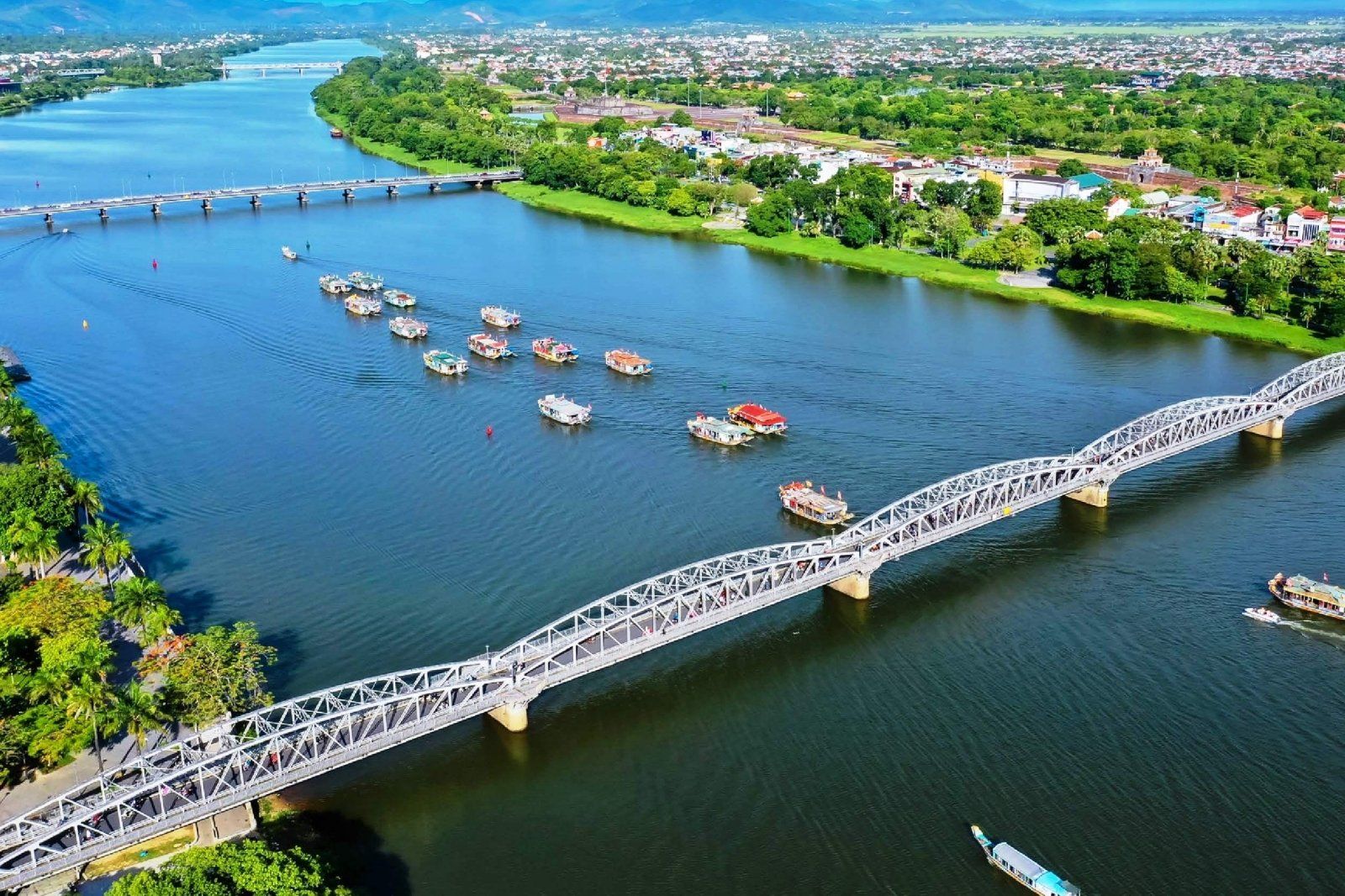
The Perfume River is located right in the center of Hue City, Thua Thien Hue Province, Central Vietnam. The river flows through Phu Xuan and Thuan Hoa wards, connecting the North and South banks along Tran Hung Dao and Le Loi streets. It is the largest river in Thua Thien Hue's dense river network, with a basin area of about 2,830 km² and an average discharge of 222 m³/s. The Perfume River divides Hue City into two parts: the ancient North bank with historical relics, and the more bustling South bank with modern life. This location not only creates a favorable feng shui position but also serves as a vital traffic route connecting neighboring areas such as Huong Thuy, Huong Tra, and Phu Vang.
Photo: Perfume River - A peaceful symphony in the heart of the ancient capital
2. Origin and formation of the Perfume River
To fully understand the beauty and value of Hue's iconic river, one needs to look back at its journey of formation from the early days. The Perfume River is formed by the confluence of two main branches originating from the East Truong Son Mountain Range.
Ta Trach main branch: About 67km long, originating from the East Truong Son Range, flowing through Bach Ma National Park in a northwest direction, crossing 55 large waterfalls.
Huu Trach sub-branch: About 60km long, flowing northwards through 14 waterfalls.
These two branches meet at Bang Lang Intersection (also known as Tuan Intersection), creating the poetic Perfume River. From this intersection to the mouth of Thuan An Beach, the Perfume River is about 33km long, with a total length of up to 80km. The Perfume River has a low slope, so its flow is very gentle and winding, especially the section flowing through the center of Hue City, bringing a soft and charming beauty.
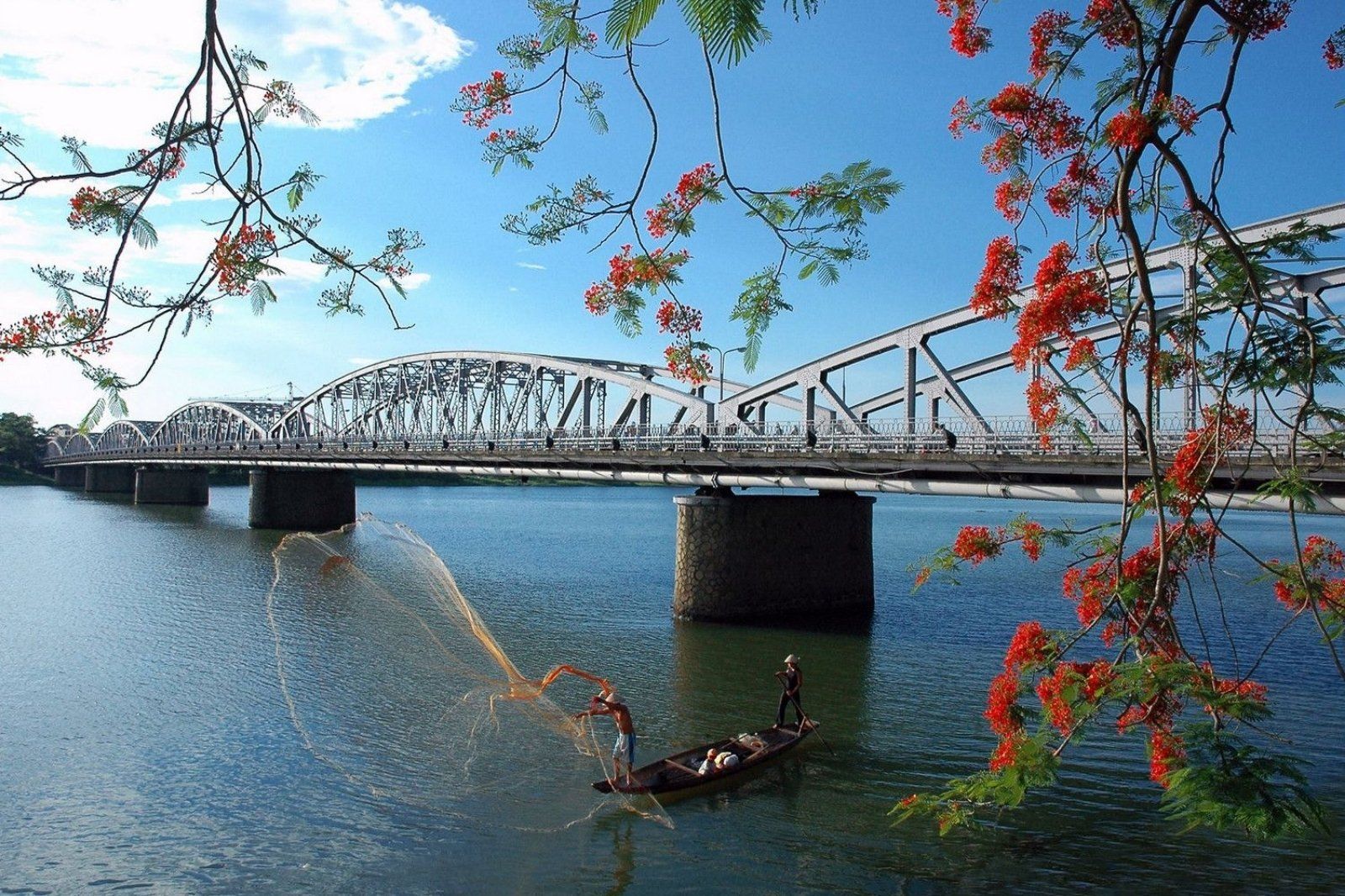
Photo: The names of the Perfume River changed through different historical periods
3. History of the Perfume River's name through various periods
The Perfume River has gone through many historical periods and has been called by various names, reflecting the changes of dynasties and people's perception of this river. Below are some prominent names throughout history:
Song Linh (Linh River): According to the book "Du dia chi" by Nguyen Trai in 1435, the river was called Linh River.
Song Cai Kim Tra (Cai Kim Tra River): In 1555, in the book "O chau can luc" revised by Duong Van An, the river was named Cai Kim Tra River (Kim Tra Dai Giang).
Song Huong Tra (Huong Tra River): By the time of Le Quy Don (18th century), in the work "Phu bien tap luc", the river was called Huong Tra River. This name was also related to Huong Tra District, which was renamed from Kim Tra District during the reign of Lord Nguyen Hoang.
Other names: In addition, some documents record that the Perfume River was once called Lo Dung River, Dinh River, and Yen Luc River.
Despite going through many name changes, the name Perfume River (or Huong Giang) has ultimately remained attached and become a symbol of the poetic and romantic beauty of Hue.
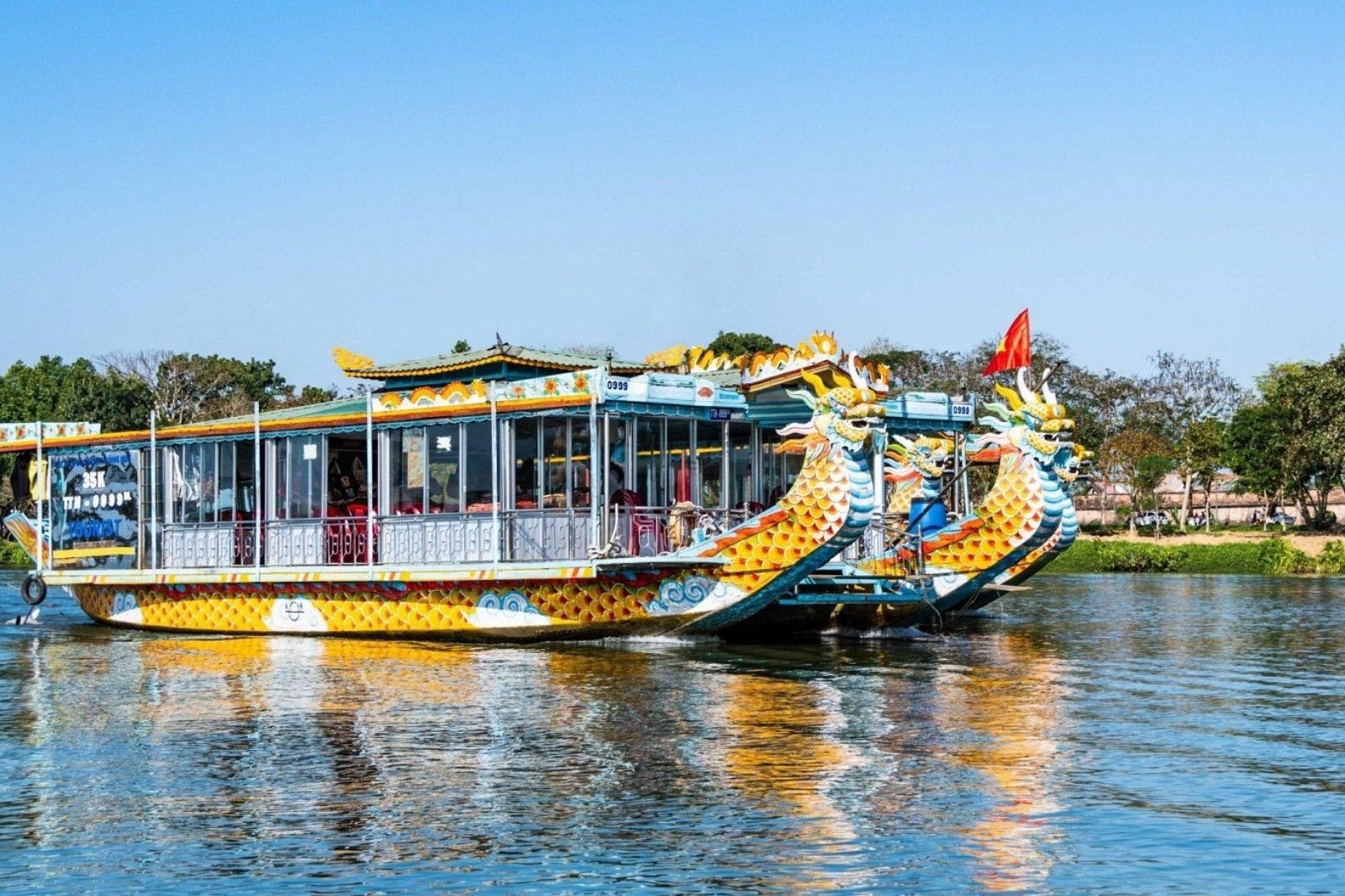
Photo: Many special experiences on the poetic Perfume River
4. Landscape along the banks of the Perfume River
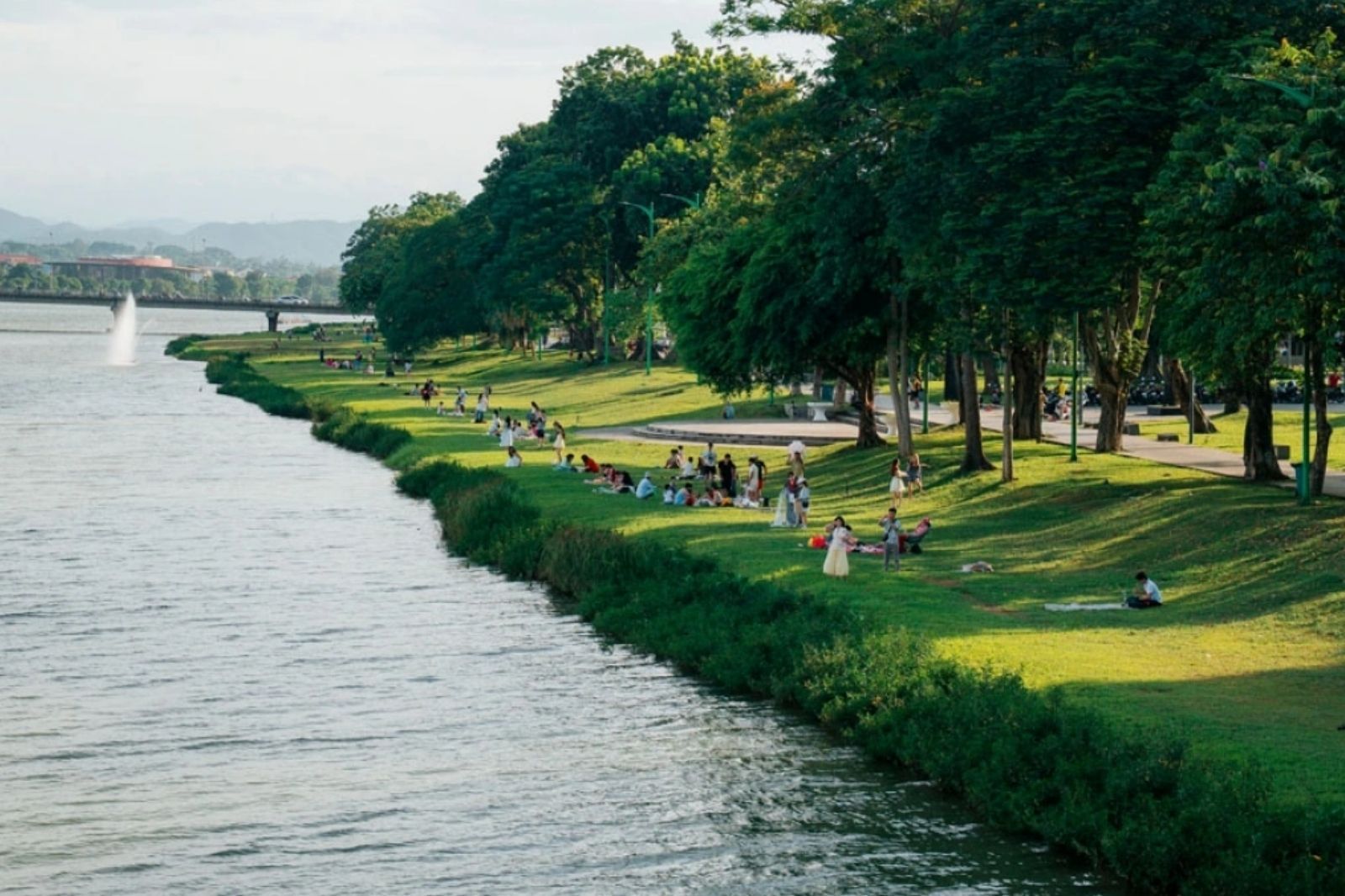
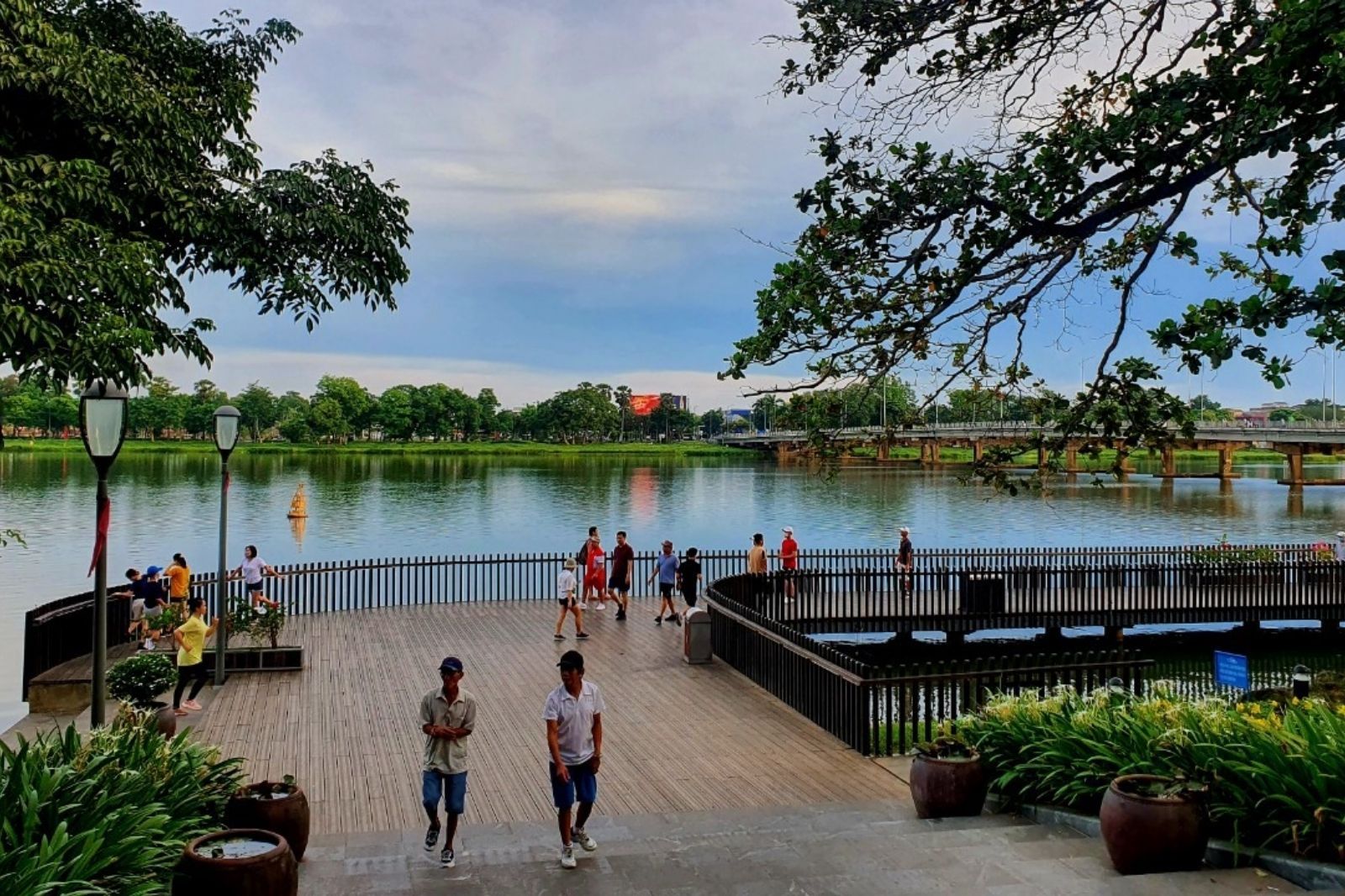
Both banks of the Perfume River feature a harmonious blend of nature and ancient architecture. The river's emerald-green, clear water flows past Vi Da garden with lush green lawns, the majestic Thien Mu Pagoda, Bach Yen River, and Vong Canh Hill. Landmarks such as Truong Tien Bridge, tombs, and temples are reflected on the water's surface, creating a poetic scenery. At sunset, the river puts on a warm coat with light drizzle; at night, shimmering lights emanate from dragon boats and cross-river bridges. This landscape offers a peaceful atmosphere with singing birds and cool breezes, ideal for those seeking relaxation.
Photo: Along the banks of the Perfume River
5. Tourism activities associated with the Perfume River
Tourism on the Perfume River offers many choices suitable for both first-time visitors to Hue and those wanting to deeply explore the pace of life in the Ancient Capital. Depending on your time and preferences, you can consider the following activities:
Dragon boat cruise on the Perfume River: Admire the views along both banks and enjoy Ca Hue (Hue folk singing) in the evening, with popular prices around 100,000 – 200,000 VND/person.
Watch the sunset at Truong Tien Bridge: The best time is usually from 17:00 – 17:30, when the evening light reflects on the water surface.
Stroll along Nguyen Dinh Chieu Walking Street: Combine sightseeing with enjoying local cuisine such as Hue beef noodle soup (bún bò Huế) and royal sweet soups (chè cung đình).
Other experiential activities: Stand-up paddleboarding (SUP) in the early morning, check-in at the ironwood pedestrian bridge or Half-Moon Bridge, or dine at floating restaurants on the Perfume River featuring European-Asian menus and seafood.
Riverfront accommodation: Choose hotels with river views like Huong Giang Resort & Spa for convenient transportation and sightseeing.
Regarding timing, spring (February–April) and autumn (September–November) are considered the most ideal times to visit the Perfume River, when the weather is pleasant and the scenery along both riverbanks is fresh and clear.
Photo: Walking street along the Perfume River
After many historical ups and downs, despite bearing many different names, the Perfume River retains the intact beauty of a great witness, quietly enriching the ancient capital land with romance and contemplation. The river is not only a symbol, but also the soul of Hue, a place where visitors find inner peace, so that upon leaving, the image of a gentle, poetic, and heartwarming Huong Giang remains forever in their hearts. To fully discover this unique beauty, join Sovaba Travel to experience Perfume River tours, listen to traditional Ca Hue melodies, and fully immerse in the cultural space of the ancient capital.