Núi Quản Bạ
TRAVEL GUIDEQuan Ba Twin Mountains

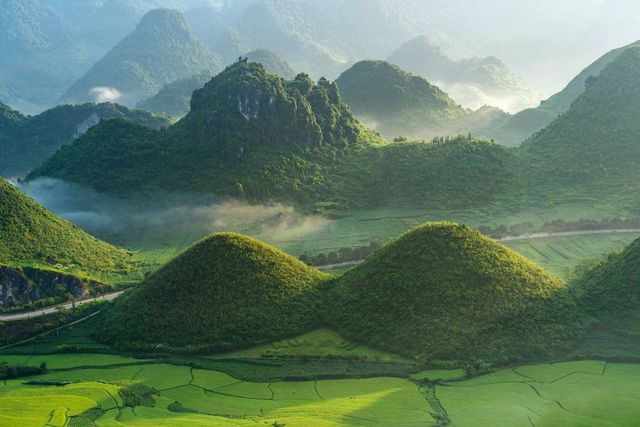
Quan Ba Twin Mountains is one of the most famous tourist symbols of Ha Giang, attracting visitors with its unique beauty formed by two symmetrically shaped mountains in the middle of the lush green Tam Son Valley. Not only impressing with its fascinating natural landscape, this place is also associated with unique folk legends of highland ethnic minorities and is an indispensable stop on the journey to explore the Dong Van Karst Plateau. From Quan Ba Heaven Gate, visitors can feast their eyes on the panoramic view of the Twin Mountains along with peaceful villages nestled amidst rolling mountains.

If you are planning to explore Ha Giang and want to learn all about the Quan Ba Twin Mountains, this article will provide a detailed travel guide from A to Z. From location, transportation, the best time to visit, ticket prices, and highlight experiences to useful tips, everything will help you have a smoother and more complete trip when visiting one of the most famous scenic spots in this frontier land.
Where are Quan Ba Twin Mountains Located?

Quan Ba Twin Mountains are located in Tam Son Town, Quan Ba District, Ha Giang Province, in the southwestern part of the Dong Van Karst Plateau UNESCO Global Geopark.

  • Exact location: Along National Highway 4C, about 40–52 km north of Ha Giang City center.
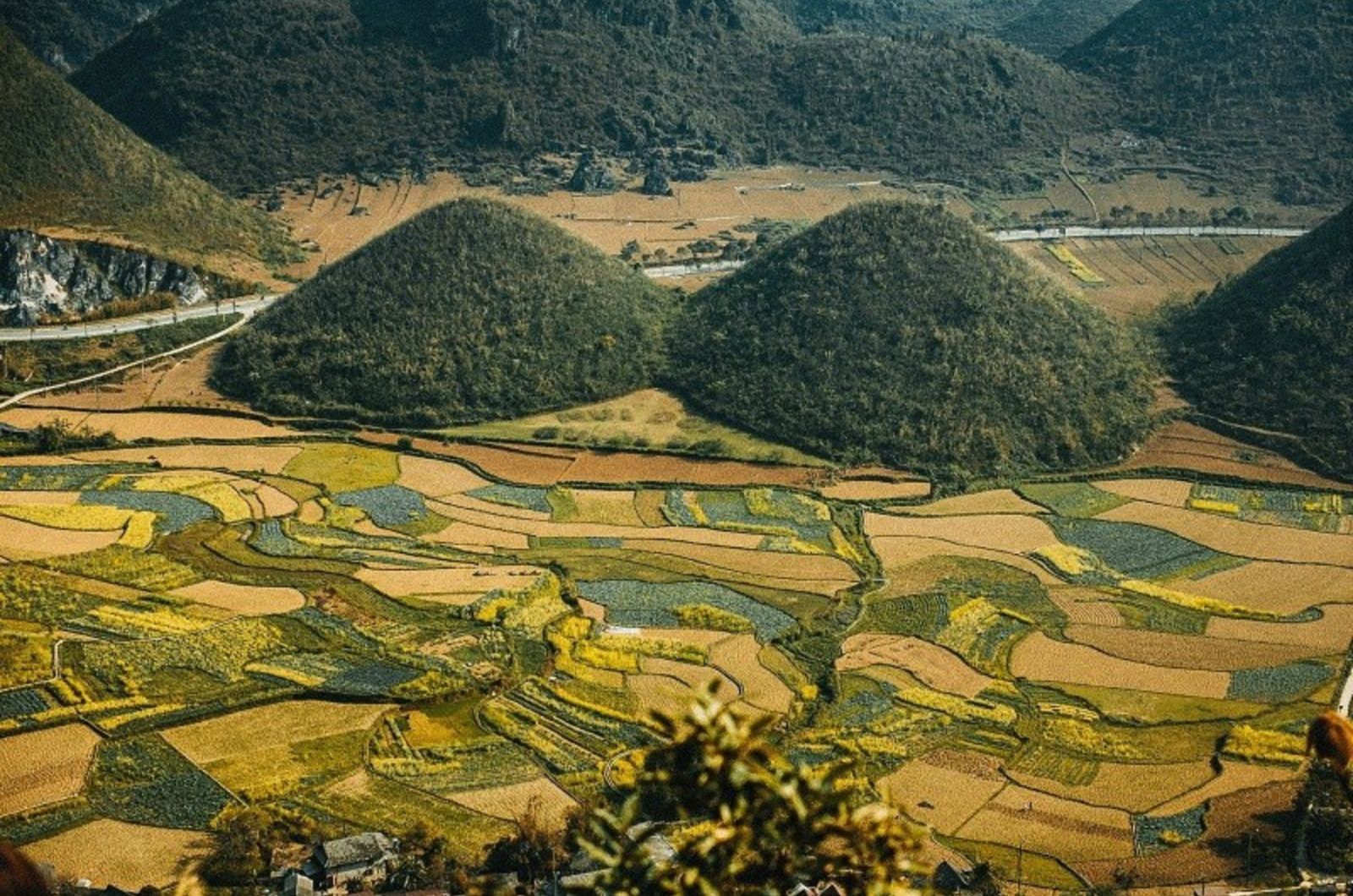
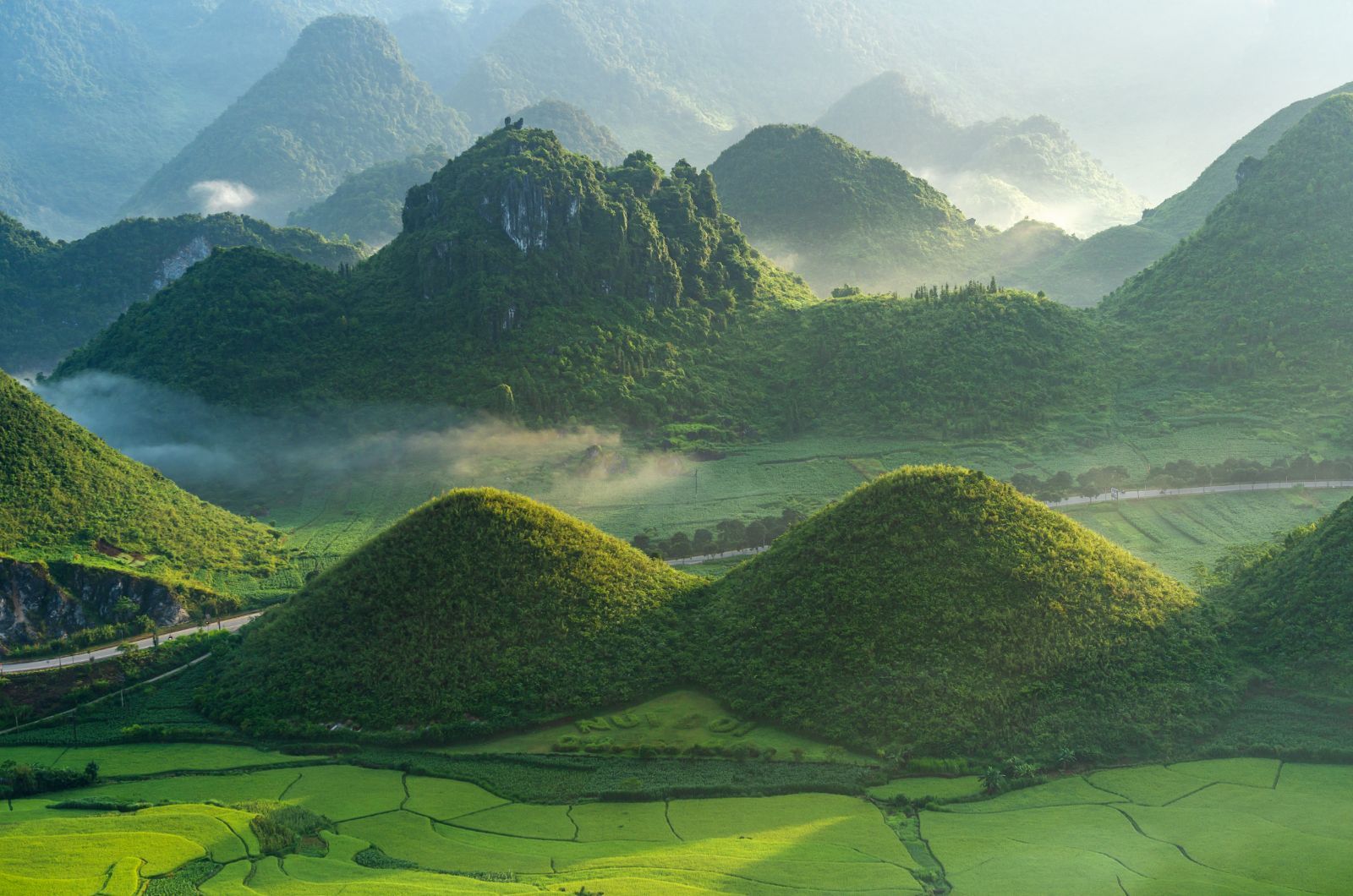
  • The two nearly symmetrical conical mountains, a few hundred meters high, nestle in the middle of a valley surrounded by terraced fields and rolling limestone peaks.
  • This is the gateway to the Dong Van Karst Plateau, easily combined with other attractions such as Quan Ba Heaven Gate.

Looking down from above, the Twin Mountains appear soft and gentle, standing in stark contrast to the surrounding rugged cat-ear limestone terrain, creating a harmonious and poetic natural landscape.

Quan Ba Twin Mountains
Photo: Quan Ba Twin Mountains 

The Legend of Quan Ba Twin Mountains and Interesting Stories

Not only famous for their unique shape, Quan Ba Twin Mountains are also associated with a touching folk legend of the H'Mong people, passed down through generations as an integral part of local culture. According to the most popular tale, once upon a time, there was a talented H'Mong youth whose enchanting jew's harp (dan moi) melody captivated everyone. The melodic sound touched the heart of Fairy Peach Blossom in the celestial realm. Mesmerized by the music and earthly love, she descended to earth, married the young man, and gave birth to a healthy baby boy.

However, the union between an immortal and a mortal could not last forever. The fairy was forced to return to the heavens. Pitying her innocent child, before departing, she left behind her breasts to nourish him. Over time, her breasts transformed into two round mountains in the middle of Tam Son Valley, forming today's Quan Ba Twin Mountains. Local people also believe that her fairy milk enriched the soil, making the land fertile, crops abundant, and bestowing gentle grace upon the mountain girls. Her lingering tears of farewell were said to have turned into the clear blue Mien River flowing through Quan Ba.

In addition, there are alternative versions related to the love story of a giant man and a local girl, but the legend of Fairy Peach Blossom remains the most widely known. Beyond adding allure to the Quan Ba Twin Mountains landmark, this legend reflects the cultural beauty, love, sacrifice, and deep bond between humans and nature among the highland ethnic people of Ha Giang.

Best Time to Visit Quan Ba Twin Mountains

Quan Ba Twin Mountains possess a distinct beauty in each season, but depending on your preferences for sightseeing, photography, or cultural experiences, travelers can choose the most suitable time for their trip.

  • January – March (Spring): Crisp chilly air, lush green vegetation, and blooming highland flowers create a poetic backdrop, perfect for sightseeing and photo taking.
  • August – September (Autumn): Considered the best time of the year when the terraced rice fields in Tam Son Valley turn golden yellow. The scenery of mountains, ripe rice fields, and clear blue skies forms an impressive natural picture.
  • May – July (Summer): Lush green nature and fresh air, but rain showers occur frequently, so travelers should take caution when navigating mountain passes.
  • Winter: Fog covering the hills creates a misty, mystical charm typical of Ha Giang's highlands, though the weather is quite cold and visibility can be limited.

For the best photos, visitors should visit in the early morning or late afternoon when the sunlight is gentle and the scenery becomes extra dreamy. Also, don't forget to check the weather forecast before your trip for a smooth and safe itinerary.

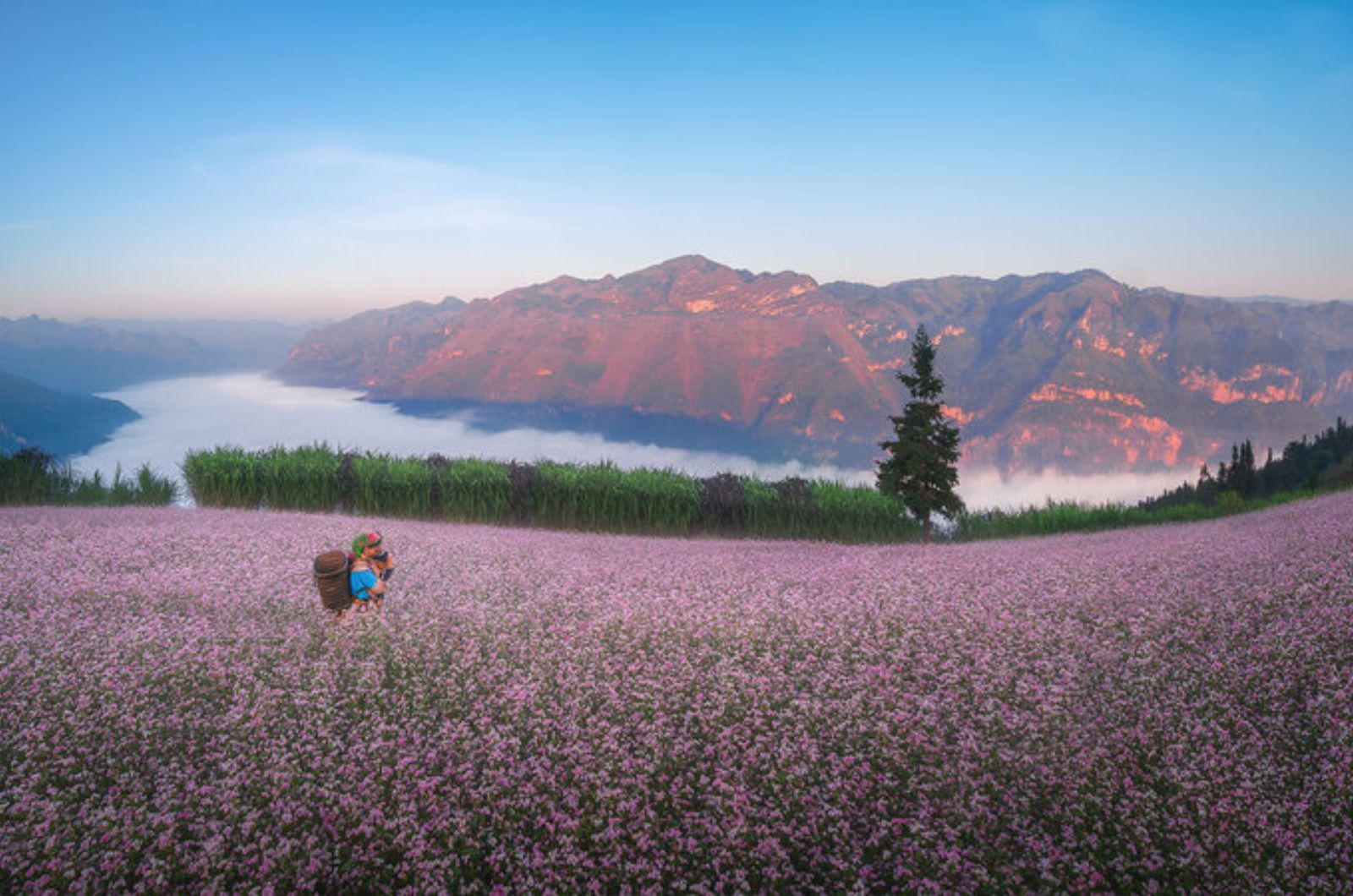
Buckwheat flower season in Ha Giang
Photo: Buckwheat flower season in Ha Giang 

Detailed Travel Guide to Quan Ba Twin Mountains

Quan Ba Twin Mountains are located about 40–46 km from Ha Giang City center and are very convenient to combine into a trip exploring Dong Van Karst Plateau. Travelers can refer to the following route:

From Hanoi:

  • Take a bus or sleeper bus to Ha Giang City (travel time takes about 6–7 hours).
  • Rent a motorbike (150,000 – 250,000 VND/day) or a car to continue the trip.

From Ha Giang City to Quan Ba Twin Mountains:

  • Travel along Nguyen Trai Street to National Highway 2.
  • Turn onto National Highway 4C heading toward Quan Ba – Yen Minh.
  • Conquer Bac Sum Pass with its scenic curves.
  • Stop at Quan Ba Heaven Gate to admire the panoramic view of the Twin Mountains and Tam Son Valley.
  • Continue driving for a few kilometers to reach the Quan Ba Twin Mountains area.

With scenic roads and famous check-in spots, the journey to Quan Ba Twin Mountains is not just a drive, but an opportunity to marvel at Ha Giang's remarkable landscapes.

Latest Entrance Fee for Quan Ba Twin Mountains

Quan Ba Twin Mountains currently require no entrance fee, and you can freely admire this famous landmark from National Highway 4C or viewing points around the Quan Ba Heaven Gate area.

Reference costs for your journey:

  • Motorbike rental in Ha Giang: around 150,000 – 250,000 VND/day.
  • Fuel and food expenses: around 300,000 – 500,000 VND/person/day.
  • Nearby attractions like Lung Khuy Cave or check-in spots may charge an entrance fee of 20,000 – 50,000 VND/person.

Overall, exploring Quan Ba Twin Mountains is budget-friendly, suitable for various types of travelers, and easy to pair with other famous destinations along the Ha Giang loop.

Panoramic view of Quan Ba Twin Mountains
Photo: Panoramic view of Quan Ba Twin Mountains 

Must-Try Experiences when Visiting Quan Ba Twin Mountains

Visiting Quan Ba Twin Mountains, travelers not only admire one of Ha Giang's most iconic symbols but also have the chance to explore the distinctive natural scenery and culture of the karst plateau.

  • Panoramic Twin Mountains check-in: Stop at viewpoints on Highway 4C or Quan Ba Heaven Gate to admire the unique beauty of the Twin Mountains set amid lush green Tam Son Valley.
  • Watch sunrise and sunset: Moments when golden sunlight bathes the hills and terraced fields create a poetic landscape, perfect for photography.
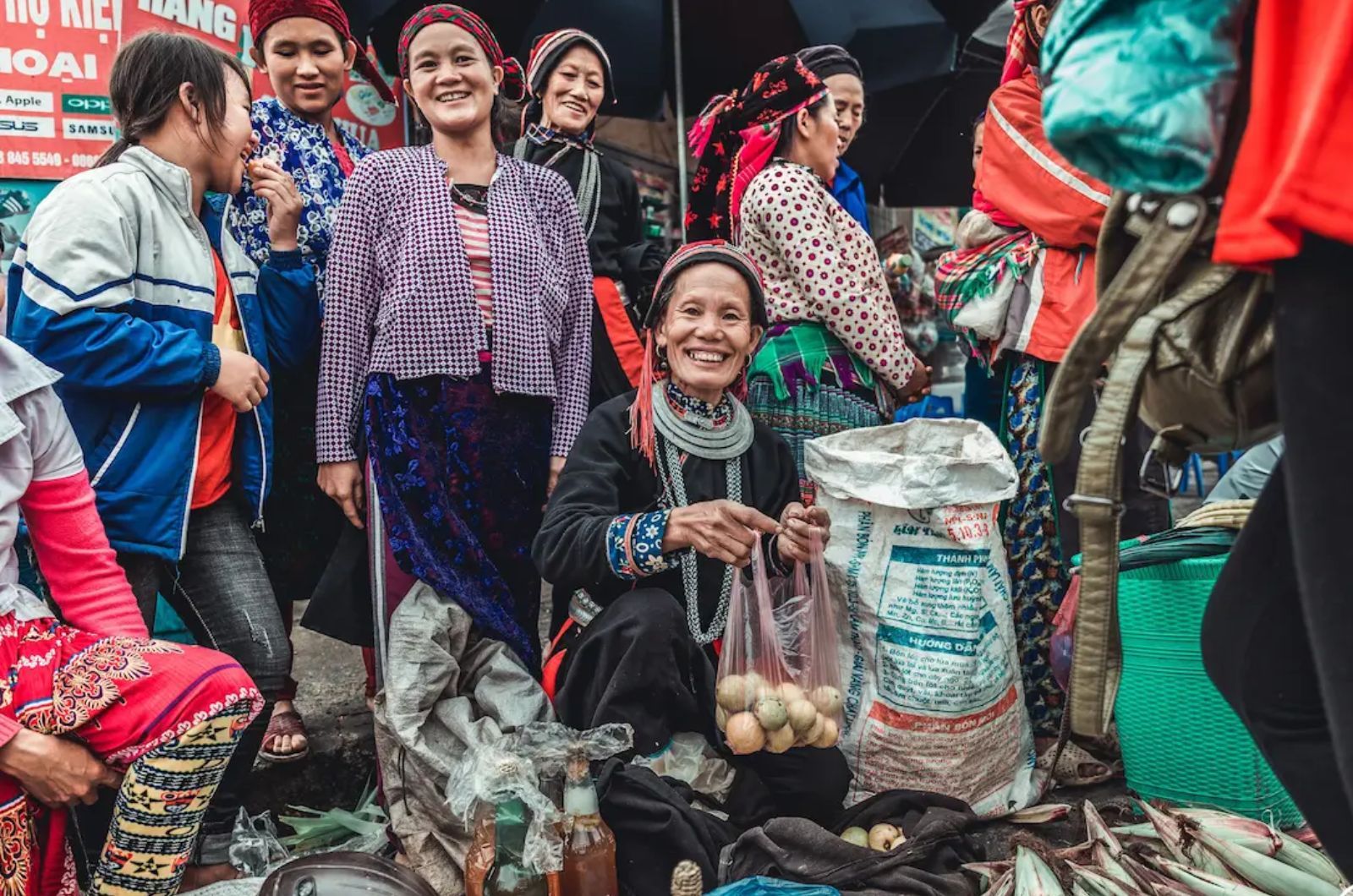
  • Discover local culture: Visit H'Mong villages, learn about local life, and savor highland specialties like buckwheat cake, smoked buffalo meat, or corn wine.
  • Aerial photography: If you have a drone or flycam, you will enjoy a stunning aerial panorama of Tam Son Valley.
  • Stroll through nature: Walk around the valley or small trails near the Twin Mountains to feel the fresh air and peaceful charm of Ha Giang highlands.
  • Buy local souvenirs: Handmade brocade, Shan Tuyet tea, mint honey, and local produce are popular gifts chosen by travelers after their trip.

With a harmonious blend of natural landscapes, local culture, and unique check-in spots, Quan Ba Twin Mountains promise to deliver many memorable experiences on your journey exploring Ha Giang.

Discovering local culture
Photo: Discovering local culture  

Quan Ba Twin Mountains are not only a unique natural masterpiece of Ha Giang but also a destination rich in cultural, historical, and scenic values of the karst plateau. From intriguing folk legends and poetic Tam Son Valley scenery to local cultural exploration, everything creates a distinct appeal that entices every traveler to visit at least once.

For a convenient, time-saving journey to fully explore Quan Ba's beauty, you can check out the all-inclusive Quan Ba Twin Mountains Tour with Sovaba Travel. Featuring a well-designed itinerary, knowledgeable local guides, and professional services, visitors can combine visits to famous attractions like Quan Ba Heaven Gate, Lung Tam Linen Weaving Village, Lung Khuy Cave, Pao's House, Vuong Family Palace, or Dong Van Karst Plateau. This is an ideal choice to fully enjoy Ha Giang's beauty and capture unforgettable memories on your journey exploring Vietnam's northernmost region.

Articles related to Quan Ba Twin Mountains