|

Back Home

Co Ha Garden Hue: Discover the Mysterious Royal Garden of the Imperial City

Central

Thua Thien Hue

Hue Imperial Citadel

Sovaba.travel

Updated at: 28/08/2026

1. Where is Co Ha Garden?

Co Ha Garden is located in the northeast corner of the Hue Imperial City, in Thuan Thanh Ward, Hue City, Thua Thien Hue Province. Strategic location: facing the Ministry of Internal Affairs (Phu Noi Vu) in front, Hou Lake (Hau Ho) behind, and bordered by the walls of the Imperial City and the Forbidden Purple City on the East and West sides.

Easy transportation guide:

  • From Phu Bai Airport: 15 km from Hue center, take a taxi or shuttle bus (around 200,000-300,000 VND), then walk or ride a bicycle into the Imperial City.
  • From Hue center: Rent a motorbike (100,000 VND/day), cross Truong Tien Bridge, turn onto Le Loi Street, pass Ngo Mon Gate to reach the Thuong Uyen Mon Gate of the garden. Travel time is only 10-15 minutes.
  • Group tours: Many Hue travel tours include entry tickets to the Imperial Citadel (200,000 VND/adult), which covers Co Ha Garden.

The best time to visit is early morning, late afternoon, or during the lotus blooming season (May–July). You can combine your visit with Ngo Mon Gate, Thai Hoa Palace, and Hau Ho Lake in the same itinerary.
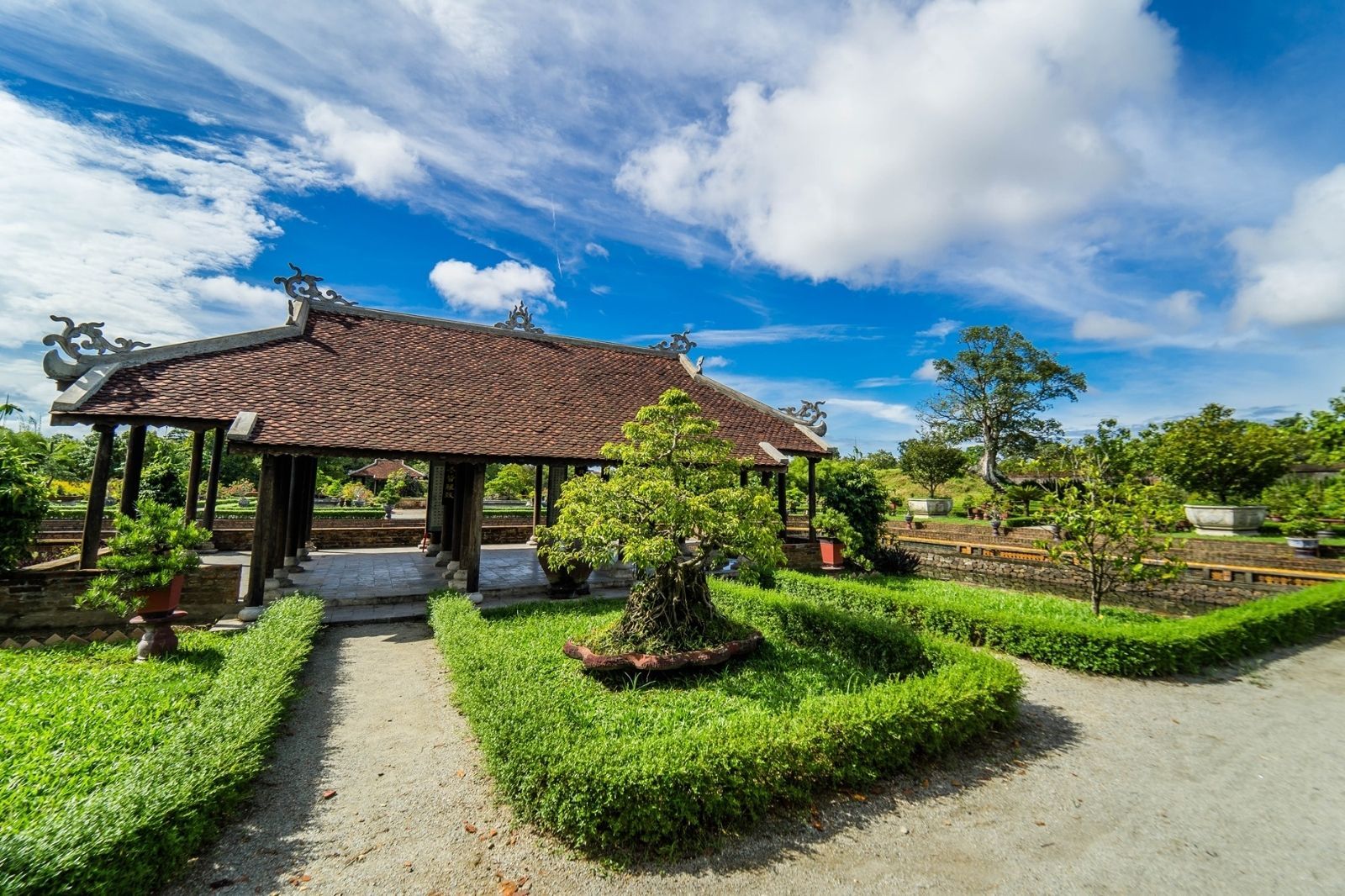
Từng là nơi dành cho các hoàng tử học tập và vui chơi
Photo: Once a place for princes to study and play 

2. The history of Co Ha Garden

Co Ha Garden was formed through several development stages closely tied to the history of the Nguyen Dynasty. Initially, in the early 19th century, this place was merely Co Ha Duong – a space for princes to study and reside, including Nguyen Phuc Dam, who later became King Minh Mang. In 1837, under King Minh Mang's reign, the area was renovated and expanded into a large-scale royal garden, while connecting with Hau Ho (Rear Lake) to create a space for relaxation and enjoyment inside the inner palace.

In 1843, King Thieu Tri continued to invest and develop the garden, adding many architectural items such as palaces, pavilions, towers, and dining halls. Notably, the Tu Phuong Ninh Mat Hoi Lang corridor system was built in a closed shape resembling the Chinese character “口” (khau), creating a unique architectural and landscape highlight. By the Tu Duc reign (from 1848), the garden continued to be restored with many intricate decorative details, including the use of yellow glazed tiles – a signature feature of high-level royal court architecture.

The name “Co Ha” originates from the phrase “Van Co Thanh Ha”, signifying leisure and peace amidst affairs of state. Constructing the garden directly inside the Hue Imperial City not only served the King's rest and relaxation needs but also optimized movement within the inner palace. Notably, King Thieu Tri also composed poems about the garden's landscapes, engraved them on stone steles, and preserved them in glass paintings, contributing to its cultural and artistic value. After the end of the Nguyen Dynasty, Co Ha Garden fell into disrepair due to war and lack of conservation. Many structures were damaged or disappeared over time. Between 2012 and 2014, the Hue Monuments Conservation Centre conducted restoration, reviving the landscape and renovating the space. Today, Co Ha Garden has regained its ancient appearance, becoming an important highlight in the Hue heritage complex, as well as a prime example of Vietnamese royal landscape garden art.

Kiến trúc vườn Cung Đình Huế
Photo: Hue Royal Court Garden architecture 

3. Unique architecture and landscape of Co Ha Garden

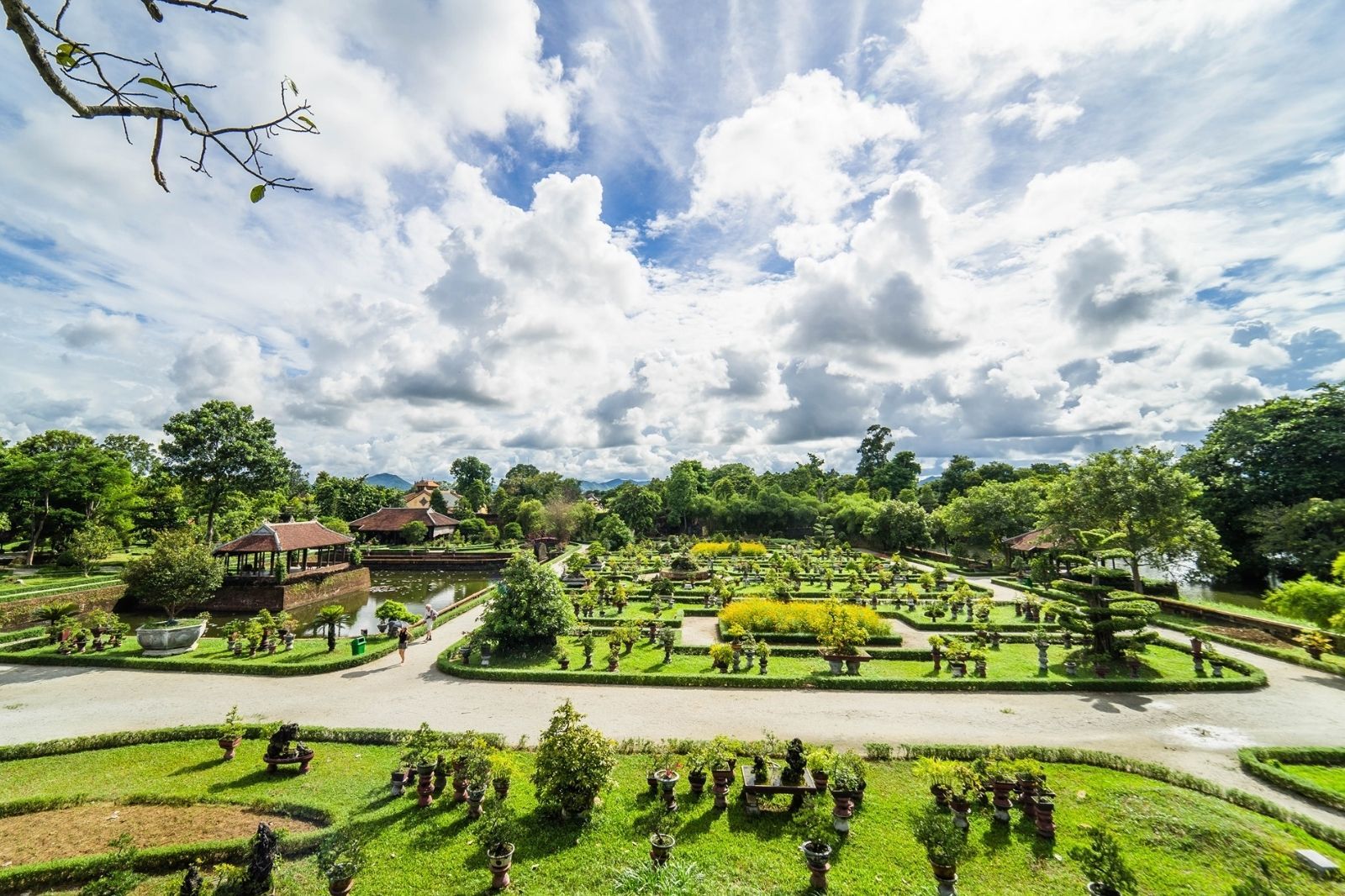
Co Ha Garden stands out with a distinct style compared to other Royal Gardens: a harmonious blend of rivers and lakes – mountains and grottoes – pavilions and towers – palaces. The main gate, Thuong Uyen Mon, facing South leads into a vast space.

Highlight structures:

  • Kham Van Palace (Minh Ly Main Hall): Main palace roofed with yellow glazed tiles, double-roof architecture similar to Thai Hoa Palace, once used for royal banquets.
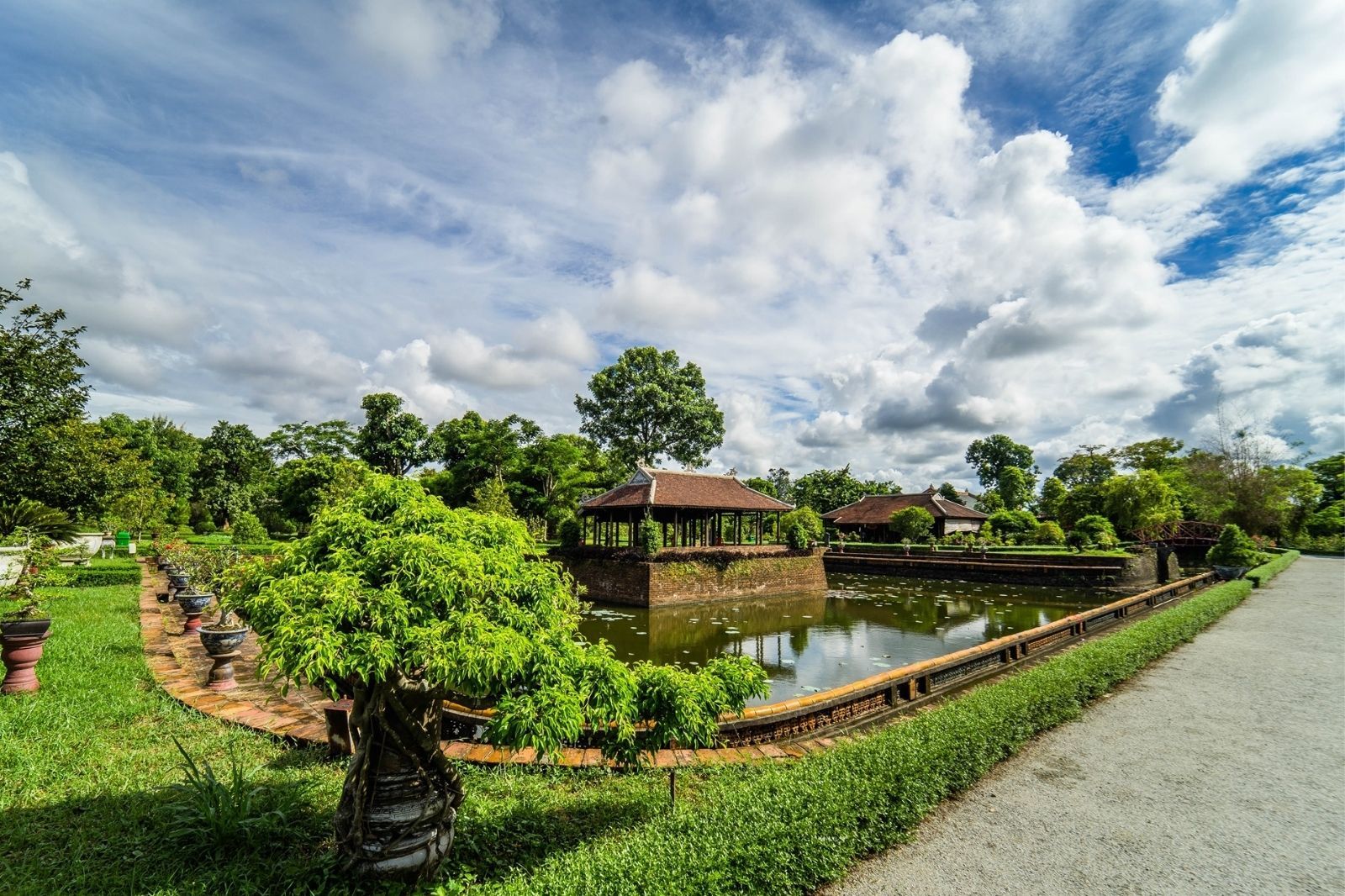
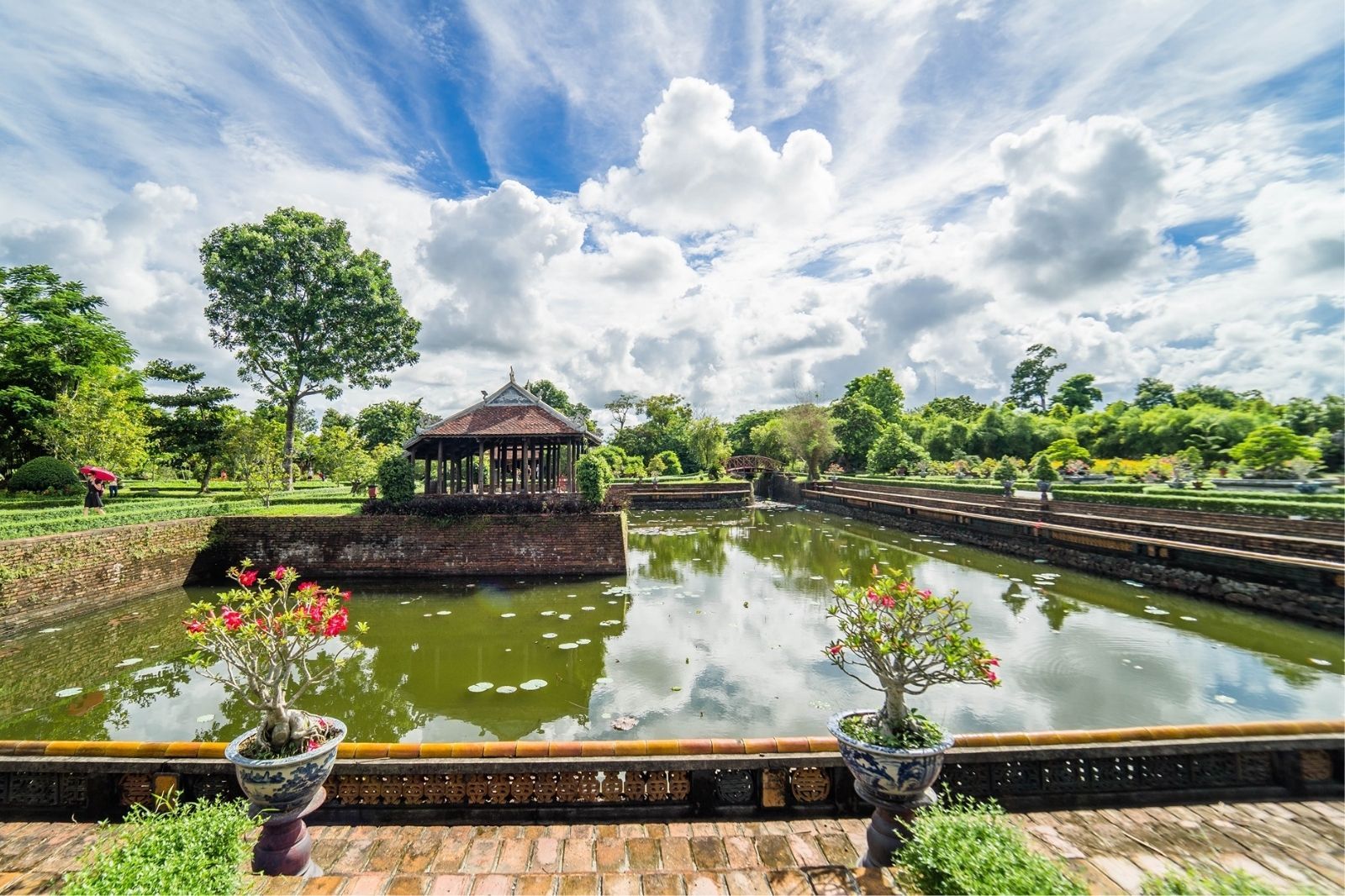
  • Minh Ho Lake: A wide, crystal-clear lake with a small island in the center featuring the Quang Bieu Pavilion. Surrounding it are the Hoa Phong Pavilion (left), Kha Nguyet Corridor (right), and Kim Nghe Covered Bridge.
  • Thuong Thang Tower: Tower north of the lake, overlooking panoramic views.
  • Tu Phuong Ninh Mat Hoi Lang: Square enclosed corridor surrounding the space, creating a private and mysterious atmosphere.
  • Natural elements: Trai Vu River, Phuoc Duyen Grotto, Dao Nguyen Grotto, Tho Yen Mountain, Trung Dinh Mountain, Quan Tu Mountain, Thuy Lien Pond… All meticulously crafted as artificial landscapes.

The space of Co Ha Garden is planned into several distinct areas, harmoniously combining vegetation, flowers, and rare bonsai trees. Today, it gathers nearly 600 individual bonsai specimens across 45 species, collected and meticulously crafted by 56 Hue bonsai artisans. The flora in the garden is diverse, ranging from characteristic flowers such as lotus, water lily, and precious orchids to fruit trees like mango, longan, jackfruit, alongside staple crops like millet and corn. This diversity not only creates landscape value but also clearly reflects the Nguyen Dynasty's “agriculture-oriented” philosophy in designing royal spaces.

Vườn Cơ Hạ là một trong những vườn thượng uyển nổi tiếng của Huế
Photo: Co Ha Garden is one of the famous royal gardens of Hue 

4. Must-do experiences when visiting Co Ha Garden

When visiting Co Ha Garden – an exemplary landscape space in the Hue Imperial City, visitors do not merely tour around, but also have the opportunity to fully appreciate the beauty of harmony between nature and royal court architecture.

Highlight experiences include:

  • Admiring the scenery of Minh Ho Lotus Lake at sunrise or sunset, when the light and water surface create a peaceful, romantic landscape.
  • Strolling under the Tu Phuong Ninh Mat Hoi Lang corridor to feel the enclosed, quiet, and highly symbolic architectural space.
  • Admiring the rare bonsai collection, regarded as “living artworks” carrying artistic and historical value.
  • Participating in activities within the framework of the Hue Festival to experience the garden space brilliantly decorated with lights and lanterns.
  • Capturing moments at ancient architectural corners or experiencing sightseeing by boat (when services are organized).
Vườn Cơ Hạ nằm ngay trong Kinh Thành Huế
Photo: Co Ha Garden is located right inside the Hue Citadel

Visiting Co Ha Garden is a way for visitors to gain a deeper understanding of the living and daily environment of the Nguyen Dynasty royalty – a place where art, nature, and history naturally intertwine. After strolling through this garden, you can continue your journey to explore the Hue Imperial Citadel with many other famous sites such as Thai Hoa Palace, the Forbidden Purple City, The Mieu Temple, or Hien Lam Cac. Each place holds its own story, contributing to reconstructing the full picture of the ancient capital of Hue. A complete tour inside the Imperial Citadel will help you appreciate more deeply the cultural, architectural, and historical values that this ancient capital land still preserves to this day.

Loading......

Featured destinations