|

Back Home

Exploring The Mieu in Hue: Majestic Memorial to the Nguyen Kings

Central

Thua Thien Hue

Hue Imperial Citadel

Sovaba.travel

Updated at: 28/08/2026

1. The History of The Mieu Temple

The Mieu Hue, also known as The To Mieu, was built in 1821 during the reign of King Minh Mang and completed just two years later. Initially, this structure was dedicated to King Gia Long – the founder of the Nguyen Dynasty, along with two Queens, Thua Thien and Thuan Thien. Previously, on this site stood Hoang Khao Mieu, dedicated to Nguyen Phuc Con, the father of King Gia Long, but it was later moved about 50 meters to the north to make room for the construction of the temple.

Over time, The Mieu became the communal place of worship for the kings of the Nguyen Dynasty, except for those considered "deposed emperors" or "dethroned emperors". Currently, inside the temple are altars for 7 kings, including Gia Long, Minh Mang, Thieu Tri, Tu Duc, Kien Phuc, Dong Khanh, and Khai Dinh. Prominent among them are figures associated with major historical milestones, such as Gia Long – who laid the foundation of the Nguyen Dynasty, Minh Mang – who ordered the construction of The Mieu, or Tu Duc – a king renowned for his scholarship and benevolence.
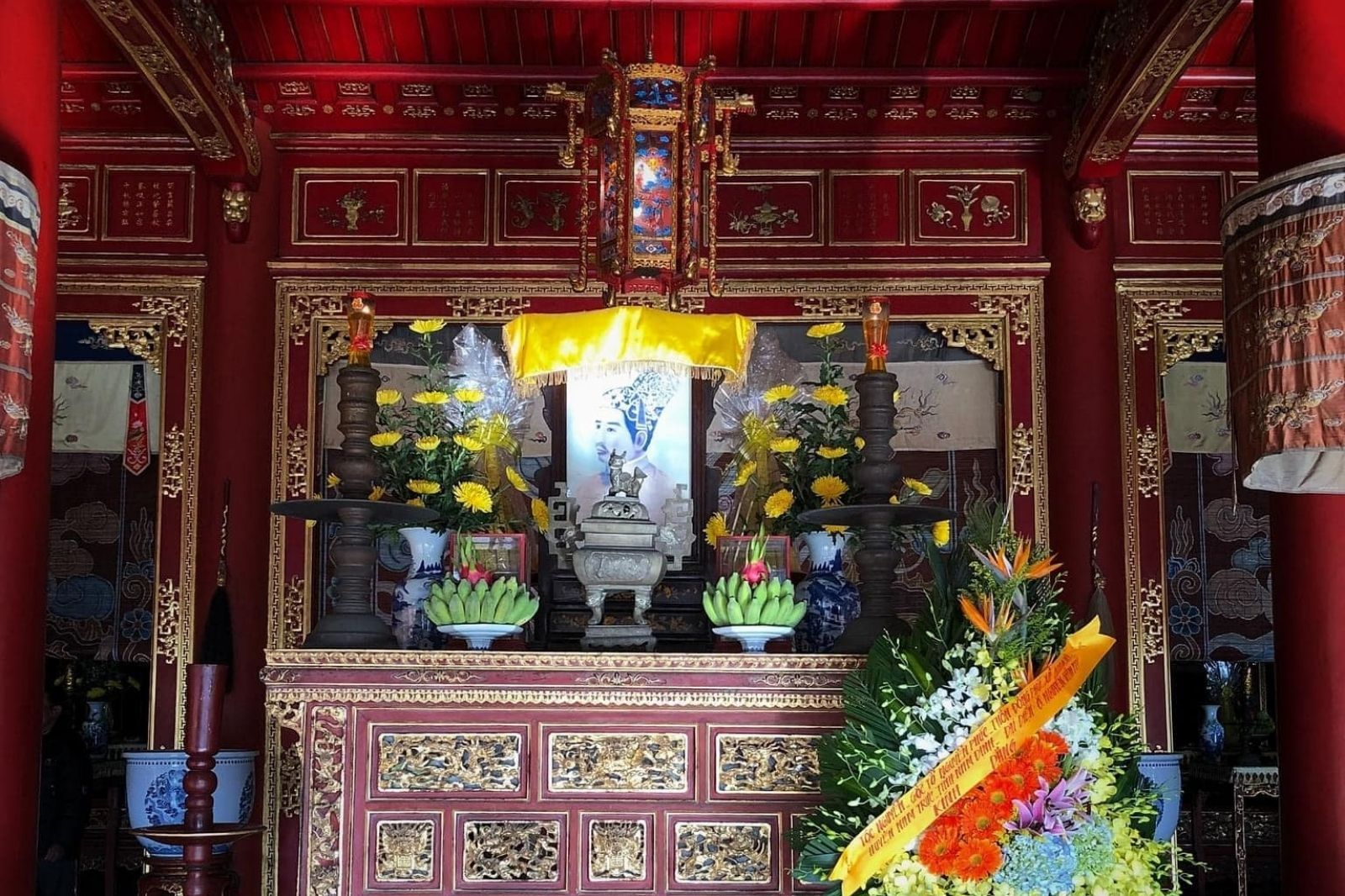
The Mieu is the communal place of worship for the Nguyen Dynasty kings
Photo: The Mieu is the communal place of worship for the Nguyen Dynasty kings 

In October 1958, the Nguyen Phuc Clan Council enshrined additional altars for Kings Ham Nghi, Thanh Thai, and Duy Tan in the temple after their titles were restored. However, kings like Hiep Hoa or Bao Dai still do not have altars here. Looking back at history, The Mieu is not only a sacred place commemorating the Nguyen emperors, but also a vivid testimony to the ups and downs and turmoil of an entire dynasty in the flow of Vietnamese history.
2. Unique Architecture of The Mieu Temple

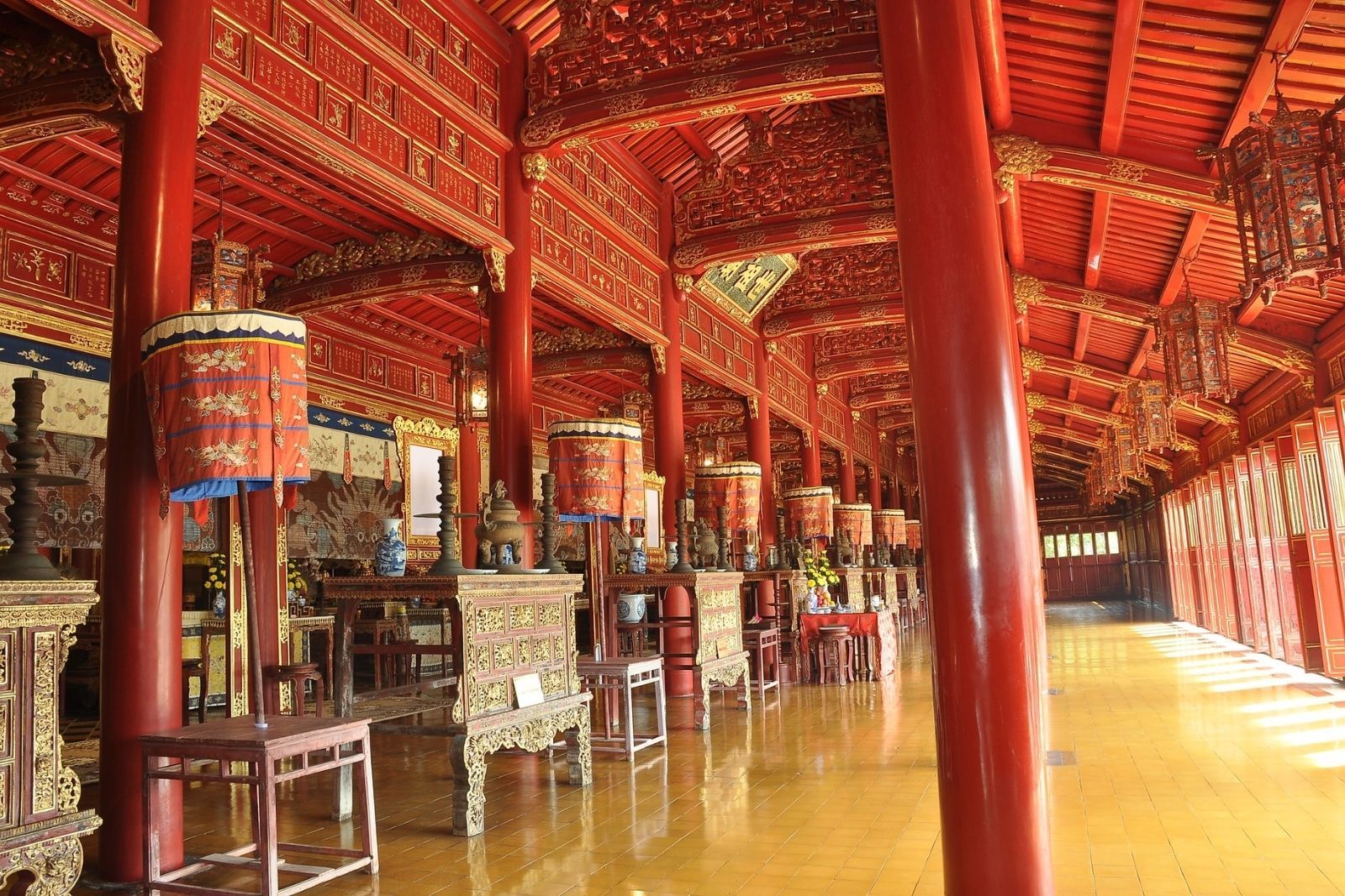
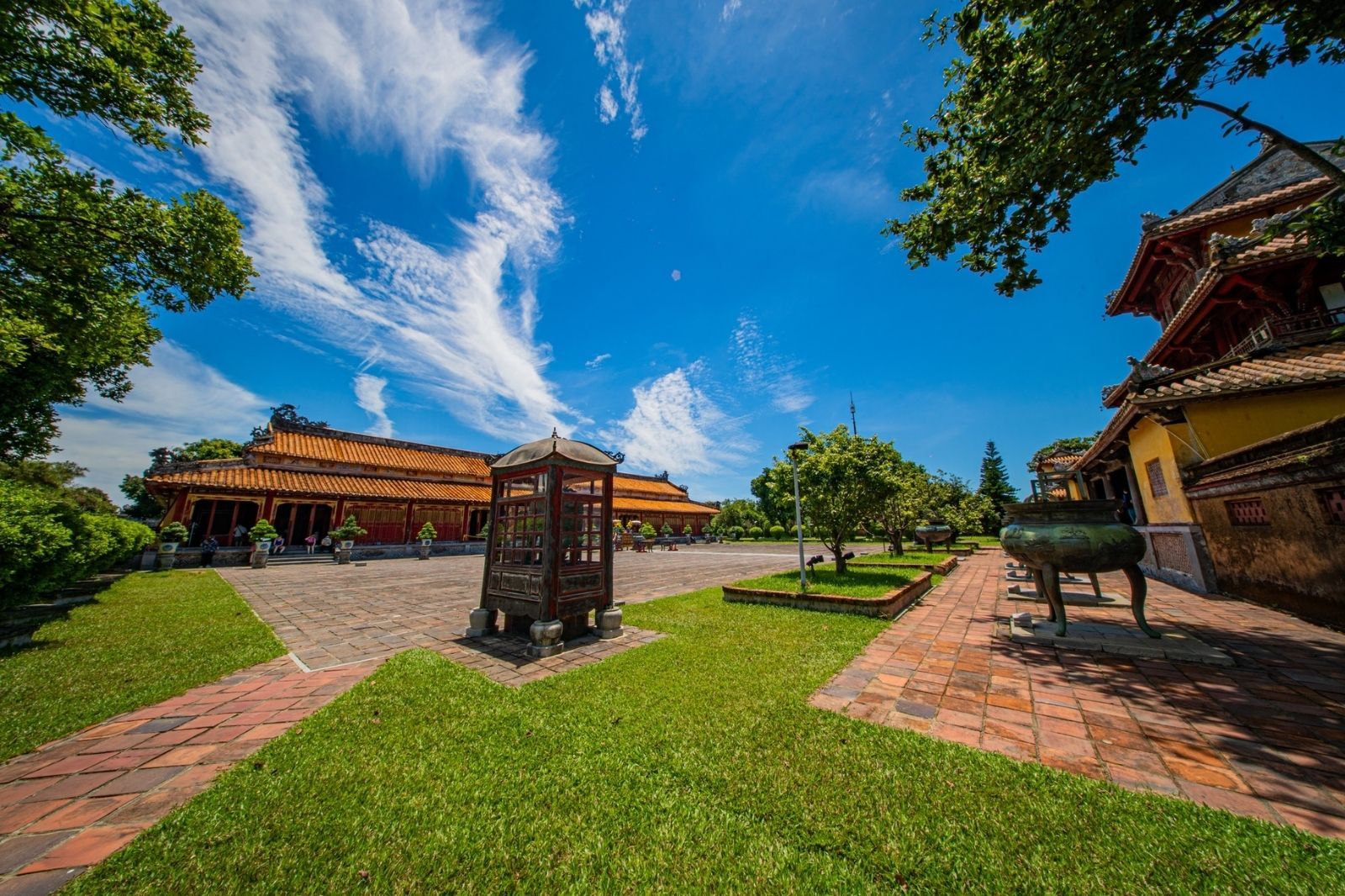
Located in the southwest corner inside the Hue Imperial City, The Mieu Hue possesses a large rectangular compound spanning over 2 hectares – accounting for about 1/18 of the total area of the Imperial City and the Forbidden Purple City. The main structure is a massive wooden architectural work built in the "trung thiem diep oc" style (double-roofed compound with front and rear halls connected), set on a foundation nearly 1 meter high with a rectangular floor plan (54.6m × 27.7m, an area of 1,500m²).

  • Main Hall: 9 bays and 2 double wings, topped with glittering yellow glazed tile roofs, with a vibrant enamel Taiji (yin-yang) symbol at the peak.
  • Front Hall: 11 bays and 2 single wings, connected to the main hall by intricately carved crab-shell rafters depicting graceful dragons and phoenixes.
  • Exterior: A glossy Bat Trang brick courtyard, 14 stone pedestals holding ceramic flower pots, a pair of bronze kylins in the pavilion, and especially the Nine Dynastic Urns (Cuu Dinh) – nine giant bronze urns aligned with the 9 altar bays, symbolizing the power and permanence of the dynasty.

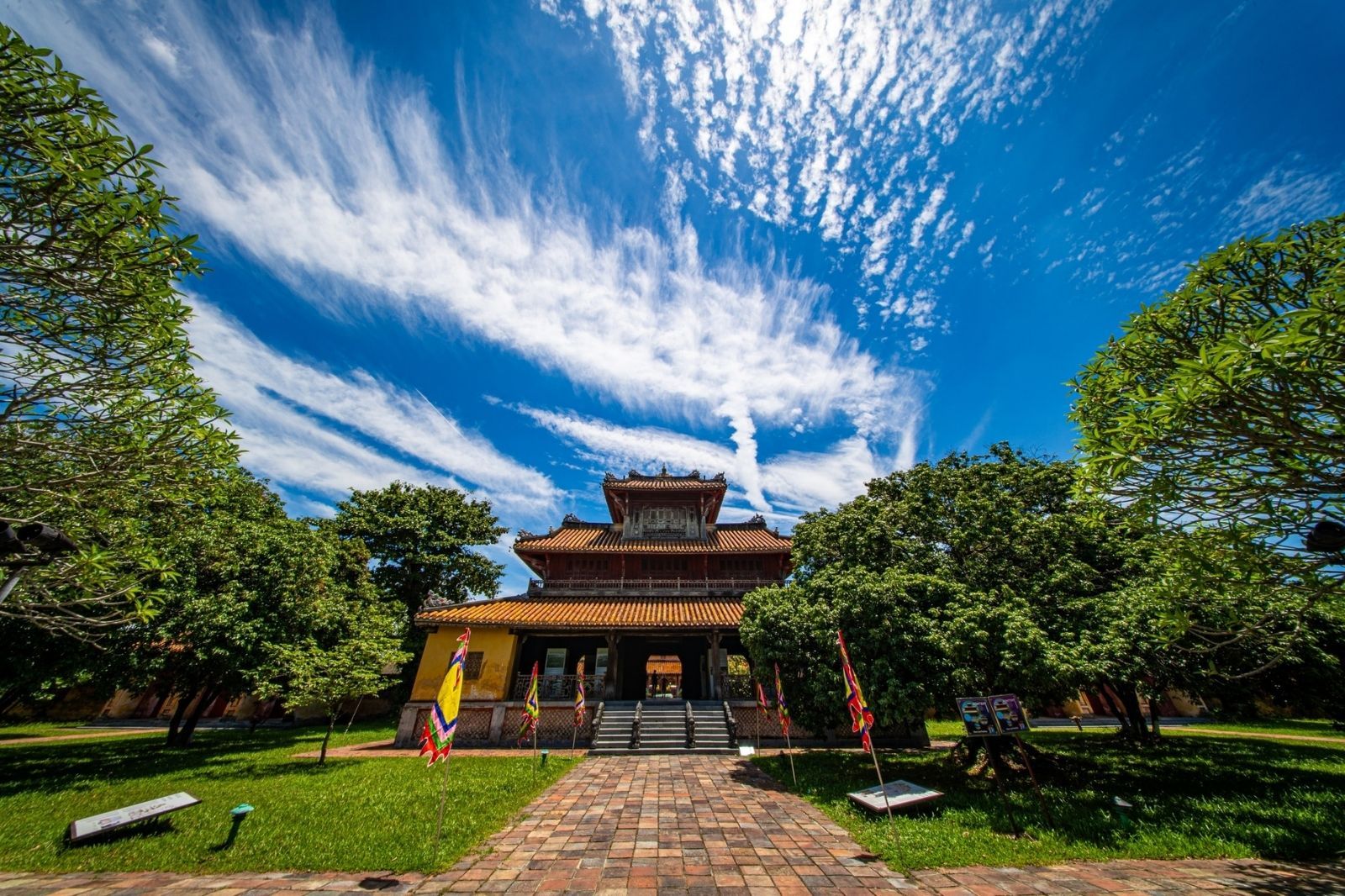
Inside the grounds, there is also Hien Lam Cac, a 3-story pavilion with a bell tower and drum tower on either side; Tho Cong Tu for worshipping the land deity; Canh Y Dien used for ceremonial robing; along with Ta Tung Tu and Huu Tung Tu worshipping meritorious mandarins such as Vo Tanh and Ngo Tung Chau. A highlight is the ancient twisting pine tree to the west of the temple, planted during its construction, radiating a wild and mystical beauty. The architecture of The Mieu not only showcases the delicacy of Hue artisans but also harmonizes seamlessly with nature, creating a solemn and majestic space.

The Mieu has a large rectangular compound
Photo: The Mieu has a large rectangular compound  

3. Cultural and Historical Significance of Hue's The Mieu Temple

As the center of worship for deceased kings, The Mieu Hue holds deep significance regarding ancestor veneration, a core tradition of Vietnamese culture. The Nguyen court frequently organized solemn rituals here, but strictly prohibited women (including queens) from attending, emphasizing the sacred, patriarchal nature of the royal space.

The Mieu is also a testament to the strength of the Nguyen Dynasty – the last feudal dynasty of Vietnam, with 13 kings reigning from 1802 to 1945. Auxiliary structures such as the Nine Dynastic Urns and Hien Lam Cac not only honor the contributions of the kings but also engrave the names of meritorious officials, contributing to the preservation of national historical heritage. Today, it stands as a symbol of Hue's identity, attracting visitors to learn about the journey from the country's unification under Gia Long to the tumultuous events at the end of the dynasty.

Solemn rituals were often held at The Mieu
Photo: Solemn rituals were often held at The Mieu  

4. Guide to Visiting The Mieu Temple in Hue

The Mieu Hue is located inside the Hue Citadel (Imperial City), at 23 Tong Duy Tan Street, Thuan Loc Ward, Hue City – right in the city center, easily accessible by motorbike, taxi, or bus from Phu Bai Airport (about 15km away).

  • Starting September 9, 2025, the Hue Monuments Conservation Center will cease opening the interior of The To Mieu to visitors. This is a sacred area dedicated to worshipping the Nguyen Dynasty kings.
  • Visitors can still observe from the outside. Additionally, an incense altar will be arranged in front of The To Mieu for visitors to offer incense and pay their respects.
Visitors will not be allowed inside the worship area
Photo: Visitors will not be allowed inside the worship area 

The Mieu is not only a majestic architectural masterpiece within the Hue Imperial Citadel complex, but also a place preserving historical memories, demonstrating the Nguyen Dynasty's reverence for past kings. Every step here is a journey back to the roots, where you can clearly feel the solemn atmosphere and traditional cultural values of the nation. If you are planning to explore Hue, don't forget to take time to visit The Mieu to listen to historical tales and admire one of the most emblematic heritage sites of the ancient capital.

Loading......

Featured destinations