Thai Hoa Palace Hue: The Political and Ceremonial Heart of the Nguyen Dynasty
Central
Thua Thien Hue
Hue Imperial Citadel
Sovaba.travel
Updated at: 28/08/2026
1. The turbulent history of a palace
Thai Hoa Palace construction began in 1805 under King Gia Long, but its location at that time was about 45m to the northwest of its current site. It was not until 1833 that King Minh Mang relocated the palace to its present position and rebuilt it on a grander scale.
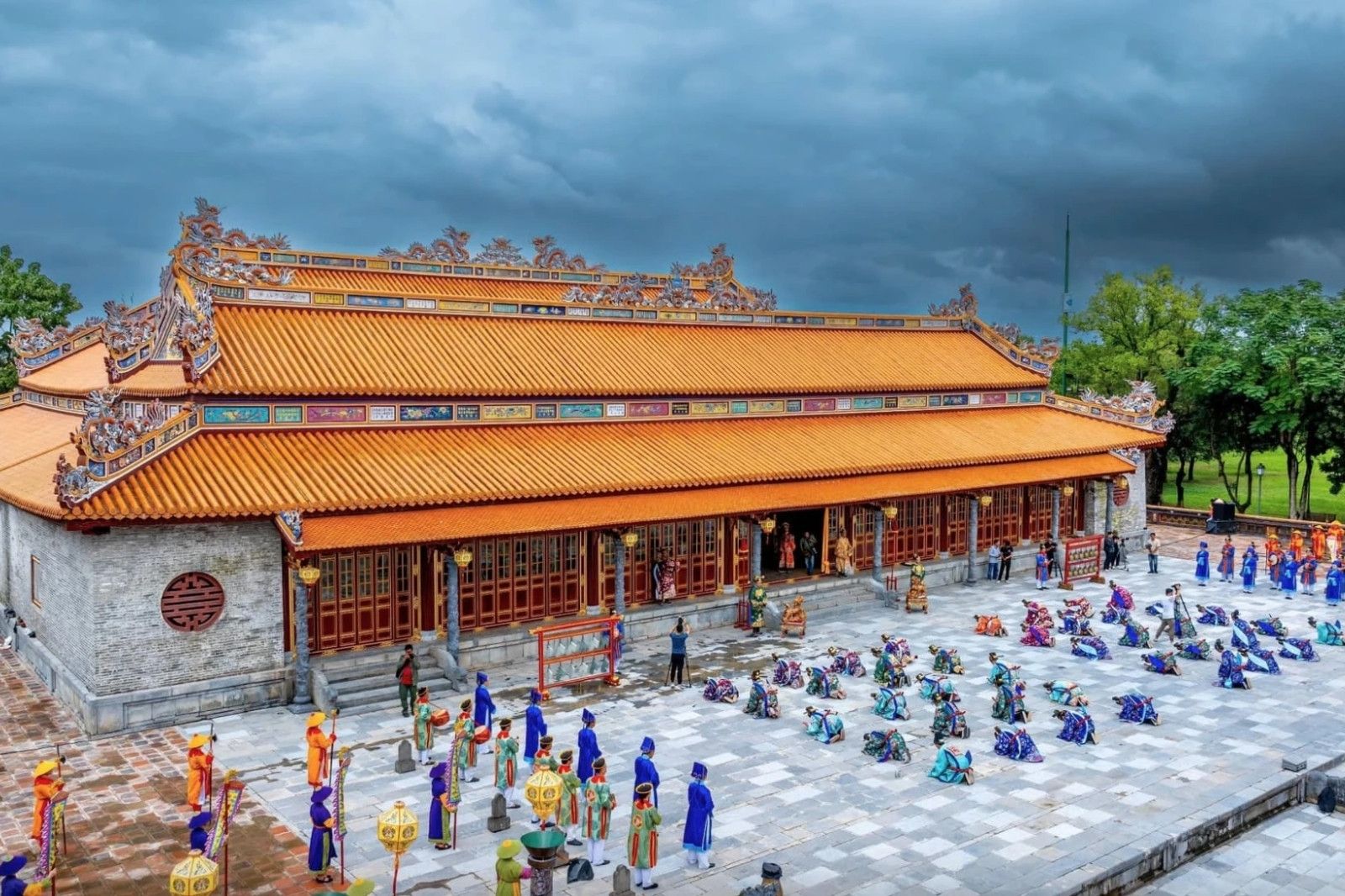
Photo: The first UNESCO heritage site in Vietnam to achieve green standards
Having undergone several restorations, most notably the major reconstruction during King Khai Dinh's reign in 1923 to prepare for the 40th Birthday Jubilee, the appearance of Thai Hoa Palace underwent some changes. However, its core architecture and decorative features have been preserved intact, retaining its ancient soul. Most recently, after nearly three years of careful restoration (2021–2024), Thai Hoa Palace was reopened on November 23, 2024, continuing to shine with brilliant and magnificent beauty.
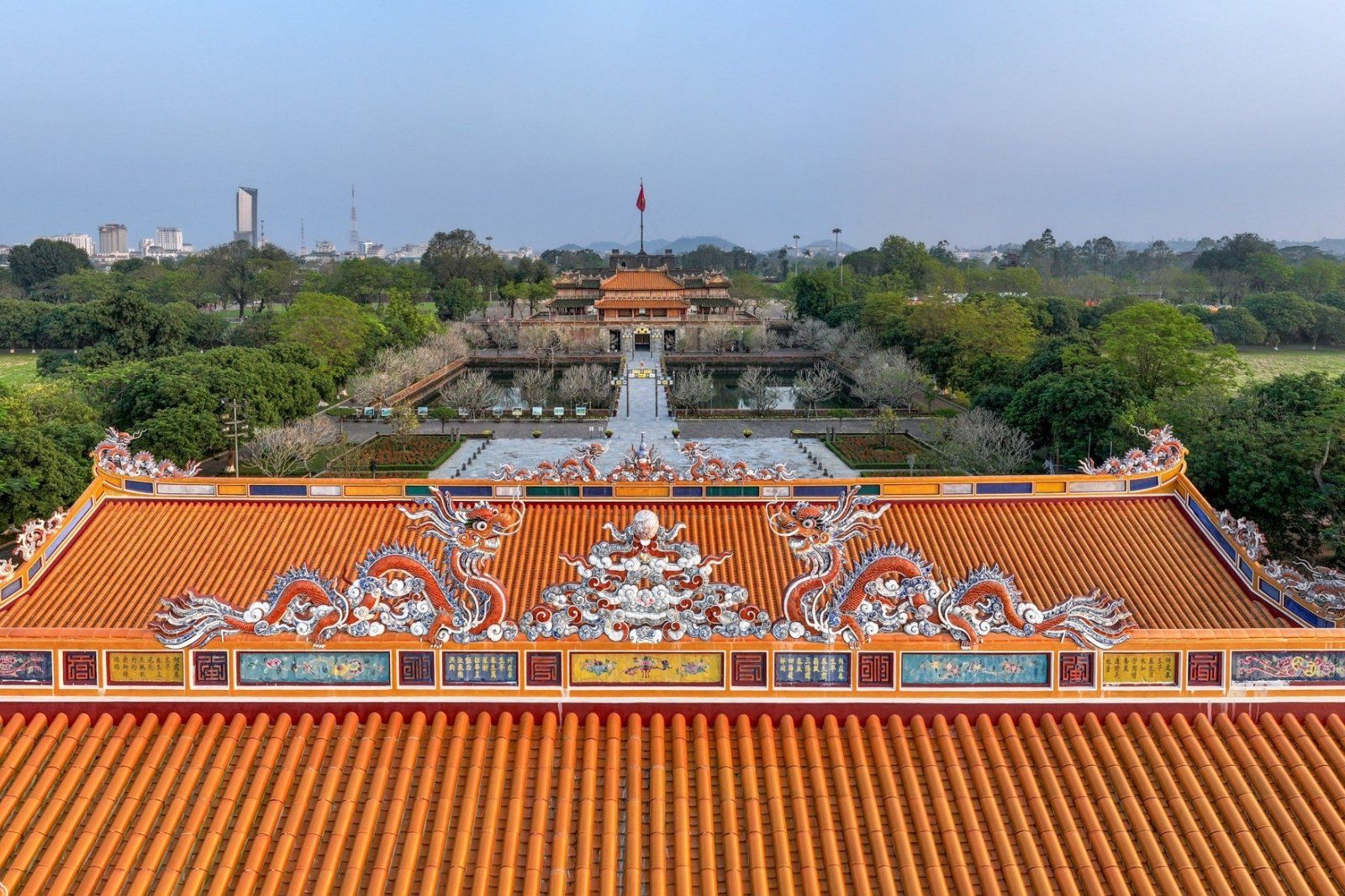
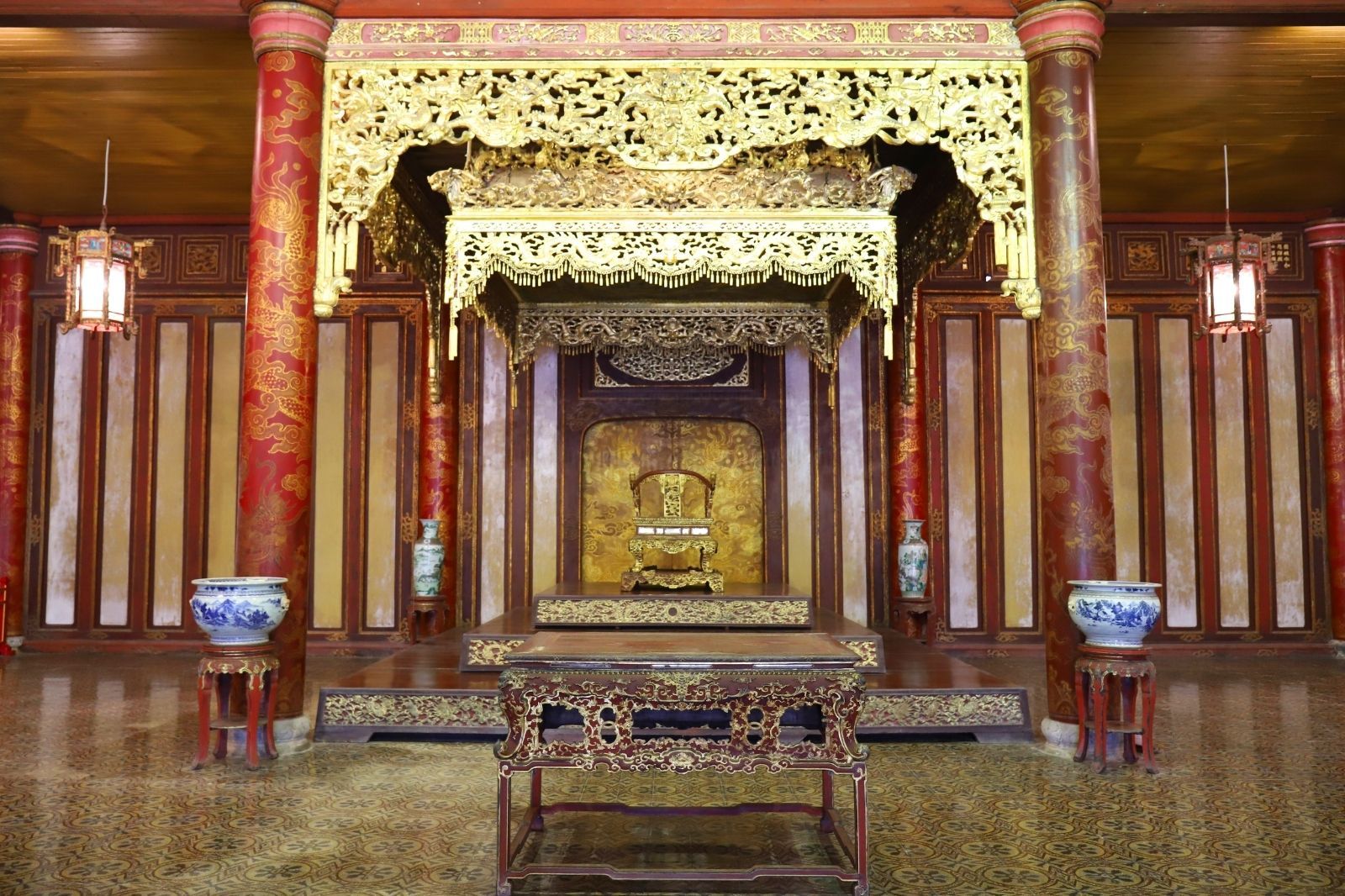
One of the architectural highlights of Thai Hoa Palace is its "trung thiem diep oc" style (double building with overlapping roofs). The entire palace is supported by 80 ironwood pillars, gilded and intricately decorated with dragons playing among clouds.
The palace is divided into two sections: the front hall (tien dien) with 7 bays, and the rear hall (chinh dien) with 5 bays. These two sections are seamlessly connected by a crab-shell arched ceiling system (mang thua luu), creating a continuous, unified, and extremely spacious interior. The roof is covered with yellow glazed tiles (hoang luu ly), divided into three overlapping tiers, creating an illusion of height and avoiding a heavy appearance.
Photo: Golden impress of the Nguyen Dynasty
Did you know that Thai Hoa Palace also conceals deep meanings through numbers? Both the architecture and decoration of the palace place special emphasis on the numbers 5 and 9. Nine dragons are embossed on the roof, decorated on the throne, and on supporting pedestals. The number 9 also appears in the stone steps leading to the palace, representing the supreme authority of the Emperor.
3. The venue for the most important ceremonies
True to its name, “Thai Hoa” conveys the meaning of supreme harmony and balance. This was not only a workplace but also a symbol of absolute power during the Nguyen Dynasty.
Thai Hoa Palace and the expansive courtyard in front were the setting for the imperial court's most important grand assemblies, including:
Coronation Ceremony: Where 13 Nguyen Dynasty emperors, from Gia Long to Bao Dai, officially ascended the throne.
Emperor's Birthday: The grand celebration of the Emperor's longevity.
Monthly Grand Audiences: On the 1st and 15th days of the lunar month, officials from the 1st to the 9th rank gathered in the courtyard, standing according to marked positions on two rows of stone markers. Only the Four Pillars of State and royal relatives were granted an audience inside the palace.
Standing before Thai Hoa Palace, you can not only admire a magnificent architectural work but also feel the solemn atmosphere of a glorious historic era. It was the political heart, the center of all major ceremonies and decision-making of the last feudal dynasty in Vietnam.
As part of the Complex of Hue Monuments recognized as a UNESCO World Cultural Heritage site in 1993, Thai Hoa Palace is a must-visit destination for anyone wishing to learn about Vietnamese history and culture.
Photo: Center of Thai Hoa Palace
As sunset falls and golden light covers the glazed tile roofs of Thai Hoa Palace, one realizes that this place is far more than just a monument. It is a witness to the ups and downs, glory, and drama of a dynasty. Though the throne belongs to the past, the majesty, architectural essence, and profound meaning of "Thai Hoa" still echo, reminding today's generation of a historical era worth preserving.
To listen to these stories more fully, you can join the Hue Imperial City tour with Sovaba Travel. With an in-depth itinerary and culturally and historically knowledgeable tour guides, this journey will take you from admiring architectural beauty to appreciating historical depth, making every step inside the Imperial Citadel a memorable experience.