Discovering the History and Unique Beauty of Hainan Assembly Hall Hoi An
Central
Da Nang
Hoi An
Sovaba.travel
Updated at: 24/09/2026
1. Where is Hainan Assembly Hall in Hoi An?
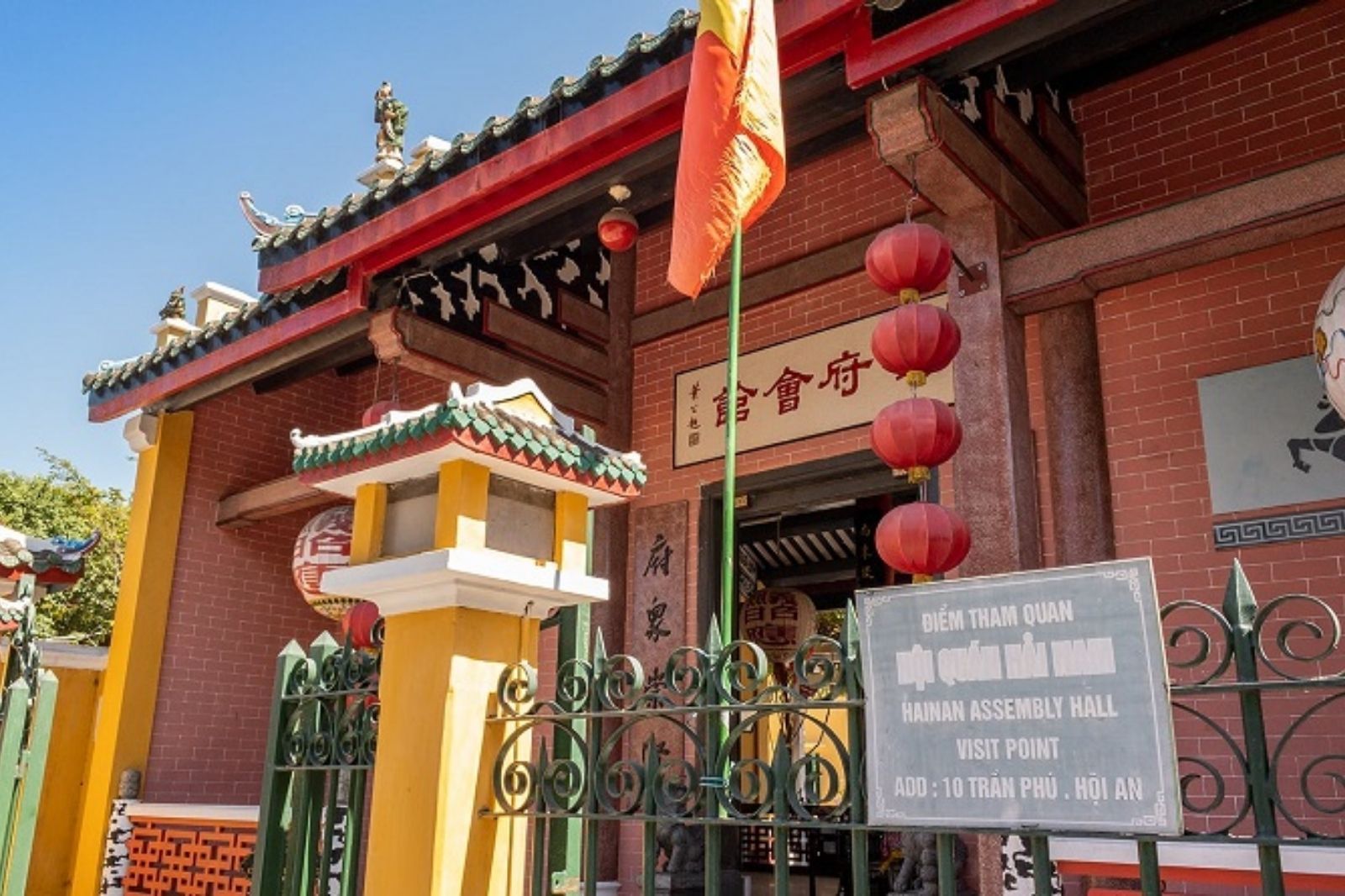
Hainan Assembly Hall is located right in Hoi An Ancient Town, at 10 Tran Phu Street, Minh An Ward, Hoi An City, former Quang Nam Province (now Da Nang City). This is a central area situated on the main pedestrian street, making it very convenient to visit while strolling around town. From the assembly hall, visitors can easily combine their tour with other familiar attractions such as the Japanese Covered Bridge, Fujian Assembly Hall, or Quan Thang Ancient House. If starting from Da Nang, the travel distance is about 30–40 km, suitable for travel by motorbike or car. Thanks to its convenient location, Hainan Assembly Hall is an easily accessible stop on the journey to explore the heritage space of the ancient town.
Photo: Hainan Assembly Hall in Hoi An Ancient Town
2. History of Hainan Assembly Hall in Hoi An
Hainan Assembly Hall was built in 1875 by the overseas Chinese community originally from Hainan when they came to Hoi An to live and trade. In the beginning, this structure served as a meeting place, community house, venue for religious rituals, and a support center for one another in a foreign land.
The history of the assembly hall is tied to a tragic event in 1851 when 108 Hainanese merchants were unjustly killed after being mistaken for pirates. Later, Emperor Tu Duc exonerated them and conferred a royal decree with the title "Nghia Liet Chieu Ung". From this event, Hainan Assembly Hall became not only a community hall but also a sacred place to worship the souls of the 108 victims, carrying the significance of commemoration and remembrance of justice. Over time, the assembly hall has undergone two restorations to preserve its architectural and historical value. In 2016, the building officially opened its doors to welcome tourists, becoming one of the monuments that help vividly recreate the history of the Chinese community and the past of the Hoi An trading port.
3. What is special about the architecture of Hainan Assembly Hall in Hoi An?
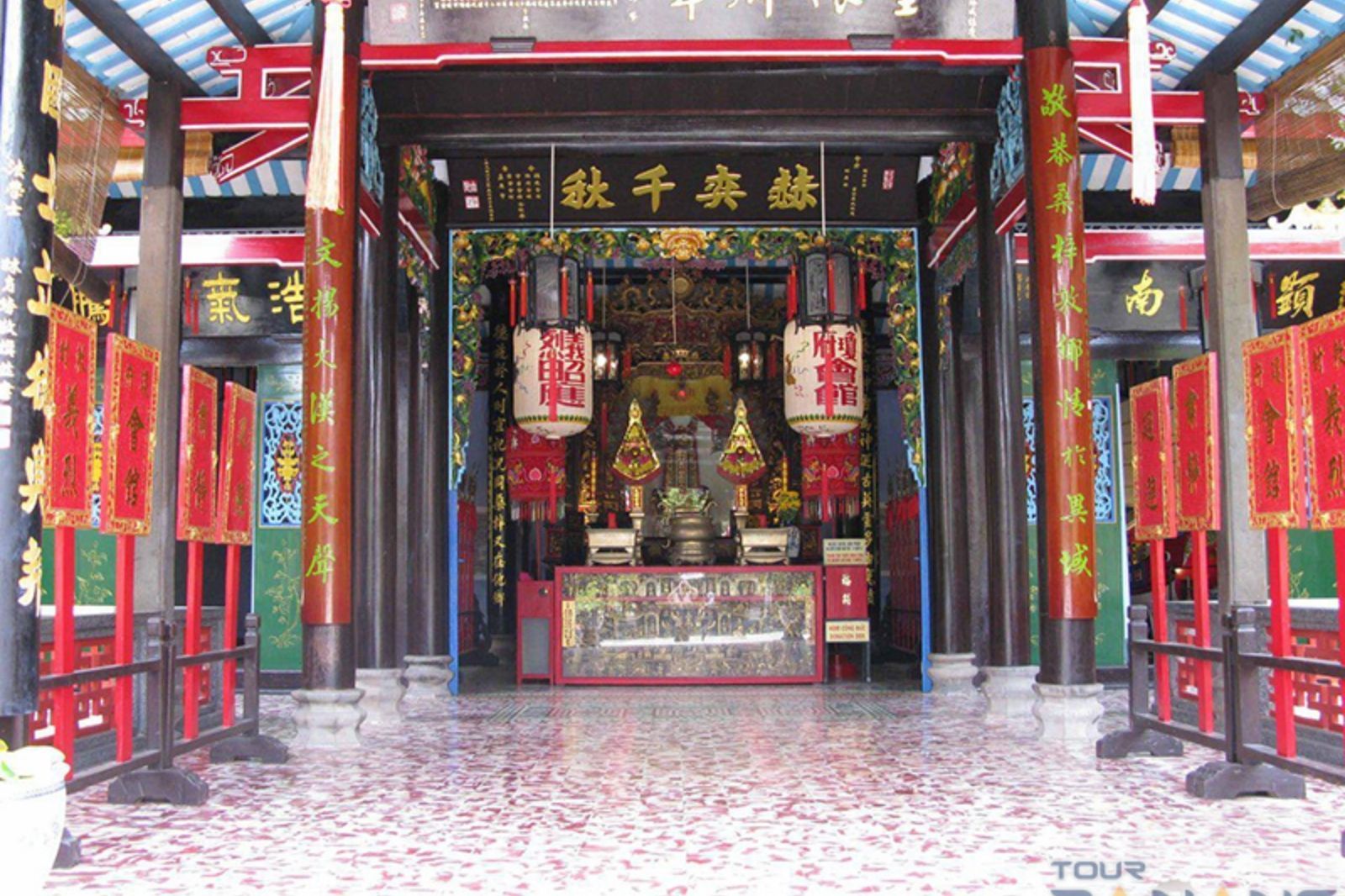
The architecture of Hainan Assembly Hall bears a strong ancient Chinese style, constructed in the shape of the character "Guo" (国) – a balanced, harmonious layout consisting of a central main sanctuary, a front hall, two side wings (East and West), and front and back courtyards. The intricate carving details, along with red-lacquered and gold-gilded wood, relief carvings, and gold plating, create a majestic yet warm atmosphere. In the center of the main hall is a set of precious wooden altars, and behind the dragon gate is the ancestral tablet dedicated to the 108 noble souls. The construction utilizes traditional materials such as bricks, wood, and stone, harmoniously combined to withstand the harsh weather of Central Vietnam. Compared to other assembly halls in Hoi An, Hainan Assembly Hall stands out for its simplicity and sophistication, reflecting Hainanese culture – a remote island region with a lifestyle closely tied to the sea.
Photo: Assembly Hall with distinct Chinese architecture
4. Cultural and spiritual significance of Hainan Assembly Hall
Hainan Assembly Hall is not only an architectural monument but also carries deep cultural significance, preserving the identity of the Hainanese Chinese community in Vietnam. It worships Guan Yu – a valiant general in Chinese history, symbolizing loyalty and righteousness – along with the 108 noble souls, emphasizing the humanistic values of vindication and remembering the deceased. In terms of belief, the hall is a spiritual destination for visitors seeking peace, especially fishermen and merchants. As a part of Hoi An's heritage, it contributes to the vibrant tapestry of Vietnamese-Chinese cultural exchange, helping younger generations better understand the history of migration and integration. Annually, festivals such as the Lunar New Year or the memorial service for the 108 souls are still celebrated here, preserving ancient customs and traditions.
5. Tips for visiting Hainan Assembly Hall in Hoi An
To make your visit to Hainan Assembly Hall smoother and more pleasant, you can keep the following tips in mind:
Visiting time: It is recommended to visit early in the morning from 7:00 AM or late in the afternoon before 5:00 PM to avoid the heat and heavy crowds.
Entrance ticket: The Hoi An Ancient Town sightseeing ticket (around 80,000 VND/Vietnamese visitor) includes admission to Hainan Assembly Hall along with many other historic sites.
Dress code and etiquette: Dress neatly and politely; limit flash photography and refrain from talking loudly to maintain the sanctity of the worship space.
Sightseeing itinerary: You can combine visits to nearby assembly halls to save time and gain a more complete overview of the architecture and history of the ancient town.
Group tours: If traveling in a large group, hiring a local tour guide is recommended to hear detailed explanations and better understand each structure.
Ideal time of year: February to April offers cool, dry weather, perfect for walking and combining your trip with watching the lantern festival.
With just a bit of preparation and reasonable planning, a visit to Hainan Assembly Hall will become an interesting highlight in your journey to explore Hoi An Ancient Town.
Photo: Visiting inside Hainan Assembly Hall
Hainan Assembly Hall may not be the largest or most prominent structure in Hoi An Ancient Town, but it holds its own unique value thanks to historical traces and stories tied to the ancient Chinese community. Visiting the assembly hall helps tourists gain a clearer understanding of the life, beliefs, and ways people once built the bustling Hoi An trading port of the past. From Hainan Assembly Hall, you can easily continue your journey to explore nearby monuments such as the Japanese Covered Bridge, Fujian Assembly Hall, Cantonese Assembly Hall, or stroll past the ancient houses on Tran Phu and Nguyen Thai Hoc streets. Each stop adds a piece to the distinctive historical and cultural puzzle of the ancient town. Spending time to walk slowly, observe, and feel, you will realize that Hoi An is not only beautiful in its scenery, but also deep in every layer of memory preserved to this day.