|

Back Home

Hien Lam Pavilion: The Beauty of "Thap Nhat Trung Dien" and the Unparalleled Majesty of the Dynasty

Central

Thua Thien Hue

Hue Imperial Citadel

Sovaba.travel

Updated at: 28/08/2026

1. History of the establishment of Hien Lam Pavilion

Hien Lam Pavilion Hue began construction in 1821 and was completed just a year later, in 1822, under the reign of King Minh Mang – the talented emperor of the Nguyen Dynasty. This was the golden age of the Nguyen Dynasty, when King Minh Mang was determined to restore and honor predecessors, especially founding kings and high-ranking mandarins with great contributions. The structure was erected at the same time as The Mieu Temple – the temple dedicated to the Nguyen kings, located right in front of its main facade, creating a harmonious ensemble within the temple area of the Imperial Citadel of Hue.
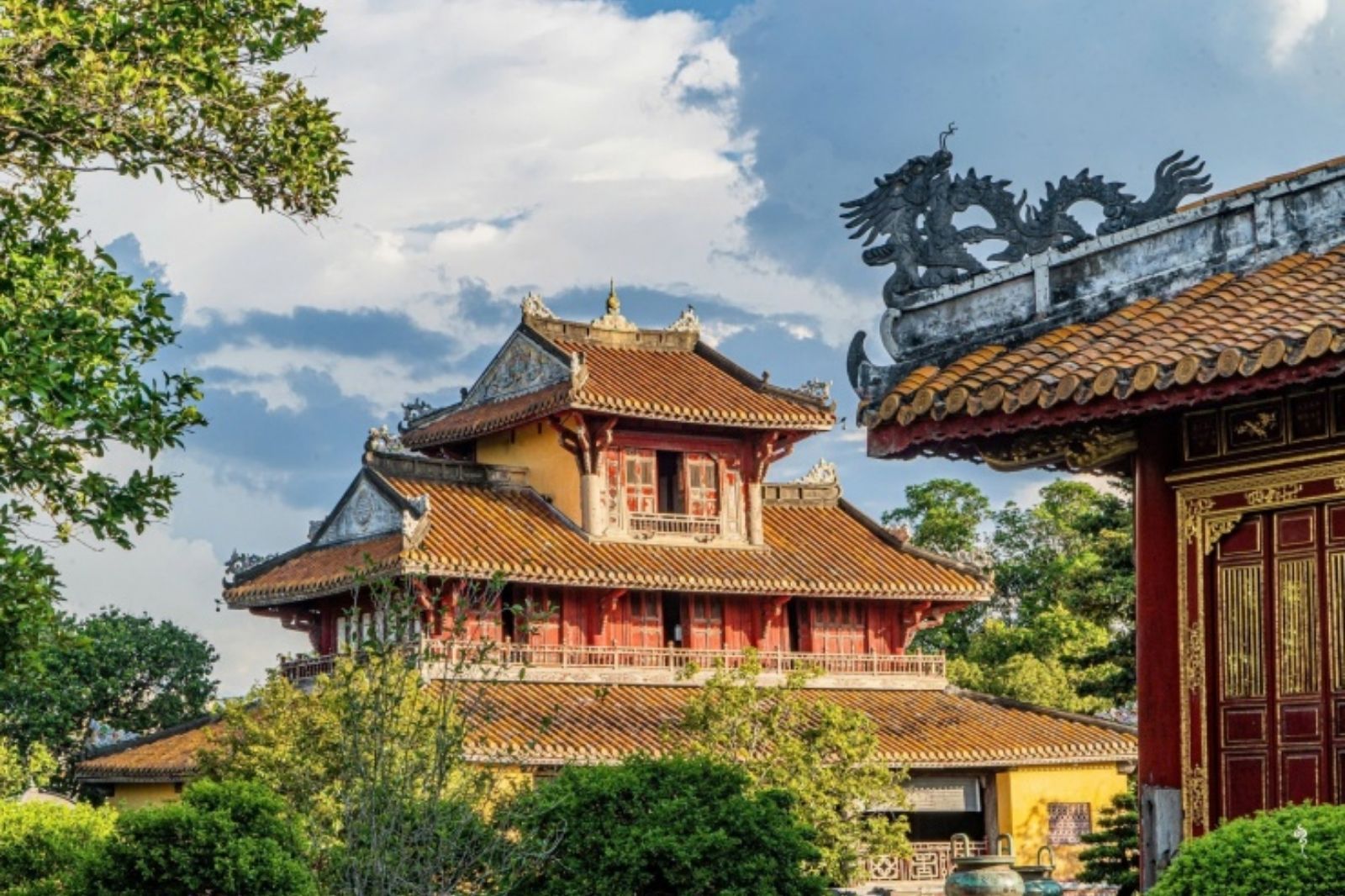
Hien Lam Pavilion is the tallest wooden structure inside the Imperial Citadel
Photo: Hien Lam Pavilion is the tallest wooden structure inside the Imperial Citadel  

This strategic location was no coincidence. Hien Lam Pavilion was designed as a memorial monument, a place to commemorate the merits of emperors and meritorious officials, while affirming the supreme position of the dynasty. Over its 200 years of existence, the monument has undergone several restorations, with the most comprehensive restoration in 2001 thanks to investment from conservation experts. Today, it remains an integral part of the Complex of Hue Monuments – a UNESCO World Cultural Heritage site recognized in 1993.
2. Thap Nhat Trung Dien architecture

What creates the "unparalleled" appeal of Hien Lam Pavilion is the "Thap Nhat Trung Dien" architecture — a unique structure featuring 11 tiers of overlapping eaves, making it one of the buildings with the highest number of roof layers in Vietnamese architectural history. Reaching a height of up to 17 meters with a floor area of about 20 square meters, this wooden tower stands out as a majestic symbol in the heart of the Imperial Citadel. Constructed entirely of precious wood, combined with a rectangular base paved with Bat Trang bricks, dressed bricks, and mortar, Hien Lam Pavilion exudes an elegant yet sturdy appearance, weathering the ups and downs of time.

The structure is divided into three distinct floors, each possessing its own delicate features:

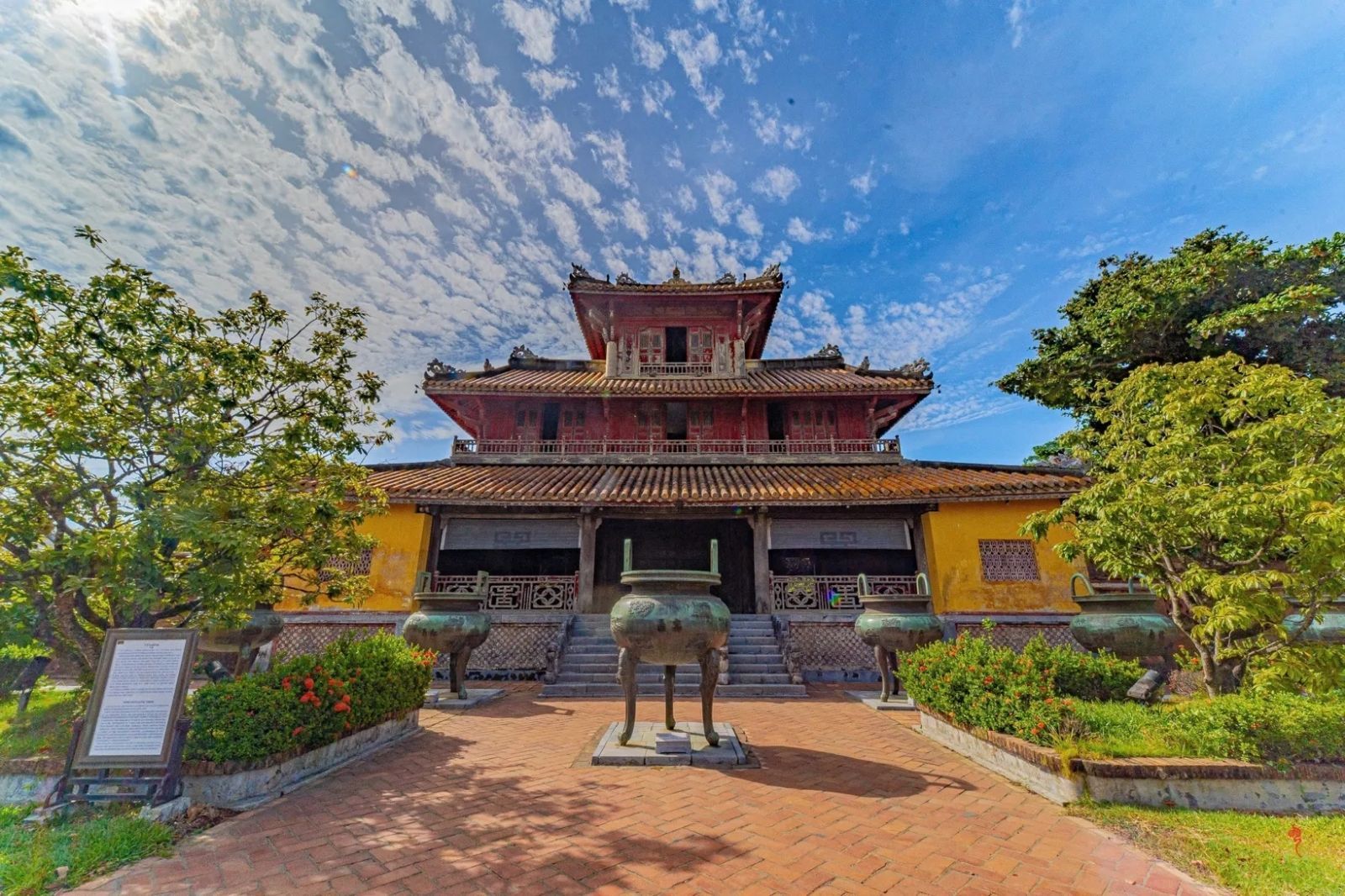
  • 1st Floor (5 bays): A high platform accessed by 9 Thanh Hoa green stone steps on both sides, with a central path reserved exclusively for the king, flanked by embossed sinuous dragon figures. The pillars and rafters are exquisitely carved with dragons, flowers, and flora. 
  • 2nd Floor (3 bays): More spacious, connected by a wooden staircase with balustrades embossed with the characters "Tho" (longevity), "Van" (eternity), and dragon heads and tails, symbolizing longevity and prosperity.
  • 3rd Floor (1 bay): The highest peak, holding only a golden wine flask symbolizing purity and supreme power.

The entire structure is supported by 24 large wooden pillars, featuring 12 main roofs and a complex overlapping eave system of up to 11 layers. "Thap Nhat Trung Dien" is not merely a construction technique but also an art of expressing authority: each overlapping roof layer resembles celestial realms, representing the reach of the Nguyen Dynasty toward immortality. Further decorated with porcelain mosaic reliefs and the gold-gilded, red-lacquered horizontal board reading "Hien Lam Cac", it creates a rare magnificent and grand appearance.

3. Cultural and historical significance of Hien Lam Pavilion

Hien Lam Pavilion is not only a beautiful tower, but also a place that preserves the soul of the Nguyen Dynasty. Serving as a memorial, it honors the contributions of kings such as Gia Long and Minh Mang, as well as high-ranking mandarins, reminding future generations of the moral principle "when drinking water, remember its source". In the context of the Nguyen Dynasty — the last feudal dynasty of Vietnam — this structure affirms the nation's strength and civilization, where architecture blends seamlessly with Confucian philosophy: majestic yet harmonious with nature.

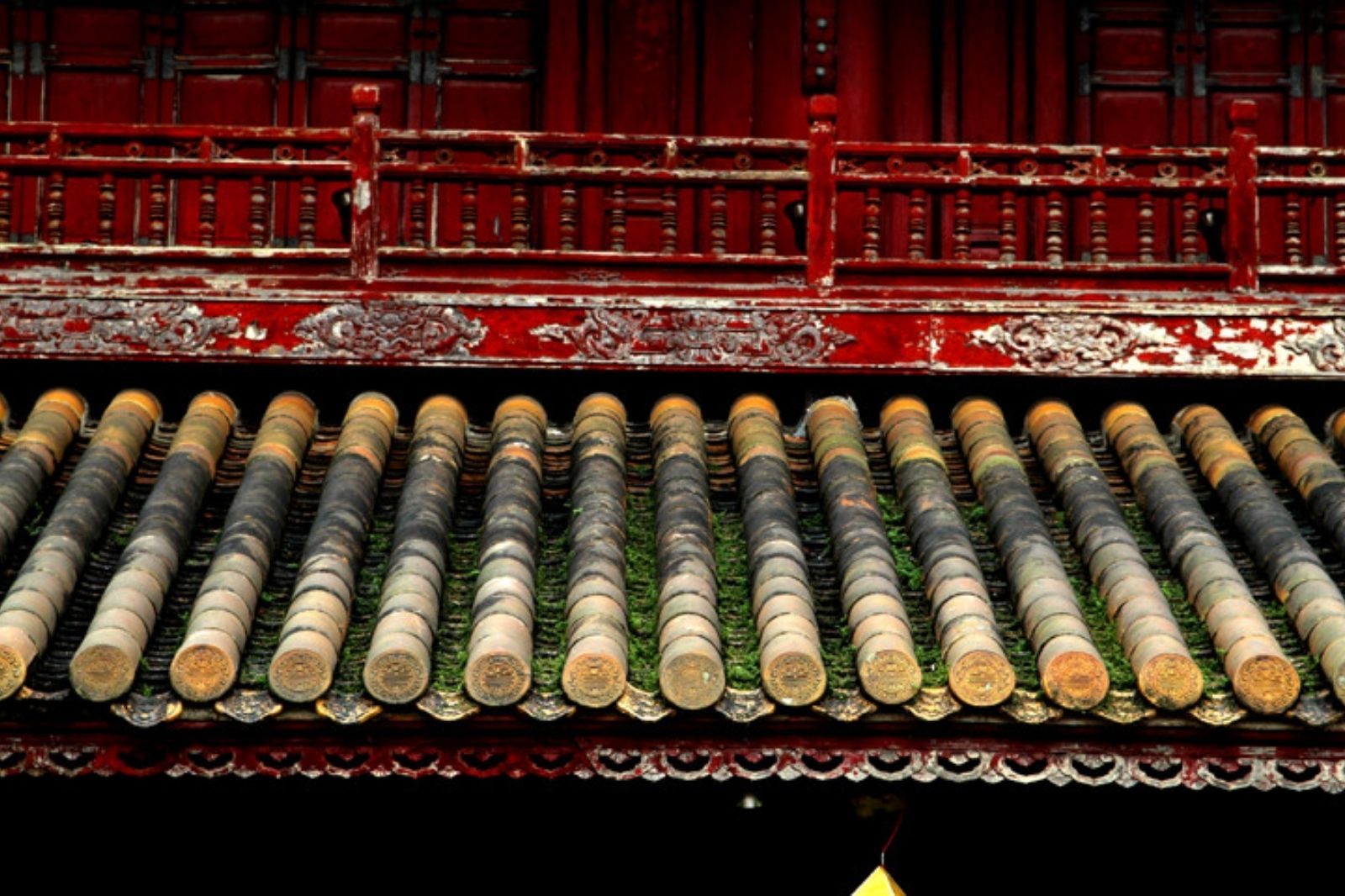
Tile roof of Hien Lam Pavilion
Photo: Tile roof of Hien Lam Pavilion  

Furthermore, Hien Lam Pavilion contributes significantly to the overall value of the Ancient Capital of Hue, closely linked with The Mieu Temple and the Nine Dynastic Urns, creating a sacred space. For tourists and history lovers, visiting this site is an opportunity to reflect on the endurance of Vietnamese culture, where the beauty of "Thap Nhat Trung Dien" is not just form, but a message of spiritual strength.

4. Hien Lam Pavilion in modern tourism

Currently, Hien Lam Pavilion is part of the ticket for the Complex of Hue Monuments (around 200,000 VND/adult). You can visit year-round, but the ideal time is autumn (September-November) when Hue's weather is cool and pleasant, making it easy to admire the entire architectural work from afar. Combining it with a bicycle tour around the Imperial Citadel or a royal court music performance will make your trip complete.

To preserve the monument, visitors should adhere to regulations: no carving, no littering, and practice responsible photography. With preservation efforts from UNESCO and local authorities, Hien Lam Pavilion promises to continue shining and inspiring future generations.

There are 9 steps from the courtyard to the platform
Photo: There are 9 steps from the courtyard to the platform 

Hien Lam Pavilion is not only a unique architectural work in the Hue Imperial City complex, but also a vivid symbol of the spirit of honor and morality of the Nguyen Dynasty. Every carved line, every curved roof tier carries a profound message of power, merit, and benevolence, helping visitors better understand the royal identity and cultural values of feudal Vietnam. To fully appreciate the beauty of “Thap Nhat Trung Dien” and the unparalleled majesty of Hien Lam Pavilion, you should take the time to experience an all-inclusive Hue Imperial City tour with Sovaba — a journey that helps visitors explore each monument in depth, listen to professional tour guides recount ancient court stories, and enjoy comfortable services, well-planned itineraries, and time-saving convenience.

Loading......

Featured destinations