Exploring Trieu Chau Assembly Hall: Over 170 Years of Architectural and Artistic Beauty in Hoi An

Central

Da Nang

Hoi An

Sovaba.travel

Updated at: 26/09/2026

1. Where is Trieu Chau Assembly Hall located?

Nestled within the space of Hoi An Ancient Town, Trieu Chau Assembly Hall is a familiar stop for anyone wishing to explore the imprint of the Chinese community in the history of the Hoi An trading port. The structure is located on Nguyen Duy Hieu Street, in the eastern area of the ancient town, not too far from the main sightseeing routes.

From the central area of the ancient town, visitors can walk about 7–10 minutes to reach the assembly hall. Along the way, you can also combine visits to many famous relics such as Phuc Kien Assembly Hall, Quang Dong Assembly Hall, Tan Ky Old House, and the Japanese Covered Bridge, forming a quite convenient exploration route. If departing from Da Nang, the journey to Hoi An takes about 30–45 minutes by car, depending on your starting point and traffic conditions. Visitors traveling by motorbike can also choose the coastal route or the pass via Marble Mountains to enjoy the scenery along the way.
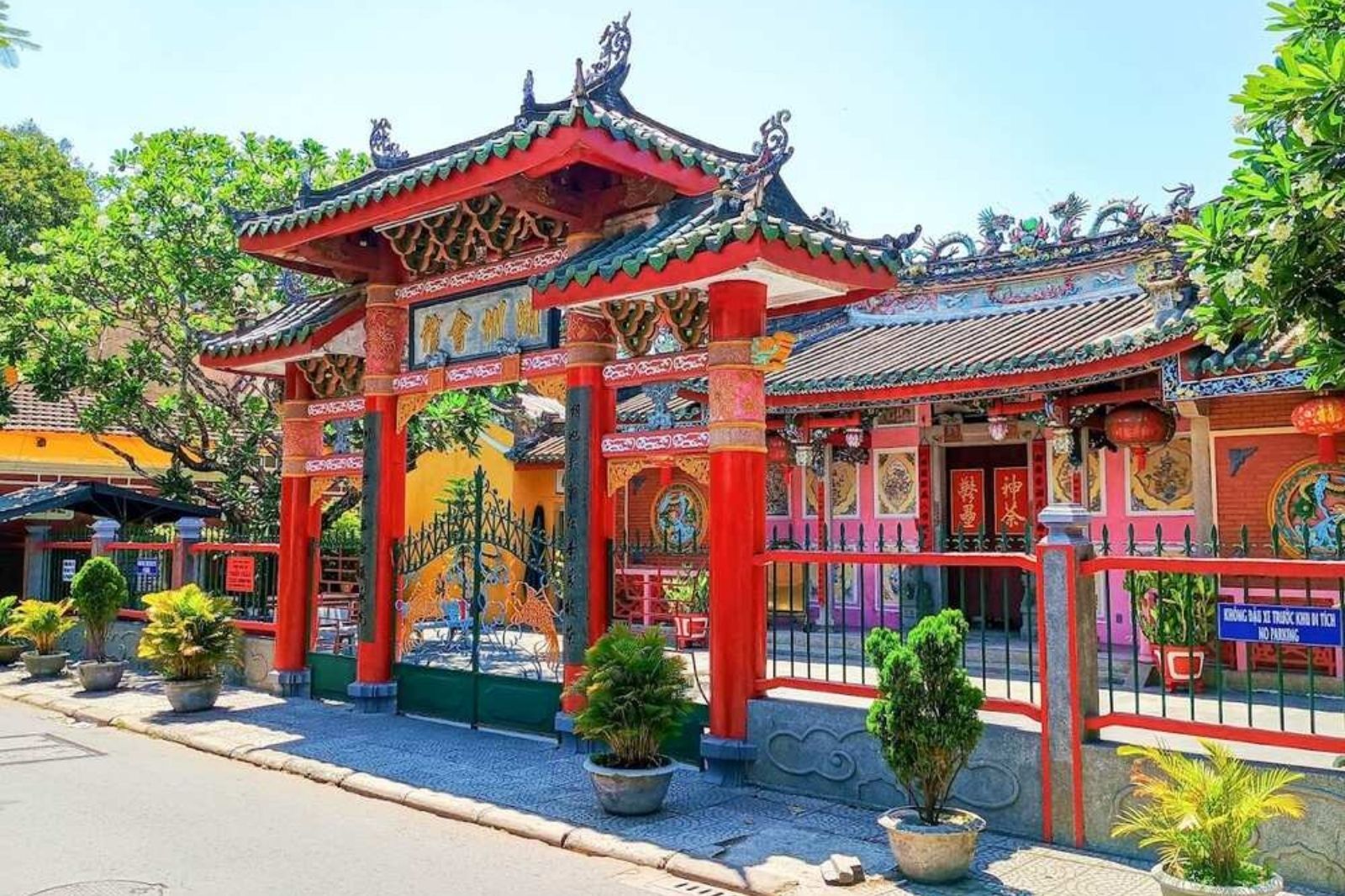
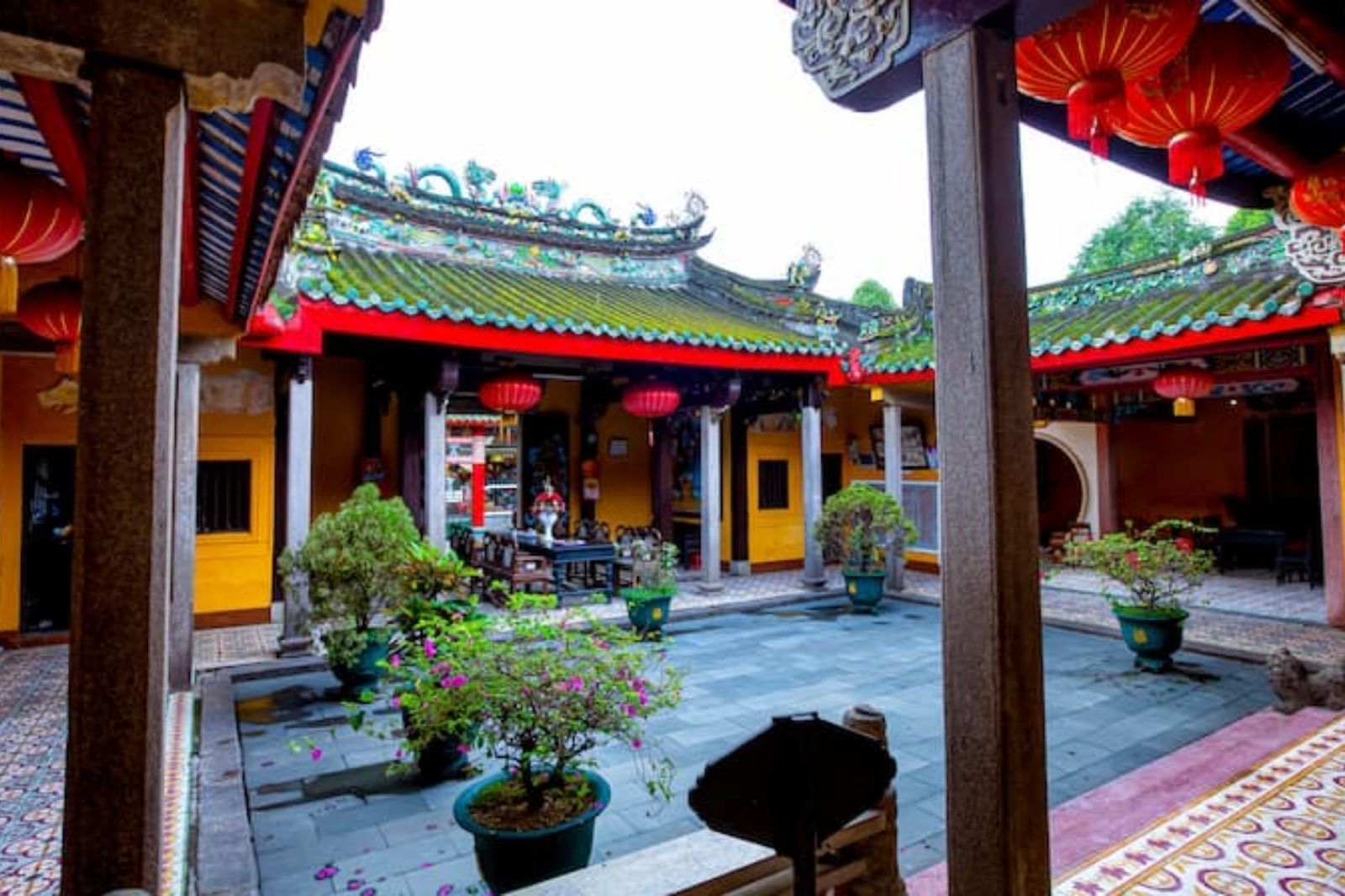
Trieu Chau Assembly Hall, also known as Ong Bon Pagoda

Photo: Trieu Chau Assembly Hall, also known as Ong Bon Pagoda 

2. The Distinctive Architectural and Artistic Value of Trieu Chau Assembly Hall

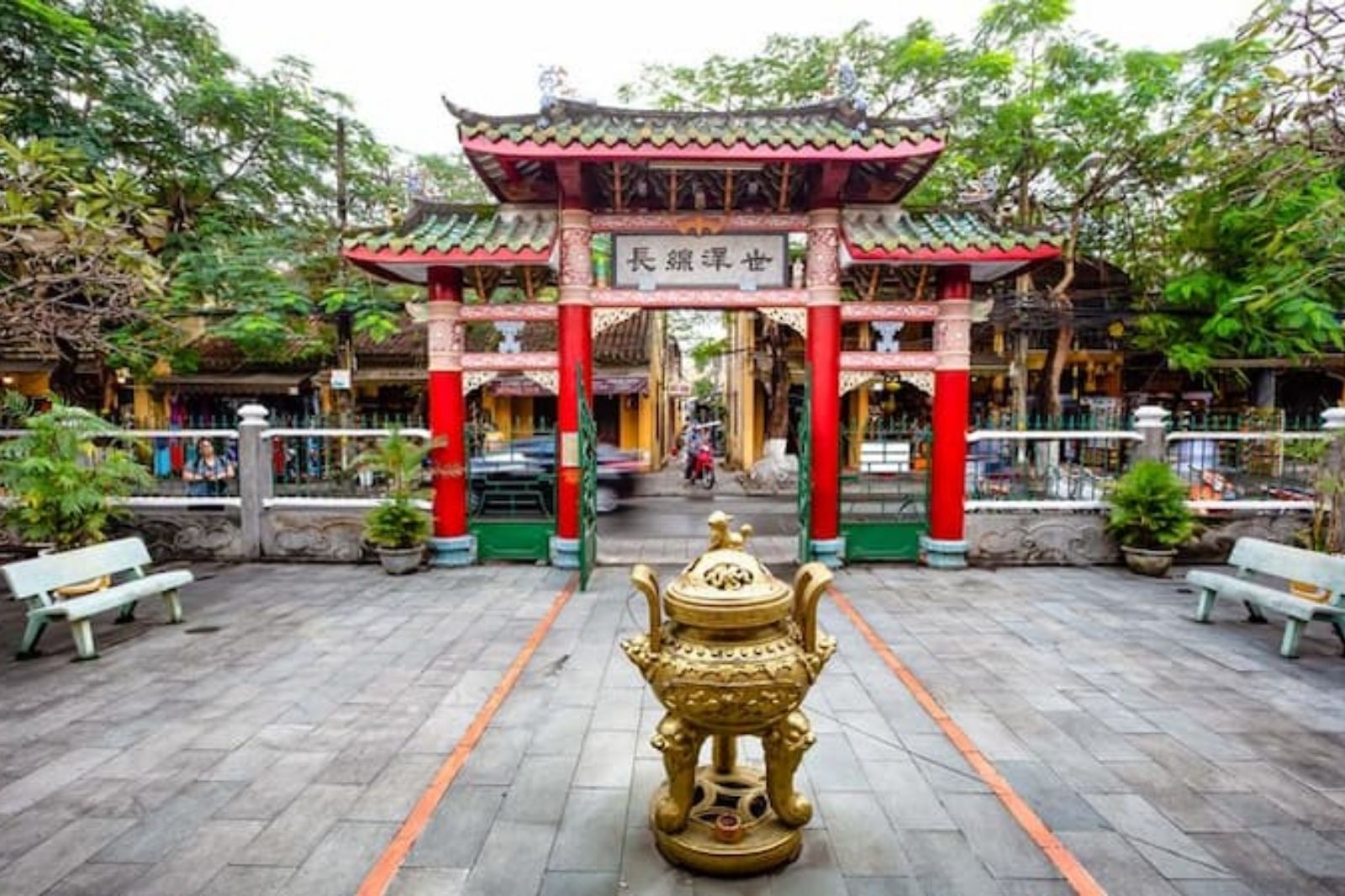
Trieu Chau Assembly Hall impresses visitors with its architecture deeply imbued with traditional Chinese characteristics, most notably the "noi cong ngoai quoc" (inner-outer ring) layout. The space is organized in clear layers, from the triple-gate entrance (tam quan), front yard, front hall, and courtyard to the main sanctuary and the East-West wings. This arrangement creates overall symmetry while allowing natural light and breeze to penetrate each courtyard and veranda. From the outside, the assembly hall carries a quiet beauty with curved tiled roofs, gently upturned roof corners, red-painted wooden pillars, and formal Chinese-character signage. Stepping deeper inside, the space gradually reveals elaborate decorative layers crafted from wood, stone, brick, and ceramics. Carvings and reliefs of dragons, phoenixes, carp, swirling clouds, and more appear on the roof, trusses, and architectural details, carrying familiar East Asian cultural symbols of blessings, prosperity, longevity, and an abundant life.

Notably, the wooden frame system is linked using traditional mortise-and-tenon techniques, limiting the use of metal nails. The wooden beams are precisely calculated and connected, creating a structure that is both sturdy and reflective of the skill of ancient craftsmen. Through every carved line and decorative section, one can feel the meticulousness and reverence that the Teochow community dedicated to their spiritual space. Having undergone multiple restorations, the assembly hall still retains its characteristic architectural and artistic features. The space here is not merely an ancient structure, but also a place where the cultural, spiritual, and artistic values of the Teochow community are preserved across generations.

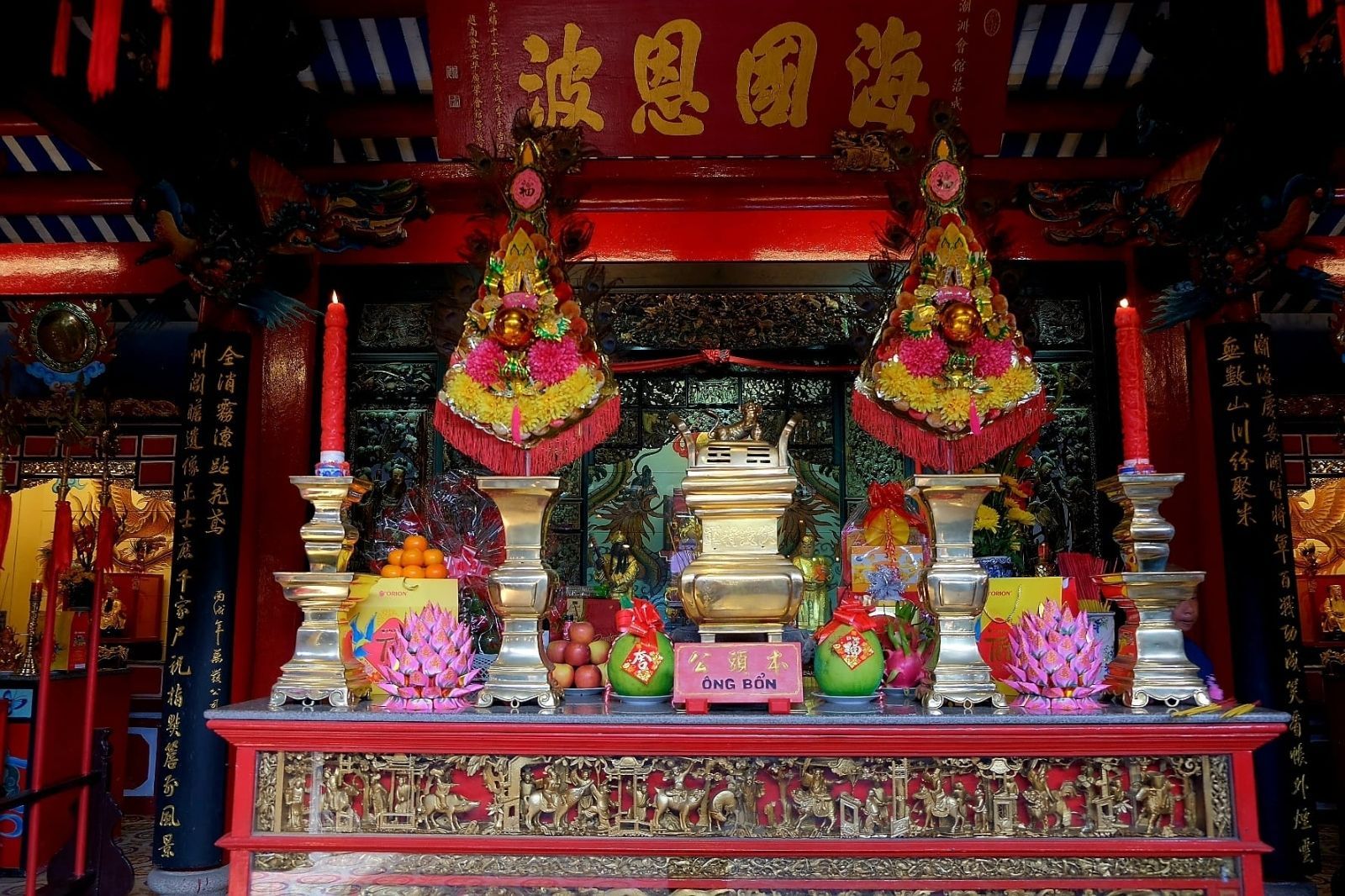
Inside Trieu Chau Assembly Hall

Photo: Inside Trieu Chau Assembly Hall 

3. Wood Carving and Ceramic Decoration Art at Trieu Chau Assembly Hall

One of the most prominent artistic highlights of Trieu Chau Assembly Hall is its exquisite wood-carving art, executed by Chinese artisans. The main hall's wooden framework is elaborately carved with motifs of dragons and phoenixes, carp transforming into dragons, flying butterflies, and lions playing with coins, symbolizing strength, transformation, and good fortune. The large wooden pillars in the front hall and main hall are engraved with folk legends, featuring smooth, vivid lines that tell stories through every carved stroke.

In addition, ceramic decorations contribute to the magnificent beauty of the assembly hall. The walls and tiled roofs are decorated with brightly colored ceramic reliefs depicting natural scenery, historical figures, and Chinese mythology. These ceramic reliefs are not only durable over time but also carry feng shui significance, helping the assembly hall maintain the harmony of yin and yang. This carving and decorating technique requires a high degree of skill, reflecting the master craftsmanship of the Teochow community, and has been preserved through numerous restorations over the past 170 years.

4. Worship Space and Religious Significance of the Teochow Chinese Community

The worship space at Trieu Chau Assembly Hall in Hoi An is tightly organized, clearly reflecting the religious characteristics and spiritual life of the Teochow Chinese community. Specifically, the layout and significance are expressed through the following elements:

  • Spatial layout: The assembly hall consists of three main sections—front hall – main hall – rear hall—arranged along a traditional axis, creating solemnity and seamlessness in religious practices.
  • Main hall: The most important worship area, featuring a large, elaborately carved altar housing, dedicated to General Ma Yuan (Phuc Ba General)—the deity believed to protect the seas, tame rough waves, and bring safety to voyages.
  • Worship decorations: A system of horizontal lacquered boards and parallel sentences painted in red and gold hangs along the halls, highlighting the solemn atmosphere and traditional artistic value.
  • Community significance: For the Teochow Chinese, the assembly hall is not only a place of worship but also a center of spiritual life, a place to pray for smooth business and a peaceful life.
  • Historical and cultural value: Built by the Minh Huong community fleeing from the Qing Dynasty, the assembly hall plays a role in preserving homeland memories and cultural identity.
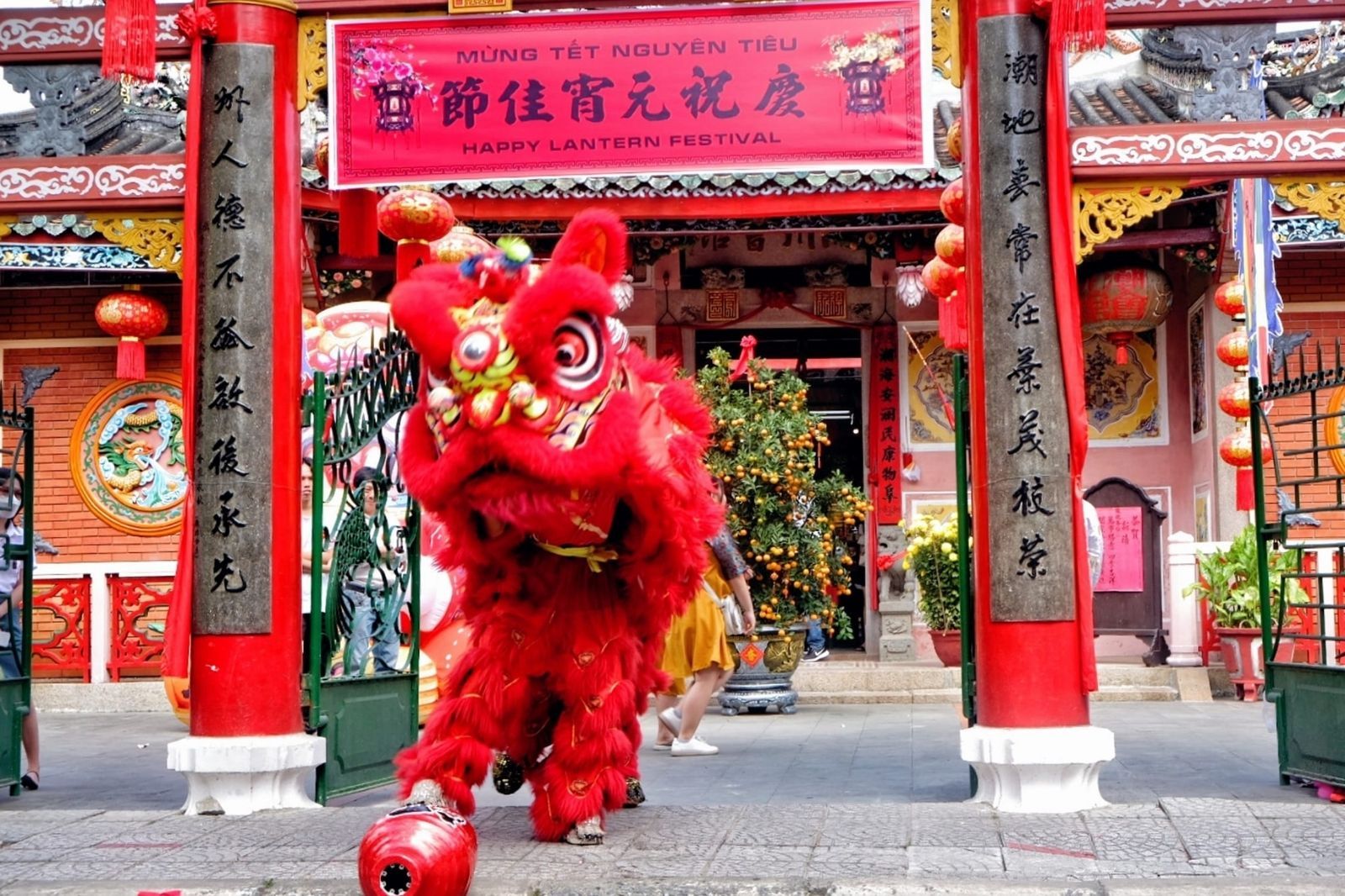
  • Typical festival activities: Highlighted by the Tet Nguyen Tieu (Lantern Festival on the 16th day of the first lunar month) with lantern procession rituals, ancestor worship, and folk art performances, enriching the cultural life of the old town.

Today, visitors exploring Trieu Chau Assembly Hall can directly observe and participate in worship activities, thereby gaining a better understanding of East Asian beliefs as well as the assembly hall's role in Hoi An's cultural structure.

Worship space at Trieu Chau Assembly Hall
Photo: Worship space at Trieu Chau Assembly Hall 

5. Ticket Prices, Opening Hours, and Ideal Times to Visit

Trieu Chau Assembly Hall is located within the ancient town of Hoi An, so visitors do not need to buy a separate ticket for the assembly hall; instead, they use the general ancient town entrance ticket. Tickets are sold at ticket booths in the central area of the old town and can be used to visit a selection of heritage sites from the prescribed list.

  • Vietnamese visitors: 80,000 VND/person.

  • Foreign visitors: 120,000 VND/person.

This ticket allows you to visit any 5 locations within the old town, including the assembly halls, making it very economical and convenient. You can buy tickets at ticket booths around the old town or via the Hoi An tourism app.

Opening hours: From 7:00 AM to 5:00 PM daily. The assembly hall is open year-round, except on certain major holidays when special hours may apply.

The ideal time to visit is early morning (from 8:00 AM) to avoid crowds and enjoy the peaceful atmosphere, or during Tet Nguyen Tieu (January-February of the lunar calendar) to witness the vibrant lantern festival and traditional rituals. Spring and autumn (March-May or September-November) offer the best weather in Hoi An, with gentle sunshine and little rain, making it comfortable for exploration.

Trieu Chau Assembly Hall during Tet Nguyen Tieu

Photo: Trieu Chau Assembly Hall during Tet Nguyen Tieu 

6. Visitor Tips for Exploring Trieu Chau Assembly Hall

To fully appreciate the architectural beauty and cultural space of Trieu Chau Assembly Hall, visitors can keep a few small tips in mind for their journey:

  • Attire and behavior: As it is a place of worship, wear polite clothing, avoiding short shorts or off-the-shoulder tops. Do not speak loudly, run around, or touch artifacts to respect the sacred space.

  • Getting around and combining visits: Walk from the Japanese Covered Bridge to sightsee the old town, or rent a bicycle (about 30,000 VND/day) to explore. Combine your visit with nearby locations such as Quang Dong Assembly Hall (176 Tran Phu Street) or Phung Hung Old House to save time.

  • Photography and learning: The assembly hall is a paradise for photographers with great camera angles from the triple gate to the main sanctuary. Hire a local tour guide (about 200,000 VND/group) to hear detailed historical stories.

  • Other tips: Bring drinking water, sunscreen, and download the Hoi An map app for easy navigation. After your visit, you can enjoy cao lau or mi Quang at nearby eateries to complete your trip.

Maintain politeness in the solemn space

Photo: Maintain politeness in the solemn space 

With a history spanning over 170 years, Trieu Chau Assembly Hall is not only a typical architectural work of the Chinese community in Hoi An, but also living documentation reflecting the process of cultural, religious, and artistic exchange of a former international trading port. The values preserved from spatial structures, carving arts, to worship practices have helped the assembly hall maintain its important role within the ancient town's heritage complex. Visiting Trieu Chau Assembly Hall is therefore not merely stopping at a destination, but an opportunity to look deeper into the historical depth and cultural identity that have shaped the enduring visage of Hoi An today.

Loading......

Featured destinations