Exploring the Cantonese Assembly Hall: A Remarkable Chinese Architectural Relic in Hoi An

Central

Da Nang

Hoi An

Sovaba.travel

Updated at: 24/09/2026

1. History of the Cantonese Assembly Hall

The Cantonese Assembly Hall, also known as the Guangdong Pagoda, was built in 1885 by the Cantonese congregation—immigrants from Guangdong Province (China) who came to Hoi An for trade and settlement. Initially, the assembly hall was established to worship Mazu (Goddess of the Sea), the patron deity of seafarers and merchants, aiding them through perilous ocean journeys.

Over time, in 1911, the assembly hall was renovated and dedicated to Guan Yu (Guan Gong)—a symbol of loyalty, righteousness, and bravery in Chinese culture. At the same time, it also pays homage to the ancestors (Tien Hien) who contributed to building the community. The history of the Cantonese Assembly Hall is closely tied to the development of Hoi An's trading port during the 17th–19th centuries, when the Chinese constituted a large proportion of the local population. Today, this over 140-year-old monument was recognized as a UNESCO World Cultural Heritage site along with Hoi An Ancient Town in 1999. Its origin not only reflects cultural harmony but also tells the story of the migration and adaptation journey of the Chinese community in Vietnam.

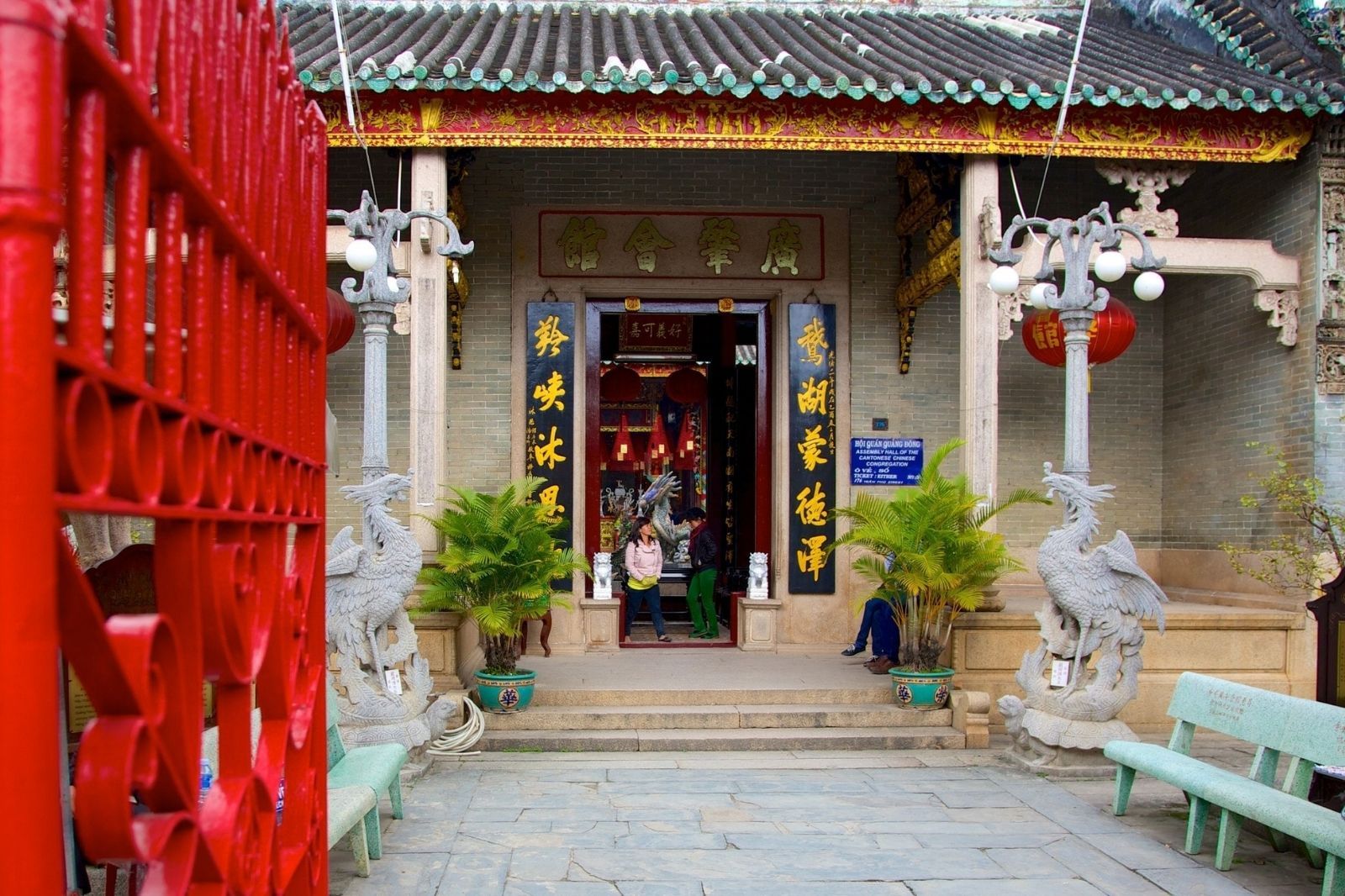
The Cantonese Assembly Hall, also known as Guangdong Pagoda
Photo: The Cantonese Assembly Hall, also known as Guangdong Pagoda 

2. Where is the Cantonese Assembly Hall located?

To easily plan your visit to the Cantonese Assembly Hall, visitors can refer to the essential information regarding location, transportation, and opening hours below:

  • Address: Cantonese Assembly Hall is located at 176 Tran Phu Street, Minh An Ward, Hoi An City, Quang Nam Province.
  • Geographic Location: The building is situated right in the center of Hoi An Ancient Town, on Tran Phu Street. 
  • Getting Around: Motor vehicles are restricted in the Ancient Town area, so walking is recommended to fully experience the atmosphere and pace of life here.
  • Opening Hours: Open daily from 7:00 AM to 5:00 PM.
  • Entrance Ticket: An entrance ticket to Hoi An Ancient Town is required (VND 80,000 for Vietnamese visitors; standard ticket applies to multiple heritage sites in the area).

With its central location, seamless connectivity, and convenient visiting conditions, the Cantonese Assembly Hall is an ideal stop on your journey to explore the heritage of Hoi An Ancient Town through cultural and historical depth.

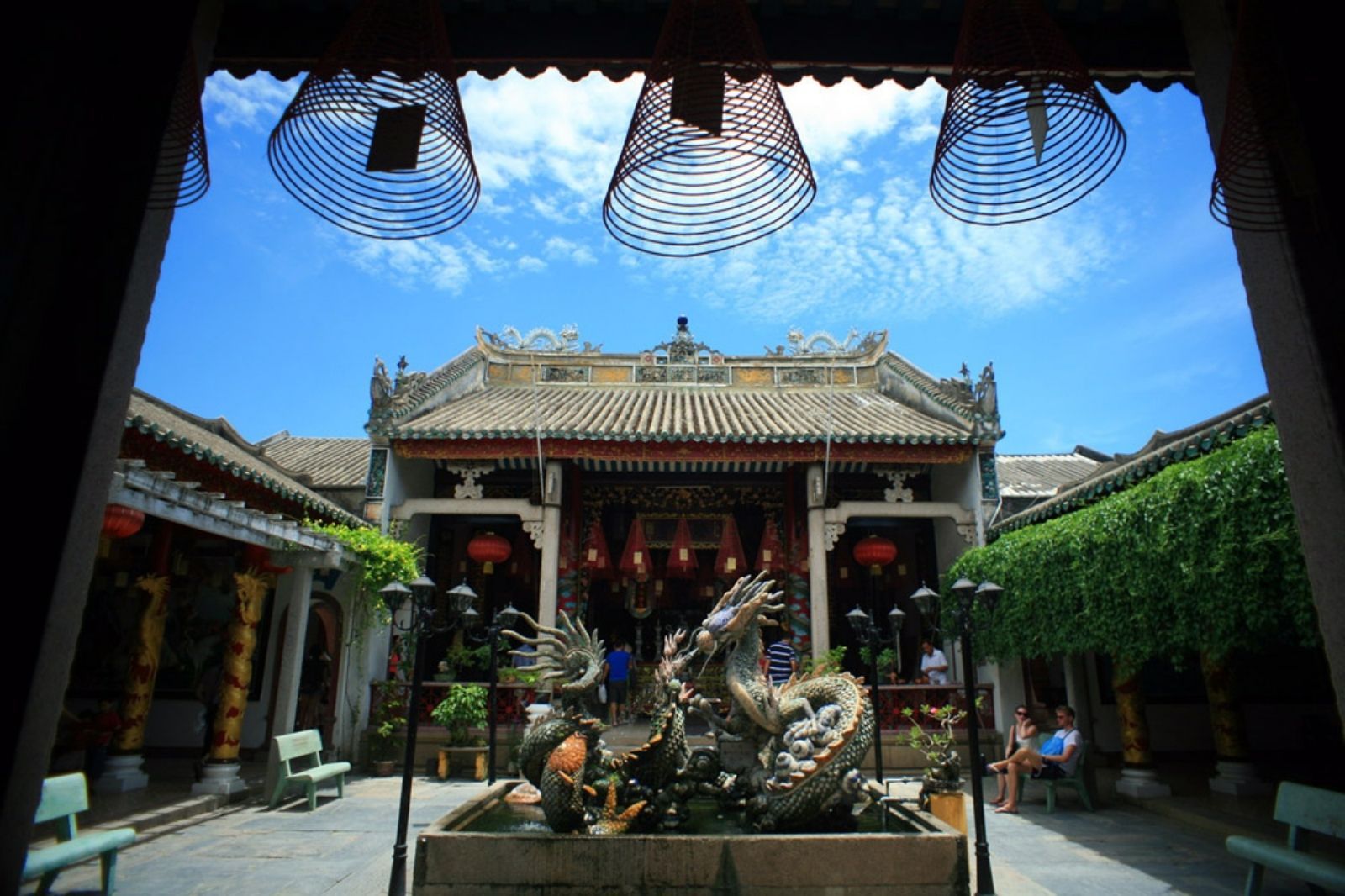
The assembly hall is located right in the heart of Hoi An Ancient Town
Photo: The assembly hall is located right in the heart of Hoi An Ancient Town 

3. Architecture of the Cantonese Assembly Hall

The architecture of the Cantonese Assembly Hall features a strong classic Chinese style, harmoniously combined with Vietnamese elements to create an impressive ensemble. The entire complex is constructed in the enclosed shape of the Chinese character "Quo" (国), spanning an area of about 600 m², comprising main sections: the triple gate (tam quan), front courtyard, central pavilion (phuong dinh), east-west wings, inner courtyard, and the main sanctuary.

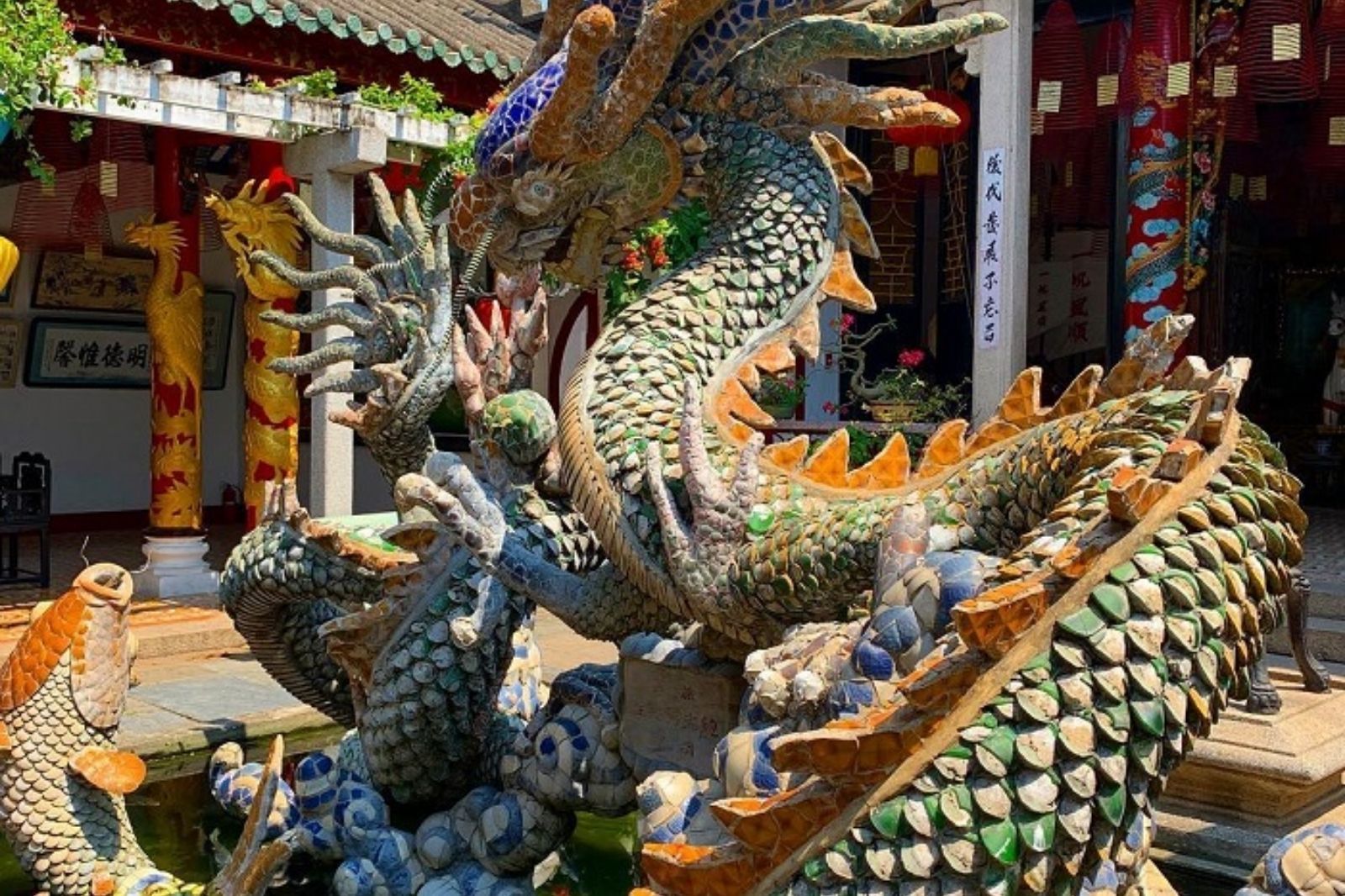
The primary building materials are ironwood, marble, and glazed ceramic tiles, meticulously carved by Cantonese artisans. The roof is covered with yin-yang tiles, curving upwards with dragon and phoenix motifs—symbols of power and good fortune in East Asian culture. The pillars are decorated with stone bas-reliefs depicting nature scenes, mythology, and everyday life. Overall, the architecture not only reflects the prosperity of the Chinese diaspora but also stands as testament to the cultural exchange between Vietnam and China, with localized details such as lotus patterns or the use of local Bat Trang bricks.

4. Outstanding architectural features inside the Cantonese Assembly Hall

Inside the Cantonese Assembly Hall, visitors will be captivated by a series of exquisite architectural elements:

  • Triple Gate (Cổng tam quan): The grand main entrance featuring three arched doorways, flanked by majestic stone dragon statues carved from solid stone monoliths. Above the gate, the Chinese characters "Guang Zhao Assembly Hall" are inscribed, affirming its roots from the Guangdong and Zhaoqing regions.
  • Front Courtyard and Pavilion: A spacious yard featuring bonsai plants and a small pond, creating a peaceful ambiance. The square pavilion in the center of the yard serves as a venue for festivals, featuring curved roofs and intricately carved pillars.
  • East and West Wings: Flanking the inner courtyard, used as community gathering spaces. The interior is decorated with paintings and bas-reliefs depicting historical stories, such as the migration journey of the Chinese settlers.
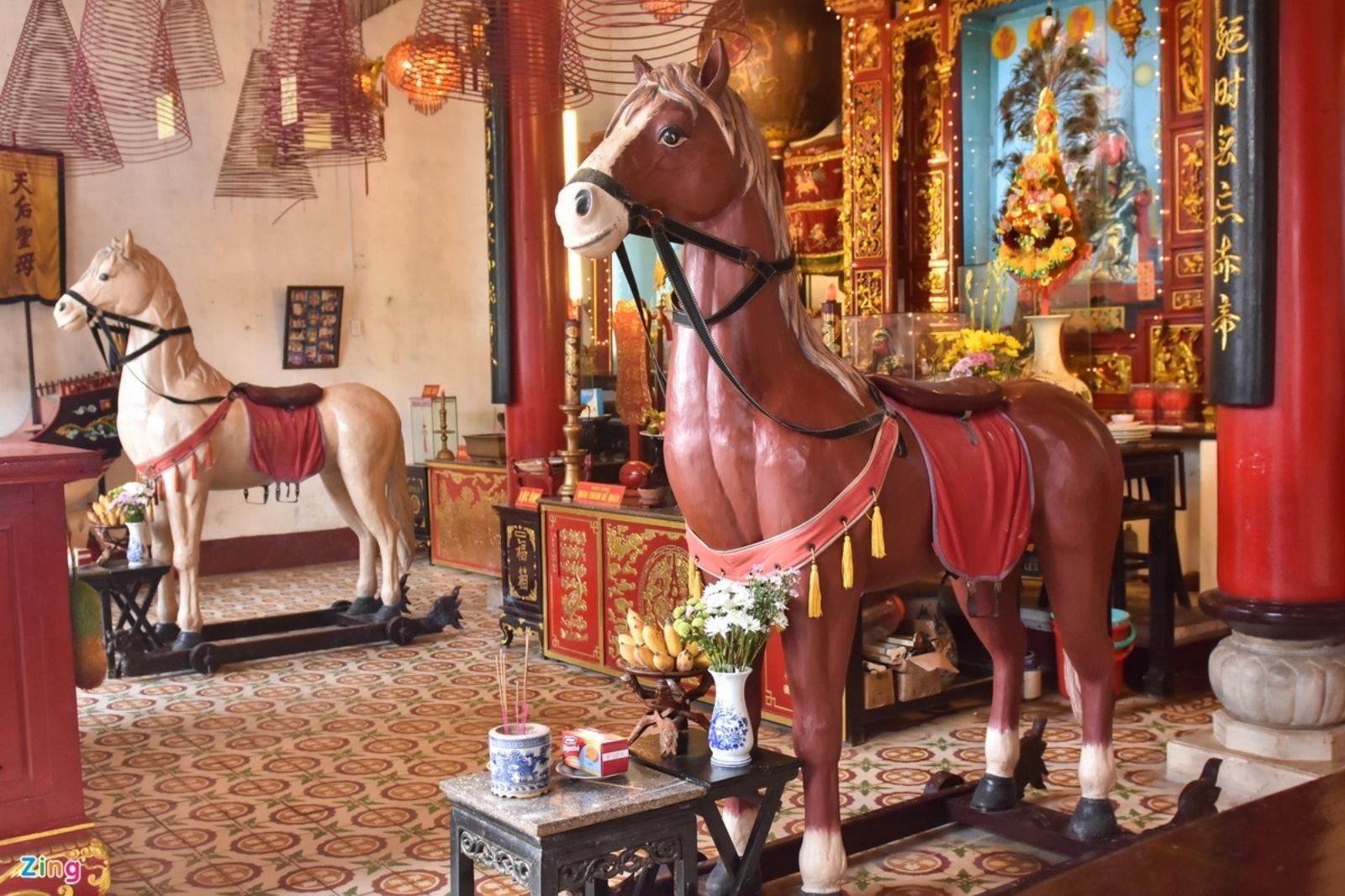
  • Main Sanctuary (Chinh dien): The most significant area, enshrining Guan Gong in the center, flanked by statues of Guan Ping and Zhou Cang. The altar is made of gilded carved wood with ancient altarpieces and ceremonial items. Surrounding the shrine are murals portraying scenes from Romance of the Three Kingdoms, along with lanterns, horizontal lacquered boards, and parallel sentences.

These architectural features are not only visually stunning but also embody high artistic value, showcasing master craftsmanship in stone and wood carving.

Majestic stone dragon statue at the assembly hall
Photo: Majestic stone dragon statue at the assembly hall 

5. Spiritual and religious values of the Cantonese Assembly Hall in Hoi An

The Cantonese Assembly Hall is not only an architectural monument but also a spiritual hub for the Chinese community in Hoi An. It originally worshiped Mazu (Goddess of the Sea), patron deity of sailors and traders, expressing faith in divine protection over the ocean. Later, the veneration of Guan Gong emphasized loyalty, bravery, and justice, inspired by the historical figure Guan Yu from the Three Kingdoms era.

The assembly hall reflects the spiritual beliefs of the Chinese community in Hoi An
Photo: The assembly hall reflects the spiritual beliefs of the Chinese community in Hoi An 

Every year, the hall hosts major festivals such as the Lantern Festival (15th day of the first lunar month) featuring lion and dragon dances, and Guan Gong's birthday (13th day of the 5th lunar month) with solemn ritual ceremonies. These activities preserve spiritual beliefs while contributing to local culture, attracting visitors interested in exploring Hoi An's religious diversity. The spiritual significance here also lies in prayers for health, peace, and business prosperity, allowing visitors to feel a tangible connection between past and present.

6. The best time to visit the Cantonese Assembly Hall

The ideal time to visit the Cantonese Assembly Hall is early morning (7:00–9:00 AM) or late afternoon (3:00–5:00 PM), when the weather is cool and less crowded. Spring (February–April) and autumn (September–November) offer the pleasantest weather, avoiding summer rain and floods or the cold winter of Central Vietnam.

In particular, if you wish to experience festival atmospheres, visit during the 15th of the first lunar month to see lanterns and lion dances, or on the 14th day of each lunar month to view the ancient town glowing under moonlight. Avoid peak hours (10:00 AM–2:00 PM) to bypass crowds, and remember to check the lunar calendar to align with cultural events.

7. Travel tips for visiting the Cantonese Assembly Hall

To make your visit to the Cantonese Assembly Hall smooth and meaningful, here are some practical tips:

  • Ticket preparation and attire: Use the Hoi An Ancient Town entrance ticket (from VND 80,000, which includes 5 heritage sites). Dress modestly, covering shoulders and knees out of respect for the sacred space.
  • Transportation and combining attractions: Walk from the Japanese Covered Bridge (only 200m away) or rent a bicycle (VND 20,000/hour). Combine your visit with nearby assembly halls like Fujian Assembly Hall to save time.
  • Experience activities: Take photos in the front courtyard, but avoid flash inside the main sanctuary. Participate in offering incense or prayers to experience its spiritual atmosphere.
  • Important reminders: Maintain cleanliness and refrain from touching sacred artifacts. Enjoy local dining nearby with Hoi An specialties like cao lau or Mi Quang noodles. Bring an umbrella if visiting during the rainy season.
Visiting Cantonese Assembly Hall
Photo: Visiting Cantonese Assembly Hall 

Leaving the Cantonese Assembly Hall, what lingers is not only the impression of a timeless Chinese architectural monument, but also a clear appreciation for how cultural values have been preserved and integrated into Hoi An's urban space. From spatial arrangement and decorative symbols to community functions, the assembly hall demonstrates the vital role of the Chinese community in shaping the multi-layered cultural landscape of the Ancient Town today. This is an ideal stop for visitors to gain a deeper insight into Hoi An's rich history and vibrant cultural life. To extend your journey, you can choose a heritage-themed Hoi An tour, combining visits to Chinese assembly halls, iconic ancient houses, the Japanese Covered Bridge, and the evening pedestrian zone. Half-day or full-day tours departing from Da Nang or walking tours with local guides are great options to explore Hoi An completely, systematically, and efficiently.

Loading......

Featured destinations