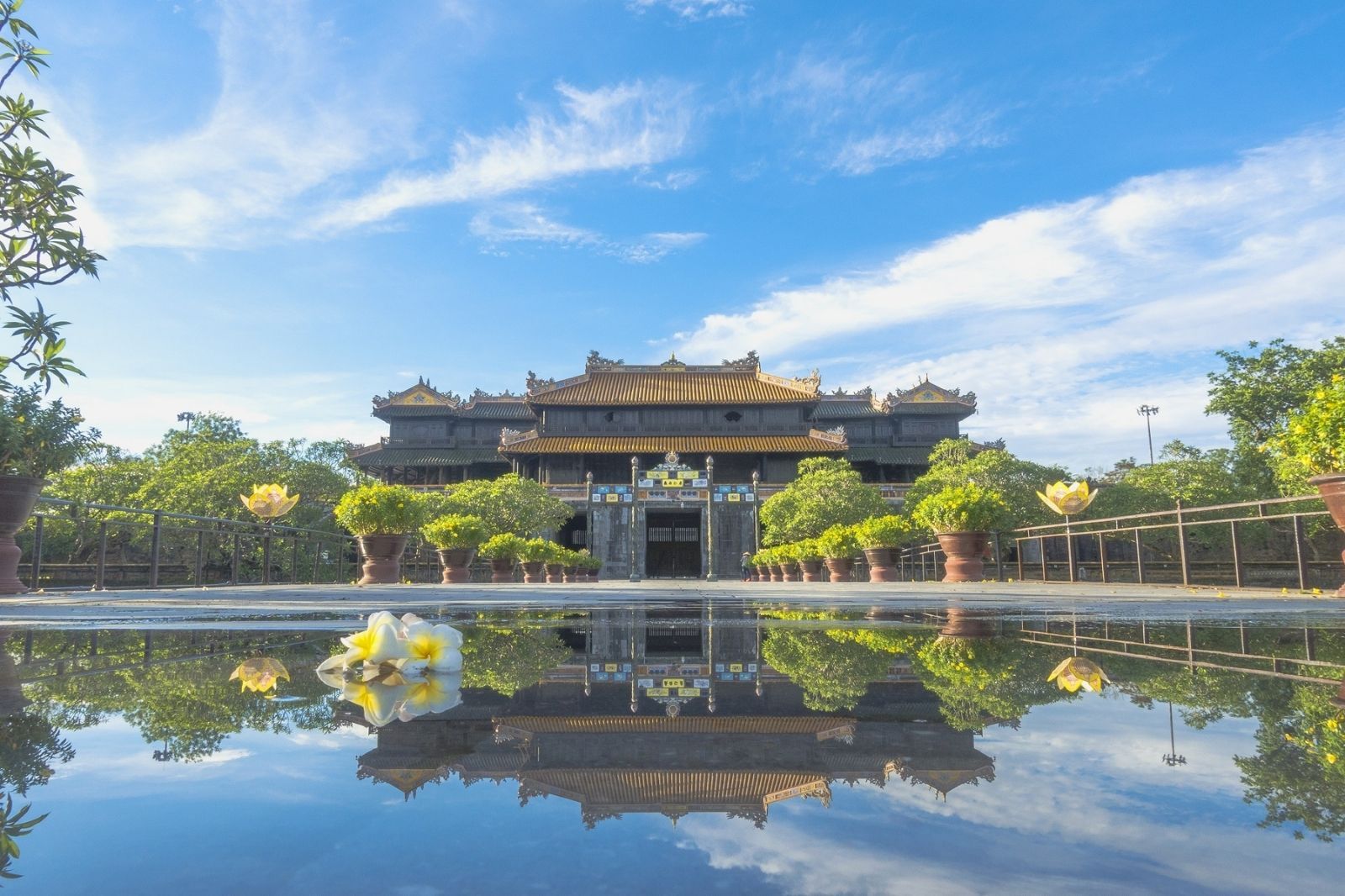
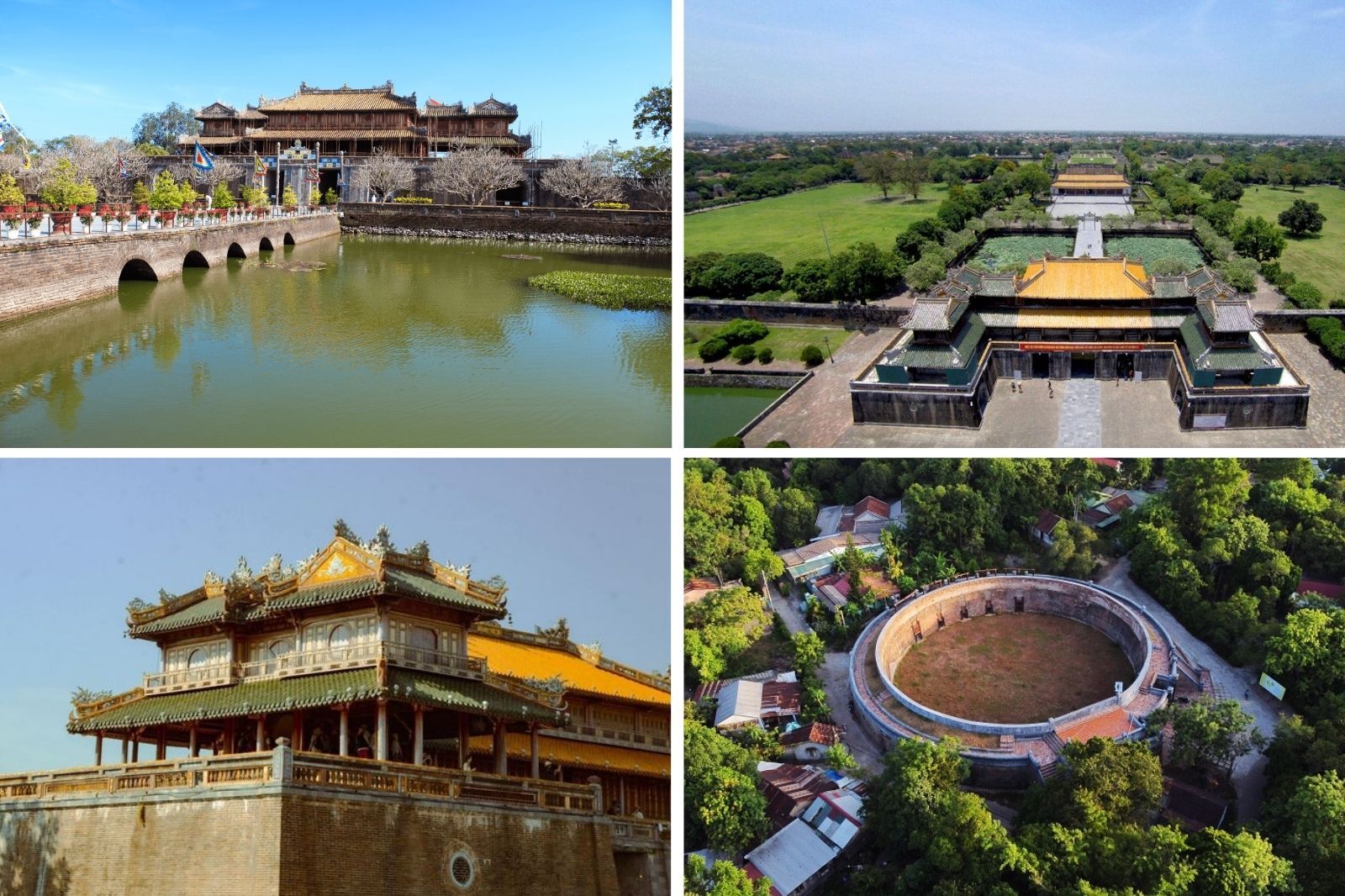
If the Ancient Capital of Huế is considered a "book" written through architecture, then every citadel, palace, or decorative motif here is a page of history rich in the philosophy and aesthetics of ancient Vietnamese people. What creates the charm of Huế lies not only in its majestic, ancient look, but also in the way architecture, culture, and nature are harmonized into a unified whole.
The Intersection of Architectural Essentials
Huế's architecture is a skillful combination of Eastern feng shui philosophy and I Ching principles with Western Vauban fortification techniques, while inheriting the essence of traditional Vietnamese architecture and selectively adopting Chinese influences. All were adjusted and "Vietnamized" to create a distinct identity: solemn yet soft, imposing yet seamlessly connected with the natural landscape.
An Urban Space Imprinted with Feng Shui
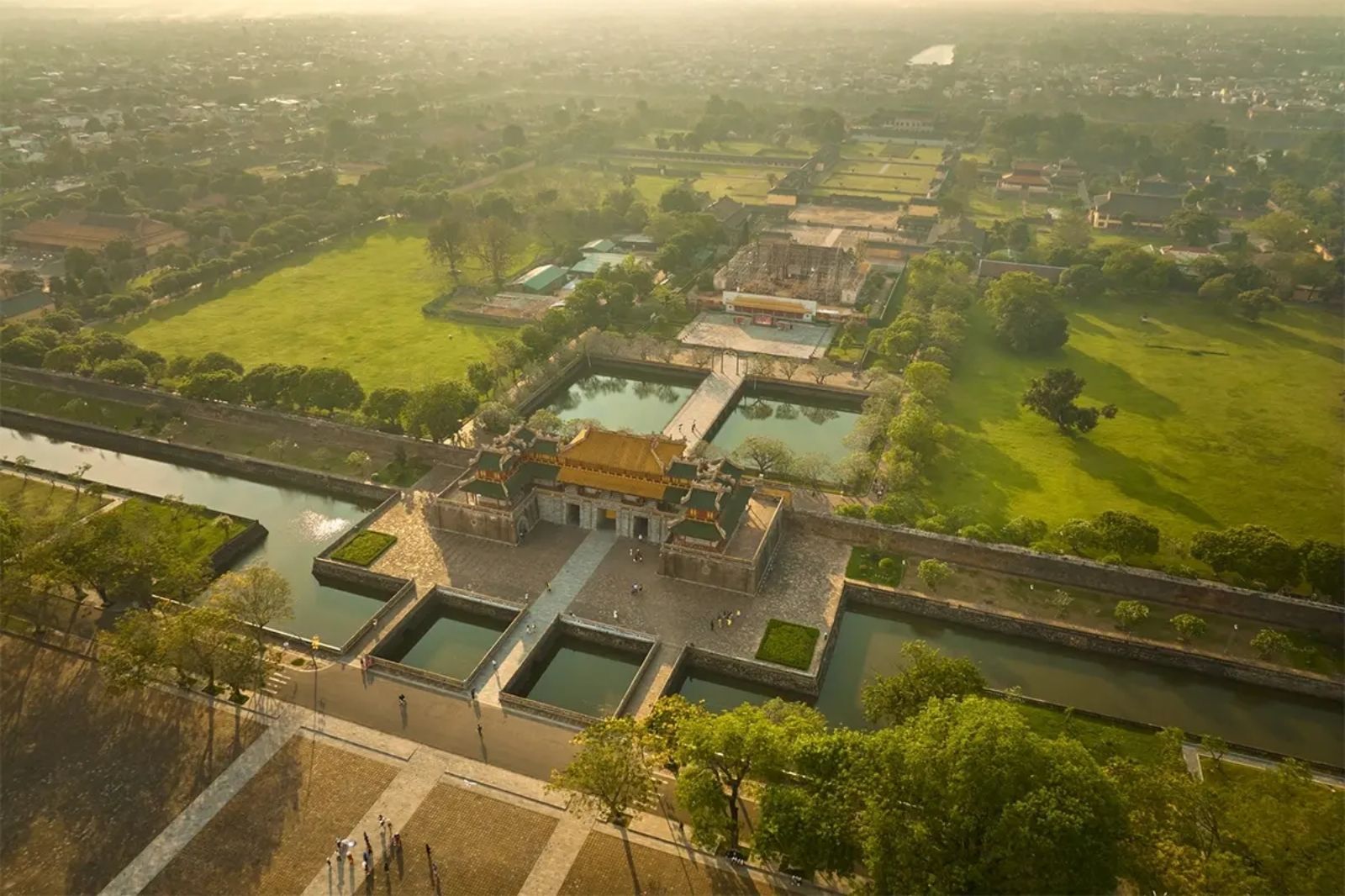
One of the most special features of Huế lies in its symmetrical layout and continuous architectural axis, linked with concepts of orientation, Five Elements, Five Directions, and Five Colors. The Citadel, Imperial City, and Forbidden Purple City are organized in highly ordered spatial layers, while the Perfume River, Ngự Bình Mountain, Hến Islet, Dã Viên Islet, and many other landscape elements are treated as natural components of the urban city.
Therefore, Huế does not give the impression of a capital "placed" into nature, but rather a capital formed out of nature itself.
Each Structure as a Cultural Symbol
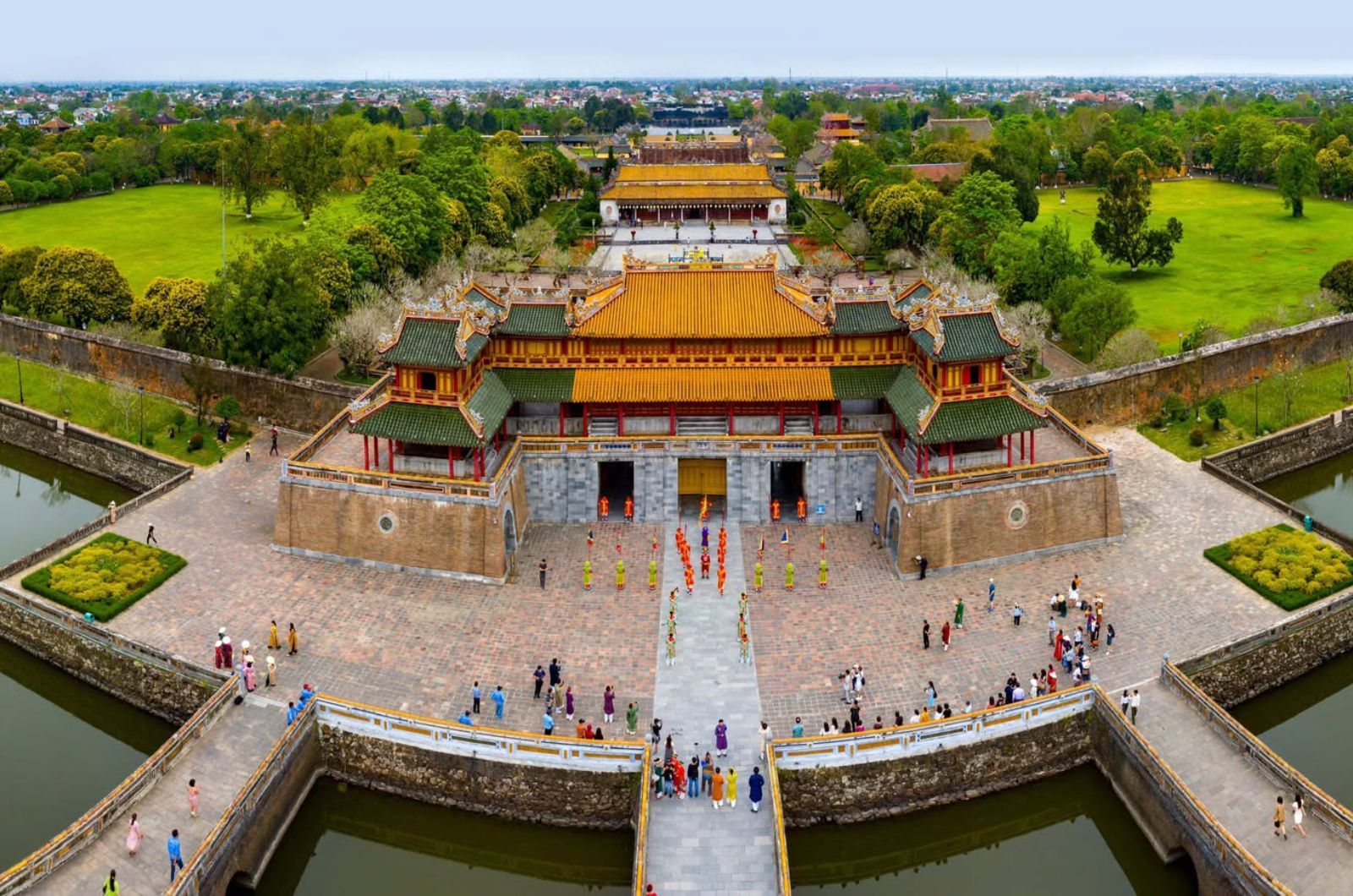
Visiting Huế, tourists do not just admire architecture but can also "read" the philosophy of the Nguyễn Dynasty through each building. Ngọ Môn (Noon Gate) symbolizes royal power; Thái Hòa Palace is the venue for solemn royal court ceremonies; while the system of ancestral temples reflects the national tradition of ancestor veneration and morality.
In particular, royal decorative art reached a high level of refinement with dragons, phoenixes, floral patterns, ancient motifs, along with exquisite carving, gilding with red and gold lacquer, and signature yellow-glazed roof tiles.
All together, these elements create a unique beauty for Huế: possessing the ambiance of an Eastern capital, yet harboring the Vietnamese soul and identity. It is this blend of power, art, faith, and nature that constitutes the special value of the Complex of Huế Monuments – a heritage not only to be viewed, but to feel the cultural depth of an entire era.