Hoi An Museum of Trade Ceramics: Preserving the Memories of a Bustling Trading Port
Central
Da Nang
Hoi An
Sovaba.travel
Updated at: 28/09/2026
1. Where is the Hoi An Museum of Trade Ceramics located?
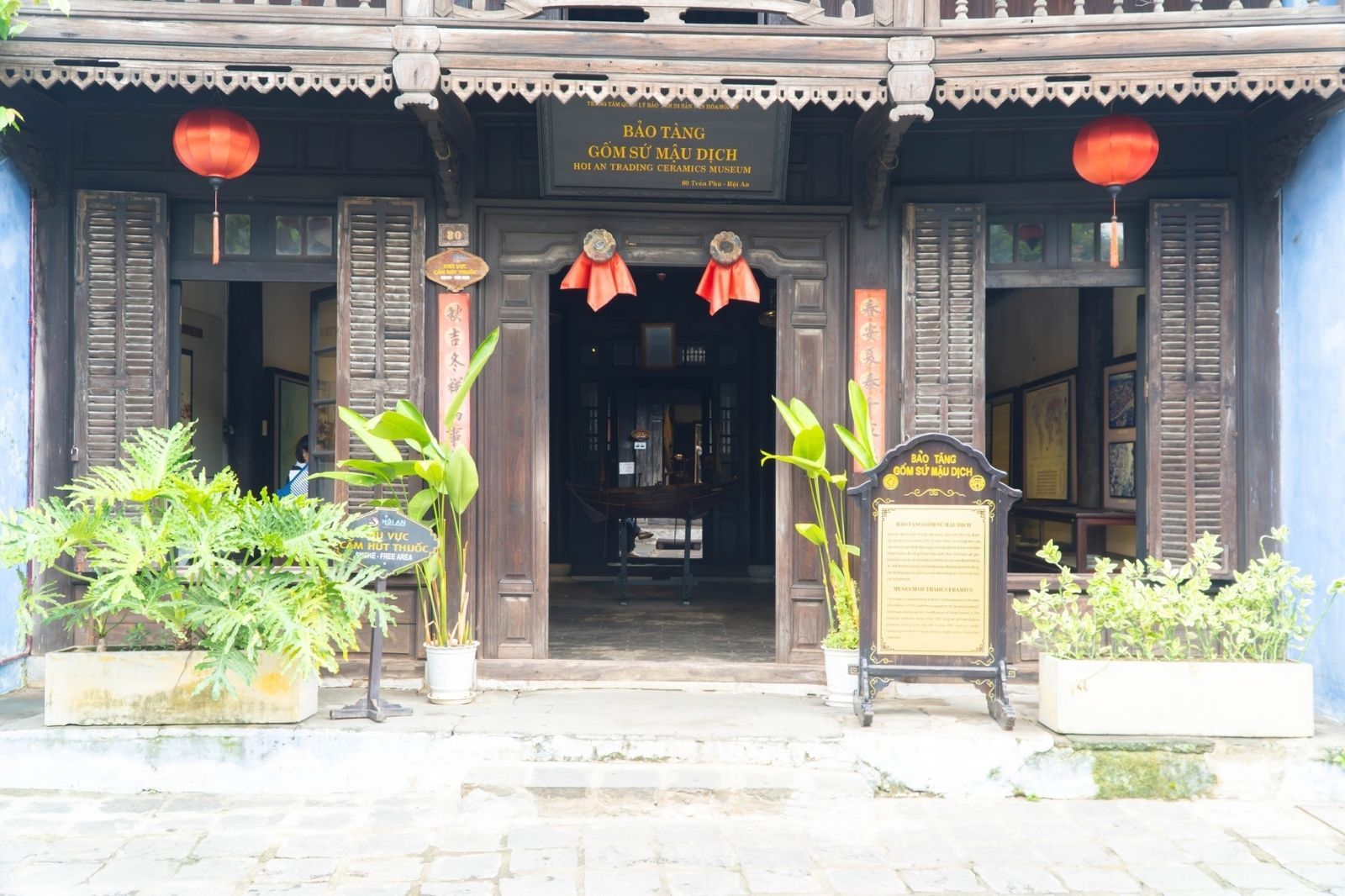
The Museum of Trade Ceramics is located at 80 Tran Phu Street, Minh An Ward, Hoi An, right within the ancient town area. This location is quite convenient for combining visits with the Japanese Covered Bridge, Tan Ky Old House, Phuc Kien Assembly Hall, and many heritage sites situated along Tran Phu Street.
The museum is set inside a two-story wooden house featuring traditional Hoi An architecture, complete with a balcony and distinctive architectural lines. The space here maintains a rustic, intimate feel, making the journey of exploring ancient ceramic artifacts feel completely natural, as if discovering Hoi An's trading heritage right inside an old traditional home.
Photo: The Museum of Trade Ceramics located on Tran Phu Street
2. History of the Hoi An Museum of Trade Ceramics
The two-story wooden old house housing the museum today was built around 1920, bearing the characteristic features of traditional Hoi An residential architecture with a front house, an interior courtyard, and a back house. In 1994, the structure was restored with the support of the Japan International Cooperation Agency (JICA) and Japanese experts. A year later, the Museum of Trade Ceramics officially opened, becoming the first thematic museum in Hoi An focusing on archaeological artifacts related to ceramic trading activities.
Most of the artifacts were excavated at archaeological sites in Hoi An from the late 1980s to the early 1990s, with the participation of Vietnamese archaeologists and Japanese experts. The museum currently preserves hundreds of artifacts dating from the 9th–10th centuries to the 19th century, many of which are relics of the maritime trade routes that once passed through Hoi An.
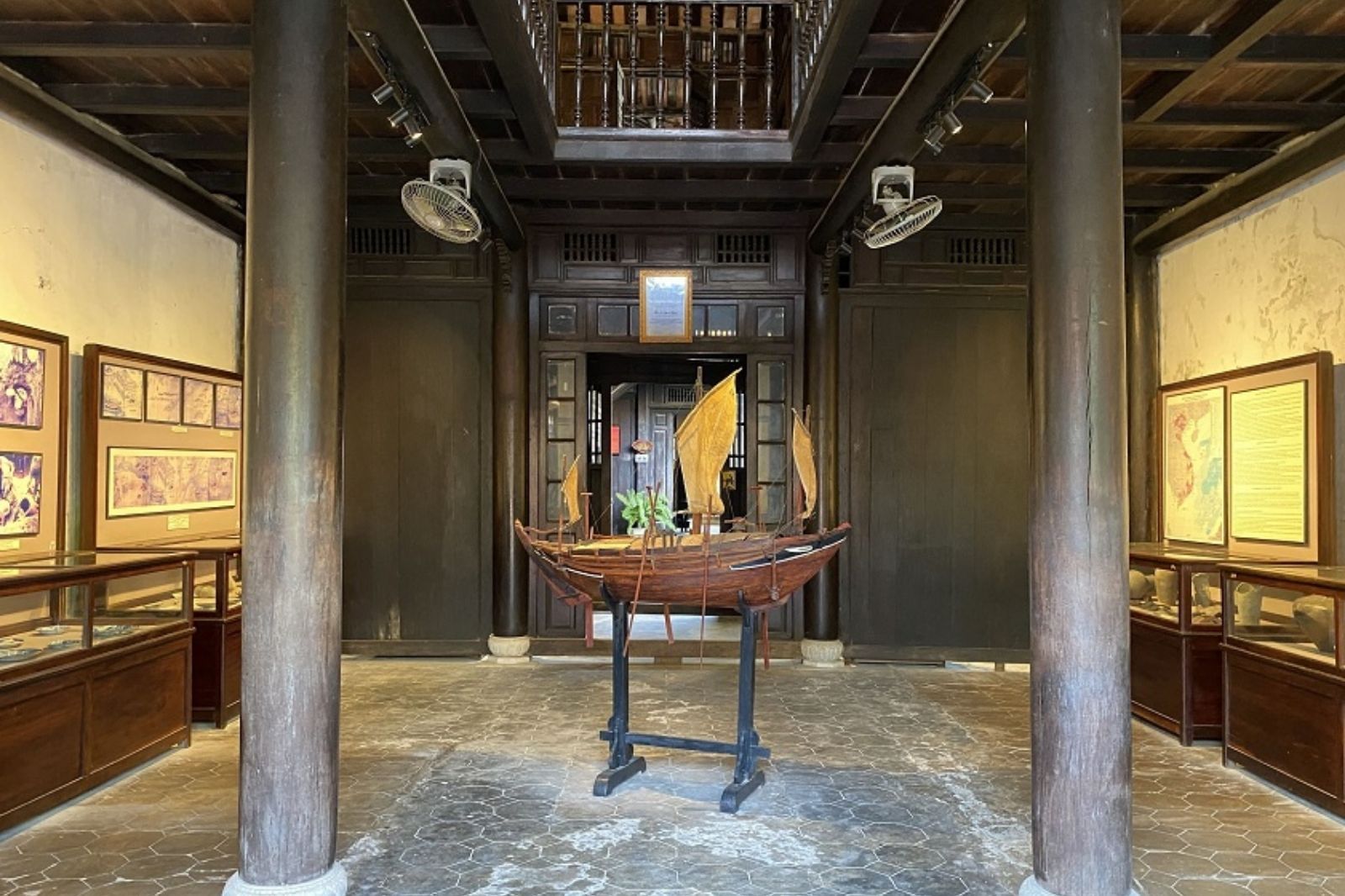
Photo: The museum is housed in a 2-story wooden house
3. The Role of Ceramics in Ancient Hoi An Trading Port
From the 14th century, Vietnamese ceramics entered the international market and flourished during the 15th–16th centuries. Products from famous pottery villages such as Chu Dau – My Xa and Bat Trang were brought to Hoi An, then transported by merchant ships to many other lands. At that time, Hoi An was an important trading hub on the "Maritime Ceramic Road." Merchant ships from China, Japan, Southeast Asia, India, the Middle East, and Europe successively arrived to exchange goods. These ceramic pieces brought along different styles, glaze colors, and patterns, reflecting the interaction among multiple cultures.
Notably, the discovery of the Cu Lao Cham shipwreck with approximately 240,000 artifacts, mostly Chu Dau ceramics dating back to the 15th–16th centuries, provided crucial documentation on maritime trade activities of that era. Through this, one can better visualize Hoi An's role in the region's vast trade network.
4. Exhibition Space and Architecture of the Museum
The museum is situated in a traditional two-story wooden house, reflecting the architectural style of Hoi An merchants from the 19th–20th centuries, which shares similarities with Japanese architecture due to the influence of the former Japanese merchant community. The space is divided into:
Ground floor: The main exhibition area with glass display cases protecting artifacts, accompanied by documentary boards, merchant ship models, and trade route maps.
Upper floor: A balcony overlooking Tran Phu Street and the indoor courtyard, creating an airy, peaceful ambiance amidst the bustling ancient town.
Inner courtyard: An open design with yin-yang tiled roofs, facilitating natural air circulation.
The architecture is simple and serene, harmoniously combining heritage preservation with modern displays, offering an intimate and unpretentious experience.
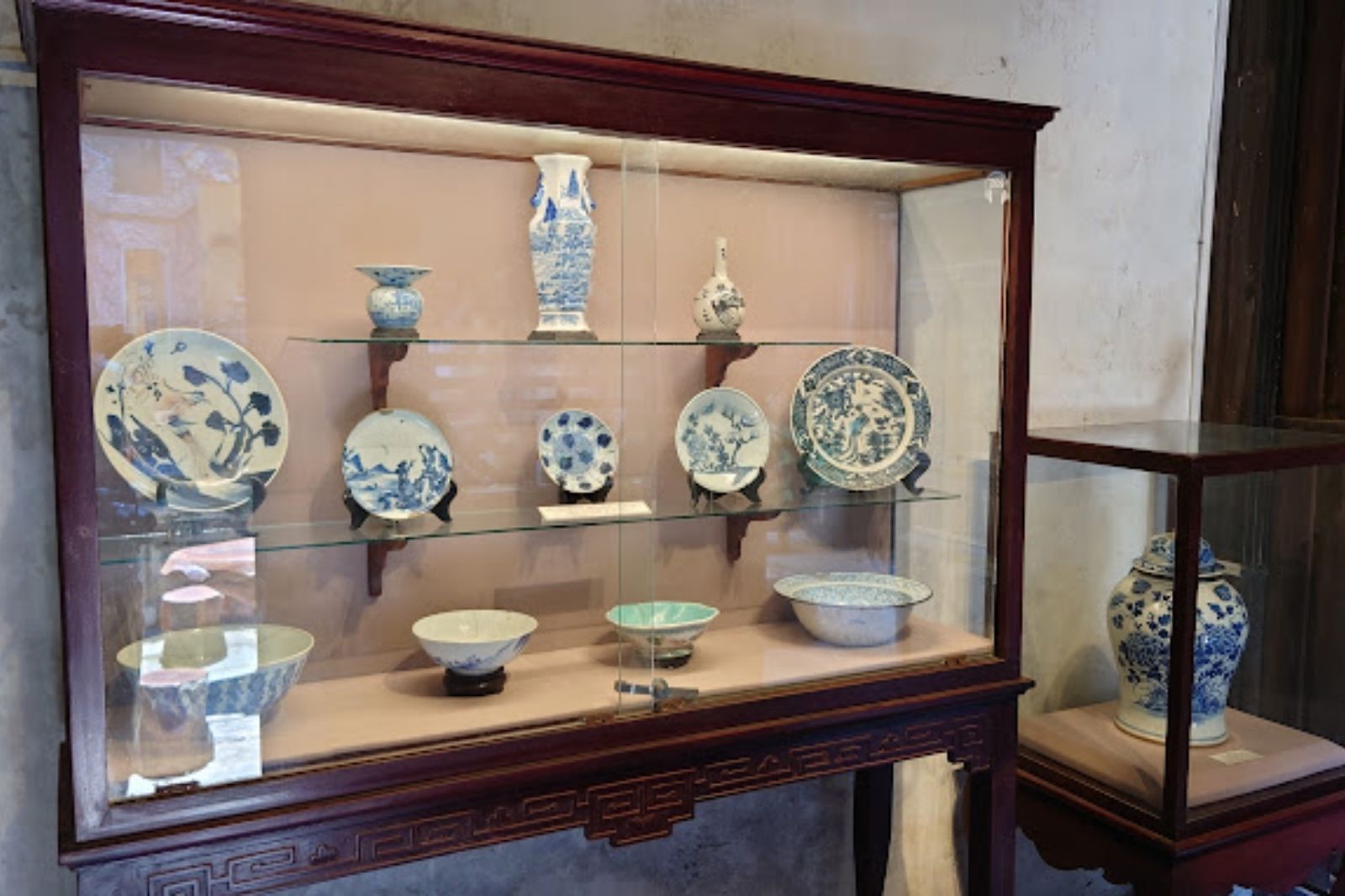
Photo: Ceramics displayed inside glass cabinets
5. Notable Artifacts at the Hoi An Museum of Trade Ceramics
The museum boasts a rich collection, primarily consisting of intact or restored archaeological artifacts:
Chinese ceramics: Ming and Qing dynasty vases, cups, and plates with exquisite dragon-phoenix motifs and blue-and-white patterns.
Japanese ceramics (Hizen): 17th–18th-century export porcelain, notable for pearly glazes and simple patterns.
Vietnamese ceramics: Products from Thanh Ha village and Dai Viet during the Le–Nguyen dynasties, including household and ritual items.
Thai ceramics and others: Evidence of diverse trade relations.
Many artifacts date from the 9th–10th centuries (early Champa period) up to the 19th century, accompanied by photo documents and models recreating cargo loading activities at the port.
6. Visitor Experience at the Hoi An Museum of Trade Ceramics
Visiting the museum offers an experience akin to stepping back in time, transitioning from the antique, tranquil space to vivid documentation recreating the ancient trading port of Hoi An. Here, visitors can:
Marvel at artifacts up close inside glass cabinets.
Take photos on the balcony, courtyard, or beside unique artifacts.
Combine a visit to the nearby Thanh Ha pottery village to experience traditional pottery making.
The ideal time to visit is early morning or late afternoon to avoid crowds and conveniently stroll through the ancient town as the lanterns begin to light up.
7. Visitor Information for the Hoi An Museum of Trade Ceramics
To ensure a smooth visit to the Hoi An Museum of Trade Ceramics, you should familiarize yourself with some basic information regarding opening hours, admission tickets, and important notes below:
Opening Hours:
Typically from 7:00 AM – 9:00 PM daily
The museum may close periodically for maintenance, usually on the 15th of every month (or the 11th and 26th, depending on the schedule)
Admission Tickets:
Included in the Hoi An Ancient Town entrance ticket
A single ticket grants access to multiple heritage sites within 24 hours
Reference price: approximately 80,000 – 120,000 VND/person, depending on domestic or international visitor status
Children usually receive discounts
Important Notes:
Dress modestly and maintain general quietness
Do not touch the displayed artifacts
As it is located within the UNESCO heritage area, visitors need to purchase an ancient town ticket before entering the museum
Preparing this information in advance will help make your visit to the Hoi An Museum of Trade Ceramics convenient, complete, and compliant with regulations, while saving time during your exploration of the ancient town.
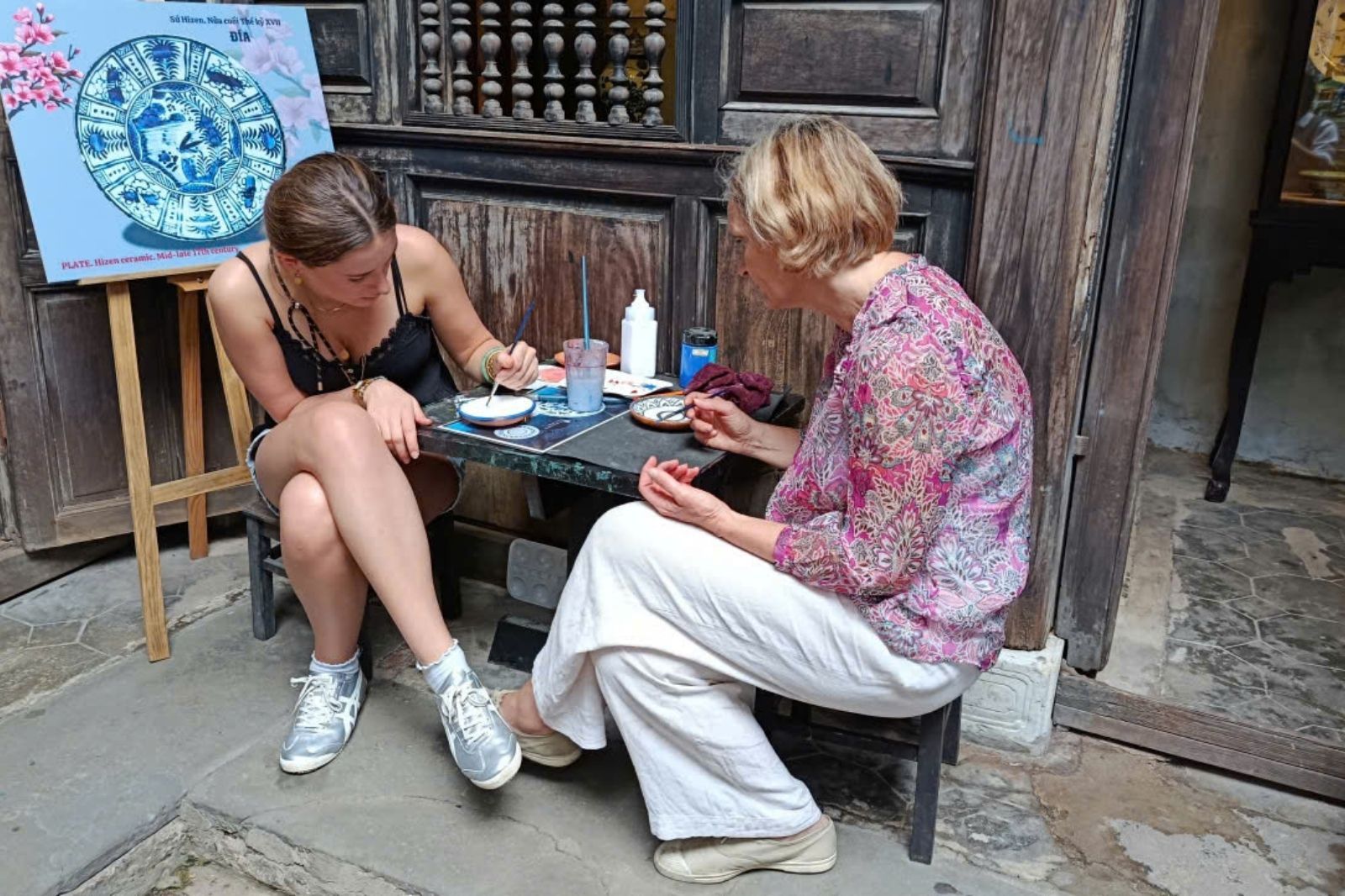
Photo: Ceramic pattern painting experience
The Hoi An Museum of Trade Ceramics is not only a place displaying ancient artifacts, but also a space preserving memories of one of Southeast Asia's most bustling international trading ports. Through each time-stained ceramic piece, visitors can vividly visualize the trading processes, cultural exchanges, and Hoi An's pivotal role in regional maritime history. At the heart of the Hoi An Ancient Town – a UNESCO World Heritage Site, the museum serves as an indispensable "historical puzzle piece," making the sightseeing journey complete and profound. This is not only a destination for history and archaeology lovers, but also suitable for travelers wishing to understand Hoi An beyond the surface beauty of its lantern-lit streets.