Hue Phap Lam cake – an exquisite and rare royal delicacy of the Ancient Capital

Central

Thua Thien Hue

Sovaba.travel

Updated at: 24/09/2026

1. What is Phap Lam cake?

Hue Phap Lam cake, also known as jam-wrapped cake, five-color cake, or rolled cake, is a traditional cake characteristic of Hue royal cuisine. This cake is not merely food but also a work of art, featuring a vibrant, colorful appearance and an unforgettable sweet, chewy, and rich flavor. The cake is made from glutinous rice flour combined with various fruit preserves, then wrapped in handcrafted paper boxes following a five-color scheme – red, yellow, green, purple, and white – creating a harmonious and eye-catching presentation.
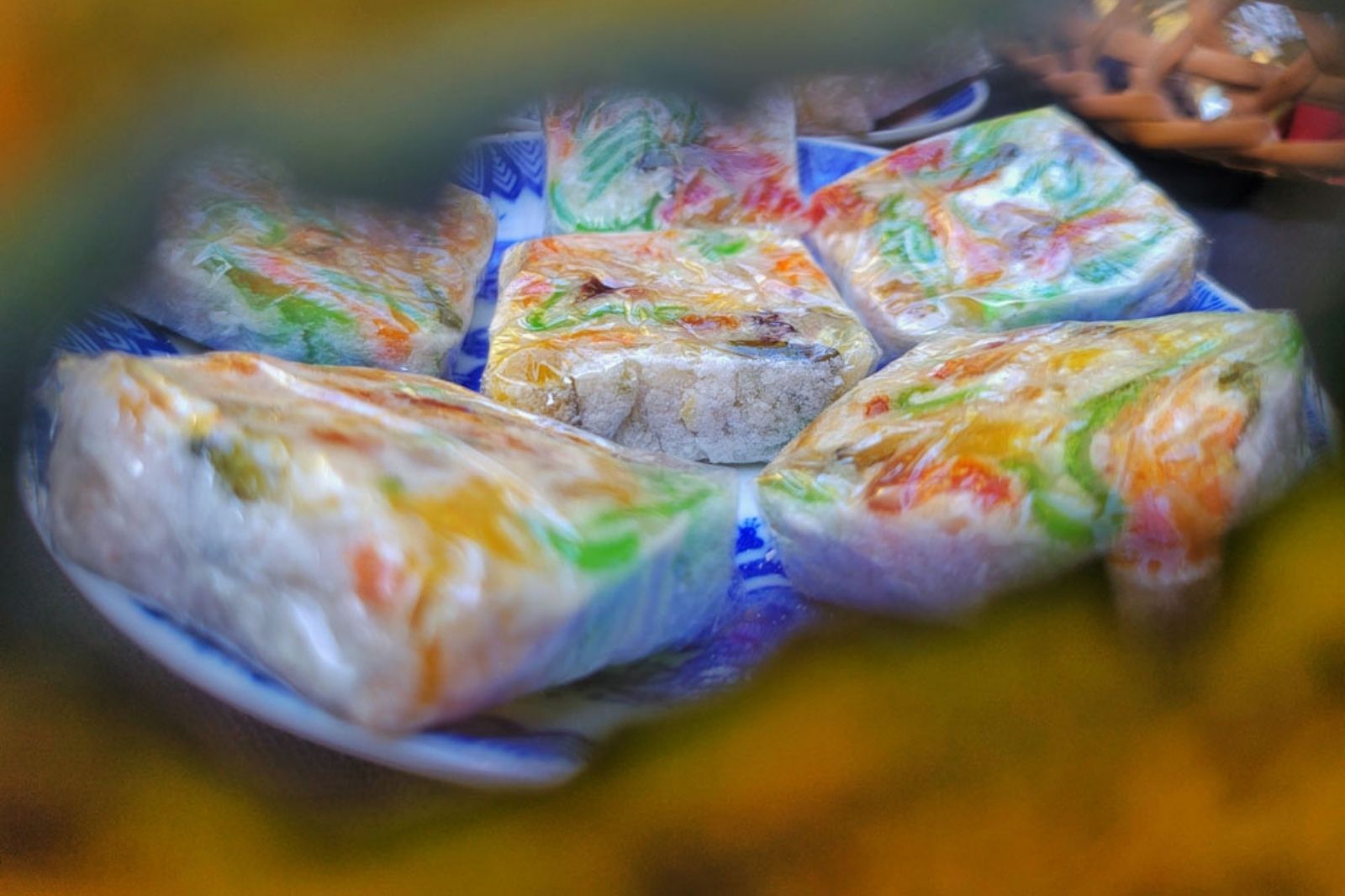
Phap Lam cake, also known as jam-wrapped cake
Photo: Phap Lam cake, also known as jam-wrapped cake  

The name "Phap Lam" takes inspiration from Phap Lam art (enameled bronze craft) that flourished during the Nguyen Dynasty, as the colors of the cake evoke gleaming, durable enamel layers. Each cake is typically square-shaped and compact, making it suitable as a gift or for enjoying during festival occasions. Unlike ordinary cakes, Hue Phap Lam cake requires meticulous care, from selecting ingredients to preparation, making it rare and produced only in limited quantities by Hue artisans.
2. The origin of Phap Lam cake in Hue Royal Cuisine

The origin of Hue Phap Lam cake is closely linked to royal cuisine under the Nguyen Dynasty (1802-1945), when Hue was the capital of Vietnam. According to historical records and stories from veteran artisans, this cake originated from making good use of leftover fruits in Hue garden houses – a thrifty tradition of Hue people in the past. When fruits ripened abundantly, people did not waste them; instead, they chopped them up, sun-dried them, and simmered them with sugar to make jams, then combined them with glutinous rice flour to form cakes.

Previously, the cake was simply called jam-wrapped cake or five-color cake, often presented to kings and lords during royal banquets. Today, this cake is preserved by royal descendants and royal cuisine researchers, contributing to the preservation of Hue's cultural heritage.

3. What is special about the ingredients of Phap Lam cake?

The appeal of Hue Phap Lam cake lies in the harmonious combination of natural, fresh, and nutritious ingredients. Each component is carefully selected, reflecting the Hue people's philosophy of "making full use of nature". Below are the main ingredients:

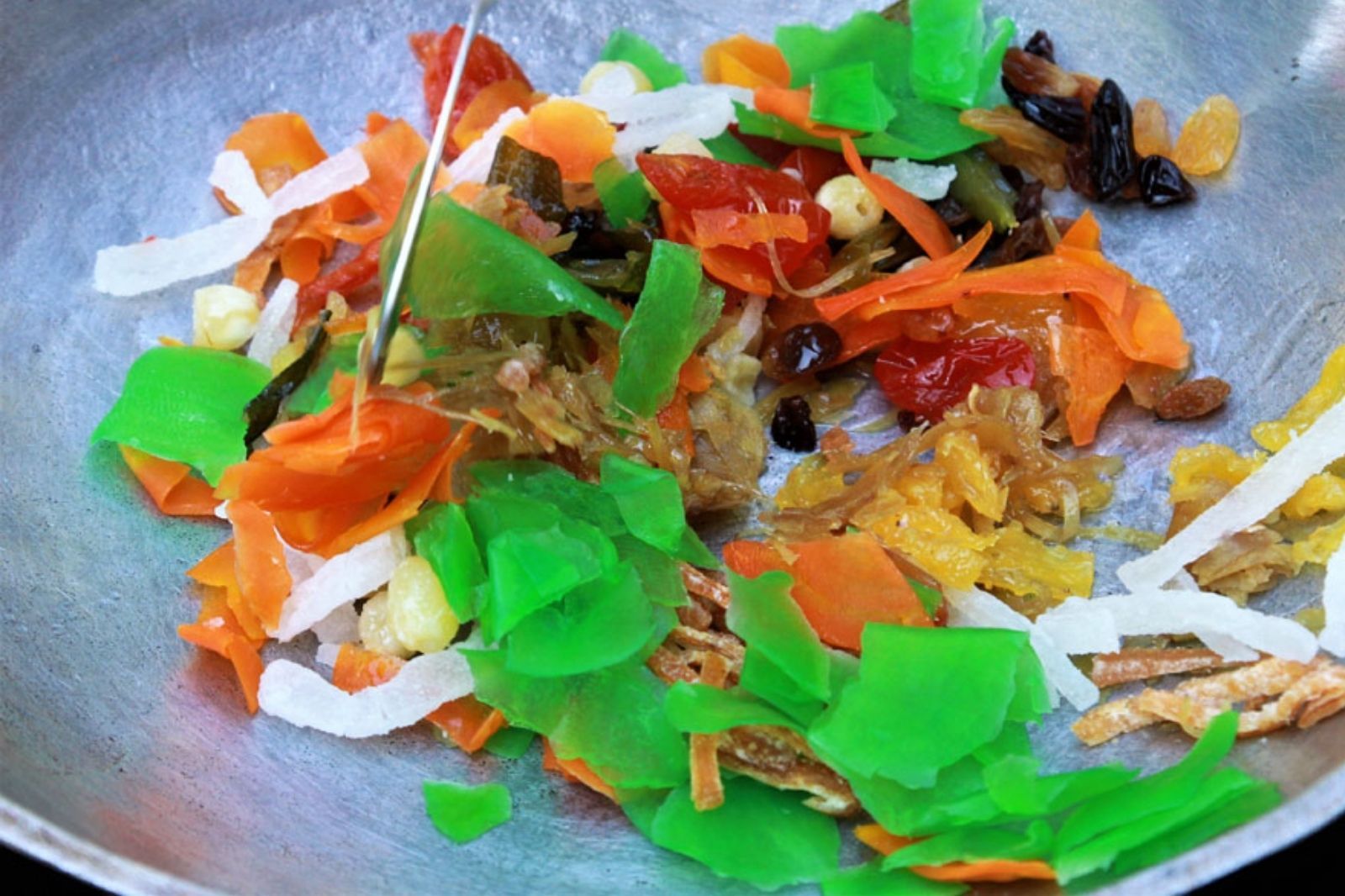
  • Cake filling (fruit jam/preserves): This is the core part, made from seasonal fruits such as papaya, winter melon, banana, pineapple, ginger, carrot, mandarin peel, cucumber, and tomato. The fruits are chopped into small pieces, sun-dried for 2-3 days to dry naturally, then simmered with white sugar over low heat for 3-4 hours to create a sticky, chewy, and crispy texture. The jam not only has a mild sweet taste but also retains its natural fragrance, rich in vitamins and fiber, beneficial for health.
  • Cake crust (glutinous rice flour): Made using high-quality Hue glutinous rice flour, finely ground and gently roasted with pandan leaves to release a fragrant aroma. Glutinous rice flour creates a chewy, rich texture that binds the jam filling without needing additives. The flour-to-water ratio is precisely measured to avoid sogginess or crumbling.
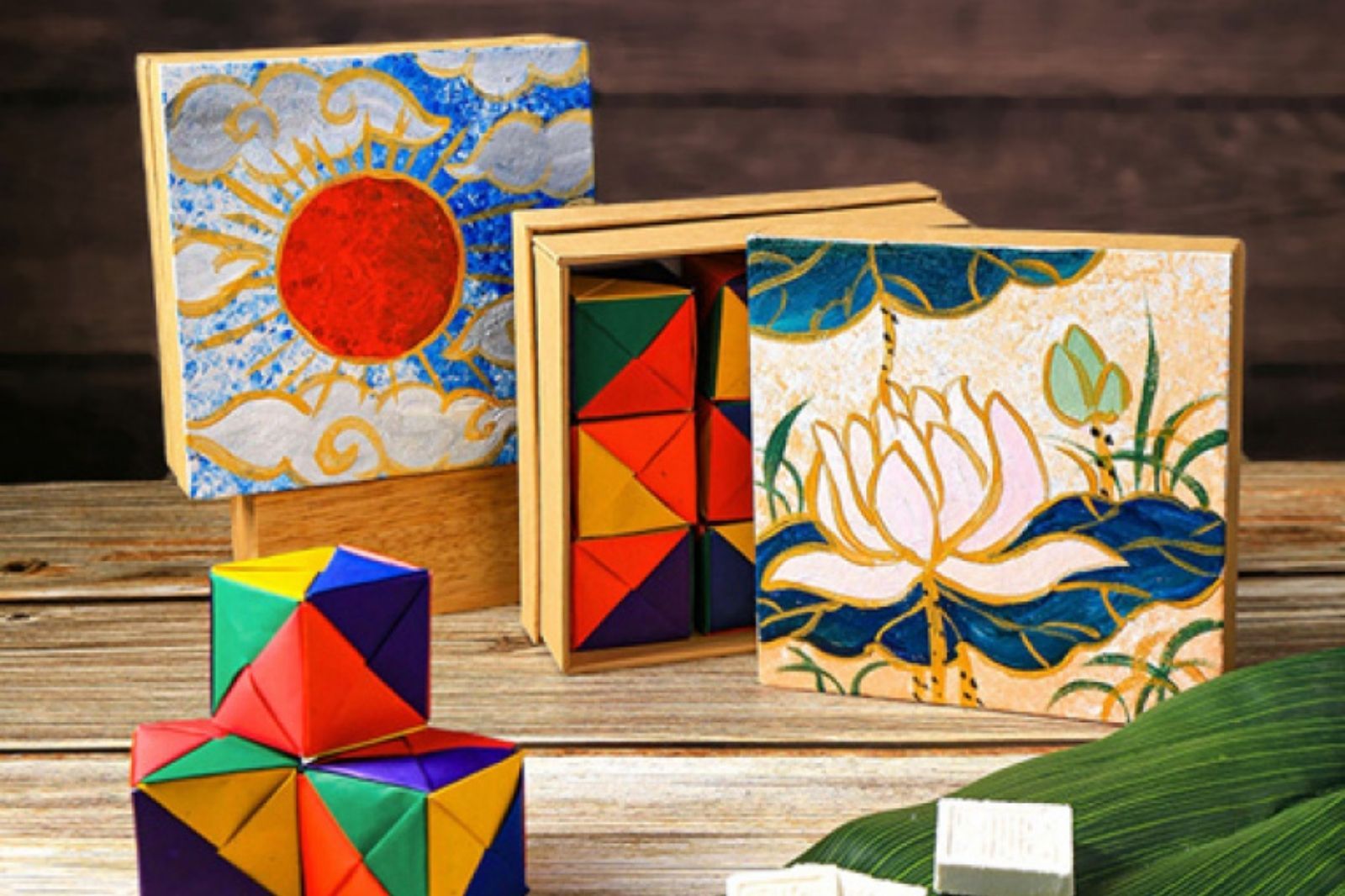
  • Wrapping paper: Most special is the paper from Thanh Tien craft village (Hue), made from paper mulberry bark, bamboo, or reed. This paper is durable (lasting hundreds of years without fading or termiting), lightly scented, and smooth-surfaced. The colors – red (representing fire), yellow (earth), green (water), purple (wood), white (metal) are arranged according to Five Elements rules, creating a cake box like an artistic painting.

These ingredients not only ensure food safety but also carry cultural value, helping the cake last long without needing refrigeration.

Ingredients for making Phap Lam cake
Photo: Ingredients for making Phap Lam cake 

4. How elaborate is the process of making Phap Lam cake?

The process of making Hue Phap Lam cake is an art that requires patience, skill, and generations of experience, often taking hours for each batch. Below are the detailed steps:

  • Preparing the jam (filling): Select fresh fruits, cut into small pieces, and sun-dry for 2-3 days to dry. Then, soak in sugar syrup and simmer over low heat for 3-4 hours, stirring continuously until the jam thickens and turns crispy without burning. Each type of jam is prepared separately to preserve its distinct flavor.
  • Making glutinous rice dough (crust): Roast glutinous rice flour over low heat until slightly yellow, adding pandan leaves for fragrance. Mix flour with water in a 1:1 ratio, knead by hand until smooth and pliable, then let it rest for about 30 minutes to allow the dough to expand.
  • Combining and shaping: Roll the dough into a thin layer, spread the jam evenly on top, and roll tightly so that dough and jam blend together. Shape into a square block, then cut into thin slices about 1-2 cm thick.
  • Wrapping the cake: This is the most elaborate step. Using 6 pieces of Thanh Tien village paper, precisely measure and cut, interlace, and fold according to Five Elements rules. Each fold must be neat and straight, with harmonious color combinations (cool tones like green and purple alternating with warm tones like red and yellow). Any mistake requires starting over from scratch to ensure aesthetic perfection.

The entire process is manual without the use of machinery, making each cake a unique product that showcases the artisan's craftsmanship. Completing a box of cakes can take 4-6 hours, making this delicacy rare and precious.

5. The proper way to enjoy Phap Lam cake

To enjoy Hue Phap Lam cake properly, you need to create a serene ambiance reminiscent of the ancient royal court. First, gently open the box to admire its five-colored beauty; this is the most exciting part, like opening a precious gift. Slice the cake into small pieces and take a bite to feel the smooth, pliable glutinous flour layer melt on the tip of your tongue, blending with the delicately sweet and fragrant flavor of the fruit jam. The nutty, rich taste of the glutinous rice flour leaves a lingering memory.

Pair it with a hot cup of tea (lotus tea or royal tea) to balance the sweetness and prevent cloying. Eat slowly, savoring each bite while chatting about Hue culture to enhance the poetic experience. If you visit Hue, you can drop by places like Moc Truly Hue or Dong Ba Market to buy and enjoy it on the spot. 

Note: Store the cake in a cool, dry place to maintain its softness and elasticity over time.

Phap Lam cake packaged as a gift
Photo: Phap Lam cake packaged as a gift 

In the modern flow, where many dishes are simplified to suit a fast-paced lifestyle, Hue Phap Lam cake still maintains its very distinct, quiet, intricate, and not easily accessible position. The value of this cake lies not in popularity, but in its ability to recount a historical era when gastronomy was intertwined with rituals, aesthetics, and royal philosophy. Researching and restoring Hue Phap Lam cake not only helps enrich the culinary landscape of the Ancient Capital, but also contributes to preserving cultural values that are gradually fading away. For those interested in historical depth and culinary art, Phap Lam cake is clear proof of Hue's refinement – discreet, standardized, and enduring through time.

Loading......

Featured destinations