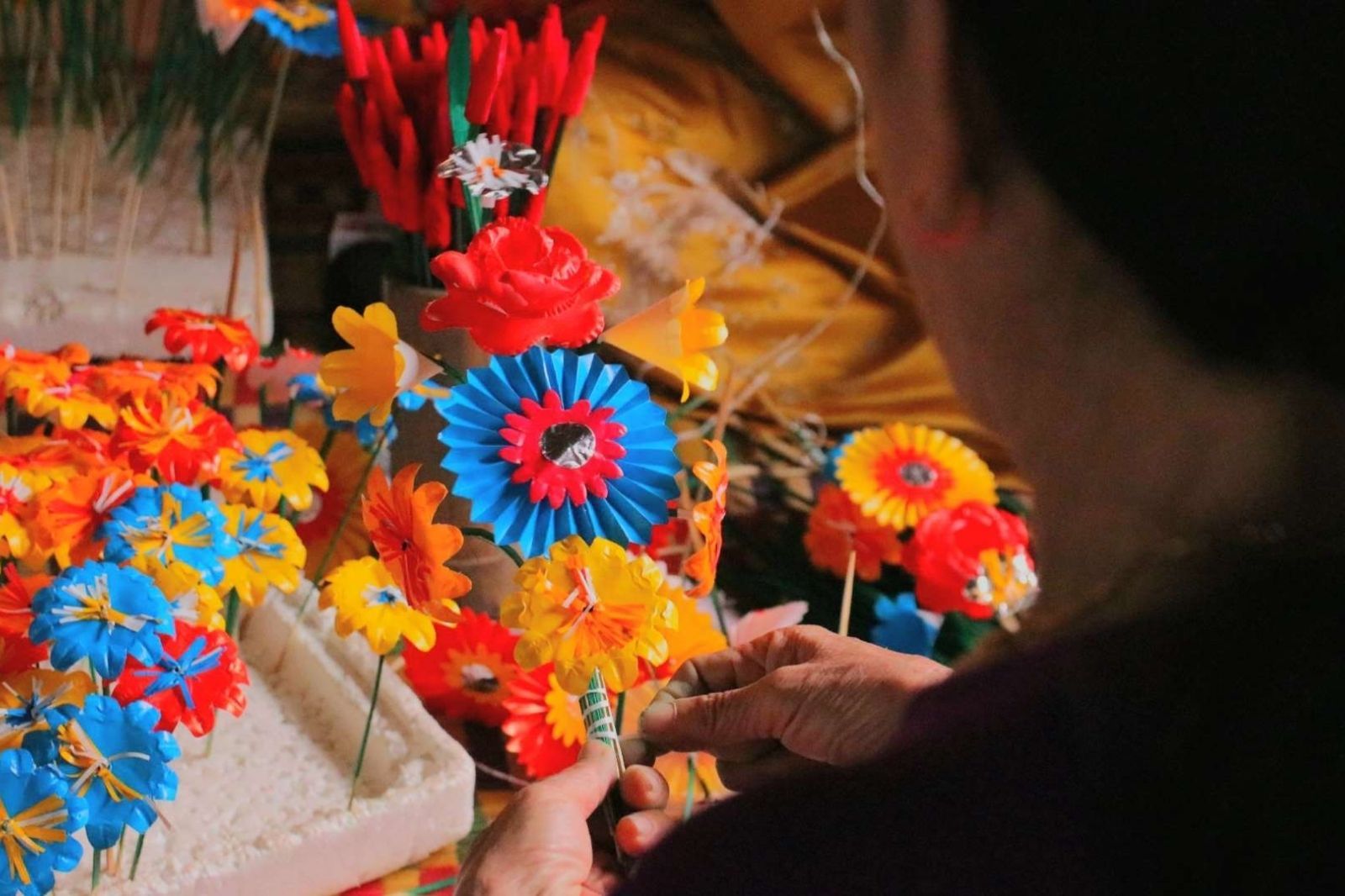
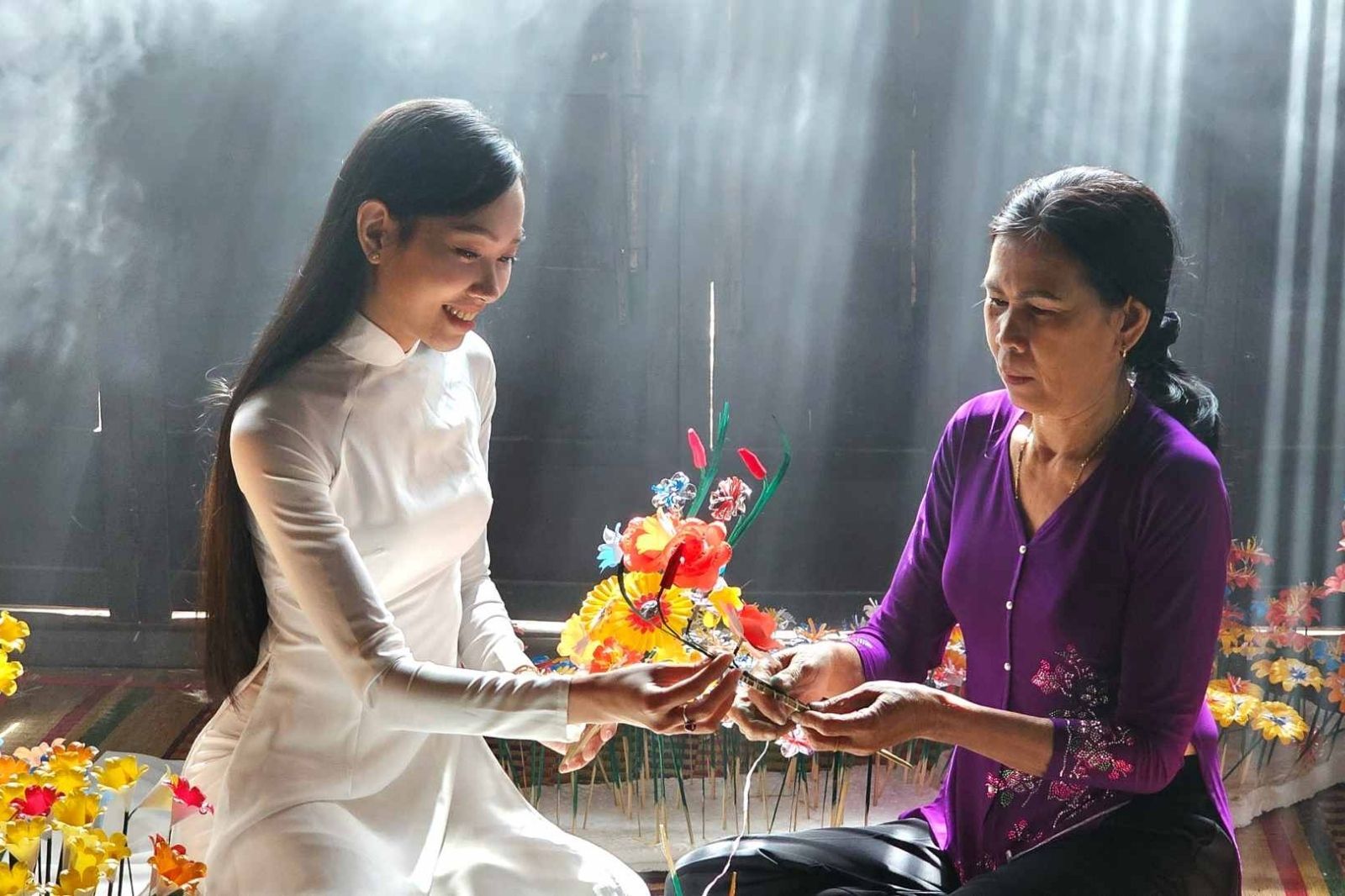
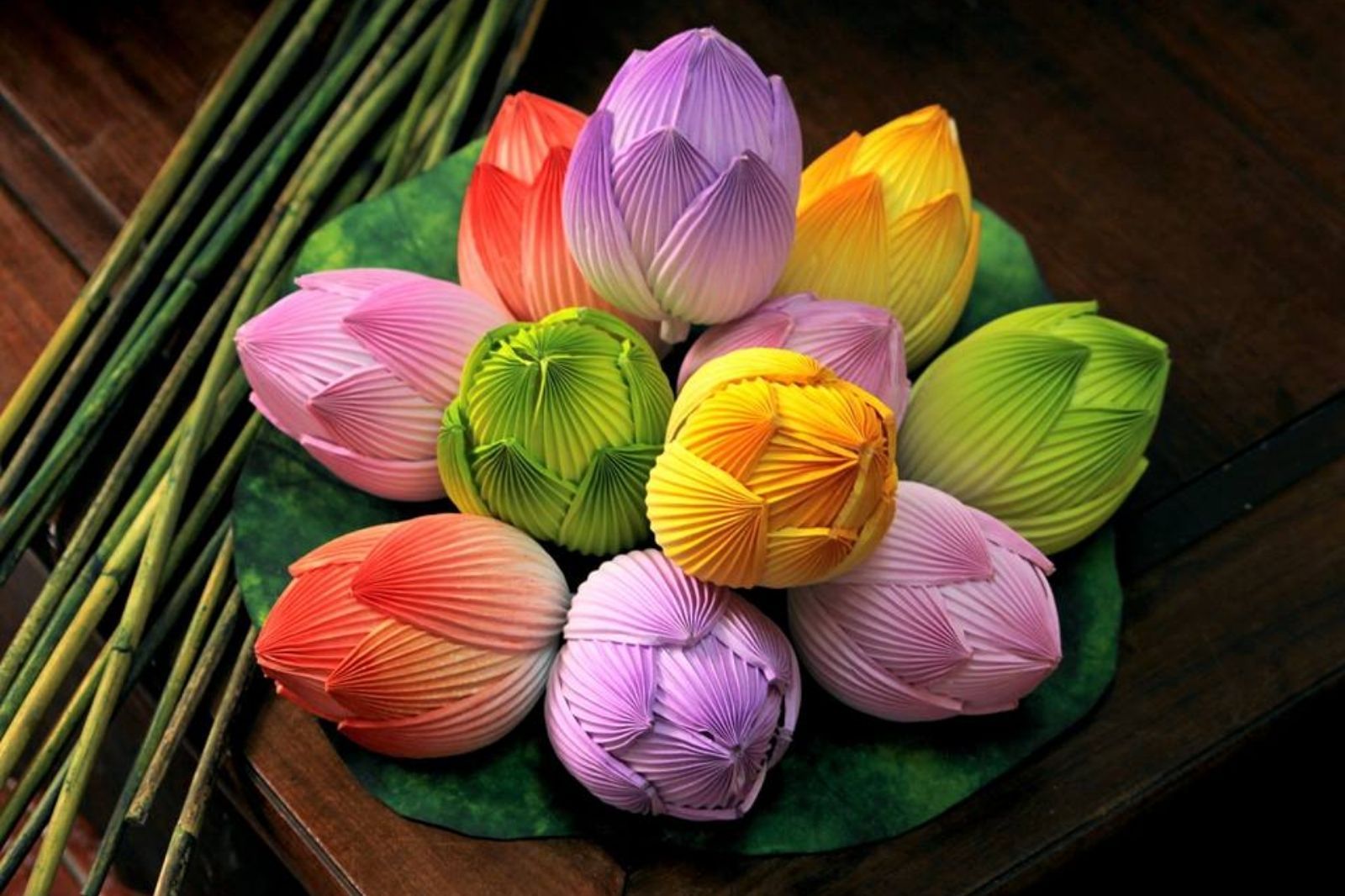
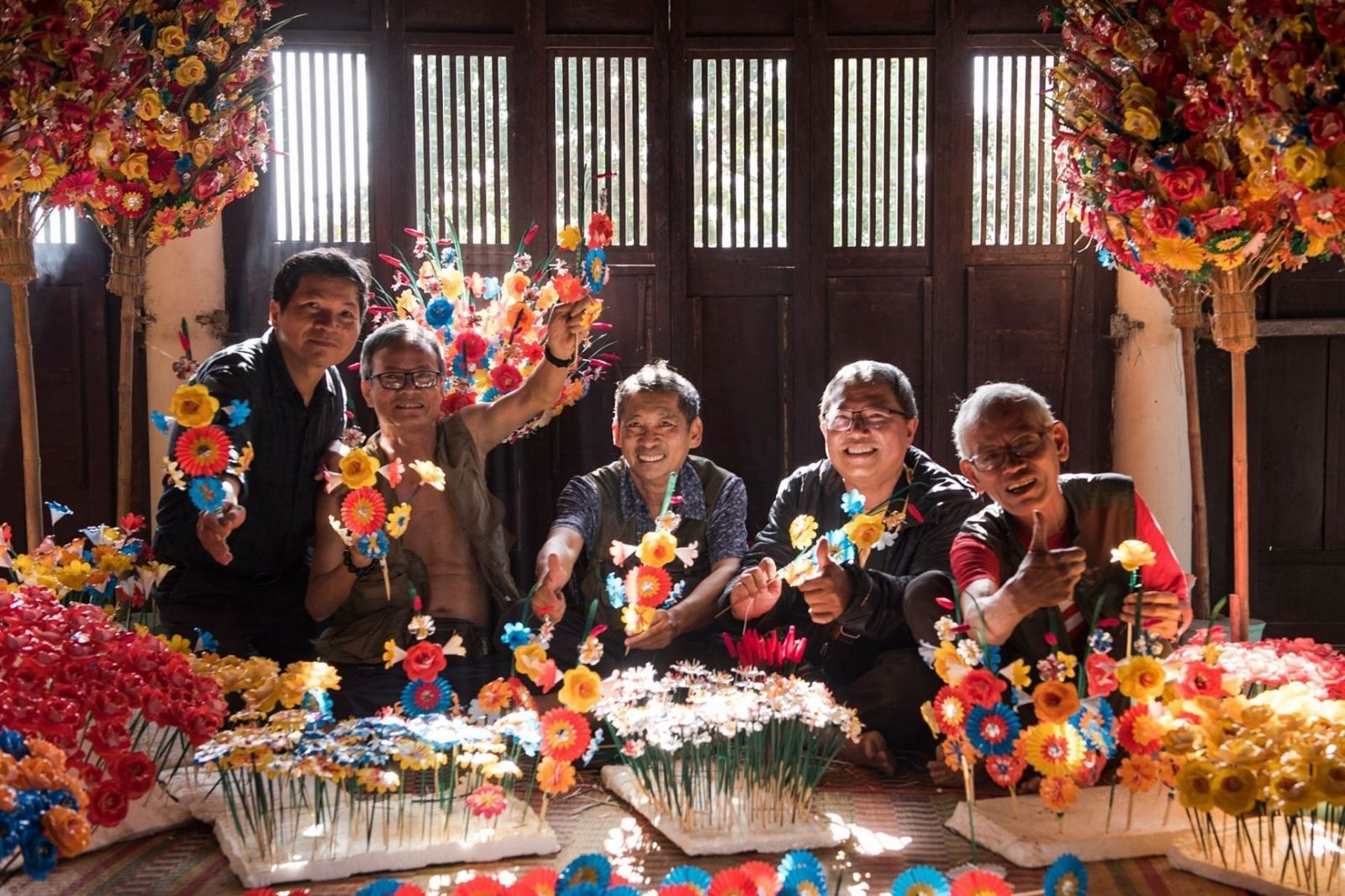
According to historical records, the Thanh Tien paper flower craft emerged during the reign of the Nguyen Lords (16th–17th centuries) and was recorded in the Dai Nam Nhat Thong Chi (Gazetteer of Dai Nam) as one of the representative handicrafts of Hue. Legend has it that during the Gia Long era, an official from the Ministry of Rites hailing from Thanh Tien village presented the king with five-colored paper flower branches, in which three large flowers symbolized the King - Teacher - Father (or Loyalty - Filial Piety - Righteousness) and five small flowers surrounding them represented Benevolence - Propriety - Righteousness - Wisdom - Trust. Pleased by this noble meaning, King Gia Long encouraged the villagers to develop the craft so that paper flowers could be present in the royal court's rituals.
Originating from practical needs, the Thanh Tien paper flower craft gradually became a beautiful cultural tradition. Hue's harsh climate, with fierce Lao winds and prolonged heavy rain, causes fresh flowers to wither quickly, making them difficult to use for long-term worship. The local people created paper flowers that are durable, solemn, and possess deep spiritual significance. Gradually, paper flowers served not only religious beliefs but also became New Year decorations, symbolizing prosperity and reunion.