What is a Hue Garden House? Architectural Secrets & Lesser-known Characteristics
Central
Thua Thien Hue
Hue Garden Houses
Sovaba.travel
Updated at: 24/09/2026
1. What is a Hue garden house?
Hue garden houses (also known as Hue traditional garden houses) are a unique architectural form that harmoniously combines living space—usually a ruong house—and the surrounding landscaped garden. This term refers to the ancient garden house properties in Hue, distributed mainly in areas such as the Citadel, Kim Long, Vy Da, Phu Cat, and Nguyet Bieu along the Perfume River.
Unlike ordinary landscape garden models, Hue garden houses are enclosed, tranquil, and deeply poetic. Each garden spans from a few hundred to several thousand square meters, surrounded by bamboo groves or neatly trimmed tea hedges, creating a secluded space. This is not only a residence but also a sanctuary for nurturing spiritual life, preserving family traditions, and upholding the cultural values of Hue people.
History of formation and development:
Appeared in the 17th century during the reign of the Nguyen Lords
Flourished under the Nguyen Dynasty, especially from the reign of King Minh Mang (around 1833)
Initially built as places of retreat and study for princes, later becoming residences for royal family members and high-ranking mandarins
By 1945, Hue had tens of thousands of garden houses; many structures still exist today, most notably An Hien Garden House—one of the most beautiful and iconic garden houses in Hue
Hue garden houses are not only architectural heritage but are also regarded as 'living museums' preserving intangible cultural values. They reflect an elegant lifestyle, family ethics, and a philosophy of living in harmony with nature—elements that define the unique identity of the ancient capital.
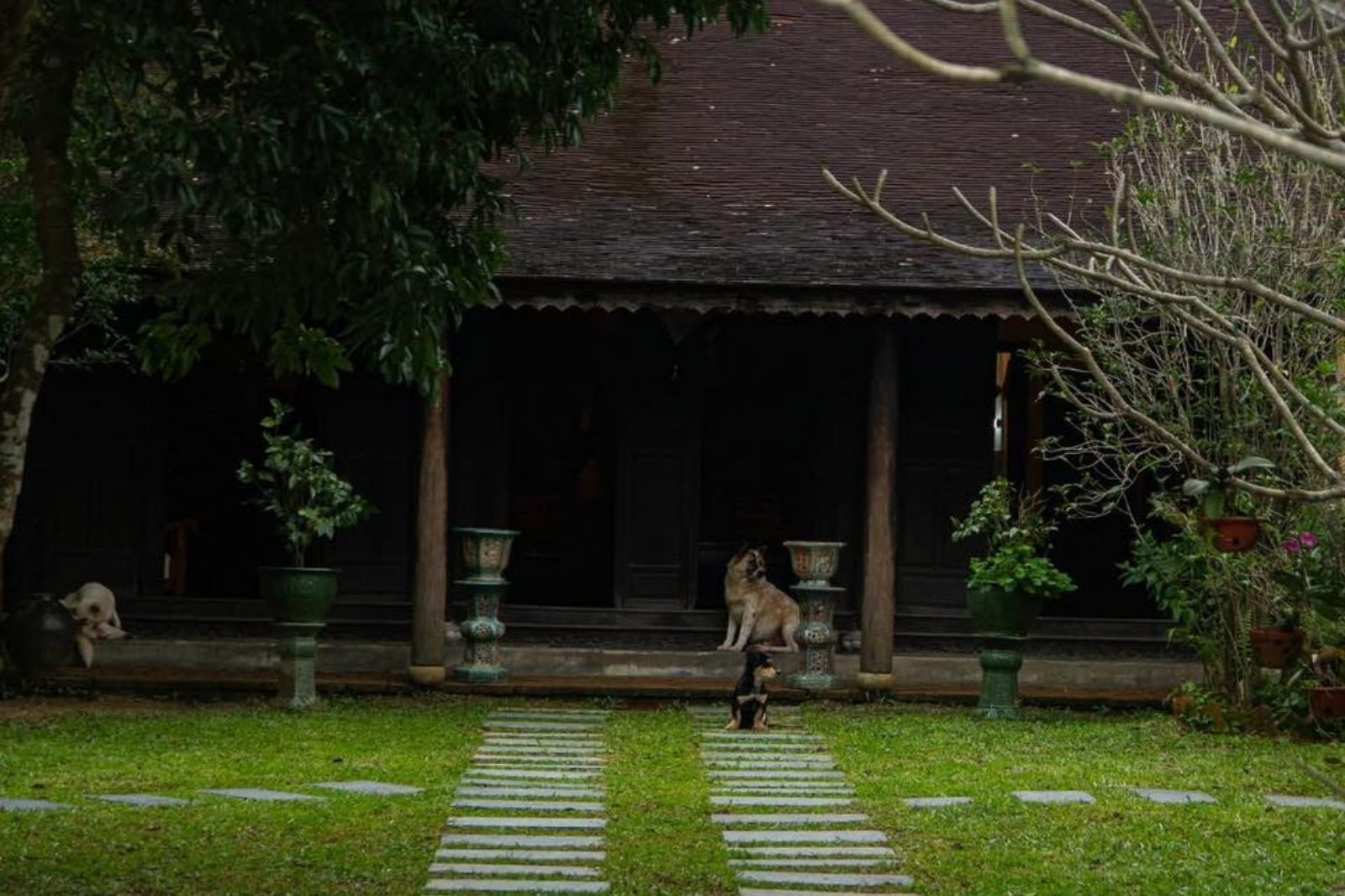
Photo: Garden house is a traditional housing model in Hue
2. Hue garden house architecture
The Hue garden house model is an architectural masterpiece, a crystallization of art, culture, and nature. Below are its prominent features:
Overall layout according to Feng Shui
Hue garden houses are designed based on principles of feng shui and I Ching, demonstrating reverence for nature and spirituality. The overall layout typically includes main components: gate, entryway, screen wall, miniature mountain, dry water basin, yard, and main house. These elements are arranged along a North-South axis, with the Southeast direction often chosen for the main house to catch cool breezes year-round.
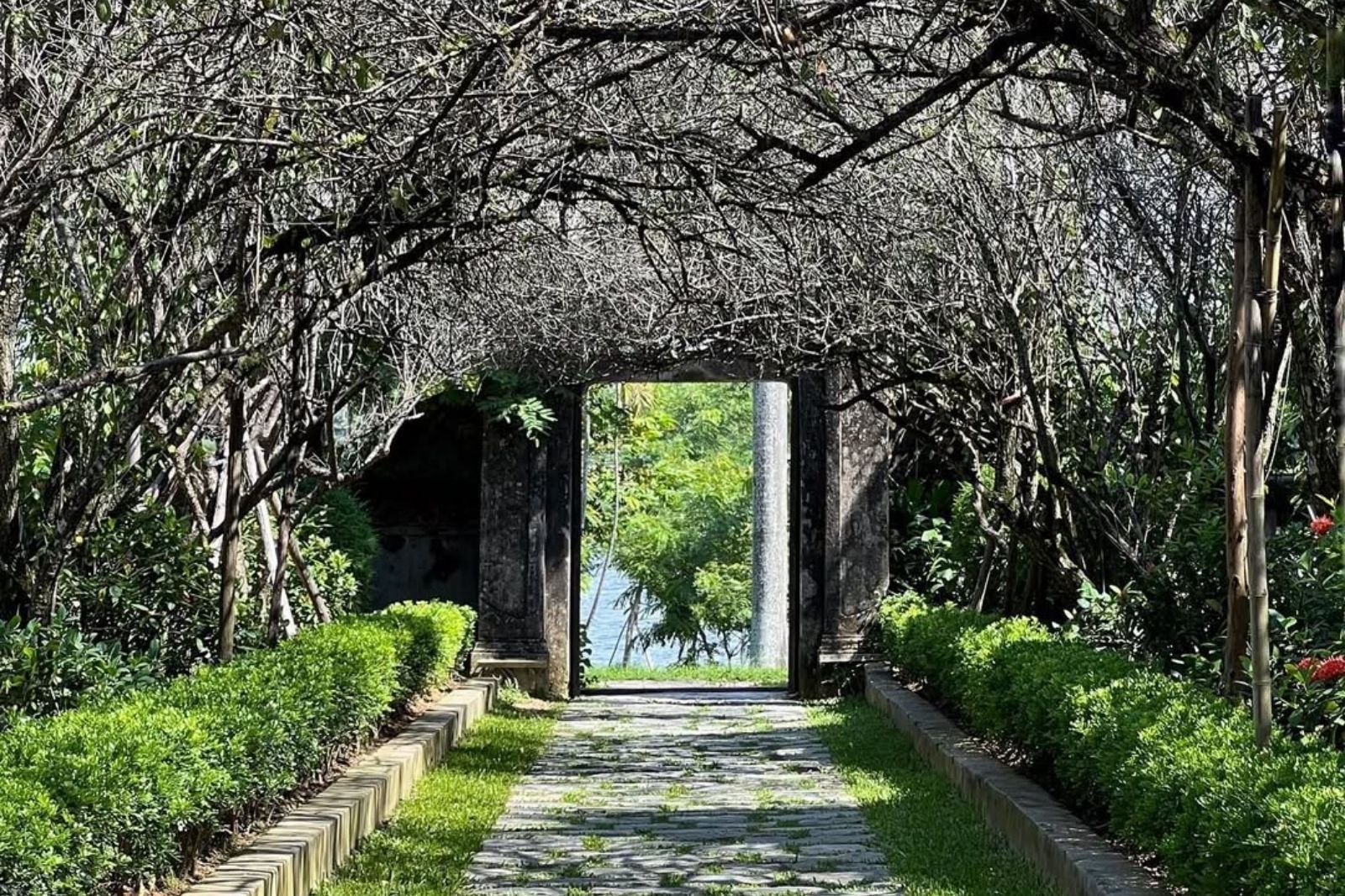
Gate and entryway: The gate is usually built of brick, flanked by carefully trimmed hibiscus or tea hedges, creating a welcoming yet elegant feel. The path does not lead straight into the house but gently curves, shielded by a screen wall to ensure the principle of 'gathering energy in the courtyard'.
Screen wall (Binh phong): Made of brick or greenery, the screen wall is not only decorative but also serves to block negative energy from entering the home. Patterns on the screen wall often feature Chinese characters for Longevity, Prosperity, or animal motifs, symbolizing wishes for good fortune and prosperity.
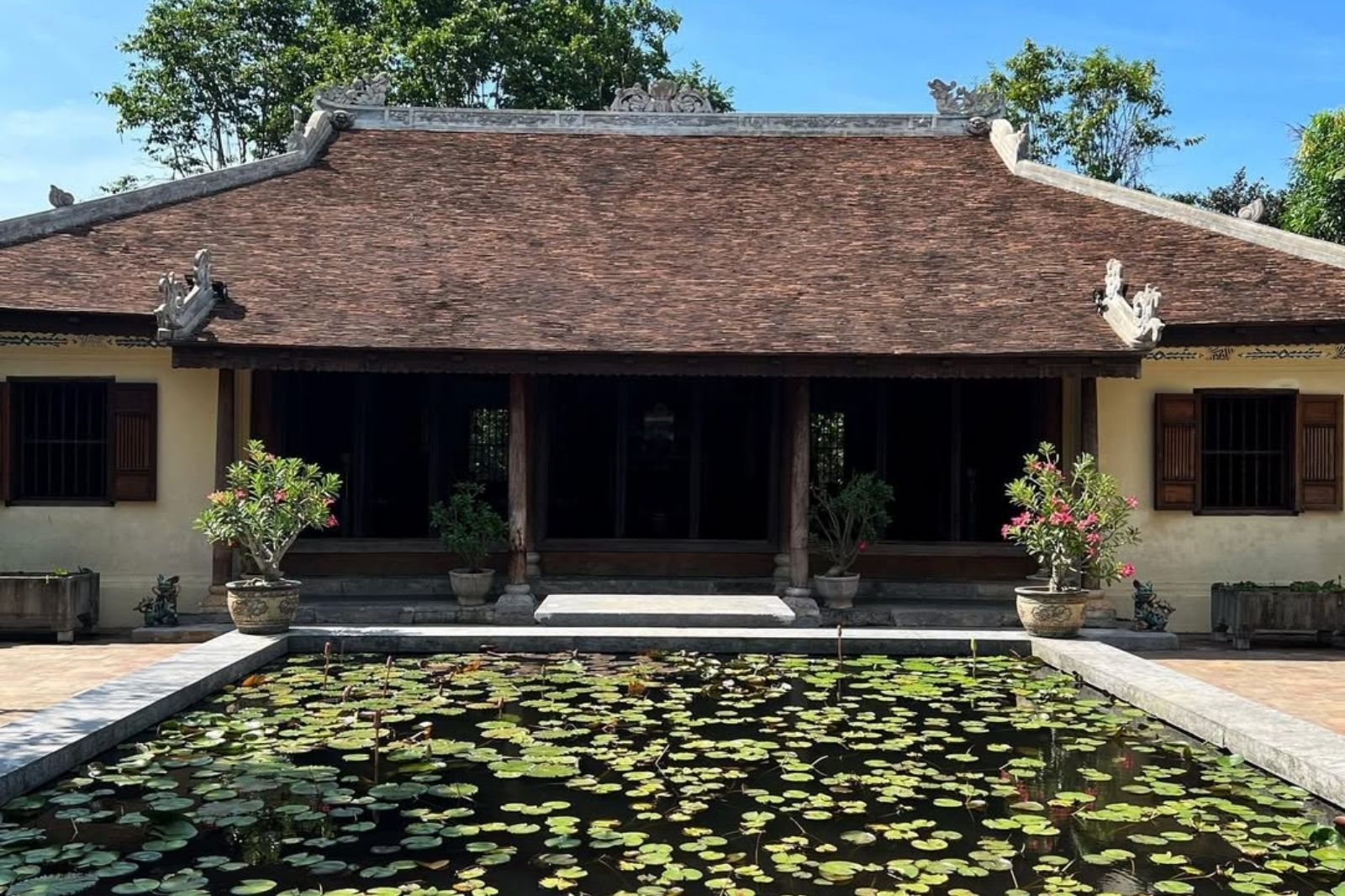
Water basin and miniature landscape (Hon non bo): The water basin acts as the 'bright hall', bringing health and fortune. Lotus, water lilies, or plants symbolizing the four seasons such as chrysanthemums, orchids, plum blossoms, and pines are often grown in the basin. The miniature rockery is exquisitely crafted to mimic picturesque landscapes, serving as a highlight of the garden.
Photo: Overall layout of a garden house
Ruong house
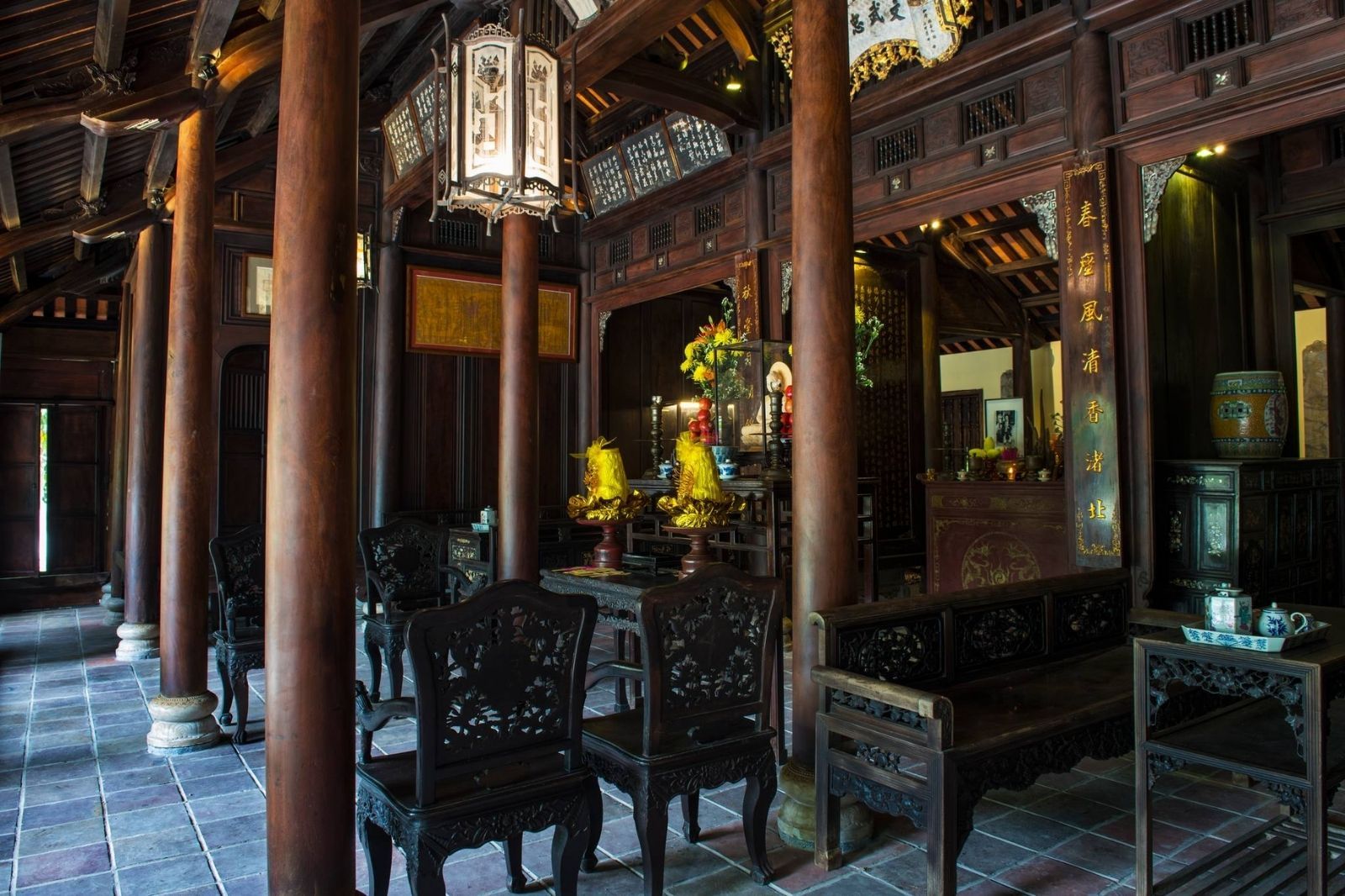
The main building in a Hue garden house is typically a ruong house—a characteristic traditional architectural style of Central Vietnam. Ruong houses are constructed from precious woods such as ironwood, jackfruit wood, or teak, using intricate mortise and tenon joints without nails. Depending on the scale and owner's preference, a ruong house may have 1 compartment with 2 wings, 3 compartments with 2 wings, or 5 compartments with 2 wings.
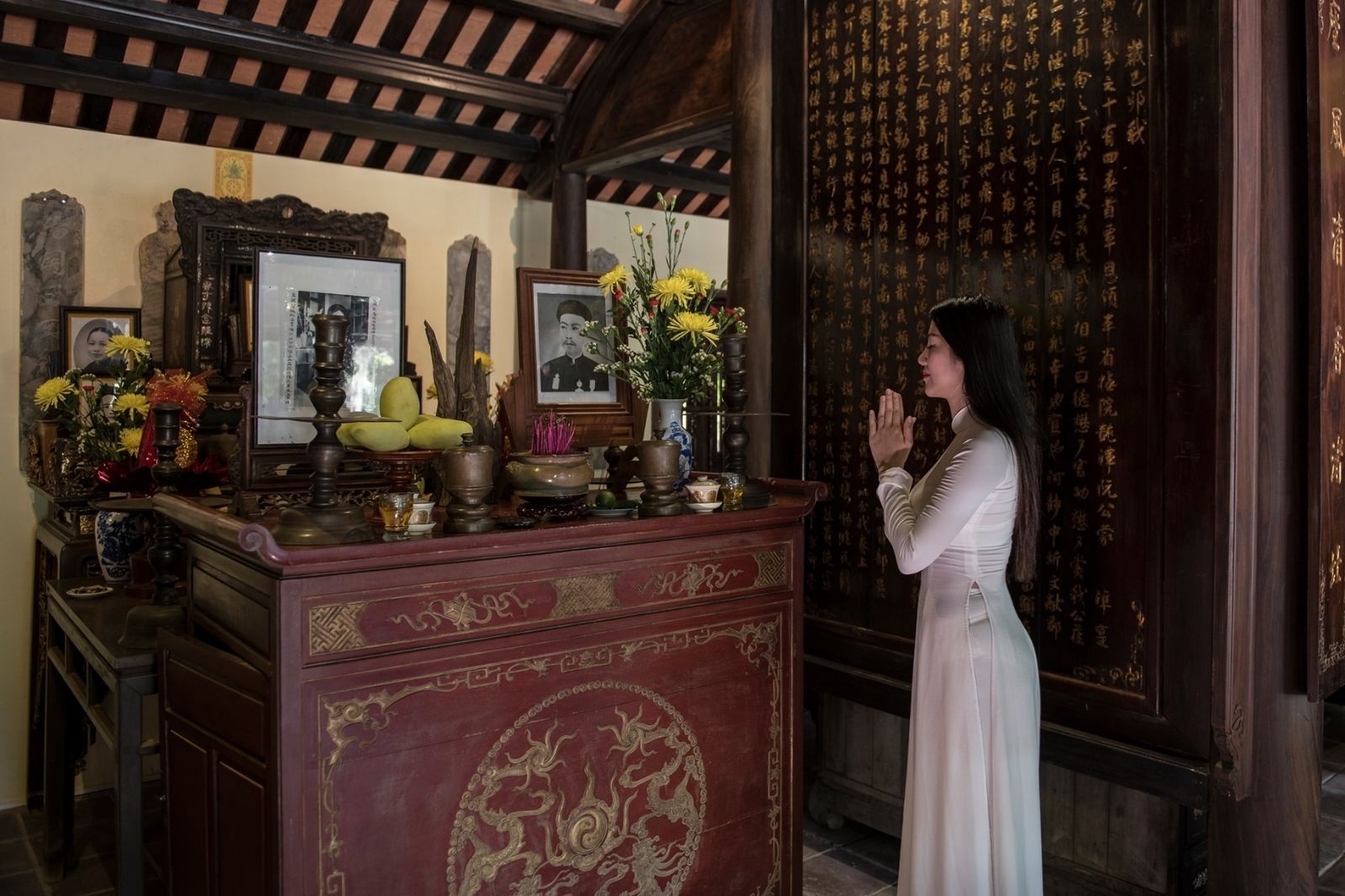
Central compartment: The most solemn space, usually reserved for ancestral worship or receiving guests. The interior is furnished with wooden daybeds, tea cabinets, horizontal lacquered boards, and parallel sentences, reflecting dignity and family traditions.
Side wings: Designated for bedrooms or private living areas. Auxiliary buildings were traditionally quarters for women, helpers, or kitchen areas.
The roof of a ruong house is covered with flat tiles or yin-yang tiles, displaying a deep, ancient brown hue. Carved details on columns and rafters are often inspired by nature, such as flowers, leaves, and birds, showcasing the craftsmanship of Hue artisans.
Photo: Ancestral worship space in a garden house
Lush green garden space
The garden yard is an essential element, taking up most of the garden house area (ranging from several hundred to thousands of square meters). The garden is arranged along functional lines or zones, featuring a harmonious combination of greenery, ornamental flowers, fruit trees, and landscape miniatures.
Arrangement by functional lines:
The outermost line consists of hedging plants such as tea hedges, bamboo, or pandan to protect the home.
The next line features fruit trees such as longan, jackfruit, coconut, and thanh tra pomelo, providing shade and economic value.
The innermost line contains decorative plants and flowers like orchids, plum blossoms, chrysanthemums, and bonsai, creating aesthetic highlights.
Arrangement by functional zones: The front yard features ornamental flowers and bonsai; the area behind the auxiliary house is planted with vegetables and herbs like green onions, garlic, and ginger; perennial trees are placed on the west side for sunshade.
The garden not only provides a peaceful living space but also supplies food and fruits for festivals, Buddhist ceremonies, and ancestral worship, reflecting the self-sufficient and nature-connected lifestyle of Hue residents.
Photo: The garden layout arranged by lines or functions
Cultural and spiritual values
Hue garden houses are not merely residences but also spaces that preserve cultural, historical, and spiritual values. Each garden house is a 'microcosm', reflecting the unhurried, refined lifestyle and deep respect for tradition of the ancient capital's people.
Spirituality: Many garden houses have ancestral altars or small shrines, expressing reverence to ancestors. Feng shui elements such as house orientation, placement of trees, and water ponds are meticulously calculated to bring luck and prosperity.
Culture: Garden houses preserve family customs and traditions of aristocratic and prestigious families. Many garden houses, such as An Hien and Lac Tinh Vien, still preserve antiques and scholar's studies, reflecting the elegance of ancient mandarins and scholars.
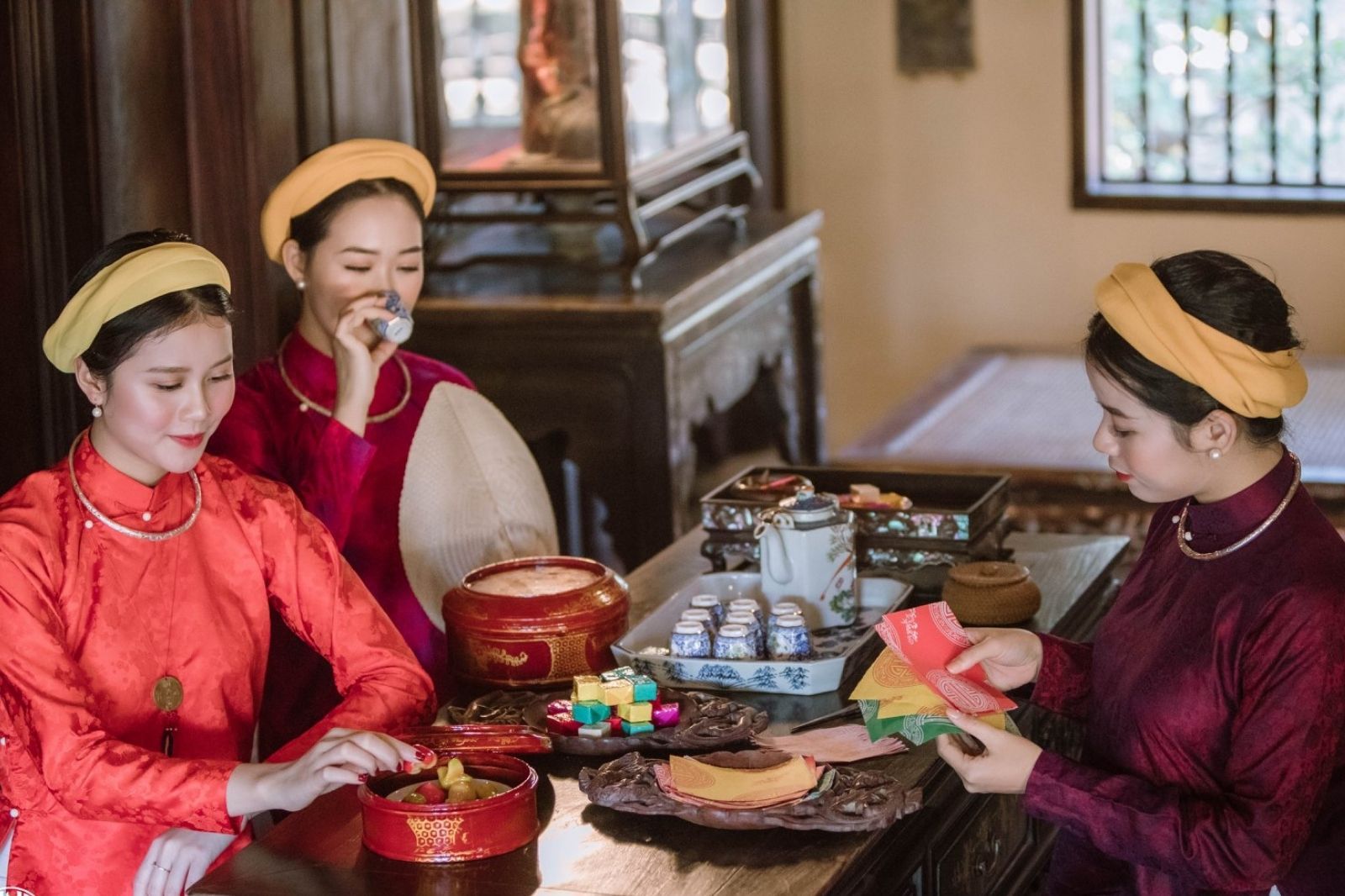
Today, many Hue garden houses have been preserved and opened to tourists, becoming attractive destinations for exploring the ancient capital's culture. Visitors can not only admire unique architecture but also experience the traditional lifestyle through activities such as tea tasting, listening to Hue folk music, or touring fruit orchards. Famous garden houses such as An Hien (58 Nguyen Phuc Nguyen), Lac Tinh Vien (65 Phan Dinh Phung), or Ngoc Son Princess Shrine (31 Nguyen Chi Thanh) are must-visit destinations.
3. Lesser-known features of Hue garden houses
Not only impressive for their serene beauty, Hue garden houses also hide delicate values that are not easily recognized by everyone. Seemingly simple details are precisely the elements that create the cultural depth and unique identity of this architectural form.
Lesser-known characteristics:
Multifunctional, self-sufficient space: The garden provides not only aesthetic value but also fresh vegetables, fruits, medicinal herbs, ingredients for traditional cakes, and even timber for household use. Everything is used seasonally, with surpluses often dedicated to ancestral offerings or hosting guests, embodying a harmonious lifestyle and the spirit of 'eating according to the season'.
Intentional 'concealment and reveal' layout: Curved pathways combined with screen walls and screening greenery create a private, tranquil space. Guests entering the house pass through multiple spatial layers before reaching the main house—a gesture of respect and mental preparation.
Strong connection with family tradition: The worship space is solemnly arranged with horizontal lacquered boards, parallel sentences, wooden daybeds, and more. A garden house is not just a residence, but a center for preserving ancestral ethics and nurturing family and traditional values.
Smart climate adaptation: Open designs, heat-insulating tile roofs, raised foundations for flood prevention, and shady tree systems demonstrate the flexible adaptation of Hue people to local natural conditions.
It is the harmonious combination of functionality, aesthetics, and cultural depth that transforms Hue garden houses into 'living architectural masterpieces'—both intimately connected to daily life and carrying profound artistic and philosophical value.
Photo: Garden houses are also places preserving culture and spiritual beliefs
4. Hue garden houses today
Amid rapid urbanization, many Hue garden houses are gradually shrinking or disappearing. However, iconic properties such as An Hien, Lac Tinh, or the Ngoc Son Ancestral Shrine remain remarkably well-preserved, serving as ideal destinations for travelers fond of traditional culture and architecture. Visiting these places, you can admire ancient spaces, enjoy rare tranquility, and even have the opportunity to hear stories of the past from the homeowners themselves.
Suggested ways to experience Hue garden houses:
Visit An Hien Garden House (Kim Long), famous for its ancient space along the Perfume River, perfect for photos and historical exploration
Stay at a garden house homestay to feel the slow-paced lifestyle close to nature
Join cultural tours or workshops such as wood carving or bonsai arrangement to gain a deeper understanding of traditional arts
Preserving and promoting the value of Hue garden houses not only helps safeguard a precious heritage, but also opens up pathways for sustainable tourism development, bridging culture and authentic experiences.
Photo: Taking photos at An Hien Garden House
Hue garden houses are not merely an architectural style, but a living memory of the ancient capital—a place preserving the spirit of the past through every roof tile, eaves, and the fragrance of fruit orchards. The blend of ancient ruong houses, lush green gardens, and subtle feng shui principles creates a sanctuary that is both tranquil and rich in cultural values. To fully experience this beauty, you can join Sovaba's garden house tour—a journey taking you through century-old gardens, visiting famous landmarks, savoring rustic Hue cuisine, and experiencing the daily life of local residents. It is not just a trip, but an opportunity to slow down and touch the true pulse of Hue.