Ngo Mon Gate Hue: The Majestic Main Gate of the Nguyen Dynasty Imperial City
Central
Thua Thien Hue
Hue Imperial Citadel
Sovaba.travel
Updated at: 28/08/2026
1. Where is the Meridian Gate of Hue?
Ngo Mon Gate Hue is located at the center of the ancient capital of Hue, specifically the main southern gate of the Imperial City within the Complex of Hue Monuments, Thua Thien Hue province. It is part of the Imperial Citadel of Hue, situated in Phu Xuan Ward, Hue City. This location sits along the Perfume River, close to famous landmarks such as Truong Tien Bridge, Thien Mu Pagoda, and the Flag Tower (Ky Dai). From the city center, you can easily reach Ngo Mon by motorbike, taxi, or cyclo, taking only about 5-10 minutes from nearby areas.
This strategic position not only holds feng shui significance but also makes Ngo Mon a symbol of royal grandeur and power. If you are in Hue, start your journey here to explore the entire UNESCO heritage complex.
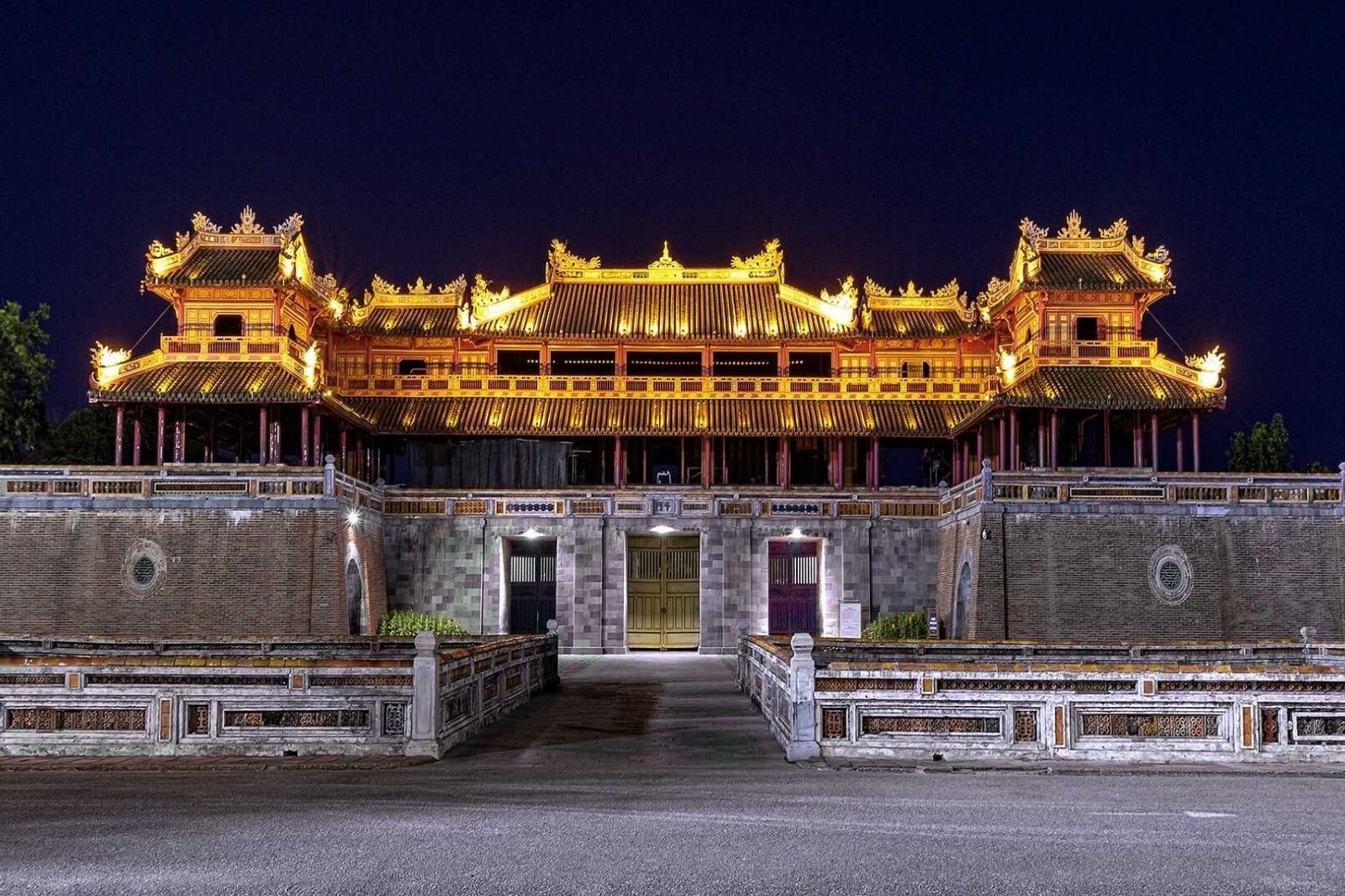
Photo: Ngo Mon was built in 1833 under King Minh Mang
2. History and significance of the Meridian Gate of Hue
Ngo Mon Gate Hue was built in 1833 during the reign of King Minh Mang (the 14th year of Minh Mang), as part of reorganizing the Imperial City's layout. Previously, this site held Nam Khuyet Dai built under Gia Long, which was dismantled to make way for the more imposing Ngo Mon. The structure faces south but is actually offset toward the Can - Ton direction (northwest - southeast) according to Eastern feng shui principles, aiming to bring prosperity to the royal dynasty.
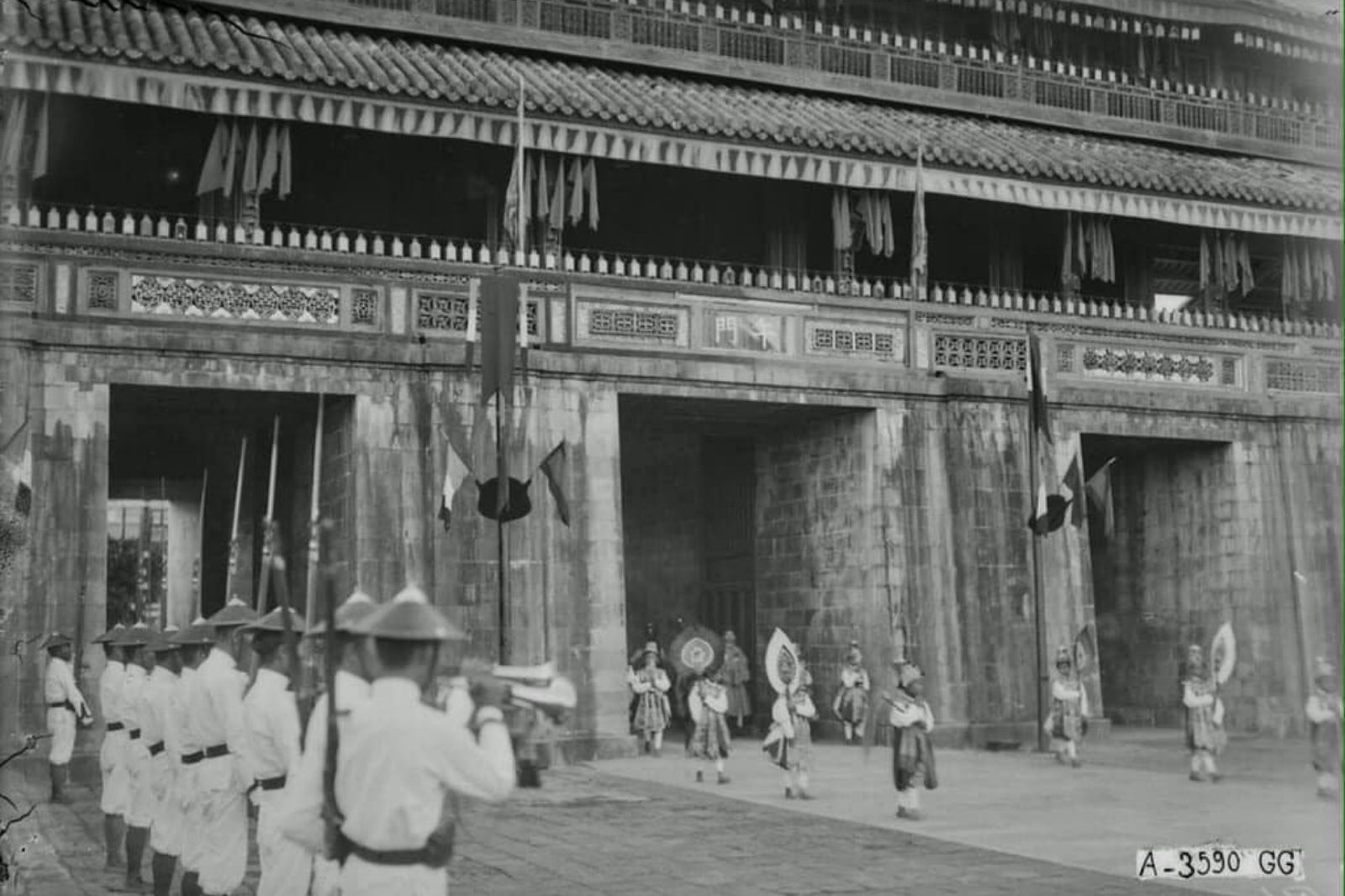
The meaning of Ngo Mon extends far beyond an ordinary gate. The name "Ngo Mon" means "Noon Gate" (midday gate), symbolizing the wisdom and supreme power of the king, implying "facing the light to rule the world." It is an icon of Nguyen Dynasty architecture and art, demonstrating Vietnamese national identity through a harmonious combination of local elements and Chinese influences. Ngo Mon also witnessed major historical events such as the abdication ceremony of Emperor Bao Dai in 1945, marking the end of the Vietnamese feudal regime.
With its deep historical value, Ngo Mon is not only a monument but also a source of inspiration for research into Vietnamese royal culture.
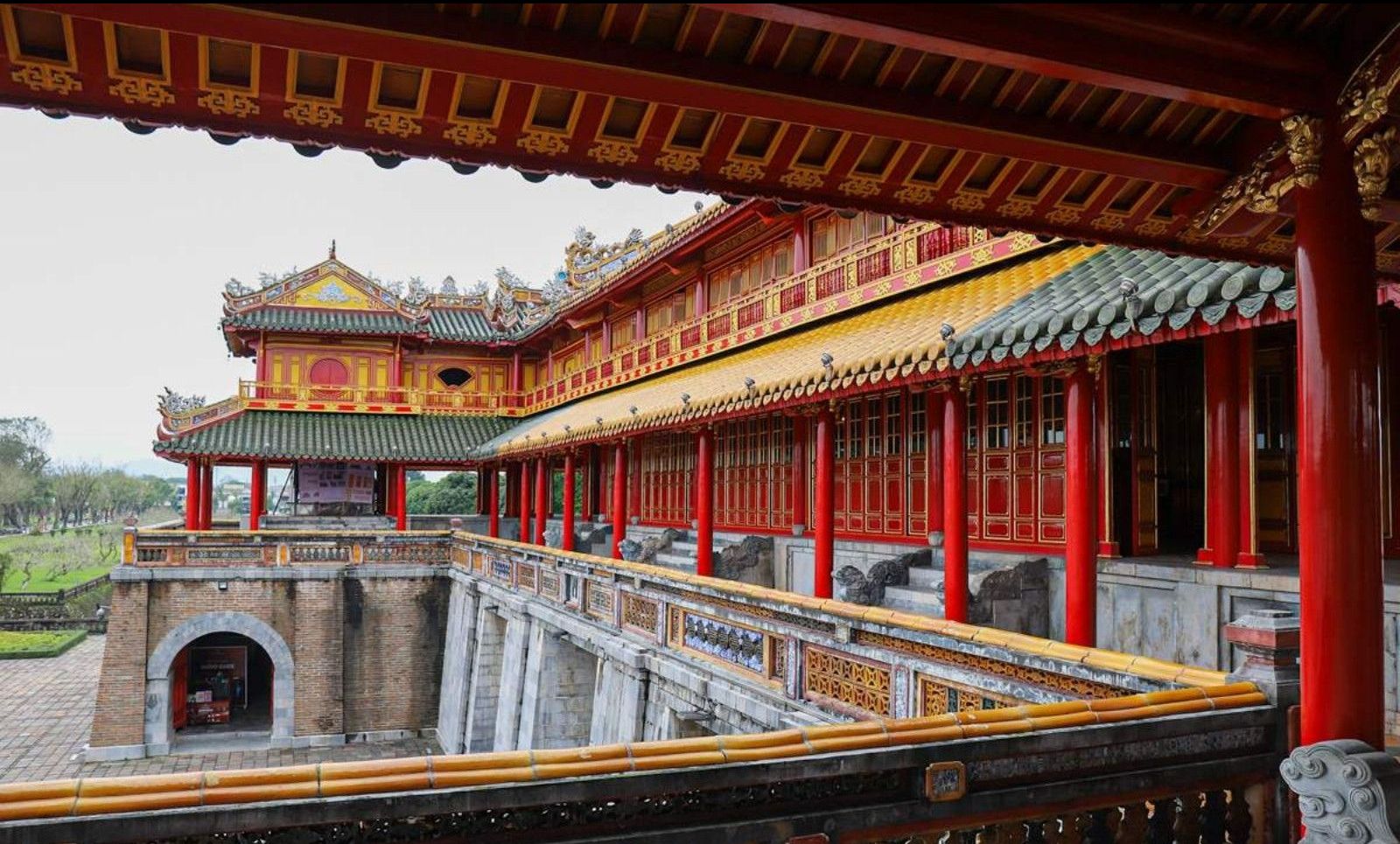
Photo: A unique architectural complex was built
3. Architecture of Hue's Meridian Gate
The architecture of Ngo Mon Gate Hue is a masterpiece combining traditional Vietnamese style with Eastern influences, divided into two main parts: the platform (lower section) and Ngu Phung Pavilion (upper section).
The Platform: This is a massive U-shaped foundation, about 57.77m wide at the base, nearly 5m high, with an area of over 1,560m², constructed of brick, stone, and bronze beams. There are five main entrances designed in the "minh tam am ngu" style (three visible central gates and two hidden side gates), similar to the Forbidden City in Beijing. The central gate (Ngo Mon) was reserved exclusively for the king, the two inner side gates (Ta Giap Mon and Huu Giap Mon) for civil and military mandarins, and the two outer side gates (Ta Dich Mon and Huu Dich Mon) for soldiers, horses, and elephants. The balustrade is decorated with five-color glazed tiles, with staircases on both sides leading to the upper pavilion.
Ngu Phung Pavilion: The upper section consists of two storeys supported by 100 sturdy ironwood columns. The lower roof wraps around to provide shelter from rain and sun, while the upper roof is divided into 9 sections; the middle roof is covered with yellow glazed tiles (reserved for the king), and the side roofs are covered with blue tiles. Decorative details such as phoenixes on the roof and gables demonstrate majesty and harmony with nature.
The structure utilized local materials to ensure durability while reflecting Vietnamese architectural philosophy: harmony, balance, and closeness to the environment.
4. The role of the Meridian Gate in ancient royal ceremonies
During the Nguyen Dynasty court period, Ngo Mon was not only the main entrance but also the stage for major ceremonies reflecting royal authority. It was where the king entered and exited the Imperial City via the "ngu dao" (royal road reserved exclusively for the emperor), received foreign ambassadors, and hosted major events such as coronations, royal awardings, or military parades.
The central gate only opened for the king, while officials and soldiers used the side gates, emphasizing feudal social hierarchy. Ngo Mon was also a symbol of "facing south to rule the world," where royal rituals were staged to reinforce authority. In 1945, it became the site where Emperor Bao Dai abdicated, transferring power to the revolutionary government and marking a historic transition.
These rituals were not merely ceremonial; they also reflected the governance philosophy and culture of the Nguyen Dynasty.
Photo: An eternal symbol of Hue
5. Hue's Meridian Gate through historical periods
Ngo Mon Gate Hue has experienced many historical ups and downs, reflecting the transformations of the nation. Built in 1833 under the Nguyen Dynasty, it quickly became the icon of the Imperial City. Throughout the 19th and 20th centuries, Ngo Mon witnessed major events, including Emperor Bao Dai's abdication on August 30, 1945.
During wartime, the structure suffered severe damage, but it underwent multiple restorations, particularly after 1945 and in the post-war period. In 1993, the entire Complex of Hue Monuments, including Ngo Mon, was recognized by UNESCO as a World Cultural Heritage site, affirming its global value. Today, following extensive restoration projects (such as from 2013 to 2021), Ngo Mon has been preserved intact, becoming a historic and cultural attraction.
Through various eras, Ngo Mon transformed from a symbol of feudal power into a national heritage site, contributing to educating younger generations about Vietnamese history.
6. Experience visiting Hue's Meridian Gate today
Today, Ngo Mon Gate Hue is a must-visit destination for travelers who love history and culture. The monument is open daily from 5:00 to 17:00 and 19:00 to 22:00. Ticket prices for the Imperial Citadel (which includes Ngo Mon) are 200,000 VND for adults, 40,000 VND for children aged 7-12, and free for children under 6. Free admission is offered on major holidays such as Lunar New Year, Hue Liberation Day, and National Day (September 2).
When visiting, please dress respectfully (avoid sleeveless tops and short pants), refrain from smoking, do not film/photograph inside worship areas, and do not bring pets. Visitors can participate in royal ritual reenactments or enjoy artistic night lighting, especially during the Hue Festival (April - May). Be sure to take photos at Ngu Phung Pavilion for a panoramic view of the Imperial City.
Near Ngo Mon, you can find places like Hien Lam Cac, Dien Tho Palace, and Nguyen Dinh Chieu walking street. For accommodation, choose hotels like Melia Vinpearl Hue, located about 2km away for easy commuting. Avoid peak hours to prevent overcrowding, and remember to carry drinking water as Hue's weather can be hot.
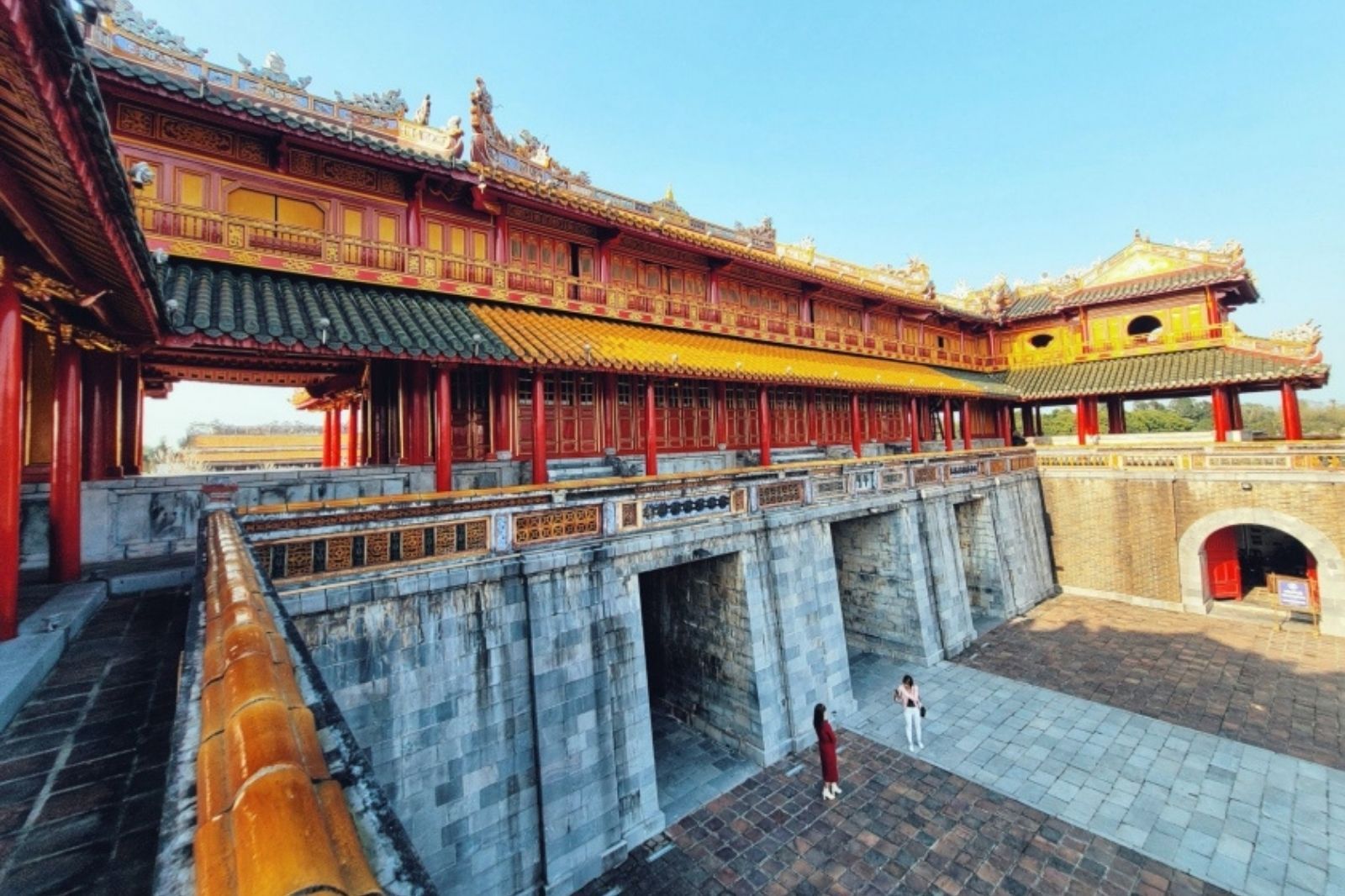
Photo: Visiting Ngo Mon and structures inside the Imperial City
Not only a historical monument, Ngo Mon is also an ideal photo spot. Visitors often come here to admire the architecture, take photos, and feel the nostalgic atmosphere, as if stepping into a period drama. In particular, wearing a traditional ao dai here highlights the elegant and charming beauty of Vietnamese women, immersing in the traditional architectural space.
To fully appreciate the grand beauty of Ngo Mon alongside other outstanding structures in the Imperial City of Hue, you can choose Imperial City toursorganized by Sovaba Travel. With professionally crafted itineraries and experienced guides, Sovaba Travel will not only take you to admire the sights but also help you gain deeper insights into the history and culture of the Nguyen Dynasty. This will be a journey to fully experience the atmosphere of the ancient capital and bring back memorable moments.