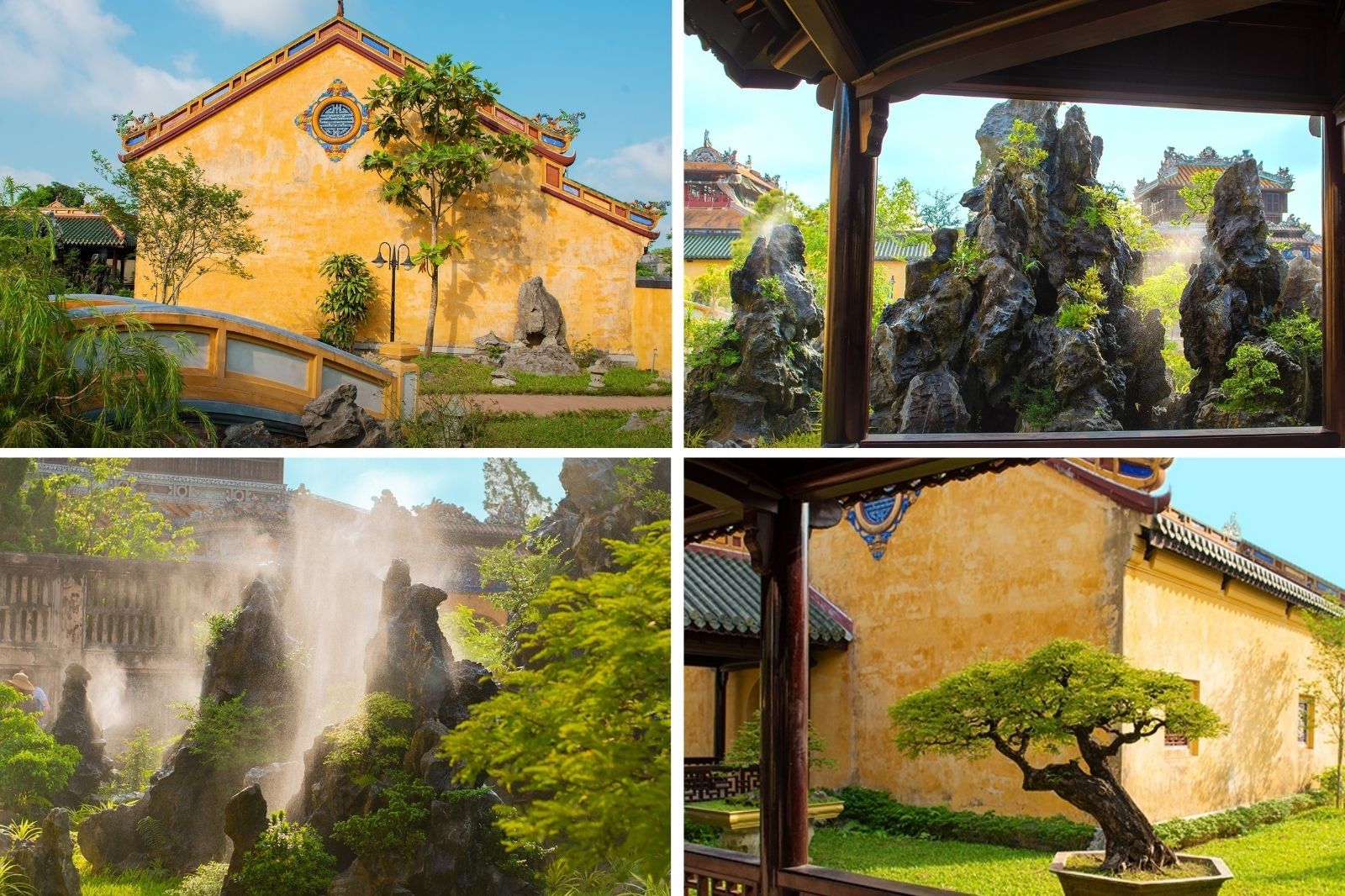
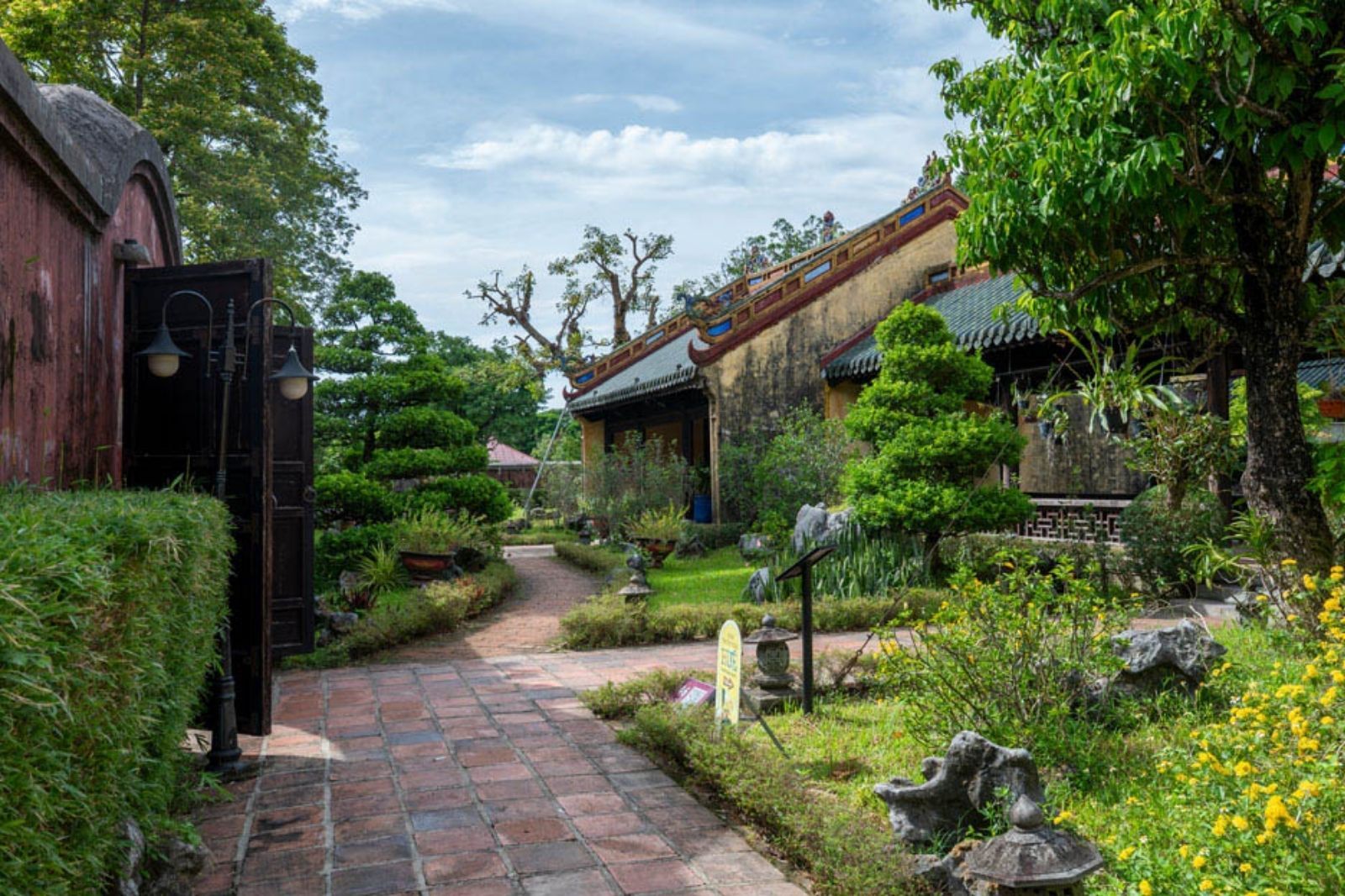
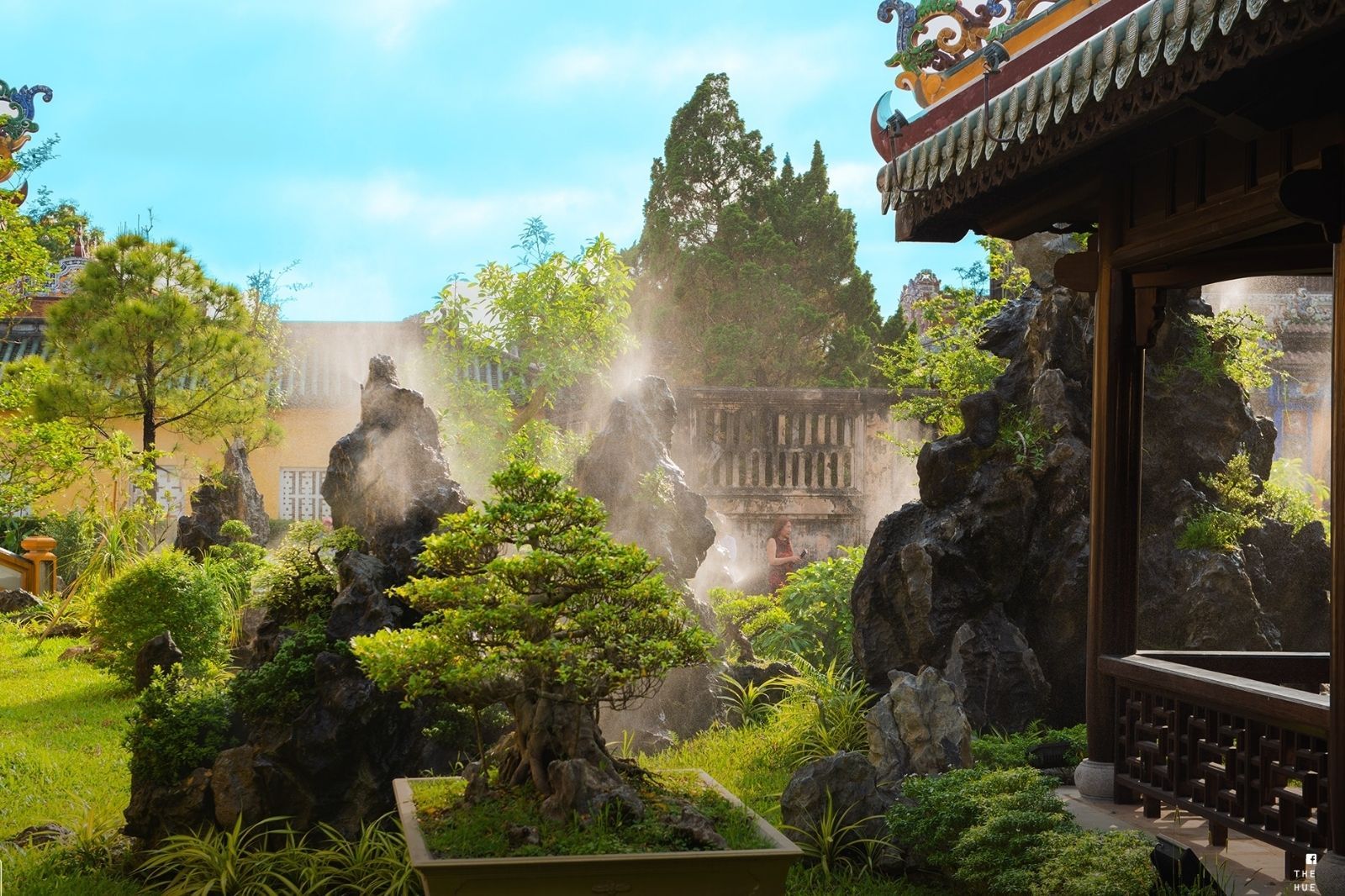
The history of Thieu Phuong Garden is closely linked with the prosperous period of the Nguyen Dynasty, starting in the 9th year of Minh Mang's reign (1828). Emperor Minh Mang had the garden built in the eastern part of the Purple Forbidden City, just inside the Hung Khanh Gate, with its main gate facing south toward Duyet Thi Duong – the place for royal art performances. From then on, the garden became a serene space for the emperor to rest, reflect, and practice the philosophy of harmony between 'heaven - earth - human'.
By 1841, under the reign of Emperor Thieu Tri, Thieu Phuong Garden entered its most glorious era. During nearly three years of mourning, the emperor turned Hoang Phuc Palace into a living and administrative hub, while constructing several new features: the octagonal Nhan Thanh Bat Bieu pavilion, Lien Tri lotus pond, and Trung Quang Ta waterside pavilion (formerly Luong Dinh Dieu Ngu) beside Ngoc Dich Lake. This was also a period when the garden witnessed many historical milestones, including the hiding of Emperor Minh Mang's treasure of over 39,964 silver ingots, equivalent to 15 tons, in secret pits within the premises.
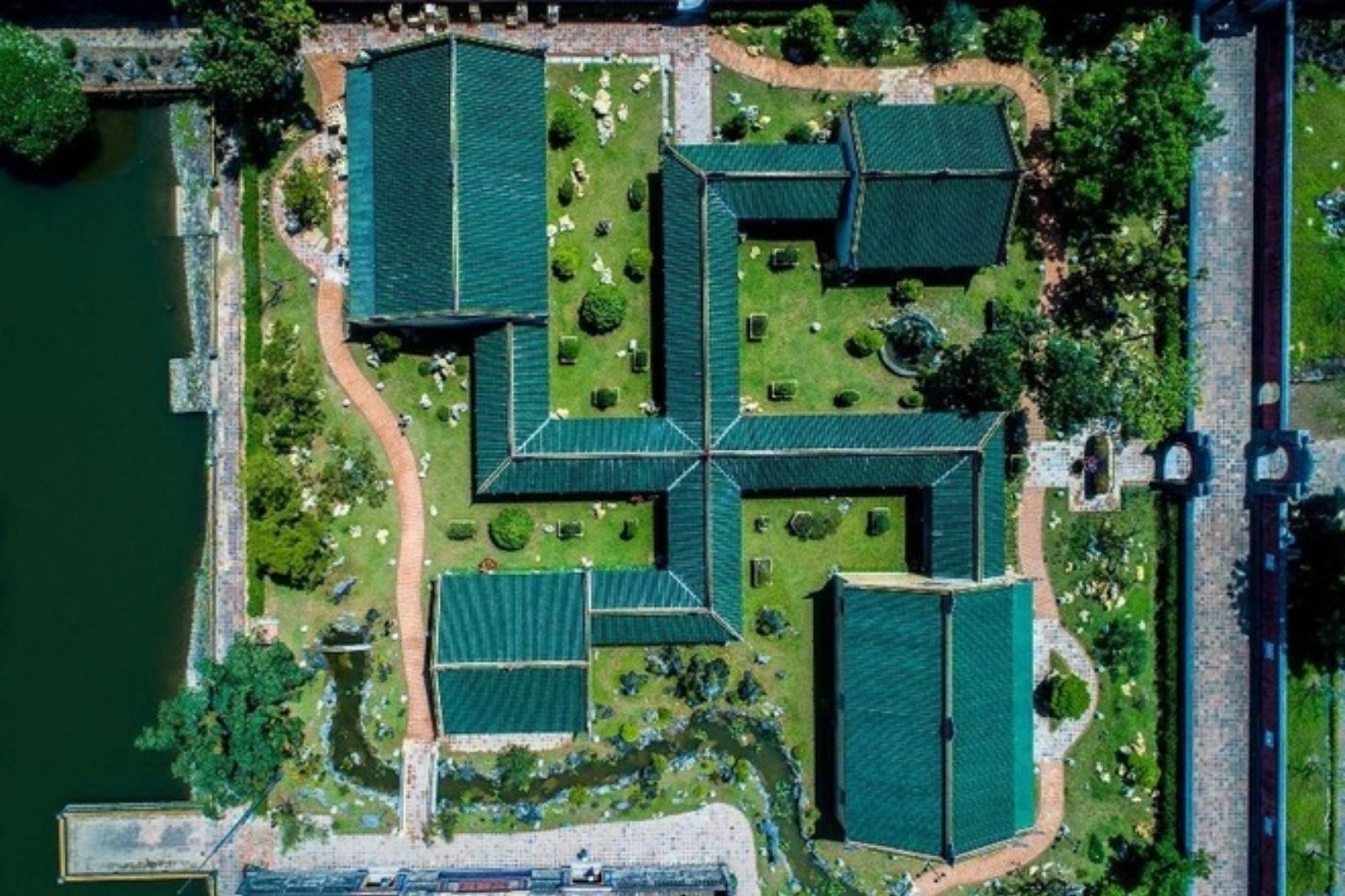
However, from the reign of Emperor Dong Khanh (1886 – 1889), political turbulence and the 'Four Months, Three Kings' period led to the gradual dismantling of the garden. By 1896, during the reign of Thanh Thai, Hoang Phuc Palace was dismantled, leaving Thieu Phuong Garden in a deserted state for nearly a century. Nevertheless, the Van Tu Hoi Lang (Swastika-shaped Covered Gallery) architecture remained intact, serving as a vital foundation for later restoration efforts.
Entering the 21st century, Thieu Phuong Garden began its revival. Starting in 2002, the Hue Monuments Conservation Center, in collaboration with the New Arts Association (France), organized scientific workshops based on archaeological results from 1999–2002 to undertake reconstruction. Today, although covering only about two-thirds of its original area, the garden has been restored and adapted, serving as a vivid testament to the enduring vitality of Hue's heritage through the ups and downs of history.