Tucked quietly along the An Cuu River, An Dinh Palace in Hue carries a beauty that is both ancient and distinctly Western, setting it apart from the familiar structures within the Imperial Citadel. Located at 97 Phan Dinh Phung Street, Thuan Hoa Ward, Hue City, about 2 km from the center, this place once served as the living space for Emperor Khai Dinh and Emperor Bao Dai – the last two emperors of the Nguyen Dynasty.
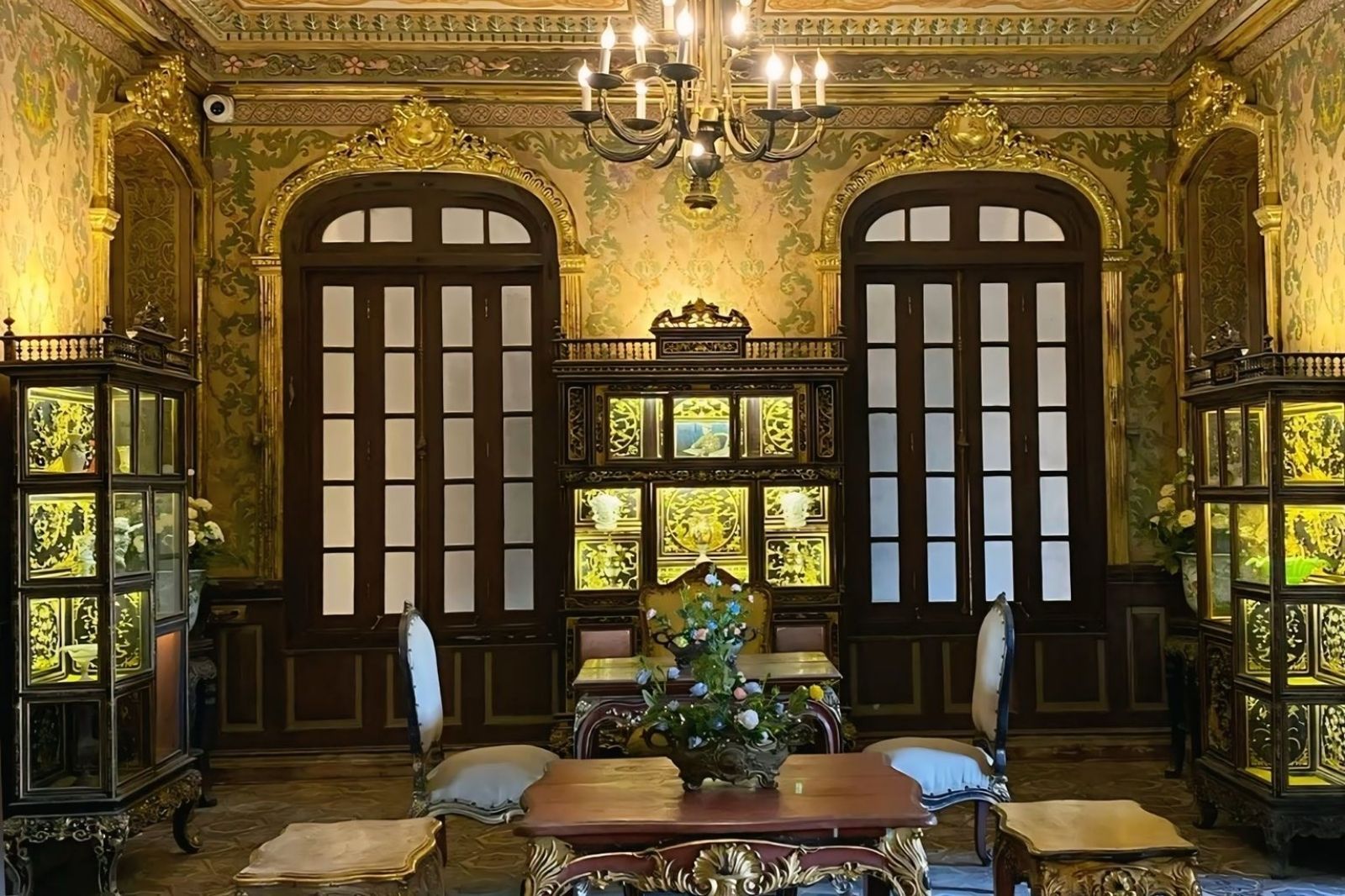
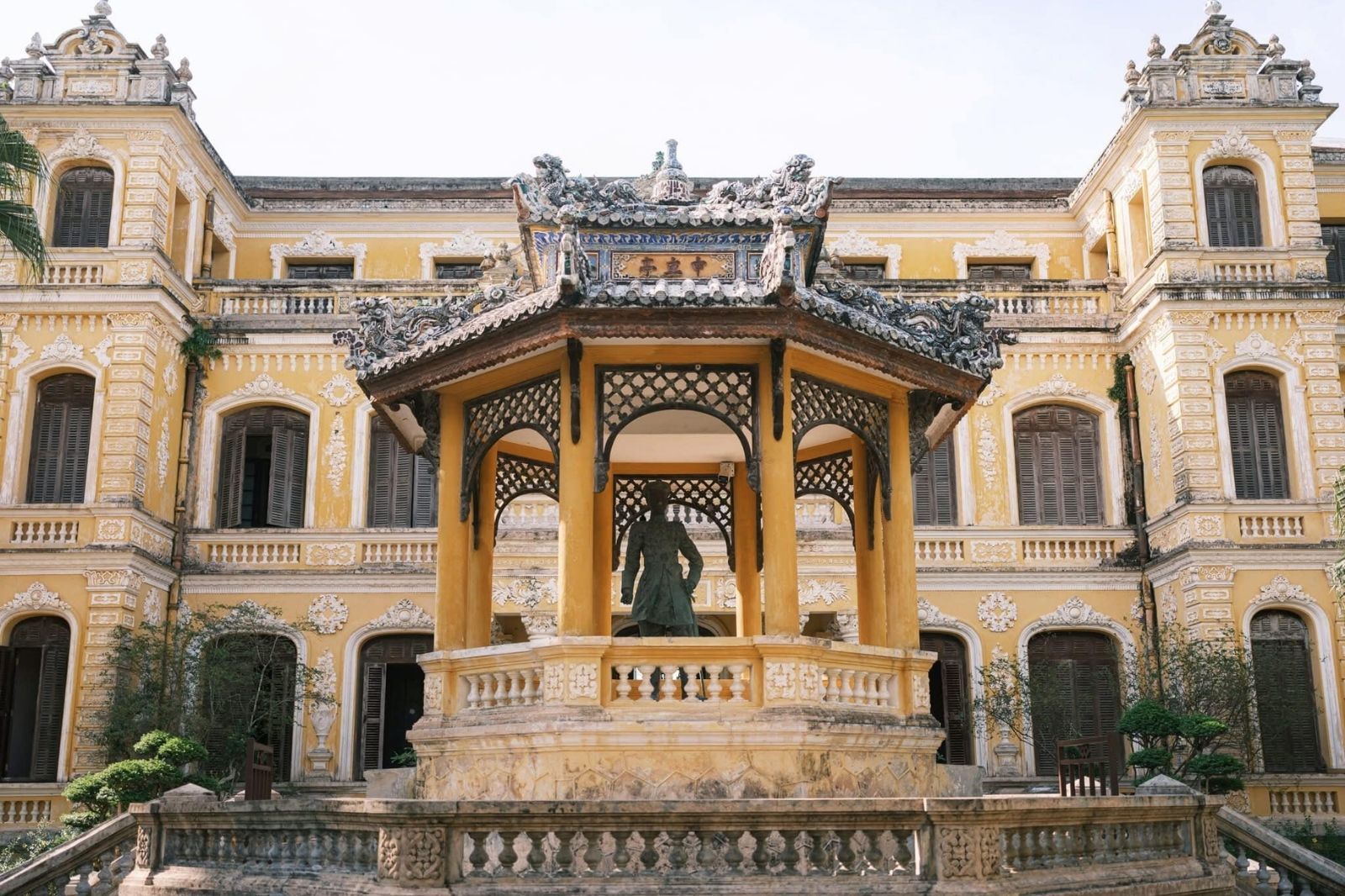
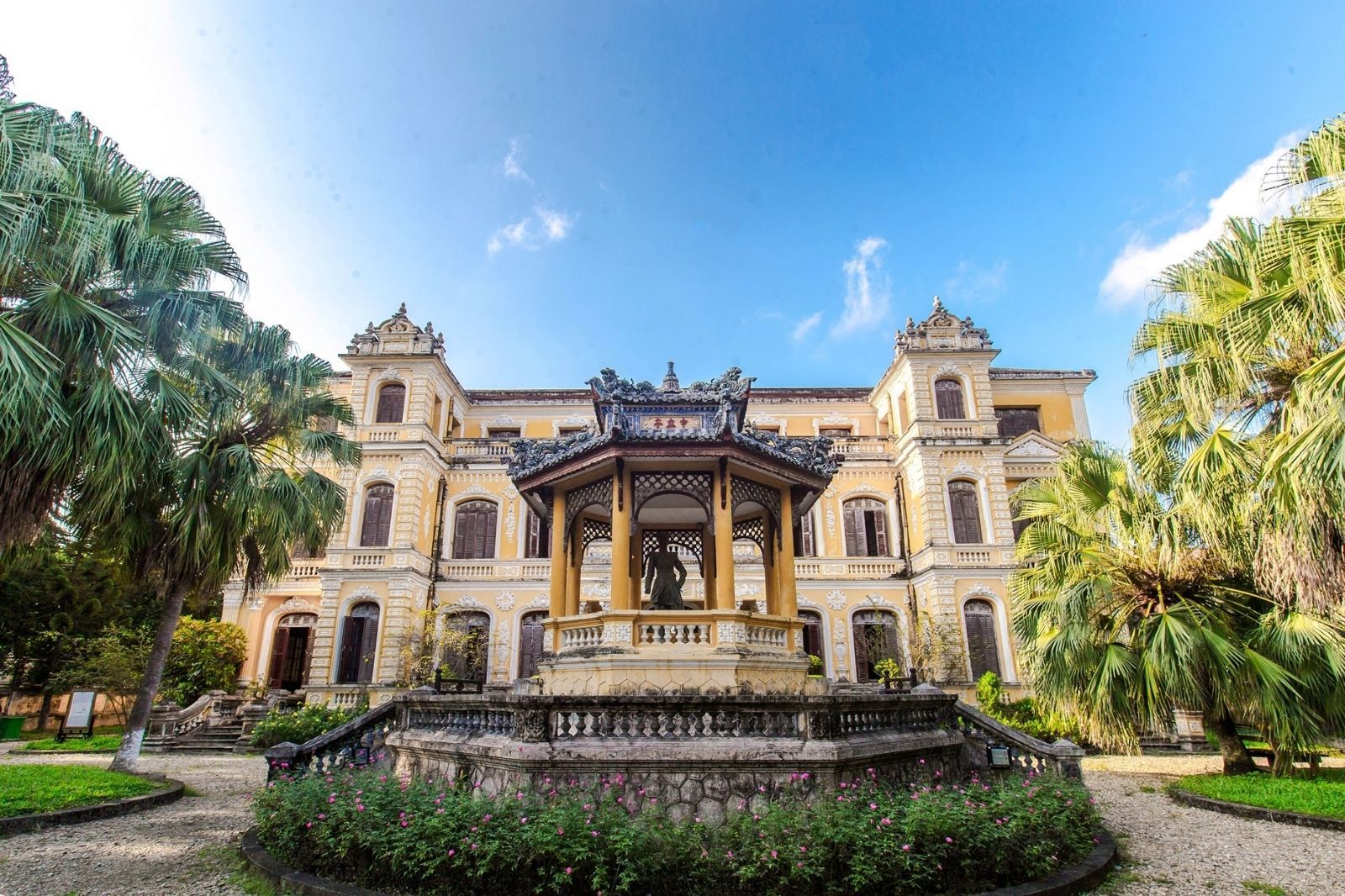
The most distinctive feature of An Dinh Palace is the harmonious combination of European architecture (Neoclassical style, influenced by Roman and French designs) with traditional Vietnamese motifs such as the four sacred animals (dragon, unicorn, tortoise, phoenix), the four noble plants, and the eight precious objects. The entire structure is predominantly painted in yellow, exuding a luxurious and magnificent appearance while retaining the quiet, melancholic charm of the ancient capital.
Today, the palace primarily preserves three main notable structures:
Main Gate: A two-tier triple-arch gate (tam quan), intricately decorated with porcelain and glass.
Trung Lap Pavilion: An octagonal pavilion housing a bronze statue of Emperor Khai Dinh cast in 1920.
Khai Tuong Residence: A three-story European-style building that once served as the living quarters for Emperor Bao Dai's family and Empress Nam Phuong.
An Dinh Palace was once the residence of Emperor Bao Dai and his family after 1945, intimately tied to the life story of Empress Nam Phuong. Today, it is part of the Complex of Hue Monuments recognized by UNESCO, as well as a popular check-in spot featured in numerous films and music videos.