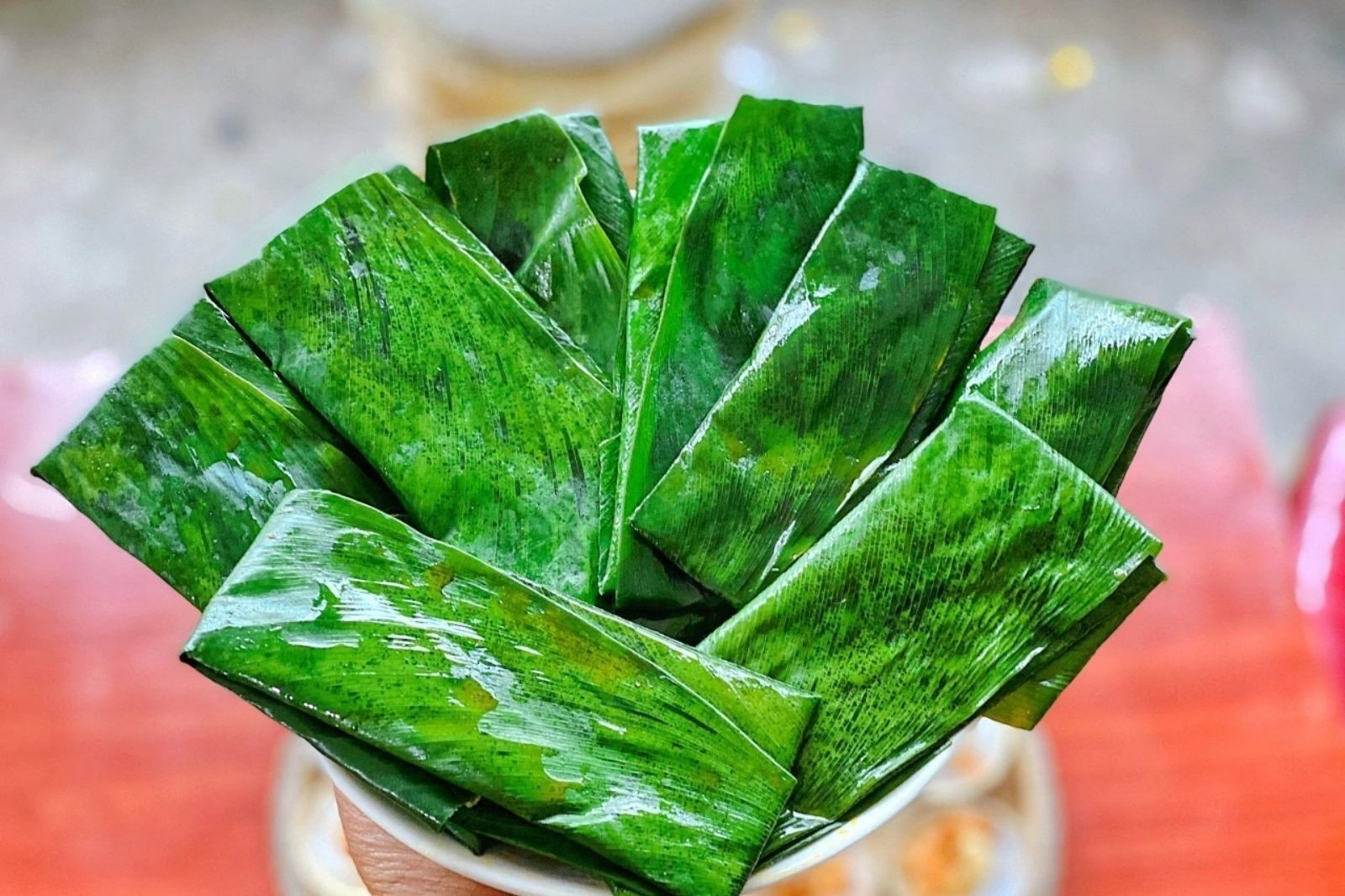
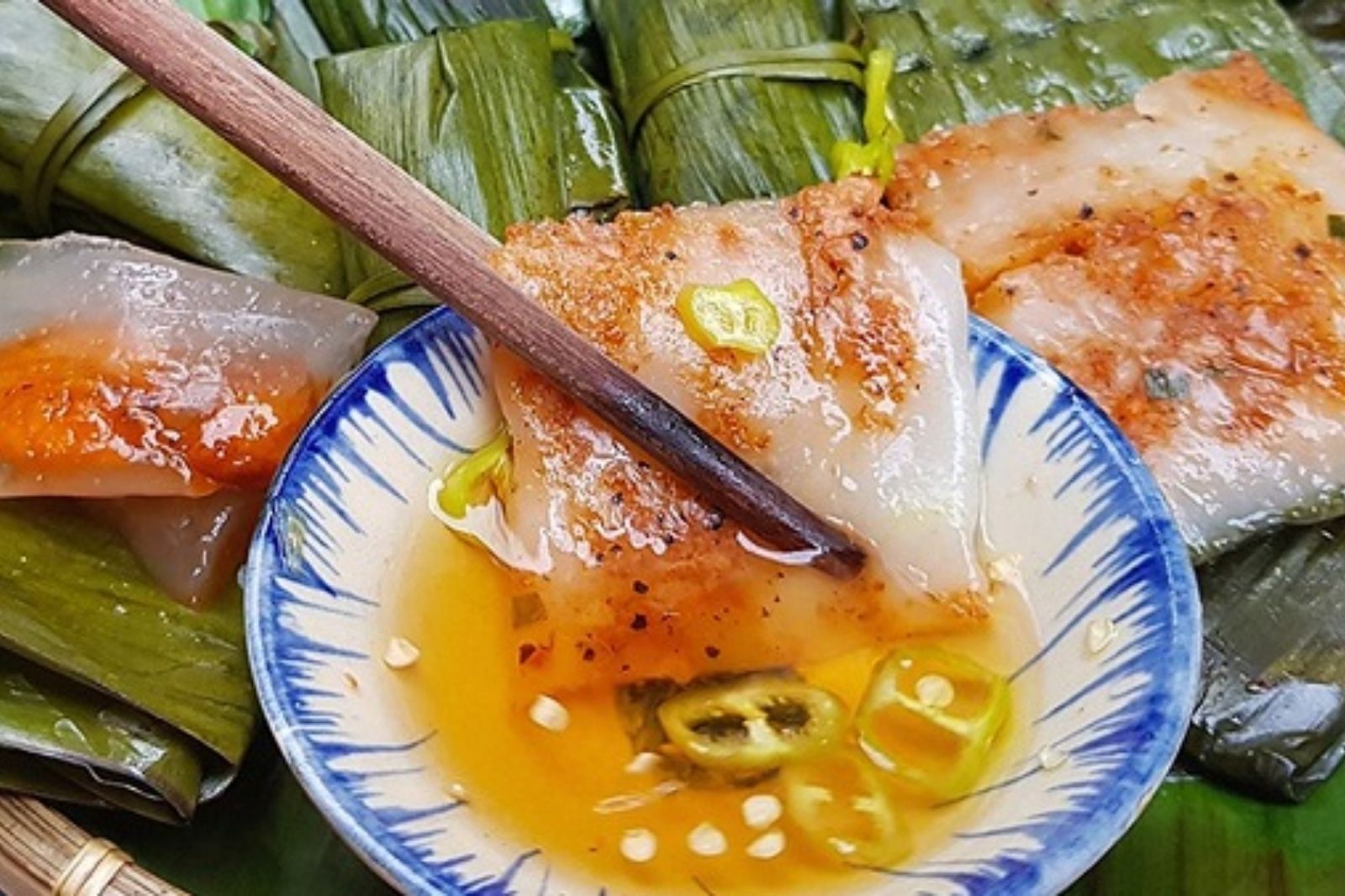
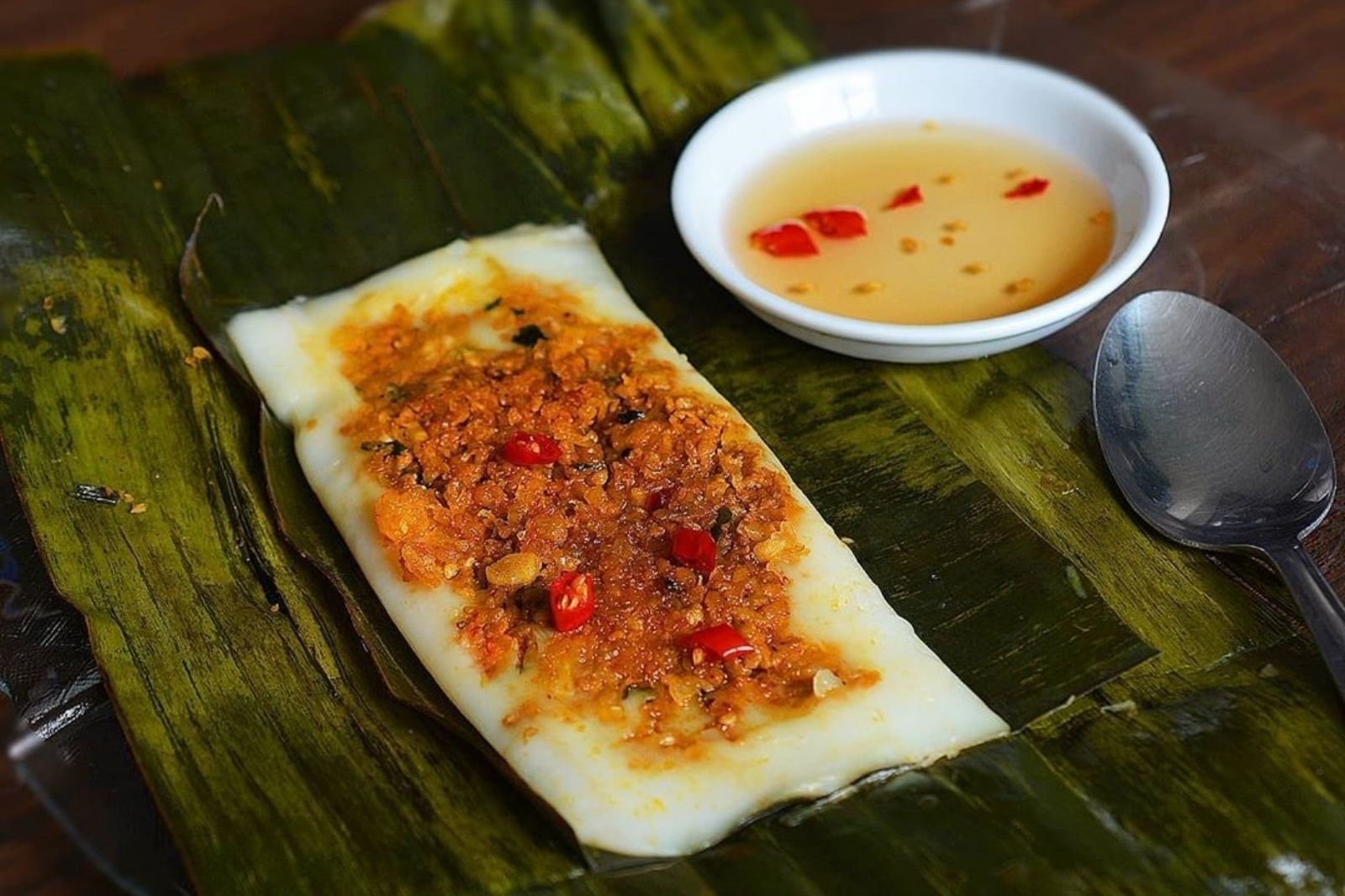
Bánh nậm is one of the unique traditional cakes of the imperial land, prepared from simple ingredients yet offering an unforgettable, delicate flavor. The cake is made from fine rice flour, filled with fresh shrimp and fragrant sauteed minced pork, skillfully wrapped in banana leaves or phrynium leaves, and then steamed. The result is a thin, rectangular cake with a soft, pliable shell and a savory shrimp-pork filling accented with green scallions, giving off a tempting aroma. When served, bánh nậm is typically enjoyed with a sweet, sour, and spicy bowl of fish sauce, creating a subtle harmony of rich, sweet, fragrant, and spicy flavors.
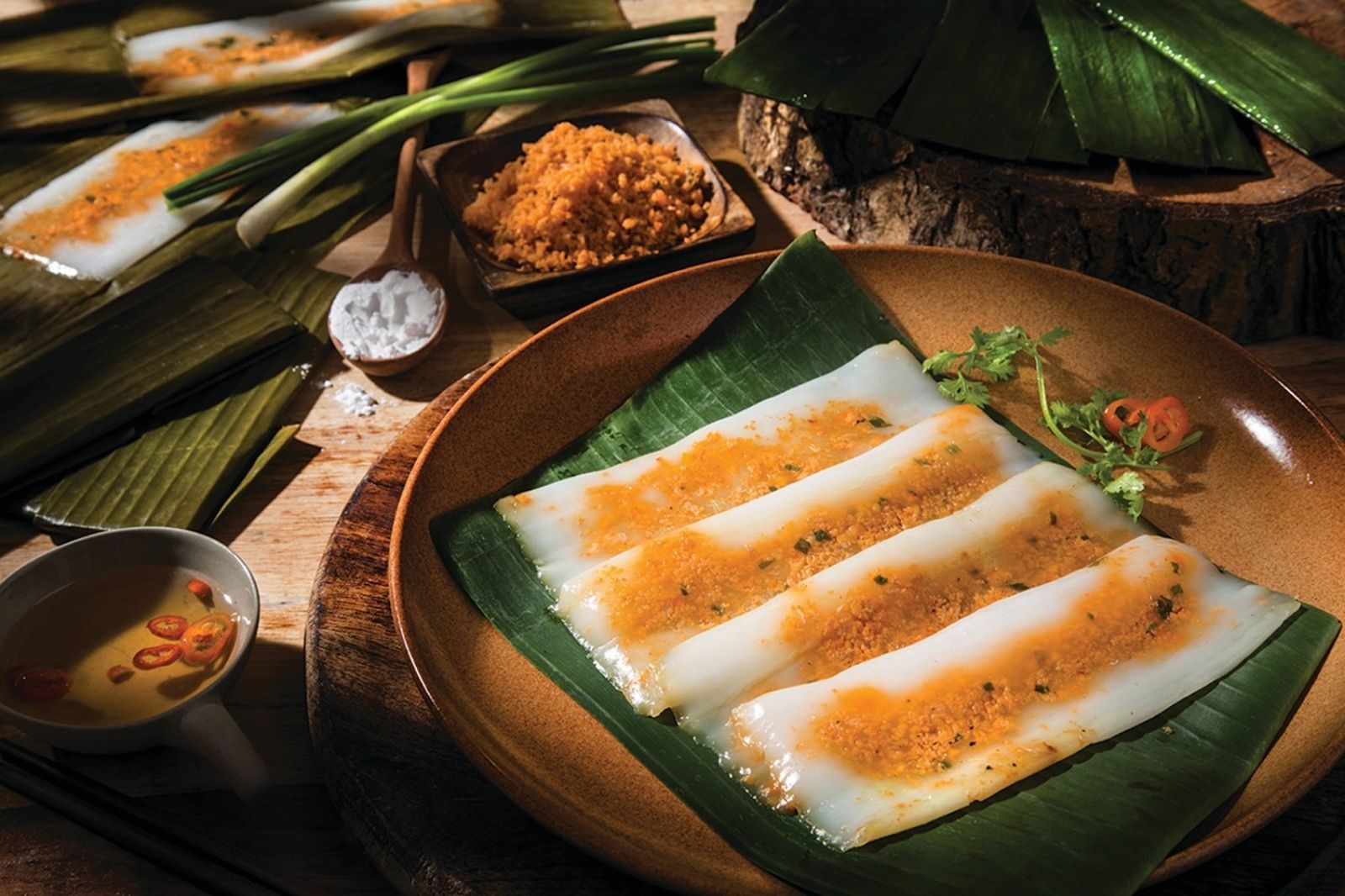
Unlike elaborate royal dishes, bánh nậm carries a rustic, close-to-home charm. For a long time, it has been associated with the daily lives of local people, appearing in family meals, street vendors' baskets, or during holidays and full-moon offerings. More than just a humble snack, bánh nậm is considered a symbol of skillfulness and sophistication in Hue culinary art. This dish originated from Nam Pho village (Phu Thuong commune, Thua Thien Hue), where locals created a refined dish from available ingredients, embedding the spirit of their countryside into every single cake.
In Hue culture, bánh nậm is not only for dining but also carries spiritual significance. People in Hue often make mung bean bánh nậm for offerings on full moon days, the first day of the lunar month, or Tet holidays, expressing reverence to ancestors. The appearance of bánh nậm in famous lullabies like “In the late afternoon, bánh nậm sways along…” shows how deeply this dish is rooted in the spiritual life of Hue locals.