Hue Cuisine - The Cultural Essence of the Ancient Capital
Central
Thua Thien Hue
Sovaba.travel
Updated at: 28/08/2026
1. Distinctive features of Hue cuisine
Hue cuisine is a tapestry woven from the threads of royal, folk, and spiritual culture. Each dish is like a verse of poetry, carefully nurtured from selecting ingredients to plating, carrying the breath of the Nguyen Dynasty, lavish banquets, and warm ancestor death anniversaries rich in community bonds. Hue people cook with all their hearts, ensuring that each dish not only satisfies hunger but also touches emotions and evokes memories.
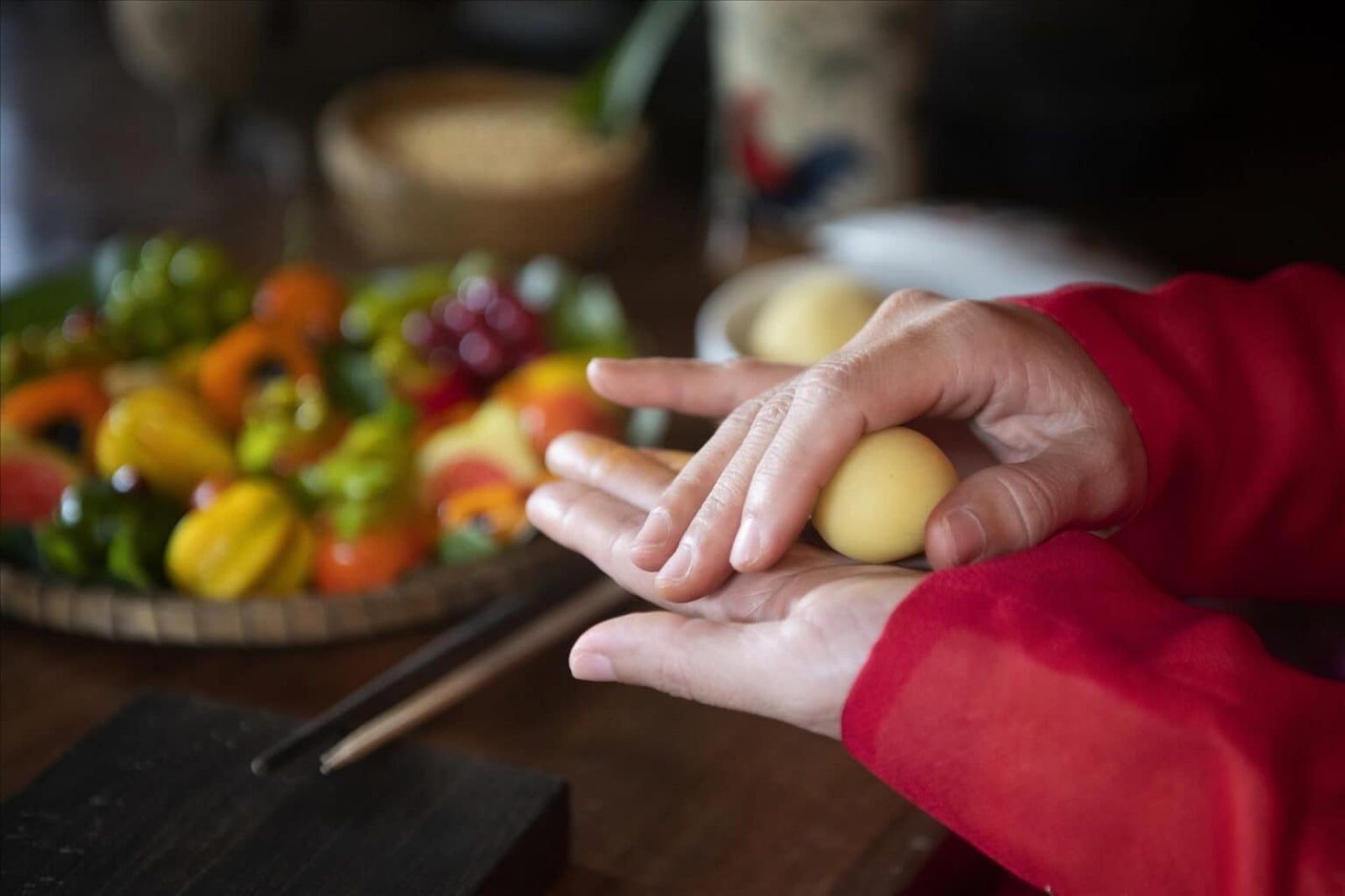
Elaborateness: Hue dishes, especially royal cuisine, are meticulously prepared with attention to the smallest details, from cutting and slicing ingredients to food arrangement.
Rich flavors: Hue cuisine is prominent for its fiery spiciness, savory richness, and a perfect balance among sour, sweet, fatty, nutty, bitter, and astringent flavors, creating a symphony for all senses.
Artistic presentation: A Hue meal, whether a family dinner or a royal banquet, is always neatly arranged with harmonious colors, evoking appetite right from the first glance.
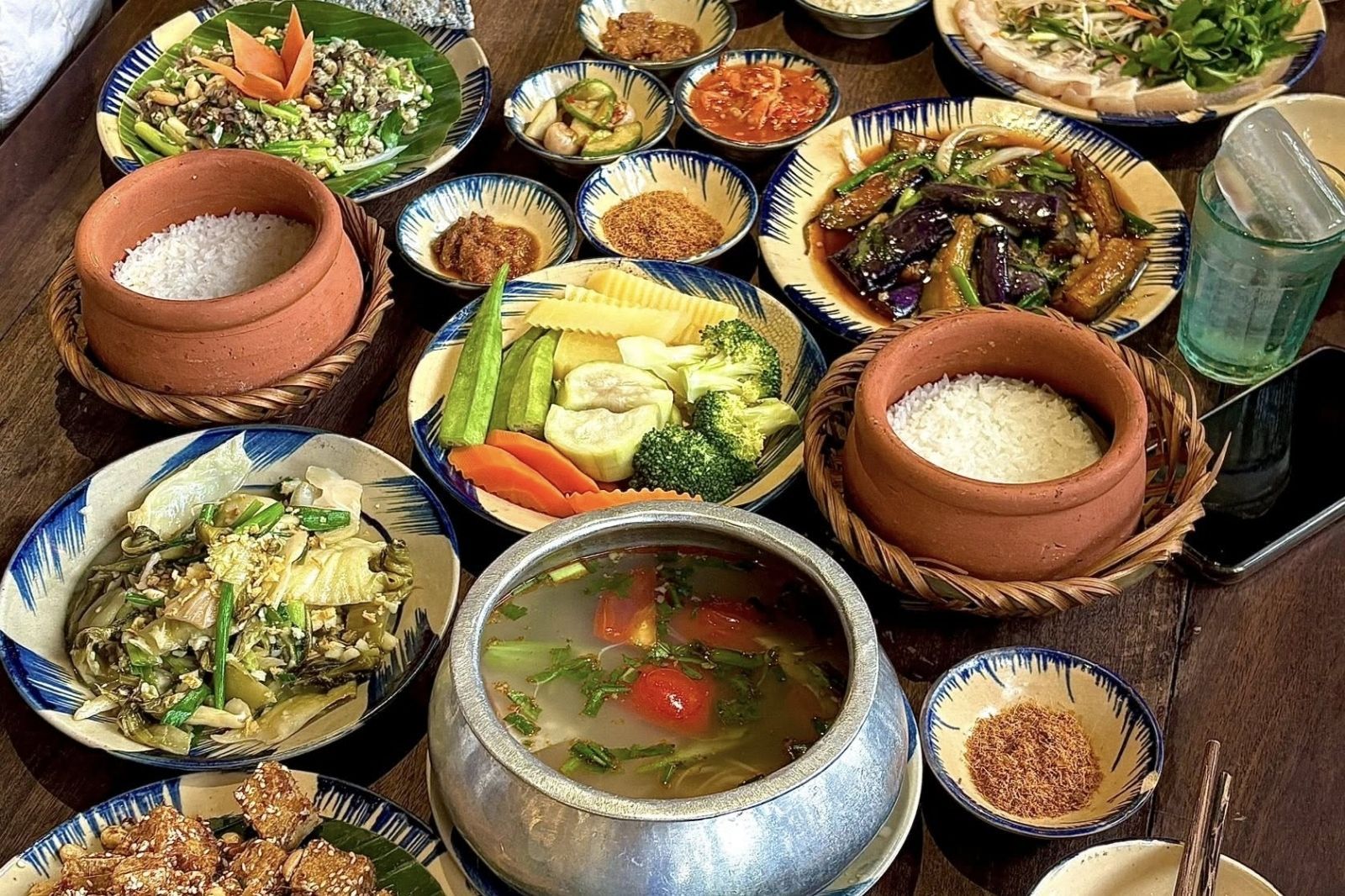
Communal spirit: Dishes are often served all at once, arranged on a tray, encouraging sharing and gathering, especially during festivals and ancestral anniversaries.
Photo: Hue people cook with meticulousness through many stages
2. Diversity in the preparation and cooking of Hue cuisine
Hue cuisine is a thick book where every page tells of a cooking method and a story, from high royal courts to rustic kitchen corners, from rich savory dishes to pure vegetarian meals. That diversity is like notes in a Hue song, sometimes deep, sometimes gentle, but always enchanting the diner.
Royal Court Cuisine
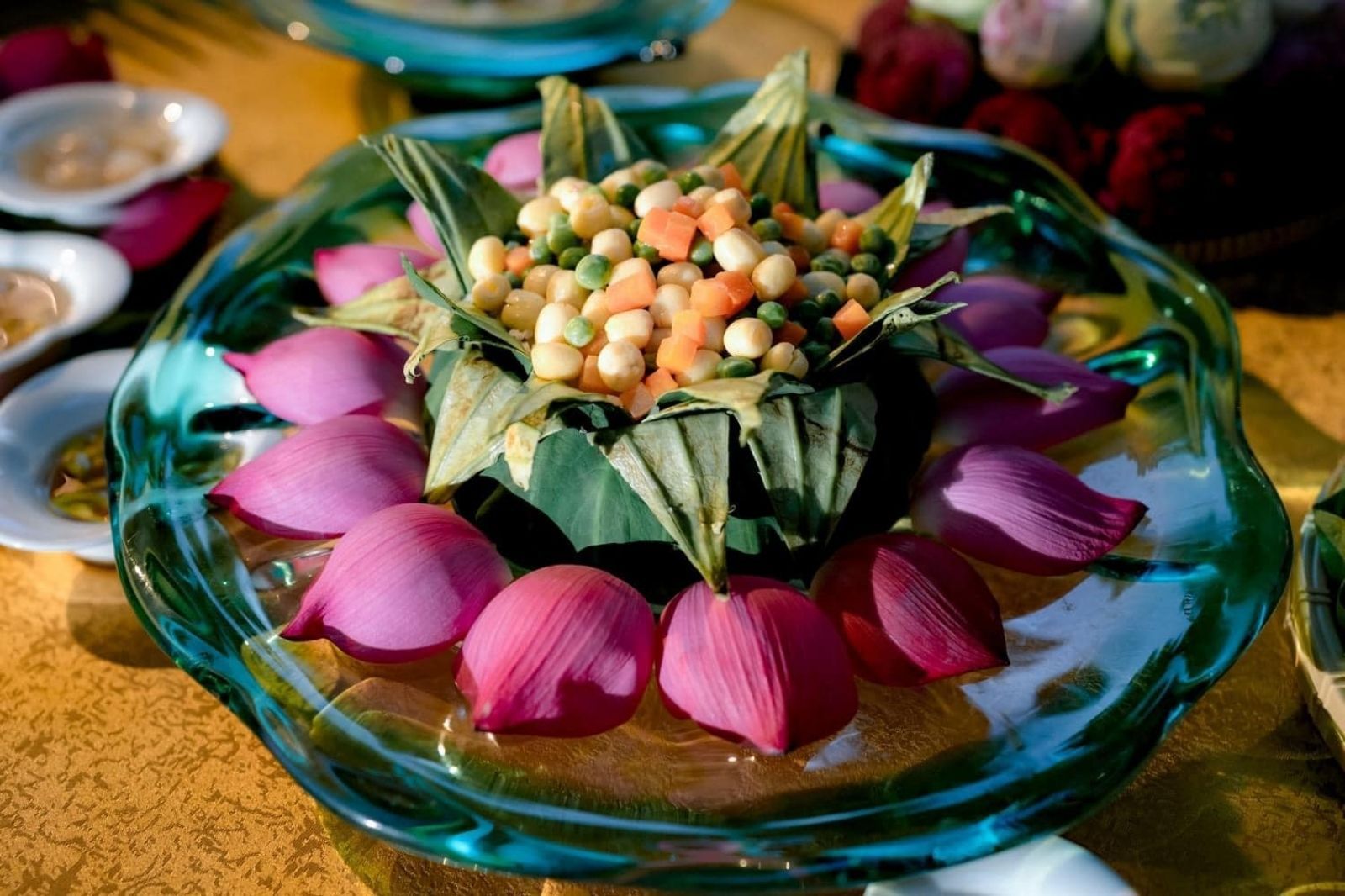
Hue royal court cuisine is the pinnacle of refinement, once serving the kings and emperors of the Nguyen Dynasty. Dishes were required not only to be delicious but also aesthetically pleasing, nutritious, and possessed of medicinal value. For example:
Peacock Nem and Phoenix Sausage (Nem Cong Cha Phuong): Peacock Nem is made from finely pounded peacock thigh meat, naturally fermented with spices such as garlic, galangal, and pepper, having detoxifying properties. Phoenix Sausage uses phoenix bird meat, steamed in banana leaves, being both nutritious and elegant.
Steamed prawns in coconut water: Fresh prawns steamed with coconut water, preserving natural sweetness, frequently featured in royal banquets.
Royal dishes were often prepared from premium ingredients, sometimes tribute specialties from various regions. The preparation process required dexterity, from pre-treatment and marination to arrangement, often involving the Royal Medical Academy to ensure nutritional balance.
Photo: Royal dishes elaborately prepared
Folk Cuisine
Hue folk cuisine bears a rustic character yet is no less alluring. Dishes typically utilize readily available ingredients, cooked simply yet packed with rich flavors:
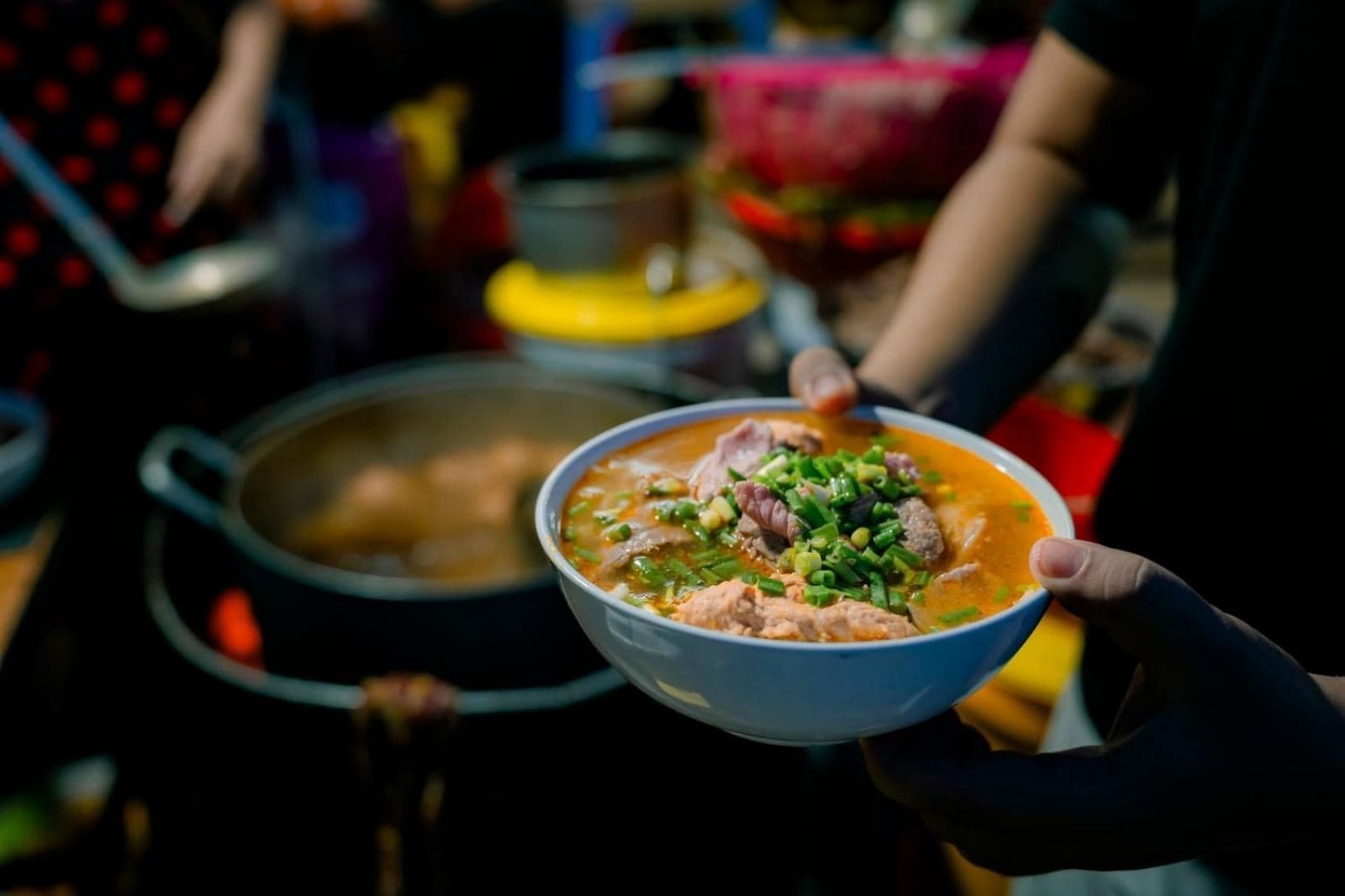
Bun Bo Hue (Hue Beef Noodle Soup): The famous dish features a broth simmered from beef bones, fragrant with lemongrass, spicy from chili, combined with beef, pork hock, crab meatballs, and fresh herbs. The rich, spicy broth is an unmistakable highlight.
Com Hen (Clam Rice): Cold rice mixed with stir-fried baby clams, pork cracklings, shrimp paste, fresh herbs, banana blossoms, and finely sliced taro, creating a rustic flavor packed with full color, aroma, and taste.
Nam Pho Thick Noodle Soup (Banh Canh Nam Pho): Noodles made from rice flour and tapioca starch in a 3:1 ratio, chewy yet tender, combined with a thick broth made from shrimp, pork belly, fish cake, garnished with green onions and spicy chili.
Photo: Bun Bo Hue with its distinctive flavor
Vegetarian Cuisine
Hue is a Buddhist land, where Hue vegetarian dishes are not just food but also a way to cultivate compassion. Hue vegetarian dishes are prepared from vegetables, mushrooms, and beans, yet possess beauty and flavors that rival savory dishes:
Vegetarian rice meal (Com Chay): A Hue vegetarian meal often includes dishes like stir-fried mushrooms, stuffed tofu, and vegetable soup, elaborately prepared and subtly presented, expressing reverence for life.
Vegetarian hotpot: Vegetarian hotpot at restaurants such as Hoa Vien uses a delicately sweet vegetable broth combined with mushrooms, tofu, and fresh vegetables.
Types of Hue Cakes
Hue cakes are an indispensable part of the ancient capital's culinary culture, often served as snacks or desserts:
Banh Beo, Banh Nam, Banh Loc, Banh Ram It: Banh beo is thin white rice cake served in small saucers, topped with dried shrimp flakes, pork cracklings, and fried shallots. Banh nam is filled with shrimp or pork, wrapped in banana leaves, and steamed. Banh bot loc is chewy, filled with shrimp or mung bean, served with sweet and sour fish sauce. Banh ram it combines a crispy deep-fried rice cake base with a chewy rice dumpling top, creating a unique texture experience.
Banh Khoai (Hue Crispy Pancake): A deep-fried crispy pancake filled with shrimp, pork, bean sprouts, eaten with fresh herbs and a signature "nuoc leo" dipping sauce that is spicy and rich.
Hue Sweet Soup (Che Hue)
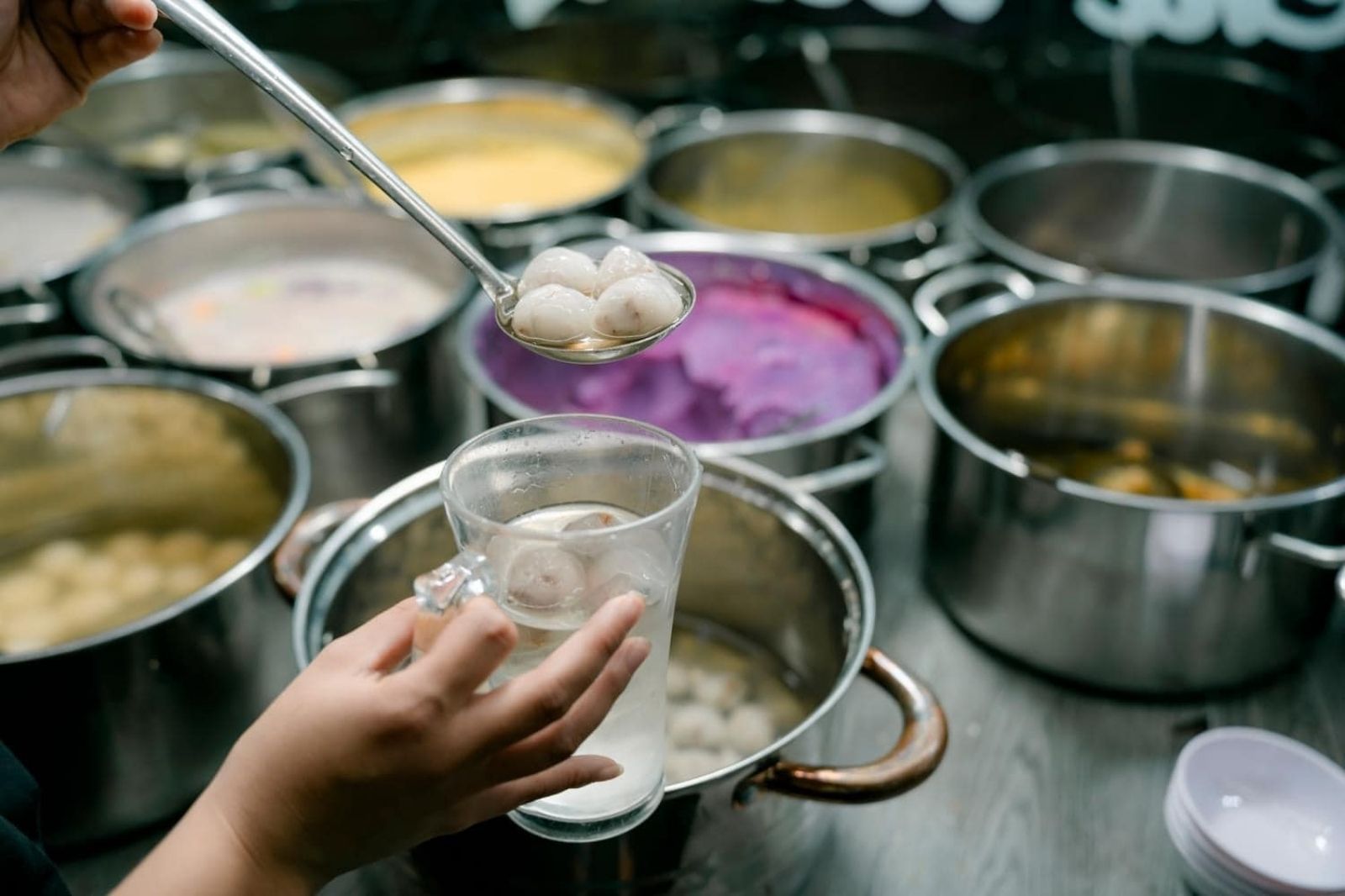
Hue is known as the “capital of sweet soups” with over 20 varieties, each offering its own flavor profile, from refreshingly mild to richly sweet:
Lotus Seed Sweet Soup (Che Hat Sen): Tinh Tam lotus seeds are buttery and nutty, cooked with rock sugar, refreshingly cool and nutritious.
Roasted Pork Tapioca Sweet Soup (Che Bot Loc Thit Quay): An intriguing dish featuring chewy tapioca dumplings filled with savory roasted pork, cooked in a mildly sweet syrup.
Alley Sweet Soup (Che Hem): Sold in small alleys, such as Ba Linh Lan's shop at 27 Hung Vuong, alley sweet soup carries a subtle sweetness, making it a favorite snack among local Hue residents.
Photo: Hue is considered the capital of sweet soups
3. Culinary secrets of the Hue people
Hue people have their own culinary secrets in preparation, ensuring dishes are not only delicious but also eye-catching and nutritious:
Careful pre-treatment: Fish is rinsed with ginger wine to eliminate fishiness, vegetables are soaked in water to retain bright colors, and dried seeds/beans are soaked to swell and remove impurities.
Meticulous seasoning: Spices are carefully balanced, often utilizing chili, garlic, lemongrass, galangal, and shrimp paste to craft a signature rich and spicy flavor.
Aesthetic presentation: Dishes are neatly arranged with harmonious color coordination, from the red of chili, green of herbs, to the golden hue of pork cracklings, creating visual appeal.
Specialized utensils: Hue kitchens strictly separate utensils for savory, vegetarian, and sweet dishes, ensuring hygiene and preserving full flavors.
Photo: Dishes eye-catchingly arranged after preparation
Hue cuisine is not only the pride of the imperial land's people but also an integral part of the nation's cultural heritage. In the pace of modern life, when everything becomes increasingly hurried, Hue dishes retain their traditional cooking methods—still slow, meticulous, and filled with reverence, just as Hue people preserve their cultural identity across generations. Enjoying a Hue meal means savoring the depth of history and feeling a part of the ancient capital's soul. And perhaps, it is precisely this quiet yet profound essence that makes Hue cuisine truly distinct and forever worthy of exploration, preservation, and returning to time and again throughout life.