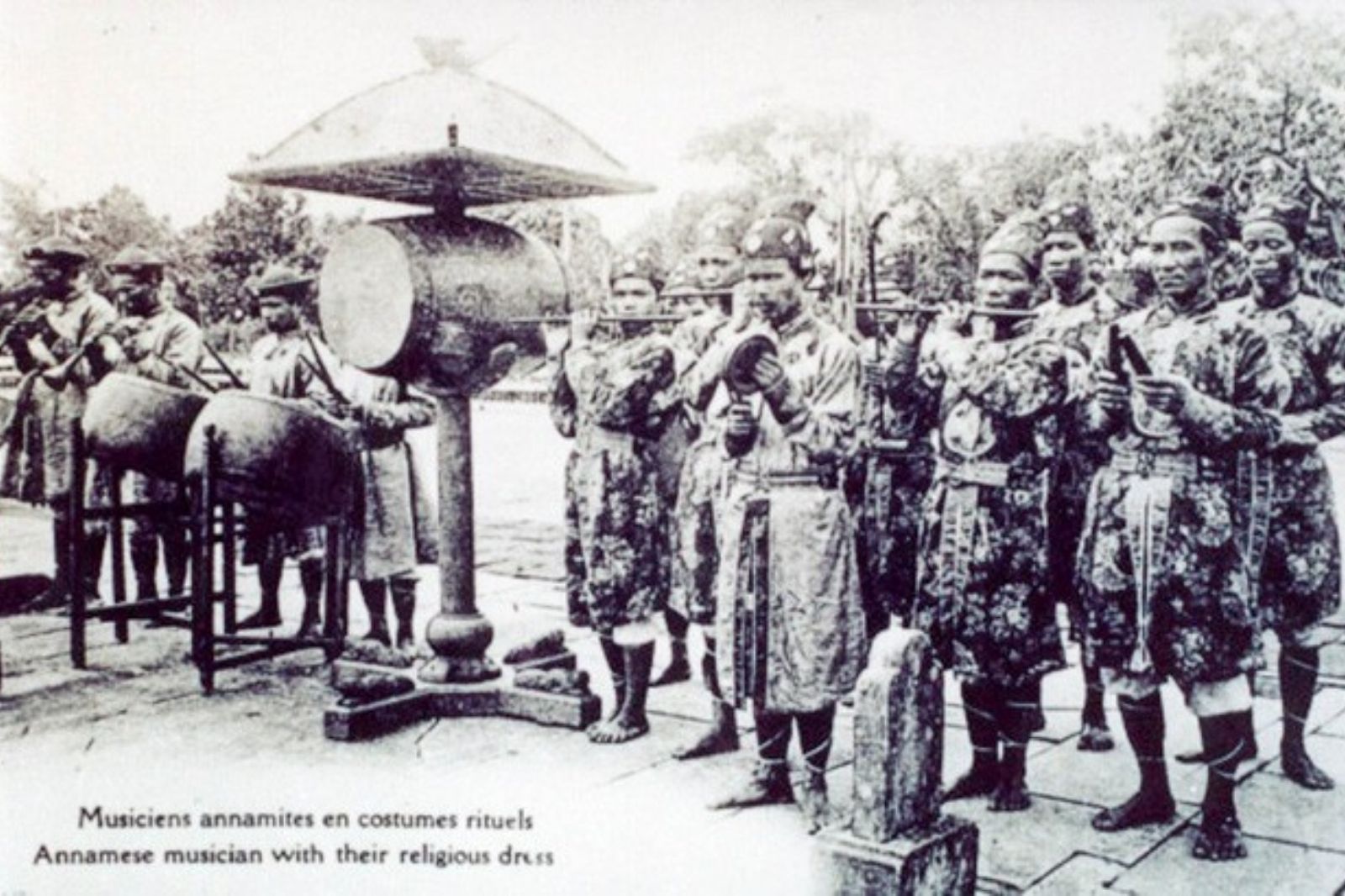
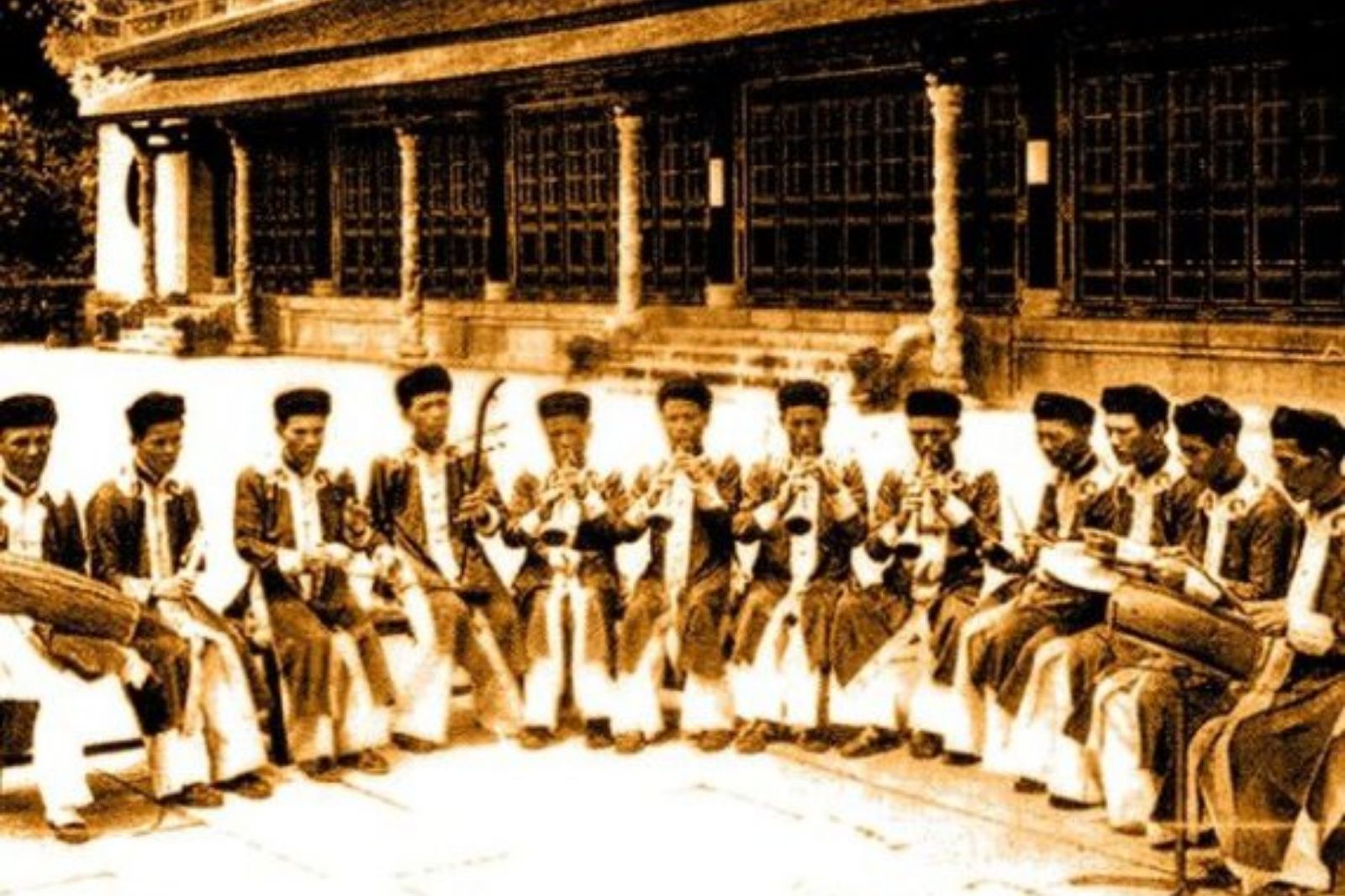
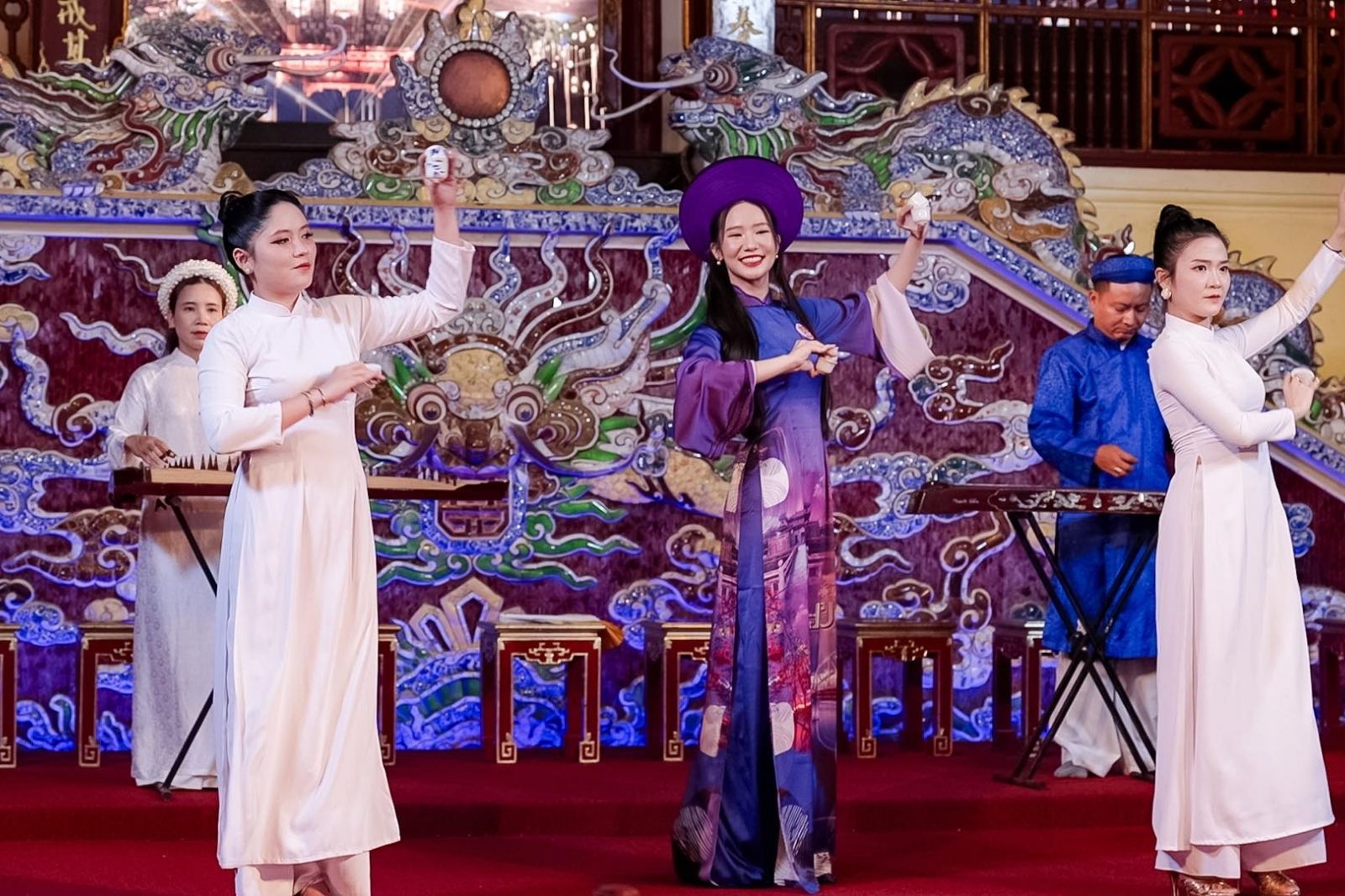
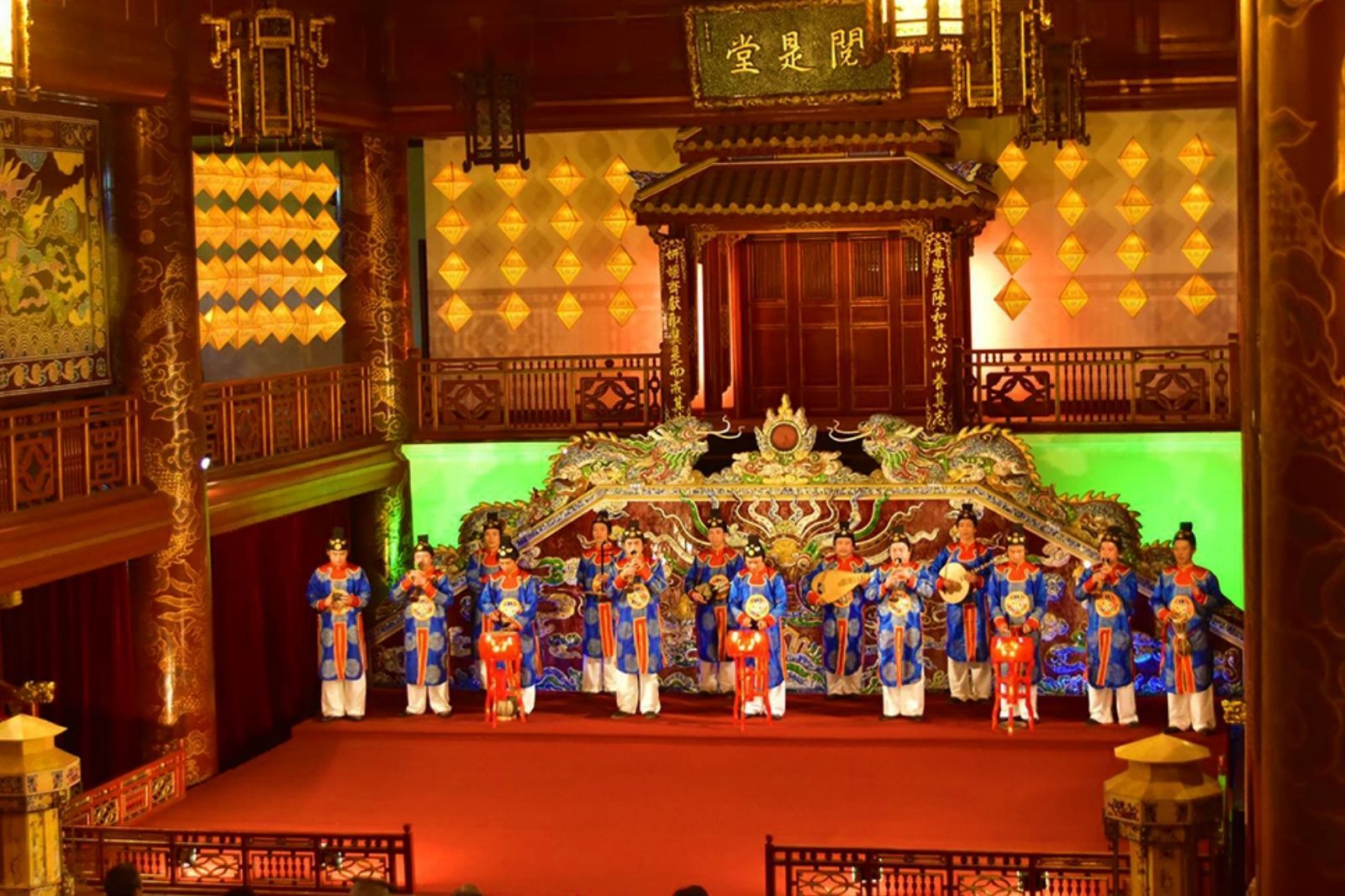
Hue Royal Court Music is the official ceremonial music genre of Vietnam's feudal court, flourishing under the Nguyen Dynasty (1802–1945). The word “Nha” implies elegance, refinement, and solemnity, reflecting the aesthetic views and ceremonial order of the royal court. Nha nhac was present in major rituals such as the Nam Giao Offering, Ancestral Temple rituals, Grand Court audiences, coronations, royal funerals, royal banquets, and receptions for foreign envoys. Each performance was strictly governed in terms of music, arrangement, and etiquette, contributing to the solemnity of the ceremonial space and demonstrating the authority of the dynasty.
The unique feature of Nha nhac lies in the harmony between musical instruments, vocals, dances, and rituals, creating a solemn, refined, and highly symbolic artistic whole. Through this, Nha nhac not only reflects court life but also expresses the thoughts, aesthetics, and concepts of rite and music of the ancient Vietnamese.
In 2003, UNESCO proclaimed Hue Royal Court Music as a Masterpiece of the Oral and Intangible Heritage of Humanity, now inscribed on the Representative List of the Intangible Cultural Heritage of Humanity. From the ancient palace courtyards to present-day life, these sounds are still preserved, so that Hue is remembered not only by the color of time, but also by a gentle, deep, and regal musical melody.
Unlike Ca Hue, which leans toward appreciation with a lyrical, intimate nature, Nha nhac possesses an academic, standardized, and ceremonial beauty. If Ca Hue is the voice of the heart along the Perfume River, then Nha nhac is the majestic sound of the royal court, contributing to the unique cultural depth of the Ancient Capital.