Miếu Bà Thiên Hậu
TRAVEL GUIDEThien Hau Temple

Thien Hau Temple is one of the most famous spiritual and cultural destinations in Ho Chi Minh City, attracting a large number of domestic and international tourists every year. Located in the heart of the bustling Cho Lon area, this over 250-year-old temple is not only a place to worship Thien Hau Thanh Mau (Mazu) – the patron goddess of seafarers – but also an architectural work deeply imbued with Chinese cultural traits, featuring ancient tiled roofs, exquisite relief sculptures, and a characteristically sacred atmosphere. This is also a place that preserves many unique historical, religious, and artistic values of the Chinese community in Saigon.

If you are planning to visit Thien Hau Temple but don't know where to start, what time is suitable, or what highlights to experience, this detailed A-to-Z Thien Hau Temple travel guide will provide all the necessary information. From transportation, opening hours, outstanding attractions to useful tips when paying tribute and exploring the Cho Lon area, all will help you have a more complete and meaningful journey when visiting this famous temple.
Where is Thien Hau Temple?

Address: 710 Nguyen Trai Street, Ward 11, District 5, Ho Chi Minh City.

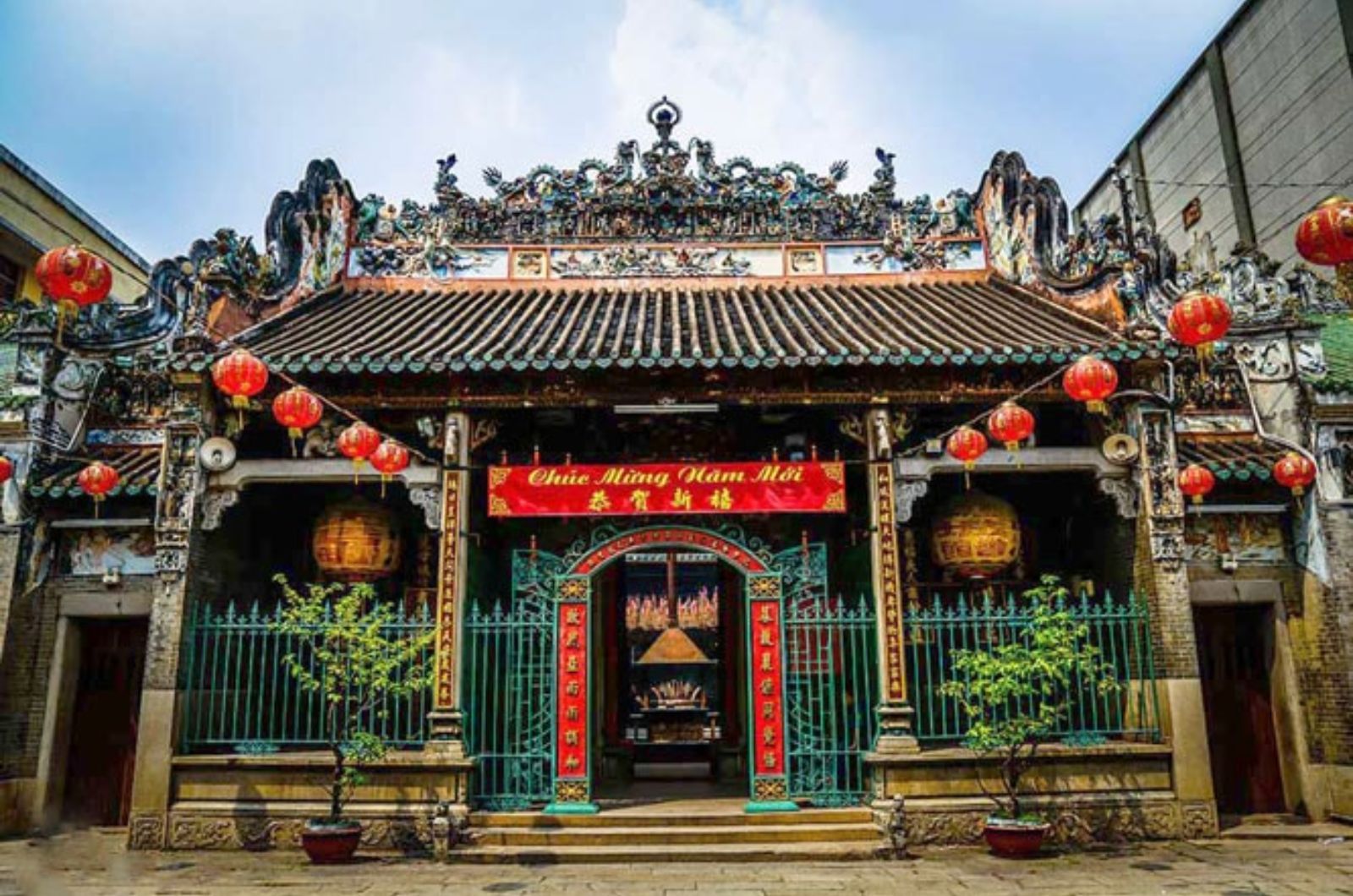
The temple is located right in the heart of Cho Lon – a vibrant historical Chinatown filled with shops, local cuisine, and unique culture. Just about 5-7 km from District 1 center, it is very convenient to combine with visits to other attractions such as Ong Bon Pagoda, Binh Tay Market, or Nguyen Trai walking street. Though the surrounding area is lively, the temple retains a peaceful and solemn atmosphere.

Miếu Bà Thiên Hậu nằm ngay trung tâm Chợ Lớn
Photo: Thien Hau Temple located right in the heart of Cho Lon 

History of over 250-Year-Old Thien Hau Temple

Thien Hau Temple was built around 1760 by the Cantonese Chinese community in the Cho Lon area, making it one of the oldest religious structures in Ho Chi Minh City. The temple honors Mazu / Lady Thien Hau (Lin Moniang) – a goddess revered as the patron deity of seafarers and fishermen, bringing safety and good luck on every journey.

Having existed for over 250 years, Thien Hau Temple is not only a sacred place of worship but also a cultural symbol closely linked to the history and development of the Chinese community in Cho Lon. With its exceptional historical, architectural, and religious values, the temple was recognized as a National Architectural and Artistic Relic in 1993 and has become a must-visit destination when exploring Saigon.

Ngôi Cổ Tự với lịch sử hơn 250 tuổi
Photo: The Ancient Temple with over 250 years of history 

Guide on the Most Convenient Ways to Get to Thien Hau Temple

Thanks to its location in the center of Cho Lon (District 5), Thien Hau Temple is easily accessible from various areas in Ho Chi Minh City using different modes of transportation.

  • Motorbike/Taxi: From District 1, take Nguyen Thi Minh Khai - Hung Vuong/Hong Bang - turn left onto Luong Nhu Hoc (or Luong Huu Hoc) - Nguyen Trai. Takes about 15-30 minutes depending on traffic. Taxi fare ranges around 80,000 - 150,000 VND.
  • Bus: Routes 01, 45, 56, 150... stop near Tran Hung Dao, Hong Bang, or Chau Van Liem. Walk another 200-300 meters. Ticket price is only 5,000 - 7,000 VND.
  • Grab/Be: Very convenient, especially when traveling in a group or carrying offerings.

For the best experience, visitors should avoid traveling during peak rush hours and proactively park their vehicles at parking lots near the temple.

Opening Hours and Essential Information for Visiting Thien Hau Temple

Before visiting Thien Hau Temple, visitors should know some basic information to ensure a smoother trip.

  • Opening hours: Typically from 6:00 - 17:30 daily. It is recommended to visit early in the morning or late in the afternoon to avoid crowds.
  • Entrance fee: Completely free.

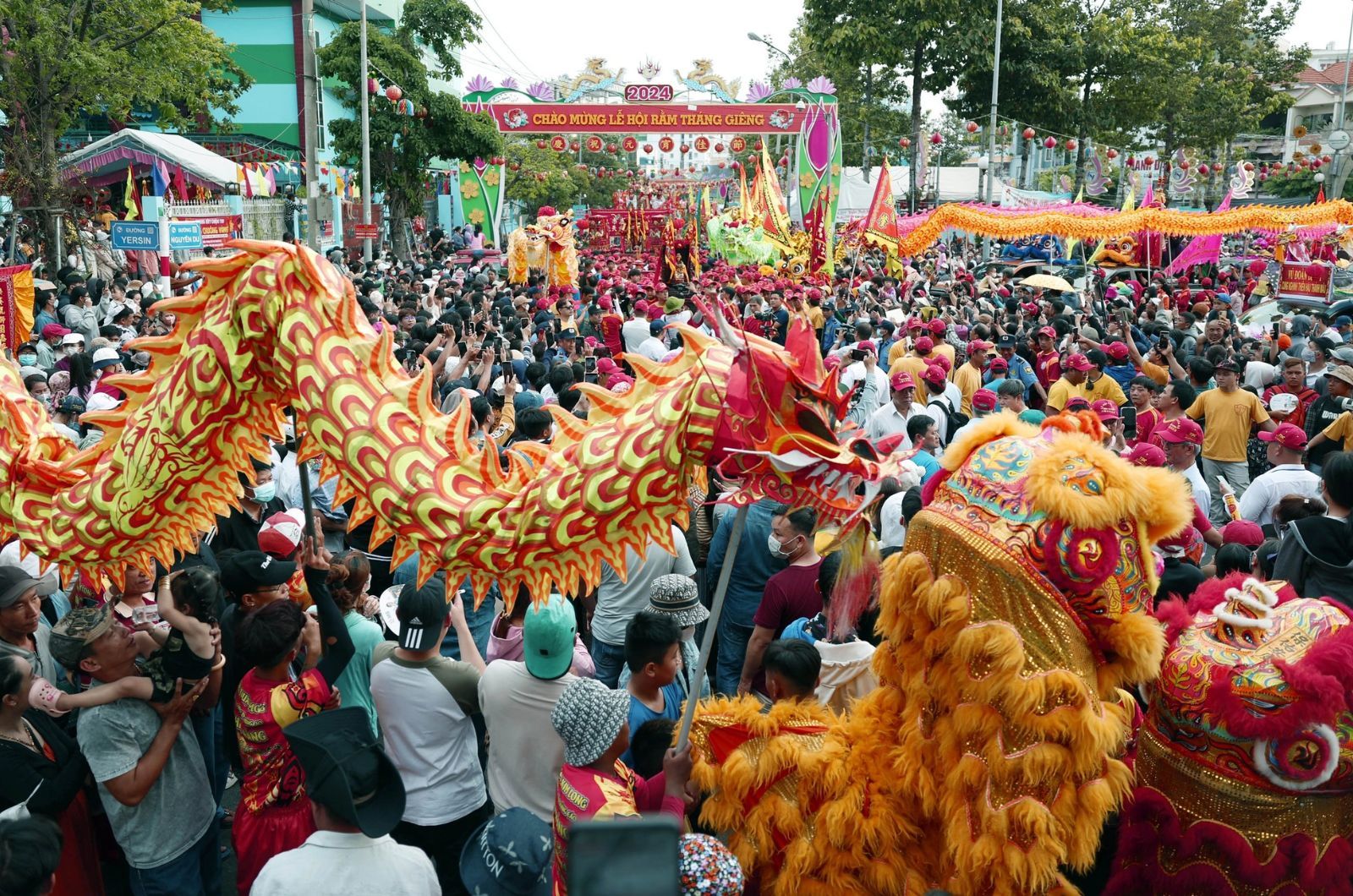
If you prefer a quiet atmosphere, you should visit on weekdays or early mornings. Notably, occasions such as Lady Thien Hau Festival (23rd day of the 3rd lunar month), Lantern Festival (Tết Nguyên Tiêu), or the 1st and 15th days of the lunar month feature many special religious and cultural activities, attracting numerous locals and tourists.

Lễ vía Bà Thiên Hậu
Photo: Lady Thien Hau Festival 

Discovering the Unique Architecture of Thien Hau Temple

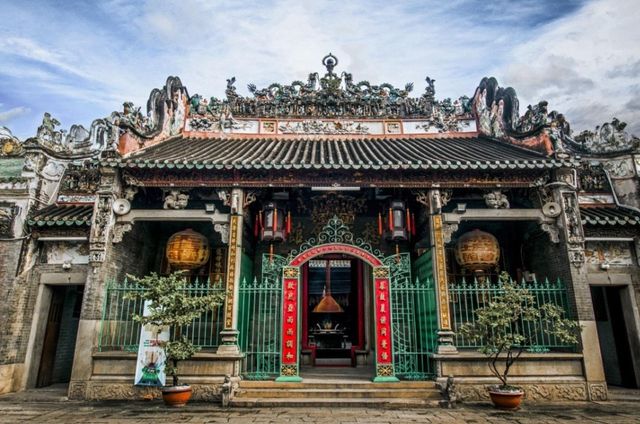
The temple was built in the shape of a Chinese seal (resembling the character 'Quoc' 国 or 'Khau' 口) characteristic of Chinese architecture: a complex of 4 connected halls including Front Hall – Middle Hall – Rear Hall, with a skylight courtyard (tian jing) in the center for ventilation, clearing incense smoke, and providing natural light.

Highlights:

  • Curved yin-yang tiled roofs, adorned with vibrant ceramic art added in 1908 (from Buu Nguyen and Dong Hoa kilns) depicting the Four Sacred Animals (Dragon - Phoenix - Turtle - Qilin), two dragons fighting for a pearl, and ancient folklore stories.
  • Front Hall: Three-door gate, altars dedicated to Fude Zhengshen and Gate Guardians, and stone steles recounting the legend of Thien Hau.
  • Middle Hall: A set of five cloisonné incense burners (1886), along with gilded red-lacquered palanquins and dragon boats.
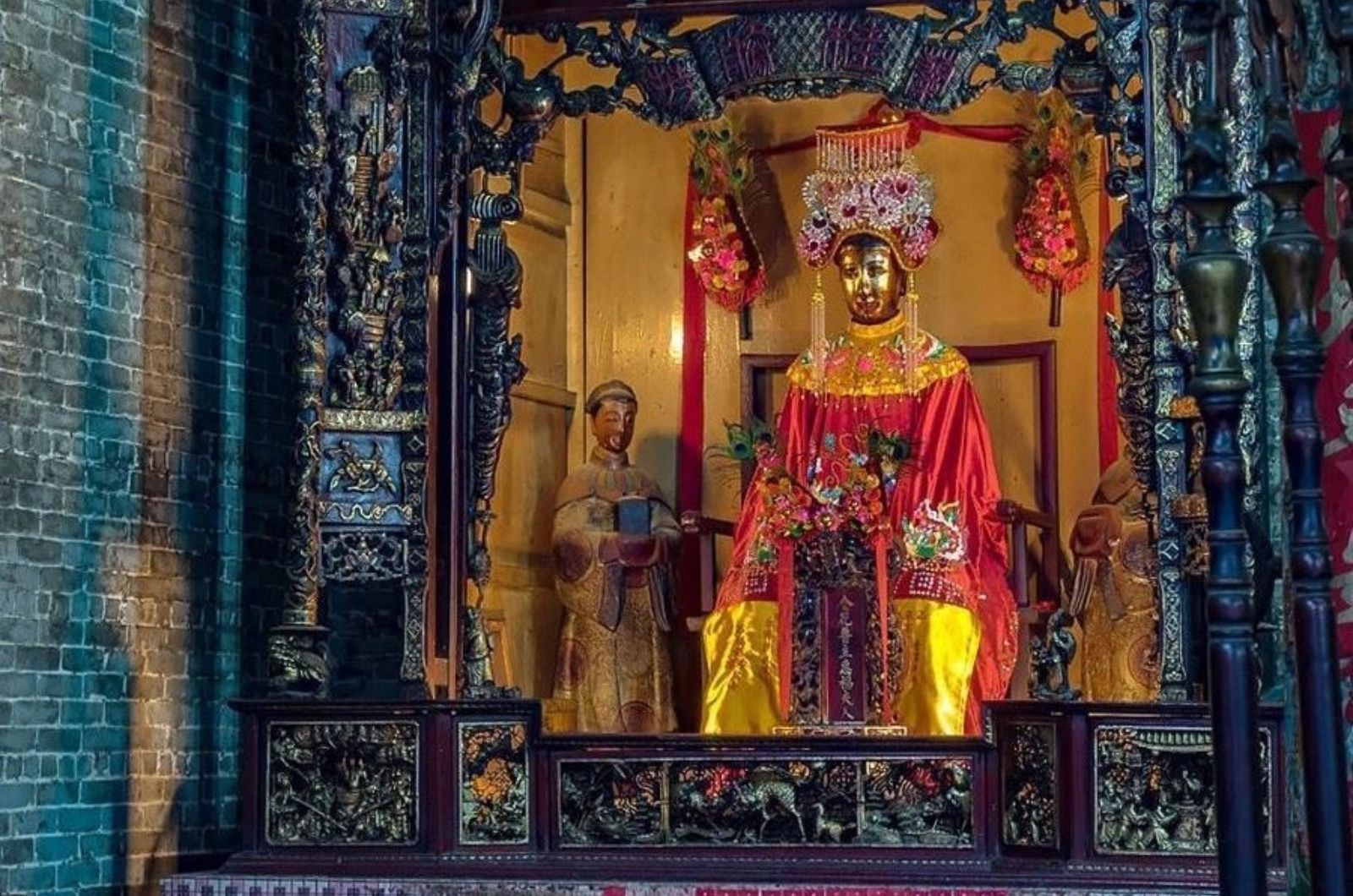
  • Rear Hall (Main Sanctuary): A statue of Lady Thien Hau carved from a single block of wood approximately 1m tall (relocated from Bien Hoa in 1836), flanked by Jinhua Niangniang and Longmu Niangniang. Two side chambers worship Guan Yu, Ksitigarbha, and God of Wealth.

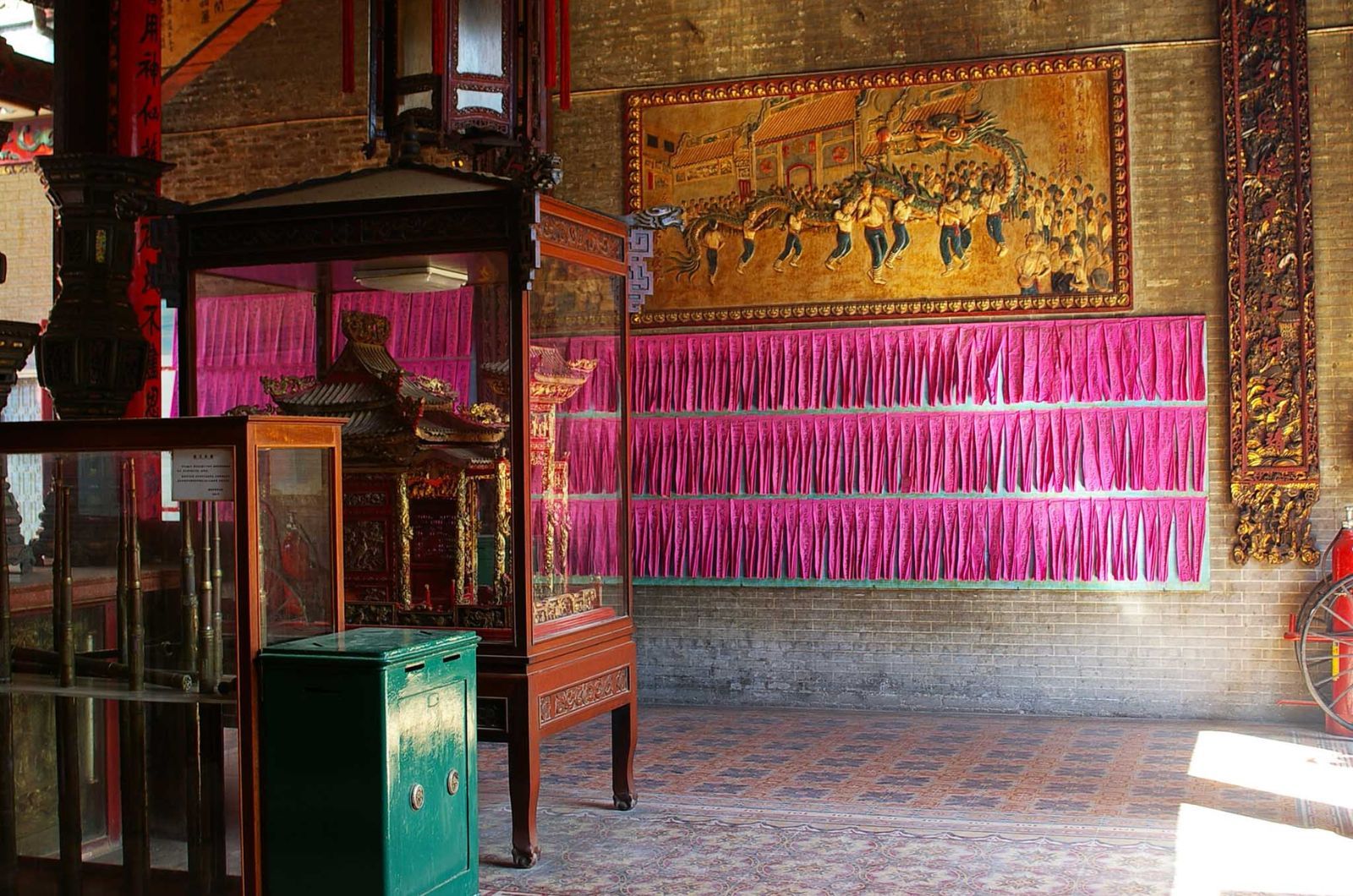
The entire complex features intricate carvings, red-and-gold horizontal lacquered boards, couplets, relief panels, and dense ceramic statues – a masterpiece of Chinese architecture and sculpture in the heart of Saigon. The temple also preserves hundreds of precious antiques such as bronze bells, incense burners, and relief paintings.

Experience in Offering Incense and Praying for Peace at Thien Hau Temple

Offering incense at Thien Hau Temple is not only a spiritual ritual but also an opportunity for visitors to find inner peace and express good wishes. When visiting the temple, you can prepare simple offerings such as incense, fresh flowers, fruits, or pastries, which are sold in the area around the temple gate.

  • Preparation: Simple offerings (incense, flowers, fruits, sweets). Can be purchased outside the gate.
  • Order of worship: Light incense at Front Hall - Middle Hall - Main Sanctuary (worshipping Lady Thien Hau). Sincerely pray for peace, health, career success, and love.
  • Praying for love: Many people visit on the full moon or the Lady's festival day, writing their wishes on red ribbons to hang.
  • Notes: Focus on sincere devotion and avoid noise. After offering incense, you can draw fortune sticks or walk around the temple courtyard to admire the architecture.
Dâng hương tại miếu Bà Thiên Hậu
Photo: Offering incense at Thien Hau Temple 

Thien Hau Temple is not only a renowned religious site of the Chinese community in Ho Chi Minh City, but also a destination rich in historical, cultural, and architectural value. From the sacred atmosphere and delicate carvings to vibrant traditional festivals, this place offers visitors a chance to discover a unique part of Cho Lon's over 250-year-old heritage. Hopefully, this detailed A-Z Thien Hau Temple travel guide will help you best prepare for your visit and experience.

If you want to save time and explore more thoroughly, visitors can choose the all-inclusive Thien Hau Temple tour by Sovaba Travel with a well-planned itinerary, combining visits to Thien Hau Temple, Binh Tay Market, Nghia An Assembly Hall, and exploring the distinctive culture and cuisine of Cho Lon. Additionally, don't forget to check out Ho Chi Minh City Tours, Ben Thanh Market Tour, Independence Palace Tour, Notre-Dame Cathedral – City Post Office Tour, or Cu Chi Tunnels Tour for more memorable experiences in the city named after Uncle Ho.

Articles related to Thien Hau Temple