Dinh Độc Lập
TRAVEL GUIDEIndependence Palace

The Independence Palace is not only one of the iconic architectural structures of Ho Chi Minh City but also a historical witness closely associated with important milestones of the Vietnamese nation. Each year, it attracts millions of domestic and international tourists who come to explore the country's heroic past and admire the unique architecture deeply marked by its era. However, to have a complete trip, knowing information about ticket prices, opening hours, outstanding sightseeing areas, and experiences for exploring the Independence Palace is extremely essential.

In the article "The Ultimate Guide to Visiting the Independence Palace from A to Z", Sovaba Travel will accompany you in exploring all the most useful information, from its history of formation, transportation guides, and visiting experiences to suggestions for quality tours and suitable itineraries. If you are planning to visit this special historical symbol in the near future, do not miss the detailed insights below to ensure a meaningful, convenient, and memorable journey in the heart of Ho Chi Minh City.
Where is the Independence Palace Located?

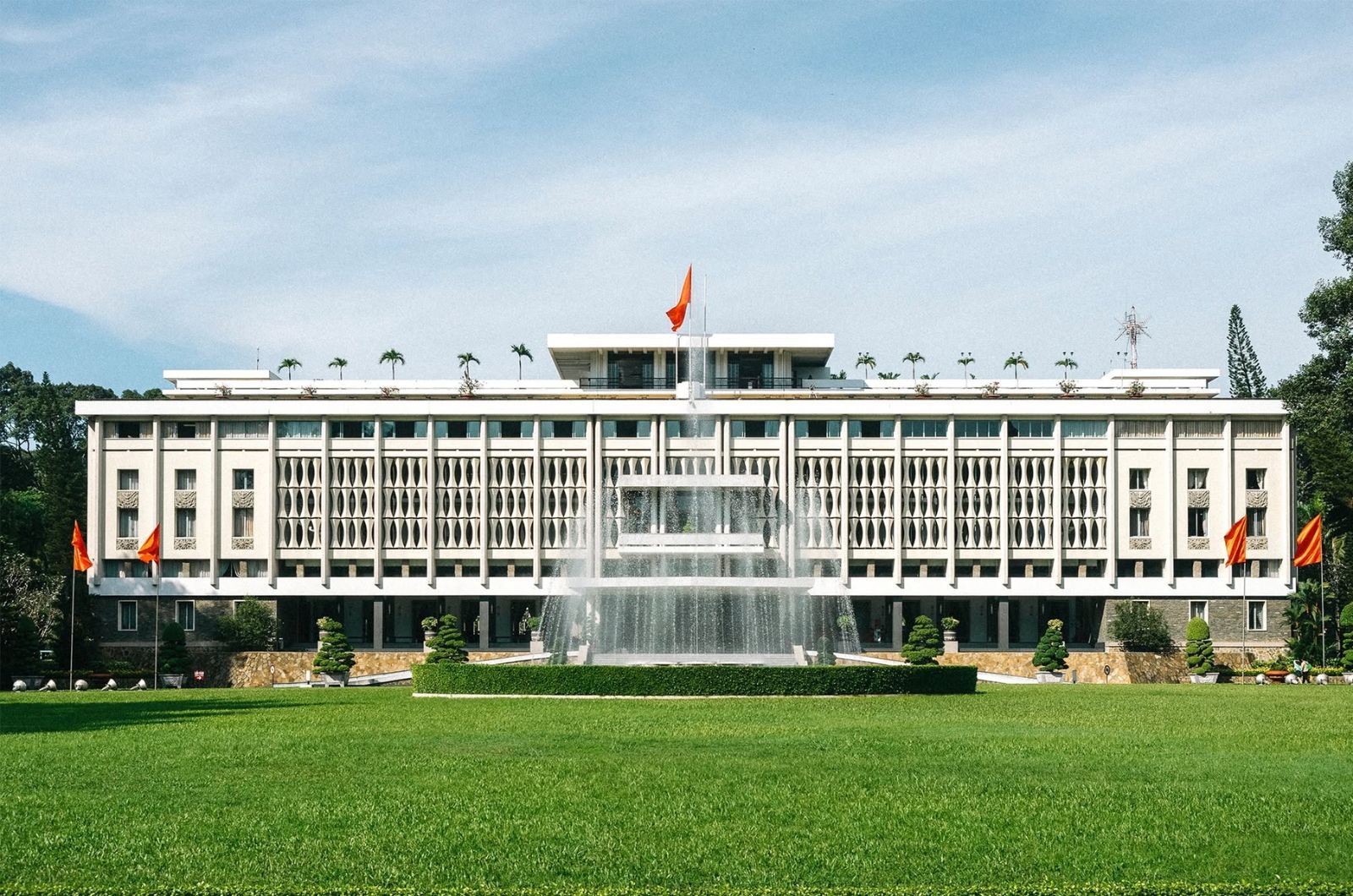
The Independence Palace is located at 135 Nam Ky Khoi Nghia Street, Ben Thanh Ward, Ho Chi Minh City, with a side entrance on Nguyen Du Street. Boasting a prime location right in the city center, this historic site is close to many famous landmarks such as Tao Dan Park, Notre-Dame Cathedral, Saigon Central Post Office, and Ben Thanh Market, making it convenient for visitors to combine sightseeing with exploring the vibrant life of District 1.

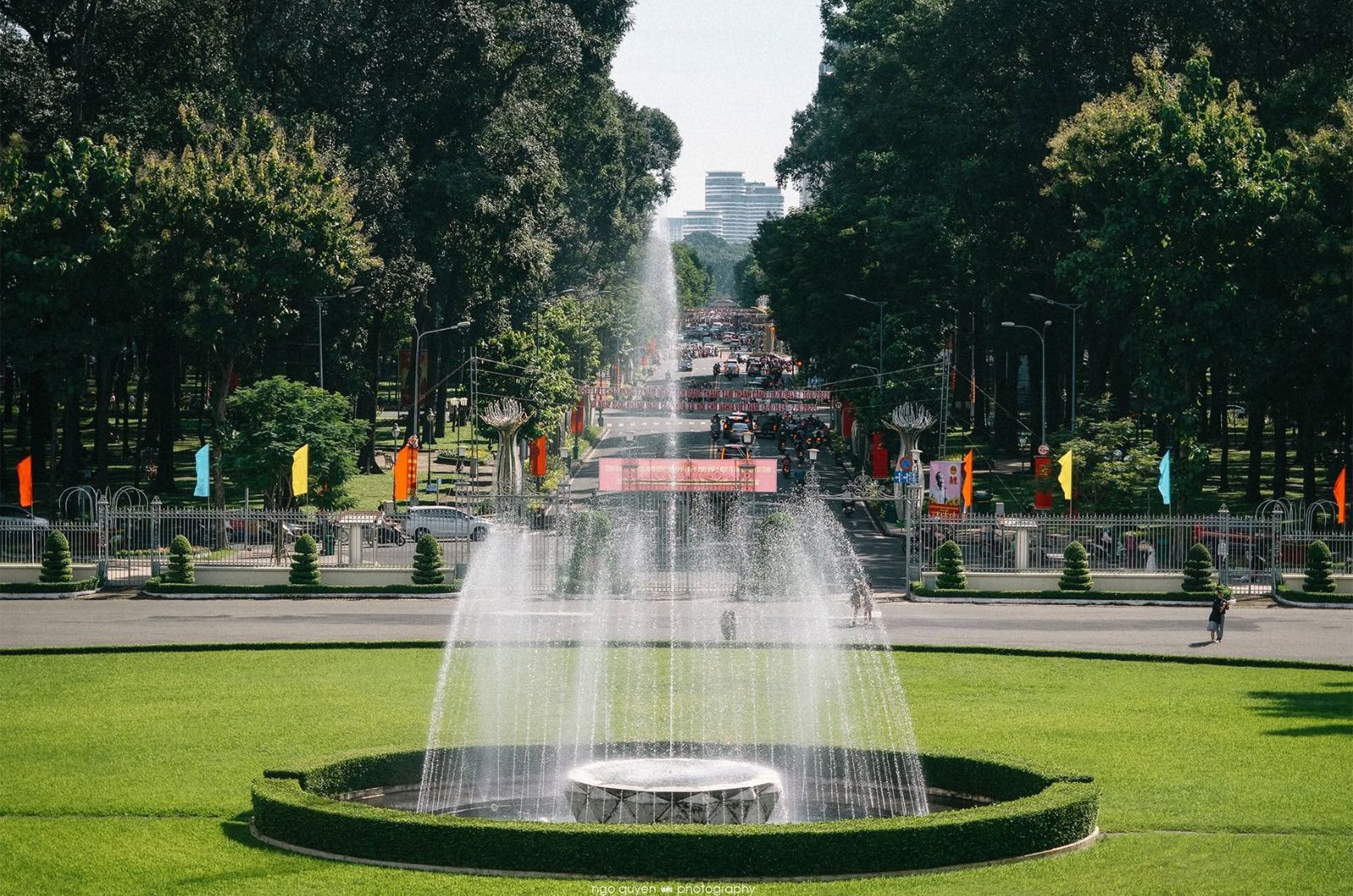
The Independence Palace was built on an area of approximately 12 hectares (equivalent to 120,000 m²), including the main building, a lush green garden system with ancient trees, fountains, and auxiliary structures. Not only a special national historical site, it is also an attractive destination for those who want to learn about history, architecture, and capture memorable moments during their journey exploring Ho Chi Minh City.

The Independence Palace is located right in the city center
Photo: The Independence Palace is located right in the city center 

History and Significance of the Independence Palace Through the Ages

Having weathered many shifts in national history, the Independence Palace is not only an exemplary architectural work but also a witness to crucial milestones in the struggle for national independence and reunification. Each development phase of the Palace is closely associated with events of special significance in Vietnamese history.

  • French Colonial Period (1868 – 1954): The predecessor of the Independence Palace was Norodom Palace, constructed by French colonizers in 1868 and completed in 1871. This building served as the residence and workplace of the Governor-General of Cochinchina. Following the Geneva Accords in 1954, the Palace was handed over to the Vietnamese government and renamed the Independence Palace.
  • Republic of Vietnam Era (1962 – 1975): After a bombing raid severely damaged Norodom Palace on February 27, 1962, President Ngo Dinh Diem decided to construct a new palace on the same grounds. The building was designed by architect Ngo Viet Thu—the first Vietnamese to win the prestigious Grand Prix de Rome. Construction of the new palace began on July 1, 1962, and it was officially inaugurated in 1966, serving as the administrative center and presidential residence of the Republic of Vietnam.
  • Historical Event of April 30, 1975: The Independence Palace recorded a sacred moment when tanks 843 and 390 crashed through the main gates, marking the liberation of the South and the reunification of the country. The image of the victory flag flying atop the Palace roof became an eternal symbol of the aspiration for national peace and independence.
  • The Independence Palace Today: After 1975, the Palace was preserved almost intact and opened to public visitors and traditional educational activities. In 1976, the site was classified as a National Historical and Cultural Monument; in 2009, it became one of Vietnam's First Special National Monuments. Today, it houses over 3,700 valuable artifacts and serves as the venue for many important political and cultural events of the country.

Beyond its value as a sightseeing attraction, the Independence Palace stands as a symbol of sovereignty, peace aspirations, and national solidarity. Every step taken to explore this site not only helps visitors better understand Vietnamese history but also serves as an opportunity to further appreciate the values of independence and freedom painstakingly cultivated by past generations.

The Independence Palace is the venue for many historical events
Photo: The Independence Palace is the venue for many historical events 

How to Get to the Independence Palace: Most Convenient Travel Guide

Located right in central District 1, the Independence Palace is one of the most accessible attractions in Ho Chi Minh City. Depending on your needs and starting point, visitors can choose from various means of transportation to ensure a convenient and time-saving journey.

  • Motorbike or private car: This is a suitable choice for visitors who want flexibility in their schedule. You can park at the Palace's parking lot on Huyen Tran Cong Chua Street or nearby parking lots like Tao Dan Park.
  • Taxi and ride-hailing services: From Tan Son Nhat Airport, the distance to the Independence Palace is about 7 km, taking around 20 – 30 minutes depending on traffic. The cost ranges from approximately 100,000 – 150,000 VND/one way.
  • Public bus: Several bus routes such as 04, 05, 06, 109, 152... have stops near Ben Thanh Market or the Municipal Theatre. From there, visitors only need to walk about 5 – 10 minutes to reach the Palace.
  • Walking: If you are visiting nearby famous sights like Notre-Dame Cathedral or the Saigon Central Post Office, you can easily walk to the Independence Palace, covering a distance of only about 800 m – 1 km.

For a smoother sightseeing experience, visitors should avoid traveling during peak rush hours from 07:00 – 09:00 and 16:00 – 18:00, when traffic volume in the city center is usually heavy. Choosing the right transport mode and planning ahead will make your visit to the Independence Palace easier, comfortable, and complete.

Latest Entrance Ticket Prices for the Independence Palace

Before planning your visit to the Independence Palace, travelers should check the latest ticket pricing to properly organize their itinerary and budget. According to official information effective from January 1, 2026, the entrance fees are specified as follows:

Full site ticket (includes the Independence Palace and the thematic exhibition hall "From Norodom Palace to Independence Palace 1868–1966"):

  • Adults (ages 18 – 59): 80,000 VND/person
  • Seniors (aged 60 and above) and Vietnamese students: 40,000 VND/person
  • Children (ages 6 – 17): 20,000 VND/person

In addition, the Independence Palace also offers limited entrance tickets for visitors who only wish to tour a specific section, priced at approximately 50% of the full-access ticket. For greater convenience during your tour, electric shuttle services are available inside the grounds for 25,000 VND/ride.

Visitors need to purchase tickets to tour the Independence Palace
Photo: Visitors need to purchase tickets to tour the Independence Palace 

Opening Hours and Visiting Tips for the Independence Palace

Before visiting the Independence Palace, travelers should take note of operating hours and key regulations to ensure a smooth trip.

Opening hours: 07:00 – 18:00 daily, including weekends and holidays (except during special events).

Ticket sales hours: Nam Ky Khoi Nghia gate from 07:00, Nguyen Du gate from 08:00.

Best time to visit: Early morning or late afternoon to avoid the heat and crowds. Visiting duration typically ranges from 1.5 to 3 hours.

Tips when visiting:

  • Dress respectfully and appropriately for a historical site.
  • Do not bring food, drinks, bulky luggage, or prohibited items inside.
  • Do not touch artifacts and keep your entrance ticket throughout the visit.
  • Audio guides can be hired or guided tours joined to gain a deeper understanding of the building's history.
  • Comply with photography rules and staff instructions on site.

Preparing thoroughly before your visit will help you enjoy a fulfilling and meaningful experience at the Independence Palace.

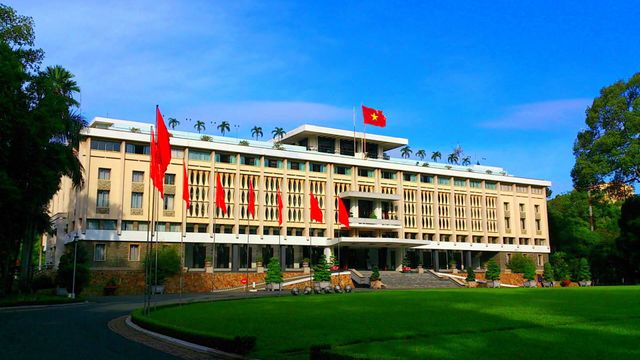
Exterior space of the Independence Palace
Photo: Exterior space of the Independence Palace 

Discovering the Unique Architecture of the Independence Palace

The architecture of the Independence Palace is a masterpiece designed by architect Ngo Viet Thu, harmoniously blending 20th-century modernism with traditional Oriental philosophy. Covering a usable floor area of 20,000 m² and standing 26m high, it features 3 main floors, 2 mezzanines, 2 reinforced underground basements, and a rooftop helipad.

Key Highlights:

  • Overall layout: Designed in the shape of the Sino-Vietnamese character Cat (good fortune and luck). The center forms the character Khau (emphasizing education and freedom of speech). Other architectural elements combined form the characters Vuong, Chu (national sovereignty), and Hung (prosperity).
  • Facade: Features stylized bamboo-joint stone slats and intricate bas-reliefs inspired by ancient Vietnamese architecture and pagodas.
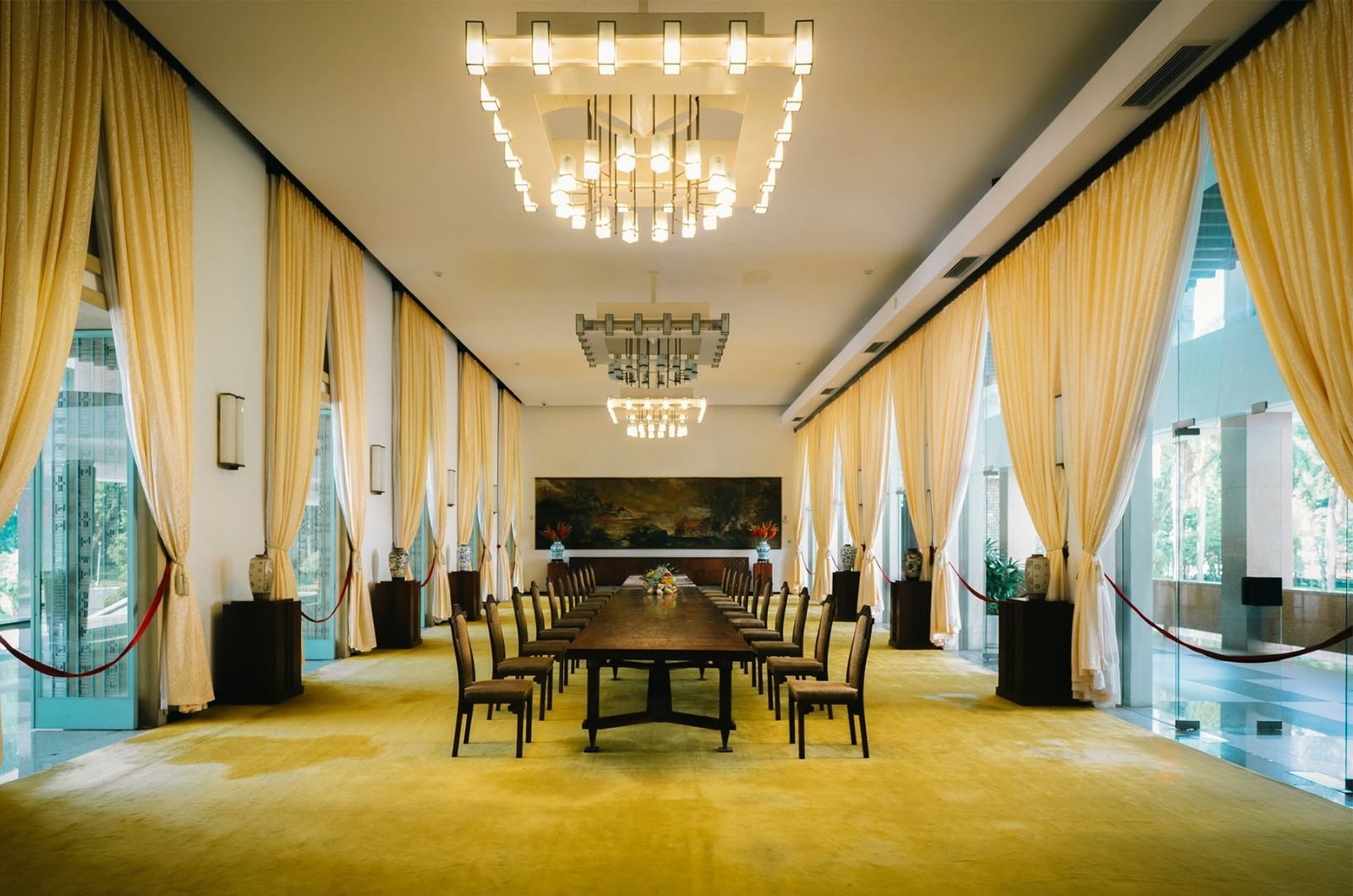
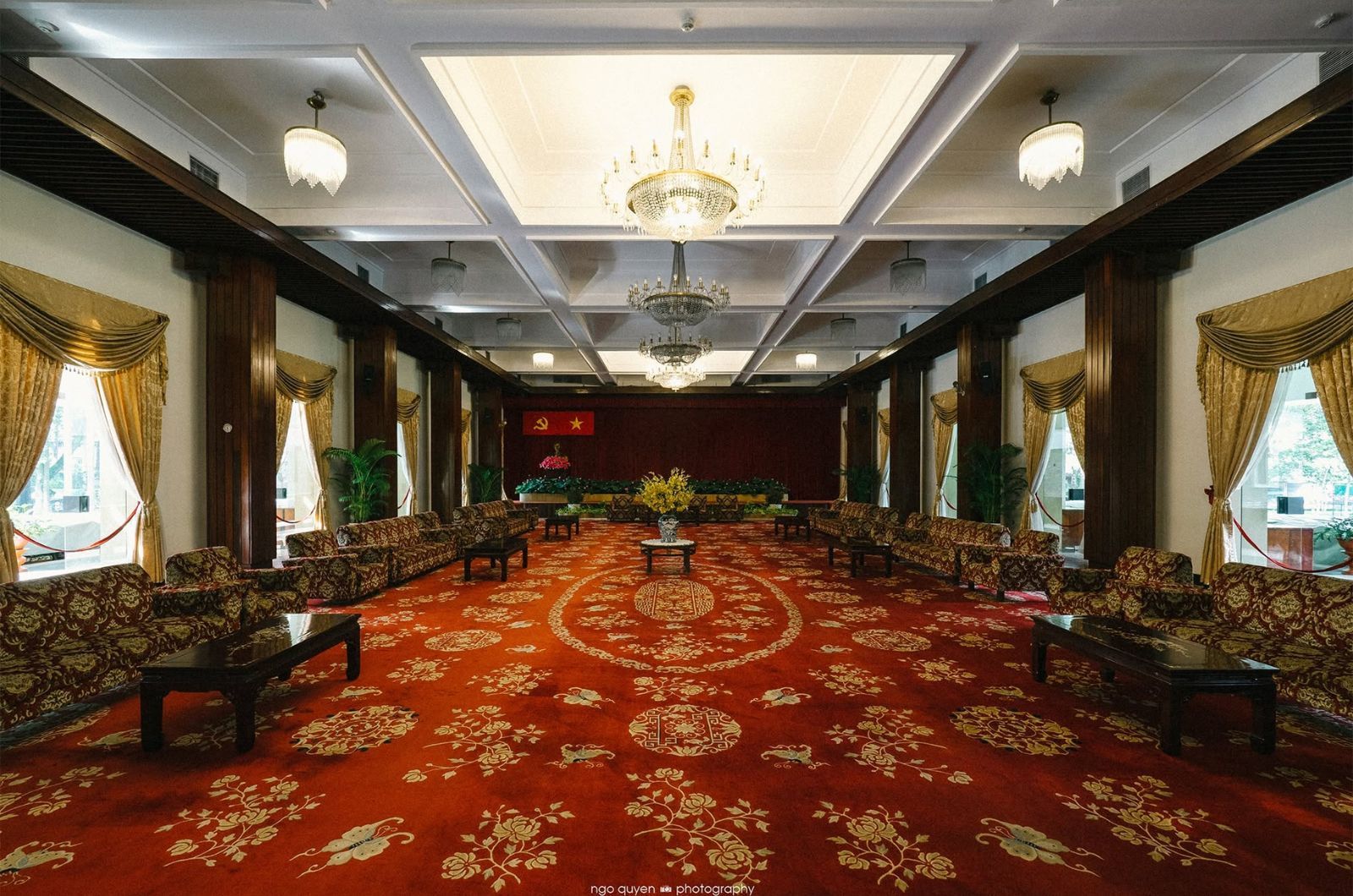
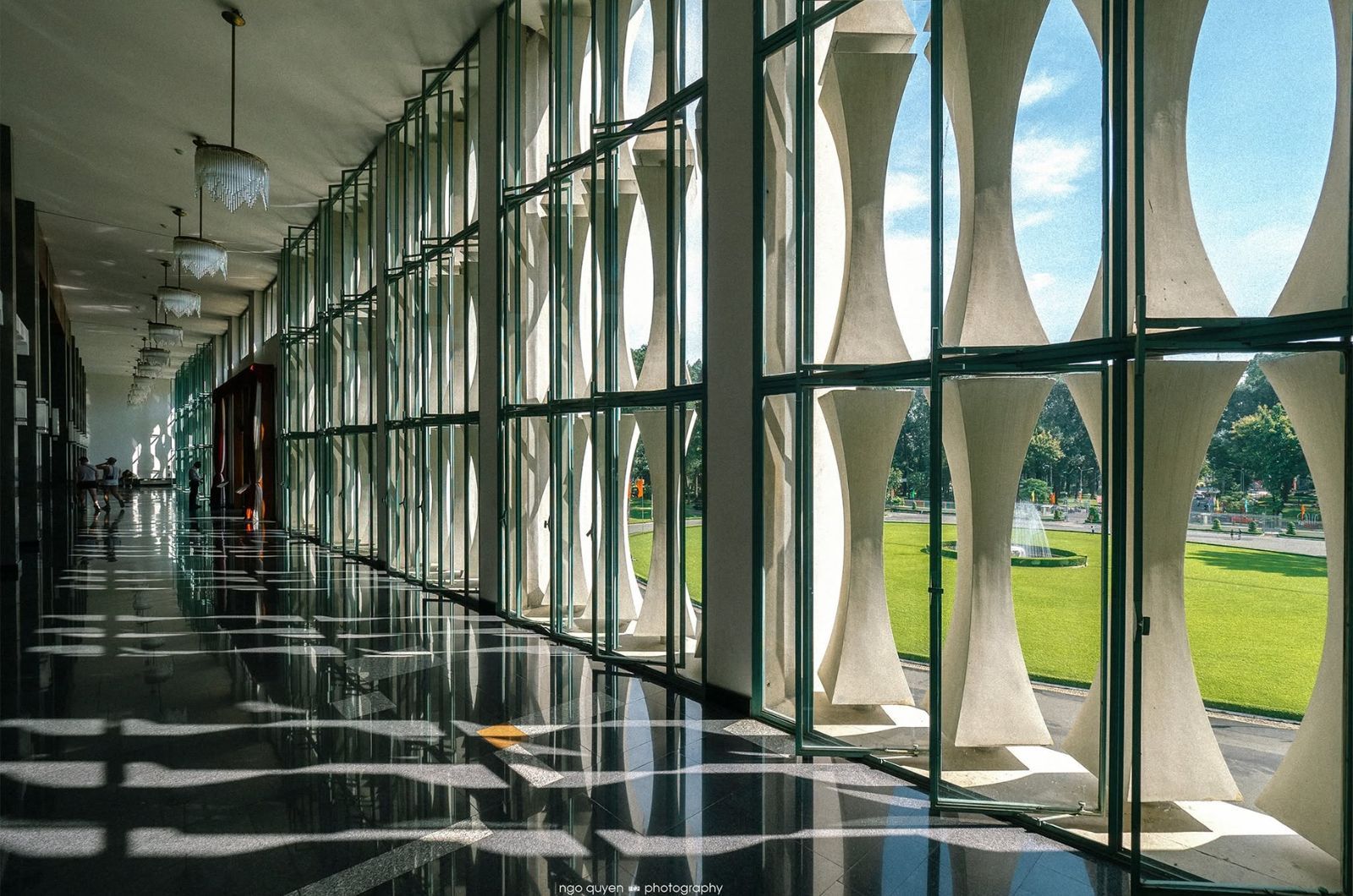
  • Interior: Over 100 rooms designed in diverse styles ranging from luxurious reception halls to modern conference rooms. The basement is a reinforced, bomb-proof command center.
  • Grounds: Ancient shade trees, lotus ponds, green lawns, and fountains create an airy, open atmosphere.

Visitors frequently check in at the main gate, rooftop, basement, and famous rooms such as the Reunification Hall and the President's Office.

Interior space of the Independence Palace
Photo: Interior space of the Independence Palace 

The Independence Palace is not only a unique architectural work in the heart of Ho Chi Minh City but also a witness to pivotal milestones in national history. With its vast space, valuable artifacts, and captivating historical narratives, this destination is ideal for cultural and historical enthusiasts as well as travelers seeking to explore an iconic city landmark. For a convenient and time-saving travel experience, you can opt for all-inclusive Ho Chi Minh City tours combining the Independence Palace with other famous attractions such as Notre-Dame Cathedral, Saigon Central Post Office, Ben Thanh Market, or the Cu Chi Tunnels. Well-arranged itineraries along with professional tour guides will help you gain deeper insights into the history, culture, and vibrant lifestyle of the city named after Uncle Ho.

Articles related to Independence Palace