Discovering Thieu Tri Tomb: An elegant painting in the heart of the ancient capital
Nestled in the peaceful scenery of poetic Hue, Thieu Tri Tomb is a very special heritage, preserving the unique values of the Nguyen Dynasty. The monument is not merely the final resting place of a gentle king but also like a poem carved in nature, with a delicate combination of simplicity and elegant beauty.
Interesting Facts About Thieu Tri Tomb
When delving deep into the unique historical and architectural features of Thieu Tri Tomb, an indispensable factor is its unique geographical location and surrounding landscape.
Geographical Location and Surrounding Landscape of Thieu Tri Tomb
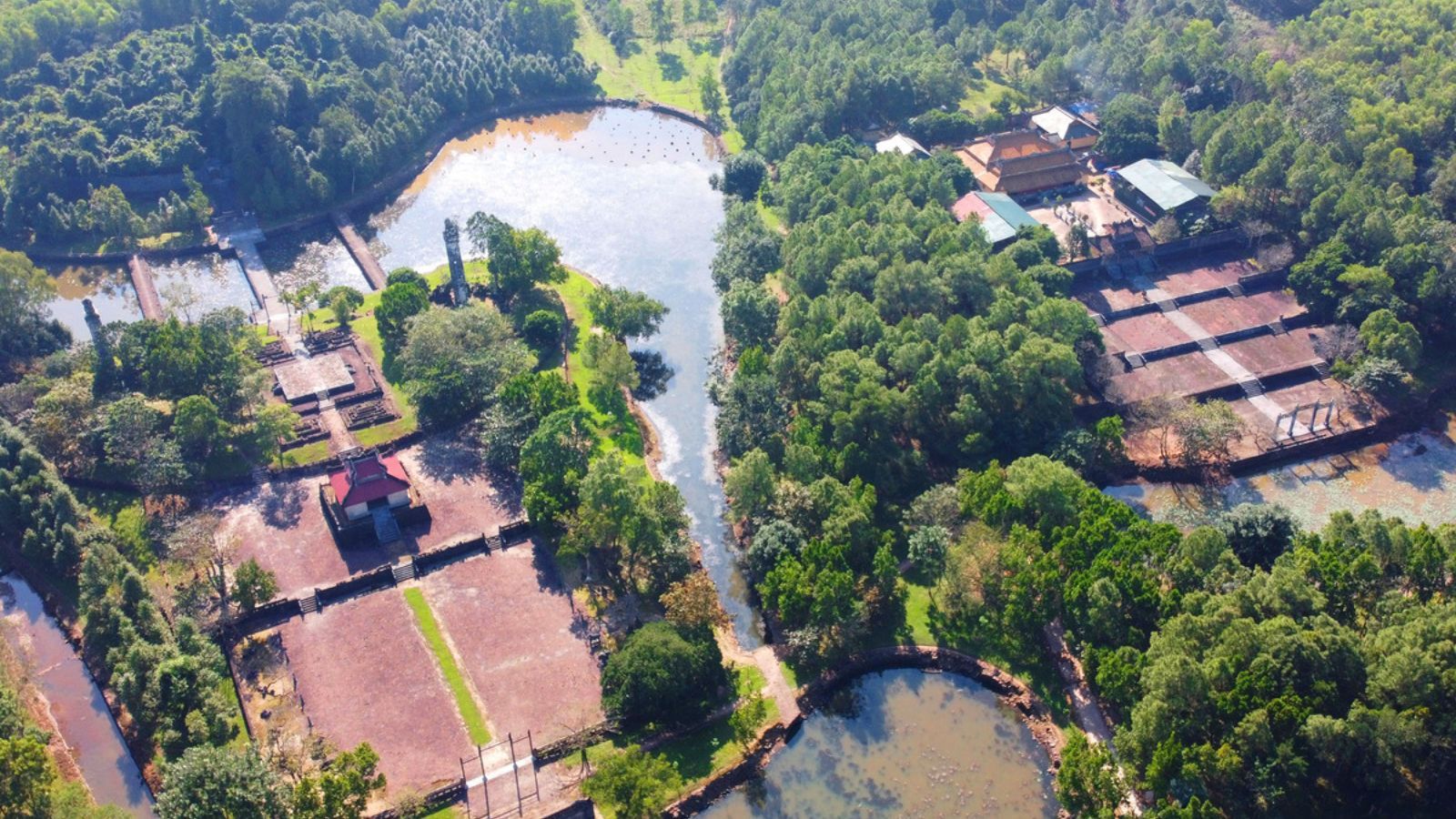
Thieu Tri Tomb is located in Cu Chanh Village, Thuy Bang Commune, Huong Thuy District, about 8 km west of Hue city center. Unlike other royal tombs that are often situated in rugged mountainous terrain, Thieu Tri Tomb lies on flat land, facing lush green fields and embraced by rolling mountain ranges. This creates a peaceful and poetic setting, seamlessly blending nature with architectural design.
Surrounding the tomb are small streams and rice fields that turn golden during harvest season, forming a picturesque landscape. Nature plays a significant role in enhancing the tranquil and elegant beauty of the tomb. Visitors come here not only to tour a historical relic, but also to experience a serene atmosphere, far away from the hustle and bustle of modern life.
Thieu Tri Tomb is set amidst a poetic natural landscape.
Construction Process of Thieu Tri Tomb
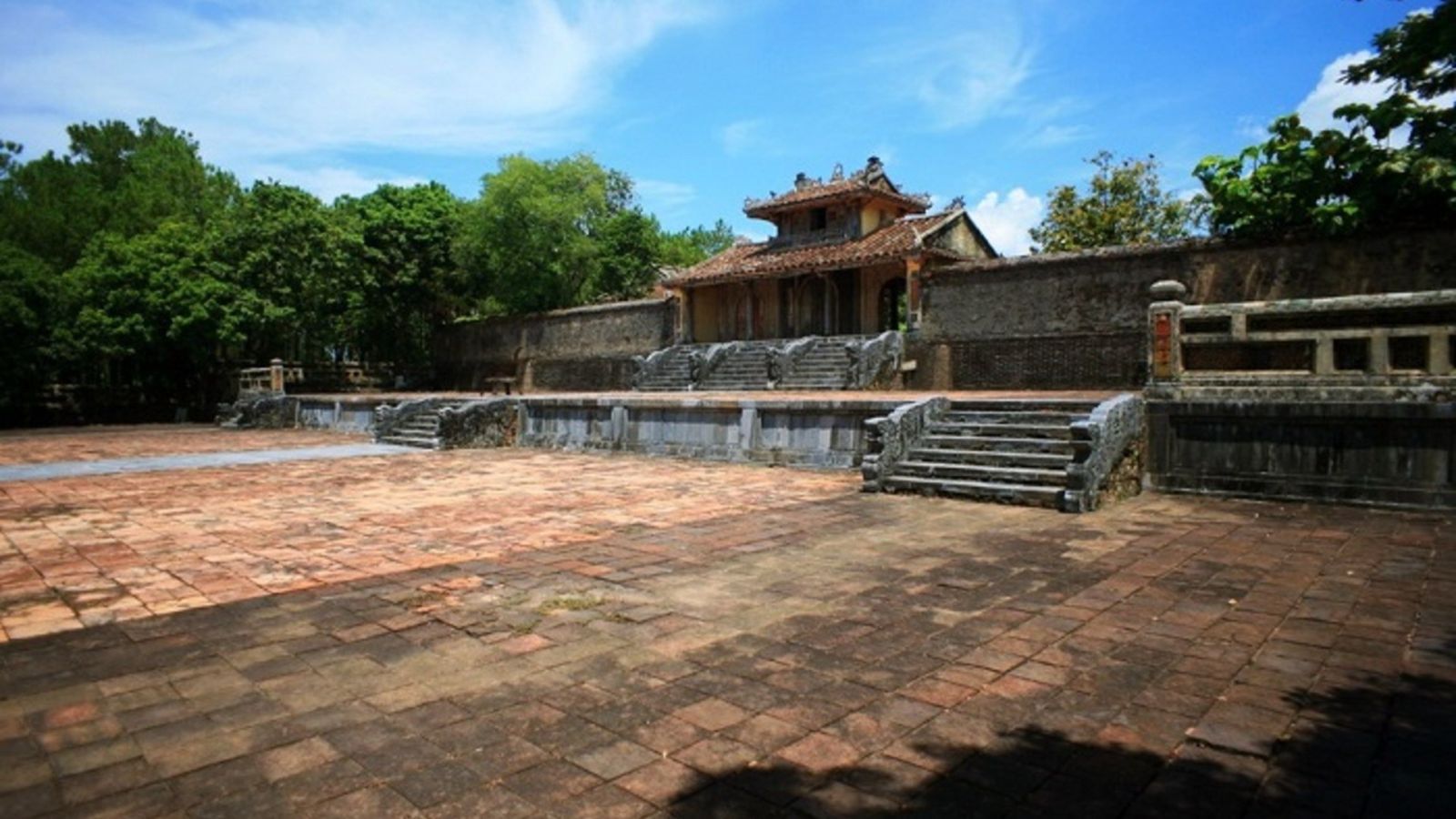
The construction of Thieu Tri Tomb began in 1847, shortly after Emperor Thieu Tri passed away. Remarkably, the tomb was completed in just 10 months, much faster than other royal tombs. Emperor Thieu Tri wished for his tomb to maintain simplicity without being overly ostentatious; thus, the structure focused not on grandiosity but on gracefulness and harmony with nature. The entire complex was designed based on the balance between mountains, rivers, and fields, creating a peaceful and elegant space.
Thieu Tri Tomb was built in a short time yet meticulously crafted.
Thieu Tri Tomb in the Cultural and Spiritual Flow of Hue
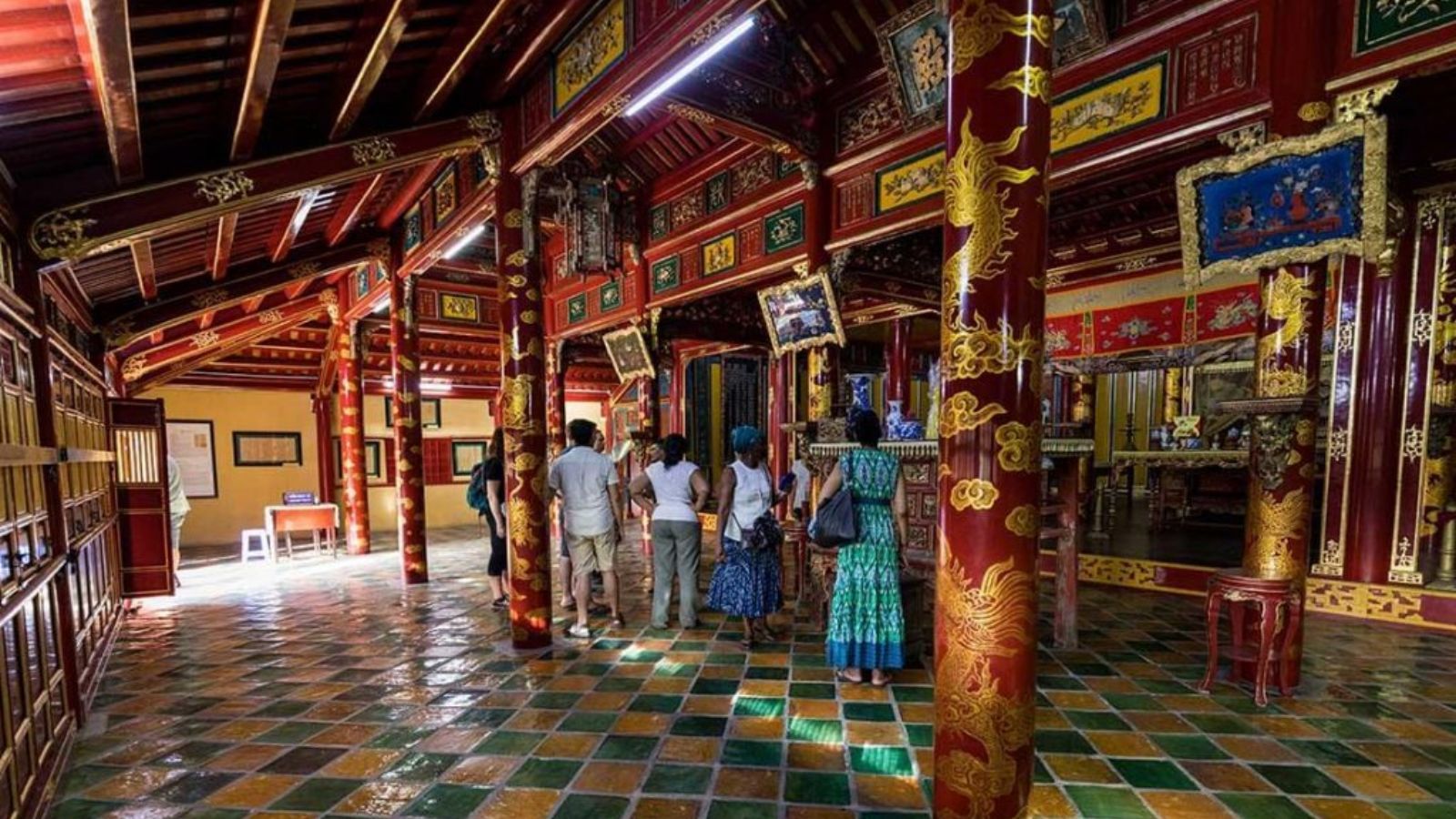
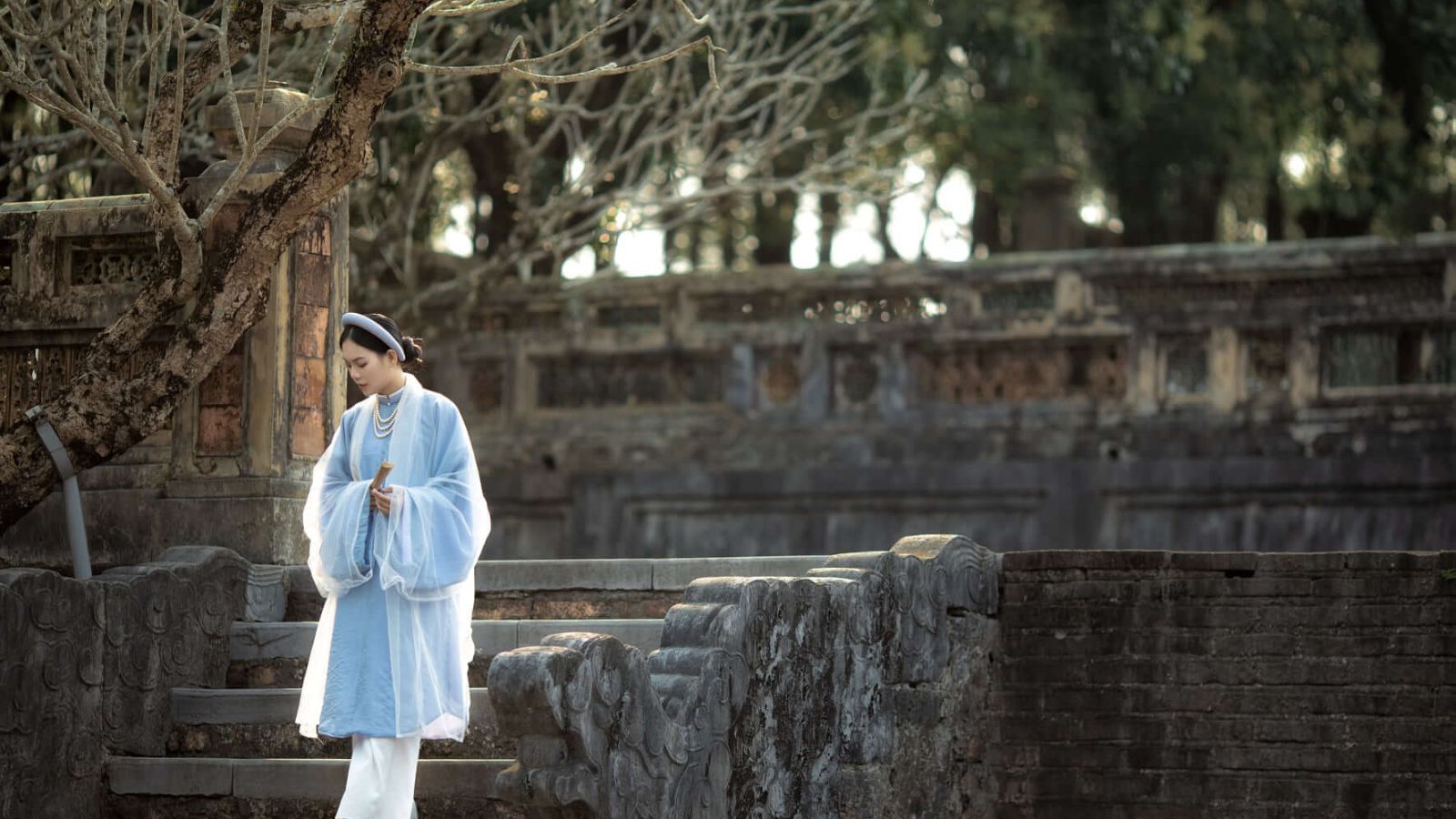
Thieu Tri Tomb is not only the resting place of an emperor, but also holds profound spiritual value. People in Hue often come here to offer incense, pray, and show respect to the Nguyen Dynasty emperors. This place is also considered a spiritual pilgrimage destination, where traditional culture and gratitude to ancestors are preserved and passed down through generations.
Although Emperor Thieu Tri did not achieve as many major military or political accomplishments as his predecessors, his virtuous character left behind a cherished legacy. His tomb is not merely an architectural monument, but also a bridge connecting spiritual culture between past and present, between the temporal world and eternity.
Thieu Tri Tomb carries deep spiritual and cultural values.
Architecture of Thieu Tri Tomb: A Harmony of Simplicity and Elegance
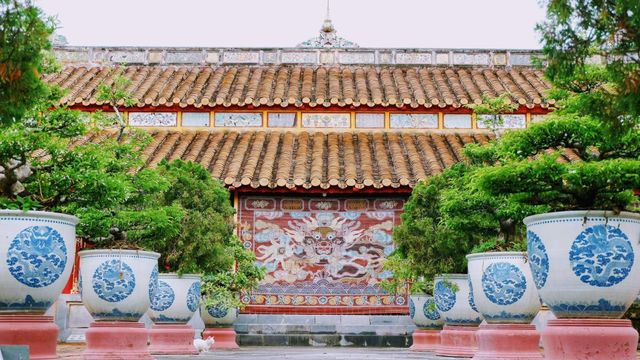
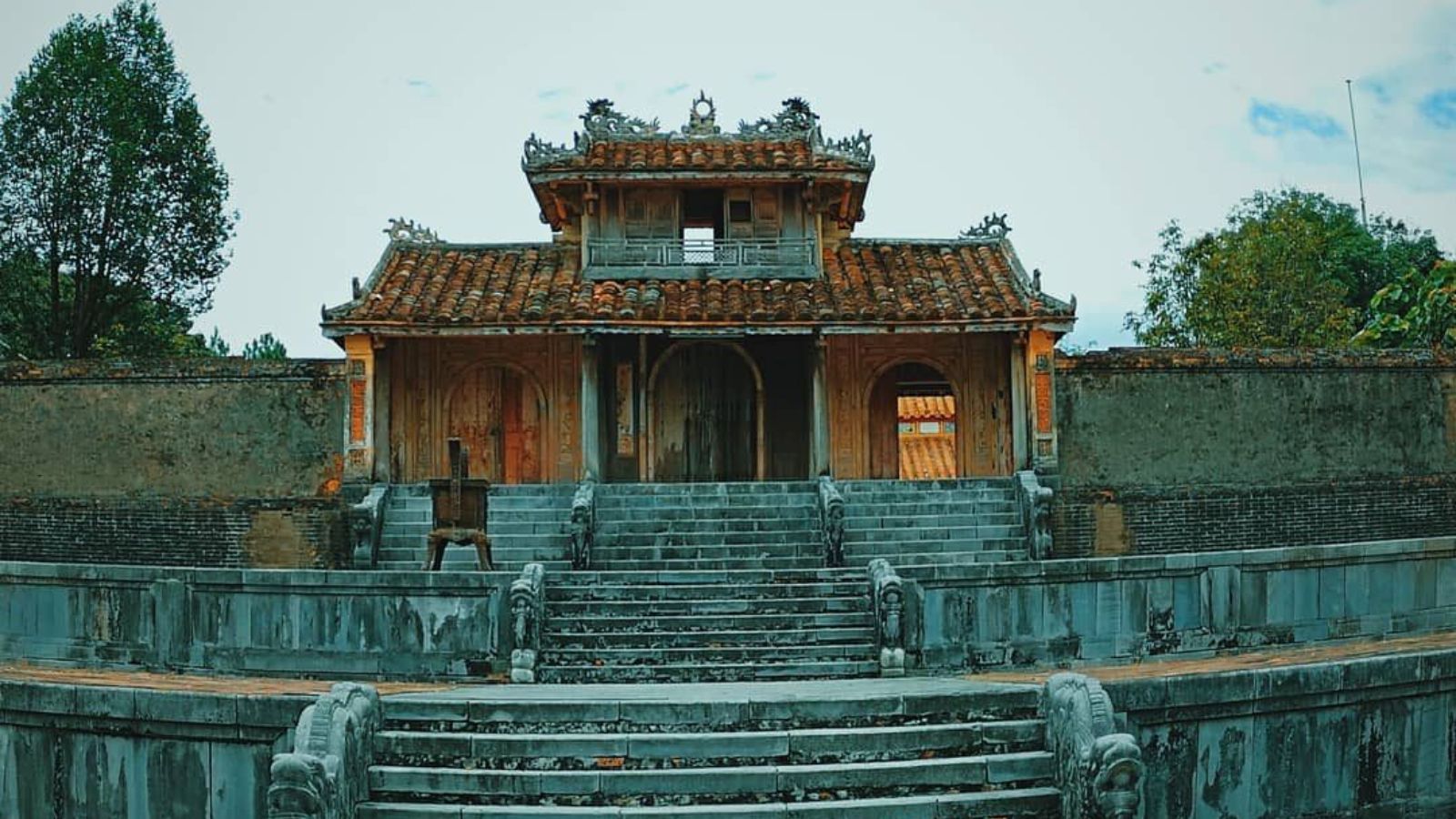
The architecture of Thieu Tri Tomb stands out for its harmonious blend of simplicity and refinement, reflecting the emperor's lifestyle and aesthetic philosophy. The tomb was constructed following the concept of "left dragon, right tiger", featuring the gently winding Perfume River on the left and majestic mountain ranges on the right providing natural protection. Major structures within the tomb, such as Buu Thanh and Bieu Duc Temple, bear a modest appearance—not overly intricate yet retaining elegance and solemnity. The system of gates, courtyards, and lakes is arranged symmetrically, creating an airy and light feel. Notably, the primary construction materials are baked bricks and blue slate stones, which not only ensure durability but also convey a sense of rustic closeness. Thieu Tri Tomb stands as a testament to the philosophy of "tranquility in simplicity," celebrating the beauty of humility and nature.
The architecture of Thieu Tri Tomb is simple yet exquisite.
Tips and Guidelines for Visiting Thieu Tri Tomb
Regarding transportation, from Hue city center, visitors can travel by motorbike, car, or taxi. The most convenient route is along National Route 1A towards the northwest, passing through green fields and rolling hills. When visiting Thieu Tri Tomb, guests should dress respectfully, maintain order, and refrain from littering to protect the environment. Additionally, bringing drinking water and hats/caps is recommended as the tomb complex is quite open and sunny. Another tip is to check the weather forecast in advance to avoid heavy rain, which could affect your sightseeing experience.
Visitors should prepare carefully for a complete experience at Thieu Tri Tomb.
Entrance Ticket Prices for Thieu Tri Tomb, Hue: Latest Update
The entrance fee for Thieu Tri Tomb in Hue is listed equally for both domestic and international tourists: Adult ticket: 50,000 VND/person; Children: free of charge. With this reasonable price, you will have the opportunity to admire the solemn space and learn about the life of the third emperor of the Nguyen Dynasty.
Exploring Thieu Tri Tomb is a wonderful journey to gain deeper insight into the cultural and architectural heritage of the Nguyen Dynasty. Let Sovaba Travel accompany you for a complete trip to discover the hidden charms of the ancient capital of Hue.