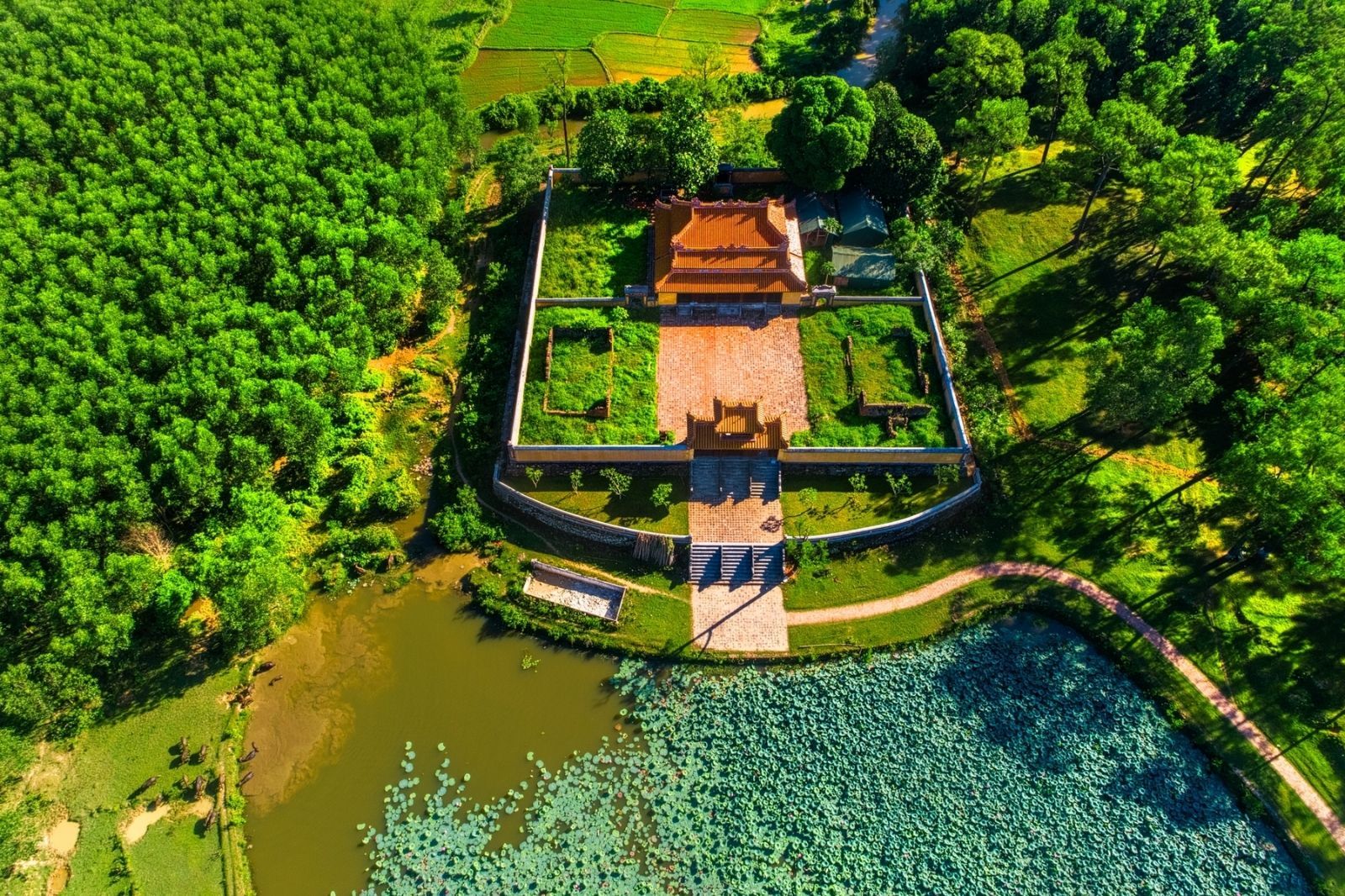
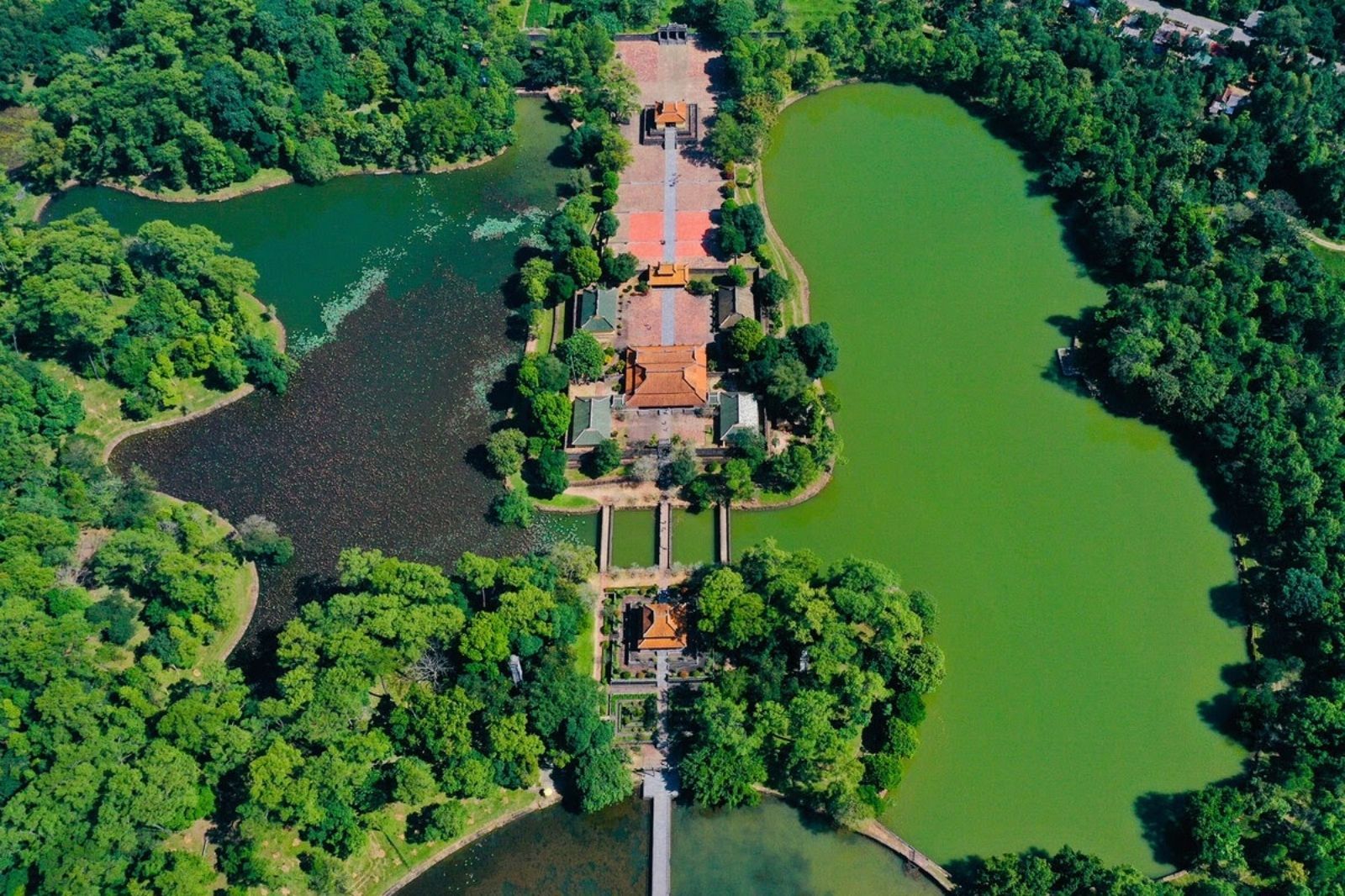
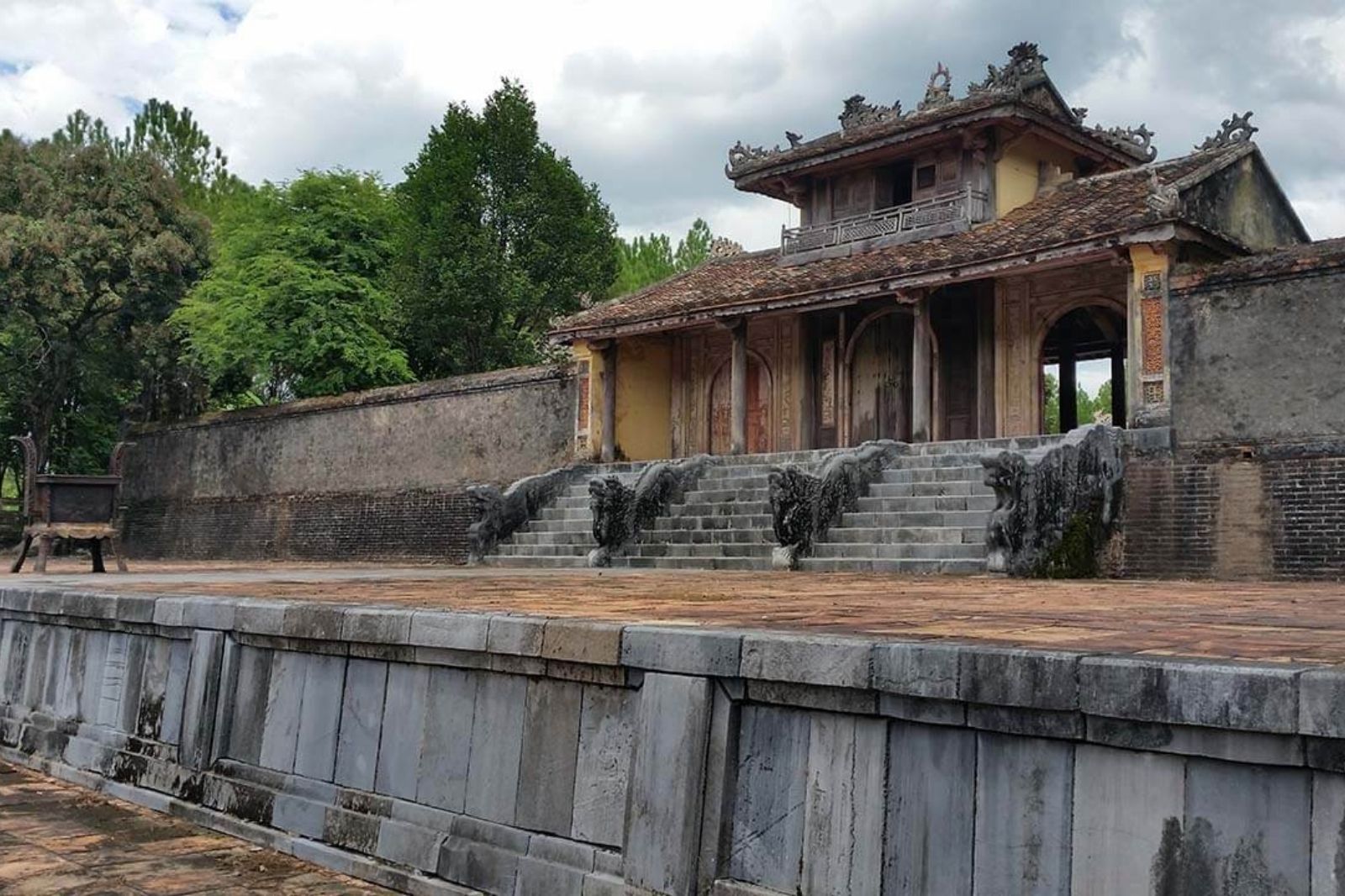
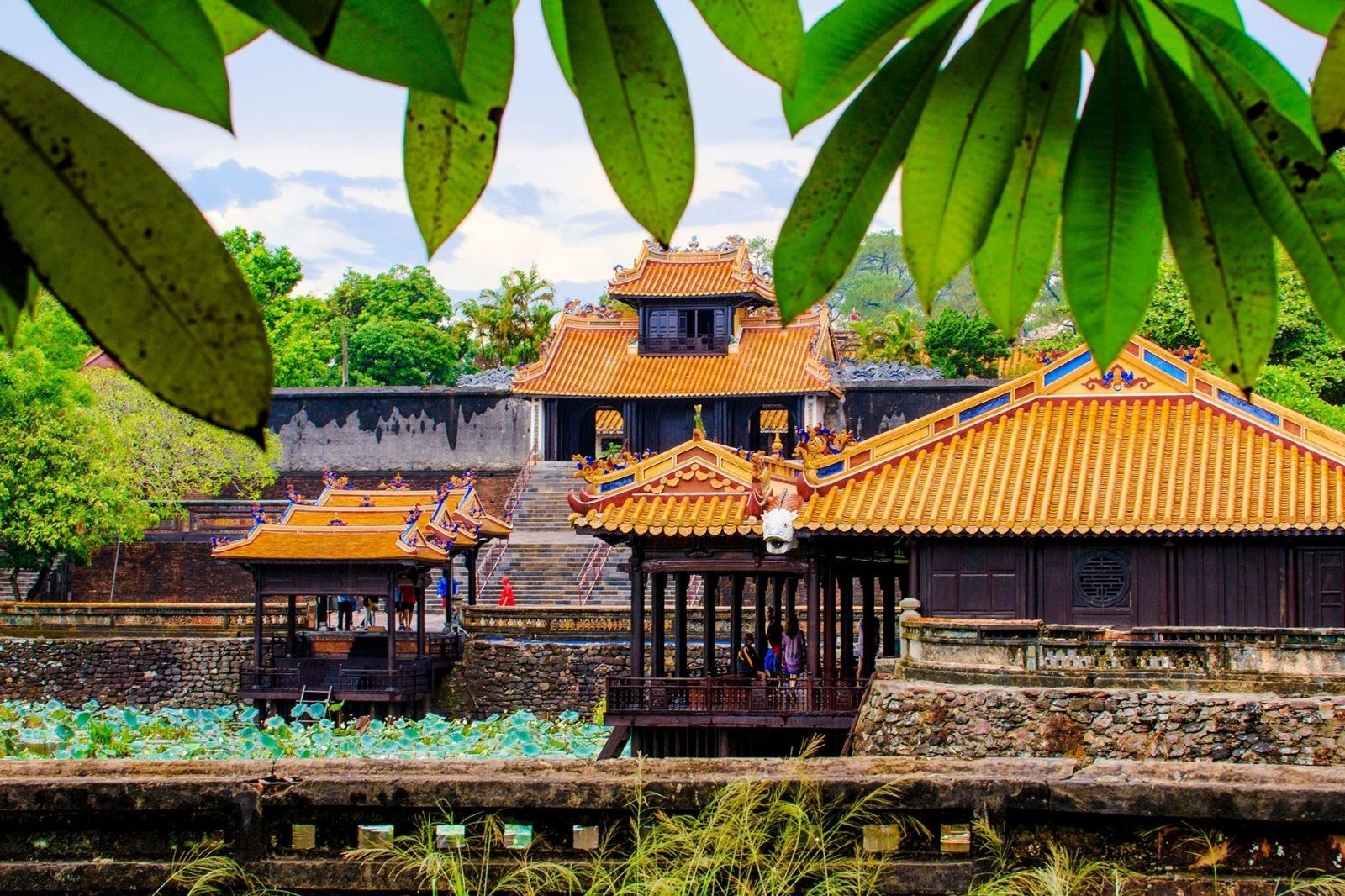
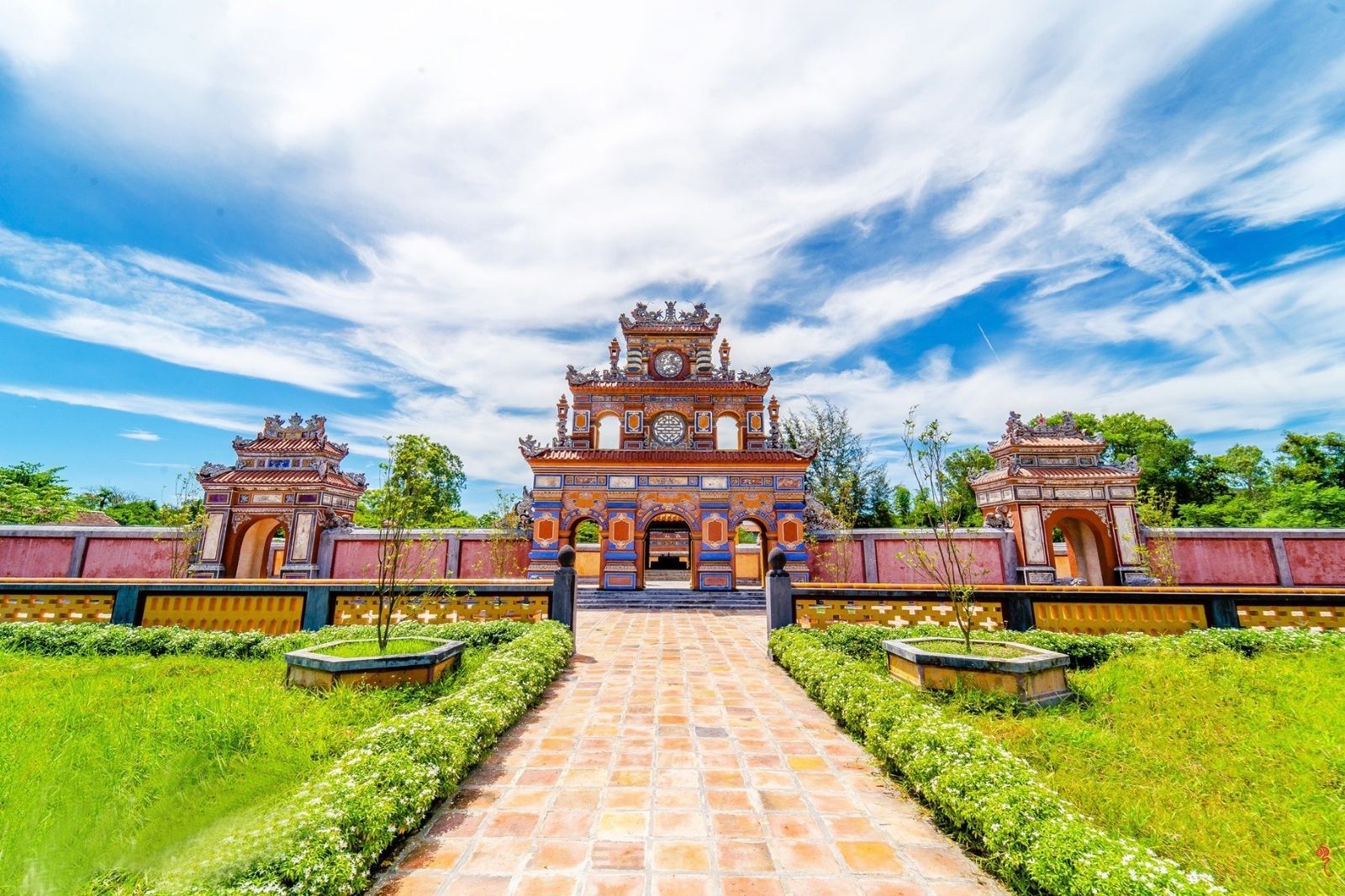
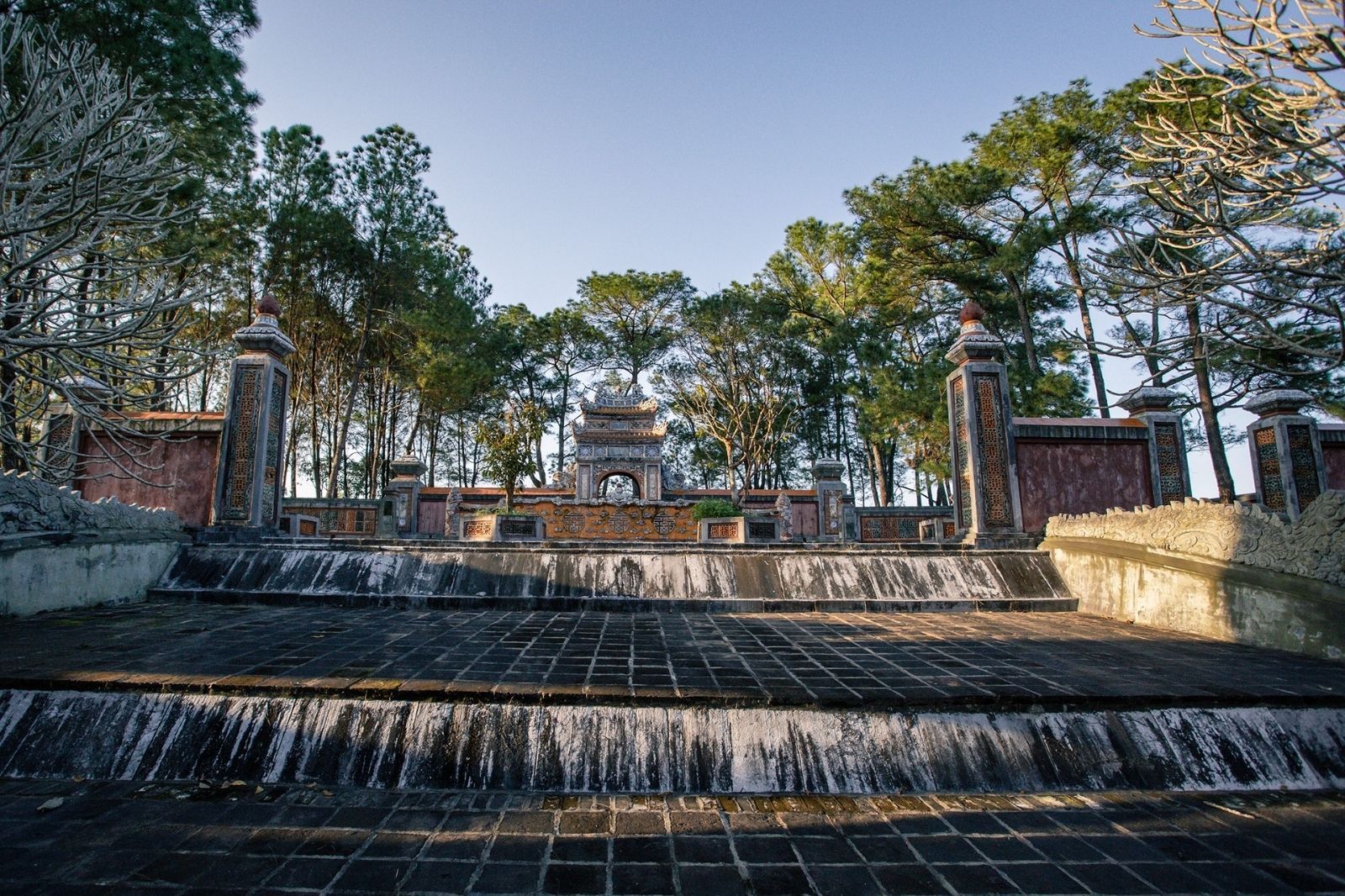
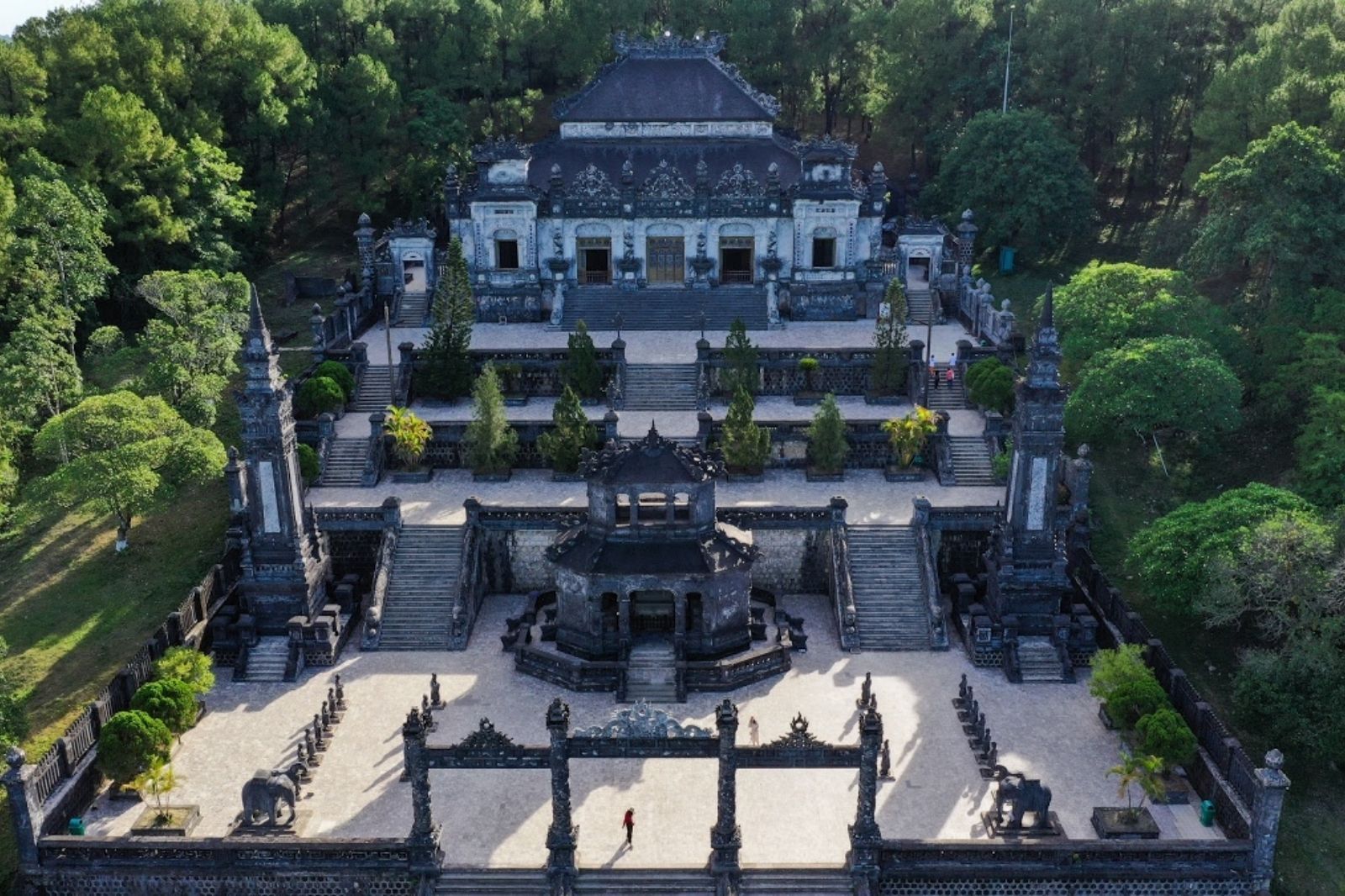
The Nguyen Dynasty – the last feudal dynasty of Vietnam – was founded by King Gia Long, who chose Hue as the imperial capital. Along with the Imperial Citadel, the royal tombs here are living proof of the architectural thinking, aesthetics, and cosmological concepts of the ancients. Each structure strictly adheres to Eastern feng shui principles: “son trieu thuy tu” (surrounded by mountains, gathering rivers), “tien an hau cham” (a front screen for protection, a mountain behind as a pillow), and “ta long huu ho” (green dragon on the left, white tiger on the right).
However, the tombs were not merely burial grounds; they were designed as a miniature palace where the king used to stroll, compose poetry, reflect on life, while embodying the philosophy of “sinh ky tu quy” (living is temporary, dying is returning to one's true home) imbued with Confucian and Buddhist spirits. The overall architecture is typically divided into three areas: the tomb area, the worship area, and the landscaped garden area, harmonizing with nature to create a majestic yet poetic space.
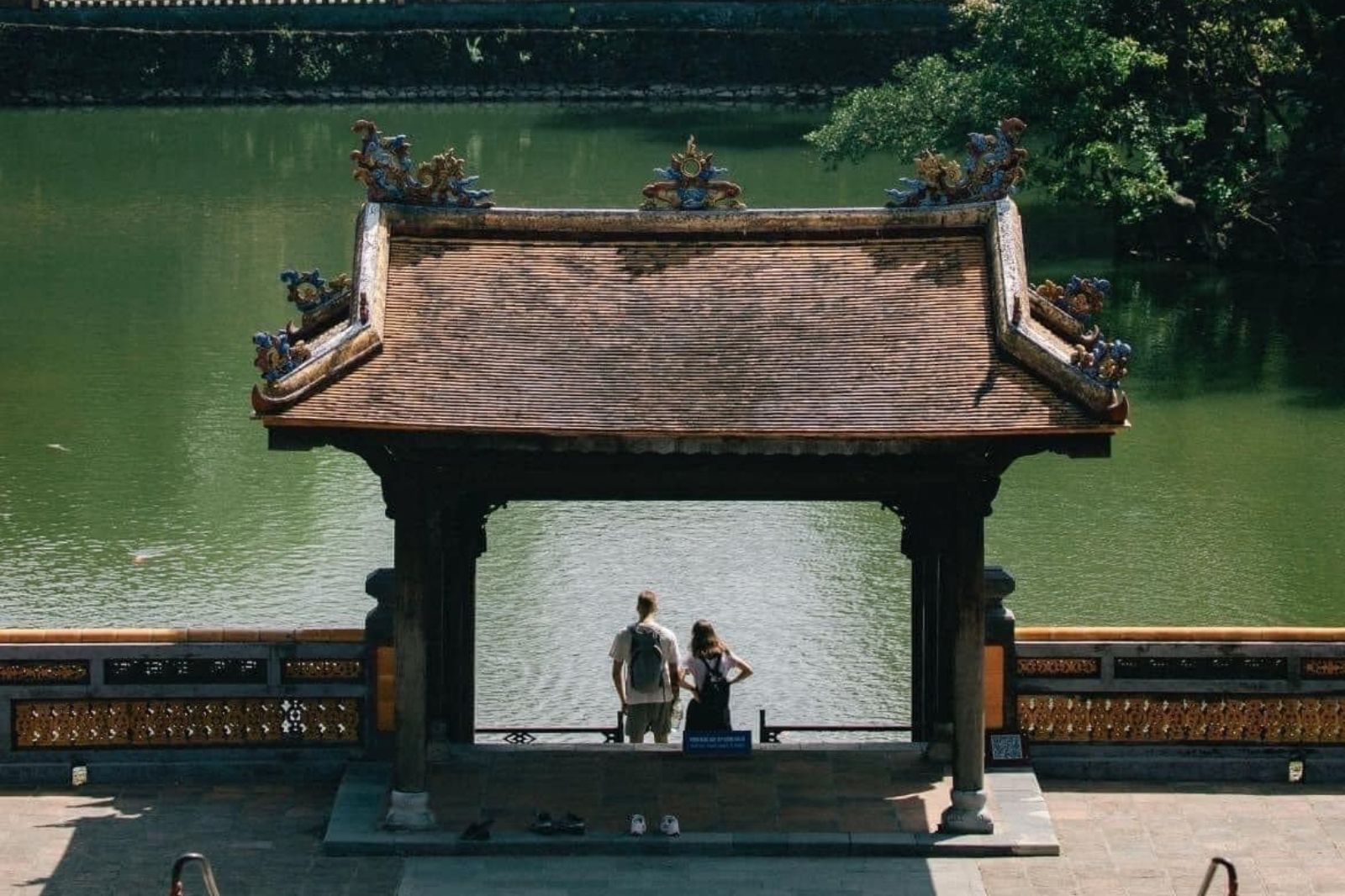
And now, join Sovaba Travel to discover in detail the 7 most prominent Hue royal tombs, which preserve the cultural, artistic, and soulful essence of the ancient capital.