Overall Architecture of Quang Tri Ancient Citadel through the Lens of History and Art

Central

Quang Tri

Quang Tri Ancient Citadel

Sovaba.travel

Updated at: 24/09/2026

1. Overview of Quang Tri Ancient Citadel

Quang Tri Ancient Citadel is located in the center of Quang Tri town, Quang Tri province, about 2 km east of National Highway 1A and beside the peaceful Thach Han River. Built during the reign of King Gia Long (1809) in Thach Han commune, the citadel was originally built of earth. By 1837, under the reign of King Minh Mang, it was rebuilt with bricks, becoming a solid architectural structure serving as the administrative and military center of Quang Tri province.

Throughout history, Quang Tri Ancient Citadel particularly made its mark with the fierce 81-day-and-night battle in 1972, where thousands of soldiers bravely sacrificed their lives to protect national independence. Their blood and bones soaked into every brick and every inch of soil here. Today, what remains of the Ancient Citadel is not only moss-covered walls or war relics, but also a sacred symbol, reminding us of a tragic yet heroic era of the nation. This monument has become a spiritual destination and a place for deep patriotic education for young generations today and tomorrow.
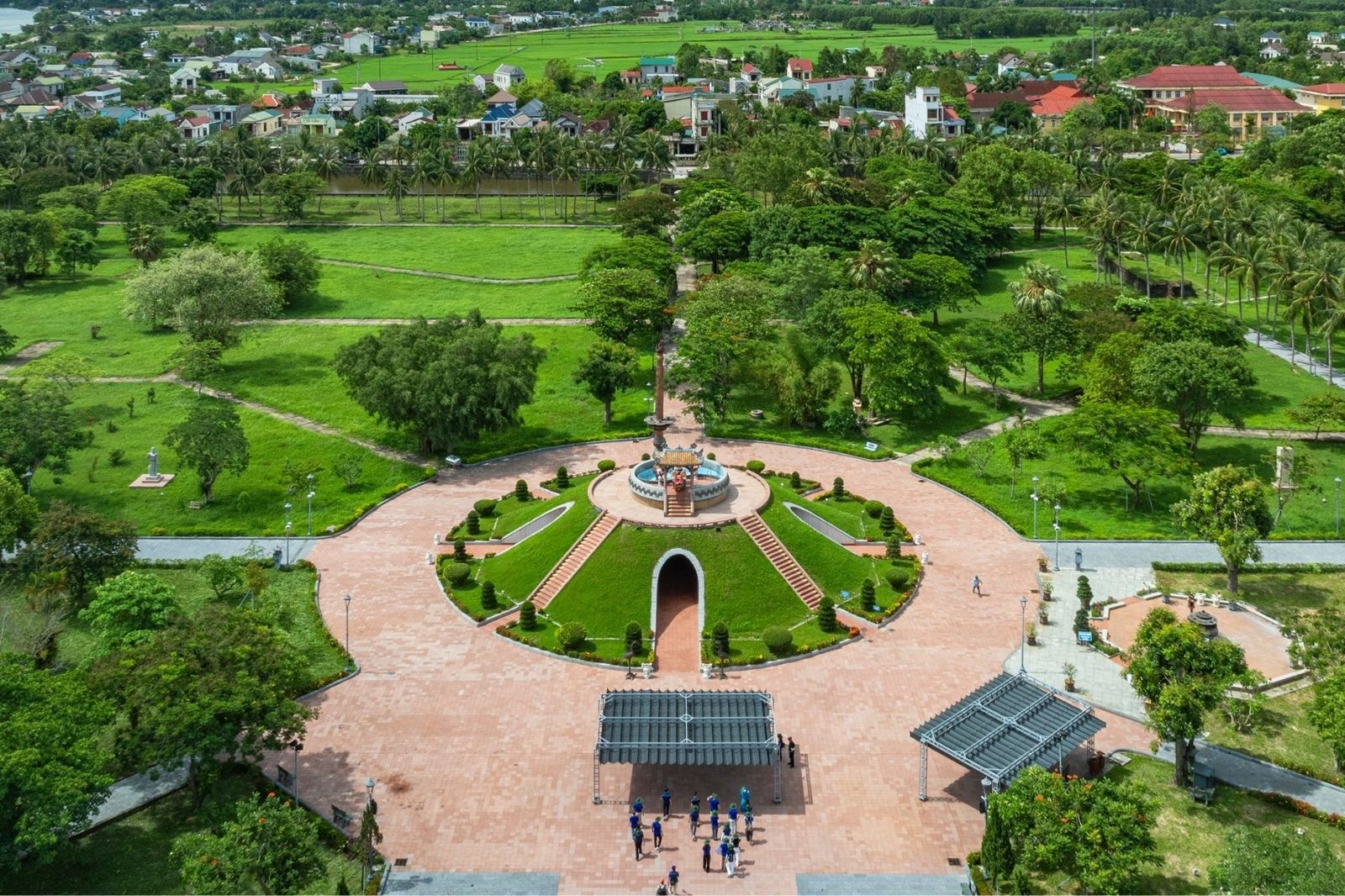
Architecture of the central memorial monument of the Ancient Citadel
Photo: Architecture of the central memorial monument of the Ancient Citadel 

2. Distinctive Square Architecture

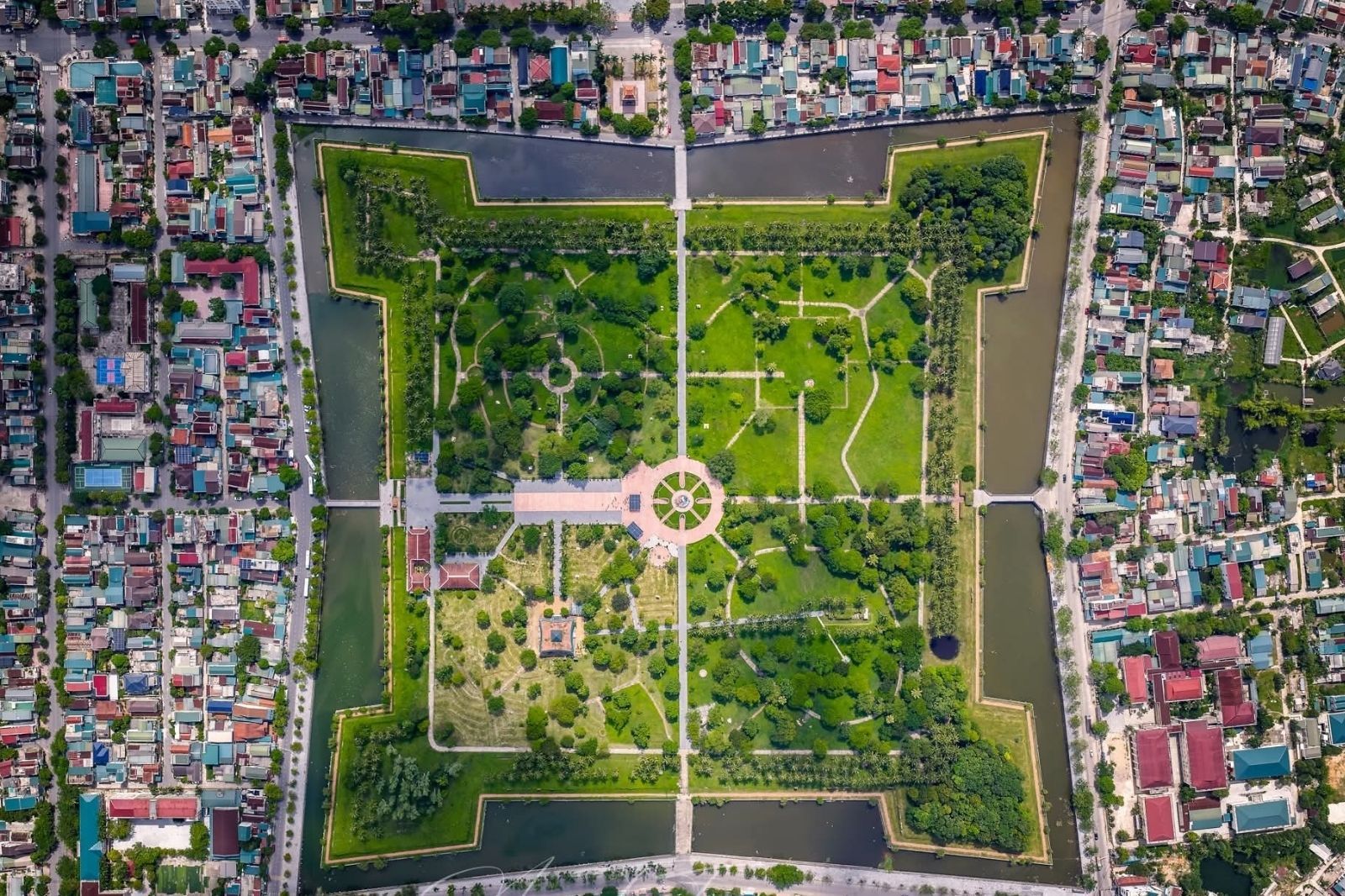
Quang Tri Ancient Citadel was designed in a square shape, a characteristic of Vietnamese citadel architecture under the Nguyen Dynasty, combined with the Vauban style, a famous European military defense model of the 17th-18th centuries. The perimeter of the citadel walls is about 2,160 m, with an average height of 4.3 m, a wall base thickness of over 12 m, and a wall top thickness of about 0.72 m.

  • Solid square shape: The square shape of the citadel not only holds aesthetic value but also optimizes defensive capabilities. Four protruding bastions are located at the four corners, allowing full control over all walls and surrounding areas, enhancing observation and counterattack capabilities.
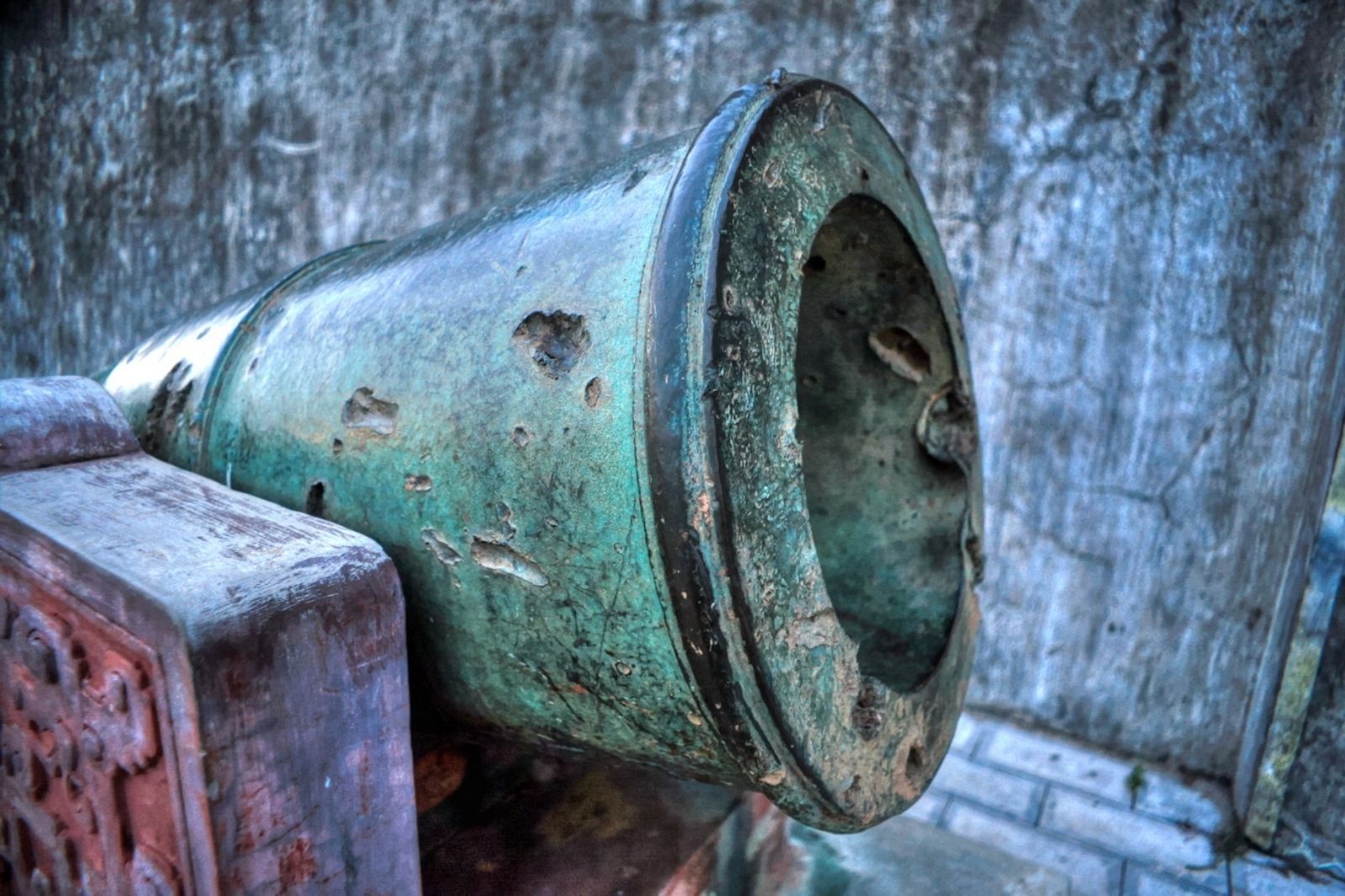
  • Construction materials: The citadel walls were built with large fired bricks, bonded with a mixture of lime, molasses, and traditional additives, creating timeless durability. Despite enduring devastating wars, some sections of the wall still retain intact traces, testifying to the sophisticated construction techniques of the ancients.
Characteristic square architecture
Photo: Characteristic square architecture 

The solid square architecture of Quang Tri Ancient Citadel not only demonstrates strategic thinking and construction techniques ahead of its time, but is also living proof of the intersection between Vietnamese architectural identity and Western military essence, creating an enduring heritage over centuries.

3. Surrounding Moat System

The moat system is an important element in the defensive architecture of Quang Tri Ancient Citadel, helping protect the citadel from external attacks. Moats were dug around all four sides of the wall, with a straight outer bank and a V-shaped slanted inner bank, creating variations in width at different points.

  • Dimensions and structure: The citadel moat extends about 250 m from the outer edge to the bank of the Thach Han River, with a depth of 3.4 m. A canal was dug from the northeast corner of the citadel connecting to the Thach Han River for drainage, ensuring the moat system was always filled with water and maintained defensive function.
  • Defensive role: The moat not only hindered the enemy's approach but also created a natural barrier, combining with bastions and parapets to enhance defense capabilities.
  • Modern renovation: Since 1993, the moat system has been dredged and revetted with basalt pebbles, creating a lush green landscape, regulating microclimate, and enhancing the aesthetic appeal of the relic.

The moat system surrounding Quang Tri Ancient Citadel is not only a solid strategic defense layer of an ancient military structure, but over time has also become a harmonious landscape element, connecting the tragic past with the peaceful present—a testament to the adaptation and endurance of the monument throughout history.

4. The Citadel Gates: Front, Rear, Left, and Right

Quang Tri Ancient Citadel has four main gates located in the center of its four sides, named Tien (South), Hau (North), Ta (West), and Huu (East). Each gate was built in a characteristic vaulted arch style, approximately 3.4 m wide, constructed from bricks and thick ironwood, topped with a watchtower covered with yin-yang tiles.

  • Architectural design: The city gates were constructed using traditional structural techniques, with the lower level serving as a foundation base and the upper level featuring a curved-roof watchtower, deeply reflecting traditional Vietnamese architecture. The watchtower served not only observation purposes but also created an aesthetic highlight.
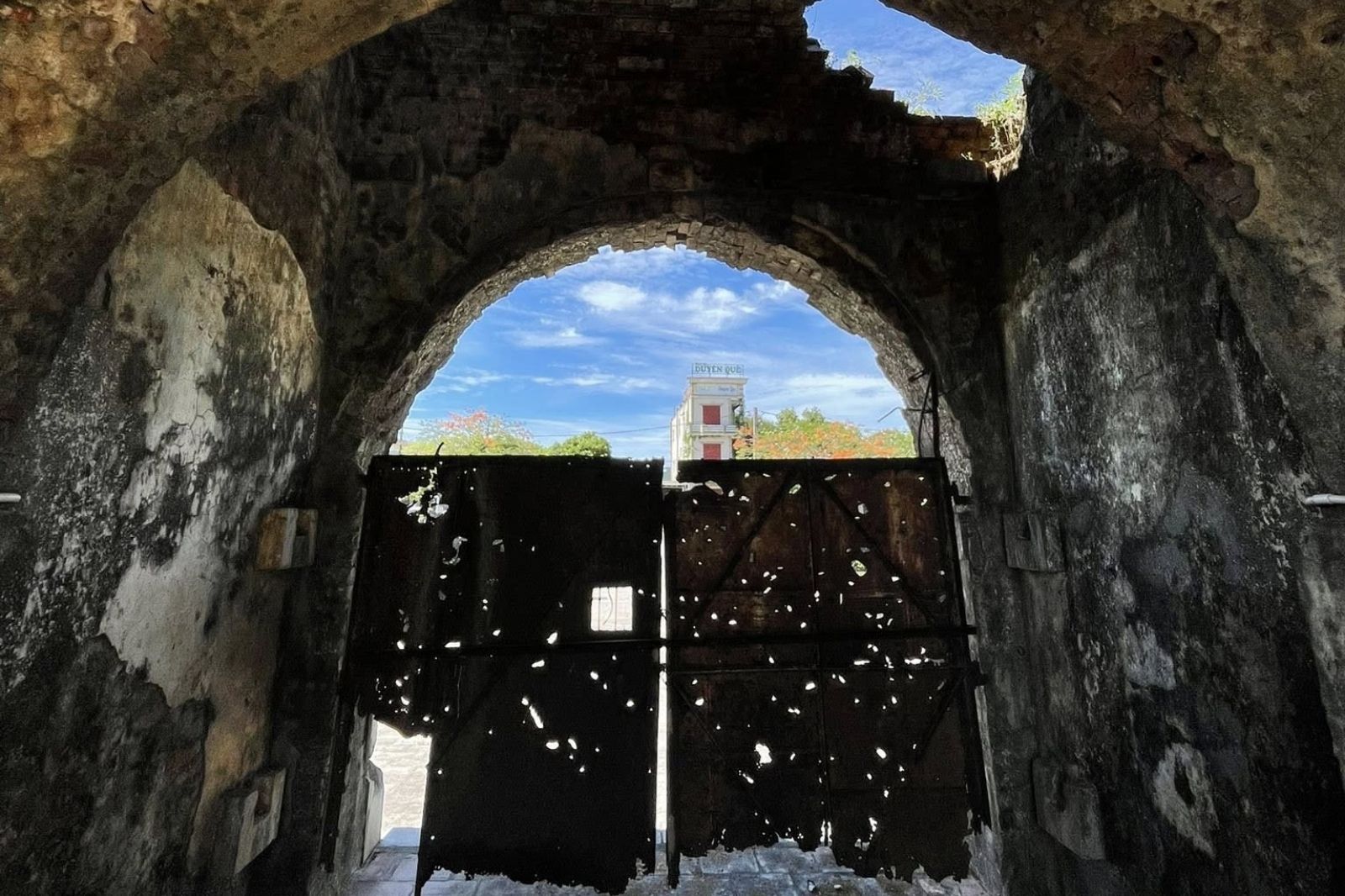
  • Post-war status: After the 81-day-and-night battle in 1972, most of the city gates were destroyed, with only the Huu (East) gate remaining relatively intact. Since the 1990s, the gates have been restored based on the original architecture, preserving their historical beauty.
  • Bridges over the moat: In front of each gate was an arched bridge crossing the moat, connecting the inner citadel with the outside. Although destroyed by bombs and artillery, some traces of vaulted culverts were preserved and restored starting in 1993.

The system of four city gates of Quang Tri Ancient Citadel played not only a defense and transportation role, but also served as architectural symbols rich in Vietnamese identity, clearly reflecting the combination of military functionality and traditional building arts—an integral part of the sacred historical space of this monument.

The East Gate of the ancient citadel riddled with bomb and bullet marks
Photo: The East Gate of the ancient citadel riddled with bomb and bullet marks 

5. Prominent Architectural Structures Within the Inner Citadel

Inside Quang Tri Ancient Citadel was a system of structures serving both administrative and military functions, arranged according to a strict planning layout:

  • Royal Palace (Hanh Cung): A vital building located about 500 m from the Tien Gate, with a perimeter of 400 m, enclosed by thick brick walls. It was the residence and workplace of high-ranking officials.
  • Administrative mansions: Including the residences of the Governor (Tuan Phu), Judge (An Sat), Financial Commissioner (Bo Chinh), Military Commander (Lanh Binh), education inspection office, military barracks, granaries, prisons, etc. These structures were built in the Nguyen Dynasty style of wooden-framed houses (nha ruong), featuring load-bearing timber frames, flat tile roofs, and brick or wooden plank walls.
  • Prison (Lao xa): Located in the northeast corner, built during the Nguyen Dynasty and expanded during the French period. This was a detention center for political prisoners, associated with many painful yet resilient historical stories.

The structures inside the inner citadel not only reflect a typical administrative-military organization model of the Nguyen Dynasty, but also record the historical ups and downs of a turbulent era. Through each remaining foundation, wall, and wooden pillar, one sees not only the shadow of a dynasty, but also feels the fortitude and enduring vitality of the heroic land of Quang Tri.

6. Memorial Monument and Spiritual Significance

At the center of Quang Tri Ancient Citadel, a memorial monument was erected as a collective grave, commemorating thousands of soldiers who sacrificed their lives in the 81-day-and-night battle in 1972. The memorial was designed according to Yin-Yang philosophy, featuring elements of deep spiritual significance:

  • Octagonal shape: Symbolizing the Bagua (Eight Trigrams), with four sets of steps representing the Four Symbols (Tu Tuong) and the incense offering level representing the Two Primary Forces (Luong Nghi).
  • Tree of Destiny: The top of the monument features a flame representing the glory of the war, along with three clouds signifying the Three Talents (Heaven - Earth - Man). Three bowls of rice on the lamp post reflect the custom of offering rice to the deceased.
  • Spiritual space: The interior of the tomb is hollow with two intersecting axes, symbolizing the gathering of the souls of soldiers from all four directions.

The memorial monument is not only a symbol remembering the great contributions of heroic martyrs, but also a sacred space connecting the past and the present, helping every visitor deeply feel the sacrifice and indomitable spirit of the Vietnamese people.

Quang Tri Ancient Citadel gate at night
Photo: Quang Tri Ancient Citadel gate at night

7. Quang Tri Ancient Citadel Today

After the war, Quang Tri Ancient Citadel was severely damaged, but since the 1990s, structures such as the city gates, moats, and memorial monument have been restored. Today, this monument is a must-visit destination when traveling to Quang Tri, where visitors can:

  • Visit ancient architectural structures such as the city gates, moats, and underground bunker system.
  • Learn about history through the Ancient Citadel museum and war artifacts.
  • Burn incense in memory and release floating lanterns on the Thach Han River to pay tribute to heroic martyrs.
Visitors can come to explore and feel it more clearly
Photo: Visitors can come to explore and feel it more clearly 

The overall architecture of Quang Tri Ancient Citadel is a rare testament to the intersection between historical value and classical military art. From a preservation perspective, it is not only a special national monument, but also living documentation of 19th-century fortification building techniques, reflecting defensive thinking, aesthetics, and national spirit through every architectural detail.

The combination of strict planning layout, characteristic fired brick materials, and scientifically restored auxiliary structures has helped the Ancient Citadel become a space of both historical symbolic nature and significant architectural-planning research value. Today, this place is not only a destination of gratitude, but also a highlight of the Central Vietnam cultural tourism journey. To fully explore Quang Tri Ancient Citadel from a practical and systematic perspective, you can choose the full-package Ancient Citadel tour by Sovaba Travel – a professionally designed program combining historical, architectural, and cultural commentary with field experiences.

Loading......

Featured destinations