The Remaining Traces of Quang Tri Ancient Citadel - A Fierce Battlefield

Central

Quang Tri

Quang Tri Ancient Citadel

Sovaba.travel

Updated at: 24/09/2026

1. History and role of the Quang Tri Ancient Citadel through different periods

As one of the important historical relics, Quang Tri Ancient Citadel is not only a witness to tragic historical events, but also a place preserving cultural values, deeply imprinted in the heart of every visitor. Let's explore a journey through time at this place!

History and Significance

Quang Tri Ancient Citadel was built under King Gia Long in 1809 and completed under King Minh Mang in 1837. Initially, the citadel was made of earth, then rebuilt with bricks in a unique square architecture, with a perimeter of over 2,000 meters, walls over 4 meters high and 12 meters thick at the base. With four fortresses at the four corners and a surrounding moat system, the citadel was not only the administrative, economic, and military center of Quang Tri province, but also a fortress protecting the capital city of Hue under the Nguyen Dynasty.

During the French colonial period, starting from 1929, the French colonialists turned this place into a prison to detain patriotic soldiers. By 1972, Quang Tri Ancient Citadel became the focal point of the 81-day and night battle, known as the "fiery red summer" - one of the fiercest battles in the history of the Vietnam War.
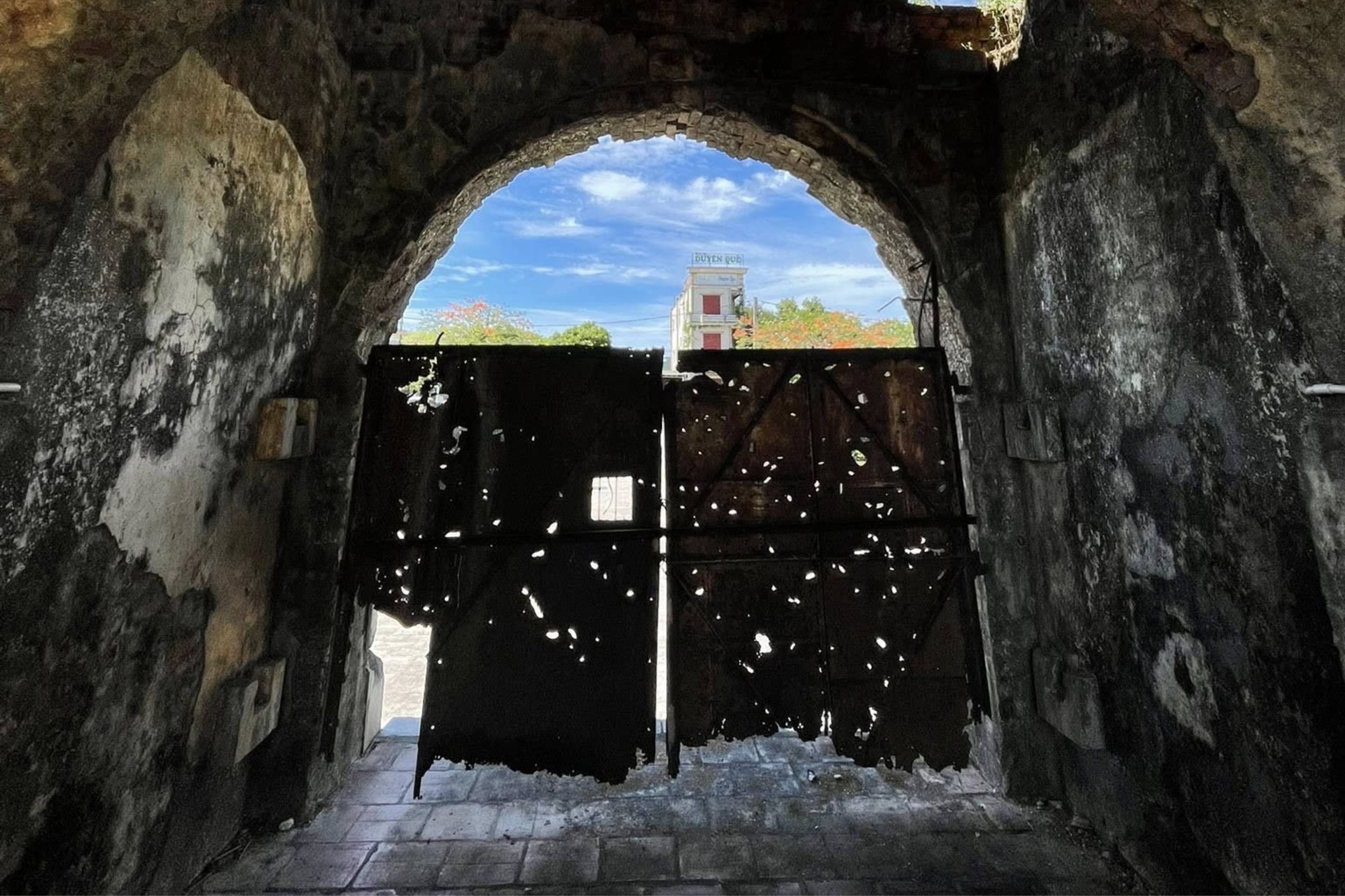
Citadel gate riddled with bullet holes
Photo: Citadel gate riddled with bullet holes 

The 81-Day and Night Battle

In 1972, against the backdrop of the Paris Peace Talks, Quang Tri Ancient Citadel became a strategic hotspot. The Liberation Army of South Vietnam was determined to hold every inch of land, while the US and the Army of the Republic of Vietnam put all their strength into recapturing it. During 81 days and nights (from June 28 to September 16, 1972), Quang Tri town endured 328,000 tons of bombs and artillery, equivalent to the destructive power of 7 atomic bombs dropped on Hiroshima. Every square meter of land here was soaked with the blood of soldiers, turning this place into a "graveless cemetery".

Stories of the courageous spirit of the soldiers still resound today. Veteran Dao Chi Thanh once recalled that, between the line of life and death, the soldiers still fought with an optimistic spirit, as if they were participating in an epic movie.
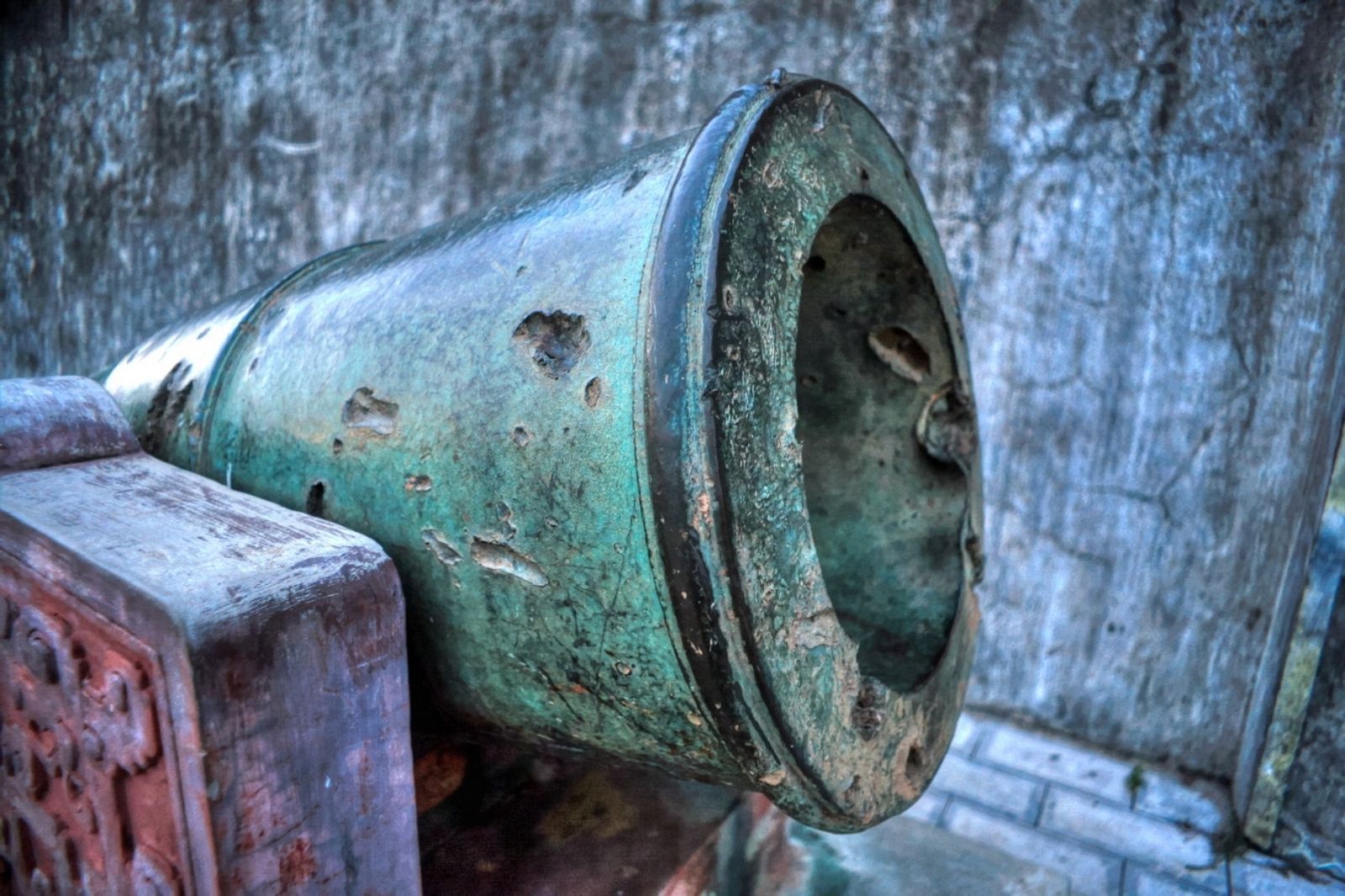
Ancient cannon beside the citadel gate
Photo: Ancient cannon beside the citadel gate

2. The remaining relics of the Quang Tri Ancient Citadel

After the war, the Citadel was reduced almost entirely to foundations and a few wall sections. Since the 1990s, the relic site has been restored, preserving its original elements and renovated further for commemoration and educational purposes. Today, you can still see:

  • North Gate (Rear Gate): Preserved in its original state, the vaulted arch remains intact, covered with bullet, bomb, and artillery marks.
  • Wall system: A few short sections remain, riddled with bullet holes. In 2012, more wall foundations were exposed.
  • Fortresses: Original traces remain at several locations, especially at the Southwest corner.
  • Bo De School Relic: Walls riddled with bullet holes – living evidence of the destructive power of war.
  • Moat and trenches: Still retaining their shape, dotted with bomb craters.
  • Other citadel gates: Restored, among which the West Gate only retains traces of a wall section.

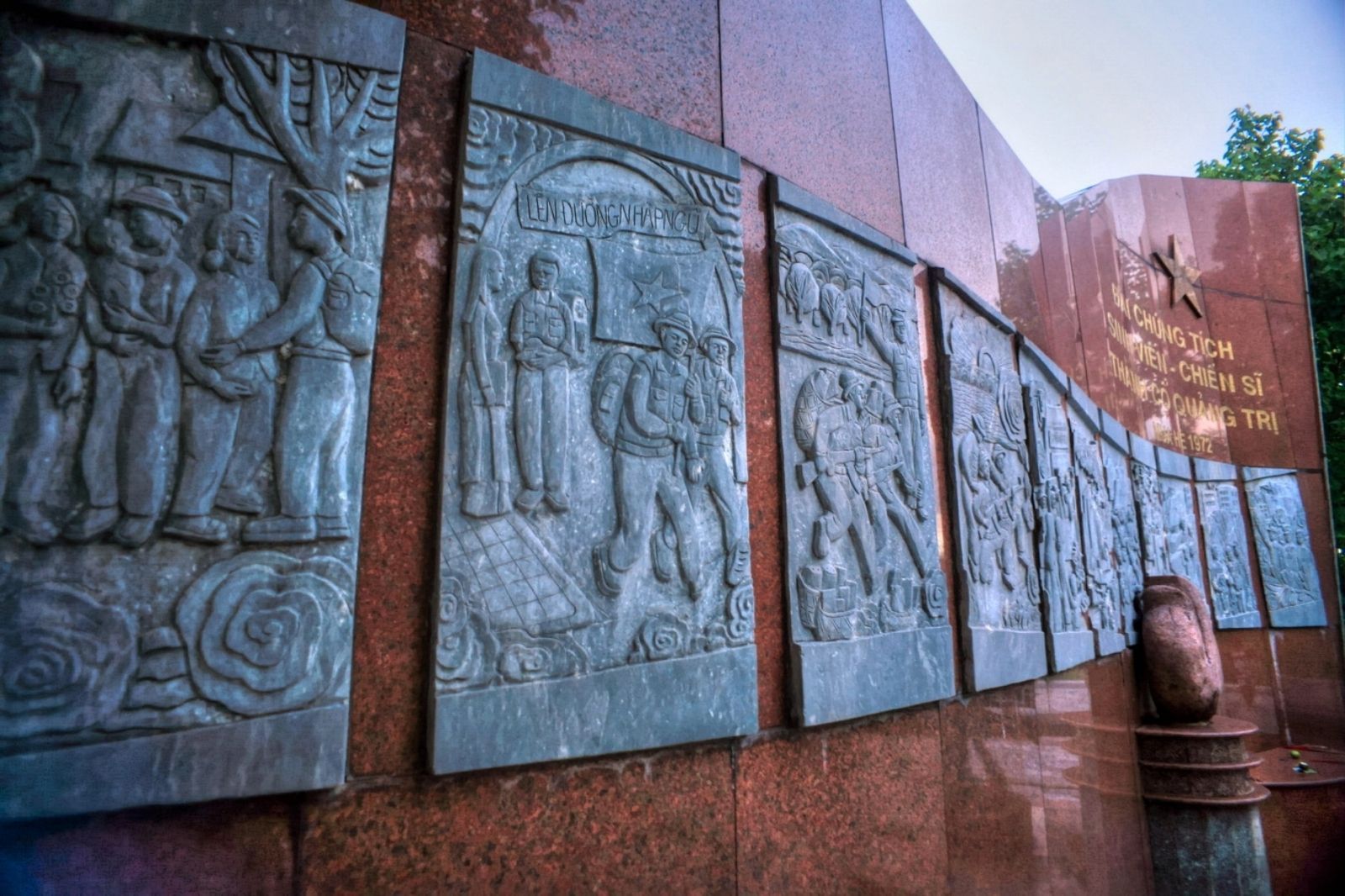
At the center of the Ancient Citadel is the Memorial Monument marking the 81 days and nights, alongside a museum displaying artifacts and letters from soldiers. Many underground bunkers and old foundations are still kept intact so visitors can envision the past scale.

Remaining wall section after the war
Photo: Remaining wall section after the war 
Belongings of Liberation soldiers displayed at the ancient citadel
Photo: Belongings of Liberation soldiers displayed at the ancient citadel

3. Quang Tri Ancient Citadel - A compelling spiritual tourism destination

Today, Quang Tri Ancient Citadel is not only a historical relic but also a spiritual tourism destination attracting hundreds of thousands of visitors every year. Coming here, visitors can:

  • Visit the relic site: Explore the remaining traces such as citadel gates, walls, underground bunker systems, and the memorial monument.
  • Release flower lanterns: Participate in the lantern floating ritual on the Thach Han River during holidays or on the 14th day of every lunar month, praying for the souls of the martyrs.
  • Visit the museum: Learn about history and moving stories through displayed artifacts.
  • Combine nearby destinations: Quang Tri tourism also features other famous landmarks such as Hien Luong Bridge, Ben Hai River, Vinh Moc Tunnels, and Truong Son Martyrs Cemetery.

A special experience at Quang Tri Ancient Citadel is the night tour, where visitors can hear historical stories from tour guides, offer incense at the memorial monument, and float flower lanterns on the Thach Han River. The shimmering lights floating on the river carry not only spiritual significance but also arouse gratitude and national pride.

Student monument at Quang Tri Ancient Citadel
Photo: Student monument at Quang Tri Ancient Citadel 

Quang Tri Ancient Citadel is not only a historical relic but also a place holding the immortal memories of the nation. Every step on this land is a journey back to the past, where you can feel the noble sacrifices, courage, and yearning for peace of past generations. This is a place for the younger generation to learn about patriotism, as well as the value of independence and freedom.

Quang Tri Ancient Citadel, with its remaining traces, is a tragic epic of valor and resilient willpower. Though the war has long receded, stories of the 81 days and nights under fire still resound forever, reminding us of the value of peace. Come once to Quang Tri Ancient Citadel to light an incense stick, release a flower lantern, and feel more deeply about the heroic history of the Vietnamese nation.

Loading......

Featured destinations