Dieu De Pagoda Hue: A Journey to Discover Ancient Spiritual and Cultural Beauty
Nestled in the heart of the ancient capital of Hue, Dieu De Pagoda emerges as a precious gem of history and culture, deeply imbued with the imprint of the Nguyen Dynasty. Not only is it a spiritual pilgrimage site, but the pagoda also encapsulates ancient beauty along with unique royal architecture. Moreover, the unique religious festivals held here have become a bridge, taking visitors back in time to fully experience the essence of Vietnamese culture across centuries.
The Historical Journey of Dieu De Pagoda Through Time
Dieu De Pagoda was built under the reign of King Thieu Tri in 1844, a monarch with a profound devotion to Buddhism who wished to establish temples as an indispensable part of the royal court. Originally the childhood residence of King Minh Mang, Dieu De carried both deep historical and spiritual significance after being converted into a pagoda.
The history of Dieu De Pagoda is closely tied to the Nguyen Dynasty, enduring the ups and downs along with the upheavals of Vietnamese history. During the French colonial period, the pagoda suffered considerable damage, with many architectural elements deteriorated. However, through the dedicated efforts of monks and local residents, the pagoda has been restored and renovated across several phases.
Notably, Dieu De Pagoda was also a hub for many major historical events. In the 1960s, as the Vietnamese Buddhist movement grew strongly, the pagoda became a gathering place and the birthplace of numerous movements advocating for peace and religious equality. Consequently, Dieu De is not merely a religious site, but also a symbol of solidarity, patriotism, and the indomitable spirit of Vietnamese Buddhism.
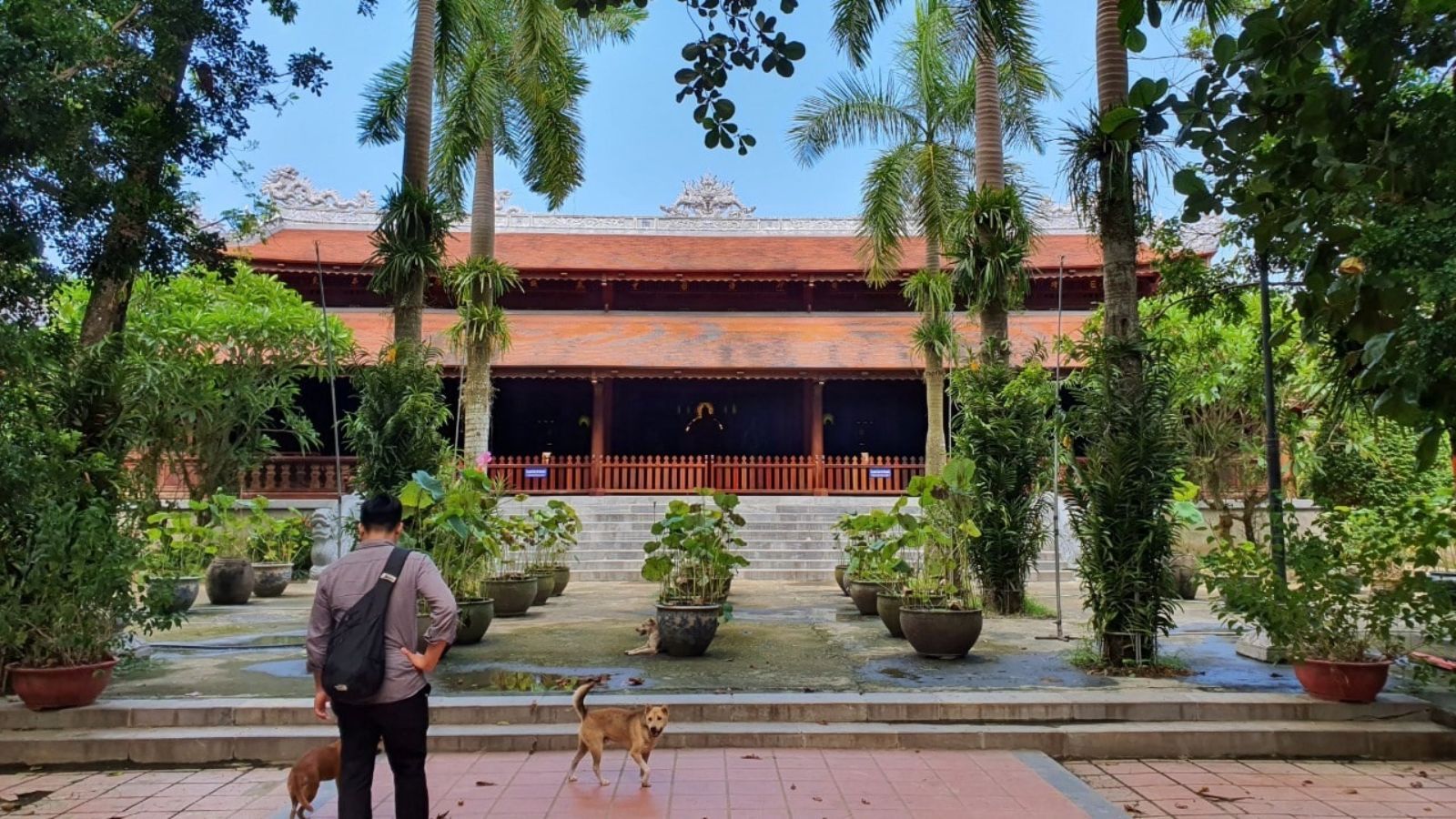
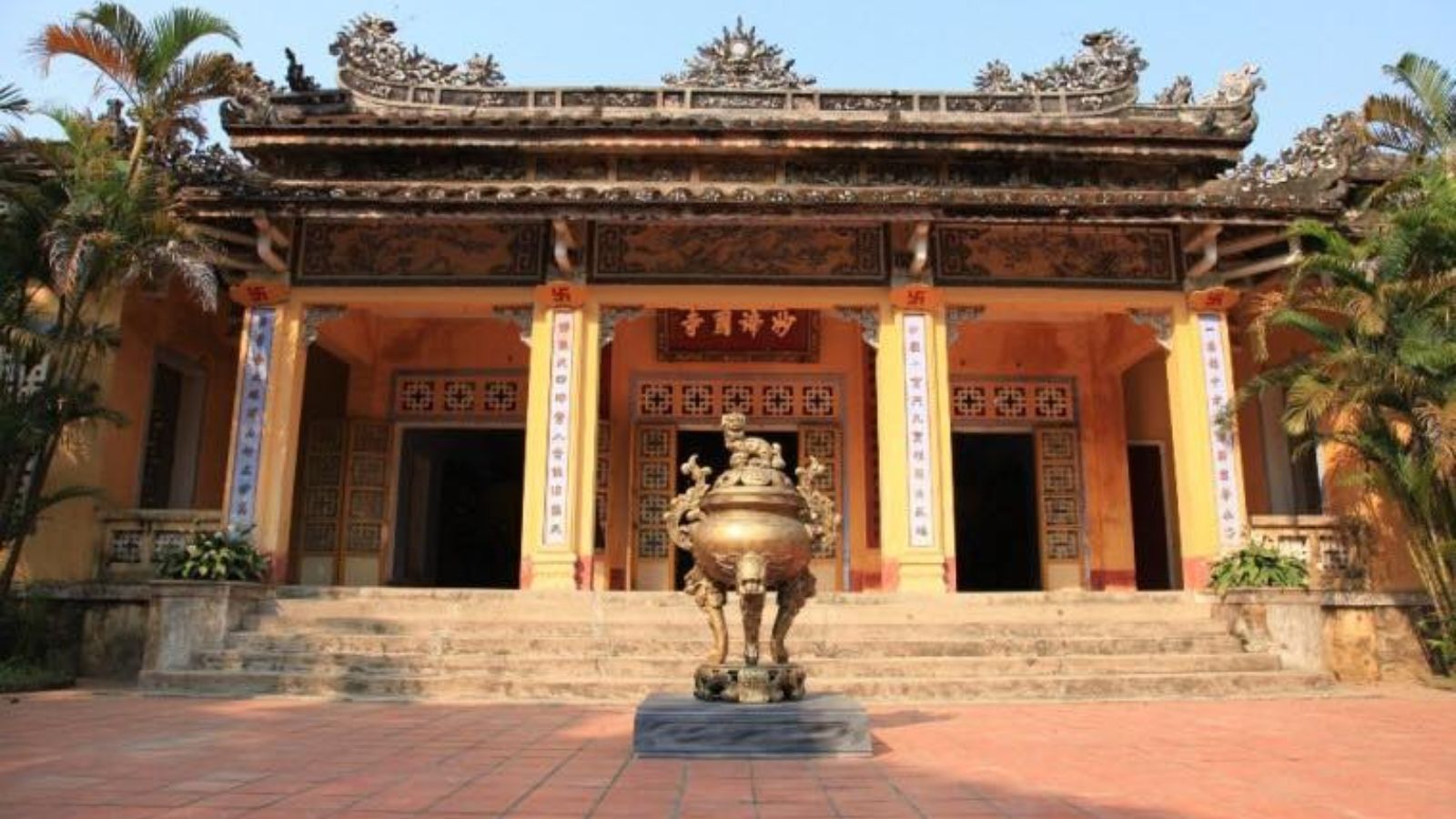
Image of Dai Hung Main Hall in the premises of Dieu De Pagoda in Hue.
Discovering the Unique Royal-Style Architecture of Dieu De Pagoda
Patronized and designed by the royal court, Dieu De Pagoda showcases exquisite architectural features that blend imperial elegance with Buddhist serenity, creating a majestic yet peaceful and gentle aesthetic.
Distinctive Architectural Structures Unique to Dieu De Pagoda
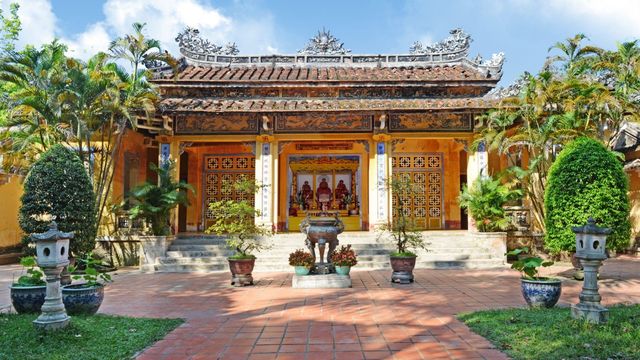
Upon entering Dieu De Pagoda, visitors will be captivated by unique architectural works found nowhere else. The first highlight is the Triple Gate (Tam Quan Gate)—a portal reflecting grand royal architecture, adorned with intricate carvings and the regal stature of an imperial spiritual monument. The Triple Gate symbolizes the bridge between the secular world and the realm of the Buddha, establishing a sacred atmosphere that welcomes those seeking inner peace.
Inside the temple, the Dai Hung Main Sanctuary was constructed on a grand scale as the primary place of worship, symbolizing the power and protection of the Buddha. In addition, the complex features smaller structures such as the Ancestor Hall, the Rear Hall, and the Bell Tower, all meticulously crafted to complement the overall serene and dignified harmony.
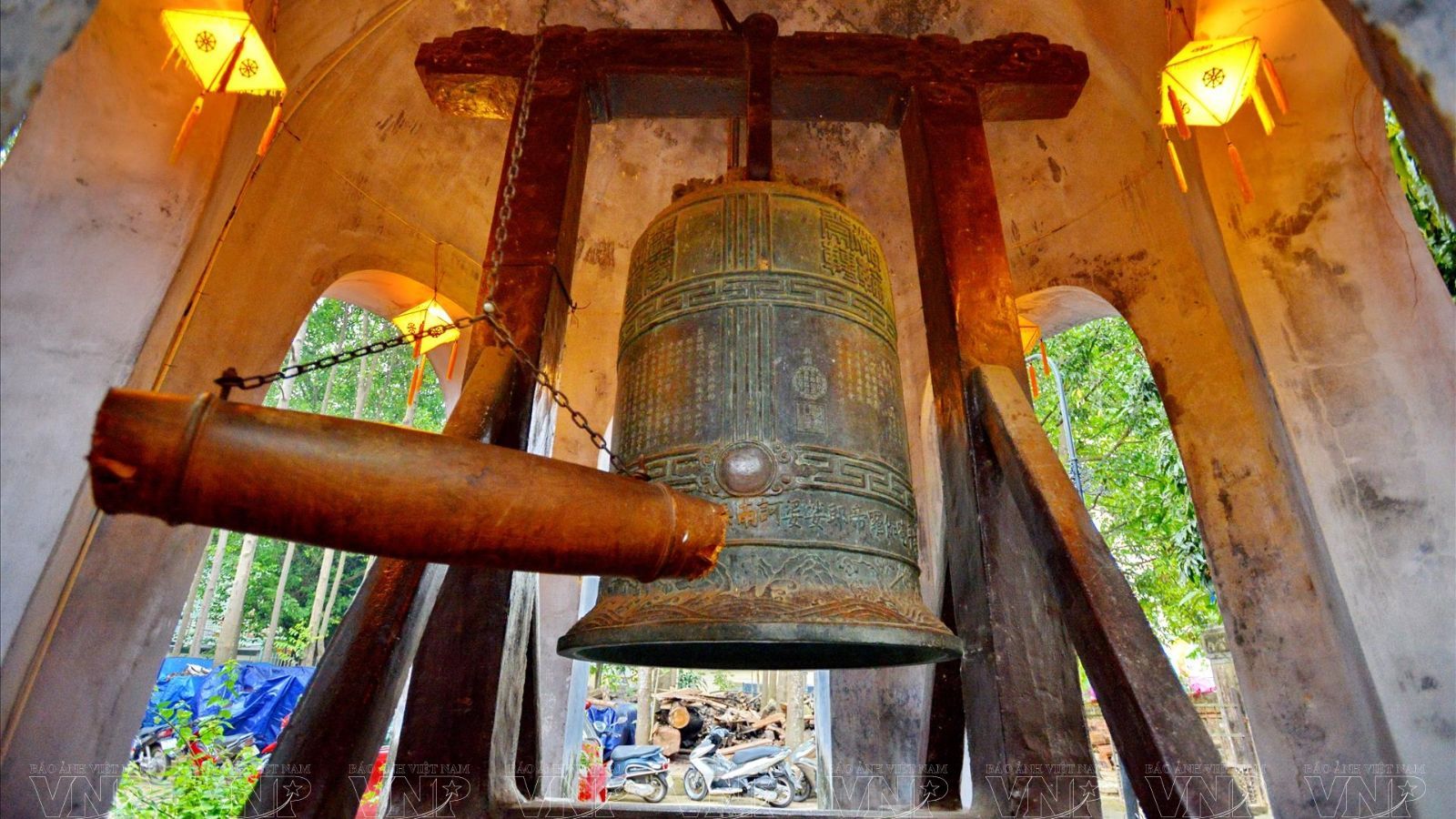
A bell bearing distinctive cultural marks at Dieu De Pagoda.
Refinement in Every Detail
From intricate wooden carvings and detailed column engravings to meticulously crafted Buddha statues, every detail showcases the skill and artistry of ancient artisans. Each subtle feature at Dieu De Pagoda tells a story and carries profound spiritual meaning, rendering the pagoda not only a sacred sanctuary but also a masterpiece of Vietnamese royal culture.
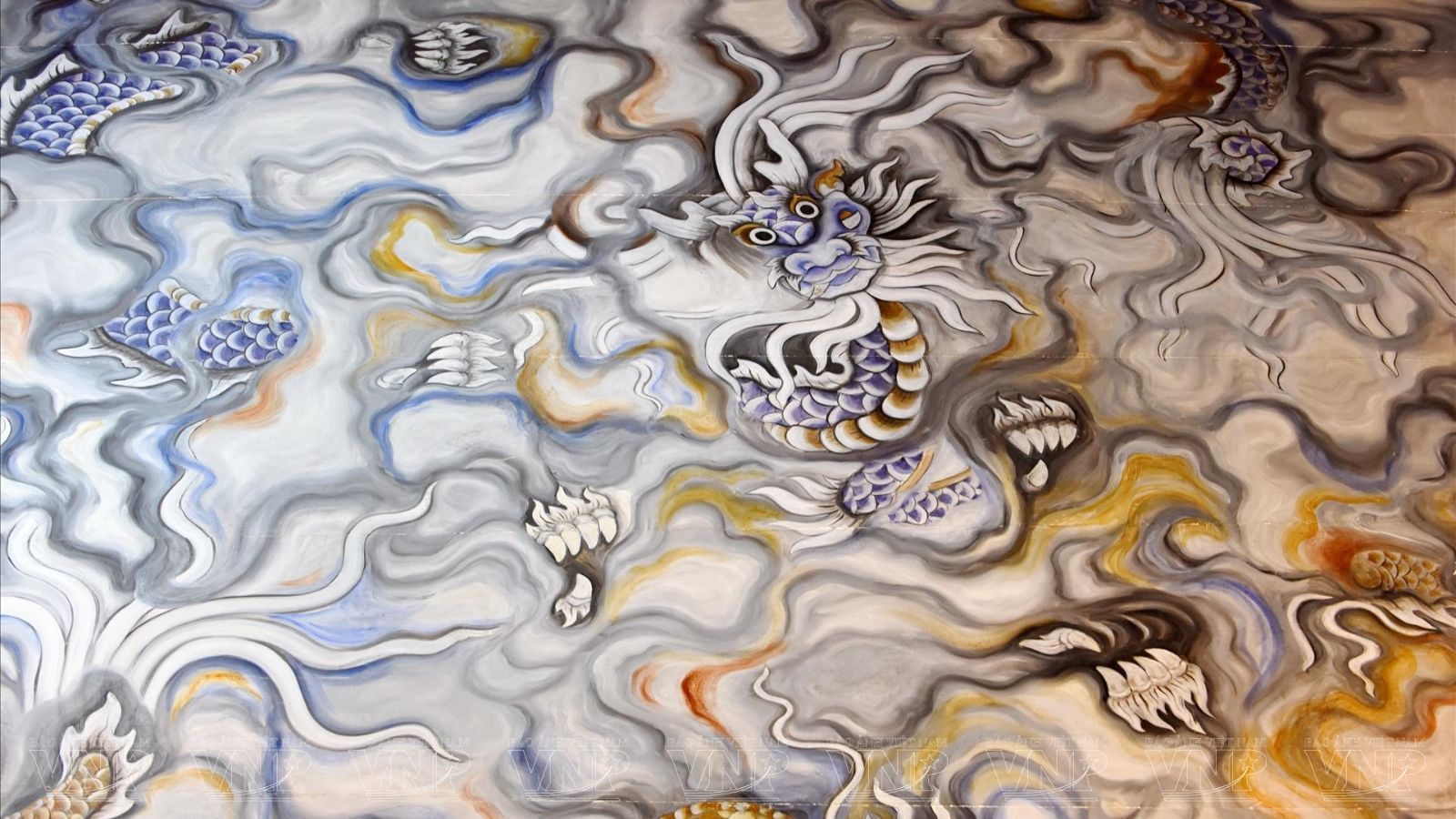
Dragon motifs on a painting at Dieu De Pagoda in Hue.
Dieu De Pagoda and Traditional Religious Festivals
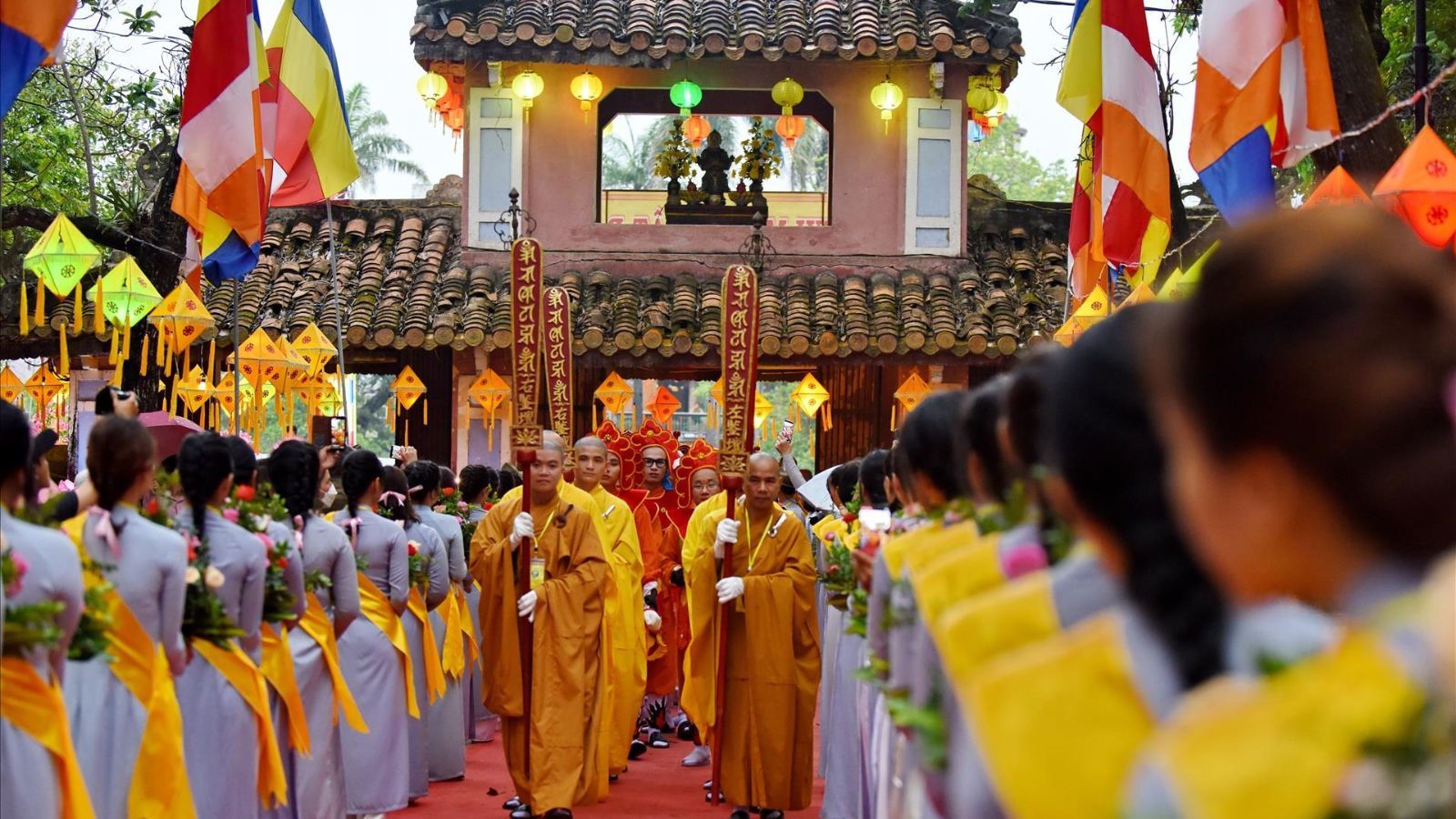
Every year, Dieu De Pagoda hosts major festivals that draw both locals and visitors from across the country. Among them, Vesak (Buddha's Birthday) is celebrated solemnly with prayer ceremonies, lantern processions, and the release of captive animals, expressing deep reverence and honor to the Buddha.
The Vu Lan Festival (Parents' Day / Ullambana) is another significant event imbued with humanistic values, reminding people of filial piety and familial love. On this occasion, Dieu De Pagoda becomes lively yet maintains a serene and solemn atmosphere, where visitors light incense to pray for their loved ones, relatives, and friends. Cultural activities such as traditional opera (hat boi) and lion dances also take place energetically, attracting many visitors.
Vesak Festival (Buddha's Birthday) at Dieu De Pagoda.
Essential Tips for Visiting Dieu De Pagoda
To have a fulfilling experience visiting Dieu De Pagoda, visitors should keep several key tips in mind. First, consider visiting during major festivals like Vesak or Vu Lan to experience the vibrant yet sacred atmosphere. Additionally, take time to explore the entire complex, from the Triple Gate to the Dai Hung Main Sanctuary, to fully appreciate the refined and unique architecture.
Moreover, when visiting the pagoda, modest attire is recommended to show respect for the sacred site. Be sure to spend some time sitting in the tranquil space to feel the peace and serenity the temple offers. For photography enthusiasts, Dieu De Pagoda is an ideal spot to capture beautiful moments of royal architecture and scenic landscapes.
The solemn and tranquil grounds of Dieu De Pagoda.
With its ancient beauty, sacred ambiance, and rich traditional festivals, Dieu De Pagoda promises an unforgettable experience for visitors. To explore more fascinating cultural and spiritual destinations in Hue, contact Sovaba Travel for detailed advice and guidance.