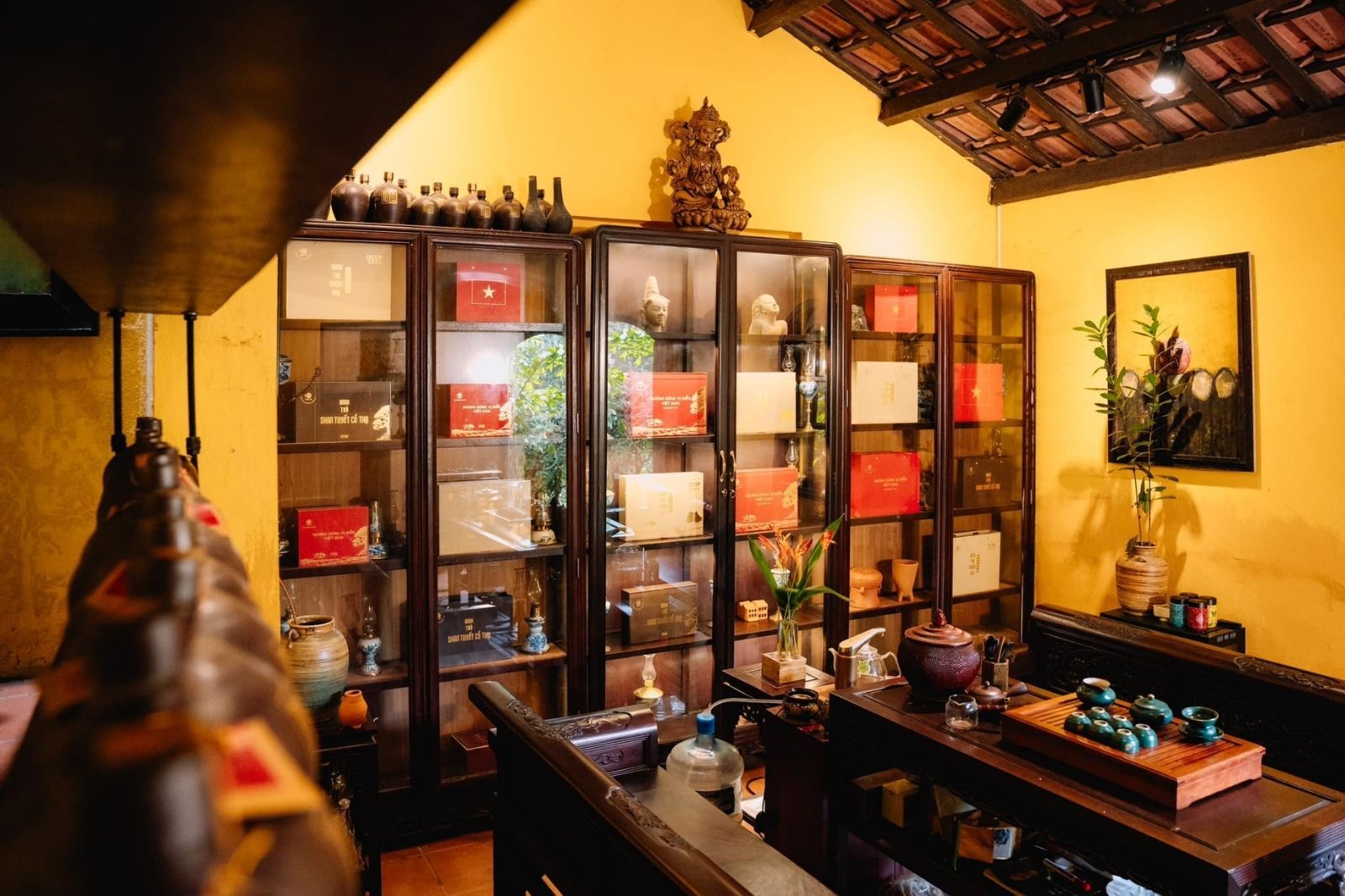
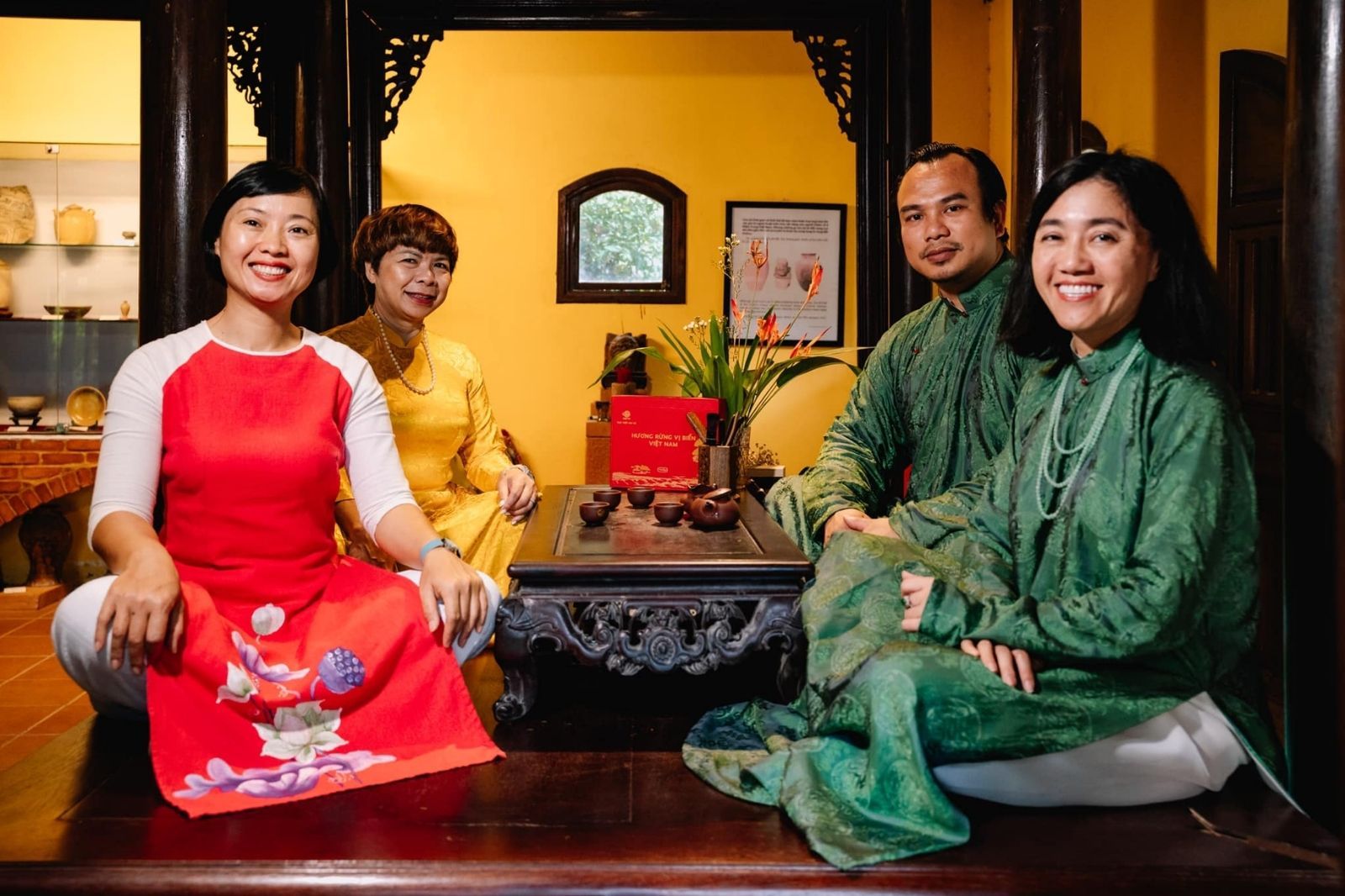
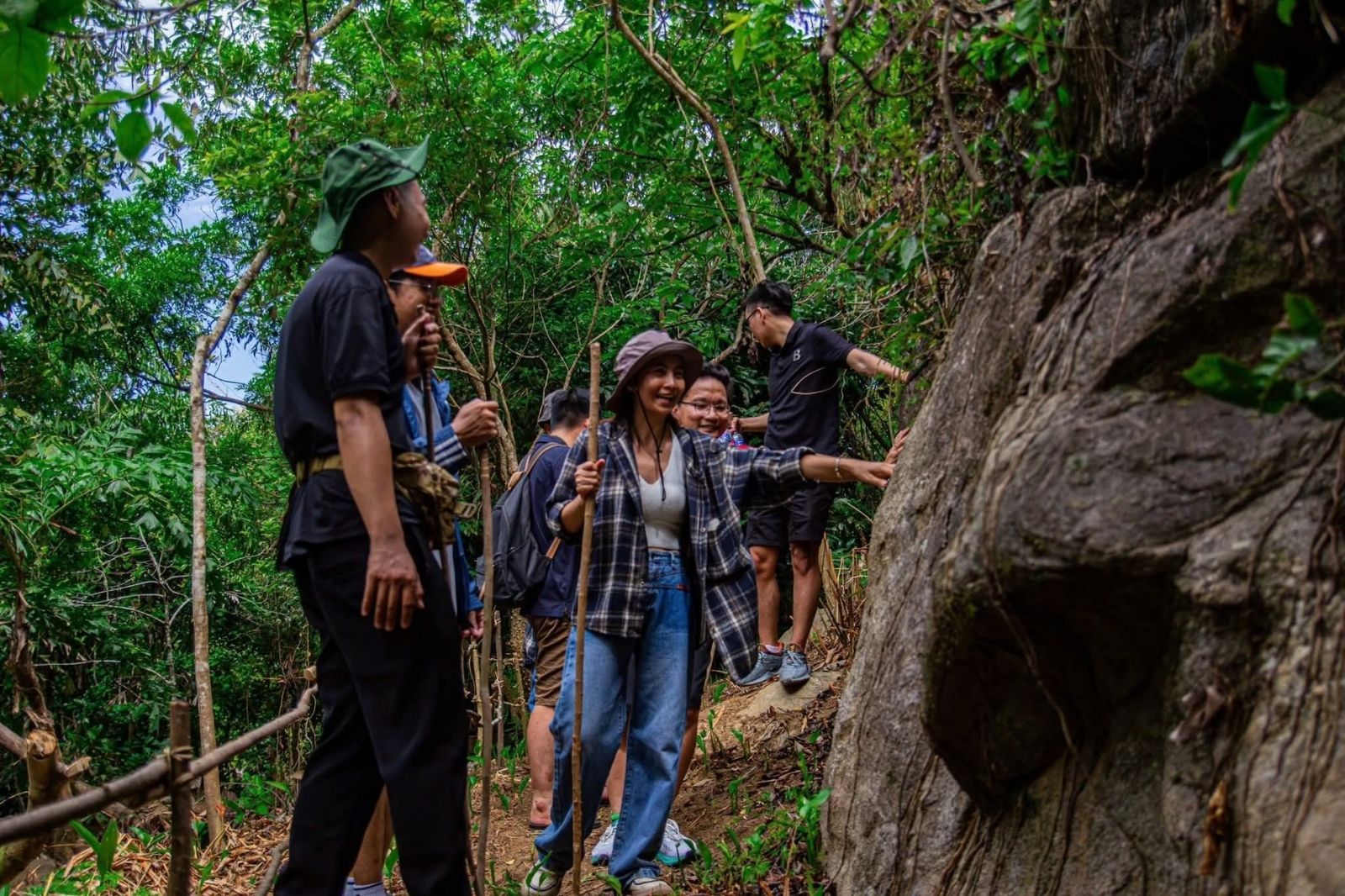
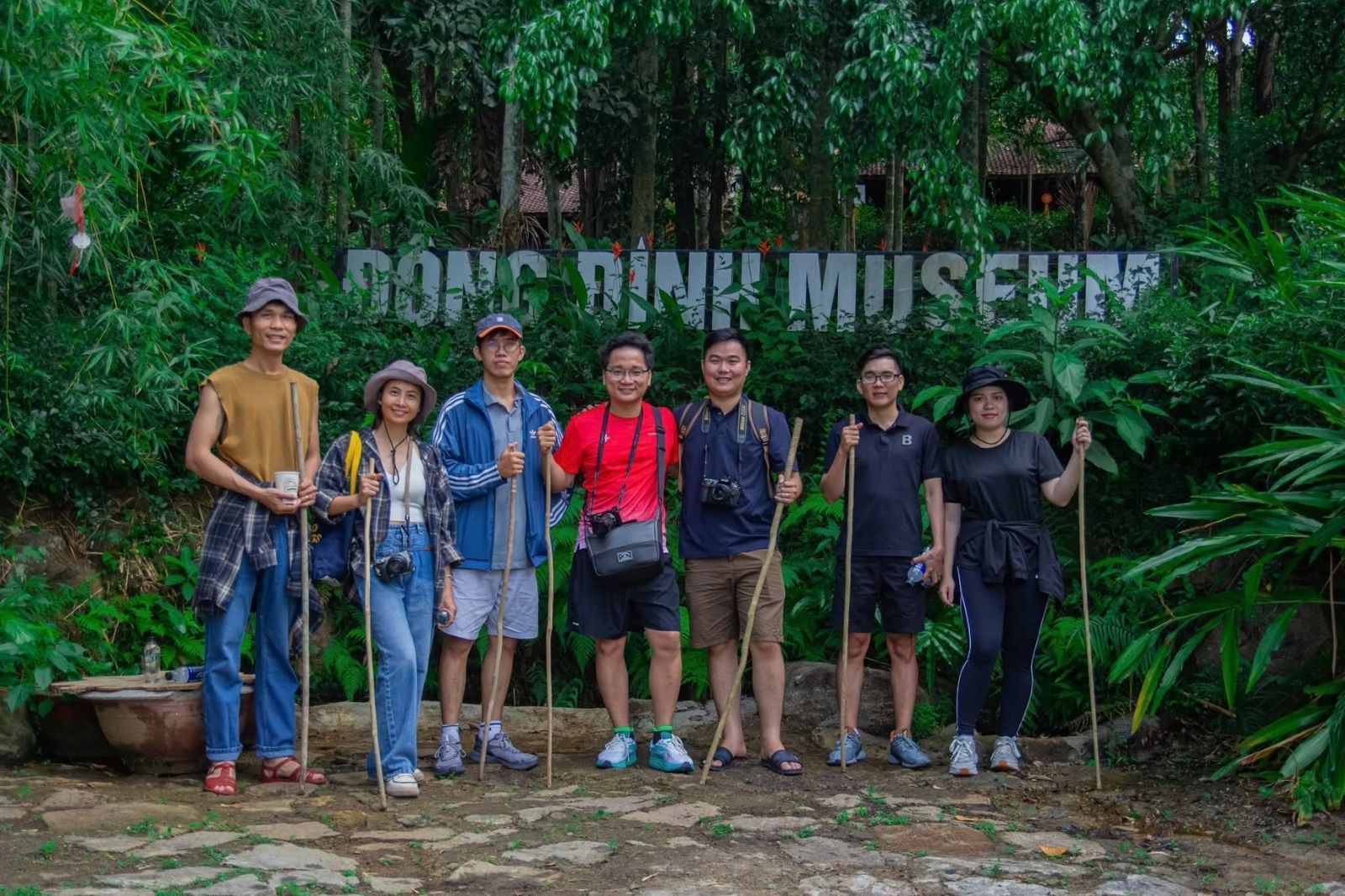
When visiting Dong Dinh Museum, visitors will have the opportunity to step into two ancient wooden pillar houses (nhà rường) restored almost to their original state in the style of Kim Bong carpentry village (Hoi An) – one of the typical and rare traditional architectural styles of the Quang region. The wooden space, tile roofs, and baked clay brick walls create a feeling of wandering into an old house in the middle of Son Tra forest, both rustic and deeply artistic. Inside is a collection of ancient ceramics dating from about 100 to 2,500 years ago, belonging to various cultures such as Sa Huynh, Champa, Dai Viet, and Oc Eo, alongside Chinese ceramics from the Han, Tang, Song, Ming, and Qing dynasties. Prominent among them are rare artifacts such as willow-leaf-shaped stone earrings and stone anklets – specimens discovered for the first time in Vietnam, along with Champa ceramics from Tra Kieu citadel (Quang Nam) and Dai Viet ceramics from the Ly – Tran – Le – Nguyen dynasties.
The artifacts are delicately arranged in the ancient house space, creating a visiting experience that is both intimate and rich in historical value. For first-time visitors, clear and easy-to-understand captions make exploration more convenient, allowing them to not only observe but also feel the cultural convergence of Central Vietnam through each artifact. The ideal visiting time for this area is about 30–45 minutes. Visitors should note that some areas do not allow the use of flash photography, so it is best to ask staff beforehand to ensure compliance with museum regulations.