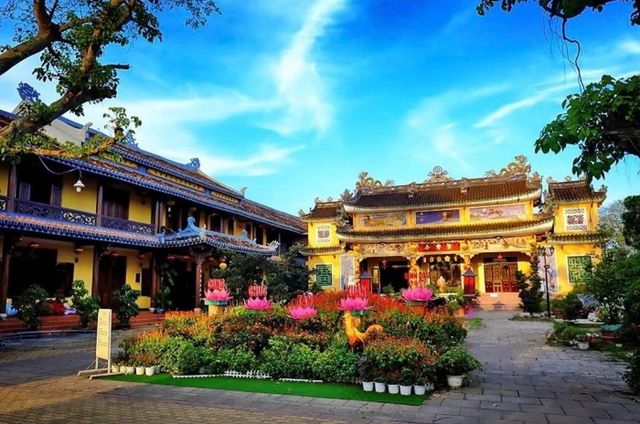
Phap Bao Pagoda Hoi An was first constructed in 1980, but its origins are deeply rooted in a much earlier Buddhist history. The name "Phap Bao" is derived from the dharma name of Zen Master Minh Hai - Phap Bao (1670–1746), a revered master of the Yunmen Zen school who played a key role in propagating the Linji Zen tradition in Quang Nam. In 1697, Zen Master Minh Hai founded Luan Thanh Pagoda in Cam Pho Commune (now Hoi An), which originally started as a small hermitage for spiritual practice and monastic teaching. Over time, this Zen tradition flourished vigorously, leading to the establishment of the Lam Te Chuc Thanh lineage to maintain the patriarchal succession.
In terms of spiritual significance, Phap Bao Pagoda is dedicated to the worship of Shakyamuni Buddha, with main shrines honoring Amitabha Buddha, Maitreya Bodhisattva, Avalokiteshvara Bodhisattva, and Ksitigarbha Bodhisattva. The pagoda belongs to the Mahayana Buddhist tradition, serving as a hub for religious activities for the local Buddhist community and visitors alike. It is a sanctuary where people come to pray for peace, health, and good fortune, especially during major festivals such as Vesak (Buddha's Birthday, on the 15th day of the fourth lunar month). The pagoda also hosts meditation retreats, helping participants purify their minds and regain balance in life. With its profound historical and spiritual values, Phap Bao Pagoda is not merely a historic site, but a spiritual haven that contributes to preserving Vietnamese Buddhist culture in the heart of the ancient town.