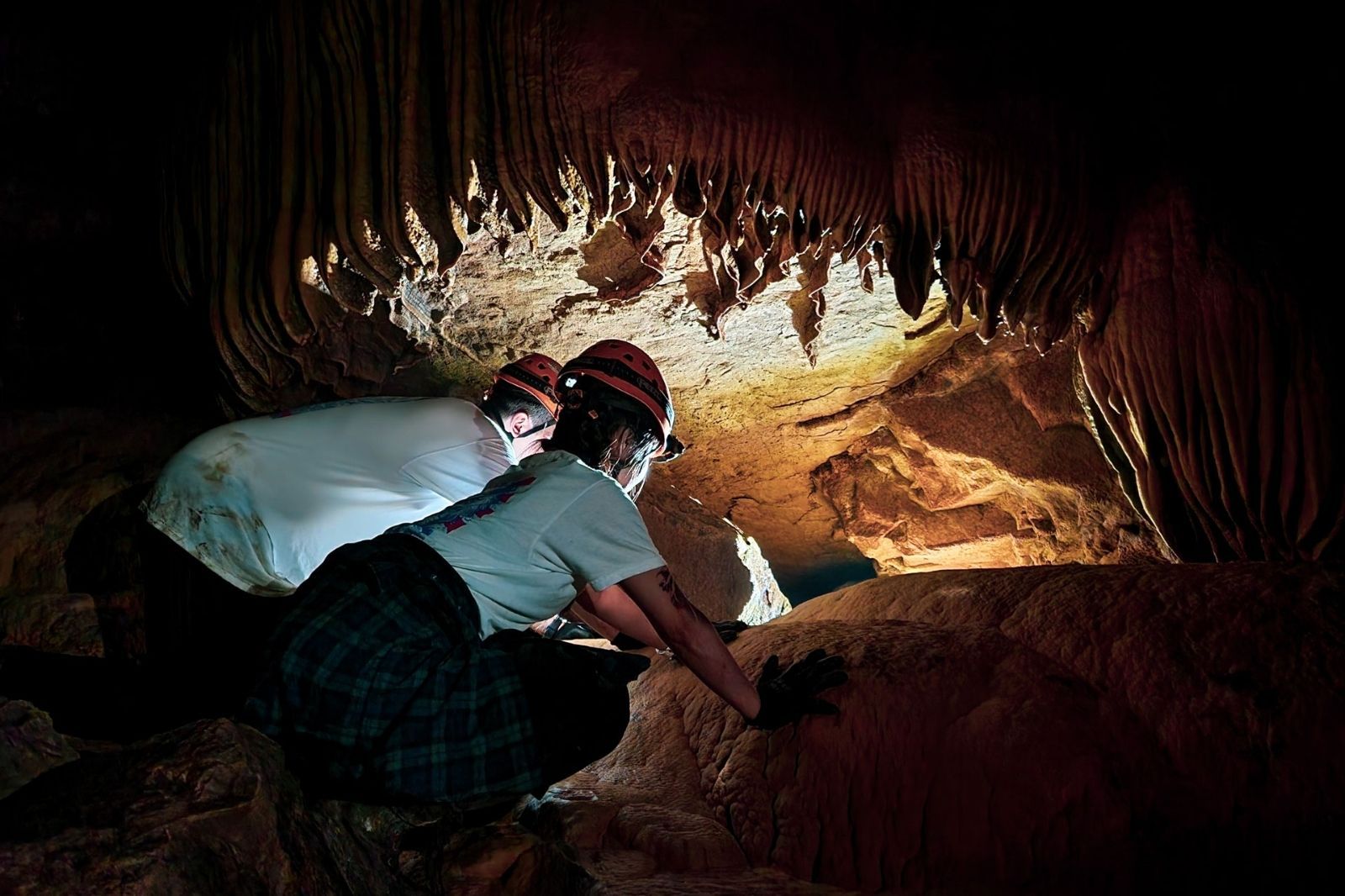
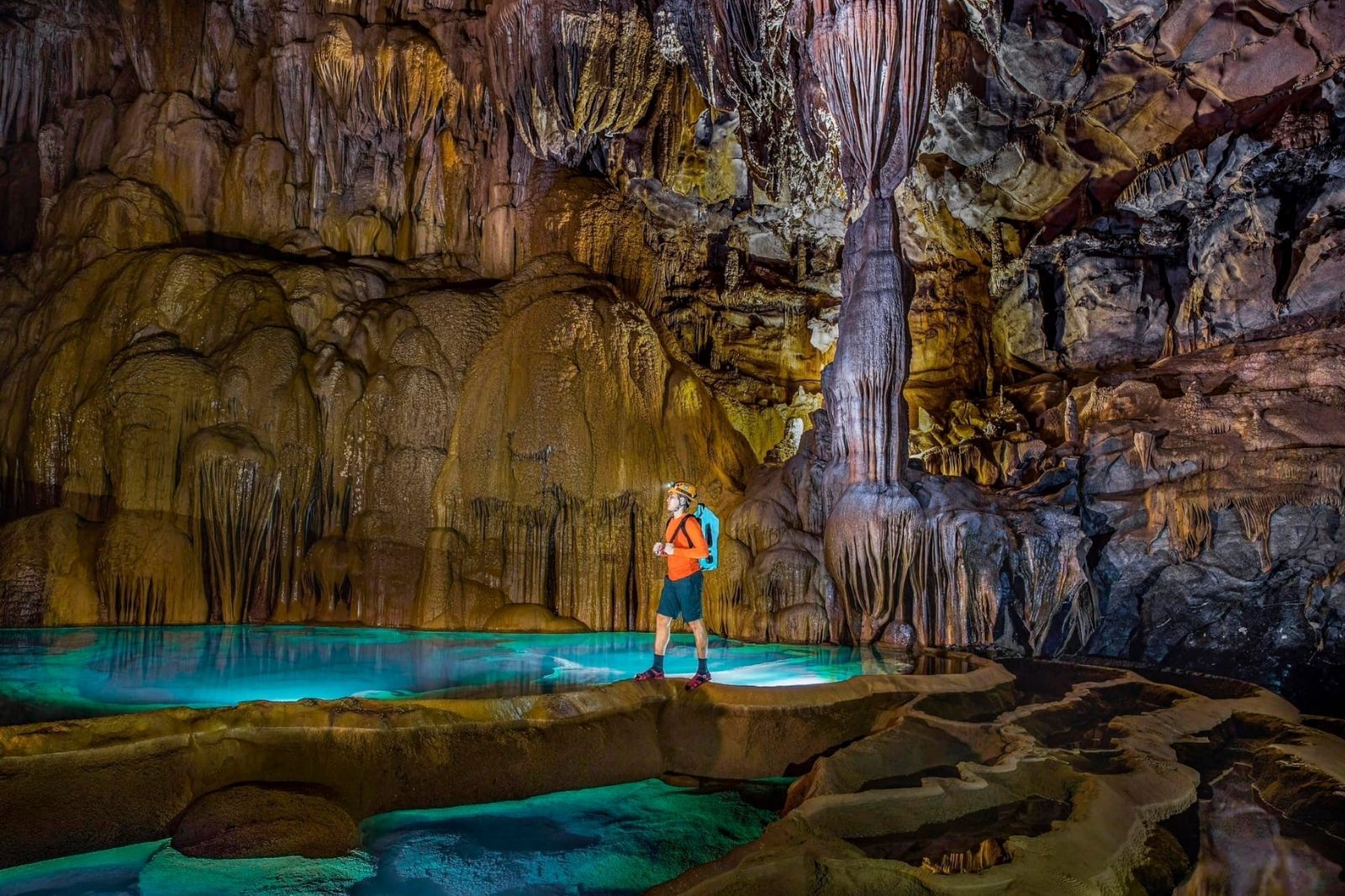
Karst topography is a distinctive landform created from the dissolution of soluble rocks such as limestone, dolomite, or gypsum by rainwater or slightly acidic groundwater. This process occurs when rainwater absorbs CO2 from the atmosphere, forming weak carbonic acid, which then percolates through rock layers and dissolves them over millions of years. The result is the formation of unique landscape features, including:
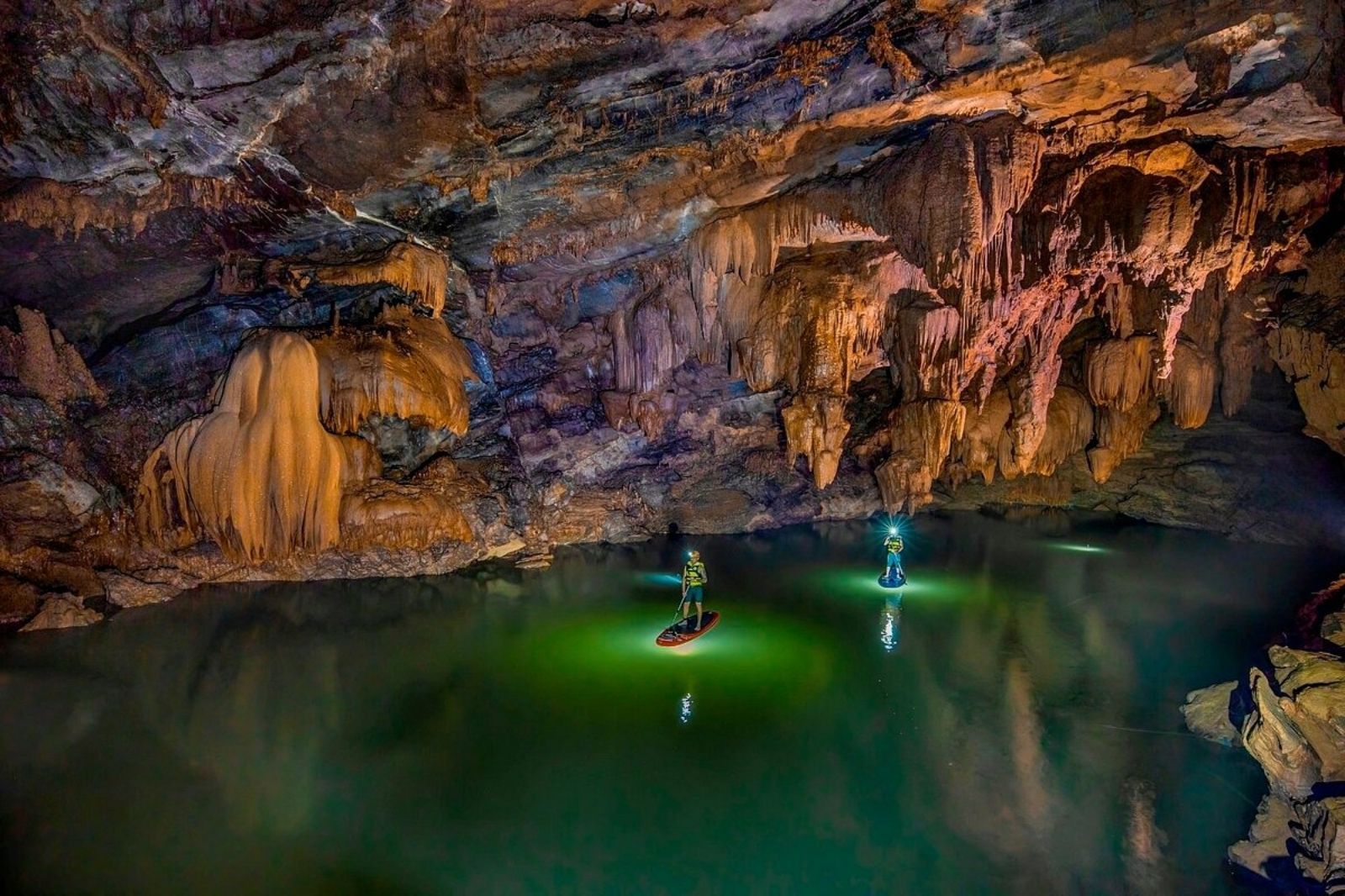
- Limestone caves: Large caverns with stalactites and stalagmites, such as Son Doong Cave in Phong Nha - Ke Bang National Park
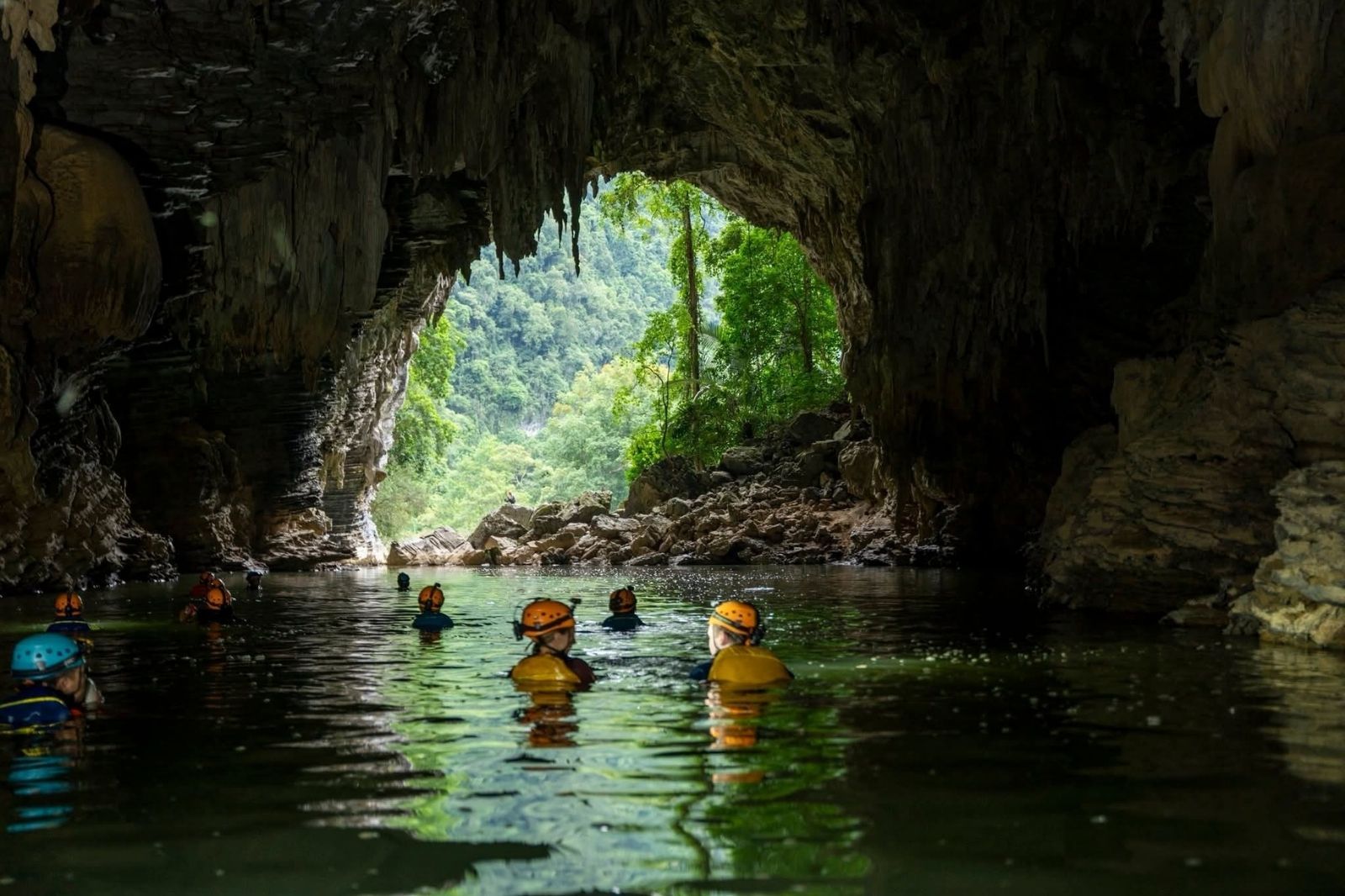
- Underground rivers and streams: Subterranean hydrological systems flowing through rock fractures, creating mysterious streams.
- Limestone mountains: Cone-shaped or tower-shaped peaks, often interspersed with valleys.
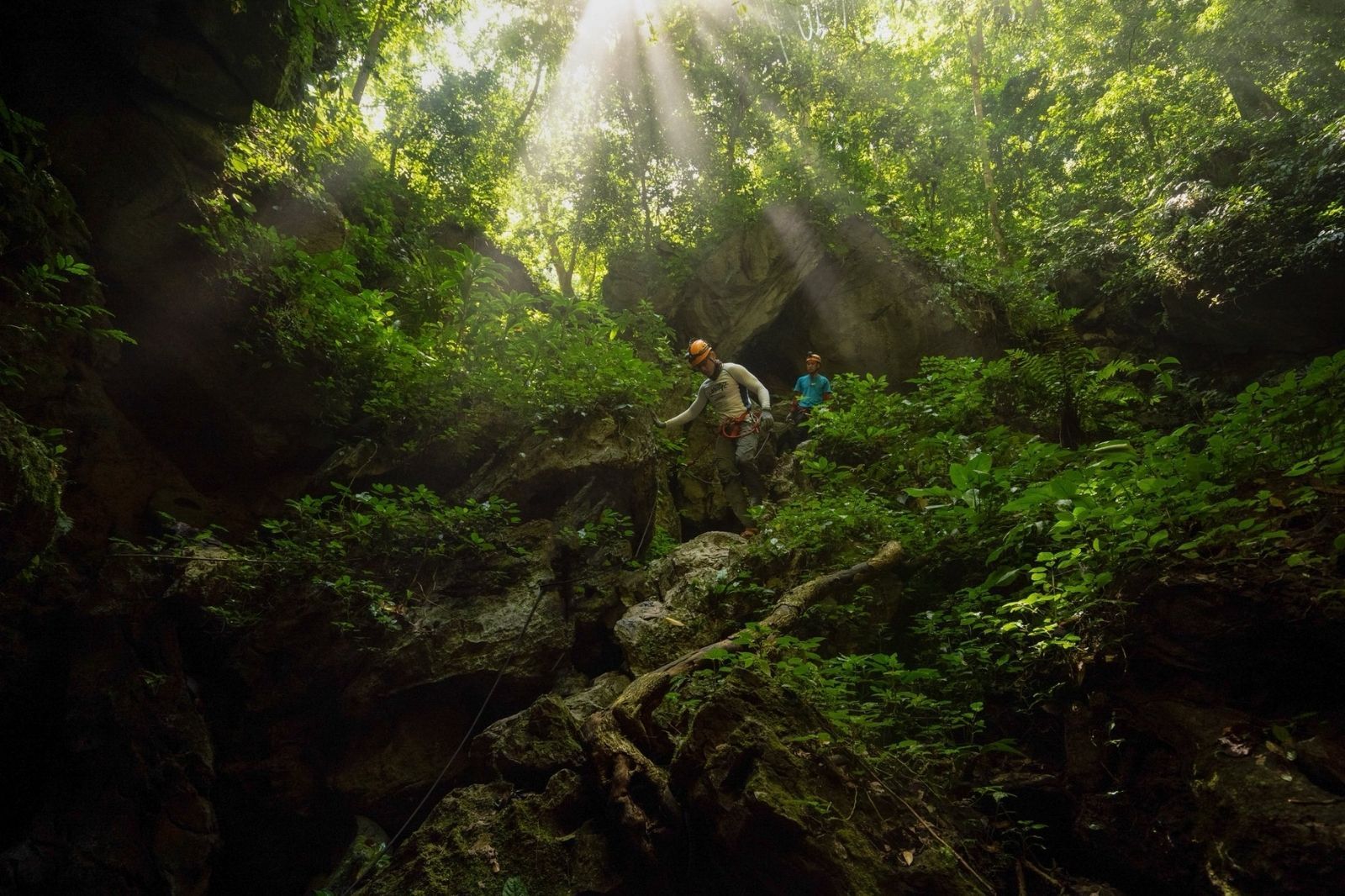
- Sinkholes: Large depressions formed when the overlying limestone collapses due to dissolution below.
- Karst plains (poljes): Flat valleys or plains interspersed between limestone mountain ranges.
The formation process of Karst topography depends on factors such as climate, geology, and time. Areas with a humid tropical climate, like Vietnam, with high rainfall and abundant limestone, provide ideal conditions for Karst topography to flourish.