|

Back Home

Dinh Cau Phu Quoc: A Sacred Ancient Temple Over 100 Years Old

Southern

Phu Quoc - Kien Giang

Sovaba.travel

Updated at: 24/09/2026

1. Where is Dinh Cau Phu Quoc located?

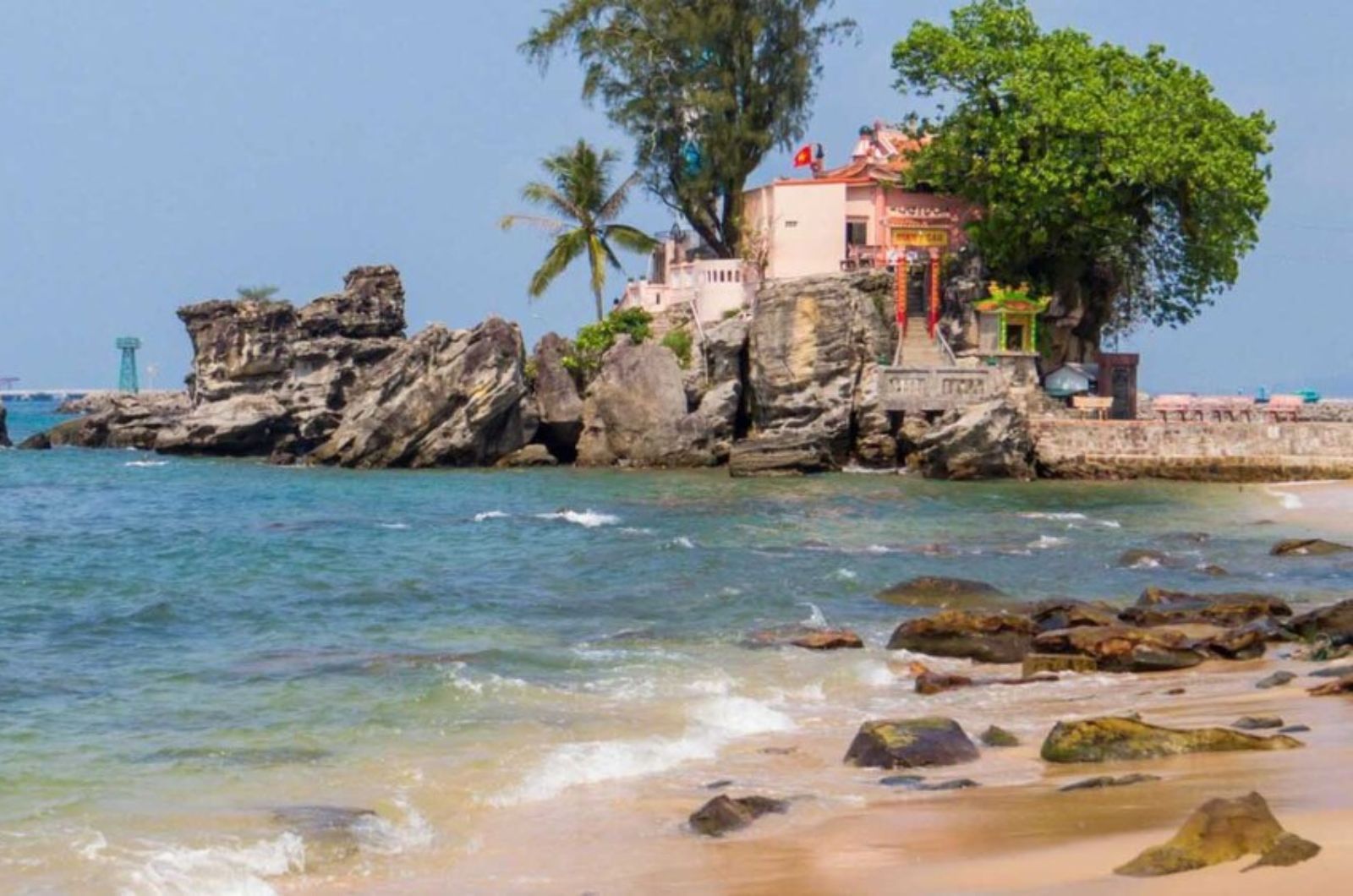
Dinh Cau Phu Quoc (also known as Long Vuong Temple or Dinh Cau Cape) is located in Neighborhood 2, Duong Dong Ward, Phu Quoc City, Kien Giang Province. The shrine sits on the highest peak of a large rocky cliff right at the mouth of the Duong Dong River facing the sea, just a 3-minute walk from Phu Quoc Night Market. This is an extremely convenient location right in the heart of Duong Dong Ward – an area bustling with markets, ports, and tourist services.

Easy Directions to Get There:

  • From Phu Quoc Airport: About 15-20 minutes by taxi or motorbike (taxi cost is around 150,000 – 200,000 VND).
  • From the center of Duong Dong: Follow Tran Hung Dao Street for about 200m to the West, turn onto Vo Thi Sau Street and go straight to the end of the road to find the entrance.
  • From resorts in the North or South of the island: Rent a motorbike (100,000 VND/day) or take an eco-friendly Xanh SM electric taxi.

You only need to climb 29 winding stone steps to reach the shrine. The entire journey is very easy, suitable for families and the elderly alike.
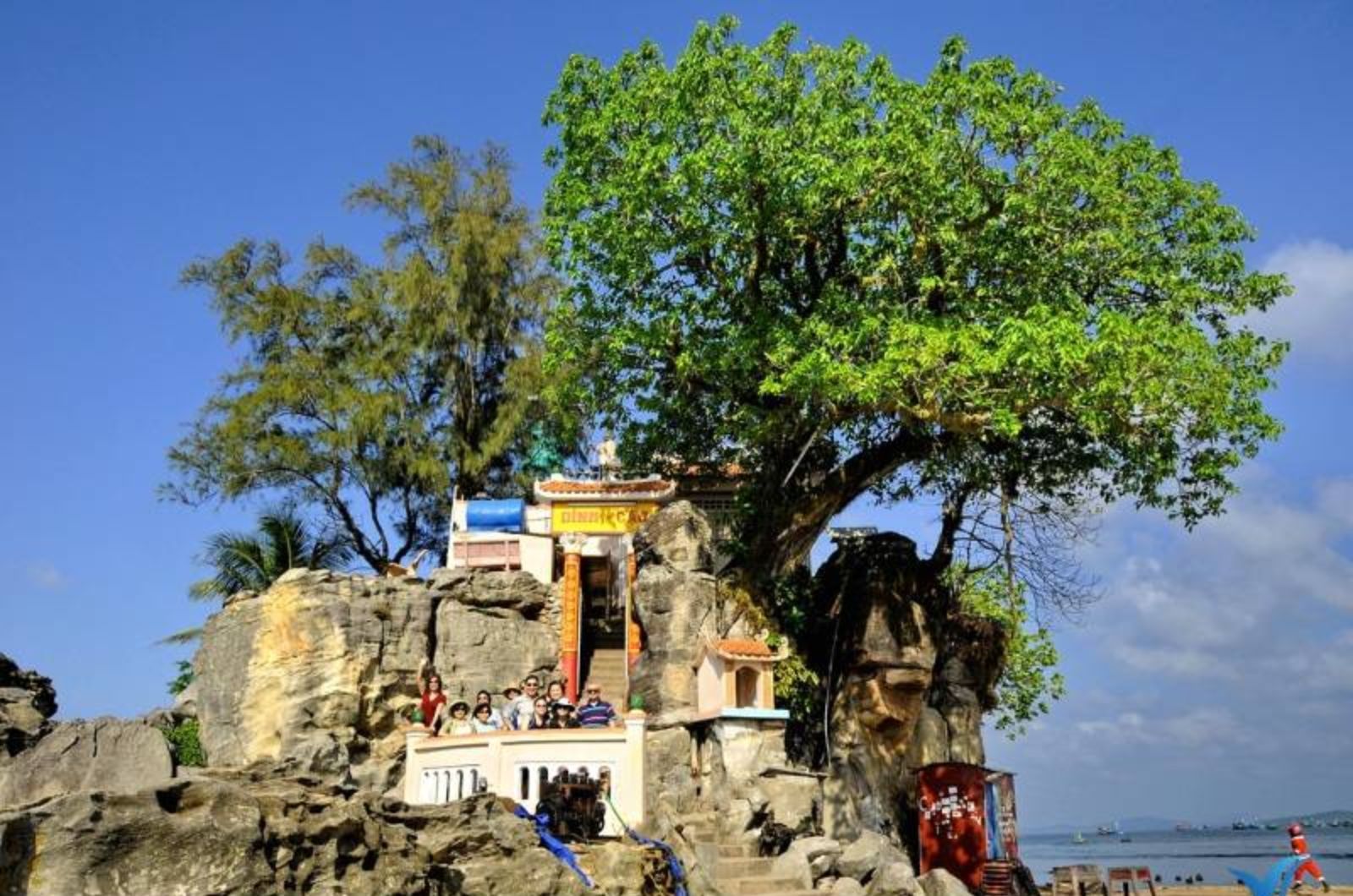
Dinh Cau, also known as Long Vuong Temple
Photo: Dinh Cau, also known as Long Vuong Temple 

2. History of Dinh Cau Phu Quoc

Dinh Cau is believed to have been established around the 17th century, when the first settlers from Central Vietnam arrived to reclaim and settle on Phu Quoc Island. At that time, fishermen's lives were closely tied to the sea, facing numerous dangers from rough waves and harsh weather.

According to local legend, a sacred rocky outcrop appeared near the mouth of the Duong Dong sea, serving as a sanctuary helping boats avoid storms and shelter safely. Believing this to be divine protection, islanders built a small shrine on the rock to worship and pray for safety whenever heading out to sea.

In 1937, following a major storm, the local fishing community joined hands to restore and rebuild the shrine on a sturdier scale. The structure underwent further renovation in 1997, giving it today's spacious and well-maintained appearance. Despite several restorations, Dinh Cau retains its profound spiritual significance and is considered a protective symbol for Phu Quoc fishermen across generations. Today, it serves as a place of worship for Lady Chua Ngoc Nuong Nuong alongside two guardian deities, Cau Tai and Cau Quy. This belief reflects the harmony between Vietnamese Mother Goddess worship and local coastal beliefs, shaping a unique spiritual identity for the island's inhabitants.

3. Unique Architecture and Spiritual Space at Dinh Cau

Dinh Cau impresses with an architectural style featuring many characteristics of traditional Northern Vietnamese temples and shrines. The building features a prominent red curved-tiled roof, with two large front pillars intricately carved with majestic dragons – a familiar symbol in East Asian spiritual architecture. Atop the roof, figures of two dragons flanking the moon are delicately crafted from ceramic, adding to the ancient yet sacred beauty of the shrine.

The shrine rests on a natural rocky cliff jutting into the sea, surrounded by rugged rock formations, a lighthouse, and the expansive marine view of the Duong Dong area. In front of the main hall is an open-air altar to the heavens and a small shrine to the Earth Deity (Tho Than), while inside lie ancestral tablets and statues of deities revered by locals. The blend of natural island scenery and traditional spiritual architecture creates a solemn and serene atmosphere throughout Dinh Cau. A highlight drawing many visitors is the shrine's rooftop terrace, offering panoramic views of Duong Dong town, the fishing port, and the vast sea. At sunset, golden rays reflecting on the water create a stunning landscape, rated by many tourists as one of the best sunset viewing spots in Phu Quoc.

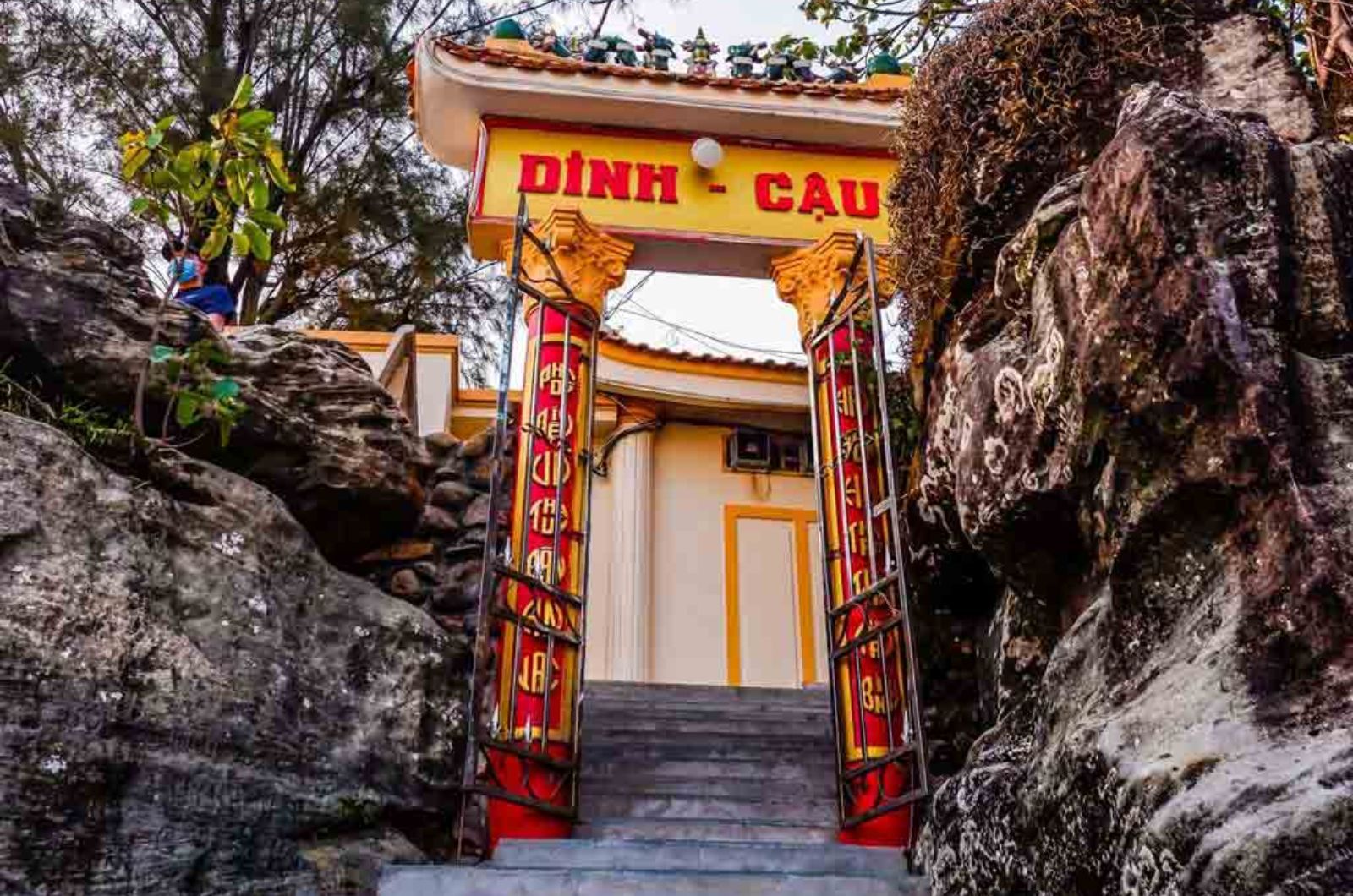
Entrance gate of Dinh Cau
Photo: Entrance gate of Dinh Cau 

4. Sacred Legends and Significance of Dinh Cau Phu Quoc

Not only a long-standing place of worship, Dinh Cau is also tied to numerous legends and spiritual stories passed down through generations of fishermen in Phu Quoc.

  • Legend of the sacred rock outcrop: When fishermen encountered severe storms, a rocky outcrop unexpectedly emerged to rescue their vessels. Since then, islanders established the shrine, believing divine spirits always protect those who set sail.
  • The story of "Cau": In the early 20th century, a mysterious man resided incognito in the temple, sweeping, burning incense, and subsequently living inside a stone cave for two years. He foretold destinies, bestowed peace talismans, and distributed blessings to fishermen on the 15th and 16th days of the 10th lunar month. Respectfully, the islanders called him "Cau".
  • Profound spiritual significance: Dinh Cau is where fishermen pray for "calm seas, peaceful weather, and full catches of seafood." Visitors come here to pray for peace, health, prosperity, and good fortune. Notably, many believe Cau Tai and Cau Quy bless those seeking luck (from the custom of "Cau Tai" [praying away misfortune] gradually evolving into "Cau Tai" [praying for wealth]).

Dinh Cau Festival takes place on the 15th and 16th days of the 10th lunar month with rituals of welcoming Cau, classical drama performances (hat boi), boat races, and flower lantern releases, attracting thousands of tourists and fishermen.

5. Tips for Visiting Dinh Cau Phu Quoc

When visiting Dinh Cau, travelers should take note of some basic information for a smoother and more fulfilling experience. The shrine is currently free to enter, with visiting hours usually from 7:00 AM to around 8:30 PM daily, making it easy to incorporate into your Phu Quoc travel itinerary.

  • Ideal time to visit: November to March (dry season) or April to June. Visit at sunset to enjoy the magical scenery or early morning to avoid the sun.
  • Dress code & etiquette: Wear polite, modest clothing. No photography/videography inside the main altar hall, no smoking, no littering, and do not touch the worship statues.
  • Offerings: Bring fruits, incense/candles, or small change for offerings (at your discretion).
  • Good tip: Combine your visit with a trip to the nearby Dinh Cau Night Market to enjoy fresh seafood (baby crab simmered with lime leaves, grilled sea urchin, khéo cake). 
Visitors are advised to visit Dinh Cau during the dry season
Photo: Visitors should visit Dinh Cau during the dry season 

Throughout centuries of existence and growth, this ancient shrine has preserved its sacred value, serving as a haven where locals place their faith for safe seafaring voyages and harmonious lives. For travelers, Dinh Cau delivers a special experience blending spiritual atmosphere, antique architecture, and stunning coastal views of Duong Dong town. Whether visiting for sightseeing, watching the sunset, or praying for peace, the site leaves a deep sense of serenity and quiet reflection – a distinct charm amid the vibrant tourism pace of the pearl island. If you have the chance to visit Phu Quoc, take the time to stop by Dinh Cau to experience its unique spiritual culture and admire one of the finest ocean views on the island.

Loading......

Featured destinations