Discover Phu Quoc Prison Relic: Preserving Heroic Pages of History

Southern

Phu Quoc - Kien Giang

Sovaba.travel

Updated at: 24/09/2026

1. History of Phu Quoc Prison

Phu Quoc Prison dates back to the French colonial period. In 1953, the French colonialists utilized the old base of the Chinese Nationalist Army (led by General Huang Chieh) to build the 40-hectare "Coconut Tree Camp" in An Thoi. This site held about 14,000 communist prisoners of war from battlefields across the North, Central, and South. After the 1954 Geneva Accords, most POWs were repatriated.

During the Republic of Vietnam era (US-backed regime), in 1967, the camp was expanded on a large scale in An Thoi Valley to an area of up to 400 hectares, comprising 12 sectors (with sectors 13-14 added in 1972). Each sector was divided into 4 sub-sectors with a capacity of 3,000 people per sector. It became the central POW camp for all of South Vietnam, detaining more than 32,000 prisoners of war (and up to 40,000 political prisoners over time). Operating for less than 6 years (June 1967 – March 1973), it witnessed countless tragedies. Following the 1973 Paris Peace Accords, the prisoners were returned and the prison was disbanded. In 1995, it was recognized as a national relic, and in 2014, it was classified as a special national relic. Today, the relic site has been faithfully restored for educational and tourism purposes.
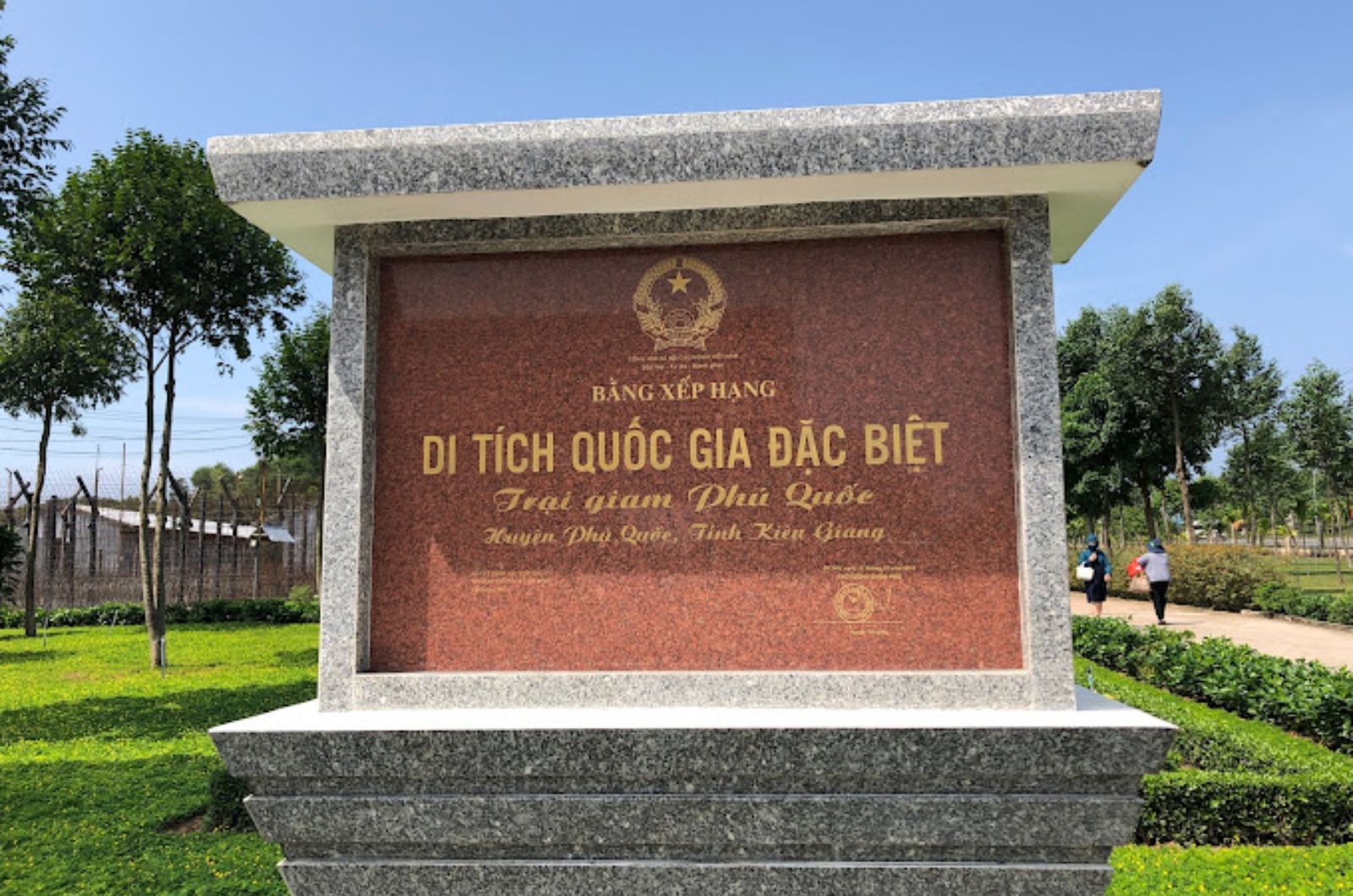
Phu Quoc Prison is a Special National Relic
Photo: Phu Quoc Prison is a Special National Relic 

2. Architecture and outstanding areas of the historical site

Phu Quoc Prison still clearly preserves historical marks through elaborately reconstructed components, helping to faithfully recreate the context of detaining POWs during wartime.

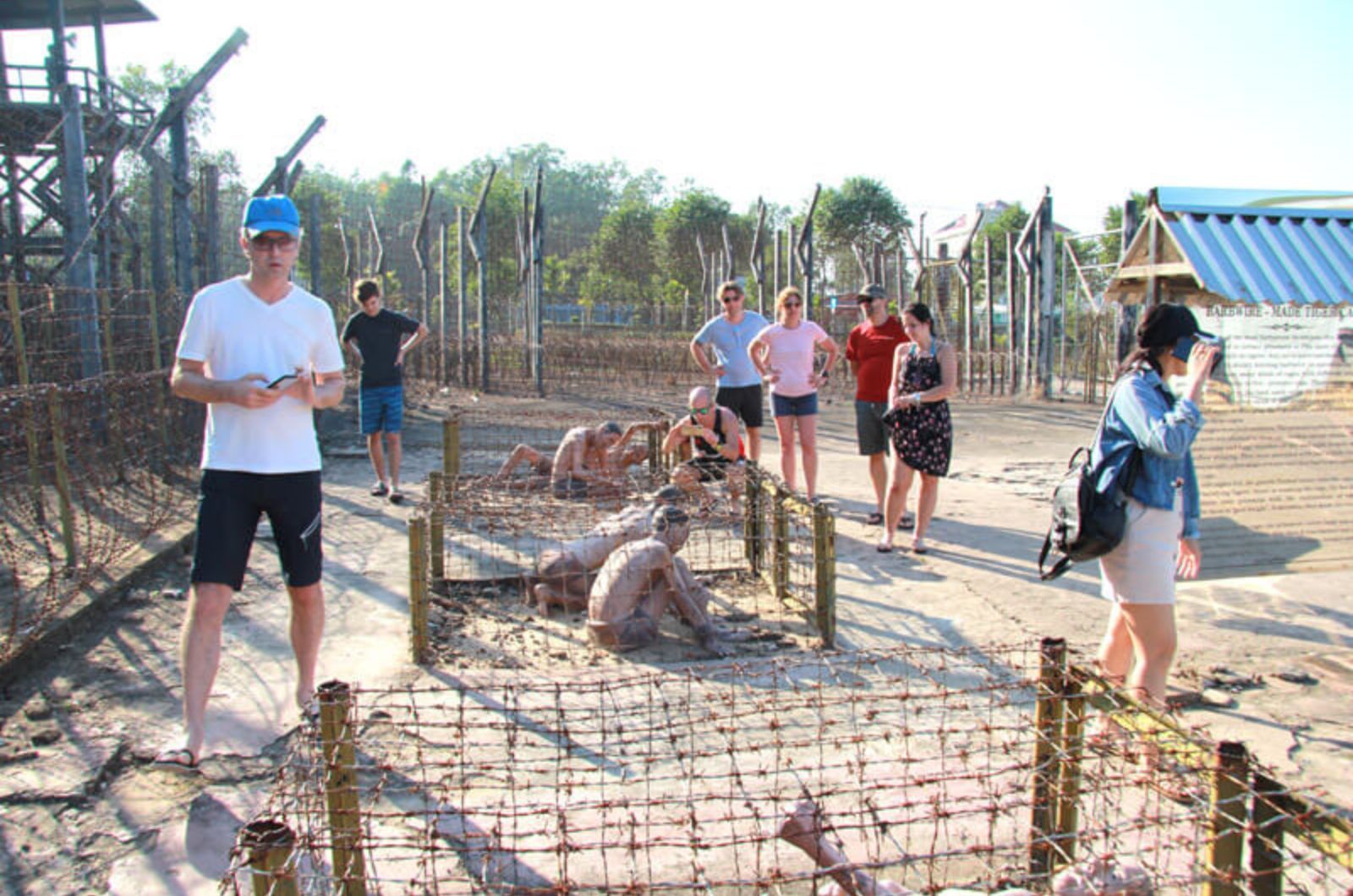
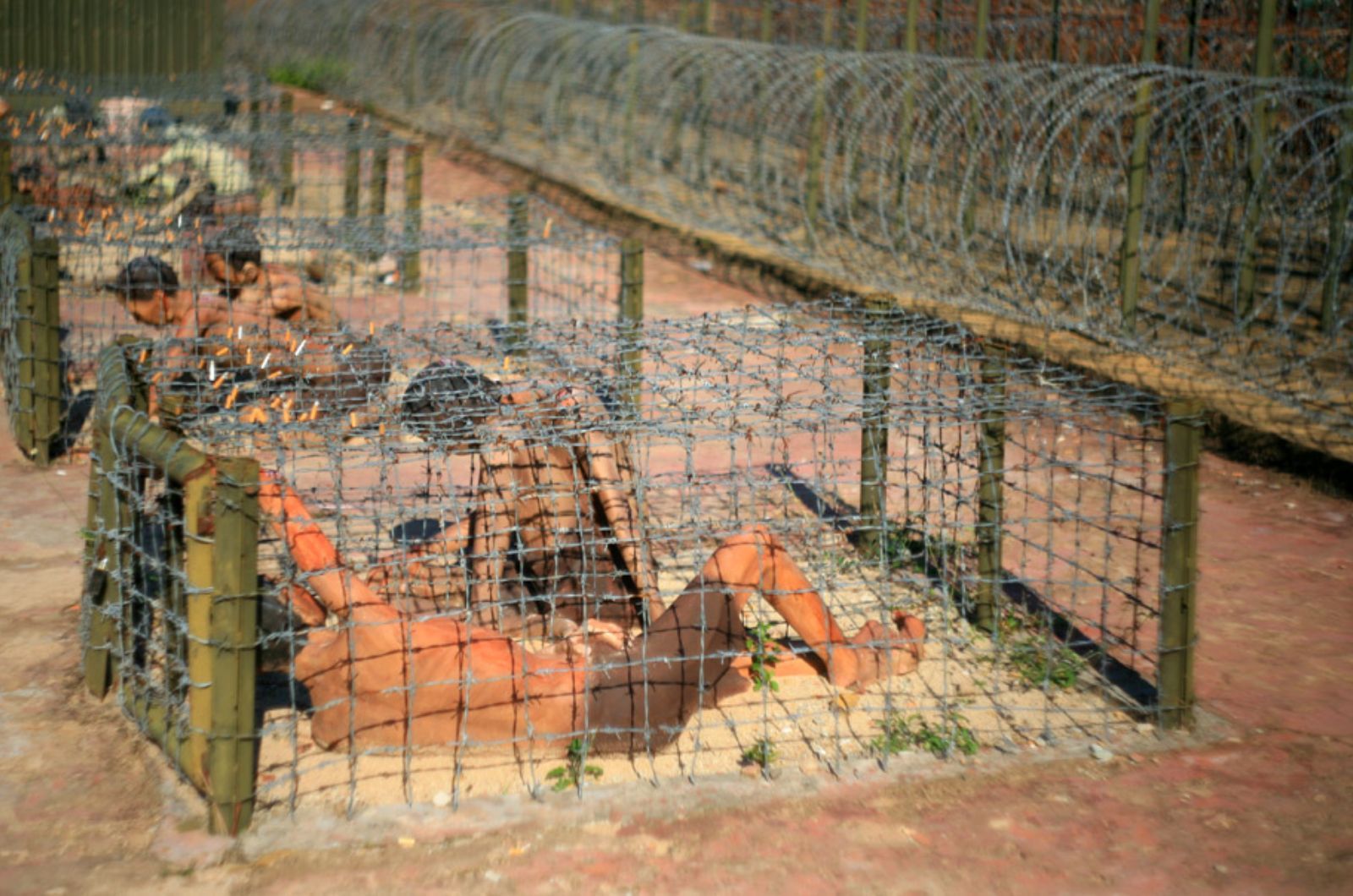
  • Sub-division B2 (area of 17,693 m²): This was the officers' detention area, fully restored with watchtowers, 8–10 layers of barbed wire fencing, barbed wire tiger cages, a kitchen, solitary confinement rooms, and an escape tunnel approximately 25 m long. This space helps visitors clearly imagine the harsh detention conditions in the past.
  • POW Cemetery at Sim Hill (area of 20,427 m²): The resting place of thousands of martyrs, featuring a fist-shaped monument—a symbol of the fighting spirit and the desire for freedom. This is the area that evokes the most emotion and reflection for visitors.
  • Other functional structures: Including the gates of Military Police Battalions 7 and 8, the Command Headquarters, and an exhibition building with over 100 documents, artifacts, and documentary films introducing the relic.
  • Memorial Area: Consisting of the martyrs' memorial monument and the ruins of Kien Van Church, helping to complete the memorial and historical education space.

These components not only hold conservation value but also play an important role in depicting a period of history that was challenging yet deeply heroic for the nation.

Barbed wire tiger cage system used to torture prisoners
Photo: Barbed wire tiger cage system used to torture prisoners 

3. Brutal torture methods and the heroic spirit of struggle

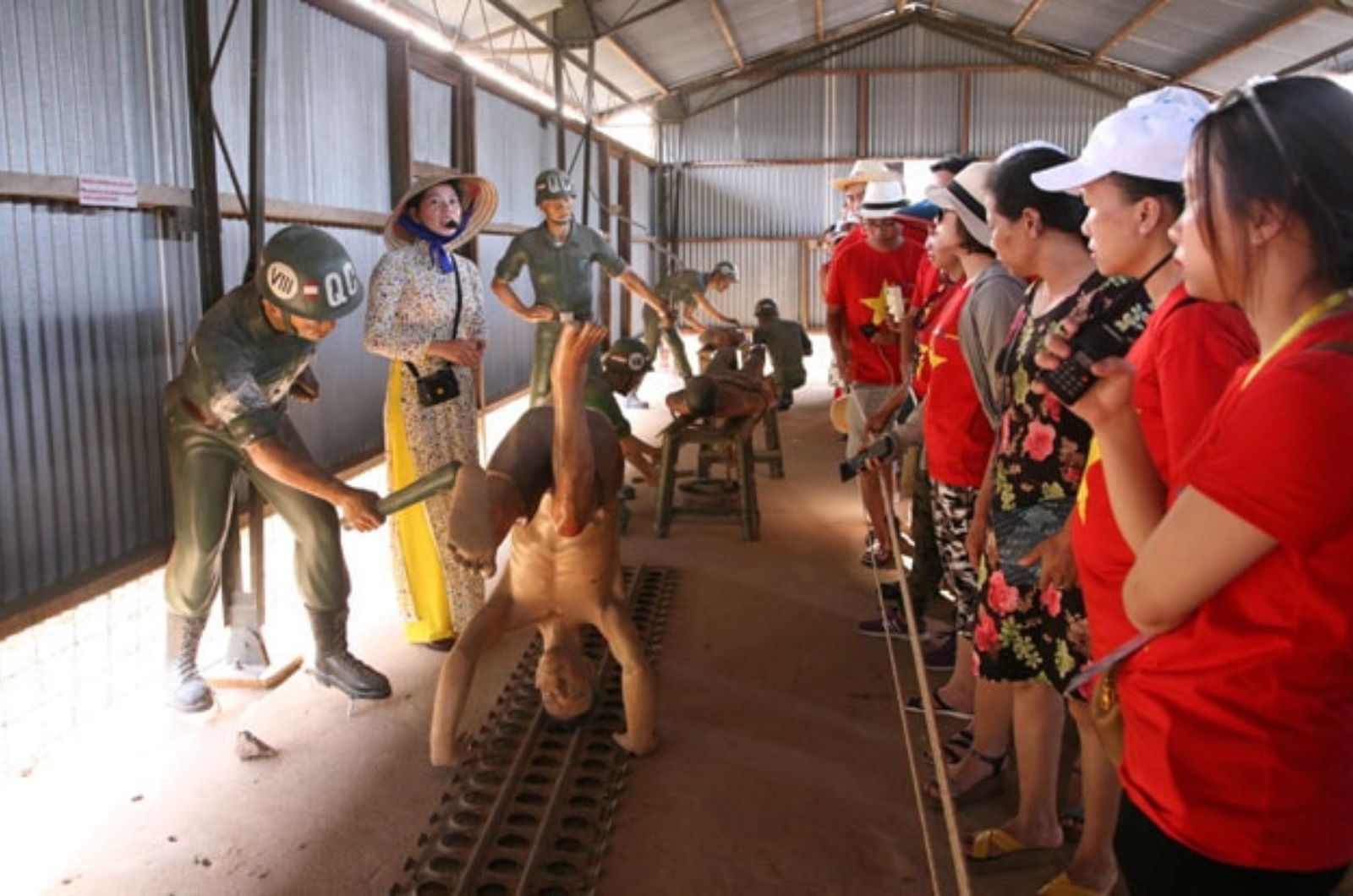
Phu Quoc Prison recorded more than 45 harsh forms of torture applied to POWs to suppress their willpower and struggle spirit. Methods such as confinement in barbed wire tiger cages under extreme conditions, physical torture, and prolonged isolation caused immense loss. Thousands of soldiers perished, yet the revolutionary spirit and resilient will endured, becoming a symbol of indomitable courage.

In addition, prisoners here organized numerous escapes of varying scales and methods, such as digging tunnels, breaching fences, or exploiting loopholes during escort. Notable cases include Nguyen Van My (Ba Toan) and his comrades escaping in 1968, as well as Pham Van Khoe and Mai Thanh in the earlier period. Notably, Party organizations maintained secret operations within the prison, organizing struggles through various forms such as hunger strikes and demonstrations, contributing to affirming the steadfast determination and "unyielding" spirit of the revolutionary soldiers even under the most brutal conditions.

Recreated torture methods at Phu Quoc Prison
Photo: Recreated torture methods at Phu Quoc Prison 

4. Detailed guide to visiting Phu Quoc Prison

To make your visit to Phu Quoc Prison smooth and fulfilling, you should know the basic information about the location, how to get there, and key tips when visiting Phu Quoc.

Address: No. 350 Nguyen Van Cu Street, An Thoi Ward, Phu Quoc City, Kien Giang Province. The location is about 25–30 km from Duong Dong center.

How to get there

  • Motorbike or taxi: Travel along Tran Hung Dao - DT46 - Nguyen Van Cu route, taking about 30 minutes
  • From Phu Quoc Airport: Takes about 20 minutes along the airport bypass road

Opening hours

  • Usually: 7:00 AM – 5:00 PM daily

Ticket price

  • Sightseeing: Completely free
  • Hiring a tour guide or audio guide: around 100,000 – 200,000 VND (helps gain deeper insight into the relic's history)

Best time to visit

  • It is recommended to visit in the early morning or late afternoon to avoid the heat
  • Recommended visiting duration: about 1–2 hours

Thoroughly preparing information before your trip not only helps you tour more efficiently but also ensures respect for an important national historical relic.

5. Tourist attractions near Phu Quoc Prison

After visiting Phu Quoc Prison, you can easily extend your itinerary to explore more attractive destinations in the Southern Phu Quoc area, making your trip even more complete.

Some recommended suggestions:

  • Sao Beach (about 4 km away): famous for its fine white sand and clear turquoise water
  • Khem Beach, Dat Do Beach, or Cau Sau Market (3–7 km away): ideal for enjoying and purchasing fresh seafood
  • South Phu Quoc Island tour packages often combine visiting Phu Quoc Prison with famous beaches, convenient for travelers looking to save time

Combining nearby destinations not only optimizes your schedule but also offers a diverse experience, from historical exploration to island resort relaxation all in one trip.

Visitors can tour the Phu Quoc Prison relic for free
Photo: Visitors can tour the Phu Quoc Prison relic for free 

Phu Quoc Prison is not only an important historical site but also a place that preserves memories of a challenging yet determined period in the nation's history. The stories, artifacts, and reconstructed spaces here clearly portray the resilient and indomitable spirit of revolutionary soldiers under harsh conditions. Visiting this site in Phu Quoc allows travelers not only to learn more about history but also to reflect on the value of peace and the sacrifices of previous generations. It is a profoundly meaningful stop that makes your journey to explore Phu Quoc more complete and enriching.

Loading......

Featured destinations