Doi Son Tich Dien Festival: Unique Royal Plowing Ceremony and Cultural Significance

Northern

Ha Nam

Sovaba.travel

Updated at: 24/09/2026

1. Origins and history of the Doi Son Tich Dien Festival

The Doi Son Tich Dien Festival dates back over 1,000 years, beginning in the spring of the Dinh Hoi year (987) during the Prior Le Dynasty. According to historical records, King Le Dai Hanh – the national hero who defeated the Song army – personally went to the field to plow at the foot of Doi Son Mountain (now in Tien Son commune, Duy Tien town, Ha Nam province). This act aimed not only to pray for a bountiful harvest but also to encourage the people to devote themselves to agricultural production, viewing agriculture as the foundation of the country.

From this historical event, the "tich dien" ceremony (royal plowing) became a state ritual throughout various feudal dynasties in Vietnam, from the Ly, Tran, to the Le. However, after many historical upheavals, the festival gradually faded away and was only revived in 2009 in the very hometown of King Le Dai Hanh. Since then, the festival has been held annually at the local level and on a larger scale every 5 years, becoming a cultural symbol of Ha Nam province. Today, the festival has been recognized as a National Intangible Cultural Heritage, contributing to the preservation of traditional values in a modern context.

The festival not only reenacts the past but also connects with the present, reminding the younger generation of the vital role of agriculture in the sustainable development of the nation.
The festival originates from the humanistic act of King Le Dai Hanh in 987
Photo: The festival originates from the humanistic act of King Le Dai Hanh in 987

2. What makes the royal ploughing ritual at the Doi Son Tich Dien Festival special?

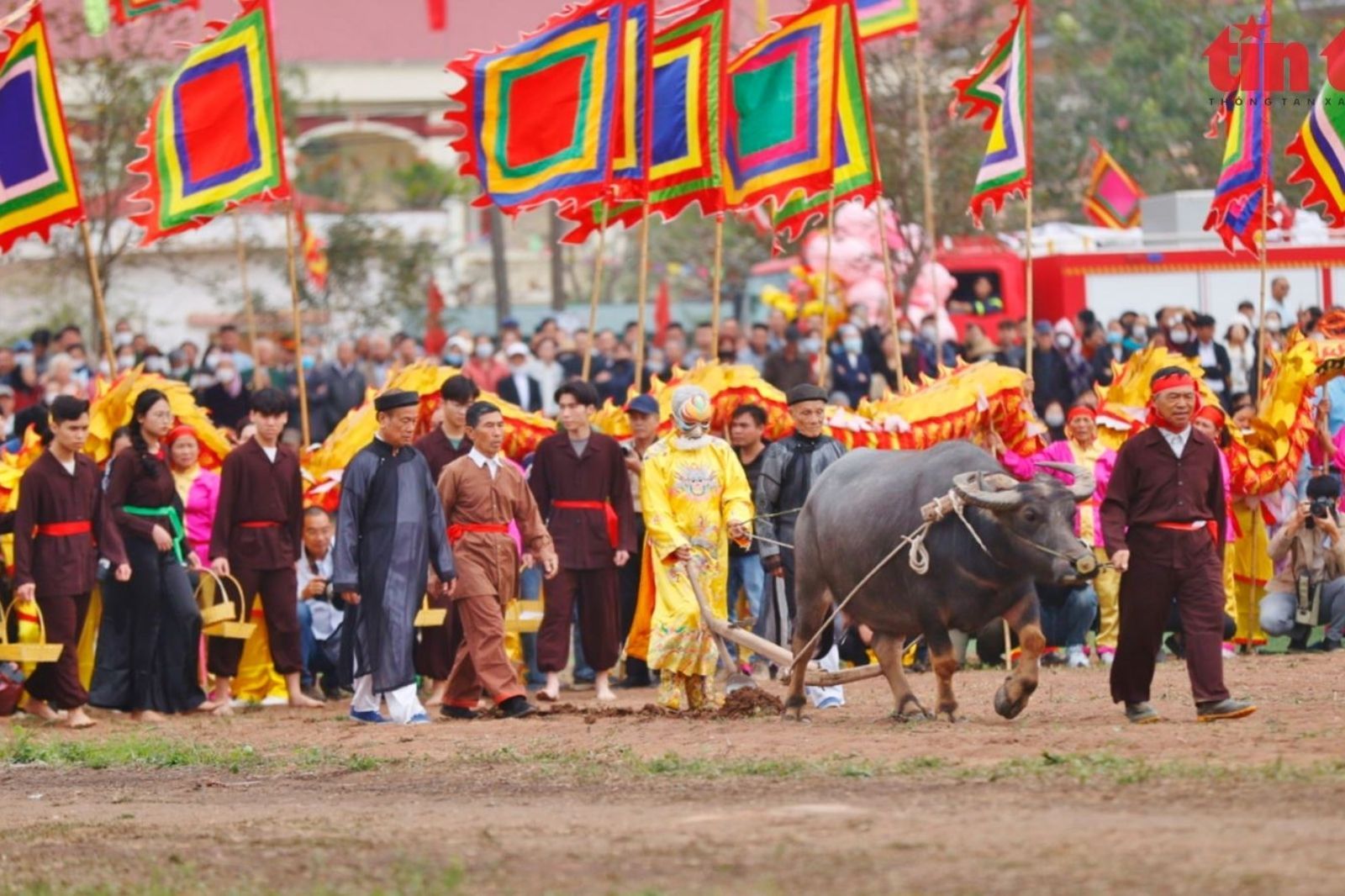
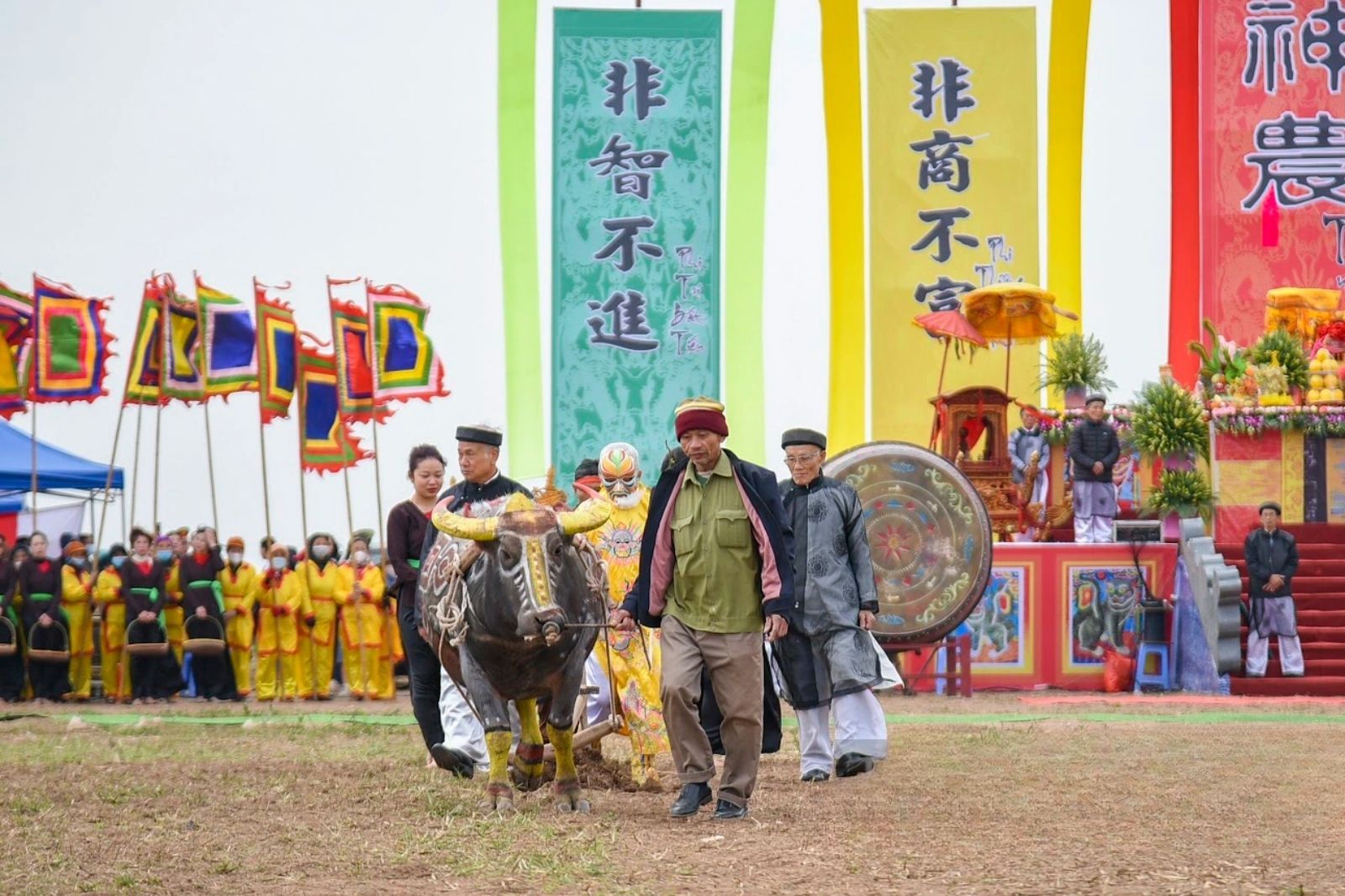
The royal plowing ceremony lies at the heart of the festival, holding high symbolic value and recreated in a solemn and authentic manner. Notably, the role of the "King" is usually played by a local leader or an respected village elder, dressed in ancient royal robes, personally guiding the plow and leading the buffalo to make the first furrows in the field.

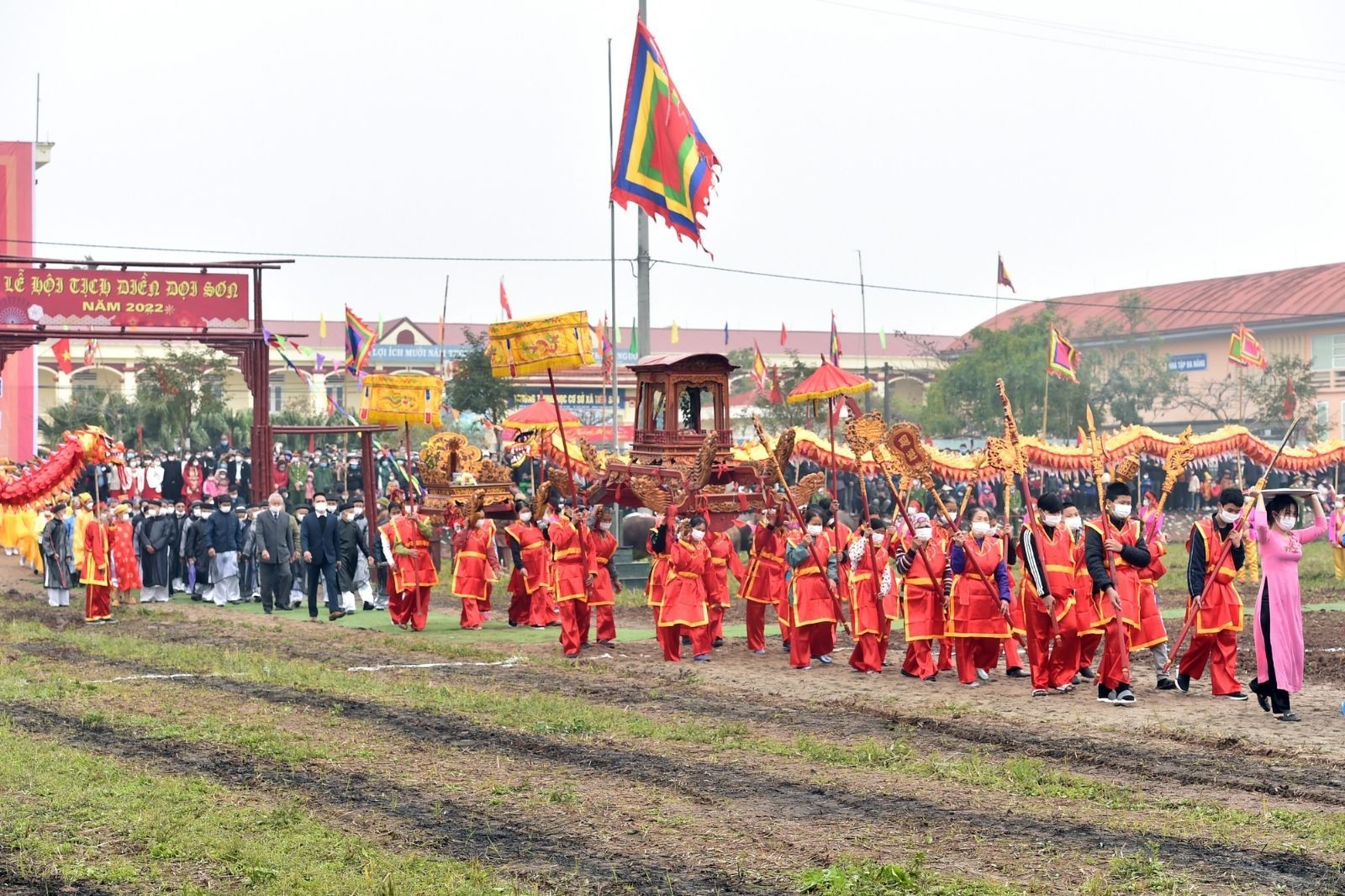
The ritual process begins with the procession carrying the spirit tablet of King Le Dai Hanh from Long Doi Son Pagoda down to the foot of the mountain, joining the procession of the village Guardian God and other beneficent deities. This is followed by the reading of the ritual address – an ancient text praising the virtues of the King and praying for favorable weather. The "King" makes three symbolic furrows, followed by "officials" and farmers who continue plowing to complete the field. The plowing buffaloes are carefully selected, usually strong and healthy, decorated with red cloth, flowers, and traditional patterns, creating a vivid picture of ancient rituals.

What makes this ceremony special is that it is not merely ritualistic, but also educational, encouraging people to value agricultural labor. In today's context of rapid urbanization, reenacting this ritual helps visitors deeply appreciate the close bond between humanity and nature.

3. Cultural and spiritual significance of the Doi Son Tich Dien Festival

The Doi Son Tich Dien Festival carries profound cultural significance, embodying the philosophy of "di nong vi ban" (taking agriculture as the root) – an agrarian concept that has endured throughout Vietnamese history. Through the royal plowing ritual, the festival emphasizes the role of agriculture as the foundation of national prosperity, encouraging people to work diligently to ensure food security.

On a spiritual level, the festival is an occasion to pray to the Agricultural Deity (Than Nong) and divine spirits for favorable weather, abundant harvests, and protection from natural disasters. It is also a way for the community to bond and commemorate the contributions of King Le Dai Hanh – the hero who ushered in an era of independence after a thousand years of northern domination. The festival contributes to preserving wet rice culture, an essential part of the national identity, and promotes sustainable cultural tourism.

In an era of industrialization, the meaning of the festival becomes even more important, serving as a reminder of green agricultural development and environmental protection.

Doi Son Tich Dien festival carries many profound humanistic meanings
Photo: Doi Son Tich Dien festival carries many profound humanistic meanings

4. Time and location of the Doi Son Tich Dien Festival

The Doi Son Tich Dien Festival usually takes place from the 5th to the 7th day of the first lunar month every year, right after the Lunar New Year (Tet), when spring is in full bloom. For example, in 2025 (Year of the Snake), the festival takes place from February 2 to February 4 in the Gregorian calendar.

The primary location is the open field at the foot of Doi Son Mountain, in Tien Son commune, Duy Tien town, Ha Nam province – where King Le Dai Hanh plowed the field over a millennium ago. This area is located about 60 km from Hanoi, easily accessible by motorbike or car via National Highway 1A. Visitors can combine their trip with a visit to the nearby Long Doi Son Pagoda for a complete cultural experience.

5. Key activities at the Doi Son Tich Dien Festival

The festival is divided into the ritual part (Ceremony) and the festive part (Festivities), featuring a wide variety of activities that attract thousands of visitors.

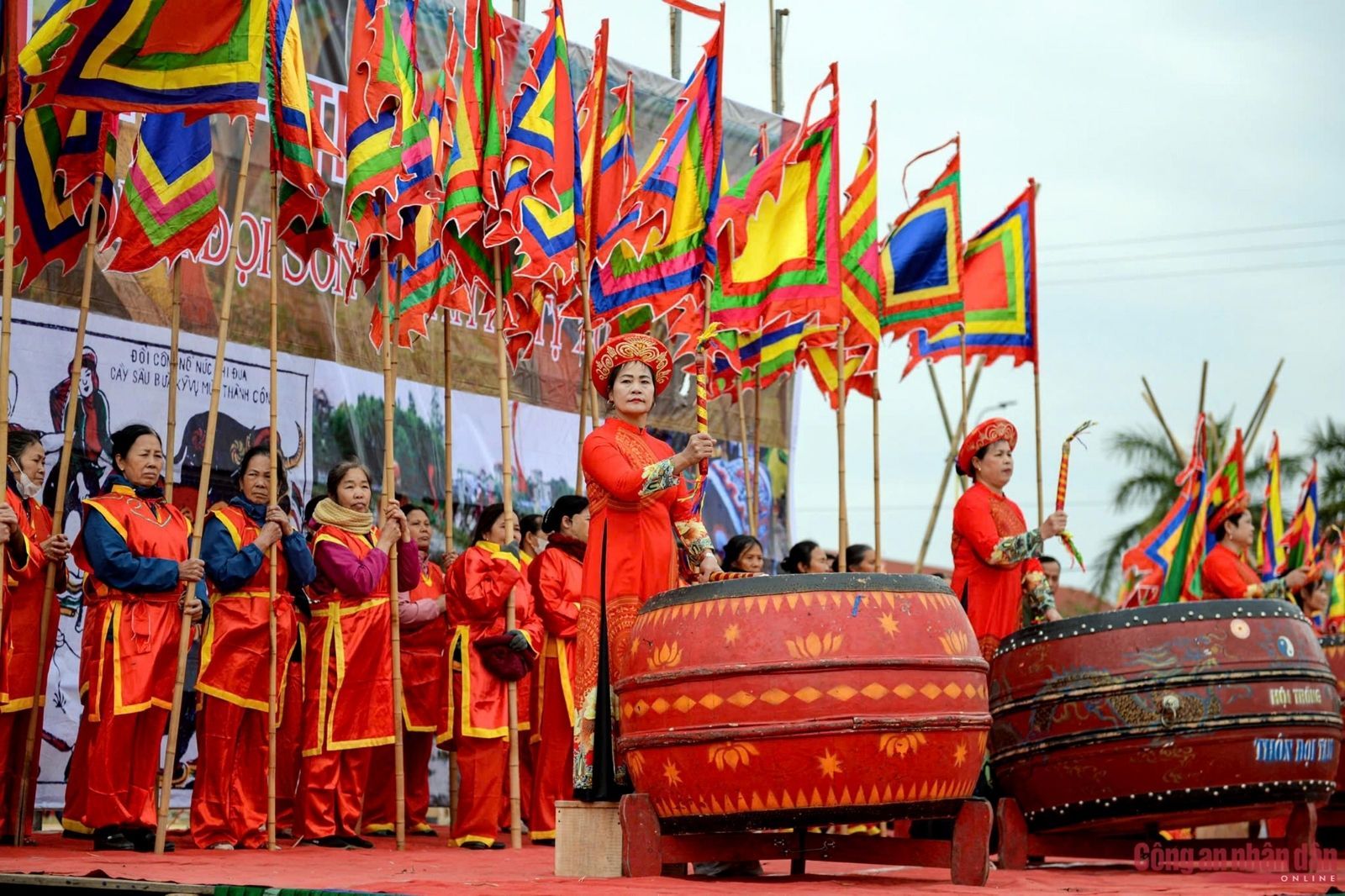
  • Ceremonial part: Includes the announcement ritual, carrying water to the altar, purification, prayers for peace, culminating in the royal plowing ceremony. These activities take place solemnly, accompanied by dragon and lion dances and incense offerings at the altar of the Agricultural Deity.
  • Festive part: Lively with traditional folk games such as swinging, blind man's bluff, folk wrestling, cockfighting; buffalo painting and decorating competitions; making day cakes (banh day); and traditional arts performances such as ca tru and hat xam. Additionally, there are exhibitions of local agricultural products and contemporary cultural programs.

These activities are not only entertaining but also educate participants about traditional folk culture.

The bustling village festival atmosphere paints a magnificent spring picture
Photo: The bustling village festival atmosphere paints a magnificent spring picture

6. Costumes, rituals, and participants in the festival

Attire worn during the festival bears strong ancient imprints: the "King" wears a brilliant yellow royal robe and a imperial crown; the "officials" and farmers wear traditional silk tunics and turbans; village maidens wear four-panel dresses (ao tu than) with crow's-beak headscarves. The plowing buffaloes are decorated with red cloth and folk motifs, creating a mystical atmosphere.

The main rituals include palanquin processions, incense offerings, reading of ceremonial texts, and plowing the field. A diverse range of participants takes part: elders role-playing as the King, local farmers as officials and commoners, alongside dragon and lion dance troupes. Everyone is carefully selected to ensure authenticity.

7. Tips for attending the Doi Son Tich Dien Festival

For the best experience, arrive early in the morning on the 7th day of the first lunar month to avoid crowds and easily secure a good viewing spot for the main ceremony. Bring drinking water, hats, and sunscreen, as the festival is held outdoors. Wear comfortable clothing and suitable footwear to participate easily in folk games.

Savor local culinary specialties such as millet rice crackers (banh da ke) and Ha Nam soft peanut candy (che lam). Combine your visit with a tour of Long Doi Son Pagoda and nearby craft villages. If traveling in a group, please maintain cleanliness and show respect during rituals. As the festival can get crowded, consider using public transportation or shuttle buses to avoid traffic congestion.

The Doi Son Tich Dien Festival is not only a festive occasion but also a great opportunity to learn about Vietnamese history and culture. If you are seeking a unique cultural experience, this is certainly an ideal early spring destination.

It is recommended to arrive early to get a good viewing spot
Photo: It is recommended to arrive early to get a good viewing spot 

The Doi Son Tich Dien Festival is not merely an annual event, but an immortal declaration of the foundational role of agriculture and the people-oriented spirit of ancestors. From the legend of the King personally plowing the field to the solemn Tich Dien ceremony and the vibrant folk festival, everything combines to create a unique cultural space. Every year, people in Ha Nam and visitors from all over gather here not only to pay tribute to their roots, but also to sow wishes together for a peaceful, prosperous new year with favorable weather. The Tich Dien Festival truly deserves to be an invaluable heritage, a bright highlight depicting the cultural identity, humanistic values, and vibrant vitality of the Vietnamese nation on every native field.

Loading......

Featured destinations