Hai Tang Pagoda Cham Islands: The Unique Ancient "4 No's" Pagoda
Central
Da Nang
Cham Island
Sovaba.travel
Updated at: 24/09/2026
1. Where is Hai Tang Pagoda located?
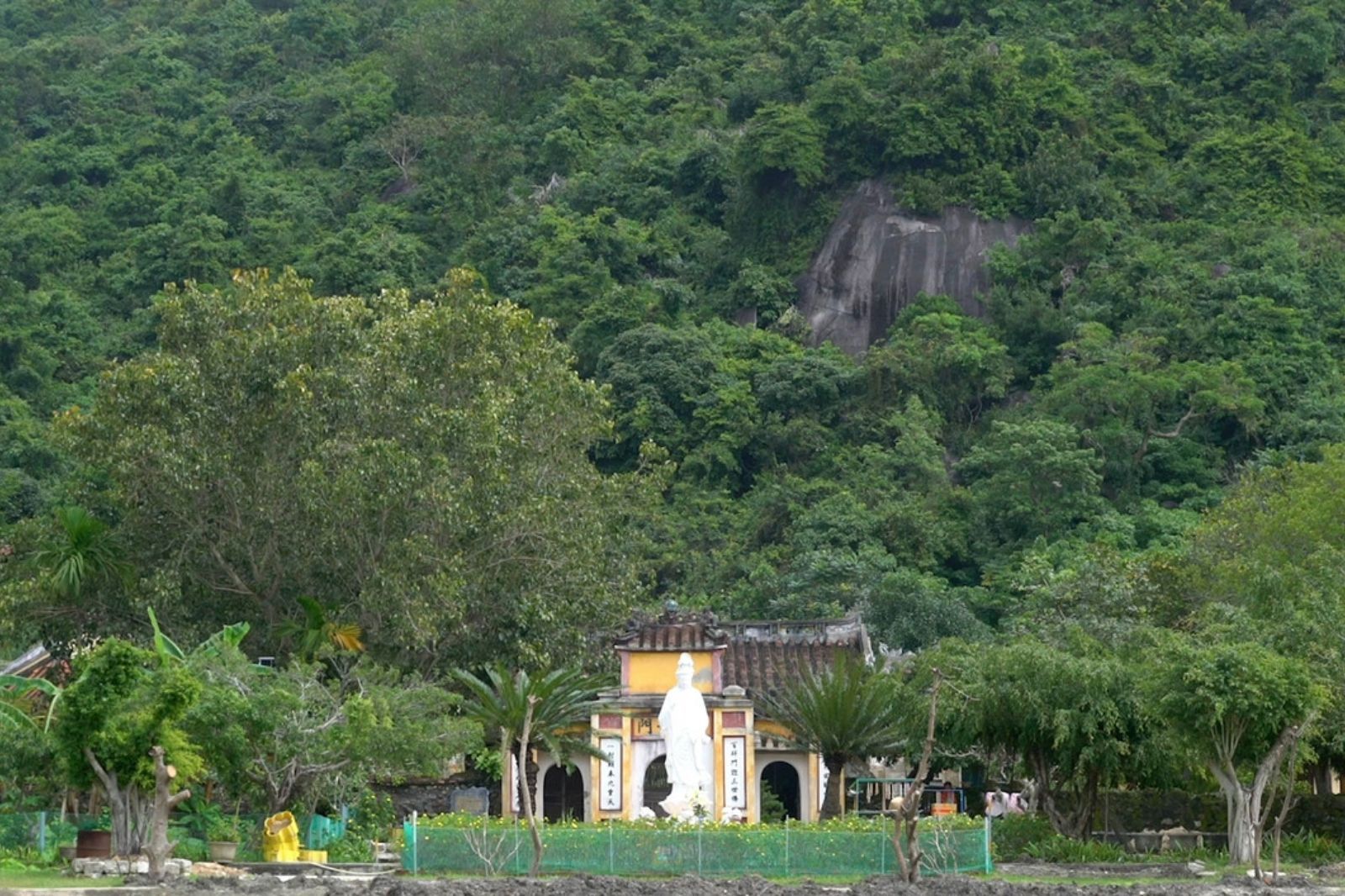
Hai Tang Pagoda is located in Cam Hamlet, Lang Beach, on Hon Lao Island – the largest island in the Cham Islands archipelago, Tan Hiep Commune, Hoi An City, former Quang Nam Province (now Da Nang City). It is about 15km from Cua Dai beach, and to reach the pagoda, visitors need to travel by speed boat or canoe from Cua Dai pier (Hoi An). Travel time takes about 20-30 minutes by canoe or 1-1.5 hours by wooden boat, depending on weather conditions.
The pagoda's location lies at the western foot of Hon Lao Mountain, surrounded by lush green forests and a small valley with verdant rice fields. This creates a peaceful space, isolated from the hustle and bustle of life, ideal for those seeking serenity. If you depart from Da Nang, travel to Hoi An first (about 30km), then continue to Cua Dai pier.
Photo: Hai Tang Pagoda located on Cham Islands
2. History of Hai Tang Pagoda in Cham Islands
Hai Tang Pagoda was built in 1758 (the 19th year of Canh Hung era), founded by Zen Master Huong Hai – a famous monk who cleared the mountain to establish it. Initially, the pagoda was located about 200m from its current position, but due to storm damage, it was severely damaged and moved to the new location in 1848. At over 300 years old, the pagoda is not only a historical monument but also proof of the intersection between Buddhism and local folk beliefs.
According to documents, the pagoda was erected to meet the spiritual needs of fishermen and merchant ships from Buddhist countries visiting the island. Historically, Cham Islands were an important stopover on international maritime routes, so the pagoda quickly became a place to pray for peace and safe sea voyages. To this day, the pagoda still retains its pristine ancient features, forming an indispensable part of the Cham Pa and Sa Huynh cultural heritage in the area.
Photo: The pagoda has an ancient and quiet atmosphere
3. Decoding the spiritual meaning of the "Four Nos" at Hai Tang Pagoda
The "4 No's" concept at Hai Tang Pagoda, Cham Islands includes: no monks, no head abbot, no electric lights, and no joss paper burning. This is not an absence of organizational structure or rituals, but reflects the depth of island folk beliefs, emphasizing tranquility, simplicity, and harmony with nature.
No monks – no head abbot: The pagoda has no resident monks or official abbot; instead, it is maintained and cared for by the local resident community.
No electric lights: The pagoda does not use modern electric lighting systems, relying mainly on natural light and oil lamps.
No joss paper: Not burning joss paper expresses the belief system of taking sincerity as the root, emphasizing reverence over formal rituals.
It is precisely the "4 No's" that create the unique characteristic of Hai Tang Pagoda, offering visitors a rustic, authentic spiritual space where people find tranquility and a harmonious connection between faith, the sea, and the mountain forests of Cham Islands.
4. What is unique about the architecture of Hai Tang Pagoda?
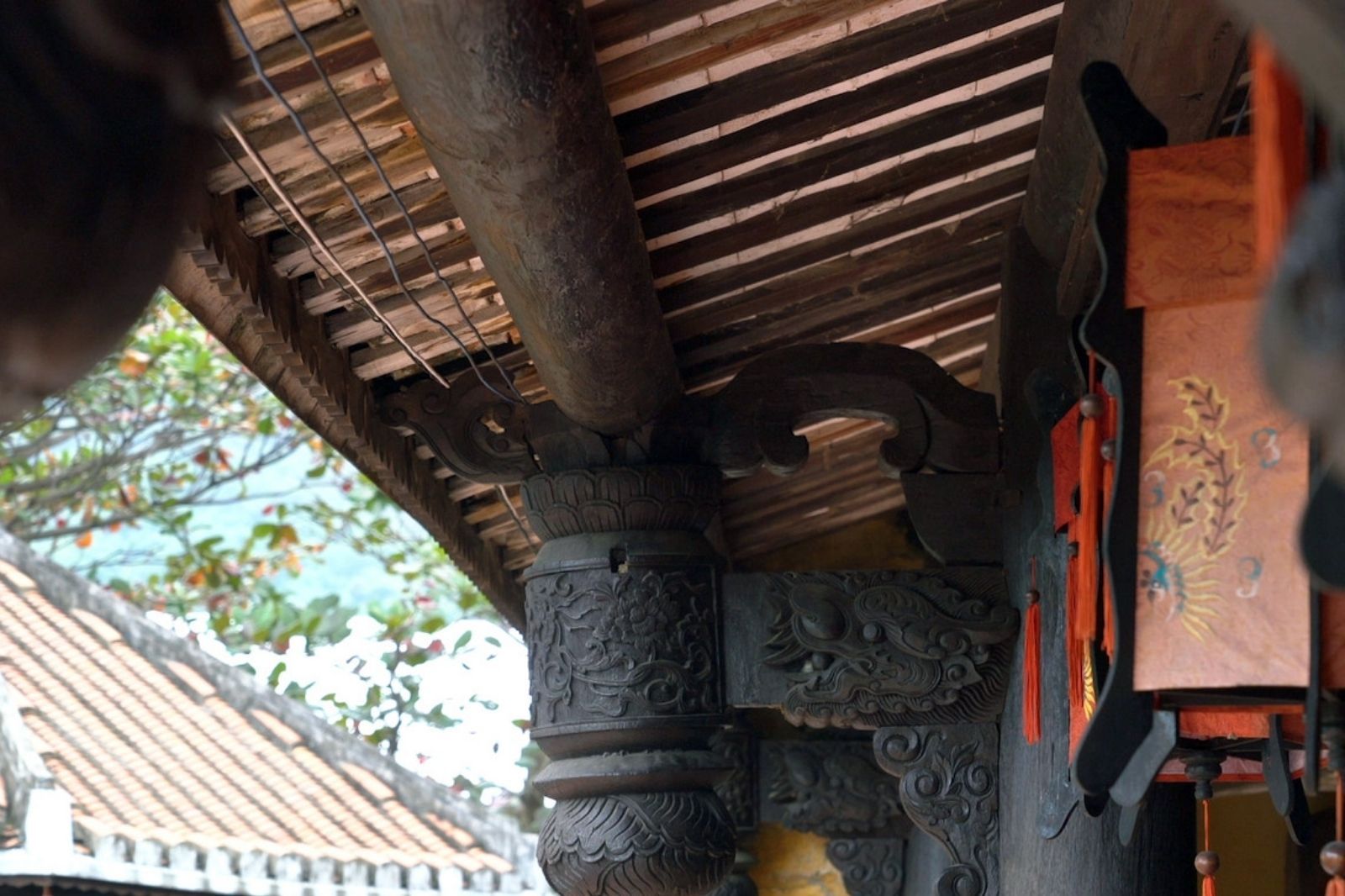
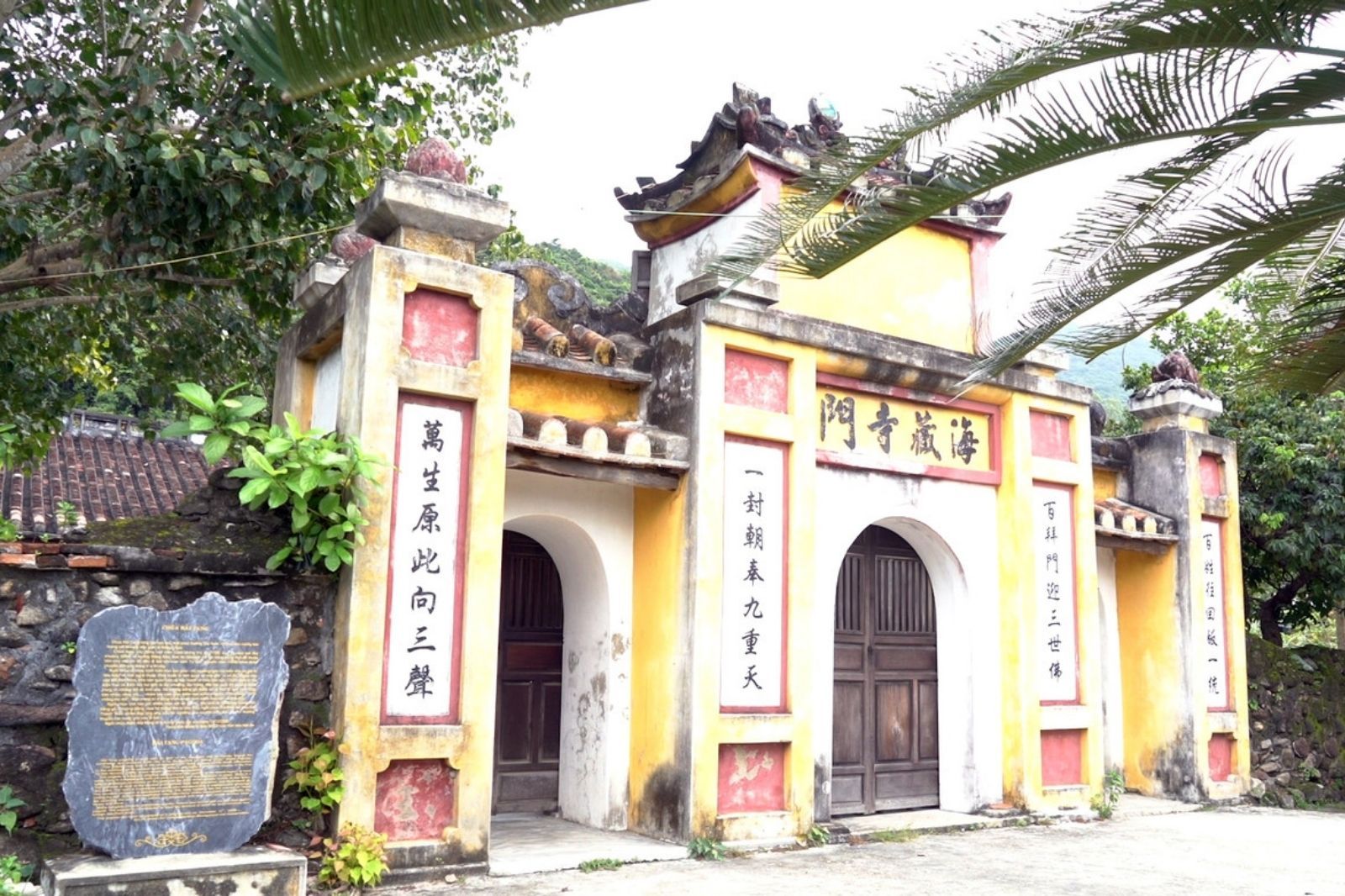
The architecture of Hai Tang Pagoda deeply reflects the ancient Vietnamese style, combining Buddhist and folk elements. The pagoda has a modest area but is delicately designed, featuring a triple gate (tam quan) with 4 pillars that are 5m high, topped with lotus-shaped peaks – a symbol of purity in Buddhism. The triple gate is divided into 3 entrances: two small pathways and a large central one with curved arched roofs tiled with traditional yin-yang tiles, decorated with delicate roof ridge patterns.
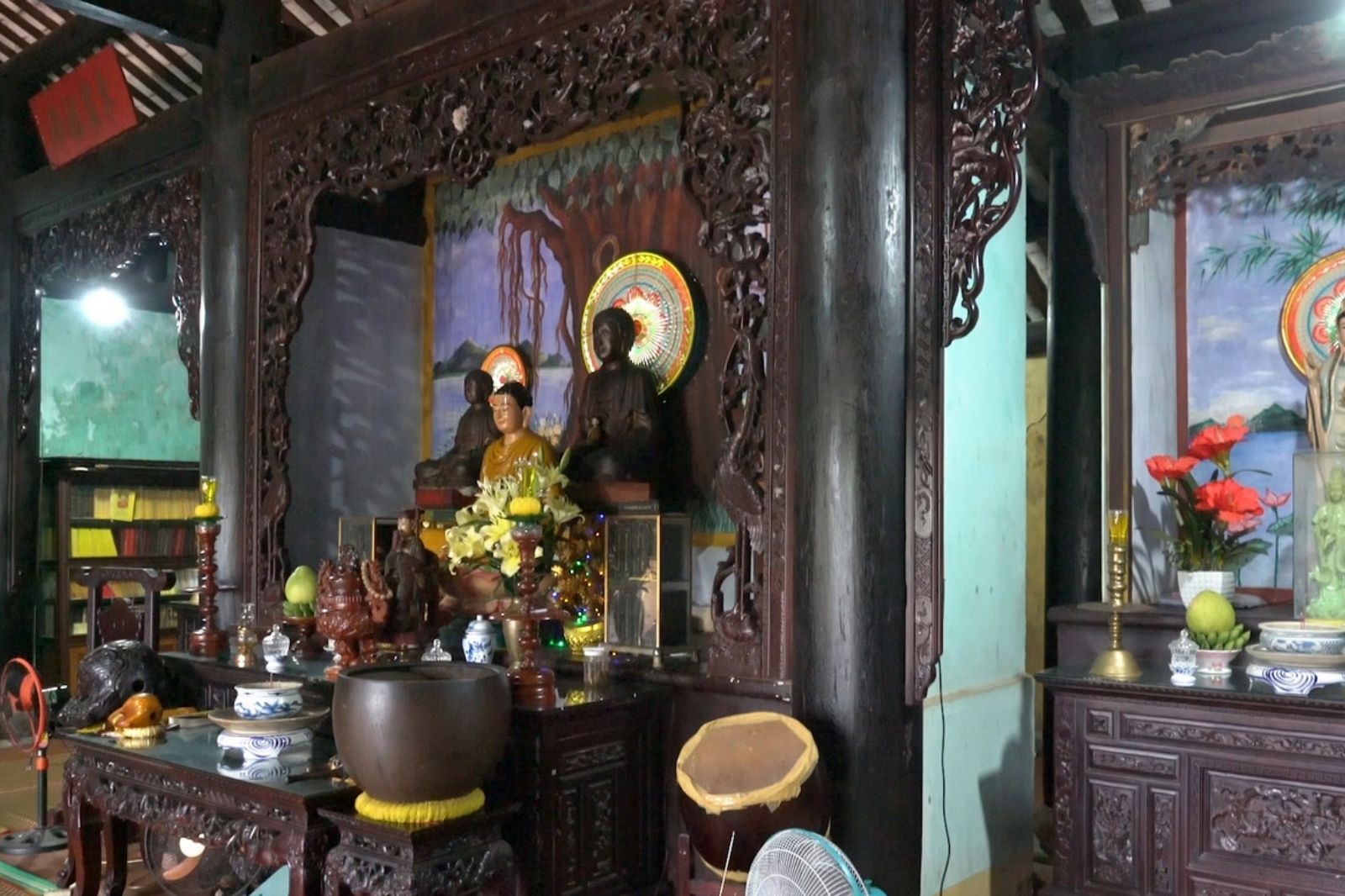
Inside, the pagoda is divided into the front hall dedicated to guardian deities protecting fishermen and the main hall worshipping the Buddha. Horizontal lacquered boards and vertical couplets are intricately carved from wood with flower and stylized lantern motifs. Notably, the pagoda does not use electricity, relying solely on oil lamps, creating a mystical and sacred atmosphere. The entire architectural structure remains intact after over 300 years, standing as a testament to the sustainable construction techniques of the ancients.
Photo: Inside Hai Tang Pagoda
5. Sacred stories associated with Hai Tang Pagoda
Hai Tang Pagoda is associated with many sacred legends reflecting the beliefs of the islanders. A prominent story is about the origin of the name "Hai Tang" (vast sea): Legend has it that in the past, a merchant ship encountered a big storm and had to anchor at the island. The local guardian deities appeared and instructed them to use timber to build a pagoda so that the sea would become calm. After the pagoda was built, the sea indeed calmed down, and since then, it has become a place to pray for peace for fishermen.
Another legend tells of the pagoda once successfully praying for rain during a drought, helping residents overcome famine. Many visitors share their experience of feeling a strange sense of peace when visiting the pagoda, as if protected by the sea deities. These stories not only enrich the cultural value but also attract those who love spiritual tourism.
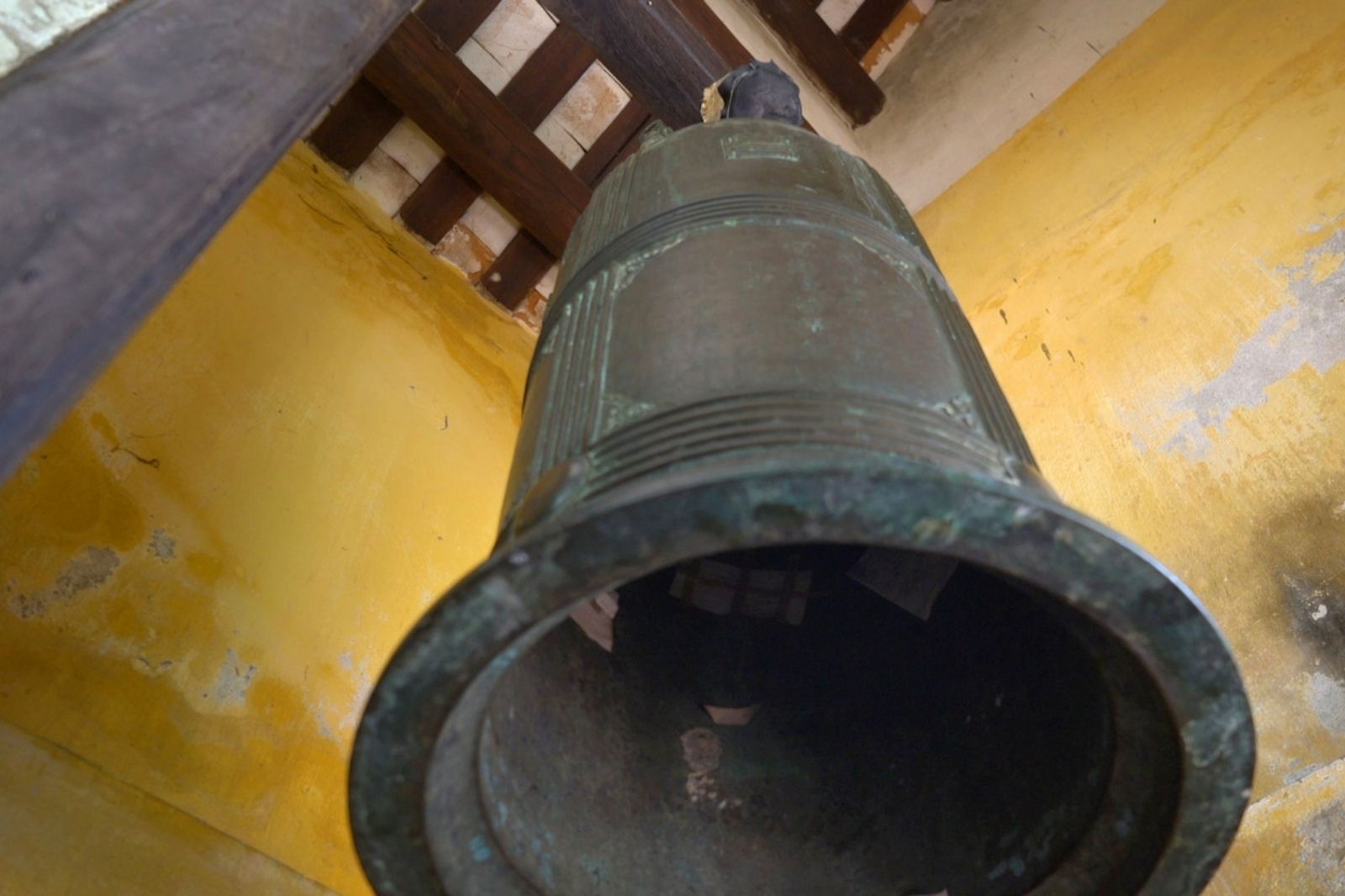
Photo: Ancient bronze bell at Hai Tang Pagoda
6. Tips for visiting Hai Tang Pagoda when traveling to Cham Islands
Below are some useful tips when visiting Hai Tang Pagoda, helping to make your Cham Islands trip more complete and convenient.
Transportation and tickets: Buy boat tickets at Cua Dai pier (around 150,000-300,000 VND round trip). The island sightseeing ticket is 70,000 VND/person, plus an environmental protection fee of 20,000 VND. Join a Cham Islands tour to save time.
Attire and rules: Dress modestly and politely (long-sleeved shirts, long trousers). Avoid speaking loudly and respect the sacred space.
Combined activities: After visiting the pagoda, explore beaches, seafood markets, or go scuba diving/snorkeling. Bring sunscreen, drinking water, and hats due to hot weather.
Accommodation and dining: If staying overnight on the island, choose a homestay at Lang Beach. Try fresh seafood like sun-dried squid or wild forest vegetables – local specialties.
Useful tips: Go early to avoid crowds, and check the weather before departing. If you love photography, sunrise at the pagoda will yield stunning photos.
Photo: Triple Gate (Tam Quan) of Hai Tang Pagoda
Enduring through hundreds of years amidst the ocean, Hai Tang Pagoda in Cham Islands is not only an ancient religious building but also a spiritual symbol closely attached to the spiritual life of island residents. The title of the unique ancient "4 No's" pagoda has contributed to creating a special attraction, making Hai Tang Pagoda an indispensable stop on the journey to discover the cultural and historical values of Cham Islands.
For convenient visiting to Hai Tang Pagoda combined with experiences at other prominent destinations such as the Cham ancient well, fishing village, coral diving, and enjoying island cuisine, tourists can choose the all-inclusive Cham Islands tour with Sovaba Travel. The tours are scientifically designed, ensuring safe transport by speed boat, accompanied by tour guides knowledgeable about local history and culture, making your trip more complete and meaningful. Contact Sovaba Travel today for itinerary consultation and to book a suitable Cham Islands tour for your family, group of friends, or a spiritual cultural experience holiday.