Ho Quoc Pagoda Phu Quoc: A Fairyland in the Heart of Phu Quoc

Southern

Phu Quoc - Kien Giang

Sovaba.travel

Updated at: 24/09/2026

1. Where is Ho Quoc Pagoda?

Ho Quoc Pagoda (full name: Truc Lam Ho Quoc Zen Monastery) is located in Suoi Lon hamlet, Duong To commune, Phu Quoc city, Kien Giang province. Thanks to its location in the southern part of the island, visitors can easily combine visiting the pagoda with many famous nearby tourist attractions.

  • About 10–15 km from Phu Quoc International Airport
  • About 20–25 km from Duong Dong center
  • About 10–15 km from An Thoi area and Sao Beach

The most impressive feature of the pagoda is its rare feng shui position “leaning against the mountain and facing the water”: backed by green mountains and facing the vast sea in front. Looking down from above, the entire pagoda campus embraces the surrounding forest and ocean scenery, creating a beauty that is both majestic and serene. Thanks to this special location, many tourists refer to this place as the “heaven gate of Phu Quoc”, a wonderful harmony between nature and spiritual space.
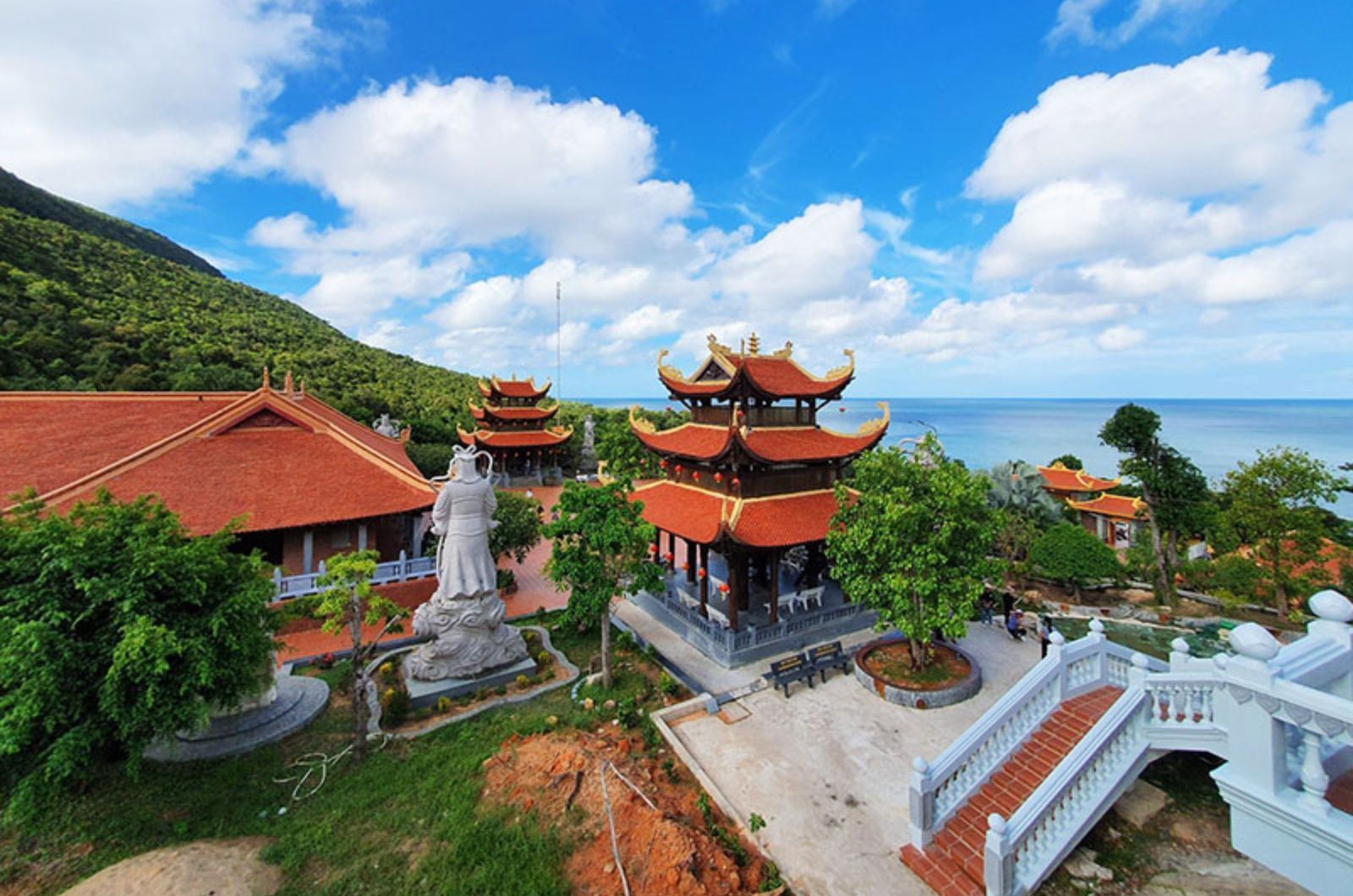
Chùa Hộ Quốc còn gọi là Thiền viện Trúc Lâm Hộ Quốc
Photo: Ho Quoc Pagoda, also known as Truc Lam Ho Quoc Zen Monastery

2. History of Ho Quoc Pagoda

Ho Quoc Pagoda (or Truc Lam Ho Quoc Zen Monastery) broke ground on October 14, 2011, and was officially inaugurated on December 14, 2012, in Phu Quoc, Kien Giang province. The project was built with contributions from businesses, Buddhists, and numerous benefactors, with a total budget of over 100 billion VND, of which about 80 billion VND was allocated for the pagoda construction and 20 billion VND for transportation infrastructure leading into the area.

The name “Ho Quoc” holds a deep meaning, expressing the desire to protect the nation, safeguard territorial sovereignty, and protect the sacred sea and islands of the Fatherland, especially in the southernmost region. It is also considered the largest spiritual project in the Mekong Delta region, belonging to the Truc Lam Yen Tu Zen Sect—a Zen school founded by King Tran Nhan Tong (the Emperor-Monk of the Tran Dynasty) in the 13th century.

After its inauguration, the pagoda continued to add and complete several auxiliary items during the 2013–2014 period to perfect its architectural space and better serve the needs of sightseers and worshippers from all over.

3. Architecture of Ho Quoc Pagoda

The entire campus of Ho Quoc Pagoda was constructed in the Ly–Tran Dynasty architectural style, deeply reflecting the traditional imprint of Vietnamese Buddhism. The project utilizes precious ironwood and monolithic stone, high-durability materials capable of lasting hundreds of years. The elaborate carvings combined with the characteristic curved red tile roofs create a beauty that is both solemn and harmonious with the surrounding mountain, forest, and ocean landscape.

Must-see highlights

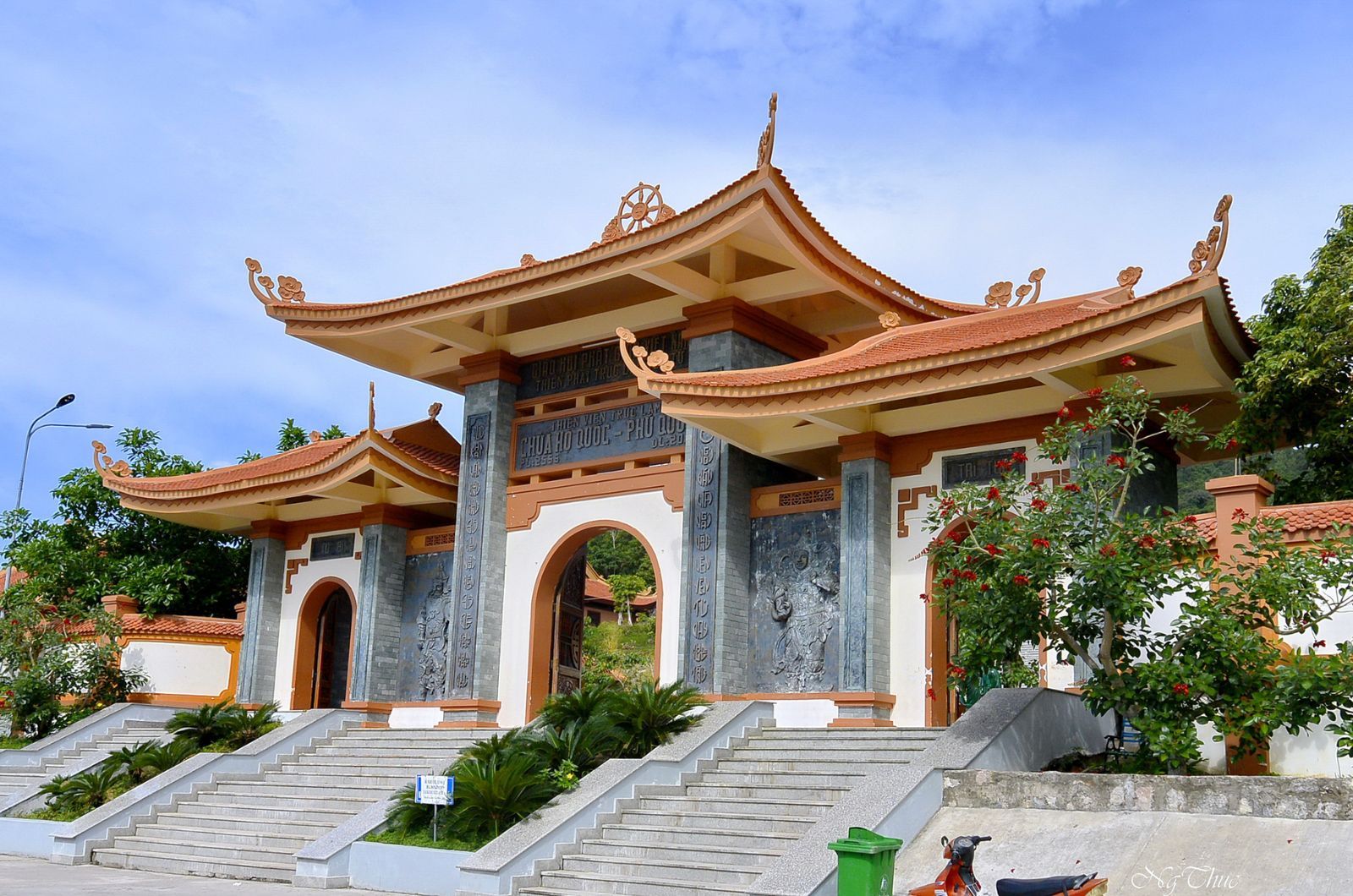
  • Tam Quan Gate: Comprising three entrances with symbolic meanings in Buddhism: Dai Giac (Great Enlightenment - center gate), Bat Nhi (Non-duality - left), and Giai Thoat (Liberation - right). On both sides of the gate stand statues of guardians Vi Da (Skanda) and Tieu Dien Dai Si (Krodha) protecting the sacred site.
  • 70 stone dragon steps: The path leading up to the main hall is adorned with dragon and lotus bas-reliefs, symbolizing purity and enlightenment in Buddhism.
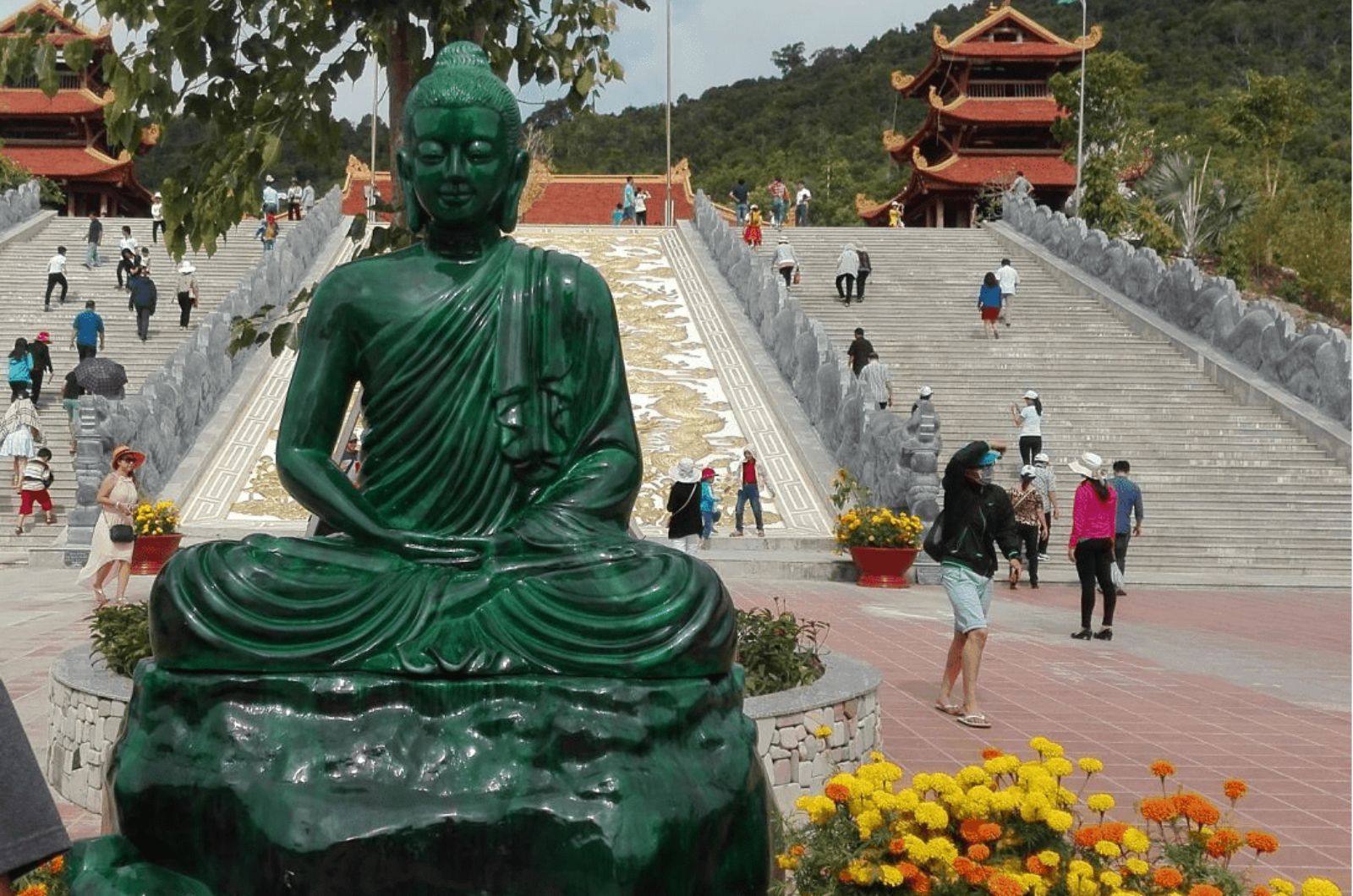
  • Main Sanctuary (Dai Hung Bao Dien): The center of the pagoda, enshrining the statue of Shakyamuni Buddha, Buddha relics, and a precious Jade Buddha statue.
  • Statue of Guan Yin Bodhisattva: A white statue standing over 30 meters tall, facing the vast sea, symbolizing compassion and protection for fishermen in the island region.
  • Bell Tower – Drum Tower: Two symmetrical structures on both sides of the main courtyard, each 3 stories tall, contributing to the overall architectural balance.
  • 18 Stone Arhats: Carved along the walkway into the pagoda, each statue carries a distinct expression, vividly demonstrating traditional sculpting art.
  • Ancestor Hall (To Duong): Dedicated to Tran Nhan Tong and the patriarchs of the Truc Lam Yen Tu Zen Sect, closely tied to the history of Vietnamese Buddhism.

The entire pagoda campus is surrounded by lush green mountains behind and the expansive ocean in front, creating a serene environment where nature and spirituality blend together, a rarity among many other Buddhist structures in Phu Quoc.

Cổng Tam Quan ở chùa Hộ Quốc
Photo: Tam Quan Gate at Ho Quoc Pagoda  

4. Tips for visiting Ho Quoc Pagoda Phu Quoc

To make your visit to Ho Quoc Pagoda (or Truc Lam Ho Quoc Zen Monastery) more complete, visitors should keep in mind some useful experiences below.

Opening hours: The pagoda is open from 6:00 AM to 6:00 PM daily with completely free admission and parking, creating favorable conditions for tourists and Buddhists to come and worship.

Ideal time to visit:

  • Early morning (6:00 AM – 9:00 AM): Cool weather, peaceful atmosphere, allowing visitors to admire the breathtaking sunrise over the sea from the pagoda grounds.
  • Late afternoon (3:00 PM – 5:00 PM): Gentle sunlight, as the sea and sky scene shifts into brilliant golden hues—an ideal time for taking photos and watching the sunset.

Note: It is recommended to avoid visiting between 10:00 AM and 2:00 PM, as the pagoda area has few shade trees, making the weather quite hot and sunny.

How to get there: From the center of Duong Dong or Phu Quoc International Airport, head towards Phu Quoc Prison. When you are about 1–2 km away from the turn to Sao Beach, you will see a directional sign for Ho Quoc Pagoda on the left side. From here, continue along the concrete road for about 4 km; the road is quite easy to navigate with a few gentle turns, suitable for both motorbikes and cars.

5. Important notes when visiting Ho Quoc Pagoda Phu Quoc

To ensure your visit and worship at Ho Quoc Pagoda is solemn and fulfilling, visitors should take note of the following points:

  • Polite attire: Wear sleeved tops, long pants, or modest clothing; avoid short shorts, mini skirts, or sleeveless tops when entering the pagoda area.
  • Prepare essential items: Bring drinking water, sunscreen, or an umbrella/parasol as the campus is quite open; if you wish to offer incense, you can prepare incense and candles beforehand.
  • Maintain a respectful environment: Do not litter, keep loud conversations to a minimum in the main hall area, and refrain from posing disrespectfully in front of Buddha statues.
  • Move carefully: The pagoda area features many stone steps, so the elderly and children should be careful when going up and down.

Rainy season notice: From May to October, the roads and stone steps can be slippery, so visitors should walk slowly to ensure safety.

Du khách nên mặc trang phục lịch sự khi tham quan chùa
Photo: Visitors should wear polite attire when visiting the pagoda  

Not only an outstanding spiritual landmark, Ho Quoc Pagoda Phu Quoc also offers visitors a sense of peace amidst the vast nature of Pearl Island's sea and sky. Standing in the pagoda courtyard looking out over the boundless ocean, listening to the sea breeze blending with the echoing sound of temple bells, you will clearly feel a rare tranquility and lightness. If you have the opportunity to visit Phu Quoc, take some time to stop by here, not only for worship but also to find a quiet moment for yourself during your journey exploring this beautiful island.

Loading......

Featured destinations