Interesting facts about the fauna you can encounter when trekking to Mu Me Waterfall
Central
Quang Binh
Mu Me Waterfall
Sovaba.travel
Updated at: 24/09/2026
1. Mu Me Waterfall – an attractive trekking destination in Central Vietnam
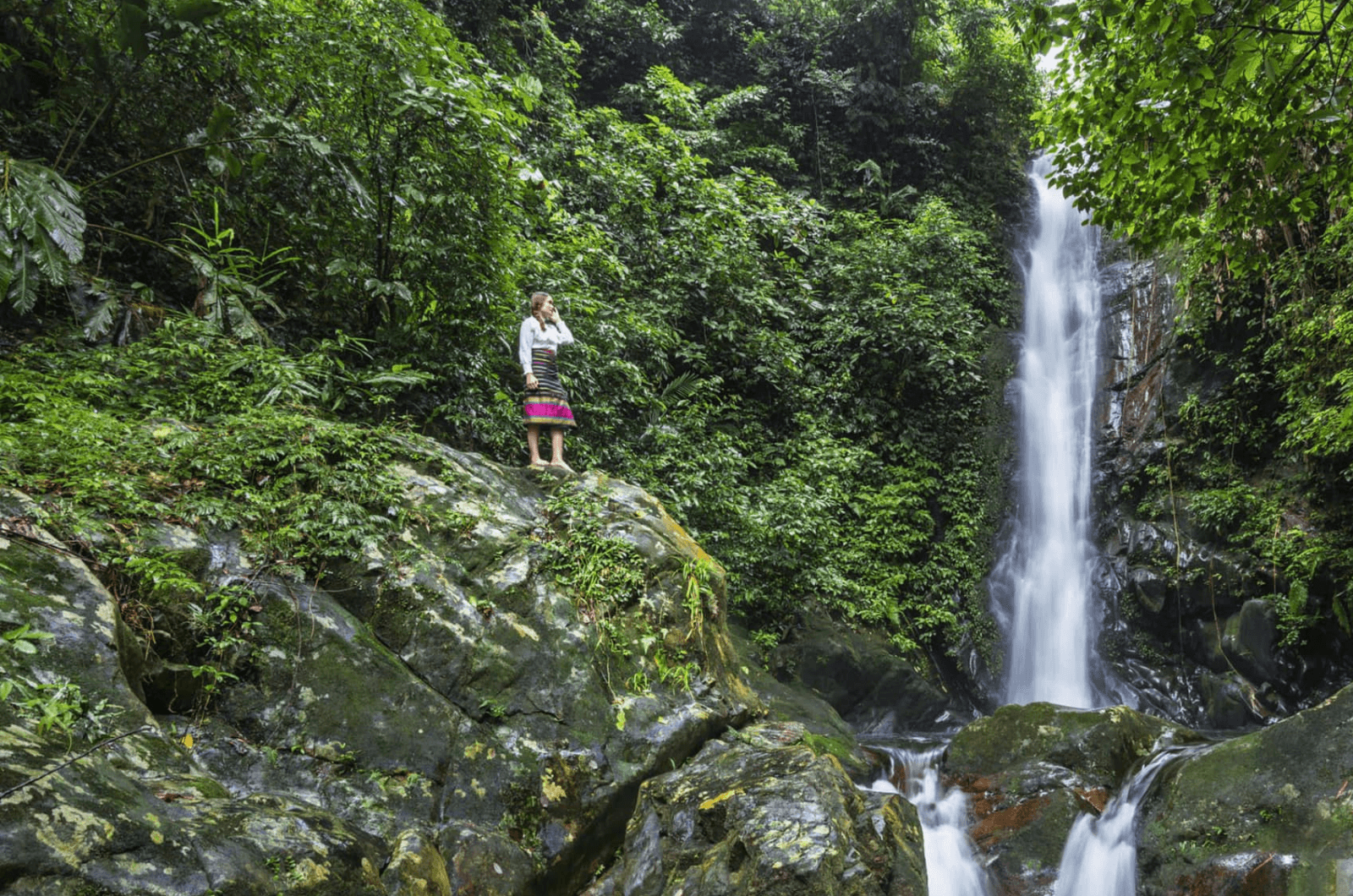
Nestled amidst the pristine mountains and forests of Quang Binh province, Mu Me Waterfall is an emerging destination for trekking enthusiasts and nature explorers. With a height of 35 meters, the waterfall cascades down in white foam amidst lush green ancient forests, creating a scene that is both majestic and romantic, leaving anyone in awe.
The trekking route to Mu Me Waterfall is not too long but challenging enough with dense forest sections, rocky slopes, and winding underground streams. On that journey, visitors not only enjoy the fresh air and listen to the gurgling stream but also have the opportunity to admire the pristine ecosystem with rich flora and fauna, including many rare species.
Not noisy, not commercialized, Mu Me Waterfall is a gift from nature for those who long for an authentic, intimate, and emotional trekking experience.
2. The diverse picture of fauna at Mu Me Waterfall
The Mu Me Waterfall area appears like a lush natural painting, where the majesty of the waterfall blends with the pristine beauty of the primary forest, creating a diverse and unique ecosystem. The vegetation here is incredibly rich, ranging from ancient canopy trees reaching up to catch the sunlight, to dense shrub layers and lush green grass mats underfoot. It is this diversity of vegetation that has created countless different habitats, serving as a solid foundation for the survival and development of a diverse animal population in terms of species and numbers.
Humid primary forest: With high humidity, shade, and an abundant food supply from diverse plant species, this area is an ideal habitat for many amphibians such as frogs and toads of all sizes and colors, moisture-loving reptiles like pythons and snakes, and countless diverse insect species.
Stream beds and water bodies: Clean water sources and continuous flow are essential habitats for native fish, small shrimp and crabs, as well as coastal foraging birds like herons and night herons. The presence of these aquatic species contributes to enriching the area's ecosystem.
Shrublands and grasslands: Areas receiving more sunlight are usually home to seed-eating birds and insects, agile reptiles like lizards and skinks, and foraging spots for small mammals like squirrels and wild mice. The diversity of herbaceous plants and shrubs provides food sources and safe shelters for them.
Photo: The Mu Me Waterfall area appears like a lush natural painting
The diversity of fauna at Mu Me Waterfall is not just a random collection of species, but a complex picture painted by the close interaction between animal species and the diverse habitats that this region offers.
3. Diverse fauna along the trekking route to Mu Me Waterfall
Not only captivating visitors with the pristine beauty of the mountains, forests, and waterfalls, the trekking route to Mu Me Waterfall is also home to a rich fauna – where every step can bring you closer to the wild world.
Saola - "the unicorn of the ancient forest"
The Saola (Pseudoryx nghetinhensis) is one of the rarest and most mysterious mammals in the world, dubbed the "unicorn of the ancient forest" due to its graceful beauty and the extreme difficulty of observing it in the wild. Featuring a dark brown coat, distinctive white stripes on its face, and long, straight, parallel horns, the saola possesses a wild and captivating beauty. Its existence is proof of the invaluable biodiversity of the Truong Son mountain range.
Truong Son Muntjac
The Truong Son muntjac (Muntiacus truongsonensis) is a small deer species endemic to the Truong Son range, discovered in 1997. Being only half the size of the Indian muntjac and weighing around 15kg, they adapt to life in deep, dense forests at altitudes ranging from 400 to 1,000 meters. Their smooth yellowish-brown or rusty-yellow coat helps them camouflage easily among the vegetation, and the long canine teeth present in both males and females are an interesting characteristic of this species.
Red-shanked Douc Langur
The Red-shanked douc langur (Pygathrix nemaeus) is a rare and endangered primate species endemic to the Indochina region. With striking colorful fur including reddish-brown legs, a gray back, a white belly, and a distinctive orange-yellow face, the red-shanked douc langur is crowned the "queen of primates." They live in trees and move gracefully through the forest canopy, creating breathtaking scenes in nature.
Crested Argus
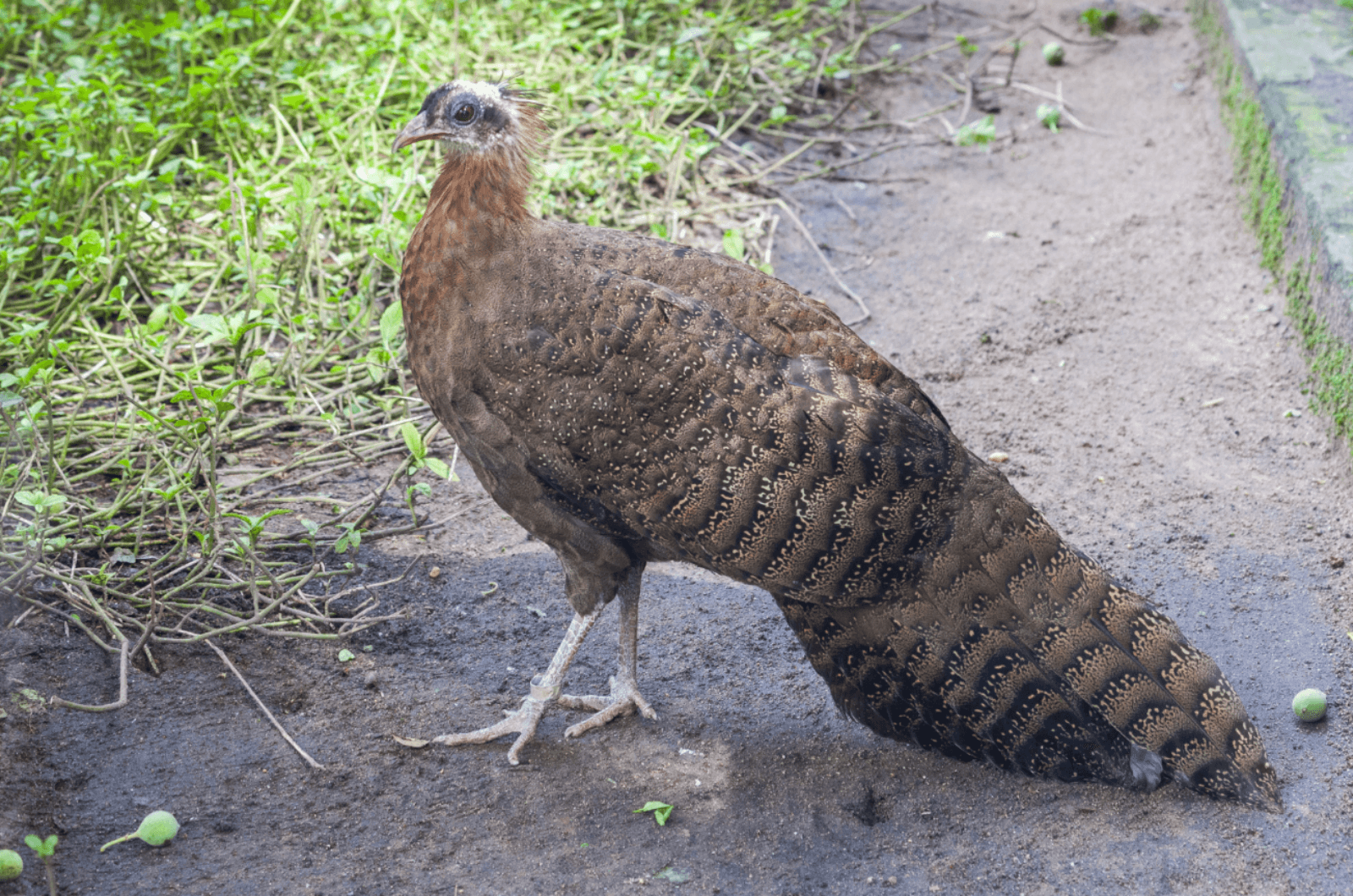
The Crested argus (Rheinardia ocellata) is a large bird species belonging to the pheasant family, famous for its magnificent plumage resembling a starry night sky, with dark brown spots on a buff or black background. In particular, the male possesses a long, broad tail with two central feathers that can reach nearly 2 meters in length, making them the wild bird with the longest feathers for a long time. The echoing call and courtship display of the male during the breeding season are an essential part of the sounds and sights of the mountains.
Photo: The Crested argus is a large bird belonging to the pheasant family
Great Hornbill
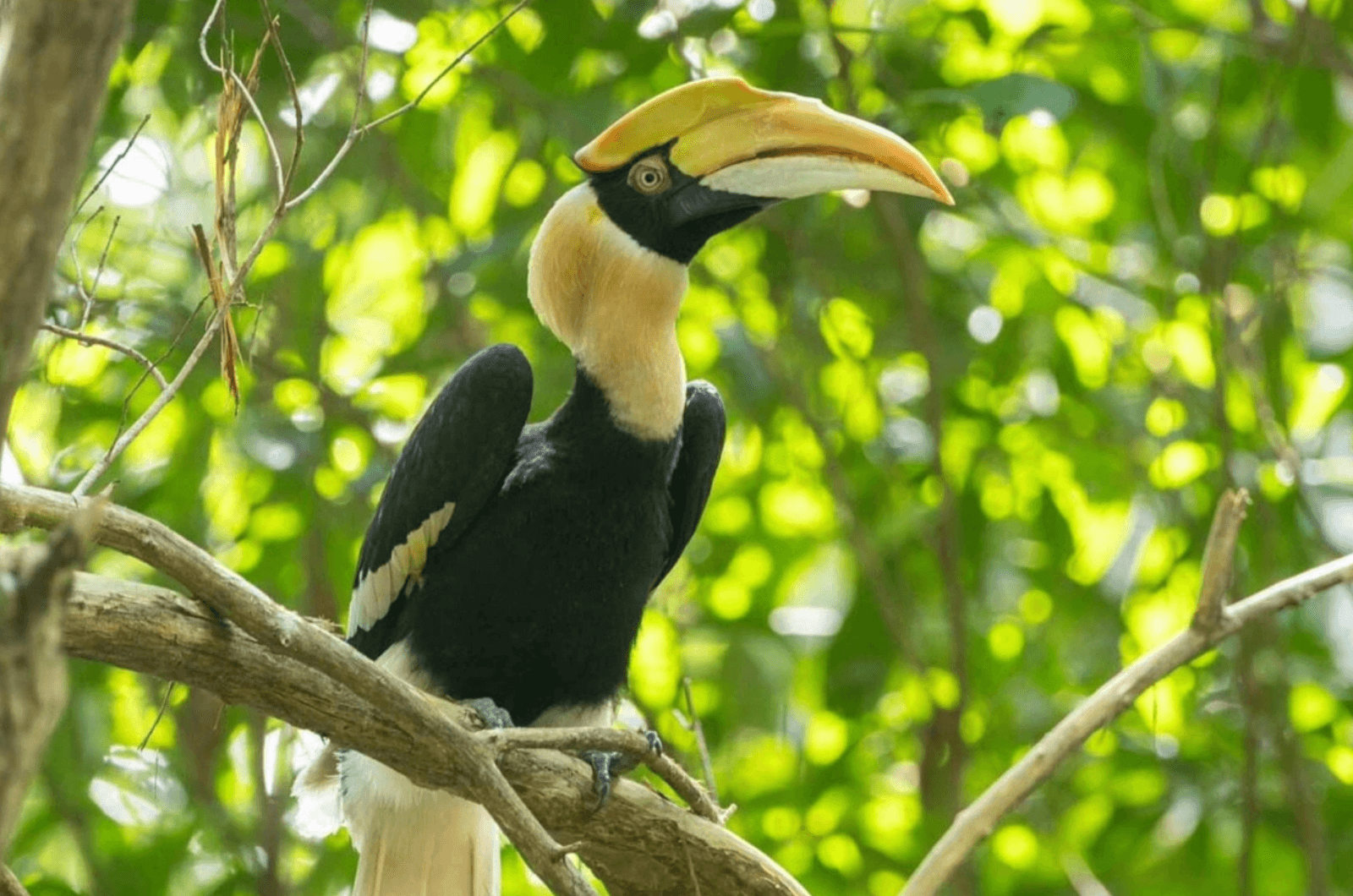
The Great hornbill (Buceros bicornis) is the largest bird in the hornbill family, with a length of up to 1.2 meters and a wingspan reaching 1.6 meters. Their most recognizable feature is a large, bright yellow bill topped with an impressive horny casque. The echoing call of the great hornbill often reverberates throughout the forest, and their appearance with jet-black plumage accented with white on the belly and tail creates a majestic and colorful sight amidst wild nature.
An important note when observing wildlife is to always keep a safe distance and never attempt to approach or feed them. Respecting their natural living space is the best way to protect them and ensure enjoyable experiences for other visitors.
Photo: The most recognizable feature of the great hornbill is its large, bright yellow bill
With its rich and diverse fauna, Mu Me Waterfall is truly an ideal destination for nature lovers who seek a deep connection with the wild world. Every time you pause, every sound you listen to, and every creature you spot is a piece that creates an unforgettable memory. If you are eager to explore and appreciate the wonderful wildlife here, you can check out the Mu Me Waterfall tour by Sovaba Travel. We are dedicated to providing you with an amazing journey of discovery. For quick assistance, visitors are welcome to contact our hotline at 0934 733 223.