Lao Bao Prison – A Historical Witness in the Deep Jungle of Quang Tri
Central
Quang Tri
Sovaba.travel
Updated at: 24/09/2026
1. Where is Lao Bao Prison?
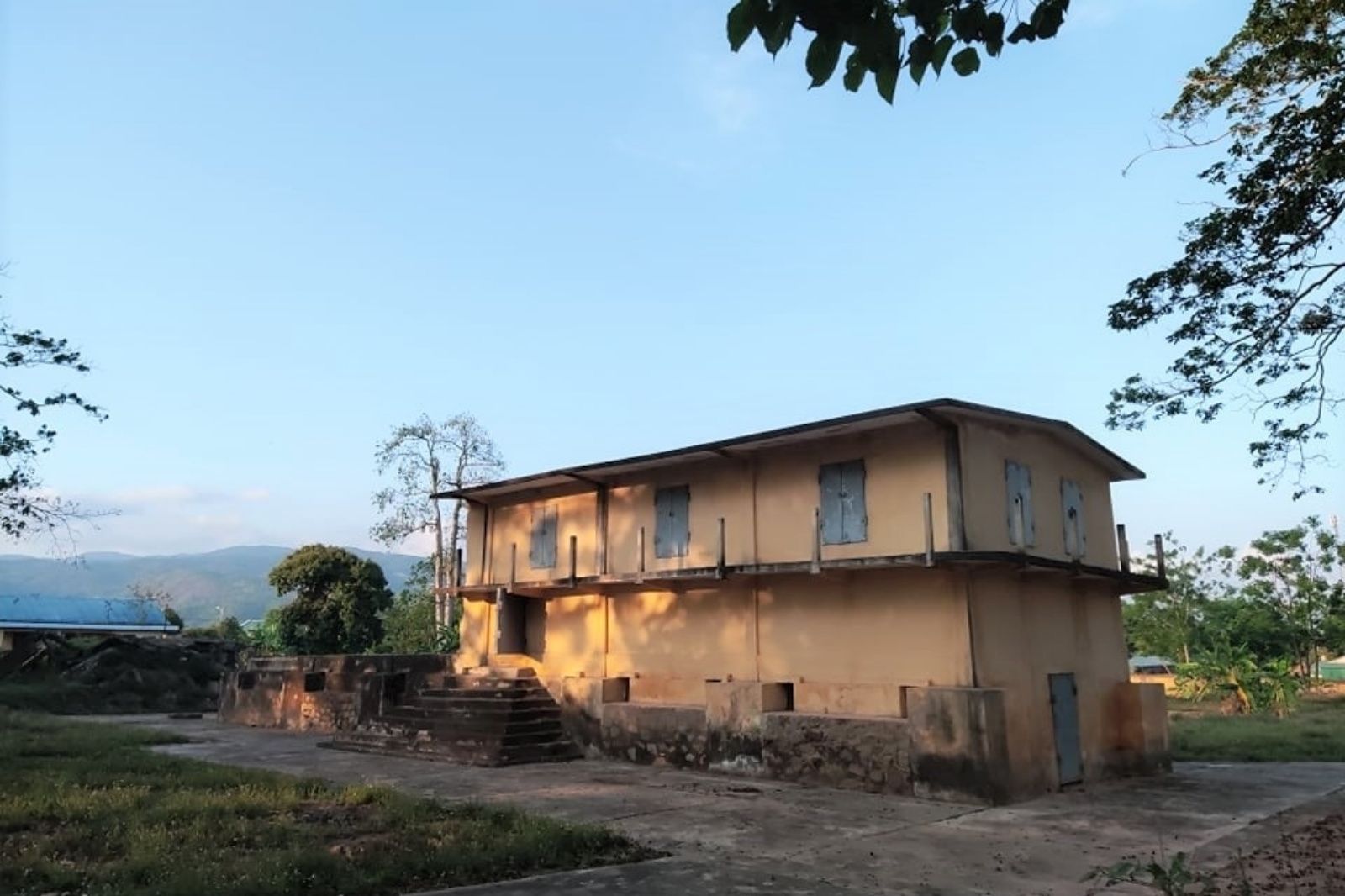
Lao Bao Prison is located in Duy Tan hamlet, Lao Bao town, Huong Hoa district, Quang Tri province, Vietnam. With geographical coordinates of approximately 16°36′42.3″N 106°35′15.2″E, this historical site lies at the end of Le The Tiet Street, about 2 km south of National Route 9. From Dong Ha city, you travel about 80 km to the west, and from Khe Sanh, it is only about 22 km. This area sits in a border valley, bordering the Sepon River to the west (the river separating Vietnam and Laos), surrounded by towering rocky mountains to the east, and the Tran Cao fort from the Nguyen Dynasty to the north. Today, Lao Bao Prison is a national historical monument easily accessible by road, suitable for visitors interested in Quang Tri historical tourism.
Photo: Historical marks from the early days
2. History of Lao Bao Prison during the French colonial era
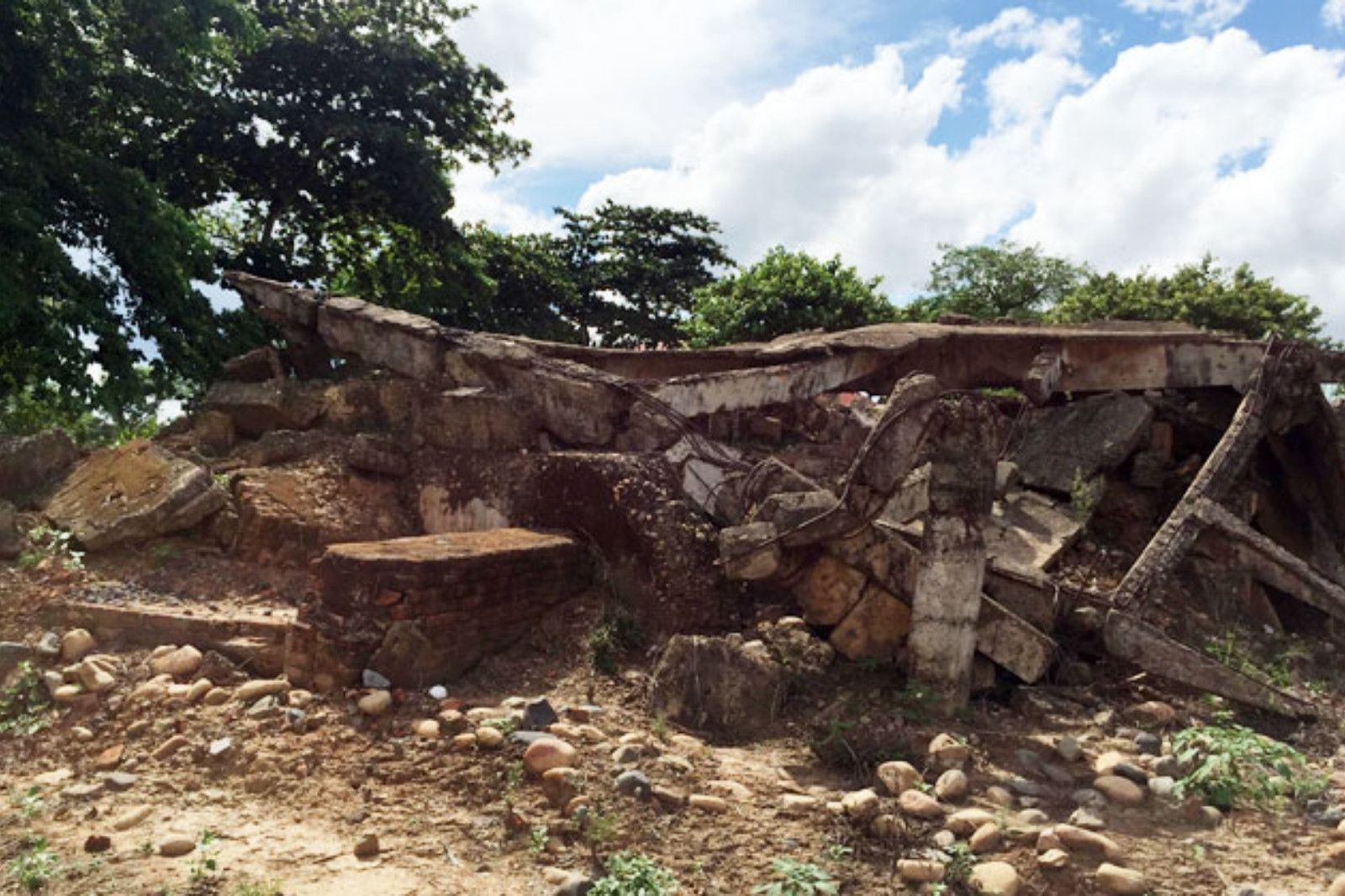
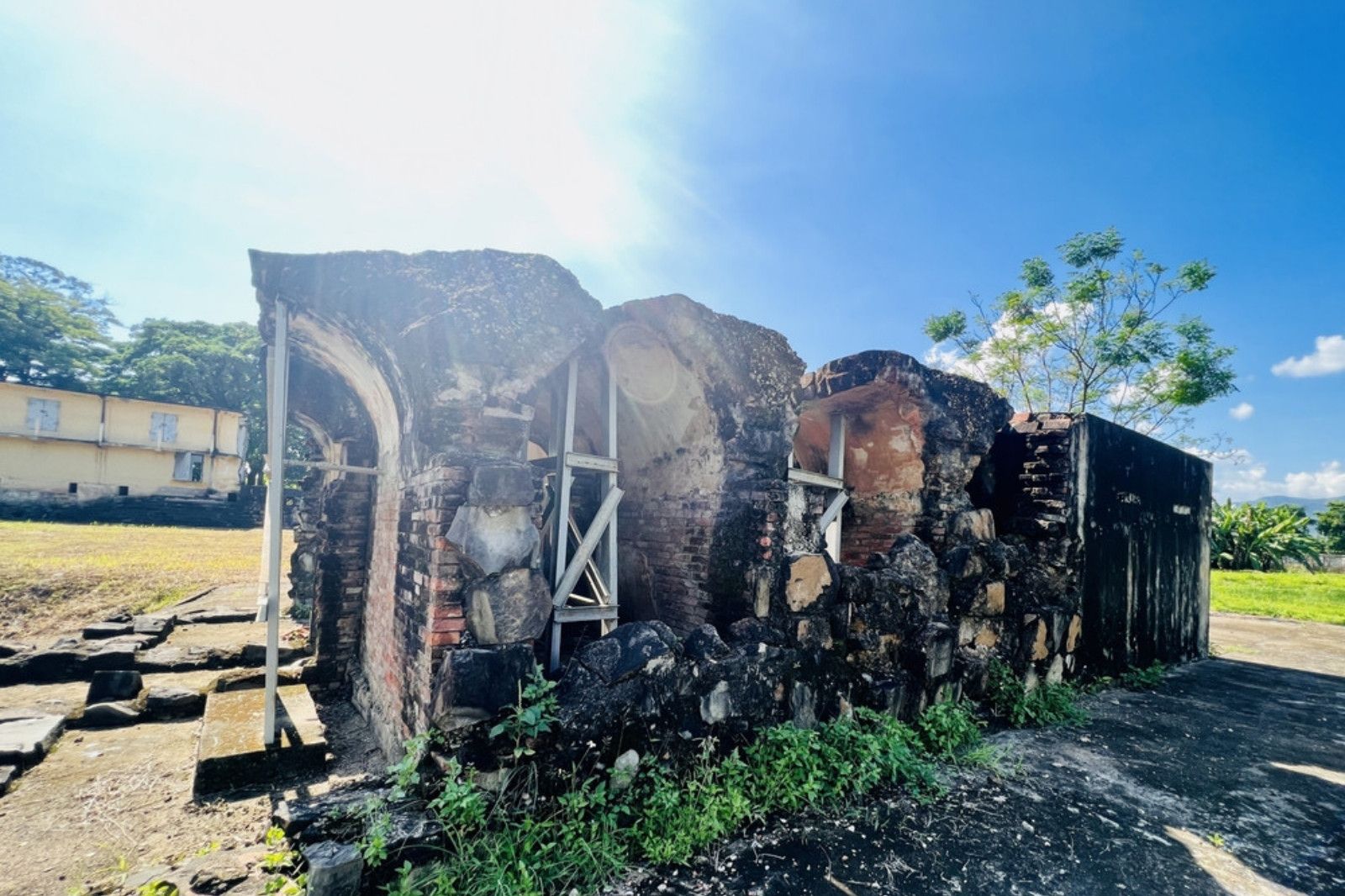
The history of Lao Bao Prison began in 1908, when the French colonialists built it to detain "National Political Prisoners" – anti-French political prisoners from Central Vietnam. Initially, there were only two cell blocks, A and B, semi-permanently built with bamboo, timber coated with mud, and tiled roofs. During 1929-1931, following the Nghe Tinh Soviet Movement, the prison was expanded to hold more communist prisoners, adding more solid blocks C, D, and cell E. During the Indochina War (1946-1954), it continued to hold thousands of patriotic prisoners. During the Vietnam War, in 1967, the prison was transformed into a revolutionary base by the National Liberation Front of South Vietnam during the Route 9 - Khe Sanh Campaign, before being largely destroyed by US bombing. After 1975, Lao Bao Prison was recognized as a national historical monument on January 25, 1991, with memorial structures such as a monument marker, spirit altar, and memorial built between 1995 and 2000. However, to date, the site is severely degraded and requires urgent restoration.
Photo: Desolate ruins after years of fierce war
3. Structure and architecture of Lao Bao Prison
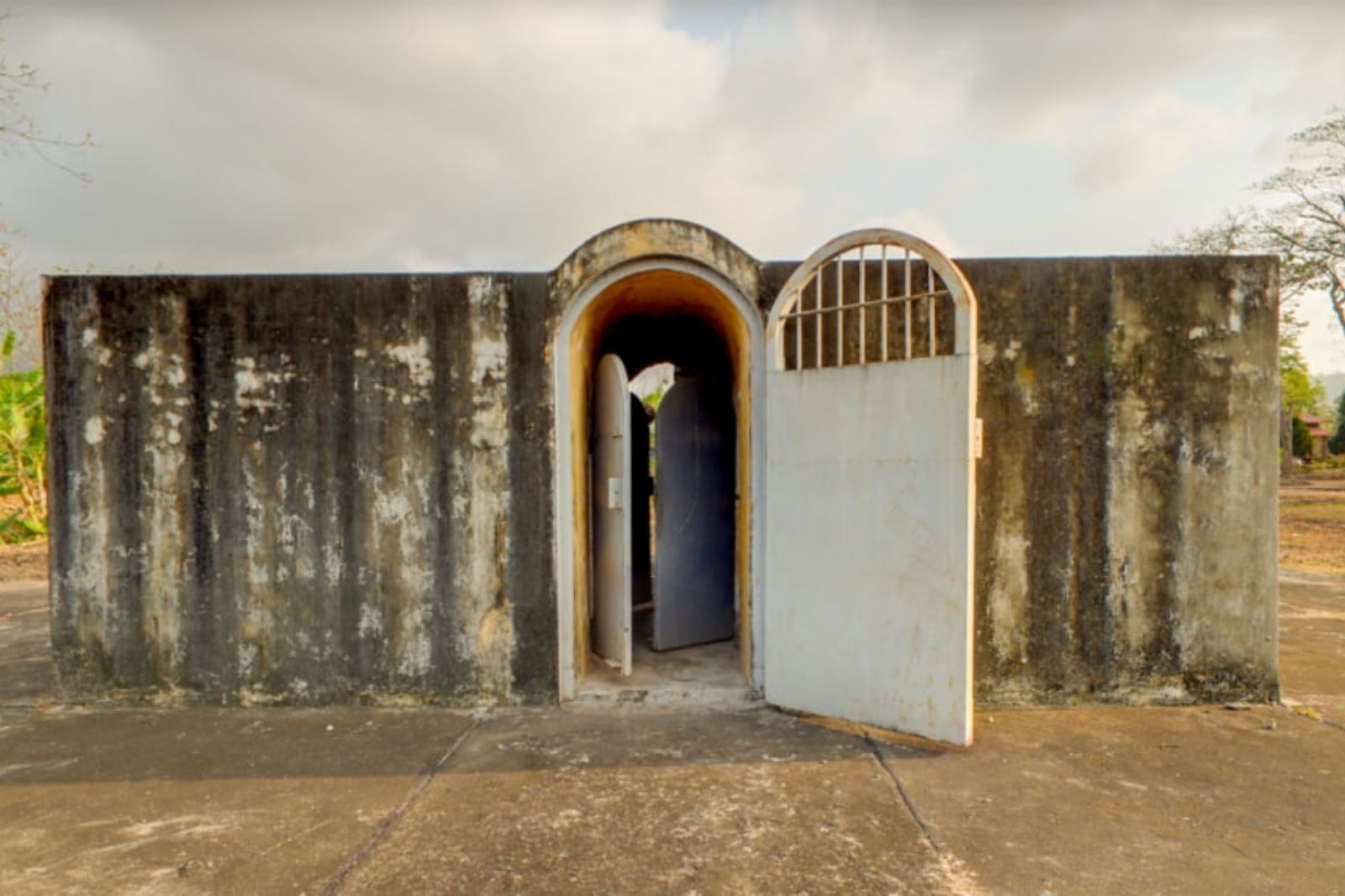
The structure of Lao Bao Prison was designed to maximize isolation and control. The main area covers 0.1 km², consisting of five cell blocks (batiments A, B, C, D, E), a kitchen, water filtration tower, toilets, torture house, wardens' quarters, military barracks, handicraft workshops (carpentry, embroidery, blacksmithing), and a post office. Cell blocks A and B were originally 15m long, 5m wide, and 2m high, with completely sealed mud walls, dark as a cellar, featuring wooden floors for 60 prisoners and large stocks at the end of the room. Blocks C and D (built 1931-1932) were more solid: 30m long, 6m wide, stone walls with corrugated iron roofs, concrete floors, holding 180 prisoners; accompanied by 13 solitary confinement cells measuring 1m x 2.14m. Cell E (dungeon/cachot) was deep underground, with 1m thick reinforced concrete walls, no windows, only small air vents, designated for political prisoners.
The entire complex was surrounded by a 3.5m high perimeter wall with bunkers, bamboo fences, and concrete pillars. Characteristic architecture: 5m high windowless walls, an overhang of 2.5m with iron bars, allowing guards to observe while prisoners could only see the sky through high windows. Today, the site still preserves several ruins such as foundations and the monument.
Photo: A place leaving behind valuable historical lessons
4. Harsh imprisonment regime at Lao Bao Prison
The penal regime at Lao Bao Prison was likened to a "hell on earth" with Medieval cruelty. Newly arrived prisoners were searched, shaved with blunt knives, and put in iron fetters (neck collared, leg shackled, and connected by chains). They were issued only two sets of low-quality blue clothes per year, a blanket, and a mat.
Miserable meals: wooden bowls for rice, toxic rusty copper pots for soup, rotten rice, spoiled fish sauce, with no right to complain.
Hard labor: breaking rocks to construct Route 9, logging timber, growing vegetables, doing handicrafts under strict guard (two prisoners per guard, 5m apart, no talking allowed).
Torture: leg shackles, chains, beatings, forbidden from reading books or contacting families. Terrible sanitation: using bamboo tubes through shackles.
Rudimentary medical care: only liquid quinine administered weekly, leading to widespread illness and death.
From 1908 to 1945, thousands of prisoners were held, and over 350 political prisoners died due to torture. Prisoners struggled continuously to demand basic rights to life.
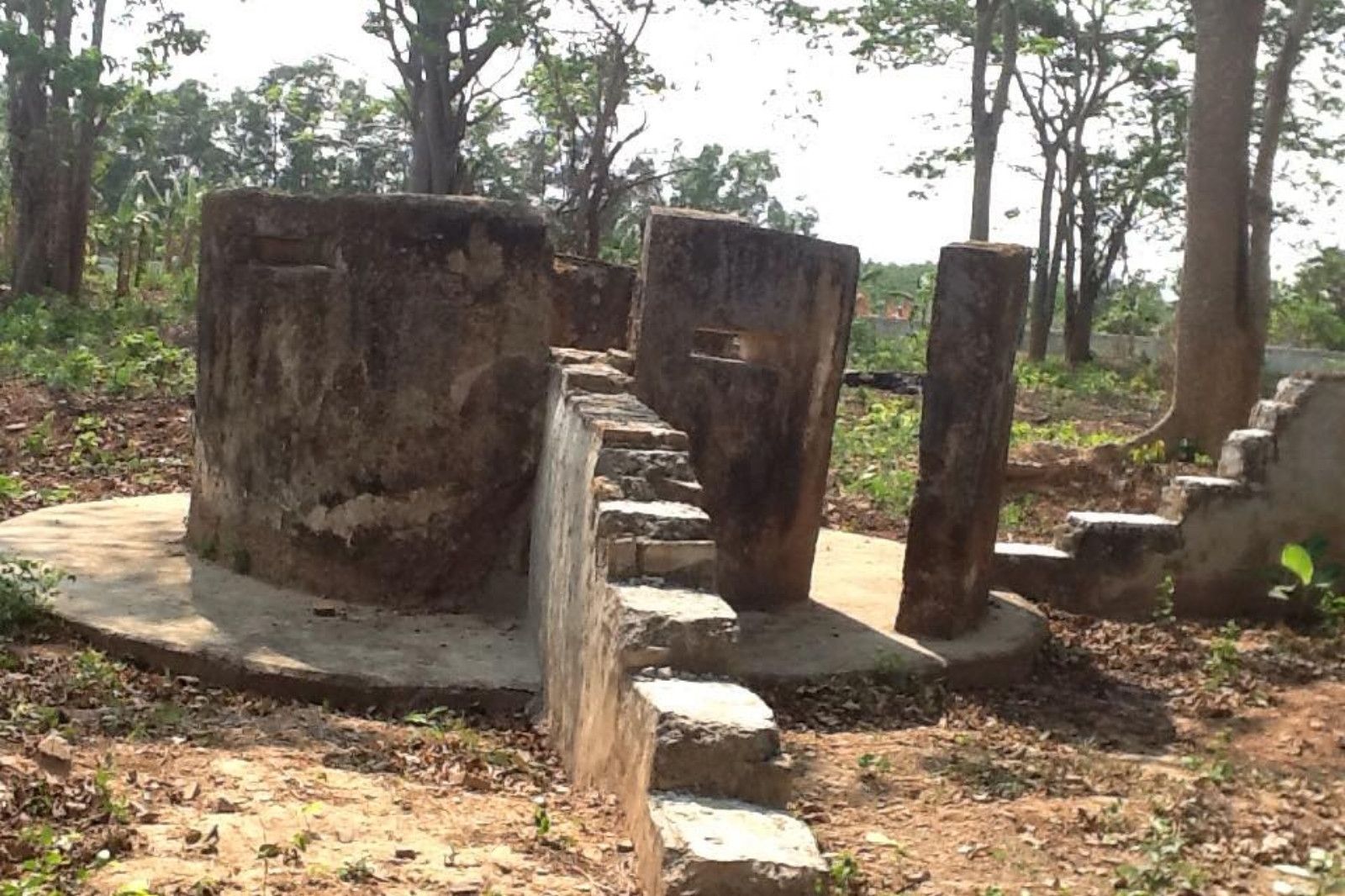
Photo: What remains after the war
5. Historical figures once imprisoned at Lao Bao Prison
In the history of revolutionary struggle, Lao Bao Prison was once a place of detention for many patriotic leaders and soldiers, who later became high-ranking officials of the Party and State, leaving a profound mark on the Vietnamese revolutionary movement. Notable figures include:
Nguyen Chi Thanh: General of the Vietnam People's Army, imprisoned in the 1930s, who later escaped and led the revolution.
To Huu: Revolutionary poet, imprisoned from 1939–1942, who composed many works here.
Le The Tiet: Party leader in Quang Tri, martyred in 1940 due to torture.
Tran Huu Duc: Central Vietnam revolutionary, imprisoned 1929–1931.
Tran Hoanh, Le The Hieu, Tran Ngang, Doan Lan: Anti-French communist party members.
In addition, there were Lao prisoners and patriots from the Can Vuong movement such as Ho Ba Kien (leader of the 1915 uprising).
Despite facing brutal prison conditions, these individuals did not merely endure; they organized and led struggle movements right inside the prison, transforming Lao Bao into a "revolutionary school" that forged the will and faith for the ultimate victory of the Vietnamese revolution.
6. Historical evidence and immortal values
Entering Lao Bao Prison, the first thing visitors notice is dozens of ancient, thorny coral trees nearly a century old, shading the expansive grounds. These spike-covered tree trunks were used by French colonialists to torture and punish prisoners by stripping off their clothes and forcing them to embrace or climb the trees. Thus, the coral trees are considered witnesses to the barbaric crimes committed by French colonialists on this land.
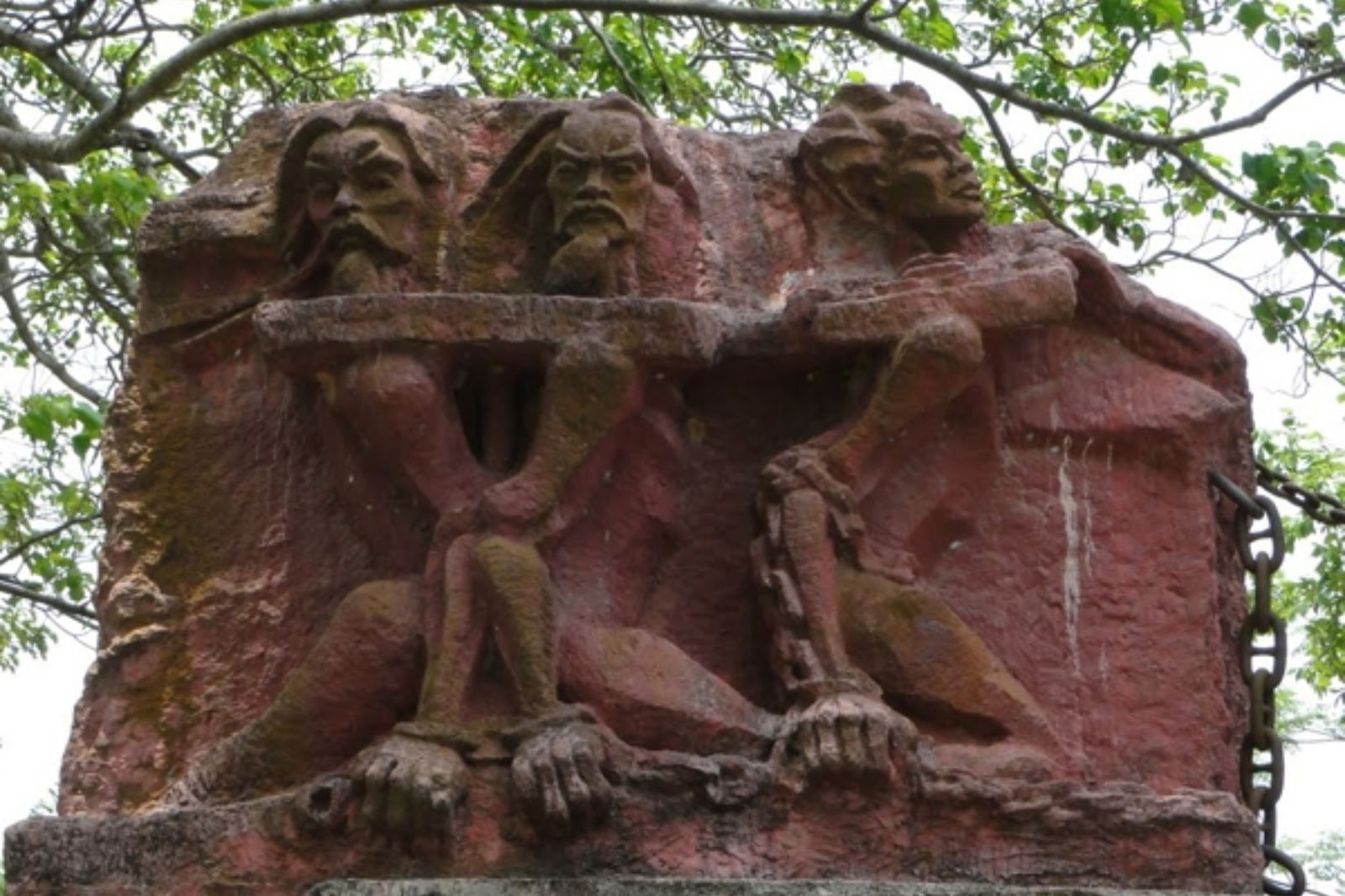
To the right, near the ancient coral trees, stands the Lao Bao Memorial Monument complex created by sculptor Pham Van Hang in 1999. The monument serves to soothe the pain and losses of the past, but above all, it praises the iron will and fighting spirit of the prisoners. The monument complex begins with imagery of patriotic scholars, followed by Communist soldiers. Even under imprisonment and chains, they exuded an undaunted spirit, holding their heads high before the colonialists.
The images of raised fists symbolize keeping steadfast oaths of loyalty and firm resolve, overcoming all hardship, chains, and fetters. Beneath the raised fists are four lines of poetry written by poet To Huu in June 1938:
“…Let me absorb the fierce fighting spirit
Let my skin harden for tomorrow
Let me dedicate my blood to the end
To dye red the grey scenes of sorrow!”
This poem, titled "Lao Bao", was written when the poet was passing by Lao Bao Prison on his way to visit his brother working at the Lao post office, deeply moved by the suffering of the exiled prisoners. Yet, poet To Huu himself could not foresee that he would be exiled to this very prison in September 1940.
Photo: A hell on earth in the vast Truong Son mountains
7. Experience visiting Lao Bao Prison
Today, Lao Bao Prison has been recognized as a Special National Relic. Structural elements of the prison have been restored, preserved, and renovated, allowing visitors to vividly visualize the harshness of the prison regime and the indomitable spirit of the revolutionary soldiers.
When visiting, tourists can:
Explore detention areas, solitary cells, kitchens, water wells, etc.
View artifacts and photographs depicting the life and struggle of prisoners.
Listen to historical commentary and touching stories of sacrifice and unyielding willpower.
Feel the sacred, solemn atmosphere of a historical landmark.
For a complete trip, visitors should choose the dry season for convenient travel, wear comfortable yet respectful clothing, and remember to bring drinking water and hats.
Photo: Lao Bao Prison recognized as a Special National Relic
Lao Bao Prison is not merely a location on the historical map, but an immortal symbol of patriotism, sacrifice, and the resilient spirit of the Vietnamese nation in its journey to reclaim independence and freedom. Amidst the wild, harsh Truong Son mountain ranges, the revolutionary soldiers of the past transformed a dungeon into a revolutionary school, sorrow into strength, and chains into unshakeable faith in tomorrow. Visiting Lao Bao Prison, tourists can return to historical roots while experiencing majestic natural landscapes and listening to sacred stories at the "Indochina crossroads." This will surely be an emotional journey, helping you appreciate even more the value of peace today.