Linh Ung Pagoda Ba Na Hills – Discovering Serene Beauty atop Chua Mountain

Central

Da Nang

Ba Na Hills

Sovaba.travel

Updated at: 24/09/2026

1. History of Linh Ung Pagoda, Ba Na Hills

Linh Ung Pagoda Ba Na Hills is not only a religious monument, but also a symbol of harmony between Buddhist culture and sustainable tourism development in Da Nang. The pagoda's construction began in 1999 under the leadership of Most Venerable Thich Thien Nuyen – an abbot who played a major role in creating this spiritual sanctuary on top of Chua Mountain. After nearly 5 years of construction, on March 6, 2004, the pagoda was officially inaugurated, marking an important turning point in the restoration and development of the Ba Na Hills tourist area after decades of being forgotten.

The name “Linh Ung” carries a profound meaning: “Linh” represents sacredness, while “Ung” signifies the fulfillment of wholesome prayers. With that meaning, Linh Ung Pagoda Ba Na Hills was built as a peaceful place of worship, welcoming all visitors and not just Buddhists. Under the management of the Vietnam Buddhist Sangha, the pagoda quickly became a prominent spiritual destination, receiving millions of pilgrims and tourists each year.

Over more than 20 years of existence, the pagoda still maintains its solemn dignity while adding new structures to harmonize with modern tourism development trends. The pagoda's history is also closely linked with Ba Na Hills, a resort discovered by the French in the early 20th century and dubbed the “second Da Lat” of Central Vietnam. The establishment of the pagoda not only honors Buddhist values but also contributes to preserving local cultural identity, creating a balance between economic development and spiritual heritage preservation. 
The pagoda was built in 1999
Photo: The pagoda was built in 1999 

2. Unique Architecture of Linh Ung Pagoda, Ba Na Hills

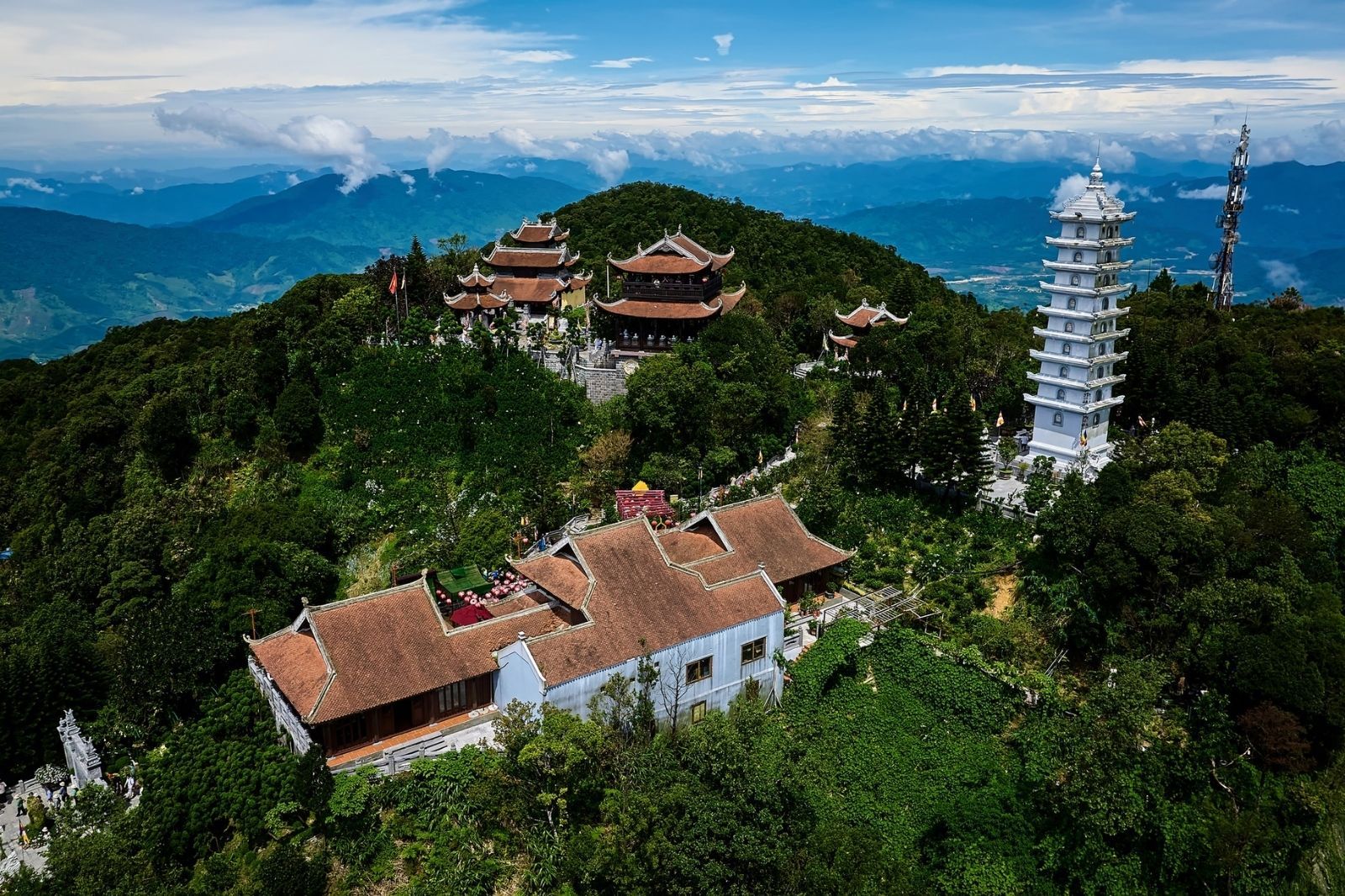
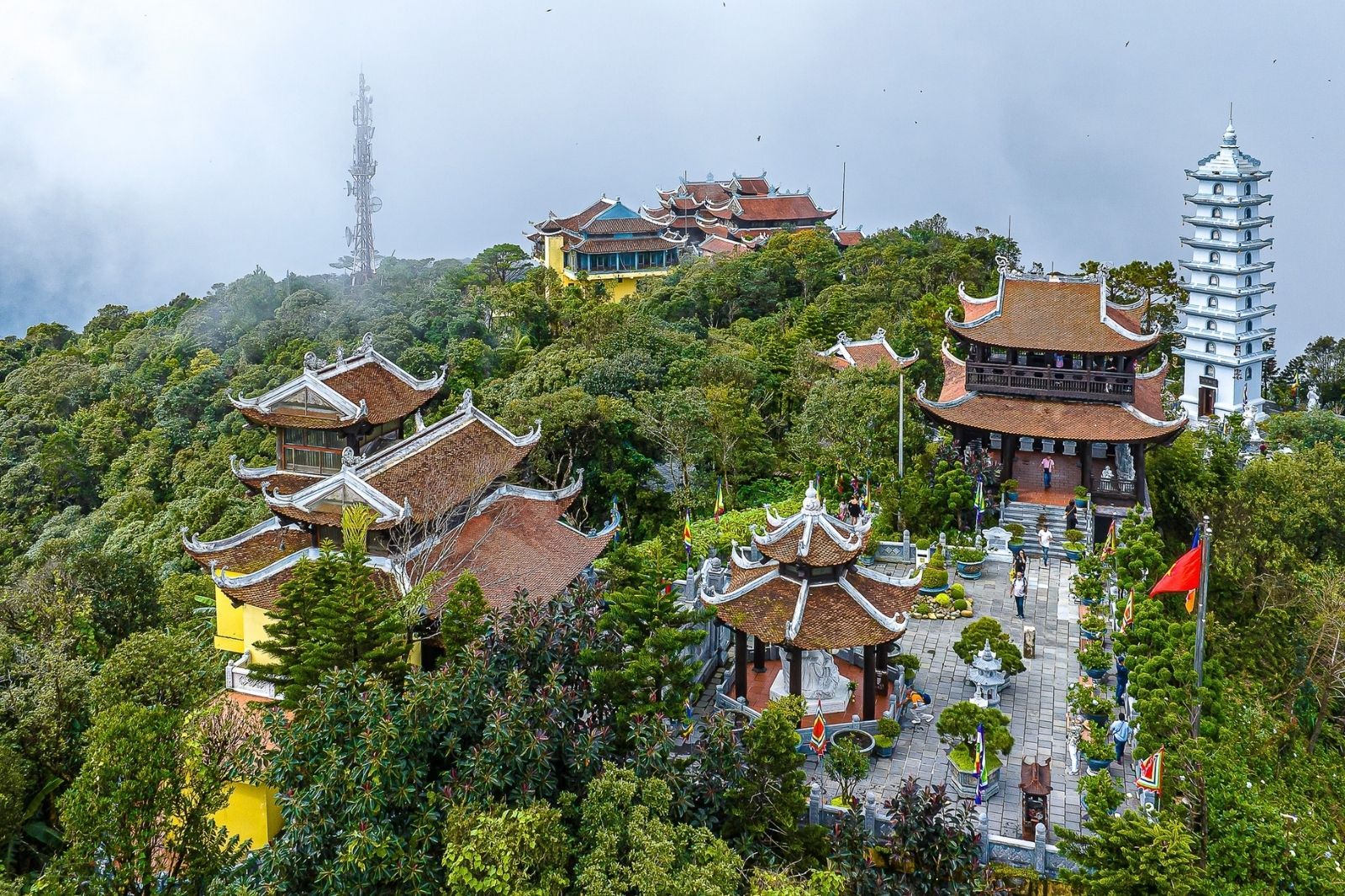
Upon stepping foot into Linh Ung Pagoda Ba Na Hills, visitors will immediately be impressed by the traditional Northern Buddhism architecture, built in the shape of the Chinese character "Tam" (三) – symbolizing harmony between heaven, earth, and humanity. The entire courtyard is paved with solid white stone, creating a sturdy and serene feeling amidst the floating white clouds at an altitude of over 1,500 meters.

The first highlight is the Triple Gate (Tam Quan), a sacred gateway leading into the pagoda, consisting of three entrances symbolizing the Three Realms, guarded by two statues of Kim Cang Dai Luc Si (Vajrapani guardians). These two guardians represent the power of mindfulness, helping humans overcome greed, anger, and delusion to achieve peace of mind.

Stepping through the gate, a spacious pagoda courtyard opens up with ancient three-leaf pine trees, a rare plant species listed in the Vietnam Red Book, symbolizing longevity and good fortune. The main hall is designed in the shape of the Dharmachakra (Wheel of the Law), representing the endless cycle of Buddhist truth. Curved yin-yang tiled roofs feature eave edges carved with the image of “Two Dragons Flanking the Moon”, symbolizing the harmony between the cosmos and human life.

The interior space is divided into the front hall, main sanctuary, and rear altar, dedicated to the Buddhas of the Three Times (Past – Present – Future), along with Bodhisattvas Samantabhadra (Great Vows), Manjushri (Great Wisdom), 18 Arhats, and guardian deities. All of this creates a solemn yet warm atmosphere, allowing visitors to feel peaceful and pure energy.

From the pagoda courtyard, at an altitude of 1,500m, visitors can take in a panoramic view of Da Nang, with floating seas of clouds, lush green pine forests, and rolling mountains. Each season brings its own flavor: vibrant blooming flowers in spring, lush greenery in summer, gentle gold in autumn, and hazy white mist in winter, making the pagoda appear as if hidden in a cloud-shrouded fairy realm.

To the left of the main hall is Linh Chua Linh Tu Temple, dedicated to Ba Chua Thuong Ngan (Goddess of the Mountains and Forests), a key figure in Vietnamese folk belief. The presence of the temple creates a unique harmony between Buddhism and indigenous beliefs, showcasing the tolerant and harmonious spirit of Vietnamese spiritual culture.

3. Giant Shakyamuni Buddha Statue at Linh Ung Pagoda, Ba Na Hills

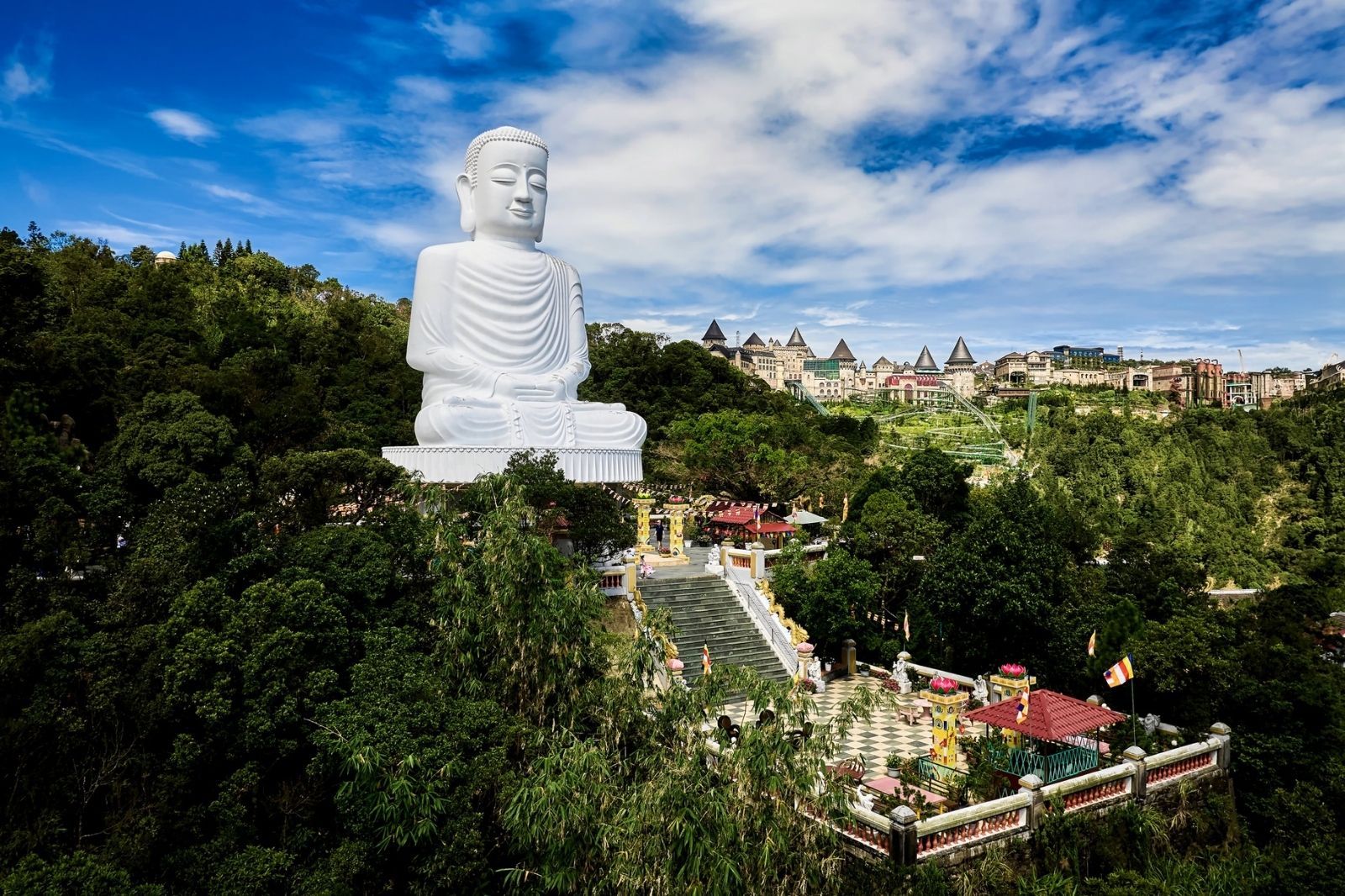
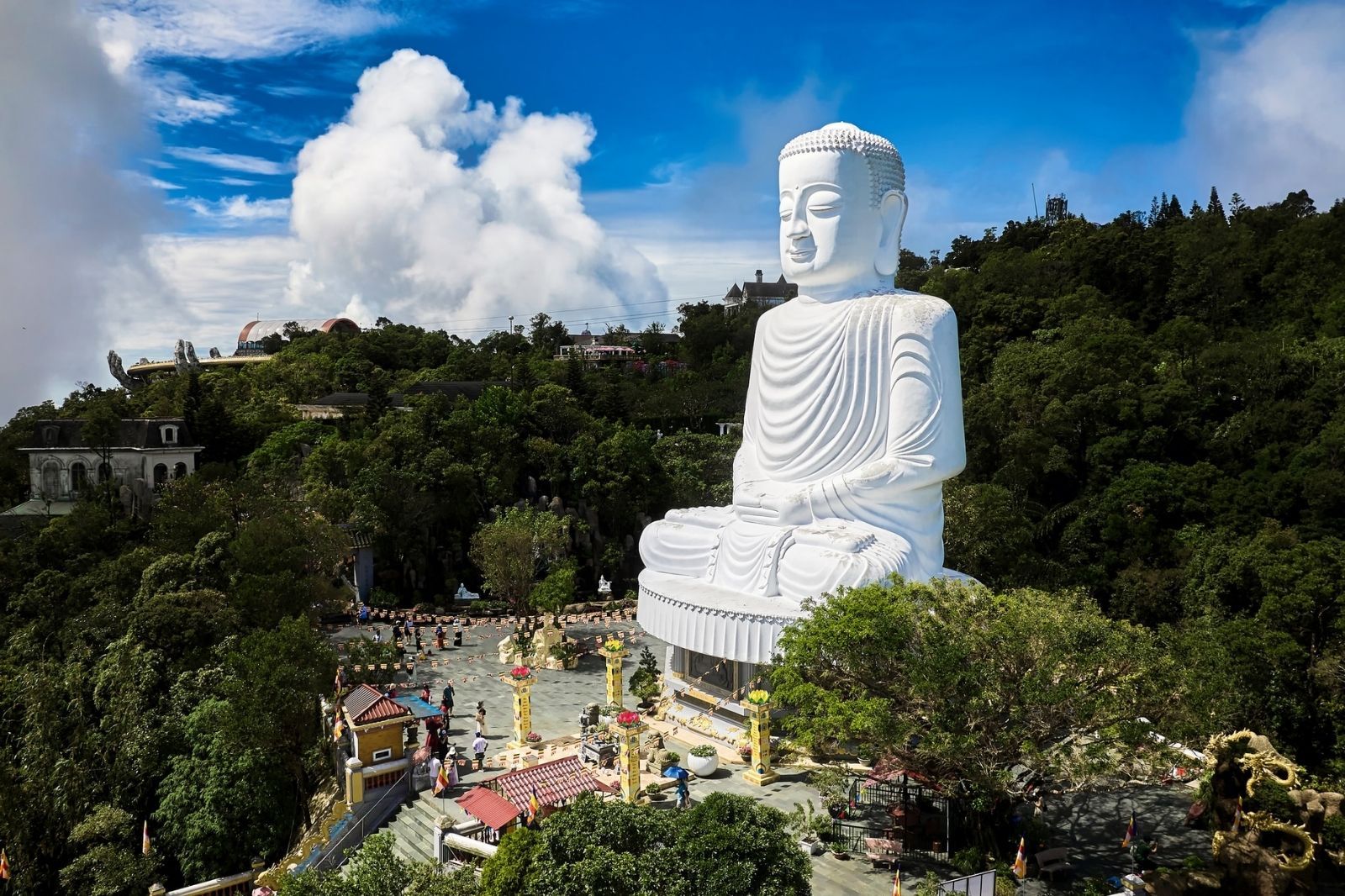
Speaking of Linh Ung Pagoda Ba Na Hills, one cannot skip the Sakyamuni Buddha statue – an iconic spiritual symbol of Da Nang city. Standing 27 meters tall with a knee-to-knee span of 14 meters, the statue is carved entirely from solid white stone, depicting the Buddha meditating on a 6-meter-high lotus pedestal with a gentle, serene gaze directed toward humankind. This is the largest outdoor Buddha statue in Asia recognized by the Vietnam Records Organization, becoming an important spiritual highlight of the Ba Na Hills tourist area.

Below the statue's base are eight intricately carved bas-reliefs depicting the complete life of Sakyamuni Buddha from his birth, renunciation, enlightenment to entering Parinirvana. Each bas-relief is not only a work of art but also embeds deep philosophy regarding karma, compassion, and the path to enlightenment.

White Sakyamuni Buddha statue
Photo: White Sakyamuni Buddha statue 

Standing before the Buddha statue, visitors often sense an energy of peace and tranquility, as if reminded to set aside worries and return to their inner selves. This site is not only a popular check-in spot for tourists, but also a sacred sanctuary for meditation and praying for peace. On major occasions such as Vesak (the 15th day of the 4th lunar month) or Vu Lan / Ghost Festival (the 15th day of the 7th lunar month), the area around the statue becomes solemn and vibrant, filled with ringing pagoda bells, wafting incense smoke, and memorial ceremonies steeped in Vietnamese Buddhist identity.

4. How to Get to Linh Ung Pagoda, Ba Na Hills

Linh Ung Pagoda Ba Na Hills is located approximately 30km west of Da Nang city center, in An Loi village, Hoa Ninh commune, Hoa Vang district. To reach the pagoda, visitors will need to combine road travel and a cable car ride – a journey that is both convenient and offers scenic sightseeing experiences.

Transportation from Da Nang city center

  • Bus:
    • Routes No. 1 or 3 departing from Da Nang Central Bus Station to the foot of Ba Na Mountain.
    • Ticket price: 30,000 – 70,000 VND/one-way, travel time approx. 40 – 50 minutes.
    • Operating daily from 5:30 AM – 7:00 PM.
  • Taxi / Grab:
    • Cost around 350,000 – 400,000 VND/one-way (Mai Linh, Vinasun...).
    • Suitable for families or groups of friends who want fast, safe, and private transportation.
  • Motorbike / Self-drive car rental:
    • Motorbike: around 210,000 VND/day.
    • Car: around 750,000 VND/day.
    • Note: The mountain pass roads are steep and winding, so experienced drivers or renting a car with a driver is recommended.

Getting to the pagoda by cable car

From the foot of Ba Na Mountain, visitors purchase cable car tickets for the Hoi An – Marseille route:

  • Length: 5,042m, travel time approx. 20 minutes.
  • During the journey, you can admire panoramic views of Chua Mountain and the primeval forest from above. 
  • After getting off at Marseille Station, walk about 5 minutes along the winding stone pathway to reach the Triple Gate of Linh Ung Pagoda.

Ba Na Hills Ticket Prices 

(Ticket includes cable car, visiting Linh Ung Pagoda and attractions within the resort)

Tip: You should book tickets online in advance via the official Sun World Ba Na Hills website to avoid long lines and get discounts.

Linh Ung Pagoda Ba Na Hills located atop Chua Mountain
Photo: Linh Ung Pagoda Ba Na Hills located atop Chua Mountain  

5. Tips for Visiting Linh Ung Pagoda, Ba Na Hills

Visiting Linh Ung Pagoda Ba Na Hills is not just a "check-in" but a soul-healing journey. Here are some useful tips: 

  • Ideal time: Morning before 9 AM or afternoon after 4 PM. Cool temperatures range from 15-20°C year-round, especially in winter with magical mist.
  • Suggested itinerary: Combine with Golden Bridge (10 minutes away), Le Jardin Flower Garden, and Debay Wine Cellar. Total time: 2-3 hours for the pagoda.
  • Highlighted activities:
    • Offer incense to pray for peace at the main sanctuary (offering fresh flowers, fruits, vegetarian cakes).
    • Stroll around the grounds, take photos of the Buddha statue from various angles (sunrise offers golden light).
    • Attend dharma talks if visiting during major festivals (Lantern Festival, Avalokiteshvara's Day on the 19th of the 2nd lunar month).

To ensure a smooth trip, keep the following notes in mind:

  • Attire: Modest and respectful (long pants, sleeved tops; avoid short skirts or sleeveless tops). You can wear a Buddhist lay robe (áo lam) for added solemnity.
  • Behavior: Keep quiet, mute phone ringers inside Buddha halls. Enter through the right gate and exit through the left gate according to custom.
  • Offerings: Prefer vegetarian items (fresh flowers, fruits, sweets). Avoid scattering loose change or bringing non-vegetarian food.
  • Safety: Bring sunscreen, drinking water, and comfortable shoes due to the steep terrain. Avoid filming that disturbs rituals.
  • Peak season: Weekends and festivals are crowded, so weekday visits are recommended.

By respecting the sacred space, you not only enjoy a great experience but also contribute to preserving cultural heritage.

Wear respectful attire when coming to make a pilgrimage to the pagoda
Photo: Wear respectful attire when coming to make a pilgrimage to the pagoda  

In a place shrouded in clouds year-round, where echoing pagoda bells blend with mountain breeze and forest aromas, one feels calmed to better appreciate the value of silence, faith, and goodness. More than just a sightseeing spot, Linh Ung Pagoda is a symbol connecting Buddhist culture with Da Nang's natural beauty, offering visitors an experience that is both sacred and poetic. It is also an ideal stop on the journey to discover Ba Na Hills – where “four seasons in one day” and “heaven on earth” truly exist.

If you desire a complete, convenient, and experiential trip, choose a full-package Ba Na Hills tour – including cable car tickets, shuttle transport, professional tour guide, and buffet lunch at the French Village. This journey not only saves you time but also opens up opportunities to pay homage at Linh Ung Pagoda, admire the legendary Golden Bridge, and enjoy the fresh air on the highest mountain peak in Central Vietnam.

Loading......

Featured destinations