Ma Coong Drum Beating Festival - Quang Binh: Cultural Beauty Amidst the Great Forest

Central

Quang Binh

Sovaba.travel

Updated at: 24/09/2026

1. Where does the Ma Coong Drum Beating Festival originate from?

Village elder Dinh Xon recounted that long ago in the land of the Ma Coong people, a ferocious yellow-haired monkey often raided the village. Every night, it came down to the fields to destroy rice and eat corn, causing the villagers to suffer crop failures, chronic hunger, and rampant diseases. On a full moon night, Giang (meaning Heaven above) appeared in the village elder's dream, instructing: “Make a very large drum. When the moon is brightest, beat it loudly.”

Obeying the heavenly instruction, the entire village carved wood and stretched skin together to make an unprecedentedly large drum. That night, as the full moon hung round above the mountain peak, the first drumbeat resounded like thunder in the heart of the forest. The yellow-haired monkey fled in fear deep into the forest and never returned to harass the village again. Since then, the Ma Coong drum beating festival was born, not only to thank Giang for his protection, but also to pray for good crops, favorable weather, and a peaceful, prosperous village.

Every year, on the 16th day of the first lunar month, Ca Roong village becomes as lively as a major festival. Starting as early as the fifth lunar month, the villagers begin preparations: damming the Aky stream to catch big fish, selecting the strongest buffalo hide to make the drumhead, shaving old rattan, cutting bamboo, and building shelters. Every task, big or small, is done with all their heart, as if embedding sincere aspirations for a full, healthy, and unified year.
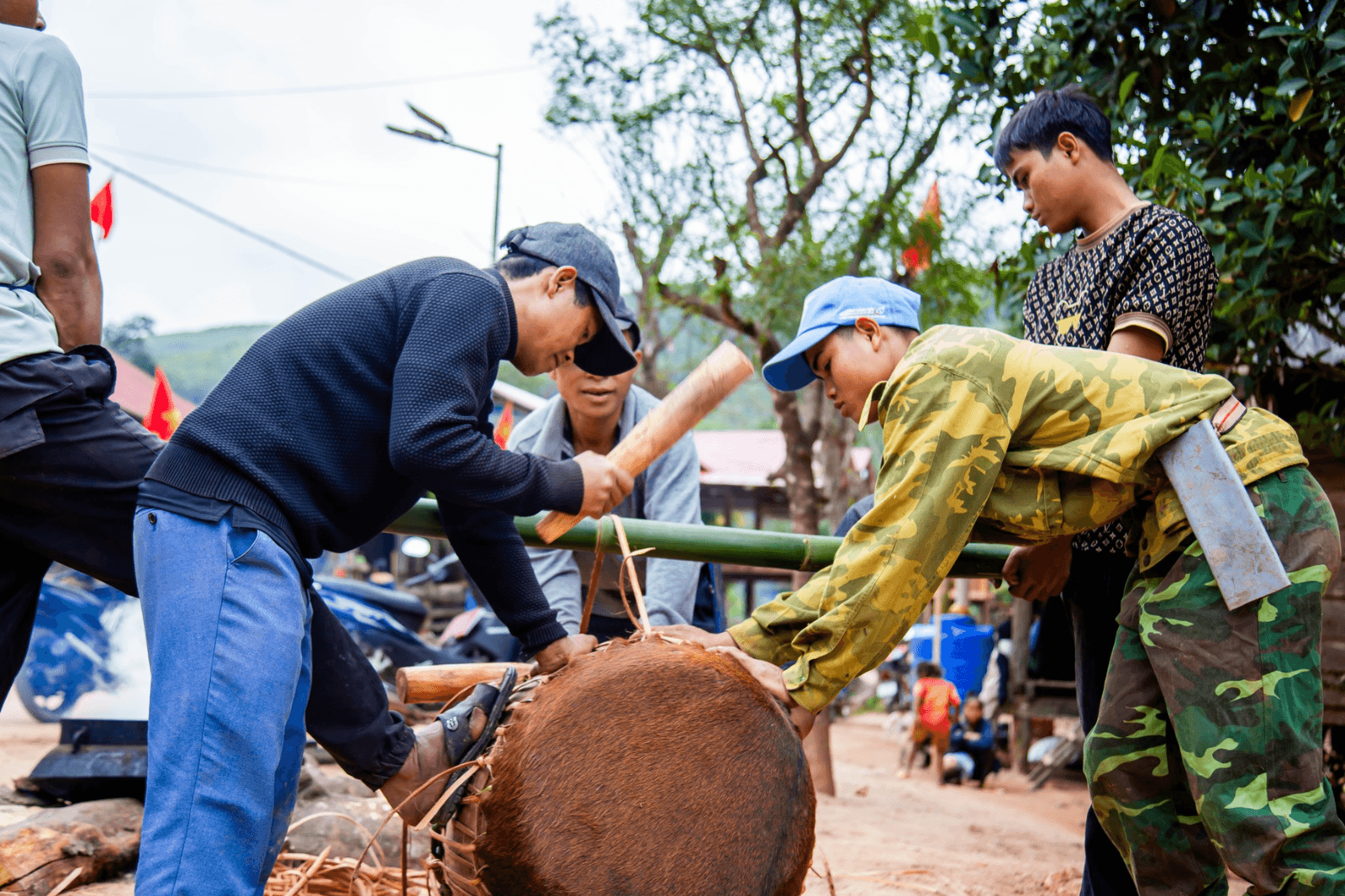
Locals busy preparing for the festival

Photo: Locals busy preparing for the festival

2. Exploring the ritual – The soul of the Ma Coong Drum Beating Festival

The ceremonial part is the most important and sacred ritual of the Ma Coong Drum Beating Festival, held in a spacious yard in the center of the village under the shade of an ancient tree – considered the space connecting humans with deities and ancestors. Here, villagers erect temporary thatched houses for the ceremony, where the drum is solemnly hung in the main house, becoming the central symbol of the festival.

Preparations are carried out months in advance:

  • From the 5th lunar month, villagers dam the Aky stream to raise large, fresh stream fish, set aside specifically as offerings to Giang.

  • Every family in the village contributes offerings such as sticky rice to brew hieng wine – a traditional wine fermented from forest leaves with a characteristic milky white color, along with chicken meat, sticky rice, forest bamboo shoots, rattan shoots, doac stems, rice, and various mountain produce.

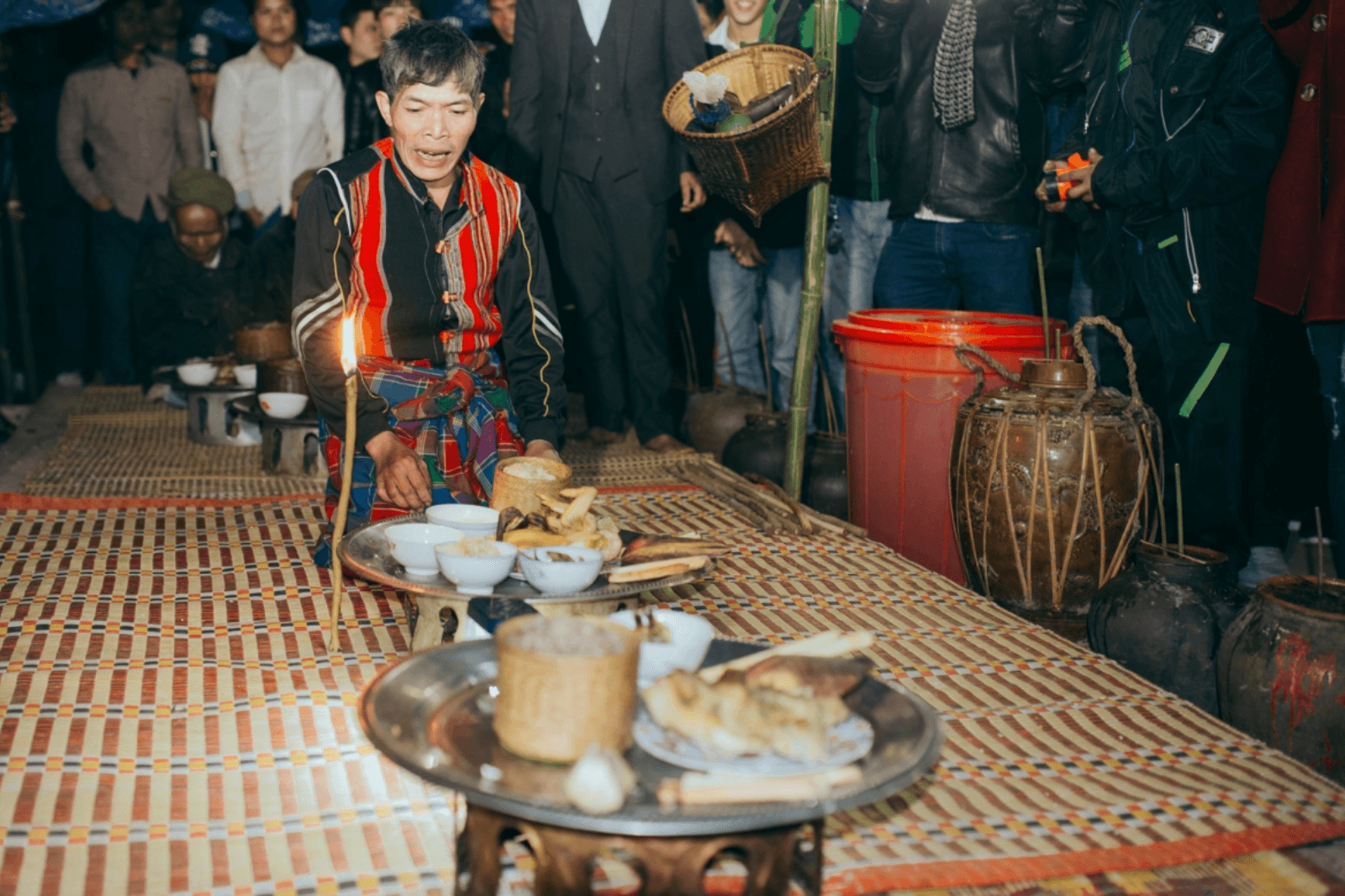
  • All offerings are laid out on 18 feast trays, prepared with utmost reverence by the village elder's family and other village households.

As the full moon rises above the mountain peak, the village elder dressed in traditional attire stands before the altar, conducting the prayer ritual to Giang on behalf of the entire community. The prayer conveys hopes for a peaceful new year, favorable weather, bumper harvests, healthy livestock, and a plentiful life for every family in the village. Following the ritual, the village elder scatters rice grains in four directions as a symbol of growth, abundance, and prosperity. The ceremonial part concludes with the first drumbeat struck by the village elder himself, opening the jubilant atmosphere of the festive part. Beyond its spiritual value, this ritual reflects the polytheistic worldview of the Ma Coong people, expressing gratitude to Giang, ancestors, and nature, who have protected and nurtured the community for generations.

The ceremonial part is solemnly held with offering trays of the Ma Coong people

Photo: The ceremonial part is solemnly held with offering trays of the Ma Coong people 

3. What makes the festive part of the Ma Coong Drum Beating Festival so appealing?

Following the solemn rituals of the ceremonial part, the Ma Coong village space bursts into life with the vibrant festive part. The sound of drums echoes across the Truong Son mountains and forests, blending with gongs, singing, and traditional dances, creating a bustling atmosphere where everyone gathers around jars of hieng wine, sharing joy and wishing each other a peaceful, prosperous new season.

Key highlights of the festive part:

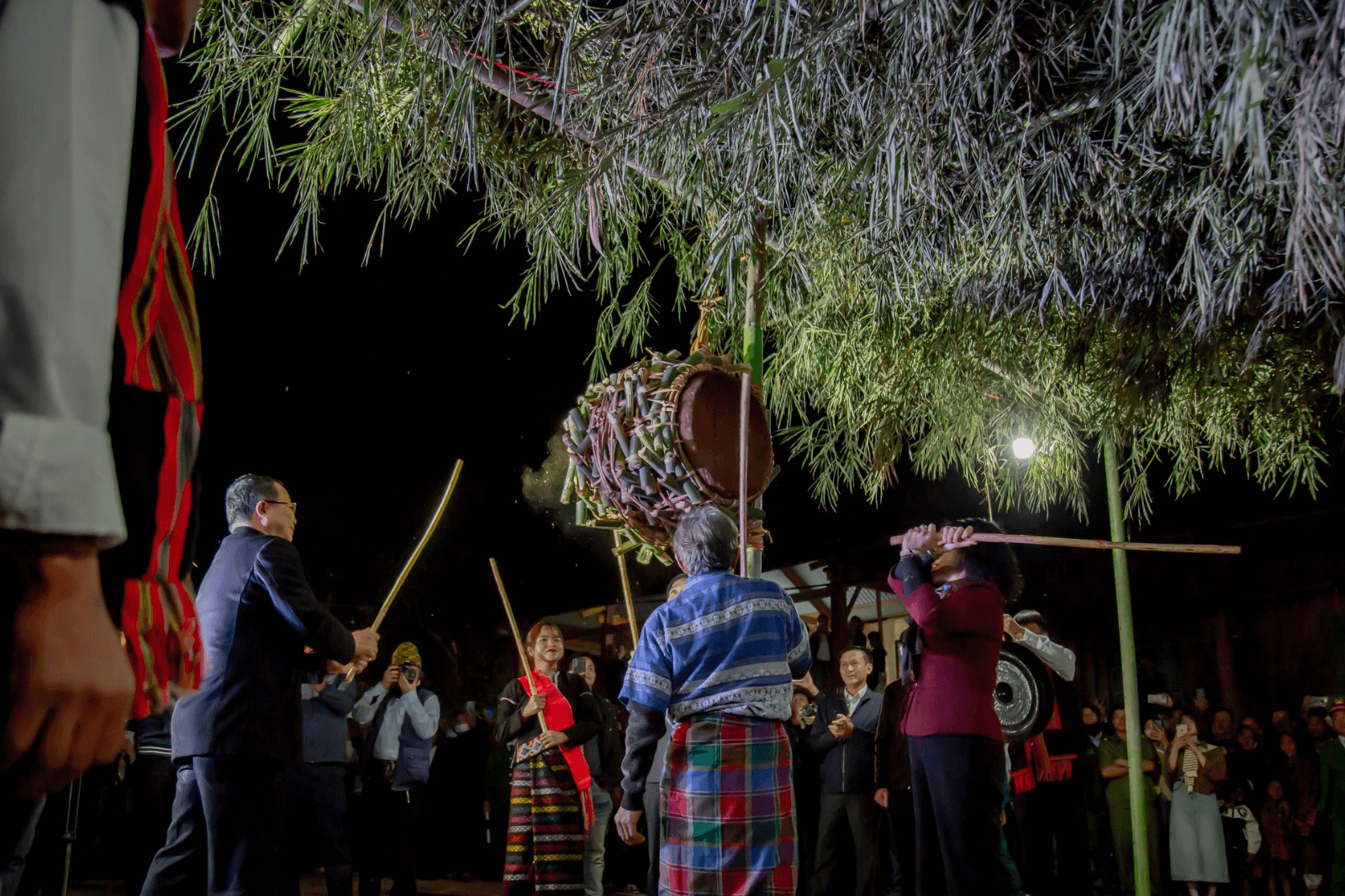
  • Drum beating competition: This is the most anticipated ritual of the festival. Strong young men take turns striking the drumhead with wooden sticks using all their strength and enthusiasm. According to Ma Coong belief, the drum must be broken before dawn to convey sincere reverence to Giang and pray for a bountiful harvest and a prosperous life. The further the drumbeats resound, the more complete the belief in a lucky new year becomes.

  • Singing, dancing, and courtship: As the drumbeats echo through the deep forest, young men and women from various villages gather, holding hands to join traditional dances, singing responsive songs, and chatting beside the flickering bonfire. The festival night is also called "the open night" by the Ma Coong people – an occasion for young people to freely meet, get to know each other, and express their feelings according to ethnic customs. Many couples have become husband and wife starting from this special festival night.

  • A festival space rich in identity: Cheers of "Roa lu Giang oi!" – an exclamation expressing joy and excitement – blend with the sound of drums, gongs, and traditional dances, forming a lively symphony in the heart of Truong Son. It is not merely the sound of a festival, but also the heartbeat of Ma Coong community cultural life.

The festive part is not simply an entertainment activity, but also an occasion to bond the community, preserve traditional customs, and foster solidarity among villages. Through every drumbeat, dance step, and song, the Ma Coong people continue to hand down the unique cultural values preserved for generations to younger generations.

According to ancient belief, the faster the drum breaks, the luckier it is

Photo: According to ancient belief, the faster the drum breaks, the luckier it is 

4. Cultural values of the Ma Coong Drum Beating Festival

In 2019, the Ma Coong drum beating festival was recognized by the Ministry of Culture, Sports and Tourism as a National Intangible Cultural Heritage, affirming the unique cultural value of the Ma Coong community. With support from the Department of Cultural Heritage, the festival receives increasing investment in everything from costumes and gongs to facilities, attracting numerous domestic and international tourists.

Not only a spiritual ritual, the festival also serves as a bridge promoting Quang Binh's culture. In recent years, the number of international tourists visiting Ca Roong village has grown steadily, especially those who love exploring indigenous culture. According to Mr. Nguyen Huu Hong, Vice Chairman of Bo Trach District People's Committee, the festival is an opportunity to develop community tourism, bringing sustainable livelihoods to local people.

5. Experiencing the Ma Coong Drum Beating Festival

If you are planning a trip to Quang Binh, do not miss the chance to visit Ca Roong village on the full moon of the first lunar month to immerse yourself in the vibrant atmosphere of the Ma Coong drum beating festival.

  • Attendance time: The festival takes place on the night of the 16th day of the first lunar month every year (usually in February of the solar calendar). Visitors should follow the event schedule from local authorities or travel agencies to plan ahead.

  • How to get there: From central Dong Hoi, travel about 60–70 km along the Western branch of the Ho Chi Minh Highway to Thuong Trach commune. The route consists mostly of mountain passes and forest roads, so it is recommended to choose a car or a motorbike driven by a confident driver. You can also combine this with a visit to Phong Nha – Ke Bang National Park for a complete journey. 

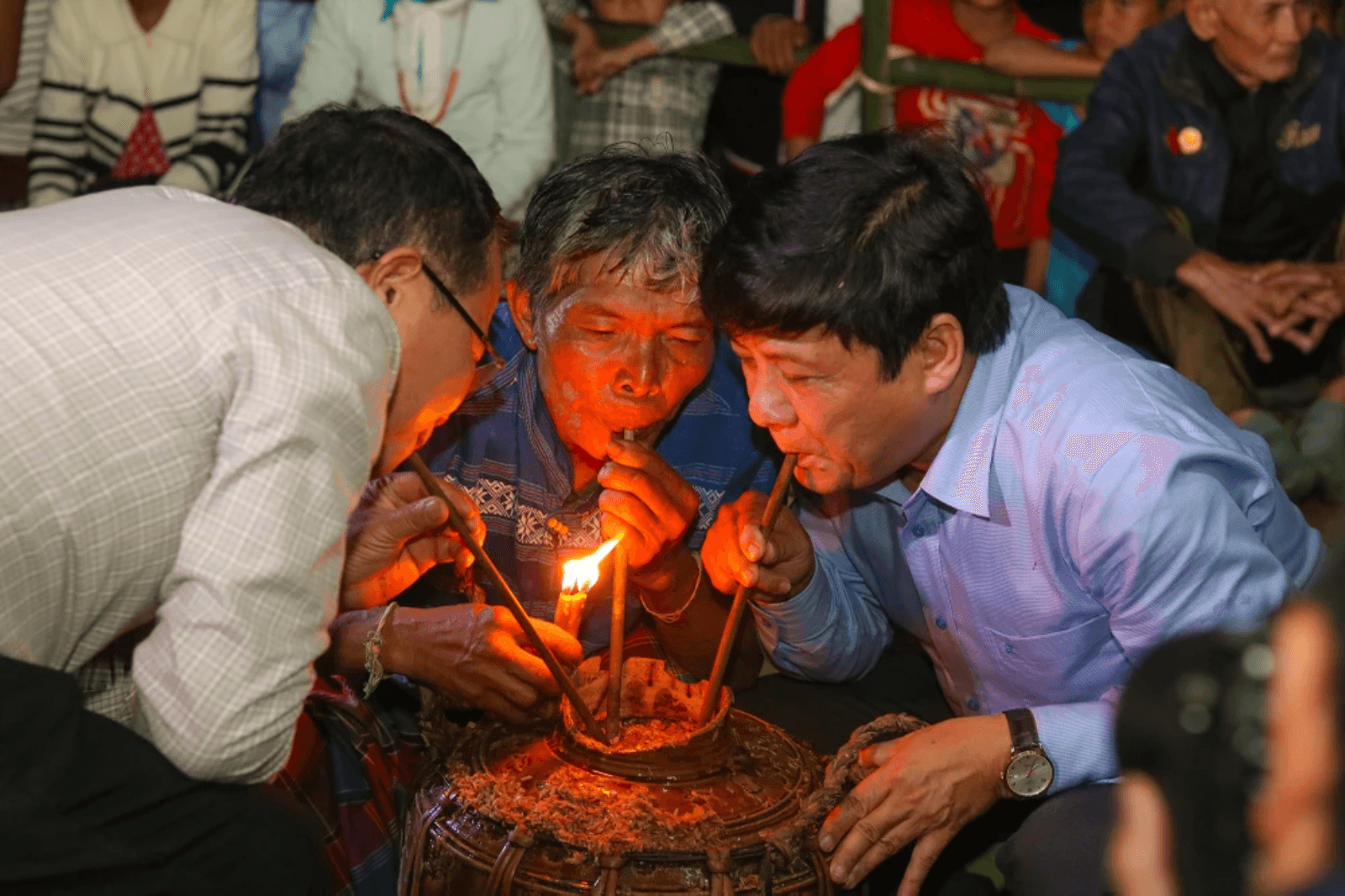
Can wine (pipe wine) is a traditional drink during festivals of the Ma Coong people

Photo: Can wine (pipe wine) is a traditional drink during festivals of the Ma Coong people 

Don't forget to engage in cultural exchanges with local people: learn a traditional dance, and listen to mythical stories like the legend of the evil monkey directly from the village elders. Besides the Ma Coong drum beating festival, Quang Binh also boasts countless other attractive destinations such as Phong Nha Cave, crystal-clear Mooc Spring, majestic Paradise Cave, or poetic Nhat Le Beach. To make your Quang Binh exploration journey even more fulfilling, feel free to check out and book quality Quang Binh tours professionally organized by Sovaba Travel, connecting you to journeys full of discovery, culture, and nature, where every step is a memorable experience.

Loading......

Featured destinations